

 English
 русский
 España
 Portugal
 عربي
عربيChen Xiao | Customer Service & After-Sales Coordinator
Home / Author / Chen Xiao | Customer Service & After-Sales Coordinator / Smart Weighing Bowls for More Accurate, Hygienic, and Convenient Pet Feeding
Pet feeding is becoming increasingly connected with health management. For many owners, filling a bowl is no longer simply a matter of placing food in front of a dog or cat. The quantity, consistency, cleanliness, and suitability of each meal can influence weight control, digestion, medication routines, and long-term well-being. A smart weighing bowl brings these daily tasks together by combining the basic function of a feeding dish with an integrated weighing system.
The DGF Series Smart Weighing Bowl is designed for pet owners who want greater control over food portions without adding a separate kitchen scale to the feeding process. Its four-digit digital LCD screen, food-grade plastic construction, antibacterial material, and easy-clean design make it a practical solution for household feeding. Available in two models, the DGF-01 and DGF-02, the series offers different capacities and weighing ranges for different pets and feeding habits.
Unlike a conventional bowl, which provides no direct information about the amount of food being served, a weighing bowl enables the user to monitor portions at the point of feeding. This can reduce guesswork and support more consistent routines. It is especially useful for pets with controlled diets, pets that need gradual weight adjustment, small animals requiring small portions, and households where several people share feeding responsibilities.
The product is supported by the manufacturing and organizational capabilities of Sensen Group Co., Ltd., a company with a long operating history in aquarium products, pet products, aquaculture machinery, and industrial equipment. The company’s broad technical background provides an important foundation for developing products that combine molded components, electronic controls, display systems, and practical household usability.
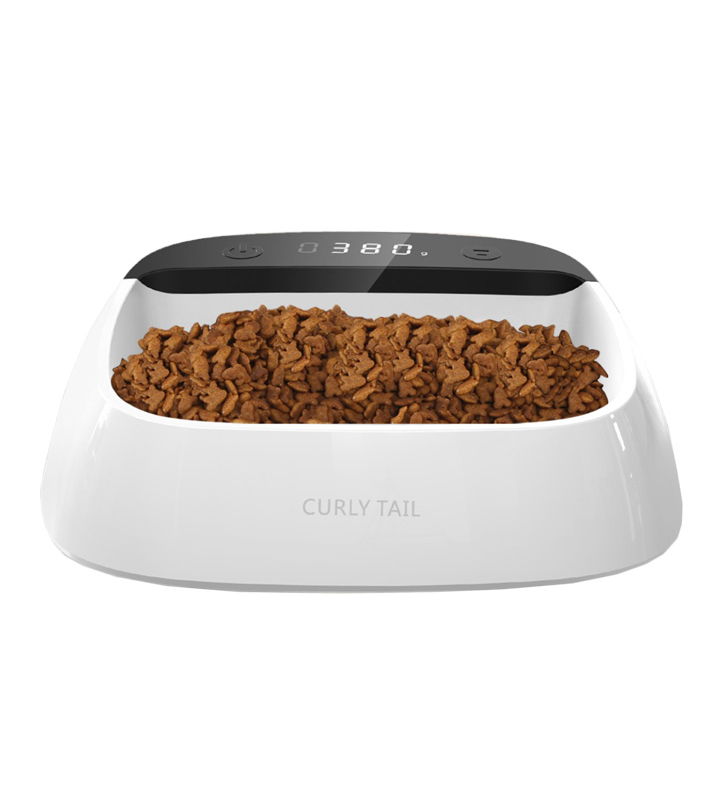
DGF Series Smart Weighing Bowl
Content
The DGF Series is a feeding bowl with an integrated electronic weighing function. The bowl is intended to measure the food placed inside it and present the result on a four-digit digital screen. This arrangement removes the need to transfer food between a storage container, a separate scale, and a feeding dish.
The product is offered in two configurations. The DGF-01 has a 1000 ml machine volume, a product weight of 660 grams, and a maximum weighing range of 0.5 kg. The DGF-02 has a 350 ml machine volume, a product weight of 330 grams, and a maximum weighing range of 0.2 kg. Both models use a 4.5 V DC power supply provided by three AAA batteries, feature a four-digit digital display, and use food-grade plastic for the bowl structure.
| Specification | DGF-01 | DGF-02 |
|---|---|---|
| Product weight | 660 g | 330 g |
| Machine volume | 1000 ml | 350 ml |
| Power requirement | DC 4.5 V | DC 4.5 V |
| Maximum weighing range | 0.5 kg | 0.2 kg |
| Display | Four-digit digital screen | Four-digit digital screen |
| Power supply | Three AAA batteries | Three AAA batteries |
| Material | Food-grade plastic | Food-grade plastic |
The two-model approach is valuable because pet owners do not all have the same requirements. A larger pet or a household that serves larger meals may benefit from the DGF-01’s greater bowl volume and weighing range. A smaller pet or a user seeking a more compact bowl may prefer the DGF-02. Offering both sizes allows the series to serve a wider range of feeding situations without forcing every customer to purchase an oversized product.
Portion control is one of the simplest ways to improve feeding consistency. Yet it is also one of the easiest routines to perform inaccurately. A scoop, cup, or visual estimate can produce different quantities from one meal to the next. The difference may be small, but repeated variation can become meaningful over weeks or months.
An integrated weighing bowl makes the measurement process more direct. Food can be added to the bowl while the user observes the digital display. If the portion is too small, more food can be added. If it is too large, some can be removed. The process is simple enough for everyday use and does not require a separate weighing platform.
For pets receiving a veterinarian-recommended feeding plan, the bowl can help owners follow the intended routine more closely. It can also support gradual adjustments. For example, if an owner needs to reduce a portion over time, the display provides a clear reference rather than relying on an approximate scoop.
The bowl may also be useful when mixing different foods. A user can measure one ingredient, add another, and monitor the total weight. This can assist owners who combine dry food with treats, supplements, or other approved ingredients. The product does not replace professional veterinary advice, but it can make an established feeding plan easier to follow.
In multi-person households, a digital display creates a common measurement reference. Family members no longer need to interpret what “one scoop” means or estimate how much food was placed in the bowl earlier. A clear displayed value can make routines more consistent between morning and evening feedings.
The four-digit digital LCD screen is one of the central functional features of the DGF Series. A numerical display provides a more precise reference than visual estimation and is easier to interpret than markings that may be hidden by food or viewed from an angle.
A digital display is also useful for repeatability. Once an owner has established an appropriate serving amount, that amount can be used as a reference for future meals. This is particularly beneficial when food density changes between products. Different foods may occupy different volumes even when their weight is similar, so measuring by weight can provide a more dependable routine than relying only on bowl level.
The display is designed as part of the feeding bowl rather than as a separate accessory. This integrated structure helps reduce the number of objects that must be stored, cleaned, and operated. For households with limited counter space, a combined bowl and scale can be more convenient than keeping a standalone scale nearby.
Because the weighing range differs between models, users should select the model that matches the expected portion size. The DGF-01 supports weighing up to 0.5 kg, while the DGF-02 supports weighing up to 0.2 kg. The stated maximum range should not be exceeded, and the bowl should be used according to its operating instructions.
The DGF Series uses food-grade plastic for its bowl structure. This material choice is important in a product that comes into regular contact with pet food and water. Food-grade plastic can provide a practical balance of weight, durability, cleanability, and manufacturing flexibility.
Compared with heavier materials, plastic can make the bowl easier to move, lift, and store. The DGF-01 weighs 660 grams, while the DGF-02 weighs 330 grams. Their relatively manageable product weights support ordinary household handling while still allowing the bowl to function as a stable integrated device.
Plastic also permits the production of smooth, shaped surfaces with fewer difficult-to-clean areas. A well-designed molded bowl can reduce the presence of unnecessary seams, recesses, or rough internal surfaces where food residue might remain. The specific cleaning method should follow the product instructions, especially because the bowl contains electronic components.
Material selection is not only a question of appearance. It affects the product’s daily practicality, packaging, transportation, and manufacturing repeatability. A food-grade plastic body can be produced through controlled molding processes that support consistent dimensions across production batches. Consistency is important because the weighing mechanism, bowl structure, and display housing must work together accurately.
The product information identifies environmentally friendly antibacterial material as a key feature of the DGF Series. The material is intended to provide highly effective antibacterial performance and help reduce conditions associated with digestive upset, including diarrhea. In practical terms, this feature supports a more hygienic feeding environment when combined with regular cleaning and proper food handling.
A bowl cannot replace cleaning, safe food storage, fresh water, or veterinary care. However, material properties can contribute to a more responsible feeding system. Pet food residue, moisture, and warmth can create an environment in which unwanted microorganisms may multiply. A bowl designed with hygienic material and a cleanable form gives the owner better tools for managing those everyday risks.
The antibacterial feature is especially relevant for pets that eat wet food, mixed food, or meals that remain in the bowl for some time. These food types may leave more residue than dry kibble. Owners should remove uneaten food promptly and clean the bowl regularly rather than relying on the material alone.
The environmentally friendly aspect of the material also reflects a broader direction in product development. Modern pet products are expected to combine performance with more responsible material choices. When a manufacturer evaluates the product from material selection through molding, assembly, packaging, and use, it can create a more balanced solution for both the customer and the environment.
Ease of cleaning is an essential advantage in any pet bowl. Even a technologically advanced product will not be convenient if it is difficult to wash after every meal. The DGF Series is designed with easy cleaning as one of its stated benefits.
A straightforward cleaning routine helps maintain the bowl’s appearance and reduces the buildup of food residue. It also encourages owners to clean more frequently because the task does not become unnecessarily complicated. This is an important practical advantage over feeding arrangements that require multiple containers or difficult-to-reach surfaces.
Since the product includes electronic weighing components, users should distinguish between cleaning the food-contact portion and protecting the electronic section. The bowl should be handled according to the manufacturer’s care guidance. Excessive water exposure, immersion of electronic parts, or unsuitable cleaning chemicals may affect the product’s operation.
Easy cleaning also improves household efficiency. Owners can prepare a meal, weigh it, serve it, and clean the bowl without managing several separate tools. The fewer steps involved, the easier it is to maintain a consistent routine, particularly for busy families, older pet owners, or users caring for multiple animals.
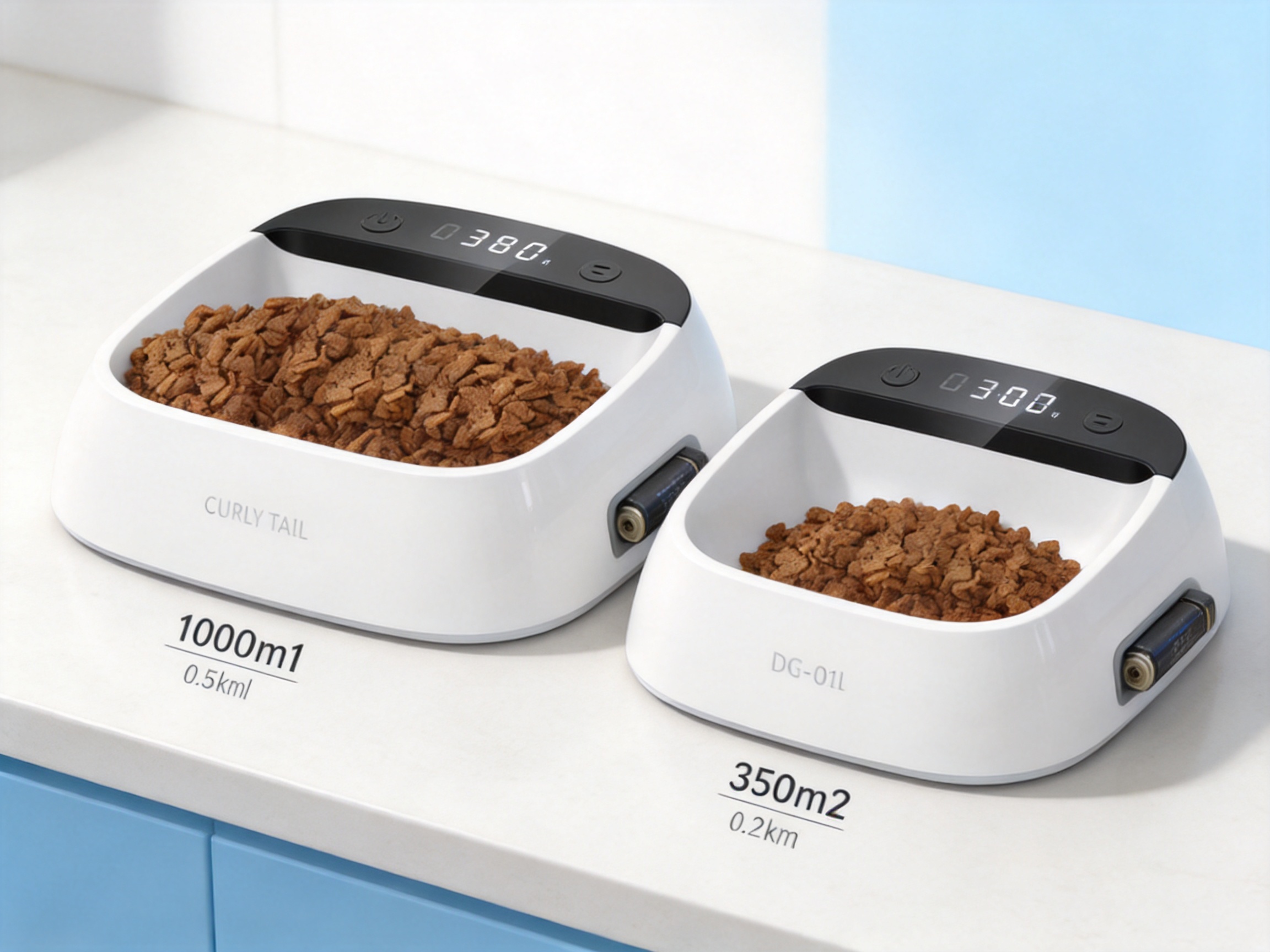
The DGF-01 and DGF-02 share the same core concept but are aimed at different feeding requirements. Choosing between them should be based on the pet’s size, typical portion, available space, and preferred bowl capacity.
The DGF-01 provides a 1000 ml machine volume and a maximum weighing range of 0.5 kg. These specifications make it the more suitable option for larger portions or pets that need a deeper or more spacious feeding area. It can also be useful for owners who prefer to place a larger meal in the bowl at one time.
Its 660-gram product weight may contribute to a more substantial feel during use. Users who want a larger integrated bowl and who regularly measure portions approaching the upper range may find the DGF-01 more appropriate.
The DGF-02 provides a 350 ml machine volume and a maximum weighing range of 0.2 kg. Its 330-gram product weight makes it the lighter and more compact model. This configuration may suit smaller pets, smaller living spaces, or feeding routines based on modest portions.
The DGF-02 can also be convenient for owners who want a bowl that is easier to move between rooms or store when not in use. The smaller capacity does not remove the core benefits of the series: digital weighing, food-grade plastic, antibacterial material, easy cleaning, and battery operation.
| Selection Consideration | Recommended Direction |
|---|---|
| Portions approaching 0.5 kg | Choose DGF-01 |
| Portions up to 0.2 kg | Choose DGF-02 |
| Need for a larger 1000 ml bowl | Choose DGF-01 |
| Preference for a compact 350 ml bowl | Choose DGF-02 |
| Shared core functions | Four-digit display, food-grade plastic, antibacterial material, easy cleaning, and three AAA batteries |
It is important to select a model based on actual feeding needs rather than choosing only by physical size. A bowl that is too small may require multiple servings, while a bowl that is much larger than necessary may occupy unnecessary space. Matching the bowl to the pet and the portion makes the product more convenient and helps preserve a predictable routine.
The most obvious advantage of the DGF Series over a conventional bowl is integrated measurement. A standard bowl can hold food, but it cannot tell the owner how much food has been placed inside. The DGF Series adds this information without requiring a separate weighing device.
A second advantage is improved workflow. With a conventional arrangement, an owner may need to locate a scale, place a container on it, weigh the food, transfer the food to the bowl, and then clean both items. The integrated design shortens the process and reduces handling.
A third advantage is repeatability. Visual estimates vary according to the person preparing the meal, the shape of the scoop, the size of the food pieces, and how full the bowl appears. A digital display gives users a shared numerical reference.
A fourth advantage is the combination of measurement and hygiene-focused material selection. Many basic bowls address only food containment. The DGF Series is intended to bring together food-grade plastic, antibacterial material, easy cleaning, and electronic weighing in one product.
Compared with a separate kitchen scale, the DGF Series is designed specifically around pet feeding. Its bowl form removes the need to place a separate dish on the scale, and its capacity options are selected for pet portions. This specialization can make the process more natural for everyday use.
The product should not be judged only by the number of functions it provides. Its strength lies in combining several useful functions without requiring a complex operating system. For many pet owners, a reliable display, convenient bowl, hygienic material, and simple battery power are more useful than unnecessary connectivity features.
Both DGF models use a DC 4.5 V power supply provided by three AAA batteries. Battery operation allows the bowl to be used without a fixed power cable. This makes placement more flexible and avoids adding a power cord to an area where food and water are present.
A battery-powered design can be moved from the kitchen to another room, taken to a pet-care area, or stored when not in use. It can also be useful in homes where the feeding location is far from a convenient electrical outlet.
Owners should use suitable batteries and replace them when the display or weighing function indicates reduced power. Batteries should be installed with the correct polarity and removed if the product will be stored for an extended period. As with any electronic household item, the battery compartment should be kept dry and inspected periodically.
The use of three AAA batteries is also practical from a replacement perspective. AAA batteries are widely available and easy to store. The 4.5 V specification provides the electrical input required by the product’s weighing and display system.
Pets may gain weight when meals and treats are not measured consistently. The DGF Series can help owners establish a more controlled routine by displaying the amount placed in the bowl. When used together with an appropriate feeding plan, this can make portion changes easier to implement and monitor.
Young pets may require feeding adjustments as they grow. A bowl with a digital weighing function allows owners to change portions in a measured way instead of increasing food based only on visual judgment. The appropriate model should be selected according to the pet’s portion size and the maximum weighing range.
Small animals can be particularly difficult to feed accurately with ordinary scoops because a small difference represents a larger percentage of the total meal. The DGF-02’s 350 ml volume and 0.2 kg maximum weighing range offer a compact option for modest portions.
When several pets eat different foods or receive different quantities, a weighing bowl can help separate their routines. Owners can prepare each portion according to the relevant feeding plan rather than using one generalized scoop for every animal.
Some owners combine dry food with approved wet food, supplements, or treats. Weighing directly in the bowl can help monitor the combined serving. Owners should follow professional dietary guidance when adding supplements or changing a pet’s food.
Older pets may have changing appetite, digestion, or weight needs. Consistent portion records can help owners notice changes over time and provide more useful information during veterinary consultations. The bowl itself is not a diagnostic device, but it can support better observation.
The development of a smart weighing bowl requires more than the production of a plastic container. The manufacturer must coordinate material selection, mold design, electronic integration, display installation, weighing performance, battery housing, assembly, inspection, and packaging.
Sensen Group Co., Ltd. has operated since November 1985 and has developed experience across aquarium pets, aquaculture machinery, industrial equipment, and related product fields. This broad industrial background is relevant to the DGF Series because the product combines consumer usability with mechanical and electronic elements.
The company has established functional departments including a research institute, business school, quality control department, personnel and administrative information department, and financial department. A structured organization can support a more complete product-development process, from initial design and engineering evaluation to production management and after-sales coordination.
Research and development capabilities are especially important for a product in which the bowl and weighing mechanism must function as one system. The bowl needs to remain practical for feeding, while the weighing structure must respond to food load changes. The display must remain readable, the battery compartment must be integrated into the housing, and the external form must remain suitable for cleaning.
Quality control is equally important. A weighing product should be checked for assembly consistency, display operation, battery contact, housing condition, and general functionality. Plastic components should be inspected for defects, deformation, sharp edges, or surface issues that could affect safe use. Consistent manufacturing reduces variation between units and supports customer confidence.
The company’s experience in aquarium and aquatic equipment also demonstrates familiarity with products used in environments where moisture, cleaning, molded parts, and routine maintenance are important. Although a smart weighing bowl is a pet-feeding product rather than an aquarium device, the transferable manufacturing disciplines are valuable.
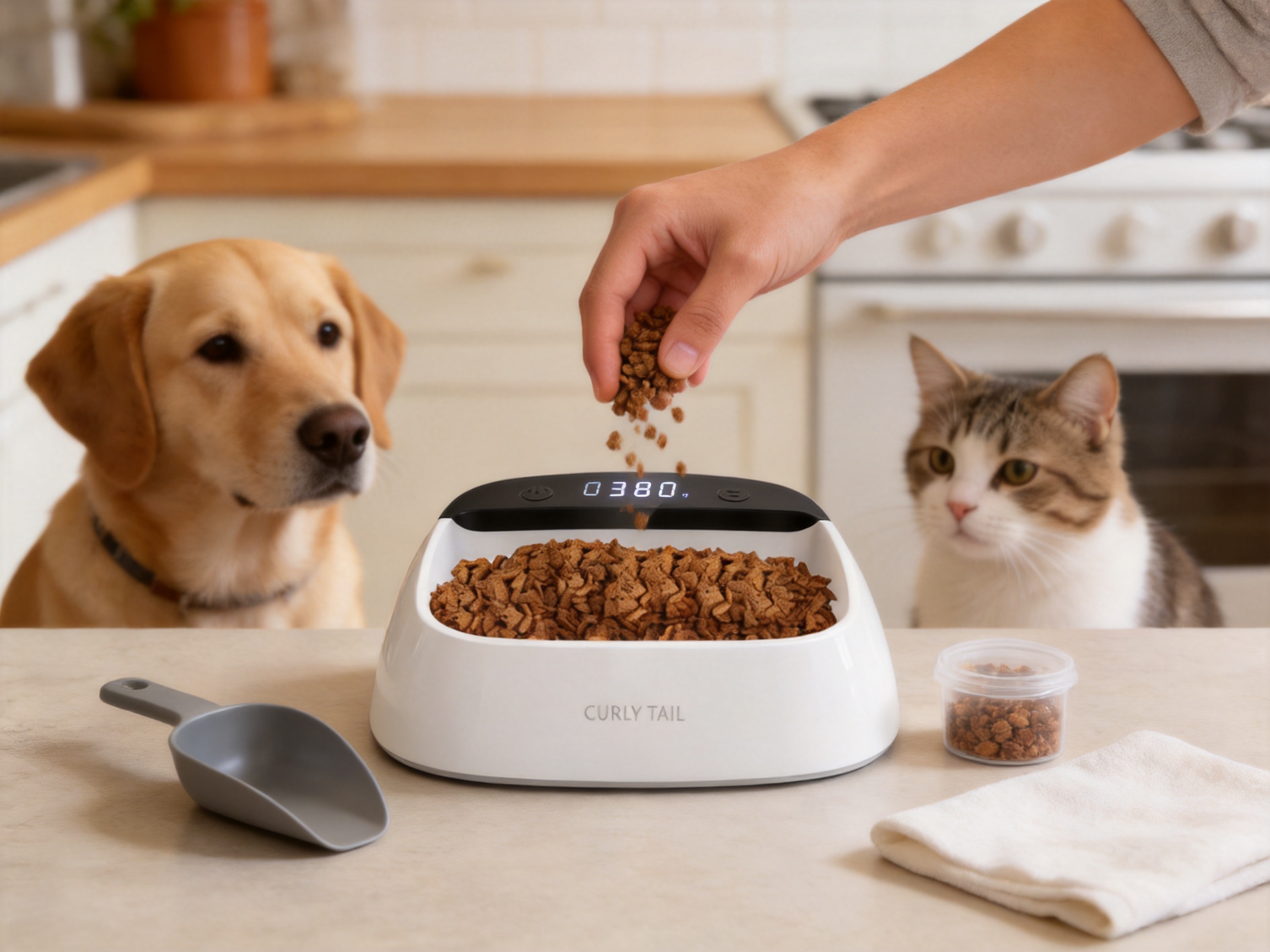
Product development begins by defining the practical problem: pet owners need a bowl that can hold food and provide a direct measurement. The design must then balance bowl volume, user comfort, display visibility, battery access, cleanability, and manufacturing feasibility.
The two-model range indicates a deliberate product strategy. Instead of making one bowl that attempts to serve every pet, the manufacturer provides two capacity and weighing configurations. This helps align the product with different household needs and may improve usability for both larger and smaller pets.
Food-grade plastic must be selected and processed in a way that supports a smooth, durable, and cleanable surface. Mold engineering determines the shape of the bowl, the location of structural supports, the integration of the electronic housing, and the consistency of the finished dimensions.
Accurate molding is important because uneven surfaces or dimensional variation can affect both cleaning and weighing performance. A well-controlled production process can help ensure that the bowl sits correctly, that the load is transferred appropriately to the weighing system, and that the display housing remains securely aligned.
The integrated weighing function requires the cooperation of the sensor system, control circuitry, digital display, and battery supply. These elements must be placed within the product housing while preserving the bowl’s practical form.
Electronic integration also involves assembly discipline. Battery contacts, display connections, control components, and sensor-related parts must be installed correctly. Production checks can identify problems such as an unresponsive screen, unstable power connection, or incorrect display behavior before the product reaches the customer.
After molded components and electronic parts are prepared, the bowl is assembled and tested. Inspection may include visual review, display activation, basic weighing-function checks, battery-compartment review, and confirmation that the housing is properly closed.
These steps are important because a product can appear attractive while still failing to meet functional expectations. A structured quality-control process helps connect external appearance with actual performance.
The finished product must be packaged to protect the bowl, display, and electronic components during storage and transportation. Packaging also needs to communicate the model, basic specifications, and use information clearly.
Sensen Group’s import and export activities and its broad sales network provide a foundation for distributing products to domestic and international markets. A strong distribution structure can support product availability, customer communication, and coordination with business buyers.
According to the supplied company information, Sensen Group operates through a headquarters with multiple functional departments and has several wholly owned subsidiaries and interests in trading companies. This organizational scale can contribute to production capacity, supply-chain coordination, market access, and technical cooperation.
The company’s business covers aquarium products, aquaculture machinery, industrial equipment, and pet-related products. Such diversification can support the sharing of manufacturing knowledge across product categories. Experience in pumps, aquarium equipment, molded accessories, and pet products may help the company understand different requirements for durability, moisture exposure, maintenance, and consumer operation.
The group also describes a focus on industrial technicalization, marketing globalization, and brand internationalization. For an export-oriented product such as the DGF Series, international market awareness is important. Product information must be organized clearly, specifications must be consistent, and the design must be understandable to users in different regions.
Reliability does not come from a single feature. It is the result of coordinated design, appropriate materials, controlled assembly, inspection, packaging, and customer support. The company’s established history and multi-department structure provide a platform for managing these responsibilities at scale.
Before first use, the owner should inspect the bowl, display, battery compartment, and visible housing surfaces. Three AAA batteries should be installed according to the correct polarity. The product should be placed on a stable, level surface before food is added.
Food should be added gradually while the digital display is observed. When the desired portion is reached, the food can be served. Users should avoid placing the bowl on an unstable mat, a soft surface, or an uneven platform if doing so affects the weighing result.
The bowl should not be overloaded beyond the stated maximum weighing range. The DGF-01 is specified for a maximum weighing range of 0.5 kg, and the DGF-02 is specified for a maximum weighing range of 0.2 kg. These values should be treated as operating limits.
After feeding, leftover food should be removed promptly. The food-contact area should be cleaned according to the product instructions, while the electronic components should be protected from direct water exposure. The bowl should be allowed to dry as appropriate before the next use.
Owners should also monitor battery condition. If the display becomes faint, intermittent, or otherwise abnormal, the batteries should be checked and replaced when necessary. Keeping spare AAA batteries available can prevent interruption to the feeding routine.
Regular maintenance begins with cleaning. The frequency depends on the type of food served and how often the bowl is used, but wet food and mixed meals generally require prompt cleaning. Food should not be allowed to dry onto the surface because hardened residue can be more difficult to remove.
Harsh abrasives should be avoided unless specifically approved by the manufacturer. Scratches can make surfaces harder to clean and may affect the appearance of the bowl. A suitable soft cleaning tool and an appropriate cleaning solution are generally preferable.
The bowl should be protected from impacts, excessive heat, and unsuitable storage conditions. Electronic products should not be left exposed to unnecessary moisture. When storing the product for a long period, removing the batteries can help reduce the risk of leakage-related damage.
Users should also avoid using the bowl as a general-purpose container for non-food materials. It is designed for pet feeding and weighing within its specified range. Following the intended use supports safe operation and helps preserve the product.
The DGF Series can be positioned as a practical value-added pet product for retailers, distributors, pet stores, and online product catalogs. Its function is easy to explain: it is a pet bowl with a built-in digital weighing display. This clear value proposition can help customers understand the benefit quickly.
The two-model range allows retailers to present a simple choice without creating excessive complexity. Customers can select the larger DGF-01 or the compact DGF-02 according to their pet’s feeding requirements. The shared feature set also makes product training and sales communication more efficient.
For pet stores, the product can complement food, supplements, weight-management programs, and general pet-care accessories. For distributors, its combination of household convenience and health-oriented feeding support provides a wider marketing angle than a basic bowl.
For international buyers, the manufacturer’s experience in export activity and its broad product portfolio may support cooperation across multiple pet and aquatic categories. A supplier that understands both consumer products and technical equipment may be able to provide more coordinated communication during product development, packaging, and distribution.
There are several categories of products that customers may consider instead of a smart weighing bowl. A basic feeding bowl is usually less complex and may have a lower purchase price, but it does not measure food. A separate kitchen scale can provide weighing functionality, but it adds another item to the feeding process. A highly connected smart feeder may provide automation or app-based control, but it may also be more complicated, require network access, or involve additional maintenance.
The DGF Series occupies a practical middle position. It adds a useful digital measurement function while retaining the direct, familiar format of a bowl. It does not attempt to replace every type of automated feeder or veterinary monitoring system. Its strength is focused functionality: portion measurement, food containment, hygienic material, and simple operation.
Customers who want scheduled dispensing, remote monitoring, or automatic food delivery may need a different product category. Customers who primarily want to serve measured portions without adding unnecessary complexity may find the DGF Series more appropriate.
This focused design can be an advantage over products that include features users rarely need. A pet-care product should be judged by how well it fits the owner’s routine. The DGF Series is designed for direct daily interaction, easy reading, and practical feeding control.
Sensen Group describes innovation as an ongoing part of its development across aquarium pets, aquaculture machinery, and industrial equipment. The DGF Series reflects a form of practical innovation: it applies electronic weighing to an ordinary pet-care object and makes the result accessible during routine feeding.
Innovation does not always require a complex digital ecosystem. In many households, a clear four-digit display may be more useful than a feature that requires a mobile application or network connection. A simple product can still represent meaningful improvement when it solves a frequent problem more conveniently.
The company’s stated emphasis on quality, technical development, and international markets also supports the product’s commercial potential. Consistent specifications and organized manufacturing are particularly important when products are distributed across different countries and used by customers who may not have direct access to the factory.
Through research, quality control, production management, and market service, the company can continue refining the product category. Future development may involve additional bowl shapes, new capacities, improved display design, or other feeding-related functions, but the core principle remains the same: technology should make responsible pet care easier.
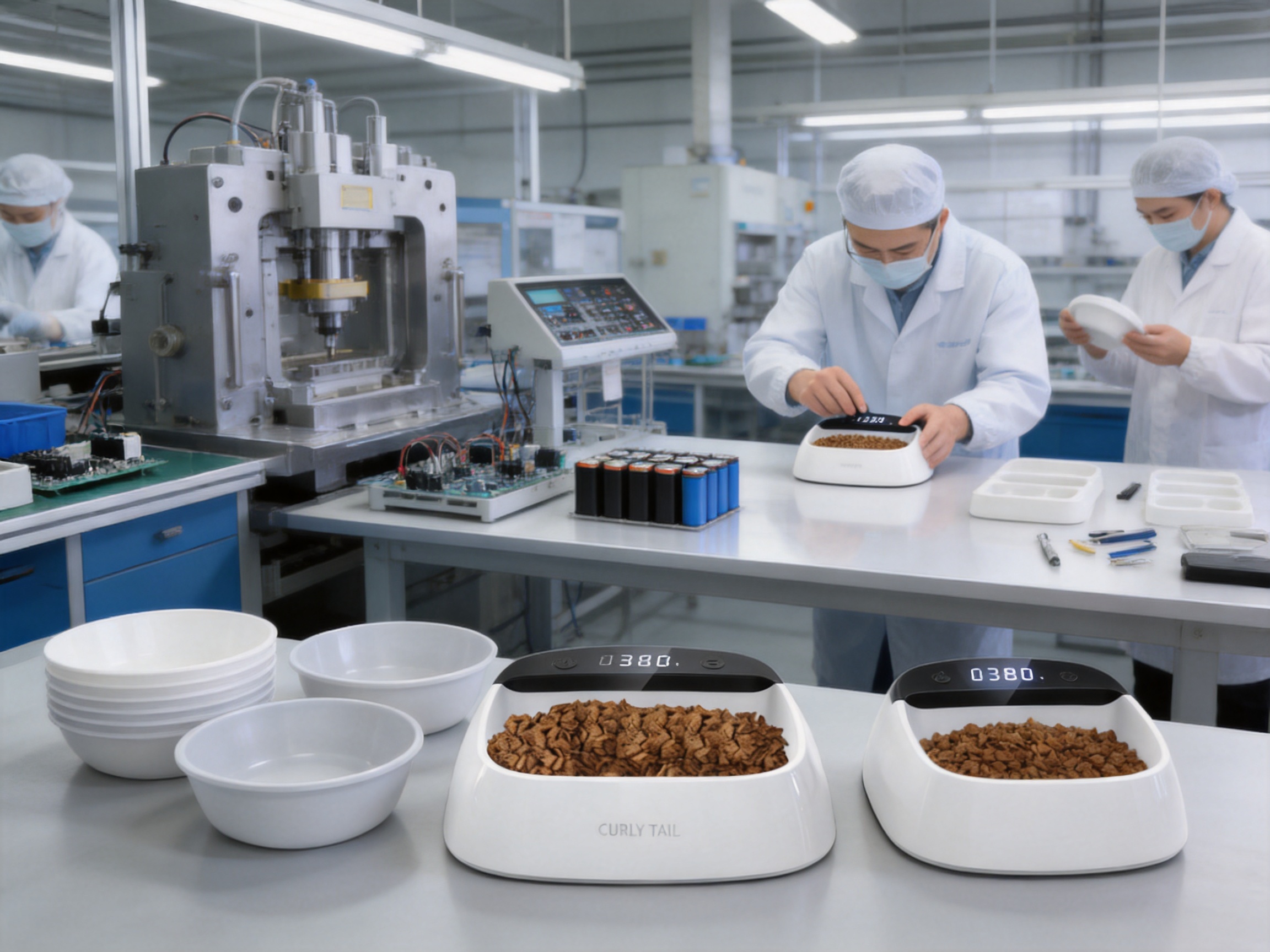
It is a pet feeding bowl with an integrated electronic weighing function and a four-digit digital LCD screen. It allows users to monitor the amount of food placed in the bowl instead of estimating the portion visually.
The series includes the DGF-01 and DGF-02. The DGF-01 has a 1000 ml machine volume and a maximum weighing range of 0.5 kg. The DGF-02 has a 350 ml machine volume and a maximum weighing range of 0.2 kg.
The DGF-02 may be more suitable for a small pet or a feeding routine based on smaller portions because it has a compact 350 ml volume and a 0.2 kg maximum weighing range. The final choice should be based on the pet’s actual portion size and feeding habits.
The DGF-01 is the larger model, with a 1000 ml machine volume. It also provides the wider maximum weighing range of 0.5 kg.
Both models use a four-digit digital screen. The display is intended to show the measured food weight clearly during portion preparation.
Both models use DC 4.5 V supplied by three AAA batteries. Users should install the batteries correctly and replace them when power becomes low.
The product uses food-grade plastic. The material is selected for its suitability for food contact, manageable weight, cleanability, and compatibility with molded product manufacturing.
The product information identifies environmentally friendly antibacterial material as one of the DGF Series features. This material is intended to provide effective antibacterial performance and support a more hygienic feeding environment. Regular cleaning and safe food handling remain necessary.
The antibacterial material is described as helping reduce conditions associated with digestive upset, including diarrhea. However, the bowl is not a medical device and cannot guarantee prevention or treatment of illness. Pets with persistent digestive symptoms should be examined by a qualified veterinarian.
Cleaning should be performed according to the product instructions because the bowl includes electronic components. The food-contact area should be cleaned while the display, battery compartment, and other electronic sections are protected from excessive water exposure.
No. The bowl is a measuring and feeding aid. Veterinary recommendations should determine the appropriate food, daily calorie intake, portion size, and feeding schedule for pets with specific health needs.
A scoop provides an approximate volume, while the digital display provides a weight reference. Food density and shape can vary, so the same scoop volume may not always represent the same mass. Weighing can therefore support more consistent portions.
The bowl is intended for pet feeding, and its food-grade plastic and easy-clean design may be suitable for different feeding routines. Wet food should be removed promptly, and the bowl should be cleaned according to the care instructions.
The weighing function is integrated into the feeding bowl. This reduces the need to measure food in one container and transfer it to another, making the portioning process more direct and convenient.
The portion should be divided or a model with a suitable capacity should be selected. The DGF-01 should not exceed 0.5 kg, and the DGF-02 should not exceed 0.2 kg.
The product is associated with Sensen Group Co., Ltd., a company established in 1985 and involved in aquarium pets, aquaculture machinery, industrial equipment, and pet-related products.
The company’s capabilities include product research, quality control, molded component production, electronic product assembly, organizational management, and domestic and international distribution. Its experience across aquatic and industrial product categories supports the development of integrated household products.
The DGF Series Smart Weighing Bowl addresses a simple but important challenge in pet care: serving consistent portions in a hygienic and convenient way. Its four-digit digital LCD screen provides a direct weight reference, while its food-grade plastic construction supports everyday use. Antibacterial material and easy cleaning add hygiene-focused value, and battery operation allows flexible placement without a power cable.
The DGF-01 and DGF-02 provide different capacities and weighing ranges, allowing users to select a configuration that fits their pet and feeding routine. The larger DGF-01 supports up to 0.5 kg and offers a 1000 ml volume, while the compact DGF-02 supports up to 0.2 kg and offers a 350 ml volume.
Its advantages over a conventional bowl or separate weighing arrangement come from integration. Measurement takes place where feeding takes place, reducing guesswork and simplifying the daily process. The product does not depend on unnecessary complexity; instead, it focuses on a clear combination of weighing, food containment, material hygiene, and cleanability.
Behind this focused product is a manufacturer with a long history, a broad industrial portfolio, dedicated research and quality-control functions, and experience serving domestic and international markets. These strengths provide a suitable foundation for producing a smart pet-care product that combines practical design with controlled manufacturing.
For owners seeking a more consistent feeding routine, the DGF Series offers a useful balance between technology and simplicity. It turns an ordinary bowl into a practical portion-management tool while remaining familiar, accessible, and suitable for daily household use.
1. Product specification sheet for the DGF Series Smart Weighing Bowl, including model capacities, weighing ranges, materials, display, and power requirements.
2. Product feature information for the DGF Series, including digital weighing, antibacterial material, and easy-clean design.
3. Sensen Group Co., Ltd. company information concerning corporate history, business sectors, research functions, quality control, subsidiaries, and distribution activities.
4. General principles of household pet portion control and responsible feeding management.
5. General material and hygiene considerations for food-contact pet products.


 No. 61-79, Baima Street, Maao Town, Dinghai District, Zhoushan City, Zhejiang Province, China.
 0086 580 8082088 / 8081168
 0086 580 8080978
 songhua@sunsun-china.com