

 English
 русский
 España
 Portugal
 عربي
عربيLi Mei | Aquarium Equipment Sales Specialist
Home / Author / Li Mei | Aquarium Equipment Sales Specialist / Advanced Multi-Function Submersible Pumps for Reliable Aquatic Circulation
Efficient water movement is one of the foundations of a healthy aquarium, indoor fountain, planted water feature, hydroponic display, or small garden circulation system. A multi-function submersible pump must do more than simply move water from one point to another; it must deliver stable output, maintain dependable head height, operate quietly, fit into limited spaces, and provide safe performance in continuous underwater conditions. The HOJ Series Multi-Function Submersible Pump is designed for these practical demands, offering a broad model range for different flow requirements, tank sizes, and installation layouts.
This article introduces the HOJ Series Multi-Function Submersible Pump from the perspective of product performance, application value, manufacturing capability, and competitive advantage. It also explains how the series supports aquarium owners, retailers, project installers, and water feature designers who need dependable circulation solutions. With multiple specifications ranging from compact low-power models to higher-output options, the series is suitable for small aquariums, medium fish tanks, filtration systems, decorative fountains, oxygenation-assisted circulation, and many other water management applications.
HOJ Series Multi-Function Submersible Pump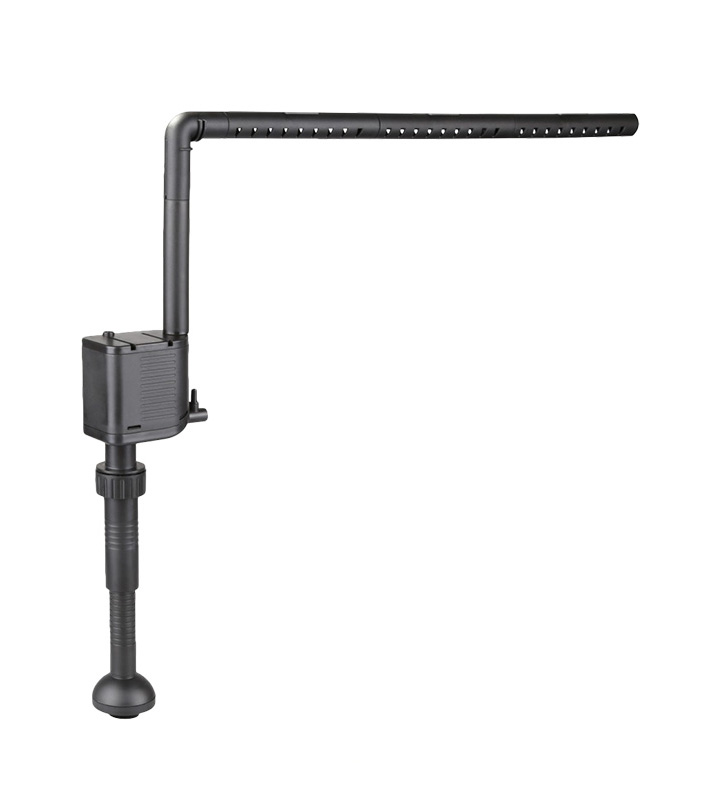
Content
The HOJ Series Multi-Function Submersible Pump is a compact underwater pump series engineered for stable water circulation. The product line includes several models with different power ratings, maximum head heights, flow outputs, hose adapter sizes, weights, and dimensions. This model range allows users to select the correct pump according to the actual water volume, desired circulation speed, installation distance, and available space inside a tank or water feature.
Unlike single-purpose pumps that only suit one fixed application, this series emphasizes flexibility. It can be used for aquarium circulation, water transfer, filtration assistance, fountain effects, small pond water movement, decorative water walls, and similar aquatic equipment systems. The design supports both household and commercial environments, making it useful for pet product dealers, aquarium equipment distributors, garden equipment suppliers, and aquatic project builders.
The series is designed around practical electrical compatibility. The listed voltage options include 110V, 220V, and 240V, with frequency compatibility at 50Hz and 60Hz. This broad electrical adaptability makes the product easier to match with international markets and different regional electrical standards. For importers, wholesalers, and retailers, this reduces the complexity of product planning and helps support wider distribution.
Another important feature is the balance between power consumption and water output. The lower-power models offer efficient circulation for smaller environments, while the larger models provide higher flow and stronger head height. This ensures that users do not need to overspend on an oversized pump or compromise performance with an undersized model. The result is a practical series that can serve many customer segments with a consistent product platform.
The following table summarizes the available models and their core specifications. These details help users compare flow rate, maximum head height, power consumption, hose compatibility, and product dimensions before choosing a pump.
Model |
Voltage |
Frequency |
Power |
H-max |
Output |
Hose Adapter |
Cable Length |
Weight |
Dimensions L×W×H |
HQJ-1000B |
110V/220V/240V |
50Hz/60Hz |
12W |
1.2m |
1000L/h |
16mm |
1.5m |
0.5kg |
90×52×110mm |
HQJ-1600B |
110V/220V/240V |
50Hz/60Hz |
20W |
1.4m |
1600L/h |
20mm |
1.5m |
0.8kg |
105×57×100mm |
HQJ-500G |
110V/220V/240V |
50Hz/60Hz |
2.5W |
0.6m |
350L/h |
16mm |
1.5m |
0.18kg |
60×40×90mm |
HQJ-700G |
110V/220V/240V |
50Hz/60Hz |
8W |
0.7m |
500L/h |
16mm |
1.5m |
0.25kg |
72×45×84mm |
HQJ-900G |
110V/220V/240V |
50Hz/60Hz |
12W |
1.2m |
900L/h |
16mm |
1.5m |
0.5kg |
94×52×88mm |
HQJ-1200G |
110V/220V/240V |
50Hz/60Hz |
20W |
1.4m |
1200L/h |
18mm |
1.5m |
0.5kg |
115×54×106mm |
HQJ-700 |
110V/220V/240V |
50Hz/60Hz |
8W |
0.8m |
700L/h |
/ |
1.5m |
0.25kg |
138×65×145mm |
HQJ-900 |
110V/220V/240V |
50Hz/60Hz |
12W |
1.2m |
900L/h |
/ |
1.5m |
0.6kg |
150×65×132mm |
Water circulation directly affects oxygen exchange, temperature distribution, filtration efficiency, and the removal of suspended debris. In an aquarium, insufficient water movement can create dead zones where waste accumulates and oxygen levels decline. In a fountain or decorative water system, weak circulation can reduce visual effect and may allow deposits to settle more quickly. The HOJ Series addresses these needs by providing a selection of outputs from 350L/h to 1600L/h.
The compact HQJ-500G is suitable for small tanks, tabletop water features, and gentle circulation applications where low power consumption and a small body are important. With 2.5W power and 350L/h output, it can support systems that do not require high head pressure. In contrast, the HQJ-1600B offers 1600L/h output and a 1.4m maximum head, making it appropriate for stronger circulation, larger tanks, and installations requiring higher lifting capacity.
For many aquarium users, the right circulation rate is not necessarily the highest possible output. A planted aquarium, shrimp tank, or small ornamental fish tank may require gentle movement to avoid stressing livestock. A medium fish tank with active species or an external filtration layout may need stronger flow. Because the HOJ Series includes multiple sizes, users can select a model that matches real biological and mechanical requirements.
The series also helps maintain more consistent water quality. By moving water through filtration media or across oxygen-rich surface zones, a submersible pump supports biological stability. Beneficial bacteria perform more effectively when water is constantly delivered to filter surfaces. Heat from aquarium heaters or environmental warming is also distributed more evenly when circulation is stable. These effects are especially important in fishkeeping, where sudden local temperature differences or waste buildup can affect aquatic health.
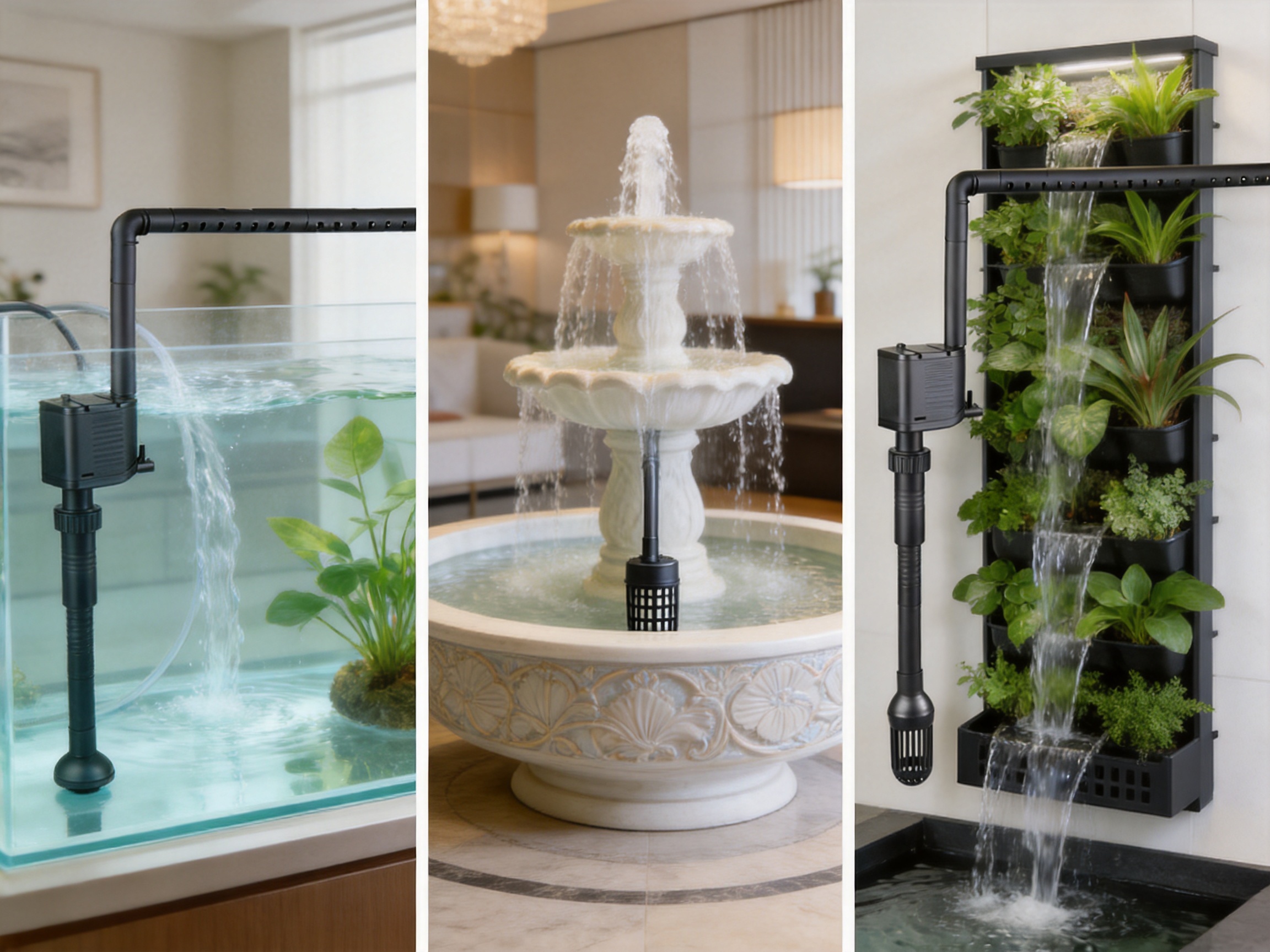
The term multi-function is important because the pump is not limited to one installation style. It can act as a circulation pump inside a fish tank, a driving pump for a small filtration system, a water transfer pump for maintenance, or a fountain pump in decorative equipment. This versatility makes the series valuable for both end users and professional buyers who need one product family for many applications.
In aquariums, the pump can help move water toward filter intake areas, circulate water behind decorations, or create current for species that prefer active flow. In small water features, it can raise water through tubing to create a continuous fountain effect. In plant walls or garden displays, it can support controlled water movement, provided the installation is matched to the pump’s head height and output. In retail environments, it can be used in display tanks or product demonstration setups.
The hose adapter options provide practical connection flexibility. Models with 16mm, 18mm, or 20mm hose adapter specifications can be paired with common tubing sizes, depending on the model. This is useful for installers who need predictable compatibility during setup. Some models listed without a hose adapter may be more suitable for specific integrated structures or direct circulation applications.
The 1.5m cable length gives users installation freedom in many standard aquarium and decorative setups. It is long enough for typical indoor use while remaining manageable and tidy. Cable length is often overlooked, but it affects convenience and safety. A pump with an appropriate cable length reduces awkward placement, tension, or the need for unnecessary extensions near wet environments.
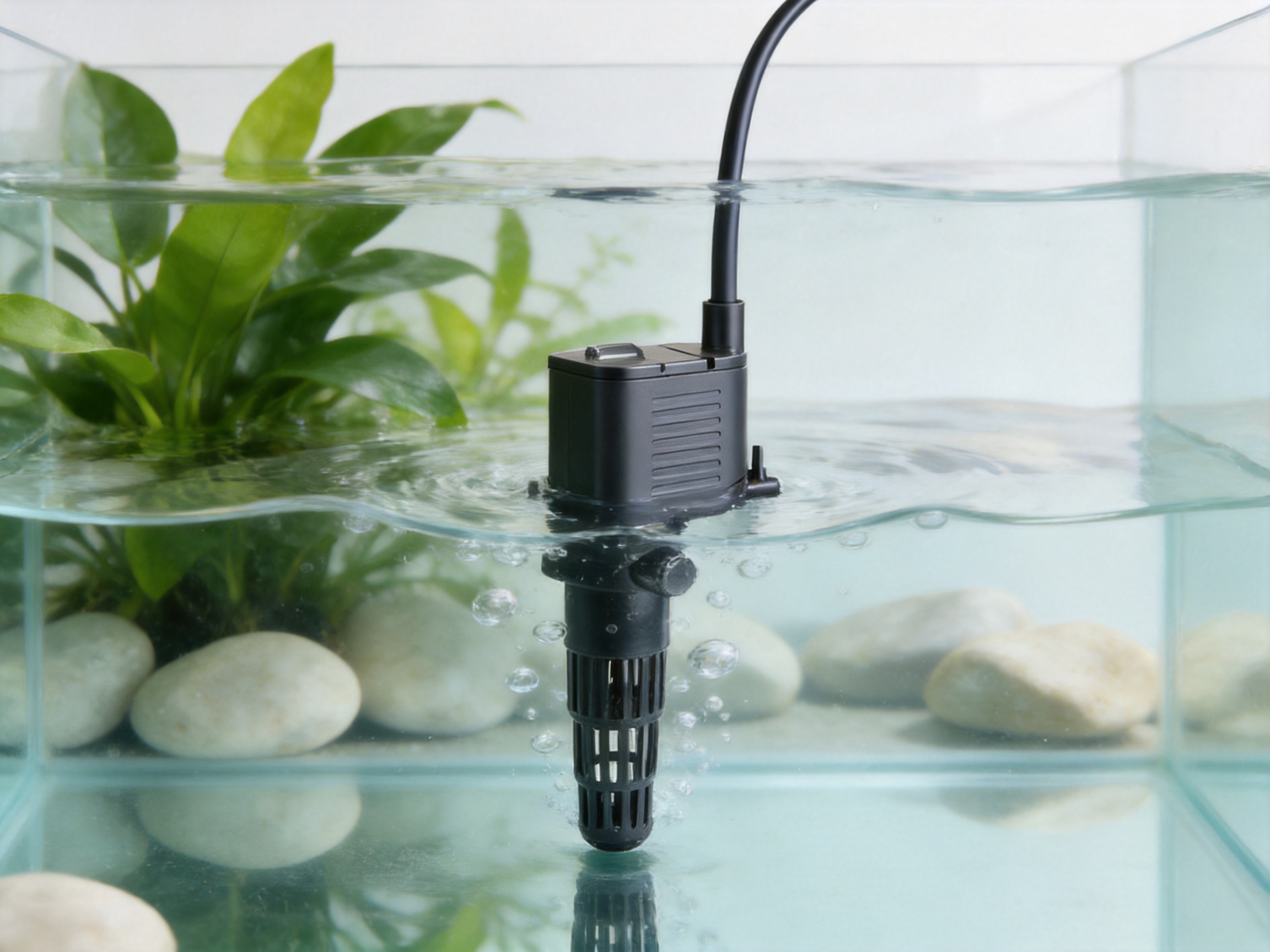
The HOJ Series offers several advantages compared with many generic submersible pumps in the same category. The first advantage is the breadth of model coverage. A product line that includes multiple flow outputs allows buyers to create a complete product assortment from small to medium circulation needs. Retailers can serve different customers without switching between unrelated pump families, while project buyers can standardize procurement and maintenance around a consistent series.
The second advantage is the balance of performance and compact design. Some competing pumps achieve flow output by increasing body size significantly, which can be inconvenient in smaller aquariums or decorative basins. The HOJ Series includes compact models such as the HQJ-500G, HQJ-700G, and HQJ-900G, which provide practical outputs while maintaining manageable dimensions. This makes it easier to hide the pump behind aquascaping materials, inside compartments, or within limited fountain reservoirs.
The third advantage is international electrical compatibility. A pump series available in 110V, 220V, and 240V versions with 50Hz and 60Hz support can be adapted for multiple markets. Competitors with limited voltage options may require separate product lines or restrict distribution. For export partners, this broader compatibility can simplify catalog planning and improve market responsiveness.
The fourth advantage is the suitability for both aquarium and garden-related applications. Many low-cost pumps are marketed only for basic aquarium use and may not be positioned for fountains, plant walls, or decorative circulation systems. This series connects aquarium equipment, garden equipment, pet products, and water pump categories, giving it wider commercial value. For distributors, this means the same pump family can appear in different sales channels.
The fifth advantage is manufacturing background. Sensen Group Co., Ltd. has long-term experience across aquarium pets, aquaculture machinery, and industrial equipment. This broad industrial base supports product development with knowledge from multiple water-handling applications. A company that understands both household aquarium needs and larger water equipment principles can design pumps with better practicality, durability, and market suitability.
Energy consumption is a significant factor for submersible pumps because many operate continuously. A pump that runs twenty-four hours a day must be efficient enough to control long-term operating cost. The HOJ Series offers models with power ratings from 2.5W to 20W, allowing users to select a pump that matches the required workload rather than using unnecessary power.
The HQJ-500G, with 2.5W power, is especially useful where gentle movement and very low electricity consumption are priorities. It can provide basic circulation without creating excessive current or using unnecessary energy. The 8W models, including HQJ-700G and HQJ-700, offer a middle level for small to moderate systems. The 12W models provide higher movement, while the 20W models support stronger output and greater head height.
Compared with poorly matched pumps, appropriate model selection can improve efficiency dramatically. For example, using a 1600L/h pump in a very small tank may create too much current and waste energy. Using a 350L/h pump in a larger system may force the pump to operate beyond the practical needs of the setup and may fail to provide adequate circulation. The variety of the HOJ Series helps avoid both problems.
Energy efficiency is also connected to system design. A smooth hose path, suitable hose diameter, clean intake area, and proper placement can help the pump operate closer to expected performance. When a pump is installed with excessive bends, clogged intake areas, or mismatched tubing, actual flow may decrease. The HOJ Series gives users a reliable foundation, while good installation practice helps maximize the result.
Space is a valuable resource in aquariums and decorative water systems. A bulky pump can disturb the aquascape, reduce swimming room, or become visually distracting. The HOJ Series offers compact body dimensions across several models, making installation easier in limited spaces. For example, the HQJ-500G measures 60×40×90mm, and the HQJ-700G measures 72×45×84mm, providing practical options for discreet placement.
Compact dimensions also improve maintenance convenience. A smaller pump is easier to remove for cleaning, inspect for debris, and reposition after tank layout changes. In aquarium retail stores, where staff may manage many tanks, easy handling can save time. In home aquariums, compact construction reduces the difficulty of routine care and helps users keep the system clean.
The larger models still maintain practical dimensions for their output levels. The HQJ-1600B, with 1600L/h output, measures 105×57×100mm. This is useful when stronger circulation is needed but available space remains limited. The design allows users to achieve meaningful water movement without installing an oversized device.
For decorative fountains and water features, a compact pump can be hidden more easily in a basin or reservoir. A hidden pump improves appearance, allowing the water effect rather than the equipment to remain the visual focus. This is important for indoor decoration, garden displays, office water features, and retail presentation systems.
Flow output and maximum head height are two of the most important specifications for submersible pumps. Flow output indicates how much water the pump can move per hour under suitable conditions. Maximum head height indicates the highest vertical lifting capability under ideal conditions. A user should consider both values before choosing a model, because a pump with sufficient output but insufficient head height may not perform correctly in a raised fountain or elevated filter path.
The HOJ Series includes maximum head ratings from 0.6m to 1.4m. The HQJ-500G is appropriate for low-lift applications with a 0.6m head, while HQJ-1600B and HQJ-1200G offer 1.4m head for more demanding layouts. The HQJ-1000B, HQJ-900G, and HQJ-900 provide 1.2m head, which is suitable for many common aquarium and fountain configurations.
When selecting a pump, users should remember that actual flow decreases as lifting height increases. A pump rated at 1000L/h at low resistance will not deliver the same flow at the top of its maximum head range. Therefore, it is best to choose a model with some performance margin. This is not a weakness of the product; it is a normal principle of pump operation. Understanding this principle helps users choose the right model and achieve better satisfaction.
The series gives buyers a structured choice. For gentle low-lift movement, the HQJ-500G or HQJ-700G may be appropriate. For stronger aquarium circulation, the HQJ-900G, HQJ-1000B, or HQJ-1200G may be better. For the highest output in the listed range, the HQJ-1600B is the strongest option. This tiered selection makes the product easier to recommend and sell.
Submersible pumps are expected to operate under demanding conditions. They remain underwater, handle continuous rotation, and may encounter fine particles, plant debris, fish waste, or mineral deposits. Reliable design is therefore essential. A practical pump must be stable, safe, and easy to maintain. The HOJ Series is positioned as a dependable option for continuous circulation and regular aquatic use.
Reliable operation begins with suitable material selection and controlled assembly. The pump body must resist water exposure, maintain structural integrity, and protect internal electrical components. The impeller and motor system must work together smoothly to reduce vibration and noise. The sealing structure must support safe underwater use. These design priorities are central to the value of a submersible pump.
Maintenance also supports reliability. Users should periodically remove debris from the intake area, clean the impeller chamber, and ensure that tubing remains unobstructed. A well-maintained pump can deliver more consistent flow and a longer service life. The compact structure of the HOJ Series supports this maintenance by making the unit easier to access and handle.
For retailers and distributors, reliability reduces after-sales pressure. Pumps are commonly used products in aquarium and garden equipment markets, and customers expect stable performance. A product line supported by an experienced manufacturer can help improve customer confidence, repeat purchasing, and brand loyalty in the sales channel.
Aquariums and indoor water features are often placed in living rooms, bedrooms, offices, restaurants, hotels, and reception areas. In these environments, pump noise matters. Excessive vibration or mechanical sound can disturb people and reduce the relaxing effect of water movement. A well-designed submersible pump should provide circulation without becoming the center of attention.
The HOJ Series is designed for practical aquatic environments where stable and unobtrusive operation is important. Correct installation helps maintain quiet performance. The pump should be fully submerged, positioned securely, and kept away from surfaces that may amplify vibration. The intake should remain free of debris, and the impeller chamber should be cleaned if sound increases over time.
Compared with some low-quality competing pumps, a properly manufactured pump with balanced internal components can deliver smoother operation. This is particularly important in small aquariums, where the pump is close to the viewer, and in indoor fountains, where sound quality affects the entire user experience. Quiet operation adds real value beyond the basic flow specification.
For commercial users, quiet performance supports better presentation. A retail aquarium display, office plant wall, or decorative lobby fountain should create a calm environment. If equipment noise distracts from the display, the project loses appeal. A dependable, quiet submersible pump is therefore a key part of the overall customer experience.
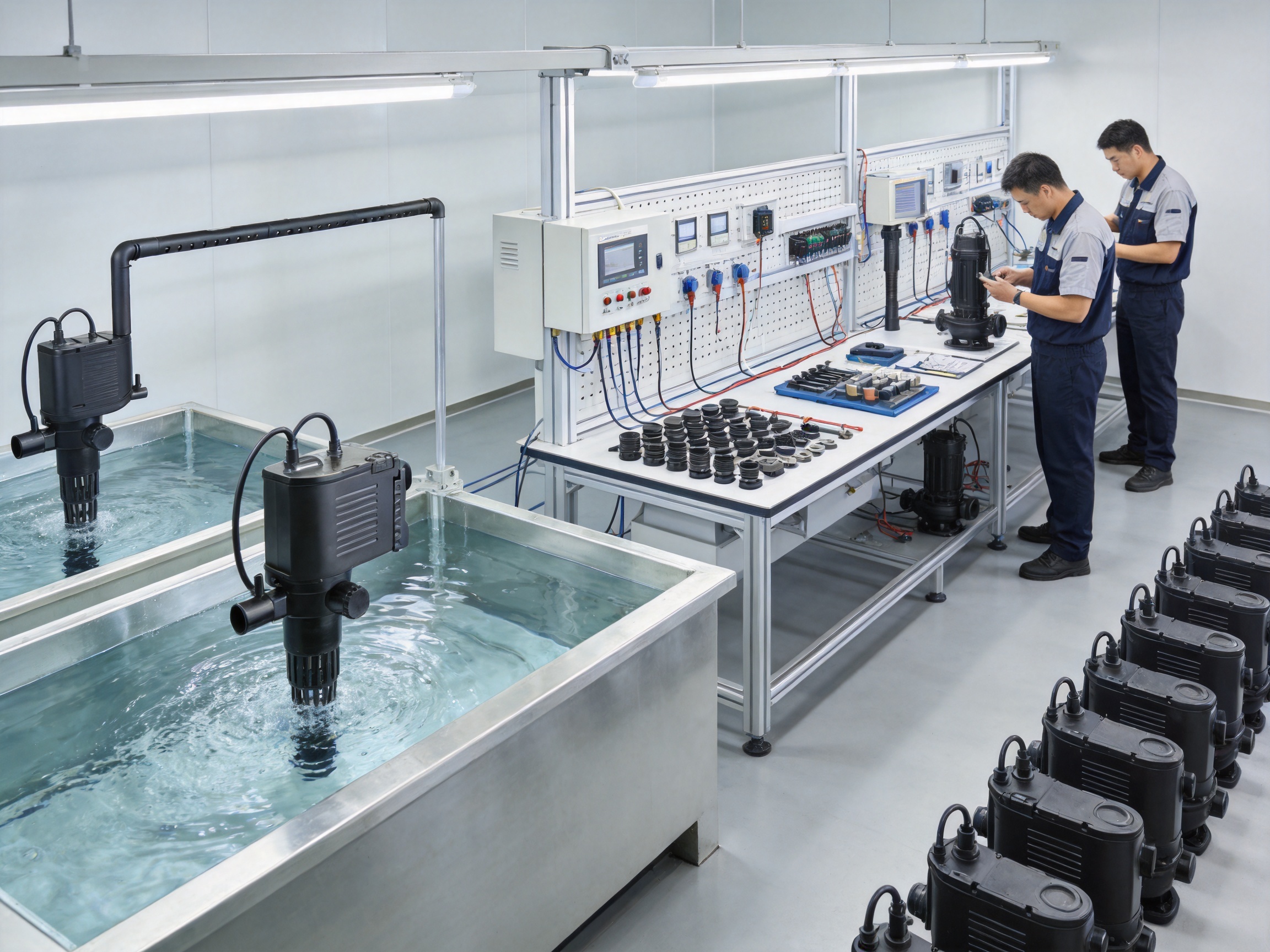
Sensen Group Co., Ltd. was established in November 1985 and has developed through more than thirty years of continuous effort. The company has expanded across aquarium pets, aquaculture machinery, industrial equipment, and related fields. This long history provides a strong foundation for designing and producing water-related equipment such as the HOJ Series Multi-Function Submersible Pump.
The company’s manufacturing strength is supported by an organizational structure that includes research, education, quality control, personnel management, administrative information, and financial management. The presence of a research institute indicates an emphasis on product development and technical improvement. A dedicated quality control department supports production consistency, inspection standards, and defect prevention. These internal systems are important for manufacturing stable pump products at scale.
Advanced manufacturing is not only about equipment; it is also about process discipline. A submersible pump requires controlled production steps, including component molding, motor assembly, sealing, impeller fitting, electrical testing, flow testing, and appearance inspection. Each step affects final performance. If the impeller is imbalanced, the pump may vibrate. If sealing is inconsistent, underwater safety may be compromised. If electrical testing is insufficient, market reliability may suffer.
With experience in aquarium and aquaculture industries, the company understands the practical use conditions of water pumps. Aquarium users need low noise and compact size, while aquaculture and industrial users emphasize durability and continuous operation. Knowledge from these different sectors can influence better product design. This cross-industry experience is a meaningful advantage compared with manufacturers that only produce simple consumer pumps.
Quality control is essential for submersible pumps because the product combines electricity, water, rotating mechanical parts, and continuous operation. A strong quality system must check not only the finished product but also materials, components, assembly accuracy, and packaging. Effective inspection reduces the risk of inconsistent output, leakage issues, abnormal noise, or premature failure.
For the HOJ Series, the listed specifications show that the series is organized with clear model differentiation. Maintaining these specifications in mass production requires disciplined control. Each model must match its intended power rating, output range, head height, cable length, body dimensions, and accessory configuration. Inconsistent specifications can cause customer complaints, so standardized production and inspection are vital.
Quality control also supports international business. Pumps shipped to different markets must meet customer expectations for stable performance and safe operation. Export buyers often require consistent batches, accurate labeling, reliable packaging, and predictable documentation. A company with mature manufacturing management is better positioned to serve these requirements than a small workshop-style producer.
Another aspect of quality is long-term product usability. Good quality does not only mean the pump works when first tested; it means the pump remains useful after repeated operation, cleaning, installation, and daily use. Durable plastic parts, stable electrical performance, precise impeller movement, and dependable cable connection all contribute to long-term satisfaction.
Product innovation in the aquarium and water pump industry often comes from small but meaningful improvements. Users value easier installation, better energy efficiency, reduced noise, compact structure, improved compatibility, and stronger reliability. The HOJ Series reflects this practical innovation by offering multiple models and a wide application range rather than forcing customers into a one-size-fits-all solution.
The company’s research capability supports ongoing improvement in pump design. A research institute can study user needs, analyze flow performance, test materials, refine impeller structures, and evaluate safety requirements. These activities help transform market feedback into better products. When a manufacturer continuously improves product details, distributors and end users benefit from more stable and competitive equipment.
Innovation also appears in market strategy. The company has built a sales network system and has developed both online and offline approaches. This means product improvement can be informed by many customer touchpoints, including retail stores, distributors, service teams, and digital platforms. A manufacturer that receives broad market feedback can identify common user problems more quickly and adjust products accordingly.
In the case of submersible pumps, user feedback may include requests for quieter operation, improved suction stability, easier cleaning, better hose connection, compact shape, or lower power consumption. A strong manufacturer can evaluate these needs systematically rather than reacting casually. This capability strengthens the long-term competitiveness of the HOJ Series.
A product can be well designed but still fail in the market if supply is unstable. Aquarium equipment distributors, pet product wholesalers, and garden equipment suppliers need consistent availability, especially for frequently used items such as pumps. The company’s large production and marketing scale helps support stable supply for domestic and international markets.
The organization includes multiple wholly owned subsidiaries and an import and export company, along with important holdings in several trading companies. This structure provides strong market reach and supply coordination. For overseas buyers, working with a manufacturer that understands export processes can reduce communication difficulty, improve order planning, and support long-term cooperation.
Production scale can also support cost competitiveness. When a manufacturer produces water pumps and related aquarium equipment at significant volume, it can optimize procurement, tooling, assembly processes, and packaging. These efficiencies can help provide competitive pricing while maintaining quality standards. This is one reason the HOJ Series can compete effectively against generic pump products.
However, scale alone is not enough. The real advantage comes when scale is combined with technical management and quality control. Large output without inspection can lead to inconsistent products. Technical strength without production capacity can lead to slow delivery. The company’s combination of manufacturing experience, organizational support, and market network creates a stronger foundation for reliable pump supply.
Small aquariums require careful water movement. Too little circulation can allow waste to accumulate, while too much flow can disturb fish, shrimp, or delicate plants. Compact models such as HQJ-500G and HQJ-700G are suitable for these environments because they provide moderate movement with manageable power consumption and small dimensions. Their compact size helps maintain the appearance and usable space of the aquarium.
For small tanks, the pump can be positioned to create gentle circulation behind rocks, driftwood, or plants. This reduces stagnant areas and helps move fine particles toward filtration. If used with tubing, the hose adapter specification should be matched carefully to avoid unnecessary resistance. Users should also ensure that the intake does not trap small livestock, especially in shrimp or fry tanks; a suitable intake guard or sponge may be considered depending on the setup.
The low-power model is especially valuable for users who run multiple small tanks. In breeding rooms, retail stores, or hobby collections, electricity consumption adds up quickly. Choosing efficient pumps for each tank can reduce total operating cost. The HOJ Series allows these users to select pumps based on real needs rather than relying on oversized equipment.
Small aquarium users also appreciate easy maintenance. A pump that can be removed, rinsed, and reinstalled without difficulty encourages proper care. Clean circulation equipment supports better water quality and reduces the chance of reduced flow caused by debris. The compact design of the series supports this user-friendly maintenance pattern.
Medium aquariums often need stronger circulation because water volume is greater, decorations are larger, and filtration systems may require additional support. Models such as HQJ-900G, HQJ-1000B, HQJ-1200G, HQJ-900, and HQJ-1600B can serve these needs depending on tank volume, livestock, and layout. Their outputs range from 900L/h to 1600L/h, covering many common circulation requirements.
In a medium fish tank, water movement supports oxygenation, temperature balance, and waste transport. Larger fish or active species may benefit from stronger current, while planted layouts may require strategic placement to avoid uprooting plants or disturbing substrate. The pump should be installed in a way that produces broad circulation rather than a harsh direct jet. Accessories, tubing, or outlet positioning can help adjust the flow pattern.
The models with higher head height are useful when water must be lifted through tubing or into a filter chamber. The 1.2m and 1.4m head specifications provide flexibility for common setups. Still, users should account for flow reduction caused by height and tubing resistance. Selecting a model with suitable performance margin is recommended for stable results.
Medium aquarium owners often seek a balance between strong circulation and quiet operation. A pump that is powerful but noisy may not be acceptable in a home or office. The HOJ Series is positioned to provide dependable water movement in practical dimensions, helping users maintain aquarium performance without compromising comfort.
Decorative fountains require pumps that can lift water reliably and produce a consistent visual effect. The flow should be strong enough to maintain the fountain pattern but not so strong that water splashes outside the basin. The HOJ Series provides several choices for fountain designers and garden equipment users, from gentle tabletop displays to more active indoor or small outdoor features.
For small fountains, models with lower output can provide a calm water effect and reduce noise. For taller fountain structures or wider water movement, models with higher head height and output may be more appropriate. The HQJ-1600B and HQJ-1200G, both with 1.4m maximum head, are useful options when the installation requires greater lifting capability.
Garden and decorative users should consider environmental conditions. The pump should be placed in clean water, protected from excessive debris, and maintained regularly. Leaves, algae, and mineral deposits can affect performance if not removed. Proper reservoir design, filtration screens, and maintenance schedules help the pump operate efficiently.
In commercial decoration, reliability is especially important. A fountain in a hotel, office, restaurant, or retail space may operate for long hours. If the pump fails, the visual display stops immediately. Choosing a product from a manufacturer with strong quality control and water equipment experience helps reduce this risk and supports more dependable project operation.
Plant walls and vertical water displays depend on controlled circulation. Water must move upward and distribute evenly across planting zones or decorative surfaces. The pump must provide enough head height while maintaining stable flow. Because these systems can vary widely in size, having multiple pump options is beneficial. The HOJ Series gives installers several outputs and head ratings to choose from.
For a small plant wall, a compact pump may be sufficient if the vertical lift is modest and the water distribution line is short. For a taller display, a stronger model such as HQJ-1200G or HQJ-1600B may be required. Installers should calculate vertical lift, tubing length, and the number of distribution outlets before selecting a pump. This ensures that water reaches the required height and spreads properly.
Plant wall systems also need easy maintenance because roots, organic particles, and nutrient deposits can collect in the circulation path. A pump that is easy to access and clean helps maintain stable operation. The compact design of the HOJ Series supports easier service in tight reservoirs or hidden compartments.
When used in plant walls or similar displays, the pump contributes to both plant health and visual appeal. Uneven circulation can cause dry areas, overwatered sections, or inconsistent appearance. Stable pump performance helps maintain a balanced system, especially when combined with proper distribution design and regular inspection.
Choosing the correct model begins with identifying the application. A small aquarium, medium aquarium, tabletop fountain, decorative basin, and plant wall each have different flow and head requirements. Users should avoid selecting only by maximum output. Instead, they should consider water volume, desired current strength, vertical lift, tubing diameter, livestock sensitivity, and maintenance access.
For low-flow applications and small spaces, the HQJ-500G offers 350L/h output with only 2.5W power. It is a practical choice when compact size and energy savings are priorities. The HQJ-700G, with 500L/h output, and the HQJ-700, with 700L/h output, provide moderate circulation. These models are useful for small to modest systems that need more movement than the smallest option.
For stronger circulation, the HQJ-900G and HQJ-900 provide 900L/h output with 12W power and 1.2m maximum head. The HQJ-1000B offers 1000L/h output with similar power and head height. These are appropriate for many medium aquarium and fountain applications. For higher flow, the HQJ-1200G provides 1200L/h with 1.4m head, and the HQJ-1600B provides 1600L/h with 1.4m head.
Users should also consider hose adapter compatibility. If tubing is required, the adapter size should match the planned hose as closely as possible. A mismatch can lead to leaks, reduced flow, or inconvenient installation. Models with 16mm, 18mm, and 20mm hose adapter options provide useful choices for different setups.
Proper installation helps the pump perform efficiently and safely. The pump should be fully submerged before operation, and the water level should remain high enough to prevent dry running. Dry running can damage the pump and reduce service life. Users should place the pump on a stable surface or secure it according to the installation structure to reduce vibration and movement.
The intake area should remain open and unobstructed. If gravel, leaves, plant fragments, or fish waste block the intake, flow will decrease and the pump may work harder than intended. In aquariums with small animals, users should consider protective measures to prevent livestock from approaching the intake too closely. Regular inspection is recommended.
When tubing is connected, it should be routed with gentle curves rather than sharp bends. Sharp bends increase resistance and reduce flow. The tubing should be cut to a practical length; unnecessary length can reduce performance. The outlet should be positioned to create useful circulation without disturbing livestock, substrate, or decorative elements.
Electrical safety is also important. The cable should be arranged so that water cannot run along it toward an electrical outlet. A drip loop is commonly recommended in aquarium practice. The pump should be connected to a suitable power supply matching the model’s voltage. Users should follow local electrical safety requirements and avoid operating damaged equipment.
Routine maintenance is one of the easiest ways to extend pump service life. Over time, debris, algae, biofilm, mineral deposits, or fine particles may accumulate around the intake and impeller. Cleaning these areas helps maintain flow and reduce noise. The frequency of cleaning depends on the environment. A clean aquarium may require less frequent service, while a garden fountain exposed to leaves may need more regular attention.
Users should disconnect power before removing or cleaning the pump. The pump body can be opened according to its structure, and the impeller chamber should be rinsed carefully. Abrasive tools should be avoided if they may damage components. After cleaning, the pump should be reassembled correctly and fully submerged before power is restored.
Maintenance also includes checking tubing and fittings. A partially blocked hose can reduce flow even if the pump itself is clean. Mineral scale can build up in fountain systems, especially in hard water areas. Periodic inspection of the entire circulation path helps ensure the pump is not blamed for problems caused by external restrictions.
Good maintenance benefits both performance and customer satisfaction. A pump that is cleaned regularly can operate more quietly, move water more effectively, and last longer. Retailers and installers can improve user experience by educating customers about these simple care practices at the time of purchase.
The HOJ Series has strong commercial value because it addresses several active product categories: aquarium equipment, water pumps, garden equipment, pet products, and aquarium accessories. Retailers can position the series for fish tank circulation, filter support, fountain creation, and general water movement. This multi-category relevance can improve inventory turnover and sales flexibility.
For distributors, a series with multiple models creates a complete offering. Instead of stocking unrelated pumps from different suppliers, buyers can carry a structured range from low-output to higher-output models. This makes product training easier for sales teams and simplifies customer recommendations. It also helps create a consistent shelf display or catalog section.
The manufacturer’s long-term industry experience adds confidence for business buyers. Sensen Group Co., Ltd. has developed a broad production and marketing network and has experience serving domestic and foreign markets. For importers and wholesalers, this background supports cooperation in product supply, quality expectations, and market development.
Another commercial advantage is the wide voltage and frequency compatibility. International buyers often need products suitable for different regions. A pump series that supports 110V, 220V, and 240V with 50Hz and 60Hz options is easier to adapt to global distribution plans. This flexibility can reduce sourcing complexity and support more efficient market expansion.
Water pump manufacturing may appear simple from the outside, but dependable production requires technical understanding. A pump must integrate motor performance, impeller geometry, waterproof structure, cable connection, plastic housing, and user-friendly assembly. Minor errors can affect flow, noise, sealing, or reliability. This is why manufacturing experience matters greatly.
A company with decades of experience in aquarium and water-related industries can better understand real operating conditions. Aquariums may contain sand, plant matter, and organic waste. Fountains may face mineral deposits and outdoor debris. Plant walls may include nutrient solutions and root particles. Designing for these realities requires practical knowledge, not only theoretical engineering.
Manufacturing experience also improves problem-solving. If a batch shows abnormal noise, flow variation, or assembly difficulty, an experienced manufacturer can identify root causes and correct them. This reduces the chance of repeated defects and improves long-term product stability. Buyers benefit from fewer complaints and more predictable performance.
In competitive markets, many pumps may look similar at first glance. The difference becomes clear after weeks or months of operation. Pumps from experienced manufacturers are more likely to maintain stable performance, resist premature issues, and provide better value over time. This long-term reliability is a meaningful advantage for the HOJ Series.
Efficient water movement supports healthier aquatic environments. In aquariums, stable circulation helps oxygen exchange and biological filtration. In decorative systems, consistent flow can reduce stagnant water and improve cleanliness. By offering models with appropriate power levels, the HOJ Series encourages users to select equipment that meets needs without excessive energy consumption.
User-oriented design also means providing manageable sizes and practical installation options. A pump that is difficult to place, noisy, or inconvenient to clean may discourage proper system care. The compact model range and clear specifications help users make informed decisions. This improves the overall ownership experience.
For environmentally conscious users, the ability to choose a lower-power model when appropriate is valuable. Continuous electrical devices should be selected responsibly. The 2.5W, 8W, 12W, and 20W options allow users to balance performance and consumption. The best environmental choice is not always the smallest pump; it is the correctly matched pump that performs efficiently in the intended system.
Durability also contributes to responsible consumption. A pump with longer service life reduces replacement frequency and waste. Manufacturing quality, proper maintenance, and correct sizing all help extend useful life. The HOJ Series provides a product foundation that can support efficient and responsible water circulation when used correctly.
It is used for underwater water circulation in aquariums, fish tanks, decorative fountains, plant walls, garden water features, filtration support systems, and small water transfer applications. Its multi-model design makes it suitable for both gentle and stronger circulation requirements.
For small aquariums, the HQJ-500G, HQJ-700G, or HQJ-700 may be suitable depending on the tank size and desired current. The HQJ-500G is the lowest-power option with 350L/h output, while the 700-level models provide stronger movement for slightly larger or more active systems.
The HQJ-1600B provides the highest listed output at 1600L/h. It also has a maximum head height of 1.4m, making it suitable for stronger circulation and applications requiring higher lifting capability.
Yes, the series can be used for small decorative fountains and water features when the selected model matches the required flow and lifting height. Users should consider fountain height, tubing length, and desired water effect before choosing a model.
Different hose adapter sizes help match different tubing requirements. Models with 16mm, 18mm, or 20mm adapters can be selected according to the planned installation. Correct hose matching improves flow efficiency and reduces the chance of leakage or connection problems.
The pump should be disconnected from power before cleaning. Users should remove debris from the intake, rinse the impeller chamber, check tubing for blockage, and reinstall the pump fully submerged. Regular cleaning helps maintain output, reduce noise, and extend service life.
Yes. The series supports 110V, 220V, and 240V options with 50Hz and 60Hz compatibility. This makes it easier for distributors and importers to serve different regional markets and simplifies product planning for international sales.
The series offers broad model coverage, compact design, practical flow choices, international electrical compatibility, and support from an experienced manufacturer with long-term involvement in aquarium, aquaculture, and water equipment industries. These advantages help it compete beyond basic price comparisons.
The HOJ Series Multi-Function Submersible Pump is a practical and versatile solution for aquatic circulation. With models covering outputs from 350L/h to 1600L/h, power ratings from 2.5W to 20W, and maximum head heights up to 1.4m, the series provides options for small aquariums, medium fish tanks, fountains, plant walls, and decorative water systems. Its compact dimensions, useful hose adapter choices, and international voltage compatibility increase its value for both end users and business buyers.
The product’s advantages are strengthened by the manufacturing background of Sensen Group Co., Ltd. Established in 1985, the company has developed broad capabilities in aquarium pets, aquaculture machinery, industrial equipment, and related product fields. Its research, quality control, production scale, and market network support the consistent development and supply of reliable water equipment. This manufacturing foundation gives the HOJ Series a competitive position in the aquarium and garden equipment markets.
For users, the key to success is choosing the correct model, installing it properly, and maintaining it regularly. For retailers and distributors, the key value lies in the series’ broad application range, structured model selection, and dependable production support. In a competitive market filled with basic pumps, a well-developed multi-function submersible pump series can stand out by combining performance, practicality, and manufacturing strength.
1. Aquarium Systems Engineering Handbook, sections on water circulation, filtration support, and pump selection principles.
2. Practical Guide to Freshwater Aquarium Maintenance, chapters on oxygen exchange, flow planning, and equipment cleaning.
3. Submersible Pump Design and Application Manual, sections on head height, flow rate, impeller performance, and underwater motor safety.
4. Decorative Water Feature Installation Guide, chapters on fountain pump sizing, tubing resistance, reservoir design, and maintenance planning.
5. Aquaculture Equipment Manufacturing and Quality Control Review, sections on production inspection, reliability testing, and water equipment durability.


 No. 61-79, Baima Street, Maao Town, Dinghai District, Zhoushan City, Zhejiang Province, China.
 0086 580 8082088 / 8081168
 0086 580 8080978
 songhua@sunsun-china.com