

 English
 русский
 España
 Portugal
 عربي
عربيLi Mei | Aquarium Equipment Sales Specialist
Home / Author / Li Mei | Aquarium Equipment Sales Specialist / Intelligent Aquarium Feeder for Reliable Automated Feeding
Modern aquarium keeping depends on consistency. Fish may tolerate small changes in daily routine, but repeated feeding delays, irregular portions, or overfeeding can quickly affect water quality and animal health. The ZK Series Aquarium Intelligent Feeder is designed to solve this common problem by giving aquarium owners a compact, reliable, and easy-to-use automatic feeding solution for home aquariums, office tanks, display aquariums, and managed aquatic spaces. With two model options, a practical 12/24-hour feeding system, smart scheduling functions, battery operation, optional 5V power input on the smart version, and WiFi control for Apple and Android users, the feeder provides a flexible answer to one of the most important daily tasks in fish care.
ZK Series Aquarium Intelligent Feeder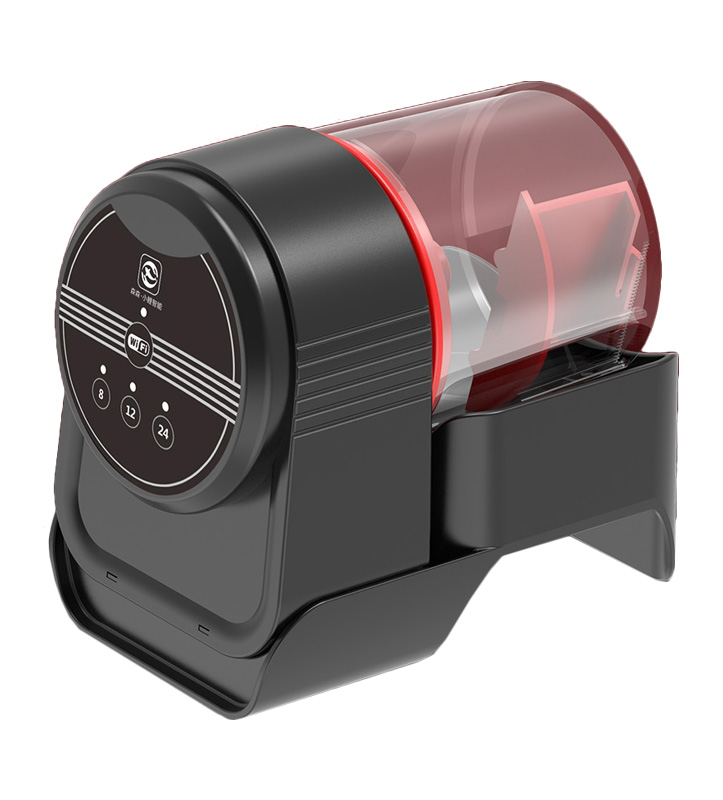
Content
The ZK Series Aquarium Intelligent Feeder is an automatic aquarium feeding device developed for users who want dependable fish feeding without relying entirely on manual routines. The series includes ZK-11, a simple battery model, and ZK-13, a smart model with enhanced timing options and mobile control. Both models share a compact body size of 130 × 90 × 120 mm, making them suitable for many aquarium layouts where space is limited but feeding reliability is essential.
The product is positioned as a practical aquarium accessory for daily feeding management. It supports regular feeding intervals, helps reduce missed feeding events, and can support more stable aquarium management when the user is away from home, at work, traveling, or caring for multiple tanks. Unlike purely manual feeding, an intelligent feeder can deliver food according to a planned cycle, which is especially useful for fish species that benefit from small and regular meals.
The ZK-11 model is designed for straightforward operation. Powered by two No. 5 batteries, it provides 12-hour and 24-hour system feeding modes. This model is ideal for users who want a simple automatic feeder without WiFi configuration or mobile application control. It is convenient for general household use, beginners, and aquariums where feeding requirements are stable and predictable.
The ZK-13 smart model adds broader timing capability and intelligent control. It supports 8-hour, 12-hour, and 24-hour feeding modes, as well as smart operation. It can be powered by two No. 5 batteries or by 5V-1A input, giving users greater flexibility in power supply. Its WiFi control supports Apple and Android devices, making it a more advanced choice for aquarists who want remote control, programmable feeding, and a more connected aquarium care experience.
Model |
Input Voltage |
Feeding Mode |
WiFi Control |
Dimensions L × W × H |
ZK-11 Simple Battery |
No. 5 battery × 2 |
12/24-hour system |
Not supported |
130 × 90 × 120 mm |
ZK-13 Smart Model |
No. 5 battery × 2 or 5V-1A |
8/12/24-hour system and smart mode |
Apple and Android |
130 × 90 × 120 mm |
Feeding is one of the simplest-looking tasks in aquarium keeping, yet it is also one of the most influential. The amount, timing, and frequency of feeding directly affect fish growth, digestion, activity, waste output, and water clarity. In many aquariums, problems do not begin with poor equipment or difficult fish species; they begin with inconsistent feeding habits. A person may feed too much before leaving home, forget a scheduled feeding, or ask another person to feed the fish without knowing the correct portion. These ordinary situations can create unstable conditions in the tank.
The ZK Series Aquarium Intelligent Feeder helps solve this issue by turning feeding into a scheduled and repeatable process. When used correctly, the feeder can reduce accidental overfeeding because food is dispensed according to the selected timing system instead of emotional judgment. It can also reduce underfeeding when the owner is busy. The result is a more controlled aquarium routine, which supports better water quality management and improved fish care.
In a competitive aquarium accessory market, many feeders offer only basic timer functions, limited installation flexibility, or inconsistent user experiences. The ZK Series stands out because it offers both a simple model and a smart model within the same product family. This allows different users to select the right level of control without paying for functions they do not need. A beginner may prefer the ZK-11, while a more advanced hobbyist or a frequent traveler may prefer the ZK-13 with smart control.
One of the key advantages of the ZK Series is its clear model differentiation. Many competing feeders attempt to serve all users through one design, which may become either too simple for advanced users or too complicated for beginners. The ZK-11 and ZK-13 approach solves this by separating essential automatic feeding from smart connected feeding. This makes the product range easier to understand and easier to recommend.
The ZK-11 is suitable for users who want dependable automatic feeding without mobile control. It is battery powered and focuses on the practical 12/24-hour feeding cycle. This makes it simple to install and operate. The ZK-13, by contrast, introduces 8/12/24-hour modes and smart operation, with WiFi control for Apple and Android. This makes it more suitable for users who want greater flexibility, especially in aquariums with fish that benefit from multiple feeding intervals throughout the day.
At 130 × 90 × 120 mm, the feeder is compact enough for a wide range of aquarium systems. Space around an aquarium is often limited by lighting fixtures, covers, filters, air tubes, decorative components, or plant growth. A bulky feeder can be inconvenient and may interfere with the daily use of the tank. The ZK Series maintains a functional size while providing automatic feeding capability, helping users add automation without dramatically changing the aquarium layout.
Compact design also supports cleaner visual integration. Many aquarium owners care not only about function but also about appearance. A feeder that is too large or awkwardly shaped can reduce the beauty of the aquarium display. The ZK Series is sized to support daily convenience while remaining suitable for home and office environments where appearance matters.
The ZK-13 offers both battery power and 5V-1A input. This is a practical advantage over feeders that depend on only one power method. Battery operation is convenient because it avoids cable management and allows installation where an outlet is not nearby. External 5V power is useful for users who prefer long-term operation without replacing batteries. By offering both options, the smart model provides stronger adaptability to different aquarium positions and user habits.
Power flexibility can also improve confidence for long absences. When preparing for travel, aquarists often check equipment reliability carefully. A feeder with only one power option may create uncertainty if batteries are weak or if power access is inconvenient. The ZK-13 gives the user more ways to set up a stable feeding plan, which is especially valuable for aquariums that must operate with minimal daily supervision.
WiFi control on the ZK-13 supports Apple and Android users, making it easier to integrate the feeder into modern aquarium care habits. Many aquarists already use smart lighting controllers, water pumps, temperature monitors, or other connected devices. A smart feeder extends this convenience to feeding management. Instead of relying only on physical buttons, users can manage feeding with a more familiar mobile interface.
Compared with traditional automatic feeders, smart control can reduce the inconvenience of adjusting schedules. If a user wants to change feeding timing, check settings, or adapt to a new fish care routine, mobile control is typically more comfortable than repeated button operation on a small device. This advantage is especially important for aquariums installed in offices, shops, educational spaces, or other environments where multiple users may need easier access to settings.
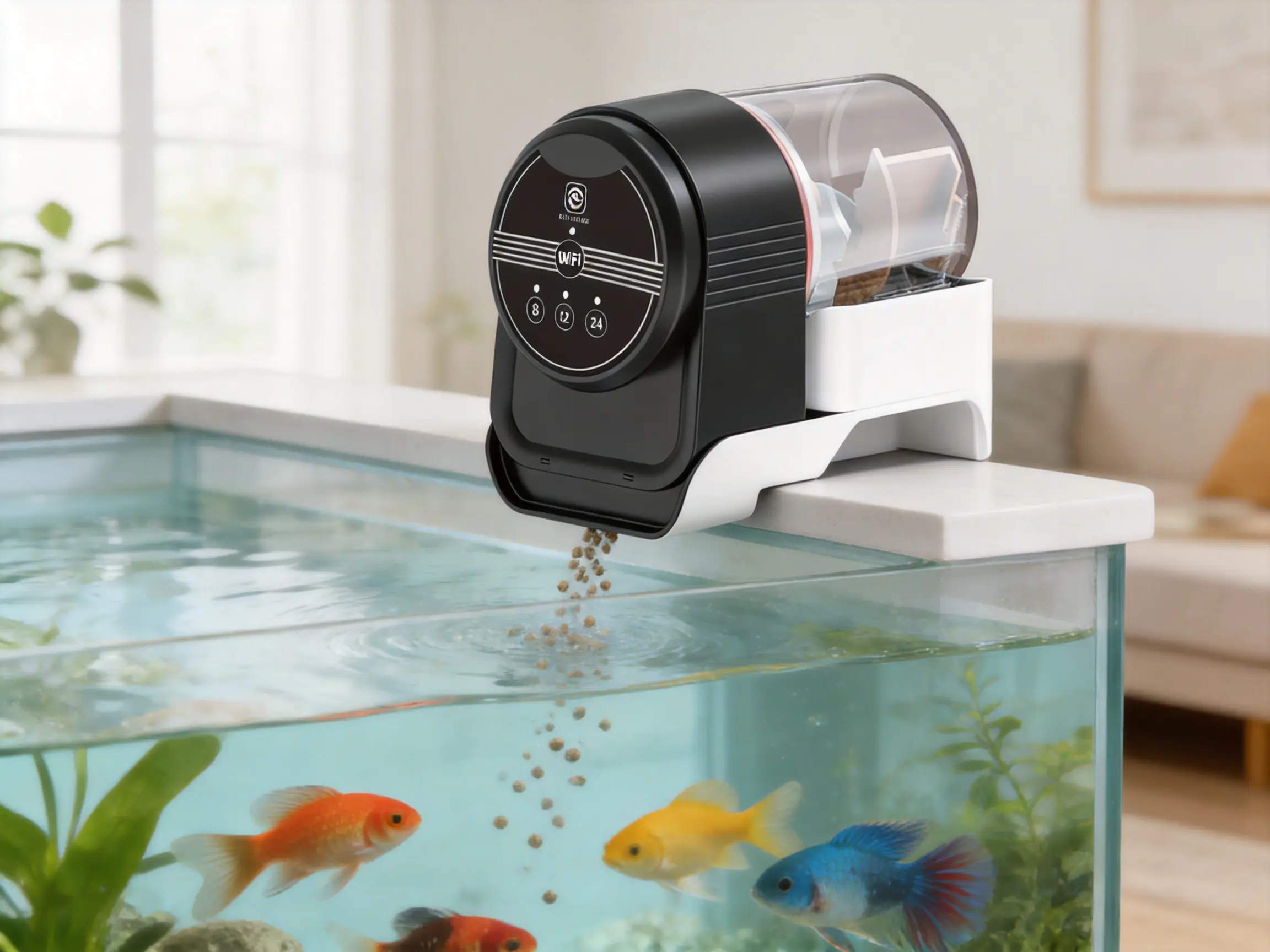
The ZK-11 provides a 12/24-hour feeding system. These two timing options correspond to common daily feeding habits. A 24-hour cycle is suitable for fish that receive one regular feeding per day, while a 12-hour cycle can support two daily feedings. This is a practical setting for many community aquariums, ornamental fish tanks, and small household systems.
The ZK-13 expands this schedule with 8/12/24-hour modes and smart operation. An 8-hour option can support three scheduled feeding points in a day, which may benefit aquariums with smaller fish, active species, or feeding routines where smaller portions are preferred. In aquarium management, smaller repeated feedings can sometimes be easier for fish to consume cleanly than a single large feeding. This can help reduce uneaten food and support better water conditions when the food amount is properly adjusted.
Smart mode adds another layer of convenience. Users who require more customized routines can rely on intelligent control rather than fixed interval operation alone. This makes the ZK-13 appropriate for experienced aquarists, families with changing schedules, or small commercial display tanks where feeding consistency is part of customer-facing presentation. The product can help maintain a stable appearance and routine even when staff are busy.
Healthy aquarium feeding requires balance. Too little food can affect growth, coloration, and behavior. Too much food can cause waste accumulation, cloudy water, oxygen demand, filter load, and unwanted algae growth. The ZK Series supports better balance because it encourages planned feeding. By selecting a suitable timing mode and adjusting food quantity according to the fish population, users can create a more stable care routine.
Automatic feeding is particularly useful for aquariums containing fish that are sensitive to routine changes. Many ornamental fish become accustomed to feeding times. Regular feeding can support natural behavior and reduce stress caused by unpredictability. While an automatic feeder does not replace observation, it does provide a reliable foundation. The aquarist can still monitor fish appetite, water quality, and tank conditions while allowing the device to handle the routine dispensing task.
The product also helps families avoid duplicate feeding. In a home environment, more than one person may feed the fish without realizing someone else has already done so. This common problem often leads to overfeeding. A feeder with a defined schedule reduces confusion. Instead of every family member guessing whether the fish need food, the device handles the normal feeding cycle. Manual feeding can then be reserved for special cases, observation, or occasional treats.
For home aquarium owners, the main value of the ZK Series is peace of mind. Work schedules, travel, school activities, and daily life can interrupt feeding routines. The feeder allows owners to maintain a predictable feeding plan even when they are not in front of the aquarium. This is useful for both small and large household tanks, especially when the aquarium is part of a living room or study where stability and appearance are both important.
Office aquariums often depend on employees who may not have aquarium experience. Feeding can be forgotten during busy days or duplicated when multiple staff members try to help. An automatic feeder creates a clear routine and reduces uncertainty. The ZK-13 smart model is especially suitable for these environments because settings can be managed more conveniently, and the feeder can be incorporated into a broader maintenance plan.
Retail aquatic shops, pet stores, and display areas may operate many tanks at once. Although professional staff still need to monitor feeding closely, automatic feeders can help support routine feeding in selected tanks or during periods of high customer traffic. The compact structure and smart model option make the ZK Series a practical accessory for controlled feeding demonstrations and managed tank systems.
Schools, training centers, and public display aquariums often use fish tanks to teach biology, ecology, responsibility, and environmental awareness. Automatic feeding can support consistent animal care when students or staff are unavailable during weekends or holidays. A reliable feeder helps ensure that aquarium maintenance remains manageable while still allowing learners to observe fish behavior and aquatic ecosystems.
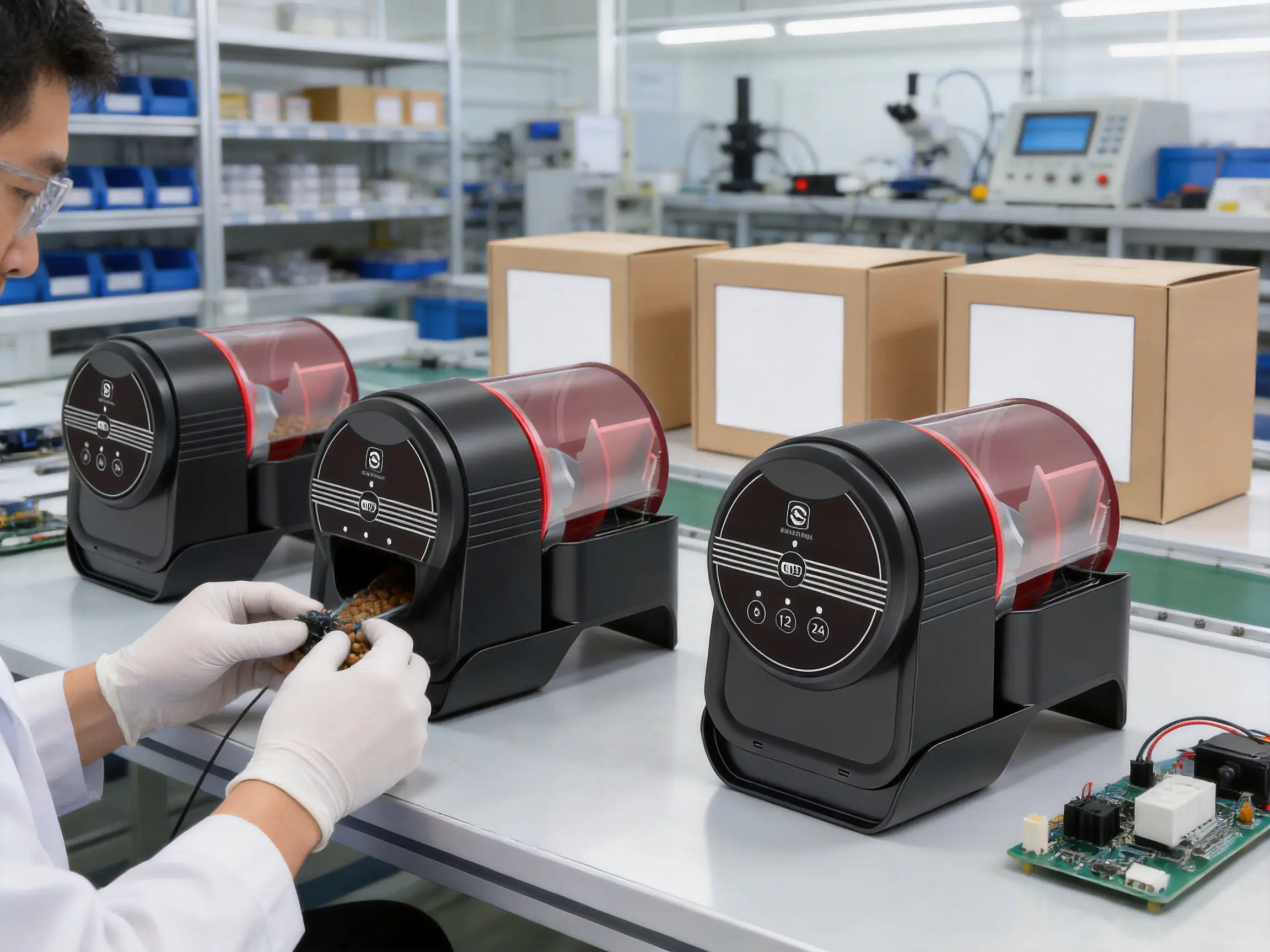
The ZK Series Aquarium Intelligent Feeder benefits from the manufacturing foundation of Sensen Group Co., Ltd., a company established in November 1985 and developed through decades of work in aquarium pets, aquacultural machinery, and industrial equipment. Long-term involvement in these related industries provides important advantages in product design, production organization, component sourcing, testing, and quality control. In aquarium equipment, reliability is not created only by a good concept. It depends on repeated manufacturing discipline and a deep understanding of real user environments.
The company operates with a broad organizational structure that includes research, quality control, personnel and administrative information, finance, business training, and specialized subsidiaries. This type of structure supports systematic product development. For an intelligent feeder, design decisions must consider electronics, mechanical movement, plastic housing, power management, user interface, packaging, and after-sales service. A manufacturer with established departments and production experience can coordinate these factors more effectively than a small workshop with limited process control.
Aquarium accessories also require consistency because they are used near water and often operate for long periods. Even when a feeder does not sit underwater, it must resist humidity, food dust, frequent handling, and environmental variation around the tank. Manufacturing strength helps ensure that housing fit, electrical arrangement, switch feel, timer performance, and assembly accuracy are controlled in production. This is an important difference between a professionally manufactured product and a low-cost copy with uncertain quality.
Product development for an automatic feeder begins with user requirements. The device must be simple enough for beginners, reliable enough for daily use, compact enough for aquarium installation, and flexible enough for different feeding routines. The ZK Series reflects these priorities through its two-model structure, clear feeding mode options, and practical power design. The smart version adds WiFi control without eliminating the value of basic operation.
Integrated development also means that mechanical and electronic teams must work together. Food dispensing depends on accurate rotation or delivery movement, while timing control depends on stable electronics. If the mechanical portion is poorly designed, food may clump, jam, or dispense unevenly. If the electronics are unreliable, feeding may be missed. A mature manufacturer can improve product balance by testing both areas together rather than treating them as separate problems.
The housing of an aquarium feeder must be durable, stable, and suitable for regular use near an aquarium. Good material selection supports product life, while precise molding improves the fit of moving parts, covers, and mounting areas. A compact feeder has limited internal space, so component placement must be carefully planned. The 130 × 90 × 120 mm size suggests a design focused on functional integration, where the outer shell, feeding container, electronic components, and control interface must work together efficiently.
Compared with low-grade feeders that may feel loose or poorly finished, a feeder produced under better manufacturing control can deliver a more stable user experience. Smooth assembly, accurate part alignment, and consistent component dimensions reduce user frustration and support reliable operation. In aquarium products, small mechanical details can make a large difference because the device is expected to operate repeatedly without constant attention.
For the ZK-13 smart model, electronic reliability is particularly important. WiFi control must be designed for stable communication with Apple and Android devices. Power input must support battery operation and 5V-1A connection. Feeding mode selection must remain accurate. These functions require careful electronic design and testing. Manufacturing strength supports this through component inspection, circuit assembly control, and functional checks before shipment.
Smart aquarium devices also need user-friendly configuration. A connected product that is technically advanced but difficult to use will not satisfy most aquarium owners. By focusing on practical smart control, the ZK-13 provides a convenient solution for users who want modern functionality without unnecessary complexity. This is one of its advantages over some competing products that either lack smart control or make smart control too complicated for everyday use.
Quality control for an automatic feeder should include checks for power activation, timing response, feeding movement, smart model connectivity, and general assembly condition. These checks help reduce the risk of early failure. A manufacturer with a dedicated quality control department can establish repeatable inspection procedures, identify production issues, and improve consistency across batches. This process is essential for products sold in both domestic and international markets.
The company’s long-term market presence and large production background support continuous improvement. Feedback from aquarium stores, dealers, users, and service channels can be returned to product teams. Over time, this feedback can guide better designs, clearer instructions, improved packaging, and more reliable product details. For buyers, this manufacturing ecosystem is an advantage because it indicates that the product is backed by more than a single production line.
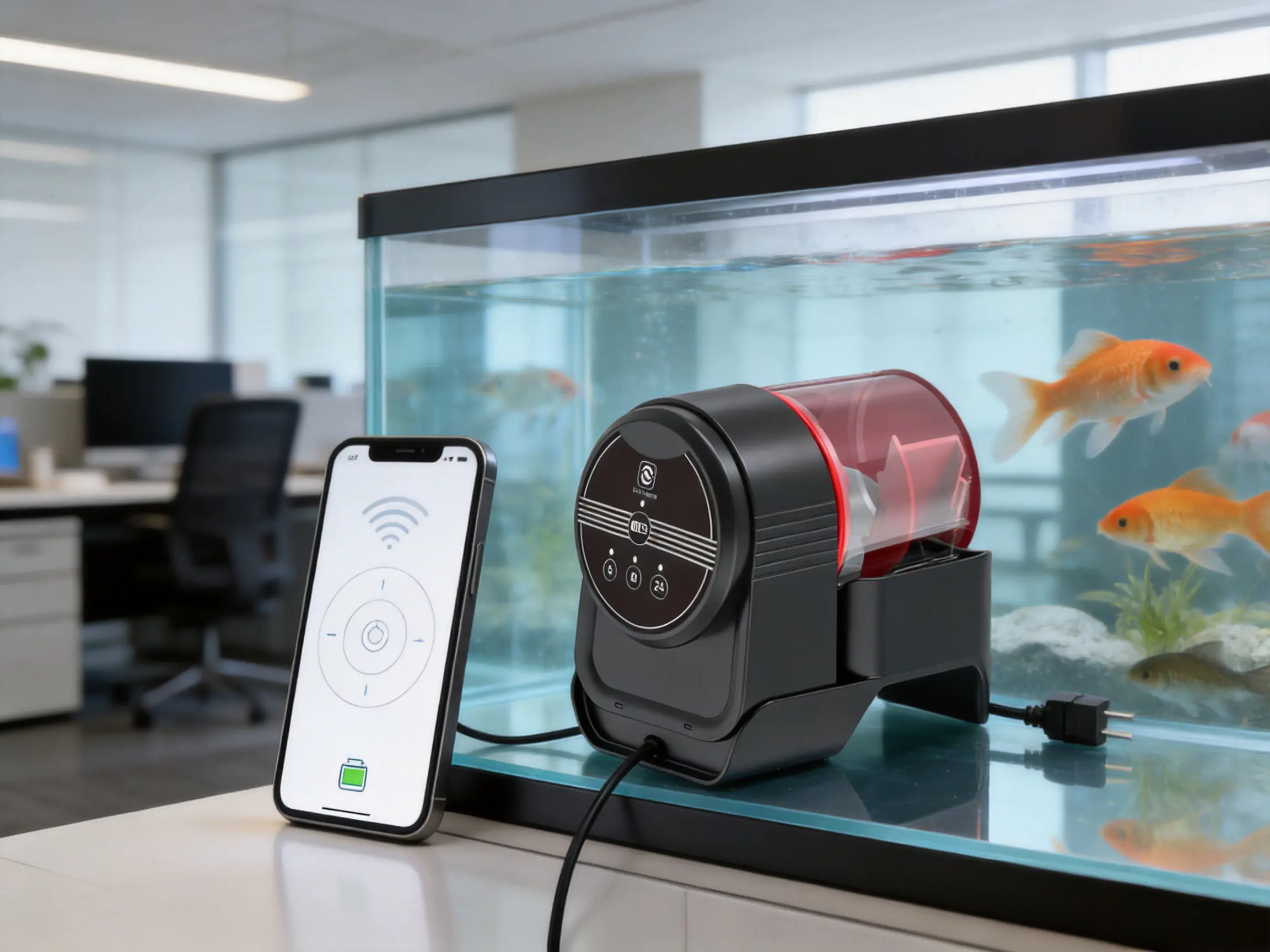
The automatic feeder category includes many products, from basic mechanical timers to app-controlled smart devices. The ZK Series competes strongly because it offers a balanced choice between simplicity and intelligence. Instead of forcing all users into one design, the product family gives users a practical path: choose ZK-11 for essential automatic feeding, or choose ZK-13 for smart connected feeding.
Compared with many entry-level feeders, the ZK-11 provides a clean and focused solution. It does not require WiFi, mobile setup, or external power. This reduces complexity. For many users, especially those who want a vacation feeder or a simple daily timer, this is a real advantage. Not every aquarium owner wants a connected device. Some simply need a feeder that performs predictable feeding at 12-hour or 24-hour intervals.
Compared with many basic feeders, the ZK-13 provides more advanced control. Its 8/12/24-hour feeding modes offer more timing flexibility than products limited to one or two fixed intervals. Its smart mode and WiFi control make it suitable for modern aquarium management. The dual power option further strengthens its practical value. In a market where some smart feeders rely only on external power or only on batteries, the ZK-13’s two power choices are especially helpful.
Another competitive strength is the company’s broad aquarium industry experience. A feeder designed by a manufacturer active in aquarium equipment, pumps, lighting, controllers, and accessories can benefit from deeper knowledge of aquarium conditions. The company understands that aquarium products must be reliable, user-friendly, and suitable for long-term operation in humid environments. This experience can improve not only the feeder itself but also its compatibility with the expectations of aquarium users.
A successful automatic feeder should not require complicated training. The ZK Series is designed around direct practical use. Users select the model that matches their needs, install the feeder on or near the aquarium, add suitable dry fish food, choose a feeding mode, and monitor the first feeding cycles to confirm the portion is appropriate. This process makes the product accessible to beginners while still useful for experienced aquarists.
The ZK-11 offers a simplified experience. Its 12/24-hour operation is suitable for people who prefer minimal adjustment. The user can focus on portion control and aquarium observation instead of device management. This simplicity is valuable for elderly users, families, first-time fish keepers, and anyone who wants reliable automation without smart device configuration.
The ZK-13 offers a more flexible experience. Apple and Android support allows users to manage feeding through smart control. For people who are comfortable with mobile apps, this can make operation more intuitive. It may also be useful when the feeder is placed in a position that is not easy to reach, such as on a higher tank, an office display aquarium, or a covered aquarium system. Smart control reduces the need to physically adjust the device each time settings change.
Before installing any automatic feeder, users should consider the aquarium cover, feeding opening, water splash level, lighting position, and fish behavior. The feeder should be positioned so that food enters the water cleanly and does not accumulate on covers, braces, or decorations. A compact feeder such as the ZK Series is easier to position than a bulky model, but proper placement remains important for best performance.
Users should test the feeder before leaving it unattended. A good practice is to observe several feeding cycles, confirm that the food type dispenses correctly, and adjust the amount according to fish consumption. Dry granules, pellets, or flakes may behave differently depending on size and humidity. The feeder should be kept away from excessive moisture to reduce clumping. Regular cleaning of the food container and dispensing area can help maintain consistent operation.
For the ZK-13, users should also confirm WiFi setup, mobile control response, and power arrangement. If battery operation is selected, batteries should be fresh before travel or long unattended periods. If 5V-1A input is selected, the cable should be routed safely away from water and positioned to avoid pulling or accidental disconnection. These simple preparation steps can improve reliability and user confidence.
The ZK Series Aquarium Intelligent Feeder is one part of a complete aquarium management system. It works best when combined with proper filtration, aeration, lighting, water movement, temperature control, water changes, and observation. Automatic feeding does not eliminate the need for responsible fish care, but it supports one of the most important repeated tasks. When feeding becomes more consistent, the rest of the aquarium system can be managed more predictably.
The manufacturer’s broader product involvement in aquarium equipment, pumps, air pumps, lighting, controllers, and accessories is an important advantage. Aquarium products are interconnected. Feeding influences waste production, waste production affects filtration demand, filtration affects water clarity, and lighting affects plant and algae growth. A company with experience across multiple equipment categories can design products with a more complete understanding of aquarium systems.
For users, this background means the feeder is not an isolated gadget. It is part of a larger aquarium equipment ecosystem. This is beneficial for product development and for market support. Dealers and aquarium stores can recommend the feeder alongside other equipment, while users can build more stable aquariums using products developed by a manufacturer familiar with the entire aquatic environment.
To gain the best results from the ZK Series, users should set feeding amounts according to the number, size, and species of fish. A common rule in aquarium keeping is to feed only what fish can consume within a short period, but exact needs vary. Automatic feeders should be adjusted gradually. It is better to begin with a conservative amount and increase only if fish consistently consume all food quickly and remain healthy.
Users should avoid filling the feeder with damp or oily food unless the food type is suitable for automatic dispensing. Moisture can cause clumping, which may affect dispensing performance. The food container should be checked regularly, especially in humid environments. If the aquarium has strong evaporation or splashing, the feeder should be placed carefully to protect the food from moisture.
Water quality should still be tested and observed. Even with an automatic feeder, uneaten food can accumulate if the portion is too large. The user should watch fish behavior, check for food reaching the substrate, and adjust the schedule if needed. The ZK-13’s multiple timing modes can help distribute food more evenly, but correct portioning remains the responsibility of the aquarist.
For distributors, aquarium retailers, and service companies, the ZK Series offers a product range that can serve multiple customer segments. The ZK-11 is attractive to customers who want affordability, simplicity, and basic automatic feeding. The ZK-13 appeals to users looking for smart aquarium solutions. This two-level product family can improve retail flexibility because sales staff can match features to customer needs instead of promoting a single model for all buyers.
The product also benefits from the manufacturer’s established production and marketing background. A company with extensive experience, multiple subsidiaries, quality control systems, and a broad sales network can support product availability and stable supply. For international buyers, manufacturing scale and organizational maturity are important. They reduce uncertainty in sourcing and help ensure that products can be delivered consistently.
The company’s development direction emphasizes industrial technicalization, marketing globalization, and brand internationalization. For buyers, this suggests that the feeder is part of a larger strategy of product improvement and global market service. In competitive aquarium equipment distribution, this matters because customers increasingly expect better design, reliable smart functions, clear specifications, and responsive support.
Durability in an aquarium feeder depends on several factors: material quality, mechanical design, electronics, user maintenance, and operating environment. The ZK Series is designed for daily use in aquarium settings, where humidity and regular operation are normal. Its compact construction helps reduce unnecessary complexity, while the smart model adds advanced functions without changing the physical size.
Users can extend product life by keeping the feeder clean, using appropriate dry food, replacing batteries when needed, and preventing water from entering the device. Regular inspection is recommended. If food dust accumulates around the outlet, it should be removed. If the feeder is used during long travel, it should be tested several days before departure to confirm reliable operation.
From a manufacturing perspective, long-term durability is supported by repeatable production control. Consistent molding, stable electronics assembly, and final inspection all contribute to product performance. This is where an experienced manufacturer has a strong advantage over low-cost competitors with limited quality systems. A feeder may appear simple from the outside, but reliable automatic operation depends on precise interaction between components.
It is used to automatically feed aquarium fish according to selected timing modes. It helps reduce missed feedings, supports regular feeding routines, and is useful when the owner is busy, away from home, or managing multiple aquariums.
The ZK-11 is a simple battery model powered by two No. 5 batteries and supports 12/24-hour feeding modes. The ZK-13 is a smart model powered by two No. 5 batteries or 5V-1A input. It supports 8/12/24-hour modes, smart operation, and WiFi control for Apple and Android devices.
Yes. The ZK-11 is especially suitable for beginners because it focuses on simple timing operation. The ZK-13 is also user-friendly for people who want smart control and are comfortable using mobile devices.
It can help reduce overfeeding by delivering food according to a planned schedule, but users must still adjust the food amount correctly. The feeder should be tested and observed to ensure fish consume the dispensed food without leaving excessive waste.
Yes. The ZK-13 smart model supports WiFi control for Apple and Android users, making it suitable for common mobile operating systems.
The ZK-11 uses two No. 5 batteries. The ZK-13 can use two No. 5 batteries or a 5V-1A power input, giving users more flexibility for different installation conditions.
Both ZK-11 and ZK-13 have dimensions of 130 × 90 × 120 mm. This compact size makes the feeder practical for many aquarium installations.
No. The feeder supports feeding consistency, but users still need to monitor fish health, test water quality, clean the aquarium, maintain filtration, and observe whether the feeding amount is appropriate.
An intelligent feeder depends on accurate mechanical movement, reliable electronics, safe power design, and consistent assembly. A manufacturer with decades of aquarium and equipment production experience can apply stronger quality control and better process management to support product reliability.
The ZK Series Aquarium Intelligent Feeder is a practical and competitive solution for modern aquarium feeding. It addresses a real problem faced by aquarists: the need for consistent, controlled, and convenient feeding. By offering both the ZK-11 simple battery model and the ZK-13 smart model, the series serves a broad range of users, from beginners who want simple automatic operation to advanced users who prefer WiFi control and smart scheduling.
Its compact 130 × 90 × 120 mm design, useful feeding modes, battery operation, optional 5V-1A power input on the smart model, and Apple/Android control support make it stand out in the automatic feeder market. Compared with many conventional products, it provides a better balance of simplicity, intelligence, installation practicality, and user choice.
Behind the product is the manufacturing strength of Sensen Group Co., Ltd., an experienced enterprise with a long history in aquarium pets, aquacultural machinery, industrial equipment, and related product systems. Its research capability, quality control structure, broad production base, and market network contribute to the reliability and commercial value of the feeder. For aquarium owners, retailers, and distributors, the ZK Series represents not only a feeding device but also a dependable component in a more stable and intelligent aquarium care routine.
Axelrod, H. R. Encyclopedia of Tropical Fishes. TFH Publications.
Andrews, C. The Manual of Fish Health. Firefly Books.
Spotte, S. Captive Seawater Fishes: Science and Technology. Wiley-Interscience.
Tullock, J. H. Natural Reef Aquariums. T.F.H. Publications.
Wedemeyer, G. A. Physiology of Fish in Intensive Culture Systems. Springer.
Industry product specification materials for the ZK Series Aquarium Intelligent Feeder.


 No. 61-79, Baima Street, Maao Town, Dinghai District, Zhoushan City, Zhejiang Province, China.
 0086 580 8082088 / 8081168
 0086 580 8080978
 songhua@sunsun-china.com