

 English
 русский
 España
 Portugal
 عربي
عربيLi Mei | Aquarium Equipment Sales Specialist
Home / Author / Li Mei | Aquarium Equipment Sales Specialist / JTP Series Frequency Variation Fountain Pump: Performance, Flexibility, and Professional Water Feature Engineering
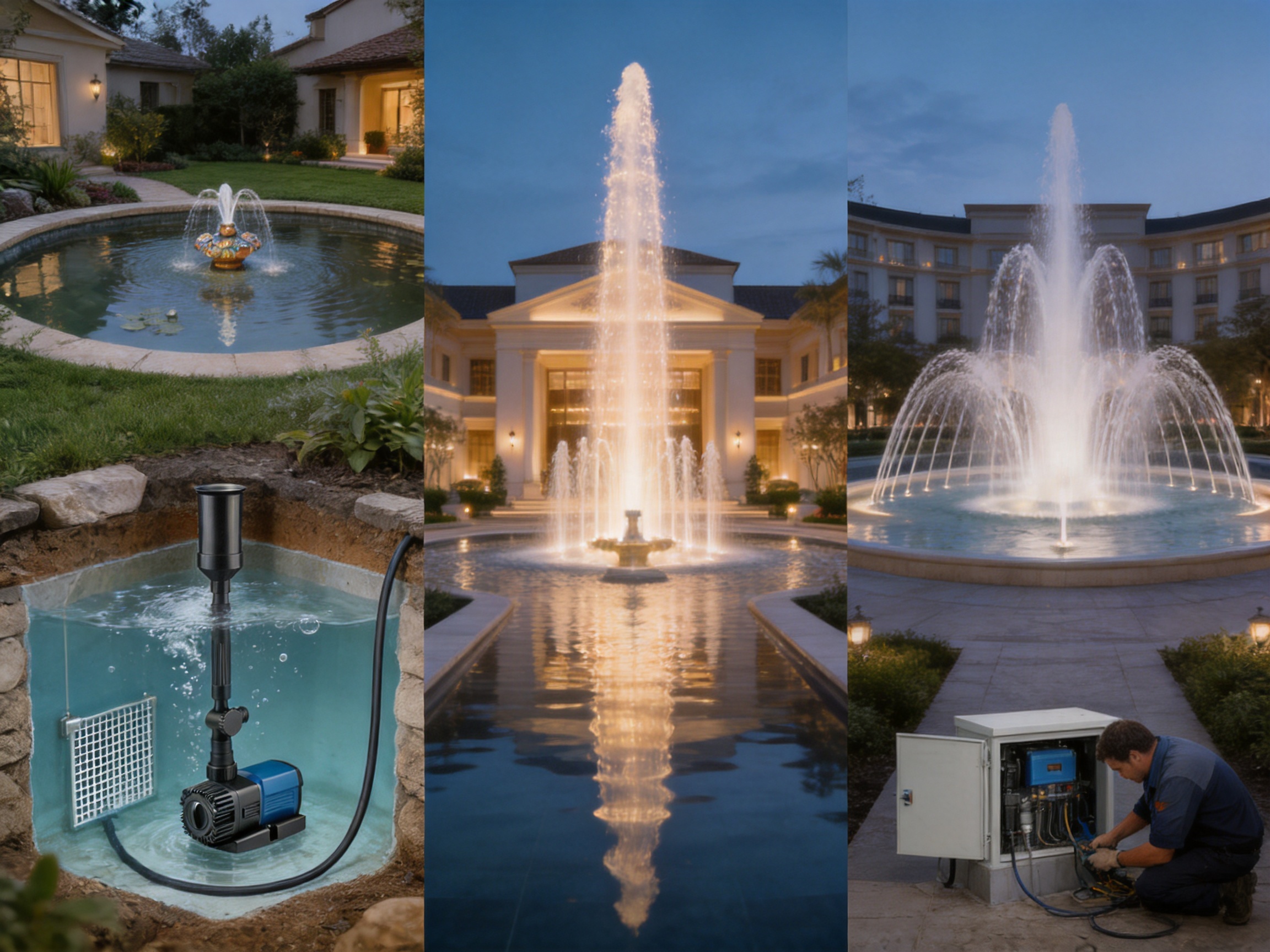
Water features are no longer limited to large public gardens or commercial landscapes. Decorative fountains, rain forest installations, ornamental ponds, aquarium displays, courtyard water walls, and indoor feature tanks are now used in homes, hotels, offices, retail spaces, restaurants, parks, and entertainment venues. Every one of these applications depends on a reliable pump. The pump must move water consistently, operate efficiently, withstand continuous use, and provide enough pressure to create an attractive and stable water pattern.
The JTP Series Frequency Variation Fountain Pump is designed for this purpose. Available in models from JTP-1800RF through JTP-9000RF, the series combines practical flow capacity, useful lifting height, long cable length, adaptable voltage options, and a selection of compatible fountain effects. It is a product family intended to support both compact decorative installations and larger outdoor water displays.
Rather than offering only one fixed pump size, the series provides ten models with output ratings from 1,800 liters per hour to 9,000 liters per hour. This range allows users, designers, installers, and distributors to select a model according to the required flow rate, fountain height, basin size, and installation scale. The result is a more precise approach to fountain design, avoiding the problems associated with using an undersized pump or an unnecessarily large unit.
Manufactured by Sensen Group Co., Ltd., the pump reflects the company’s long experience in aquarium equipment, aquaculture machinery, industrial equipment, and related water-handling products. The company has developed its production and management capabilities over more than three decades, supported by research, quality control, manufacturing subsidiaries, and an international supply network.
This article examines the product family in detail, including its technical specifications, application advantages, fountain compatibility, manufacturing strengths, installation considerations, maintenance requirements, and comparison with conventional fixed-output fountain pumps.
Content
The JTP Series is a frequency variation fountain pump family developed for water circulation and decorative fountain applications. The models are identified by their approximate nominal output: the JTP-1800RF delivers up to 1,800 liters per hour, while the largest JTP-9000RF delivers up to 9,000 liters per hour.
The product range is divided into two practical size groups. The JTP-1800RF, JTP-2800RF, JTP-3800RF, JTP-4800RF, and JTP-5800RF models share a compact housing format measuring approximately 182 × 115 × 470–600 millimeters. These models weigh approximately 3.0 kilograms and are suitable for installations requiring moderate water volume and a relatively compact equipment footprint.
The JTP-4000RF, JTP-5000RF, JTP-6000RF, JTP-7000RF, JTP-8000RF, and JTP-9000RF models use a larger format measuring approximately 250 × 123 × 500–630 millimeters. These models weigh approximately 3.5 kilograms and are intended for higher-output applications where greater circulation volume and lifting performance are needed.
All listed models support 110V, 220V, and 240V electrical options, with operation at either 50Hz or 60Hz. This broad electrical compatibility is useful for international distribution and for projects located in regions with different power standards. The cable length for every model is listed as 10 meters, giving installers substantial flexibility when positioning the pump in a basin or water reservoir.
The series also supports several fountain display styles, including foam, rain forest, tent, champagne, rocket, and volcano effects. These names describe different visual patterns produced by the pump and fountain attachments. A single pump family can therefore support a wide range of design concepts, from soft aerated spray to a more concentrated vertical jet.
Model |
Voltage |
Frequency |
Power |
Maximum Head |
Output |
Cable Length |
Weight |
Dimensions |
JTP-1800RF |
110V/220V/240V |
50Hz/60Hz |
11W |
2.2m |
1,800L/h |
10m |
3.0kg |
182 × 115 × 470–600mm |
JTP-2800RF |
110V/220V/240V |
50Hz/60Hz |
18W |
3.0m |
2,800L/h |
10m |
3.0kg |
182 × 115 × 470–600mm |
JTP-3800RF |
110V/220V/240V |
50Hz/60Hz |
25W |
3.8m |
3,800L/h |
10m |
3.0kg |
182 × 115 × 470–600mm |
JTP-4800RF |
110V/220V/240V |
50Hz/60Hz |
32W |
4.5m |
4,800L/h |
10m |
3.0kg |
182 × 115 × 470–600mm |
JTP-5800RF |
110V/220V/240V |
50Hz/60Hz |
38W |
5.2m |
5,800L/h |
10m |
3.0kg |
182 × 115 × 470–600mm |
JTP-4000RF |
110V/220V/240V |
50Hz/60Hz |
25W |
3.2m |
4,000L/h |
10m |
3.5kg |
250 × 123 × 500–630mm |
JTP-5000RF |
110V/220V/240V |
50Hz/60Hz |
30W |
3.6m |
5,000L/h |
10m |
3.5kg |
250 × 123 × 500–630mm |
JTP-6000RF |
110V/220V/240V |
50Hz/60Hz |
40W |
4.0m |
6,000L/h |
10m |
3.5kg |
250 × 123 × 500–630mm |
JTP-7000RF |
110V/220V/240V |
50Hz/60Hz |
50W |
4.4m |
7,000L/h |
10m |
3.5kg |
250 × 123 × 500–630mm |
JTP-8000RF |
110V/220V/240V |
50W/60Hz |
60W |
4.8m |
8,000L/h |
10m |
3.5kg |
250 × 123 × 500–630mm |
JTP-9000RF |
110V/220V/240V |
50Hz/60Hz |
70W |
5.2m |
9,000L/h |
10m |
3.5kg |
250 × 123 × 500–630mm |
The JTP-8000RF frequency entry should be verified against the final product label and technical documentation before installation, because the supplied specification lists “50W/60Hz” in the frequency field while the power rating is listed separately as 60W. Professional installers should always confirm the electrical data for the exact unit being purchased.
Flow capacity is one of the most important specifications in a fountain pump. It indicates the approximate amount of water the pump can move in one hour under specified operating conditions. A higher nominal flow does not automatically mean a better result. The correct selection depends on the fountain nozzle, vertical lift, pipe length, pipe diameter, bends, filters, and desired visual effect.
The JTP Series gives designers a graduated choice of flow rates. A small indoor feature may need only the JTP-1800RF or JTP-2800RF. A medium courtyard fountain may be better served by the JTP-3800RF, JTP-4800RF, or JTP-5000RF. Larger displays requiring stronger circulation can use the JTP-6000RF through JTP-9000RF models.
This model range offers an advantage over suppliers that provide only a small number of pump sizes. When a project falls between two capacity categories, the installer can choose a closer match rather than compensating with restrictive valves or inefficient bypass arrangements. Better sizing can produce a more stable spray, lower unnecessary energy use, and less stress on the pump.
Flow also affects water quality. In decorative ponds and planted water features, appropriate circulation helps distribute oxygen and reduce stagnant areas. In aquarium-related displays, water movement can support filtration and aeration, although the pump must be selected according to the biological requirements of the system. The JTP Series is primarily a fountain pump family, so its suitability for a particular aquarium or aquatic habitat should be confirmed before use.
Maximum head describes the approximate vertical height to which the pump can move water under stated test conditions. The JTP Series offers maximum head ratings from 2.2 meters for the JTP-1800RF to 5.2 meters for the JTP-5800RF and JTP-9000RF.
Maximum head should not be interpreted as the guaranteed operating height with full nominal flow. As water is lifted higher, the available flow normally decreases. Similarly, long pipes, narrow tubing, elbows, valves, fountain attachments, and dirty intake screens create resistance. Designers should therefore leave a practical performance margin rather than selecting a pump whose maximum head exactly matches the required fountain height.
The combination of flow and head is particularly important for fountain patterns. A foam or champagne effect may require a different pressure and flow balance than a rocket or volcano effect. A pump that produces excellent circulation at low height may not create a strong vertical jet. Conversely, an oversized unit may produce excessive turbulence, splashing, or noise in a small basin.
The model progression makes it easier to balance these requirements. The JTP-1800RF provides a 2.2-meter maximum head, while the JTP-2800RF reaches 3.0 meters. The JTP-3800RF reaches 3.8 meters, and the JTP-4800RF and JTP-5800RF reach 4.5 and 5.2 meters respectively. In the larger housing group, head ratings range from 3.2 meters for the JTP-4000RF to 5.2 meters for the JTP-9000RF.
The RF designation identifies the frequency variation fountain pump concept. In practical use, variable operating control can help users adjust water movement to suit different fountain scenes, schedules, and environmental conditions. Instead of treating a fountain as a device that must always operate at one fixed intensity, frequency variation supports a more adaptable operating approach.
For example, a decorative feature may be operated at a lower setting during quiet evening hours and at a stronger setting during daytime presentation. A hotel or commercial property may change the water effect according to an event schedule. A landscape installer may also fine-tune the water pattern after installation to achieve the desired balance between height, spread, sound, and splash control.
Adjustability can provide practical benefits compared with a conventional single-speed pump. A fixed-output pump often requires mechanical throttling to reduce flow. While a valve can restrict discharge, it does not always provide the same level of operating flexibility and may create additional resistance. Frequency-based adjustment can help the system deliver the required performance more directly, depending on the control equipment and final installation configuration.
Because the available product information does not specify the exact control interface or control unit included with each model, purchasers should confirm whether a controller, frequency regulator, or separate control device is required. The electrical and control arrangement should be designed by a qualified installer, especially in outdoor, public, or permanently installed applications.
The product presentation identifies six fountain styles: foam, rain forest, tent, champagne, rocket, and volcano. These styles allow designers to create different visual impressions using suitable nozzles and accessories.
A foam effect generally creates a dense, aerated water appearance. It can be used as a focal point in a compact basin or as a repeated pattern across a larger installation. Its visual character is often softer and fuller than a narrow jet, making it appropriate for gardens, indoor displays, and decorative pond features.
A rain forest effect suggests multiple streams or a natural rainfall pattern. This type of display can be useful in themed landscaping, plant walls, ecological exhibits, and resort environments. It may also complement planted installations in which the fountain is intended to look organic rather than highly geometric.
The tent effect typically produces a curved or canopy-like water form. It can serve as a central ornament in a circular basin or as part of a symmetrical design. The exact appearance depends on the nozzle arrangement, water pressure, and basin dimensions.
A champagne effect normally creates a rounded, bubbling, or aerated plume. It is suitable for smaller ornamental fountains, entrances, reception areas, and garden features where a lively but controlled pattern is required.
The rocket effect is associated with a more concentrated and energetic vertical stream. It can be used to create height and visual emphasis in outdoor landscapes, public spaces, and larger decorative basins. The pump must be selected according to the required height and nozzle resistance.
A volcano effect generally creates a broad, rising water form with a strong central presence. It can become the visual center of a pond or landscape installation. Careful adjustment is necessary to manage splash, wind exposure, and water loss.
The availability of multiple display styles is an important advantage for project planning. It enables distributors and installers to offer a wider design vocabulary without sourcing every pump from a different manufacturer. It also allows the same general equipment platform to be considered for residential, commercial, hospitality, and landscape applications.
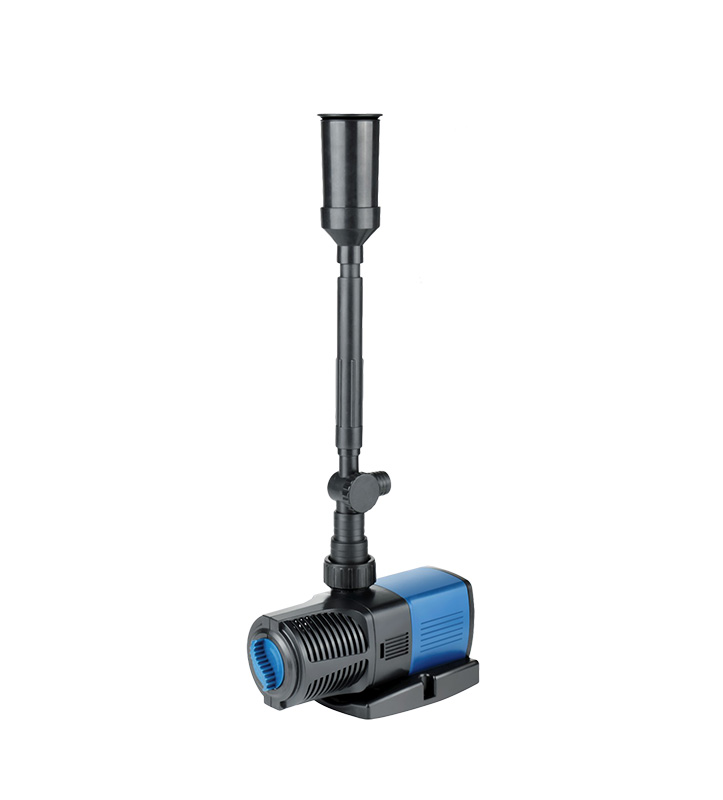
JTP Series Frequency Variation Fountain Pump JTP-4000RF~9000RF JTP-1800RF~5800RF
The listed power consumption ranges from 11W to 70W across the ten models. These ratings provide a useful basis for estimating operating costs and selecting a pump that matches the project’s actual requirements. Choosing an appropriately sized unit is essential. A pump that is too small may run continuously at its limit without achieving the desired fountain effect. A pump that is too large may consume more energy than necessary or require excessive throttling.
Low power consumption is especially valuable for fountains that operate for many hours each day. Indoor installations, hotel displays, garden ponds, and commercial landscapes may run on a daily schedule, so even moderate differences in electrical consumption can become significant over the service life of the equipment.
The power figures should be treated as listed nominal values rather than universal operating guarantees. Actual consumption can vary with operating speed, head, plumbing resistance, water temperature, voltage, and control settings. A professional installation should use the final electrical specifications for the selected model and local power supply.
Compared with many traditional high-consumption fountain arrangements, a compact pump family with moderate wattage can support a more economical design. The most effective result comes from combining the correct model with suitable pipe sizing, a clean intake, efficient nozzle selection, and a control strategy that avoids unnecessary full-power operation.
The smaller JTP models measure approximately 182 × 115 millimeters in width and depth, with an adjustable height range of approximately 470–600 millimeters. The larger models measure approximately 250 × 123 millimeters, with a height range of approximately 500–630 millimeters. The stated ranges indicate that the overall installation height can vary according to the configuration or adjustable component used in the product assembly.
A compact footprint helps installers preserve space for water storage, decorative stone, plants, lighting, filtration components, and access panels. This is particularly important in small courtyards, indoor displays, retail installations, and custom-built water features where equipment space is limited.
The 10-meter cable length is another practical benefit. It can help separate the pump from the electrical connection point and provide greater freedom in equipment layout. A long cable may reduce the need for extension arrangements, although all electrical connections must still comply with local safety regulations. Outdoor installations require suitable protection against moisture, water ingress, mechanical damage, and accidental contact.
The pump should be positioned according to the installation manual and supported in a stable manner. It should not be allowed to operate without adequate water coverage. The intake area must remain clear of stones, leaves, plant debris, algae, and other materials that could restrict flow or damage internal components.
The ten-model range is one of the strongest commercial advantages of the series. A supplier can support projects ranging from 1,800L/h to 9,000L/h while maintaining a consistent product family. This simplifies product selection, sales training, spare-parts planning, and technical communication.
Support for 110V, 220V, and 240V options, together with 50Hz and 60Hz operation, increases the product’s suitability for international markets. It also helps distributors serve customers in regions with different electrical standards. The exact voltage version must be confirmed before shipment and installation.
A 10-meter cable can make it easier to position the pump within a basin while keeping the electrical connection in a suitable location. This is especially useful in landscape projects where the power source is not immediately beside the fountain reservoir.
The compatibility with foam, rain forest, tent, champagne, rocket, and volcano styles supports creative customization. Designers can use the pump family for different visual concepts instead of being limited to one standard spray shape.
The series offers usable flow and head performance with listed power ratings between 11W and 70W. This creates opportunities for energy-conscious operation, particularly when the pump is correctly matched to the fountain design.
Using a coordinated series can make project management easier. Staff can become familiar with a common naming system, product logic, and installation approach. For distributors, this may reduce complexity compared with carrying unrelated pumps from multiple sources.
Conventional fountain pumps are often offered as fixed-output units. They may be adequate for simple installations, but their operating range can be limited. If the selected pump produces more water than required, the installer may need to reduce flow through a valve. If the unit is too small, the fountain may fail to reach the desired height or visual density.
The frequency variation concept offers a more adaptable alternative. It can help users fine-tune operating performance rather than accepting one fixed water output. This is useful when the same fountain must support several scenes or when the system is installed in a location with changing wind and weather conditions.
The JTP Series also provides more model choices than a basic two- or three-size range. The availability of intermediate capacities, such as 2,800L/h, 3,800L/h, 4,800L/h, 5,000L/h, and 6,000L/h, may help prevent over-sizing. A closer match between pump capacity and fountain requirement can improve controllability and reduce wasted energy.
Another difference is the combination of fountain-style flexibility and international electrical options. While individual competing products may offer one or two of these features, the value of the JTP Series lies in bringing them together within one coordinated family. The final advantage will depend on the project design, installation quality, and control equipment selected.
Sensen Group Co., Ltd. was established in November 1985. More than thirty years of activity in water-related equipment and associated industries have allowed the company to accumulate experience in product development, production management, quality control, and market support.
The company identifies aquarium pets, aquaculture machinery, and industrial equipment as important areas of continuous innovation. This background is relevant to fountain pump manufacturing because water-handling products require knowledge of motor performance, flow behavior, electrical safety, materials, sealing, reliability, and long-term operation.
According to the supplied company information, the headquarters includes functional departments such as a research institute, business school, quality control department, personnel and administrative information department, and financial department. The presence of dedicated research and quality functions suggests an organized structure for product development and manufacturing oversight.
Research capability is important for pump production. A fountain pump must balance hydraulic output, power consumption, operating noise, vibration, mechanical durability, and compatibility with different fountain attachments. Product development involves more than simply increasing motor size. It requires coordinated work on impeller design, motor efficiency, housing geometry, water pathways, cable construction, and control behavior.
Quality control is equally important. Water pumps are often installed in environments where electrical components are close to water. A reliable manufacturing process should include systematic inspection of materials, assembly accuracy, electrical performance, sealing, cable connections, and functional operation. Final inspection procedures should verify that each unit meets the applicable product specification before shipment.
The company also reports several wholly owned subsidiary corporations, including ZHOUSHAN GRECH, ZHEJIANG JIALU, JIANGSU SENSEN, CHONGQING SENSEN, ZHONGSHAN SENSEN, TIANJIN SENSEN, ROLL-TAIL PET COMPANY, and MARINE ORIGANISM, as well as an import and export company. This broader corporate structure can support manufacturing specialization, supply coordination, logistics, research, and international sales.
A large production and marketing network can provide advantages over small, isolated pump suppliers. It may support more stable sourcing of components, higher production capacity, broader testing resources, and better continuity for distributors. It can also help the manufacturer respond to different regional requirements and product configurations.
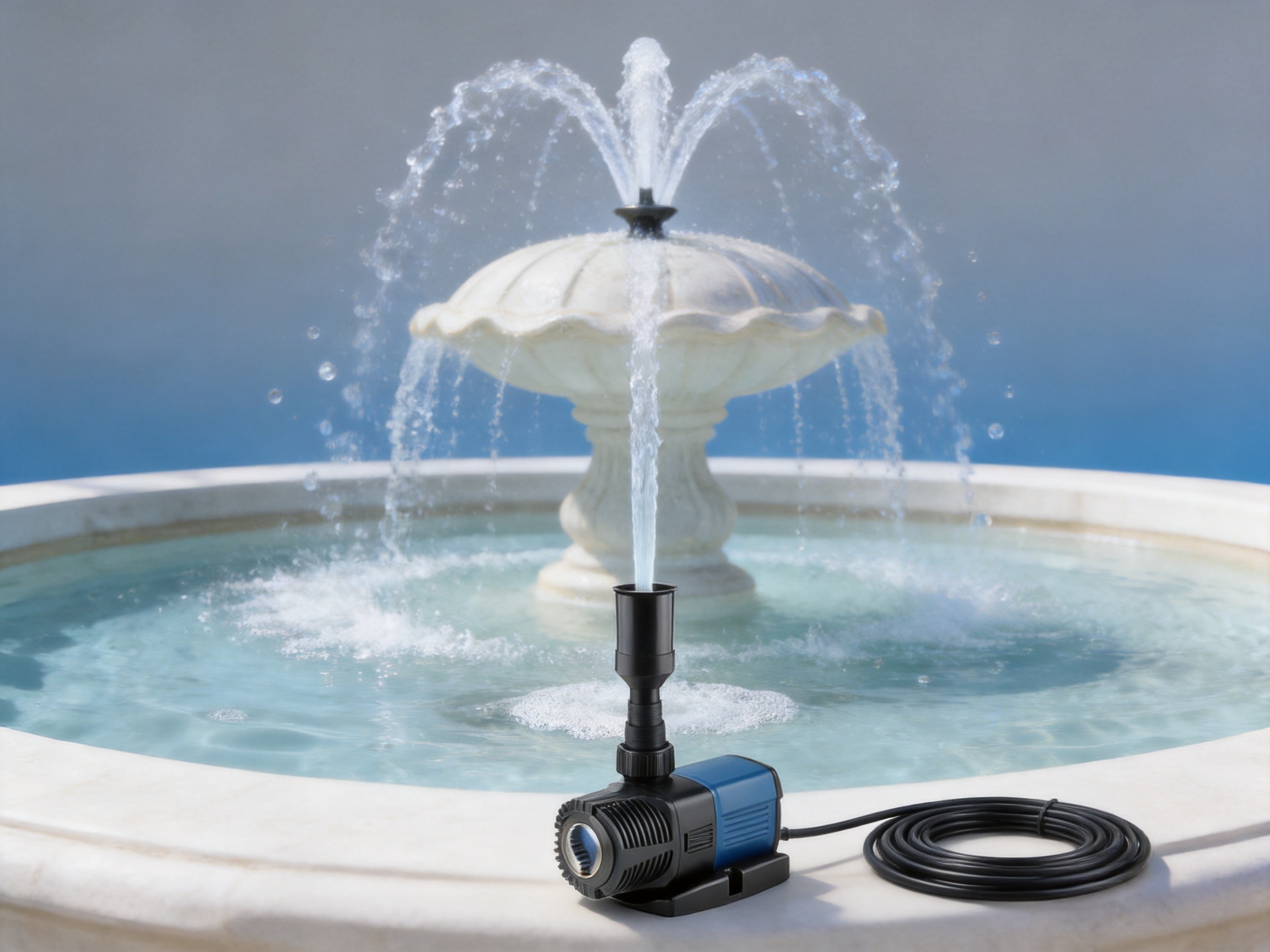
The supplied information does not provide a step-by-step factory process for each JTP model. However, a modern fountain pump production system generally depends on several controlled stages. These stages help convert engineering specifications into a consistent finished product.
The process begins with hydraulic and electrical design. Engineers establish target flow rates, head performance, power consumption, dimensions, cable length, and operating conditions for each model. The models must be coordinated so that the product family provides meaningful capacity steps without unnecessary duplication.
Engineering must also consider the relationship between the pump and fountain attachments. Different nozzle styles can produce different resistance levels and visual effects. A good design therefore considers not only free-flow output but also practical performance under installation conditions.
Motors, impellers, housings, shafts, seals, cables, connectors, fasteners, and protective components must be selected according to the intended operating environment. Material compatibility is particularly important when the pump is used in treated water, outdoor ponds, planted features, or systems exposed to changing temperatures.
Consistent component sourcing can help maintain repeatable performance across production batches. It also supports after-sales service because distributors can identify compatible replacement parts and accessories more easily.
Pump assembly requires accurate alignment of rotating and stationary components. Poor alignment can increase vibration, noise, wear, and power consumption. Proper assembly also helps maintain the designed water pathway and reduce the risk of leakage or performance loss.
In a coordinated manufacturing system, assembly stations can use standardized procedures, work instructions, inspection points, and traceability records. These methods reduce variation and make it easier to identify the cause of any abnormal result.
Electrical testing is essential for a pump that may operate in a wet environment. Testing may include verification of voltage compatibility, frequency suitability, current draw, insulation performance, cable continuity, grounding arrangements where applicable, and controller communication. The exact tests depend on the product design and applicable standards.
Hydraulic testing verifies whether the pump delivers the expected flow and head characteristics. Test systems can measure water output under different resistance conditions and confirm whether each model performs within its defined range. Such testing is important because a pump’s real performance depends on both flow and pressure.
Functional checks may examine startup behavior, operating stability, abnormal noise, vibration, temperature rise, and response to control adjustments. Durability evaluation can help identify weaknesses before products enter the market. A manufacturer with established research and quality departments is better positioned to incorporate test findings into future product improvements.
Pumps must be protected during storage and transportation. Packaging should reduce the risk of impact damage, cable deformation, moisture exposure, and accessory loss. International shipments require clear product identification and correct electrical labeling so the distributor can deliver the proper version to the end user.
Reliability is a key consideration in fountain equipment because many installations are difficult to access after completion. A pump placed beneath decorative stone, inside a pond, or within a public water feature should not require frequent intervention. Consistent manufacturing, accurate assembly, and appropriate installation all contribute to service life.
The company’s stated quality control function is an important organizational strength. A dedicated quality department can help establish inspection standards, monitor production results, manage nonconformities, and support continuous improvement. Quality control should not be limited to final inspection; it should be integrated throughout design, material procurement, assembly, testing, packaging, and customer service.
Reliability also depends on clear product documentation. Model numbers, voltage options, frequency ratings, power requirements, maximum head, output, dimensions, and cable length should be clearly communicated. Accurate technical information helps installers avoid selecting the wrong model or applying the pump outside its intended conditions.
For commercial projects, buyers should request the appropriate technical documents, conformity information, warranty terms, spare-parts policy, and installation instructions before purchase. These documents complement the manufacturer’s production strengths and help ensure that the product is used correctly.
The smaller models can be considered for decorative garden fountains, patio water features, courtyard basins, and ornamental ponds. Their moderate dimensions and output range make it possible to create a visible water effect without requiring a large mechanical room.
Hotels and resorts often use water features to improve entrances, courtyards, swimming pool surroundings, restaurants, and relaxation areas. The range of fountain styles allows designers to select a suitable appearance for different architectural themes. Frequency variation may also support quieter operation during selected periods, subject to the final control configuration.
Shopping centers, showrooms, restaurants, and retail stores can use decorative water displays to create a memorable atmosphere. The 10-meter cable length may simplify placement when the pump and electrical connection are separated by the layout of the feature.
The higher-capacity models are suitable for larger basins and outdoor landscape projects that require stronger water circulation. The JTP-6000RF through JTP-9000RF provide higher nominal outputs and head ratings for installations with larger visual scale, although final selection must account for wind, pipe resistance, nozzle design, and water depth.
Rain forest-style effects can complement plant walls, tropical displays, educational exhibits, and themed environments. Pump selection should consider whether the water feature is purely decorative or part of a broader irrigation, filtration, or recirculation system.
The manufacturer’s wider experience includes aquarium and aquaculture equipment. The fountain pump series may be relevant to certain water circulation or display applications, but users must evaluate water quality, animal safety, biological filtration, intake protection, and operating conditions before using a fountain-specific pump in an aquatic habitat.
Before installation, confirm the exact model, voltage, frequency, power rating, dimensions, and required control equipment. The pump should be matched to the fountain nozzle and the calculated system head. Installers should account for the vertical distance from the water surface to the outlet, pipe friction, fittings, valves, and nozzle resistance.
Place the pump on a stable surface or support that prevents movement and keeps the intake clear. Do not allow gravel, sand, leaves, plant roots, or other debris to enter the pump. If the fountain basin is exposed to outdoor contamination, an appropriate intake screen or pre-filter should be considered.
Use pipes and fittings that are compatible with the required flow. Undersized tubing can create unnecessary pressure loss and reduce fountain performance. Excessive bends and long runs should be avoided where possible. If a control device is used, it should be compatible with the pump and installed according to the manufacturer’s electrical instructions.
All electrical work should be performed by a qualified professional. The power supply should include suitable protection for the installation environment. Outdoor and wet-area installations require careful attention to grounding, residual-current protection where applicable, waterproof connections, cable routing, and protection from mechanical damage.
After installation, fill the basin to the required operating level before starting the pump. Check for leaks, abnormal noise, vibration, unstable flow, excessive splash, and overheating. Adjust the fountain pattern gradually. Sudden unrestricted operation with an unsuitable nozzle can cause water loss or overflow.
Routine maintenance is necessary to preserve pump performance. Inspect the intake area regularly and remove leaves, algae, sediment, and other debris. A blocked intake can reduce flow, increase motor strain, and cause overheating.
Fountain nozzles should also be checked because mineral deposits and biological growth can alter the spray pattern. A partially blocked nozzle may create uneven water distribution, unexpected splashing, or increased back pressure. Cleaning should follow the recommendations for the specific nozzle and material.
Before performing maintenance, disconnect the pump from the power supply. Never handle the pump, cable, or controller with wet hands when the unit is energized. Check the cable for cuts, abrasion, swelling, or other damage. Any damaged electrical component should be removed from service and inspected by a qualified technician.
At seasonal intervals, inspect the housing, mounting arrangement, pipe connections, seals, and control equipment. In cold climates, protect the pump from freezing conditions according to the manufacturer’s instructions. Water expansion caused by freezing can damage housings, pipes, and fittings.
Maintain records of cleaning, inspections, operating hours, and any performance changes. A gradual reduction in flow may indicate a clogged intake, blocked nozzle, worn component, pipe restriction, or control problem. Early detection can prevent more serious damage.
Begin by defining the desired fountain effect. A soft foam or champagne display may require different flow behavior from a tall rocket or volcano pattern. Next, determine the required vertical height from the water surface to the nozzle outlet.
Estimate the piping distance and resistance. A pump’s listed maximum head is not the same as the operating head available at full flow. If the installation includes long pipes, narrow tubing, multiple fittings, or restrictive nozzles, select a model with sufficient margin.
Consider the basin volume and desired turnover. A large basin may need greater circulation even if the fountain itself is not extremely tall. Conversely, a small basin may require a lower flow rate to prevent overflow and excessive turbulence.
Review the electrical supply at the installation site. The series supports multiple voltage and frequency options, but the exact version must correspond to the local power system. Confirm whether a frequency controller or other control equipment is included or must be purchased separately.
Finally, verify the physical dimensions. The larger models require more installation space than the compact group. Allow room for access, cleaning, cable routing, pipe connections, and future maintenance.
For distributors, the JTP Series offers a balanced product portfolio. Ten capacity options create opportunities to serve different customer segments without developing a completely separate sales structure for every application. The consistent model naming system also makes it easier for sales teams to explain output and performance differences.
The product family may be useful for aquarium equipment retailers, garden equipment suppliers, landscape contractors, fountain specialists, pond shops, and project-based engineering companies. The manufacturer’s broader involvement in aquatic equipment can provide a foundation for cross-selling related products such as pumps, filtration equipment, aquarium accessories, air pumps, lighting, controllers, and other water-management products.
For custom projects, buyers should communicate the required water effect, basin size, pump position, pipe layout, operating schedule, local voltage, and environmental conditions. Providing complete project information helps the supplier recommend an appropriate model and avoid performance problems caused by incomplete specifications.
OEM and private-label buyers should also confirm packaging, labeling, documentation, minimum order quantities, inspection requirements, spare parts, warranty service, and shipping arrangements. A manufacturer with an established import and export structure may be better prepared to support international procurement, but commercial terms must be confirmed for each order.
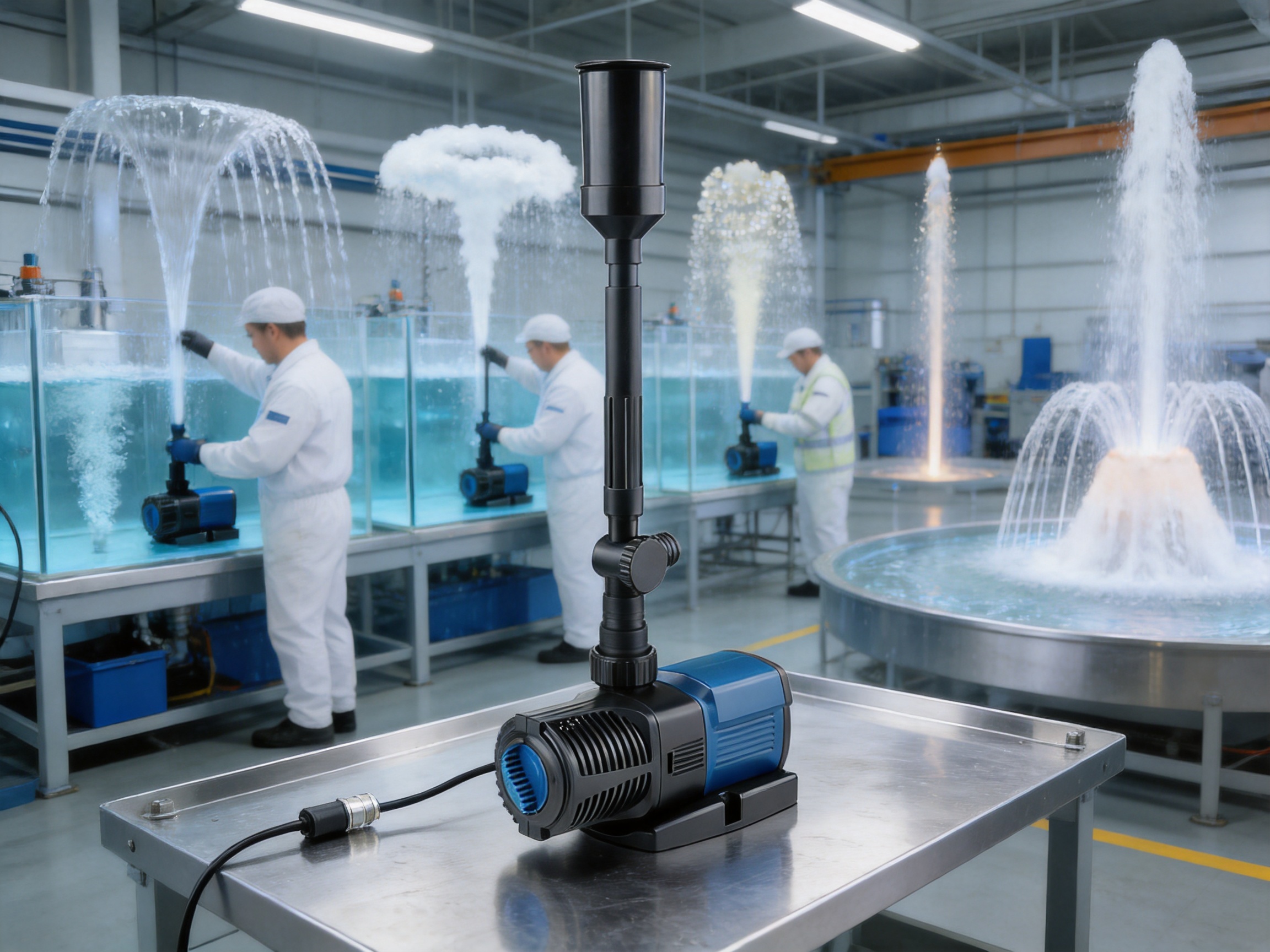
The producer’s history extends back to 1985, giving it substantial experience in the development of products connected with aquariums, aquatic machinery, industrial equipment, and pet-related applications. Long-term participation in these sectors can provide valuable insight into changing customer needs, regional market requirements, and product reliability expectations.
The company reports a network of subsidiaries and holdings in several trading companies. This structure reflects an effort to combine manufacturing, sales, marketing, distribution, and service capabilities. It also supports the company’s stated direction of industrial technicalization, marketing globalization, and brand internationalization.
A broad retail and service network can help products reach customers through multiple channels. The company also describes efforts to integrate online and offline retail and to extend product experiences through digital services. For buyers, this may indicate a manufacturer that is investing not only in individual products but also in long-term market support.
In the case of the JTP Series, manufacturing scale and product specialization are especially relevant. Fountain pumps must be produced with repeatable electrical and hydraulic characteristics. A supplier that understands both aquatic environments and industrial production can be better positioned to develop models that balance performance, efficiency, compactness, and installation convenience.
The series includes models with nominal outputs from 1,800 liters per hour to 9,000 liters per hour. The smallest listed model is the JTP-1800RF, and the largest is the JTP-9000RF.
The JTP-5800RF and JTP-9000RF both have a listed maximum head of 5.2 meters. Actual flow at that height will depend on the installation, pipe resistance, nozzle, and operating conditions.
The series is intended for fountain applications and can be considered for outdoor installations when installed correctly. Outdoor use requires appropriate electrical protection, waterproof connections, safe cable routing, adequate water depth, and compliance with local regulations.
The RF designation indicates a frequency variation fountain pump concept. The specific adjustment method and required controller should be confirmed with the supplier for the selected model. The supplied information does not state whether a controller is included as standard.
The listed voltage options are 110V, 220V, and 240V. The correct version must be selected for the local power supply and confirmed before installation.
The specifications list 50Hz and 60Hz operation. Buyers should verify the exact frequency requirements on the product label and technical documentation, especially for international orders.
Each listed model has a 10-meter cable length. The cable should be routed and protected according to local electrical safety requirements.
The product presentation identifies foam, rain forest, tent, champagne, rocket, and volcano effects. The final appearance depends on the selected nozzle, pump setting, pipe arrangement, water level, and installation environment.
The compact models from JTP-1800RF through JTP-5800RF use a housing format of approximately 182 × 115 × 470–600 millimeters and weigh about 3.0 kilograms. The larger models from JTP-4000RF through JTP-9000RF use a format of approximately 250 × 123 × 500–630 millimeters and weigh about 3.5 kilograms. Selection should be based on required flow, head, physical space, and installation conditions.
It may be considered for certain water circulation or display applications, but the pump is presented as a fountain pump. Aquarium users must confirm suitability for the animals, water chemistry, intake safety, biological filtration, and operating environment before use.
Confirm the model, voltage, frequency, power rating, output, maximum head, dimensions, cable length, control requirements, nozzle compatibility, packaging, warranty, and technical documentation. This is particularly important for international projects.
The product is manufactured by Sensen Group Co., Ltd., a company established in 1985 with activities in aquarium products, aquaculture machinery, industrial equipment, and related industries.
The JTP Series Frequency Variation Fountain Pump provides a broad and practical solution for decorative water movement. Its ten models cover nominal outputs from 1,800L/h to 9,000L/h, while maximum head ratings reach as high as 5.2 meters on selected models. Multiple voltage options, 50Hz and 60Hz compatibility, 10-meter cables, moderate power ratings, and support for several fountain effects make the series suitable for a wide range of international projects.
Its primary advantage over a basic fixed-output pump is flexibility. Users can select a closer capacity match and, where the appropriate control system is available, adjust fountain operation to meet changing visual, scheduling, and environmental requirements. The model range also helps distributors and installers support different project sizes through one coordinated product family.
The manufacturing background of Sensen Group Co., Ltd. strengthens the product proposition. The company’s history since 1985, focus on aquatic and industrial equipment, dedicated research and quality functions, subsidiary manufacturing structure, and international business organization provide a foundation for ongoing product development and supply support.
Successful results still depend on correct model selection, professional electrical installation, suitable plumbing, clean water intake, proper nozzle matching, and regular maintenance. When these factors are addressed, the JTP Series can provide an efficient and adaptable foundation for garden fountains, commercial landscapes, themed displays, pond features, hospitality projects, and other decorative water installations.
Sensen Group Co., Ltd. Product specification information for the JTP Series Frequency Variation Fountain Pump.
Sensen Group Co., Ltd. Corporate history and company information supplied for product publication.
JTP-1800RF through JTP-9000RF model data, including voltage, frequency, power, maximum head, output, cable length, weight, and dimensions.
Decorative fountain engineering principles concerning pump sizing, hydraulic head, nozzle resistance, water circulation, and installation planning.
General electrical and maintenance practices for water pumps used in indoor and outdoor fountain environments.


 No. 61-79, Baima Street, Maao Town, Dinghai District, Zhoushan City, Zhejiang Province, China.
 0086 580 8082088 / 8081168
 0086 580 8080978
 songhua@sunsun-china.com