

 English
 русский
 España
 Portugal
 عربي
عربيLi Mei | Aquarium Equipment Sales Specialist
Home / Author / Li Mei | Aquarium Equipment Sales Specialist / PG Series Industrial Whirl Charging Air Pumps: High-Volume Aeration for Demanding Applications
Content
Reliable air movement is essential in aquaculture, water treatment, industrial ventilation, material handling, pond management, and large-scale aquarium systems. When an installation requires continuous airflow, stable pressure, and dependable operation, a small conventional aquarium air pump may not provide enough capacity. The PG Series Whirl Charging Airpump is designed for applications that demand substantially greater output and a wider operating range than ordinary hobby-grade equipment.
The PG Series includes multiple models covering power ratings from 750W to 18,000W, with airflow capacities ranging from 120m³/h to 1,050m³/h. This broad range allows users to select a pump according to the size of the water system, required aeration depth, pipe resistance, operating pressure, and available electrical supply. The product family includes compact low-power units, medium-capacity machines, and heavy-duty industrial models intended for demanding continuous-duty installations.
The product listing identifies the featured item as the PG-7500 Whirl Charging Airpump. The specification table supplied for the series includes the closely related PG-7500-D model, rated at 7,500W, with a maximum pressure of 60kPa, vacuum of -45kPa, output of 700m³/h, weight of 61kg, and dimensions of 547×451×464mm. The table also presents other PG Series configurations, making it possible to compare performance and select the correct version for a particular project.
Unlike a basic diaphragm or piston pump designed for small aquariums, a whirl charging air pump is intended to deliver a large volume of air through a system of pipes, diffusers, manifolds, tanks, or other air-distribution equipment. Its value is not limited to the air pump itself. It forms part of a complete aeration solution in which output, pressure, vacuum capability, electrical compatibility, installation dimensions, and long-term operating stability all matter.
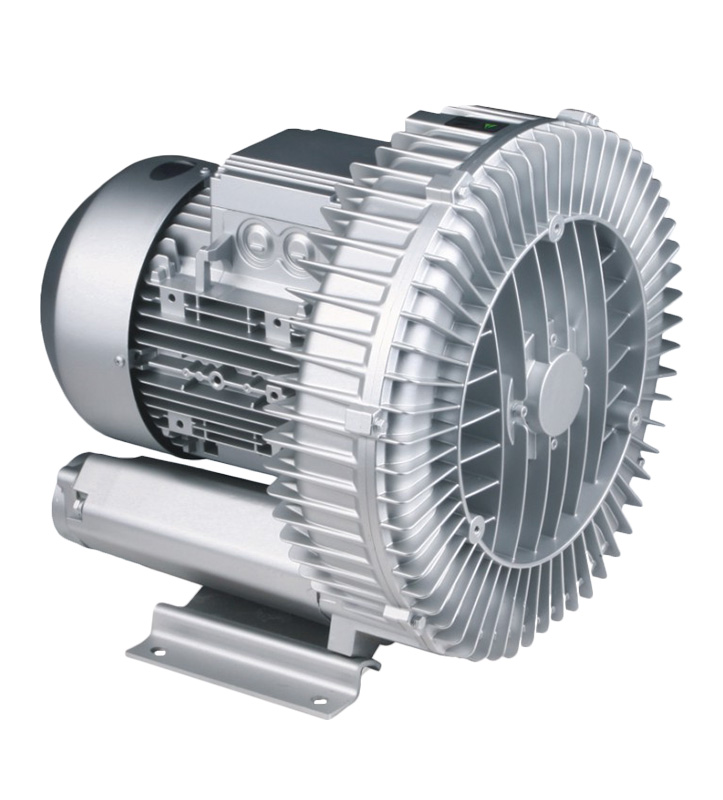
PG Series Whirl Charging Airpump PG-7500
The PG Series is a high-capacity air pump family for professional and industrial environments. The range is structured around several power and performance levels. Users can choose compact units such as the PG-750-L, medium models such as the PG-3000-D and PG-4000-D, or larger machines such as the PG-7500-D, PG-11000, PG-15000, and PG-18000.
The featured PG-7500 designation represents a high-output class within the series. The available PG-7500-D specification provides a useful reference for this performance level: 7,500W power, 380V/50Hz electrical supply, 60kPa pressure, -45kPa vacuum, 700m³/h output, less than 25kPa pressure in the listed secondary pressure specification, a 61kg weight, and a footprint of 547×451×464mm.
These specifications indicate that the unit is intended for installations where high air volume is more important than compact household portability. With an output of 700m³/h, the pump can serve a large network of air outlets when the pipe system and diffusers are correctly designed. The pressure rating supports delivery against system resistance, while the vacuum specification indicates that the machine can also be used in applications requiring negative pressure, subject to correct installation and manufacturer guidance.
The series design also provides useful flexibility for different operating conditions. Some models prioritize output, while others provide higher pressure. For example, the PG-8500 offers an output of 720m³/h and a pressure rating of 30kPa, whereas the PG-7500-D offers 700m³/h and 60kPa. This difference demonstrates why model selection should be based on the complete operating requirement rather than motor wattage alone.
The main characteristics of the PG Series include high airflow, multiple power classes, industrial voltage options, pressure and vacuum performance, and a selection of body sizes. The product family is suitable for professional users who need more capacity than standard aquarium equipment can normally provide.
The series is also useful where a single air source must supply several tanks or process points. A central pump can feed a properly sized manifold, with individual valves used to balance airflow between outlets. This arrangement can simplify maintenance and reduce the need for many separate small pumps.
Because the models differ in output, pressure, weight, and dimensions, the range can be integrated into both new installations and equipment upgrades. A smaller unit may be appropriate for a compact aquaculture room, while a larger model may be selected for commercial ponds, industrial aeration, or an extensive network of diffusers.
The following table summarizes the specifications provided for the PG Series. The featured product title refers to the PG-7500 class, while the supplied data identifies PG-7500-D as the corresponding listed 7,500W model. Buyers should confirm the exact model code, voltage, phase, and configuration before ordering.
| Model | Voltage | Power | Pressure | Vacuum | Output | Secondary Pressure | Weight | Dimensions L×W×H |
|---|---|---|---|---|---|---|---|---|
| PG-8500 | 380V/50Hz | 8,500W | 30kPa | -48kPa | 720m³/h | <20kPa | 65kg | 547×451×464mm |
| PG-11000 | 380V/50Hz | 11,000W | 65kPa | -45kPa | 1,050m³/h | <25kPa | 112kg | 644×550×570mm |
| PG-12500 | 380V/50Hz | 12,500W | 70kPa | -45kPa | 1,050m³/h | <27kPa | 115kg | 644×550×570mm |
| PG-15000 | 380V/50Hz | 15,000W | 75kPa | -50kPa | 1,050m³/h | <35kPa | 120kg | 644×550×570mm |
| PG-18000 | 380V/50Hz | 18,000W | 80kPa | -50kPa | 1,050m³/h | <45kPa | 130kg | 644×550×570mm |
| PG-750-L | 380V/50Hz | 750W | 23kPa | -20kPa | 120m³/h | <15kPa | 15kg | 269×286×300mm |
| PG-1100-L | 380V/50Hz | 1,100W | 25kPa | -22kPa | 130m³/h | <22kPa | 21kg | 269×286×300mm |
| PG-1100-B | 380V/50Hz | 1,100W | 25kPa | -22kPa | 130m³/h | <22kPa | 21kg | 269×286×300mm |
| PG-3000-D | 220V/380V/50Hz | 3,000W | 36kPa | -26kPa | 370m³/h | <22kPa | 30kg | 371×360×361mm |
| PG-4000-D | 380V/50Hz | 4,000W | 42kPa | -32kPa | 395m³/h | <30kPa | 42kg | 454×352×381mm |
| PG-5500-D | 380V/50Hz | 5,500W | 50kPa | -40kPa | 680m³/h | <18kPa | 58kg | 547×451×464mm |
| PG-7500-D | 380V/50Hz | 7,500W | 60kPa | -45kPa | 700m³/h | <25kPa | 61kg | 547×451×464mm |
The table shows that the PG Series is not a single-capacity product but a coordinated range. The compact PG-750-L produces 120m³/h, while the PG-7500-D produces 700m³/h. At the upper end, several models reach 1,050m³/h, with pressure increasing according to model selection.
The most obvious advantage of the PG-7500 class is its high airflow. An output of 700m³/h allows one central unit to support a substantial air-distribution network. In an aquaculture application, this may allow multiple tanks, raceways, or pond zones to receive air from a central station. In a water-treatment application, it can support several aeration basins or diffuser grids when the pressure requirement is within the pump’s operating range.
High output can also simplify system design. Instead of installing numerous small pumps, an operator may use one appropriately selected central machine with a manifold and independent control valves. This can make the installation easier to organize and may reduce the number of individual motors, power connections, and routine inspection points.
However, high airflow must always be considered together with pressure. A system with long pipes, small pipe diameters, many elbows, restrictive valves, or fine-pore diffusers can create substantial resistance. The PG-7500-D is therefore most effective when its air volume and pressure characteristics are matched to the complete system design.
The listed PG-7500-D pressure rating is 60kPa, with a vacuum rating of -45kPa. These figures provide flexibility beyond simple open-air circulation. Pressure capability is important when air must travel through submerged diffusers or other components that resist flow. Vacuum capability can be relevant in applications that require suction or negative-pressure operation, although the complete installation must be designed for that purpose.
Competitor products with similar motor ratings may not offer the same balance of airflow and pressure. Some units may deliver a large free-air volume but lose performance quickly as resistance increases. Others may provide pressure but have insufficient airflow for a large number of outlets. The PG Series offers several pressure and output combinations, allowing the user to choose a model based on the actual working point rather than relying on a general size label.
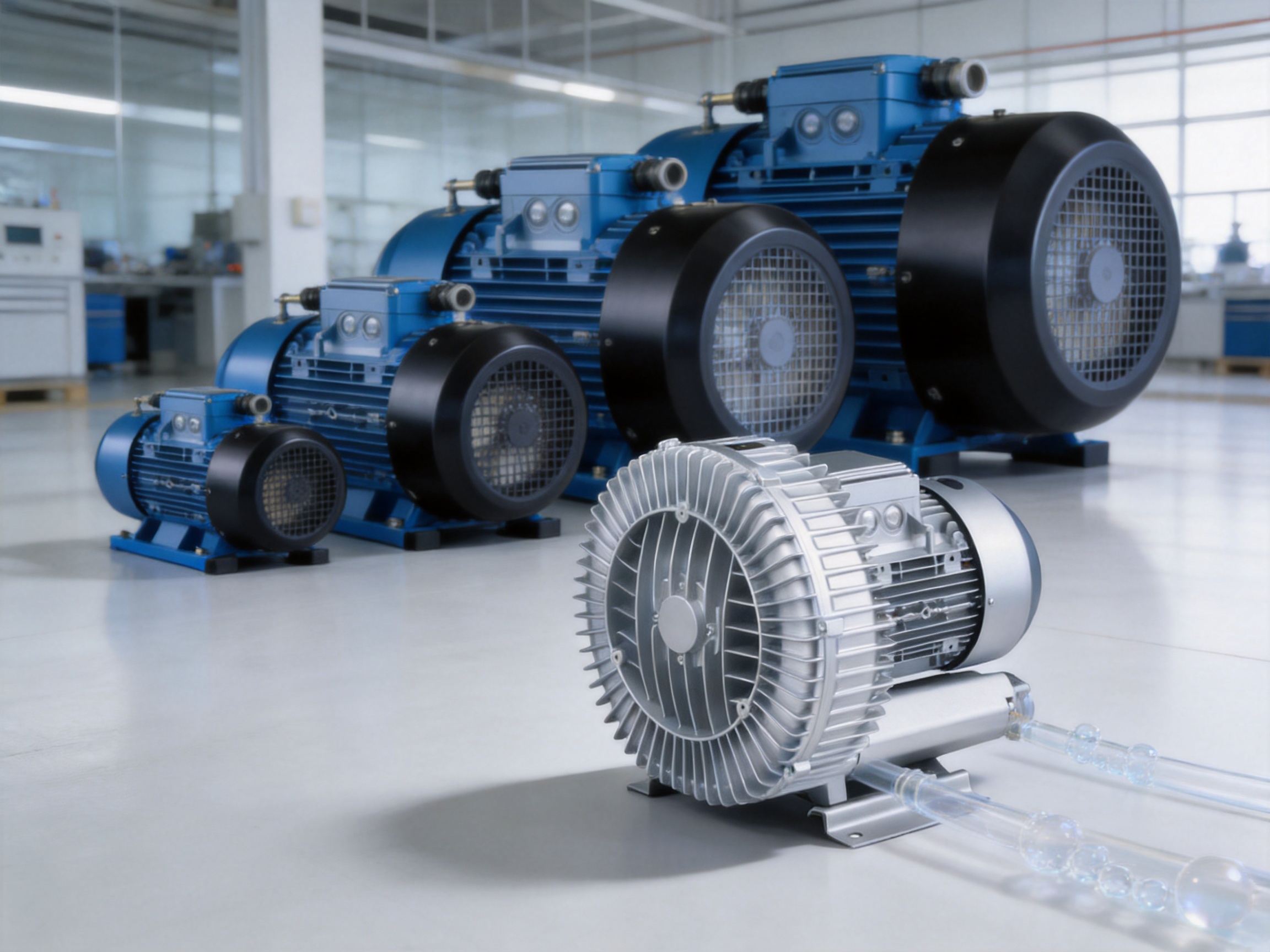
A major competitive strength of the range is its breadth. The product line begins with 750W and 1,100W models and continues through 3,000W, 4,000W, 5,500W, 7,500W, 8,500W, 11,000W, 12,500W, 15,000W, and 18,000W configurations. This makes it possible to standardize on one product family while serving installations of very different sizes.
For smaller professional systems, the PG-750-L and PG-1100 models provide a practical step above basic aquarium pumps. The PG-3000-D and PG-4000-D serve medium installations, while the PG-5500-D and PG-7500-D target high-volume applications. The PG-11000 through PG-18000 models are suitable for projects requiring very large airflow or higher pressure.
This scalability can be valuable for system integrators and engineering contractors. A supplier can design multiple projects around the same general product family, simplifying technical training, spare-parts planning, and maintenance procedures. End users can also upgrade to a higher-capacity model when their facility expands.
Most listed models use 380V/50Hz electrical power, which is common in industrial and commercial facilities with three-phase electrical infrastructure. The PG-3000-D is listed with 220V/380V/50Hz, providing additional installation flexibility. The electrical supply is a significant consideration because these machines are not intended to be connected casually to a standard household outlet.
Before installation, the buyer should verify the local electrical standard, motor protection requirements, cabling, grounding, isolator arrangements, and control equipment. Correct electrical planning supports reliable operation and protects both the pump and the wider facility. For export projects, the exact voltage and frequency should be confirmed in writing before production or shipment.
The PG-7500-D dimensions are 547×451×464mm, with a listed weight of 61kg. This is a substantial machine, but its physical size remains manageable for a high-output industrial air pump. The compact rectangular footprint can be incorporated into a dedicated equipment room, service platform, or centralized aeration station.
Compared with installing many smaller pumps to reach a similar air volume, a single high-capacity unit may use floor space more efficiently. It can also make the arrangement of intake filters, discharge piping, pressure gauges, check valves, and maintenance access more orderly. Adequate ventilation and service clearance should nevertheless be provided around the machine.
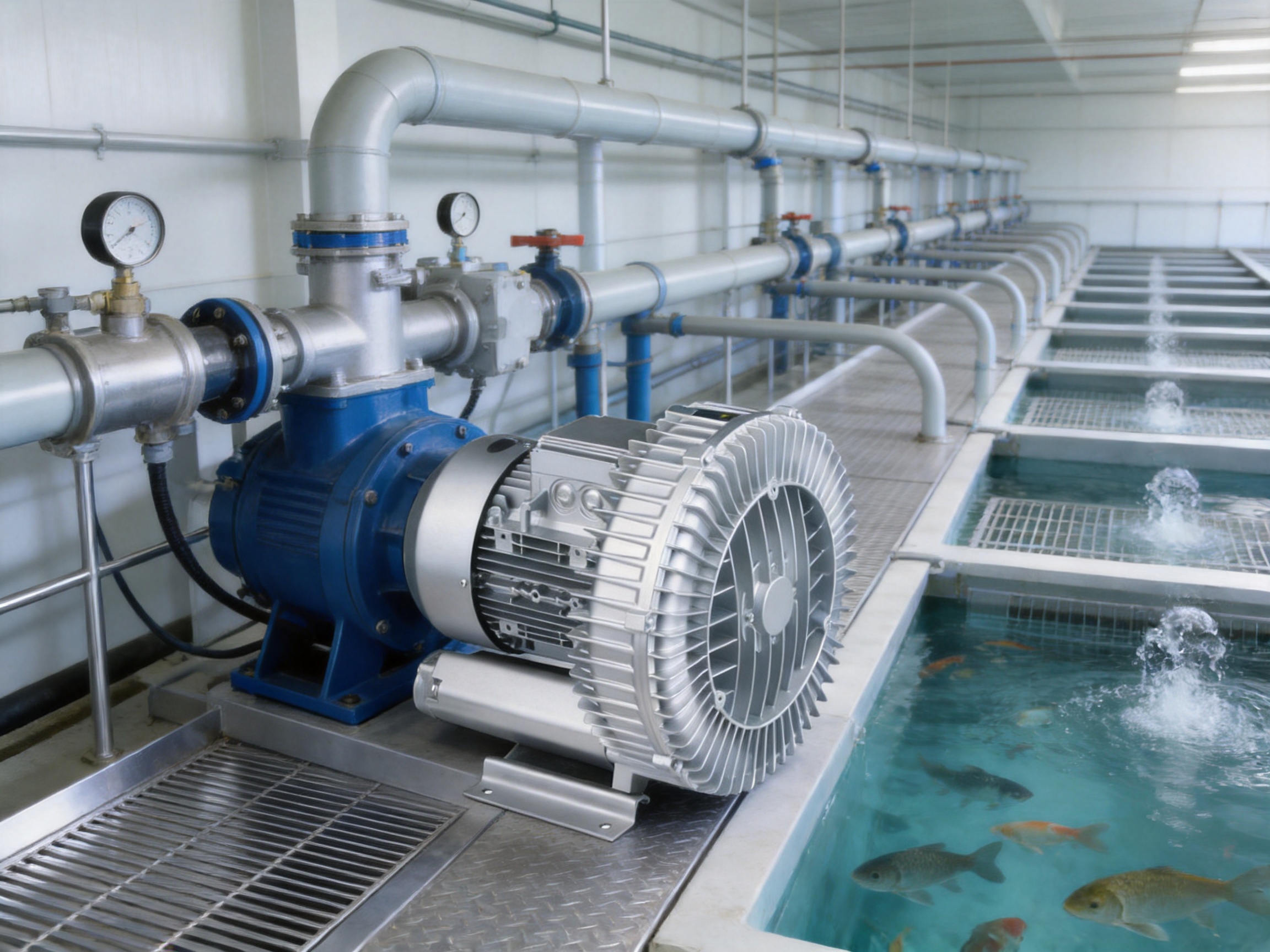
Stable dissolved oxygen is essential for fish, shrimp, and other aquatic organisms. In intensive aquaculture, oxygen demand can increase with stocking density, feeding activity, water temperature, and biological load. A high-output air pump can supply air to diffuser stones, tube diffusers, aeration grids, or pond-mounted distribution systems.
The PG-7500 class is suitable for centralized aeration in large fish farms, hatcheries, grow-out facilities, ornamental fish production sites, and aquaculture research installations. The pump can support multiple tanks through a manifold, provided that the total air demand and pressure loss remain within the machine’s operating capability.
A central air system can also improve operational control. Individual outlets may be fitted with valves so that airflow can be adjusted according to tank size, biomass, water depth, and species requirements. Backup equipment should be considered for critical operations, because a failure in a single central pump can affect many tanks at once.
Public aquariums, commercial aquarium rooms, marine-life displays, and large ornamental fish facilities often require more air than domestic aquarium equipment can supply. A professional air pump can power protein skimmers, biological filters, moving-bed filters, airlift systems, and display-tank aeration.
The PG Series may be especially useful where numerous aquariums are operated in one building. A central installation can reduce the visual clutter associated with many separate pumps and provide a consistent source of air for a large number of tanks. Careful manifold design is important to prevent one outlet from receiving excessive flow while another receives too little.
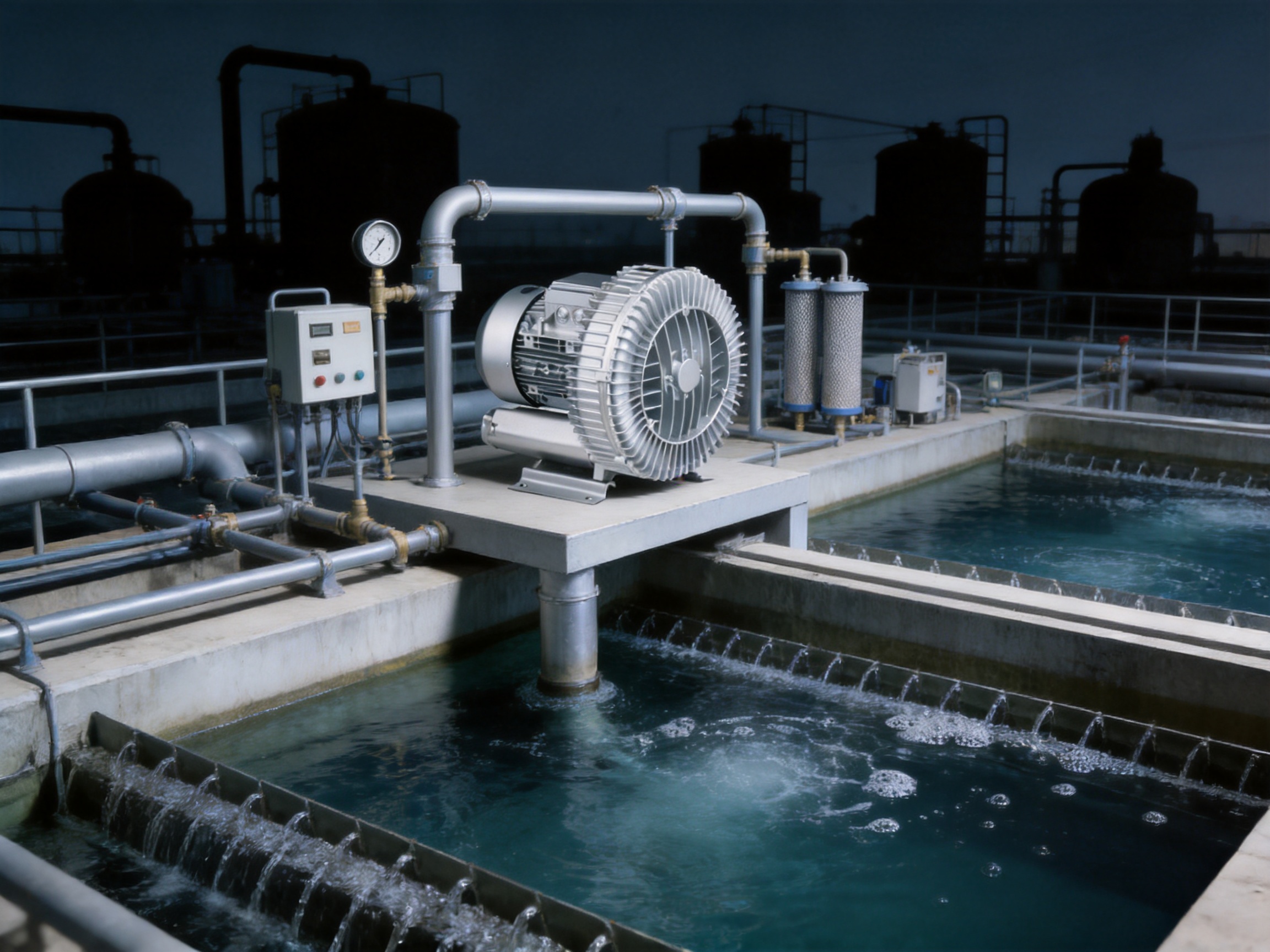
Aeration is used in wastewater treatment, biological treatment, oxidation processes, equalization tanks, and other water-management systems. Air provides oxygen for biological activity and encourages mixing in selected process stages. The required pressure depends on water depth, diffuser design, pipe length, and fouling conditions.
In these environments, the PG-7500-D’s pressure capability can be useful when air must be delivered through submerged equipment. Engineers should calculate the total dynamic resistance and compare it with the pump’s performance curve before selecting the model. The system should also include appropriate filtration and condensate management where site conditions require them.
Large decorative ponds, koi facilities, garden water features, and landscape reservoirs can benefit from centralized air supply. Aeration can improve circulation and support healthier water conditions when combined with suitable filtration and water-management practices.
The pump should be installed in a dry, ventilated location and connected to correctly sized outdoor-rated piping. Where the air line extends over a long distance, pressure loss should be calculated rather than estimated. Check valves can help reduce the risk of water returning toward the pump when the system is shut down.
The pressure and vacuum characteristics of the PG Series may support selected industrial applications involving air movement, suction, agitation, or pneumatic assistance. The exact suitability depends on the air composition, temperature, duty cycle, contamination level, and required operating point.
For process applications, the customer should provide complete technical information before ordering. A pump designed for ordinary air should not automatically be used with corrosive gases, flammable vapors, high-temperature gas, or air containing excessive dust. Application review is an important part of responsible equipment selection.
Model selection should begin with the required airflow at the actual operating pressure. Free-air output alone is not enough. The designer should determine the number of outlets, diffuser type, immersion depth, pipe length, pipe diameter, fittings, valves, filters, and expected fouling. These factors establish the working resistance of the system.
If the installation needs approximately 700m³/h at a pressure compatible with the PG-7500-D specification, that model may be a suitable candidate. If the application needs 1,050m³/h, one of the larger models may be more appropriate. If the system needs only 120m³/h, a smaller PG-750-L can avoid unnecessary power consumption and equipment cost.
The selected pump should not be operated continuously at an unsuitable point merely because its nameplate power appears adequate. A properly engineered system balances output, pressure, motor load, efficiency, and expected operating hours.
Clean intake air helps protect internal components and maintain stable performance. The installation should use an appropriate intake filter and locate the inlet away from dust, chemical fumes, spray, excessive humidity, and other contaminants. Filters should be inspected and cleaned or replaced according to site conditions.
A blocked intake filter can restrict airflow and increase operating stress. In dusty agricultural or industrial environments, inspection may need to occur more frequently than in a clean equipment room. The filter arrangement should also be accessible so that maintenance can be completed without unnecessary downtime.
Large-capacity air pumps require correctly sized pipework. Small pipes can create excessive friction loss and prevent the pump from delivering its intended performance. The main header should be sized for the total airflow, while branch lines should be sized for their individual demands.
Pipe routing should avoid unnecessary bends and sharp restrictions. Valves, silencers, check valves, gauges, and diffusers should be selected for the expected flow and pressure. In a multi-tank system, a manifold with balanced branches can make adjustment easier and improve distribution consistency.
The listed voltage values show that most PG Series models are intended for industrial electrical supplies. Installation should be performed by qualified personnel. Proper grounding, overload protection, phase verification, isolation, and emergency shutdown arrangements are essential.
Motor protection should be selected according to the rated current and local electrical regulations. The control panel should provide a practical means of starting, stopping, and isolating the pump. Where the pump operates as part of a larger aquaculture or treatment system, alarms and backup power may be appropriate.
A high-power motor and air-moving assembly generate heat during operation. The pump should be placed in a dry, clean, ventilated area with enough space for inspection and service. The base should be stable and capable of supporting the listed weight.
The installation should protect the pump from flooding, direct spray, and accidental contact with water. If the unit is installed near tanks or ponds, the equipment room should include appropriate drainage and splash protection. Air lines should be arranged so that water cannot easily flow back into the pump during shutdown.
The product is supplied by Sensen Group Co., Ltd., a manufacturer with roots extending back to 1985. The company information describes a broad business structure covering aquarium products, aquaculture machinery, and industrial equipment. This combination is relevant to the PG Series because the product sits at the intersection of aquarium technology, water management, and industrial air movement.
More than three decades of operating history provide an important foundation for product development and manufacturing management. Long-term experience allows a company to understand the practical requirements of aquatic equipment, including water exposure, continuous operation, maintenance access, air distribution, and the needs of commercial customers.
Experience does not replace technical verification, but it can support better product refinement. A manufacturer that works across aquarium pets, aquaculture machinery, and industrial equipment is exposed to a wide range of operating environments. Feedback from these different sectors can help guide future product improvements and application support.
The company information identifies a Sensen Research Institute as one of the group’s functional departments. The existence of a dedicated research organization indicates an emphasis on continued technical development rather than relying only on established designs.
For high-capacity air pumps, research and development may address airflow behavior, pressure stability, motor integration, noise management, thermal control, structural strength, and serviceability. These areas are important because industrial customers evaluate equipment according to total operating performance, not simply purchase price.
A research-oriented manufacturing structure also supports the creation of different models for different operating points. The wide PG Series range suggests that the manufacturer has developed multiple power and capacity configurations instead of offering only one generalized pump size.
The company lists a Quality Control Department among its functional departments. Quality control is particularly important for industrial air pumps because small variations in assembly, electrical components, rotating parts, sealing, or airflow passages can affect long-term reliability.
A structured quality-control process can include incoming-material inspection, assembly checks, electrical testing, dimensional verification, operational testing, and final product review. The specific tests applied to each PG model should be confirmed with the manufacturer, but the presence of a dedicated quality organization demonstrates that quality management is treated as a formal business function.
For purchasers, quality control is also connected to consistency. Contractors and distributors need equipment that performs predictably from one shipment to the next. Consistent product dimensions and specifications simplify installation planning, replacement, and inventory management.
The supplied company information identifies several wholly owned subsidiary corporations and an import and export company, as well as holdings in multiple trading companies. This broad structure may support production coordination, supply-chain management, domestic distribution, and international sales.
For overseas buyers, an established import and export function can be valuable. Industrial equipment orders often involve technical documents, packaging requirements, shipping coordination, voltage confirmation, and communication across time zones. A manufacturer with dedicated international business capability is better positioned to manage these requirements than a small workshop with limited export experience.
The company also describes a large domestic sales network and unified retail locations. Although the PG Series is a professional product rather than a simple consumer accessory, a broad service and distribution network can help support market feedback, product visibility, and access to related aquarium and aquaculture equipment.
Small diaphragm pumps are convenient for home aquariums and low-volume applications, but they are generally not designed to provide hundreds of cubic meters of air per hour. A PG Series unit offers a fundamentally different capacity level. It is intended for centralized, high-volume service rather than a single small tank.
For a large facility, replacing many small diaphragm pumps with a centralized industrial pump can simplify the air supply arrangement. It may reduce the number of separate electrical connections and make monitoring more systematic. The trade-off is that the larger unit requires industrial installation, proper pipework, and qualified electrical work.
Piston pumps can provide useful pressure, but they may be less suitable when the application requires a very large continuous airflow across many outlets. The PG Series provides a range of high-output models designed around large air volumes and pressure capability.
The best choice depends on the operating point. A piston pump may be appropriate for a small high-pressure task, while a PG Series model may be more suitable for large-scale aeration or centralized air distribution. The customer should compare actual airflow at working pressure, not only nominal motor power.
Using numerous independent pumps can create a complicated installation. Each pump may have its own filter, cable, switch, mounting position, and maintenance schedule. A centralized PG Series system can offer a cleaner equipment layout and a single primary air source.
There are also situations where multiple smaller pumps are preferable, especially when redundancy or independent zone control is essential. A well-designed facility may use one primary PG Series pump, one standby pump, and separate manifolds or control zones. This approach combines centralized capacity with operational resilience.
Some suppliers offer only one or two air-pump sizes, forcing customers to oversize or undersize equipment. The PG Series provides more choices across power, output, pressure, voltage, dimensions, and weight. This improves the likelihood of finding a model that fits the project’s actual requirements.
The range is also beneficial for distributors and project contractors. They can offer a consistent family of machines for different customers and applications while retaining a common supplier relationship. This may simplify technical training and product familiarity.
Routine maintenance is essential for preserving air output and protecting the pump. The intake filter should be checked regularly, particularly in dusty environments. Air lines and diffusers should be inspected for blockages, leaks, mineral deposits, biological fouling, or damaged connections.
Pressure should be monitored during normal operation. A gradual increase in pressure may indicate blocked diffusers, restricted pipework, or a valve that is not fully open. A sudden reduction in output may indicate a leak, a disconnected branch line, an intake problem, or a mechanical issue.
Electrical connections should be inspected by qualified personnel. Unusual current draw, repeated overload trips, excessive heat, abnormal vibration, or unusual noise should be treated as warning signs. The machine should be isolated before service work is performed.
Maintenance intervals depend on operating hours, air quality, ambient temperature, humidity, and application conditions. A pump operating continuously in a commercial aquaculture facility may require a more formal preventive-maintenance schedule than a unit used intermittently.
Keeping maintenance records can help identify performance changes. Operators may record operating pressure, approximate airflow, motor current, filter condition, temperature, vibration, and service dates. These records support early fault detection and make it easier to plan replacement parts or scheduled shutdowns.
Before purchasing a PG Series air pump, the buyer should confirm the exact model designation. The supplied product title states PG-7500, while the detailed table lists PG-7500-D. Because the models in the series have different pressure, output, and electrical characteristics, the exact suffix should be documented on the quotation, order confirmation, nameplate, and technical drawing.
The buyer should also confirm voltage and frequency. Most models are listed at 380V/50Hz, while PG-3000-D is listed with 220V/380V/50Hz. Electrical compatibility should never be assumed based only on the product family name.
Other important purchasing questions include the expected operating hours, required airflow at pressure, available installation space, inlet and outlet connection sizes, included accessories, control-panel requirements, packaging, spare parts, warranty terms, and delivery schedule. For export orders, the customer should also clarify documentation, export packaging, and destination-country electrical requirements.
It is advisable to provide the supplier with a complete application description. This should include the number and size of tanks, water depth, diffuser type, pipe layout, desired airflow, ambient conditions, and whether the system requires pressure, vacuum, or both. A more complete application brief helps the manufacturer recommend the correct model.
The PG-7500 class occupies a useful position between medium and very large industrial air systems. Its listed 700m³/h output is sufficient for substantial installations, while its 60kPa pressure rating gives it more flexibility than a free-air blower intended only for low-resistance applications.
The machine is large enough to support centralized operation but remains smaller than the 11,000W to 18,000W models. This can make it appropriate for growing aquaculture facilities, commercial aquarium rooms, medium water-treatment systems, and professional pond installations.
Its value is further supported by the wider product family. If a project expands, the user can compare higher-capacity models within the same range. If the initial requirement is lower, the user can select a smaller model rather than purchasing unnecessary capacity.
Combined with the manufacturer’s long industry history, research organization, quality-control structure, subsidiary network, and export capability, the PG Series provides a platform for professional buyers seeking more than a basic retail air pump.
It is designed for high-volume air delivery in aquaculture, large aquarium systems, water treatment, pond aeration, and selected industrial applications. It is intended for professional installations rather than small household aquariums.
The supplied specification lists an output of 700m³/h for the PG-7500-D model. The listed pressure is 60kPa, and the listed vacuum is -45kPa.
The product title identifies PG-7500, while the supplied technical table identifies PG-7500-D. Buyers should confirm the exact suffix with the supplier because model variations can have different specifications or configurations.
The supplied table lists 380V/50Hz for PG-7500-D. Electrical installation must be completed by qualified personnel, with appropriate grounding, overload protection, isolation, and motor-control equipment.
Yes, its high output makes centralized distribution to several tanks possible when a correctly sized manifold and pipe network are used. Each branch should be balanced with suitable valves and checked for leaks or restrictions.
The PG-7500 class provides much greater airflow and pressure capability. A small aquarium pump is normally intended for one or a few low-volume outlets, whereas the PG-7500 class is designed for large networks and industrial-scale aeration.
The listed PG-7500-D specification includes a vacuum value of -45kPa. The complete installation must be designed for negative-pressure operation, and the customer should confirm suitability with the manufacturer before using the pump in a specialized vacuum application.
Users should check voltage, frequency, electrical protection, foundation strength, ventilation, service clearance, pipe size, diffuser resistance, intake filtration, discharge connections, and protection against water backflow.
The supplied company information states that the group works in aquarium pets, aquaculture machinery, industrial equipment, and related fields. Its product and business structure includes research, quality control, production subsidiaries, domestic distribution, and import-export operations.
The model should be selected according to required airflow at operating pressure, not only motor wattage. The buyer should calculate pipe and diffuser resistance and compare the result with the selected model’s pressure and output characteristics.
The PG Series Whirl Charging Airpump provides a high-capacity solution for professional aeration and air-movement requirements. The PG-7500 class, represented in the supplied table by the PG-7500-D, combines 7,500W power, 700m³/h output, 60kPa pressure, and -45kPa vacuum capability in a machine sized for centralized industrial installation.
Its advantages include high airflow, a useful balance of pressure and capacity, a broad family of compatible models, industrial electrical configurations, and a manageable footprint for commercial equipment rooms. Compared with small diaphragm pumps, basic low-volume air equipment, or multiple uncoordinated units, it can provide a more centralized and scalable approach to large-system aeration.
The manufacturer’s long operating history, research institute, quality-control department, network of subsidiaries, and import-export capability provide additional support for professional buyers. These strengths are particularly relevant to customers who require consistent manufacturing, model selection, technical communication, and long-term supply capability.
Successful operation depends on correct engineering. Buyers should verify the exact model suffix, calculate pressure loss, size pipework and diffusers appropriately, confirm the electrical supply, and install suitable filtration and protection. When these requirements are addressed, the PG-7500 class can serve as a dependable core air source for aquaculture, aquariums, water-treatment systems, ponds, and selected industrial applications.
1. Sensen Group Co., Ltd. Product specification data for the PG Series Whirl Charging Airpump.
2. Sensen Group Co., Ltd. Corporate information and company history, including organizational and manufacturing overview.
3. PG Series model comparison data supplied for PG-8500, PG-11000, PG-12500, PG-15000, PG-18000, PG-750-L, PG-1100-L, PG-1100-B, PG-3000-D, PG-4000-D, PG-5500-D, and PG-7500-D.
4. General engineering principles for centrifugal and regenerative air-moving equipment, including airflow, pressure loss, pipe sizing, filtration, and motor protection.


 No. 61-79, Baima Street, Maao Town, Dinghai District, Zhoushan City, Zhejiang Province, China.
 0086 580 8082088 / 8081168
 0086 580 8080978
 songhua@sunsun-china.com