

 English
 русский
 España
 Portugal
 عربي
عربيWang Yu | Aquarium Products After-Sales Engineer
Home / Author / Wang Yu | Aquarium Products After-Sales Engineer / Targeted Nutrition for Healthy Blood Parrotfish: A Practical Guide to 800 g Aquarium Food
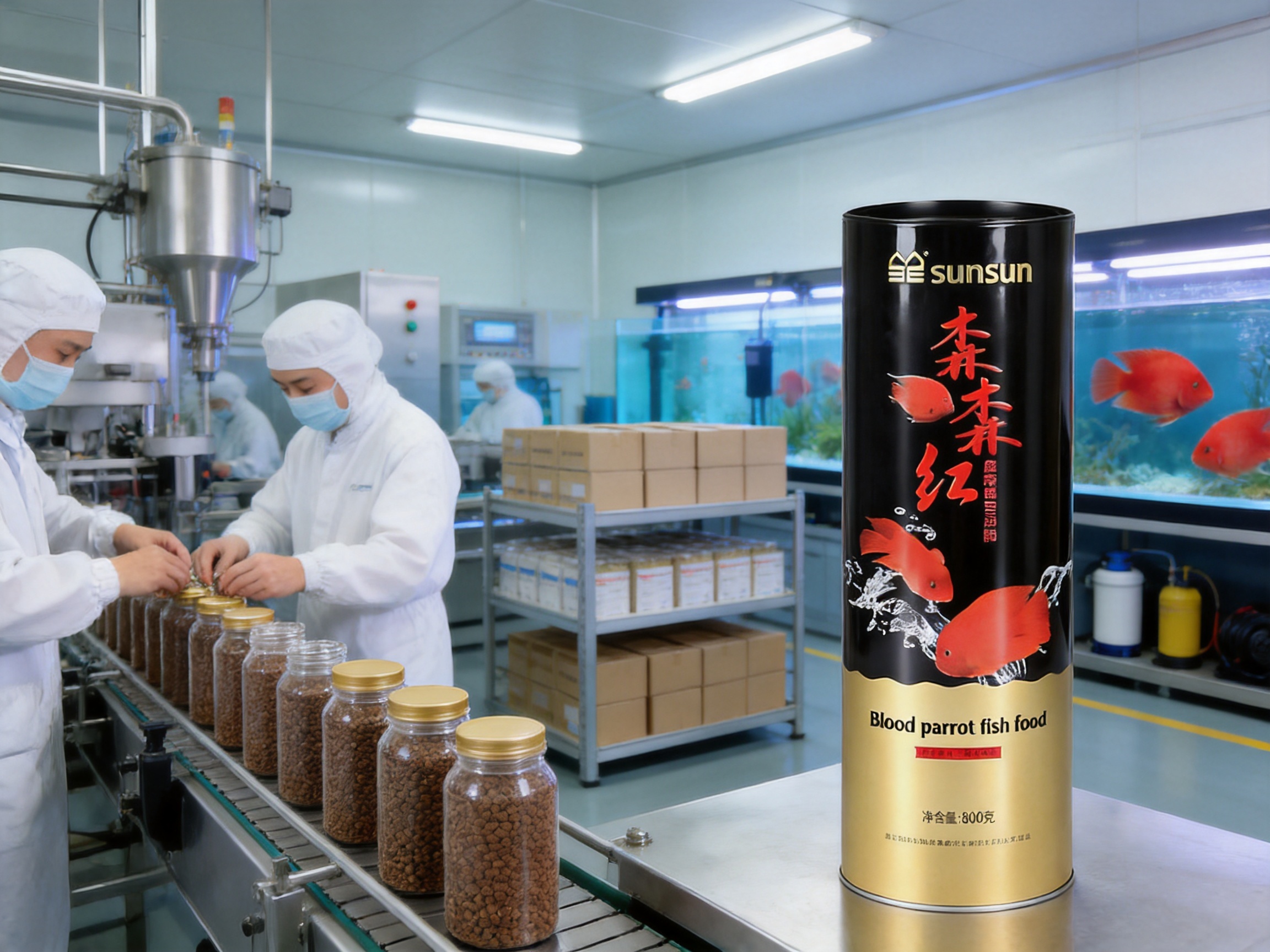
Blood parrotfish are among the most recognizable freshwater aquarium fish. Their rounded body shape, expressive appearance, bright coloration, and active feeding behavior make them popular in home aquariums, ornamental fish displays, and professional aquatic retail environments. However, keeping blood parrotfish in good condition requires more than attractive decoration and adequate filtration. Their daily diet influences growth, body condition, coloration, activity, digestion, and long-term vitality.
MSX-3203 is a dedicated blood parrotfish food supplied in an 800 g bottle. It belongs to the aquarium accessories category and is designed for aquarists who want a convenient food product intended specifically for the feeding habits and presentation requirements of blood parrotfish. Its focused positioning distinguishes it from general-purpose tropical fish food, which may not be organized around the needs of this particular ornamental fish type.
A specialized food does not replace responsible aquarium management. Water quality, stocking density, temperature, filtration, oxygenation, lighting, and feeding frequency all work together. Nevertheless, selecting an appropriate food is one of the most direct ways to support consistent care. A clearly identified product, a practical bottle format, and a substantial 800 g net content can help both household aquarists and aquarium businesses establish a more organized feeding routine.
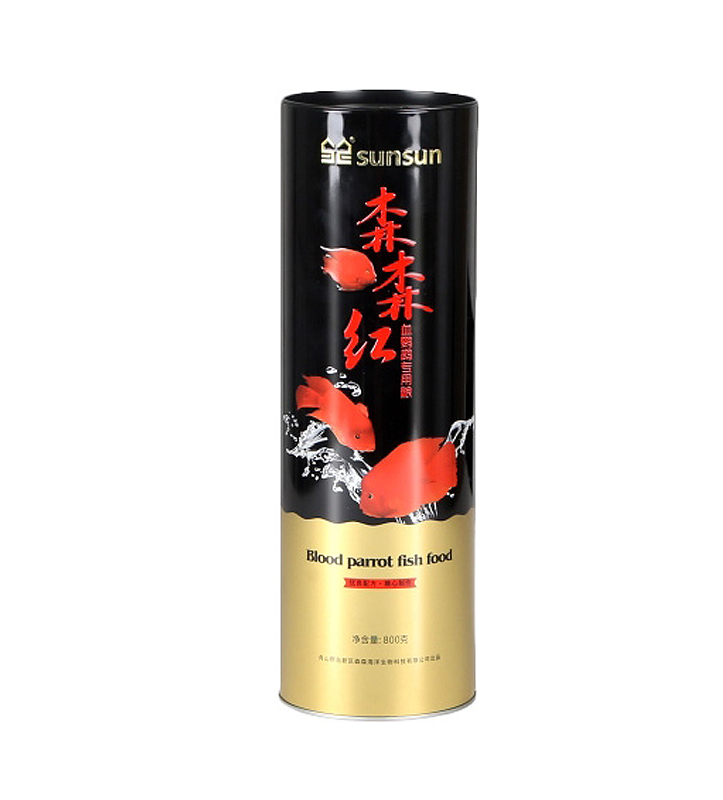
MSX-3203
Content
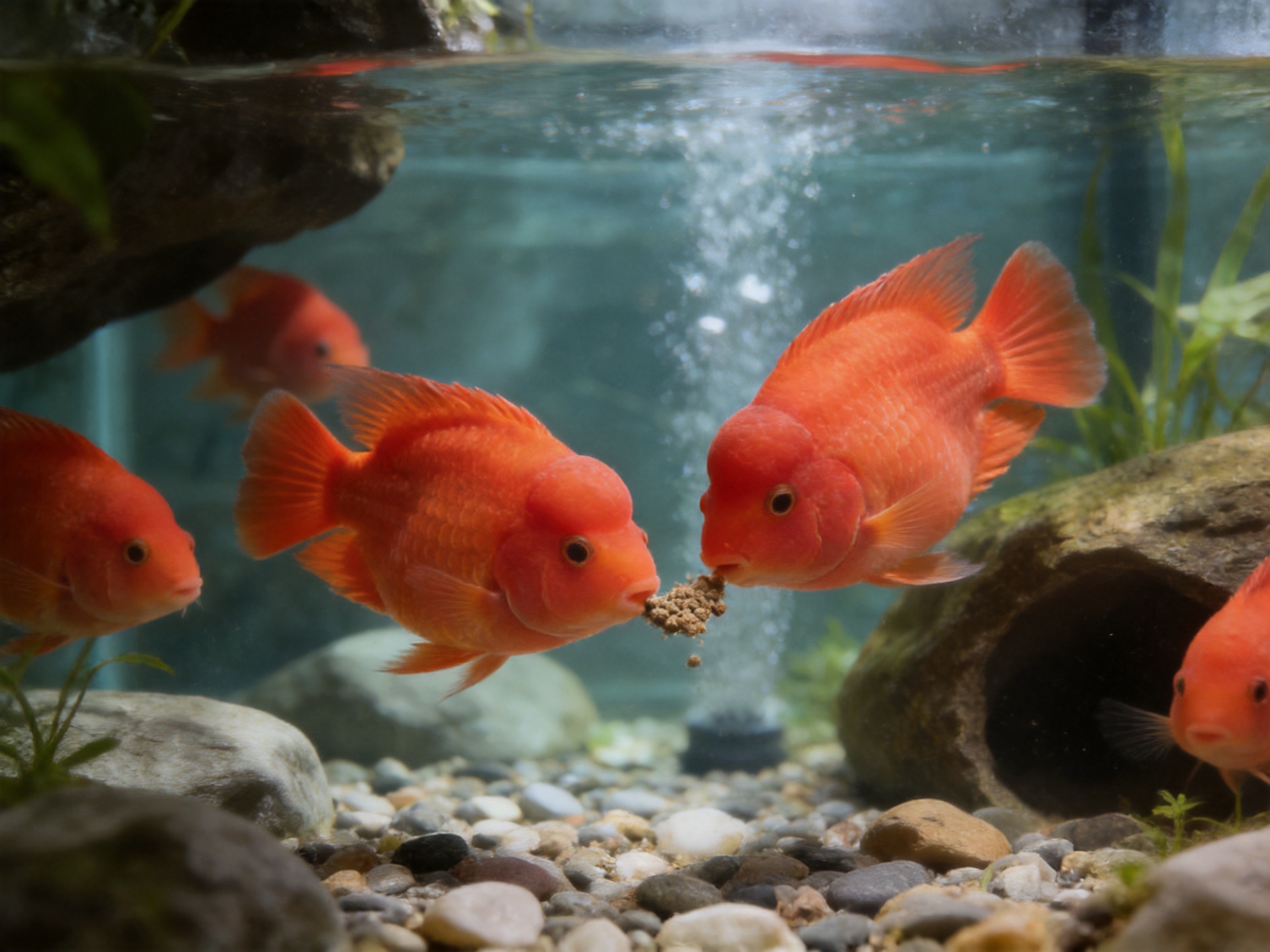
Blood parrotfish are omnivorous ornamental fish with a strong interest in food. Their mouth structure and compact body shape can make feeding behavior different from that of many long-bodied community fish. They often approach food quickly, inspect it, and consume several small portions during an active feeding period. Because they can be enthusiastic eaters, the feeding method is just as important as the food itself.
In an aquarium, food should be offered in quantities that the fish can consume within a short period. Overfeeding can lead to uneaten particles collecting on the substrate, inside filter chambers, or among decorations. As this material decomposes, it can increase the organic load of the aquarium and place additional pressure on biological filtration. A specialized food is therefore most effective when combined with portion control and observation.
Blood parrotfish are frequently kept in groups or in mixed ornamental communities. This can create competition during feeding. Faster fish may consume food before slower individuals receive enough, while larger fish may dominate a feeding area. A food product that can be portioned easily allows the keeper to distribute feeding more evenly. The aquarist can place food in more than one area or feed in small stages, helping reduce competition.
Fish condition should be evaluated through observation rather than through food quantity alone. Healthy blood parrotfish generally show active movement, regular interest in food, stable posture, and an appearance appropriate to their individual coloration. A sudden refusal to eat, abnormal swimming, rapid breathing, bloating, or unusual waste may indicate water-quality problems, stress, disease, or an unsuitable feeding routine. Food should not be treated as a substitute for diagnosis or proper aquarium maintenance.
MSX-3203 is identified as blood parrotfish food, giving it a clear application instead of leaving the aquarist to guess whether a general community formula is appropriate. Its net content is 800 g per bottle. This size is useful for regular feeding programs because it provides a meaningful supply while remaining easier to organize than very large commercial sacks.
The product’s dedicated positioning is its primary practical advantage. Many aquarium foods are marketed for broad groups such as tropical fish, cichlids, goldfish, or bottom feeders. Broad formulas may be useful in mixed tanks, but they do not always provide a feeding solution that is easy to match with the keeper’s main fish. By identifying the target fish clearly, MSX-3203 supports more deliberate product selection.
Aquarium stores can also benefit from a clearly defined product category. Staff can recommend it to customers who keep blood parrotfish without having to explain an uncertain cross-category substitution. In a retail display, the product can be placed alongside other ornamental fish supplies, allowing customers to understand its intended purpose immediately.
The bottle format offers practical handling benefits. A bottle can be closed after use, placed on a storage shelf, and labeled for routine access. Compared with an open bulk container, a closed bottle can make daily handling more orderly and can reduce unnecessary exposure to humidity, dust, and accidental contamination. The keeper should still follow good storage practices, including closing the container promptly and keeping it in a cool, dry place away from direct sunlight.
The most important difference between a dedicated blood parrotfish food and a generic aquarium food is the clarity of purpose. General foods are often designed to serve several species with different body shapes, feeding patterns, and nutritional expectations. A targeted product allows the user to begin with a formulation category associated with the principal fish in the aquarium.
This does not mean that every aquarium requires only one food. Mixed aquariums may benefit from several feeding products, and fish may require variation according to age, size, condition, or breeding status. However, a dedicated staple can simplify the main feeding routine. The aquarist knows which product is intended for the blood parrotfish and can use supplementary foods only when appropriate.
Product organization affects feeding consistency. When a food is clearly identified, the risk of using an unsuitable product by mistake is reduced. This is especially useful in homes with multiple aquariums or in retail facilities where many products may be opened at the same time. The 800 g bottle gives the user a recognizable unit for routine stock management.
Compared with unmarked bulk food, a packaged product also supports better traceability within a household or business. Staff can associate the container with a specific fish group, monitor remaining quantity, and establish an internal replacement schedule. These simple practices can improve consistency and reduce the chance that old or improperly stored food remains in use.
Feeding is performed frequently, often every day. A product that is easy to access and close again can save time over the course of weeks and months. The bottle format is suitable for placement near, but not directly above, the aquarium. This allows the keeper to feed efficiently while keeping the container away from splashing water.
Compared with a large unsealed bag, a bottle can be easier to handle with clean, dry hands. It can also be stored vertically and separated from water-treatment chemicals, tools, and other aquarium supplies. Although packaging alone does not guarantee freshness or quality, practical storage design supports responsible product use.
For aquarium retailers, a dedicated blood parrotfish product can strengthen category organization. Customers commonly search by fish type rather than by technical food classification. A product associated directly with blood parrotfish can therefore be easier to explain at the point of sale than a product identified only as a broad tropical formula.
The 800 g quantity also offers a balance between trial and regular use. A very small package may be consumed quickly by an active aquarium or may not provide good value for a busy store. An extremely large package may be inconvenient for a home keeper and may remain open for too long. The bottle size can serve individual enthusiasts, aquarium shops, fish rooms, and moderate-scale display systems.
| Feature | MSX-3203 Position | Practical User Benefit |
|---|---|---|
| Target fish | Blood parrotfish | Supports direct product selection for a defined ornamental fish group |
| Net content | 800 g per bottle | Provides a useful supply for repeated feeding and stock planning |
| Product format | Bottled aquarium food | Convenient handling, storage, and daily access |
| Market use | Home aquariums and aquarium retail | Suitable for household routines and organized commercial presentation |
| Category | Aquarium accessories | Fits within a complete aquarium equipment and care program |
| Application focus | Routine feeding of blood parrotfish | Helps keep the main feeding plan clear and consistent |
Before feeding, the aquarist should observe the fish and the aquarium. If the fish are stressed, gasping, hiding unusually, or showing signs of illness, feeding should be considered together with a water test and a broader health assessment. Food should be added carefully rather than automatically increasing the quantity because fish appear eager.
Begin with a small portion. The correct amount depends on the number and size of fish, water temperature, aquarium filtration, and feeding frequency. The fish should consume the offered portion promptly. If food remains after a short feeding period, the quantity should be reduced at the next feeding. Uneaten food should be removed when practical, particularly in aquariums with sensitive biological systems.
Dividing the daily ration into smaller meals can be helpful for active fish. It may reduce the amount released at one time and give smaller or less dominant fish more opportunities to feed. A divided schedule can also make observation easier. The aquarist can see whether all fish are eating and whether one individual is being excluded.
When introducing MSX-3203 into an established aquarium, a gradual transition may be preferred. Mix a small amount of the new food with the previous food, monitor acceptance, and increase the new product as appropriate. Some fish accept a new food immediately, while others require repeated exposure. Rapid changes are not always necessary unless a veterinarian or aquatic specialist recommends them.
Storage is an important part of product performance. Keep the bottle tightly closed after each use. Avoid placing it beside an aquarium where condensation or splashing can enter the container. Do not use wet feeding tools inside the bottle. A dry scoop or clean measuring utensil helps limit moisture transfer and keeps portions more consistent.
Blood parrotfish are valued partly for their vivid visual appeal. Aquarists often associate diet with coloration, but color is influenced by several factors, including genetics, age, stress, lighting, water quality, and general health. A suitable food can be part of a complete care program, but it should not be promoted as a guaranteed color-changing treatment.
Stable water conditions are especially important. Regular testing should consider the aquarium’s biological cycle and the species kept in the system. Ammonia and nitrite should not be allowed to accumulate. Nitrate should be managed through appropriate water changes, stocking control, plant management where applicable, and effective filtration. A fish receiving good food in poor water conditions will not achieve the full benefit of responsible nutrition.
Temperature stability also matters. Sudden changes can stress ornamental fish and may affect appetite and digestion. The aquarium heater, thermometer, and circulation system should be selected according to the tank size and environmental conditions. Water movement should provide adequate oxygenation without forcing the fish to fight excessive current.
Decorations should leave sufficient swimming space. Blood parrotfish can be active and may interact with substrate, plants, caves, and ornaments. Sharp edges should be avoided. Any decoration or equipment placed in the aquarium should be cleaned safely and should not release harmful substances into the water.
Lighting should be chosen for the needs of the aquarium rather than used solely to intensify fish color. Excessive lighting can increase algae and may create stress if the fish have no shaded areas. A consistent light-and-dark schedule supports a predictable environment. Aquarium lighting, food, filtration, and water movement should be treated as connected components rather than isolated products.
MSX-3203 is supplied by Sensen Group Co., Ltd., a manufacturer with a history extending back to November 1985. More than three decades of continuous operation provide an important foundation for product development, production management, supplier coordination, and market service. Long-term experience does not remove the need for ongoing quality control, but it can provide institutional knowledge that newer companies have not yet developed.
The company describes a broad operating structure that includes aquarium products, aquaculture machinery, industrial equipment, and related pet and leisure categories. This breadth is significant because aquarium food is used within a larger aquatic-care environment. Understanding filtration, pumps, oxygenation, lighting, and aquarium operation can help a manufacturer view feeding as part of complete fish care rather than as an isolated retail item.
The company’s headquarters includes functional departments such as a research institute and a quality control department. A research function can support product development, application evaluation, packaging improvement, and the adaptation of products to changing market requirements. A dedicated quality control function can help establish inspection procedures, manage production records, monitor consistency, and coordinate corrective action when needed.
Manufacturing strength is not defined only by machinery. It also includes personnel organization, production scheduling, procurement, warehouse handling, documentation, packaging control, and after-sales communication. The company’s stated structure includes administrative, personnel, information, and financial functions, creating a framework for coordinating the many stages between product planning and customer delivery.
The company also operates multiple wholly owned subsidiary corporations and maintains holdings in several trading companies. Such a structure may support broader production capacity, regional service, logistics coordination, and market coverage. For international customers, a connected manufacturing and export organization can make communication and order handling more efficient than relying on fragmented supply channels.
A responsible aquarium food manufacturing process begins with controlled raw-material management. Materials should be received through documented procedures, identified properly, and stored under conditions suitable for their characteristics. Batch separation and inventory rotation help reduce the risk of confusion between production lots or deterioration caused by excessive storage time.
Production stages should be organized around repeatability. Depending on the specific food process, this may involve weighing, blending, shaping or processing, drying or conditioning, screening, inspection, and packaging. Each stage requires appropriate controls. Accurate weighing supports consistency, while uniform mixing helps prevent significant variation between portions. Processing conditions should be recorded so that the finished product can be evaluated against established requirements.
Packaging is another important control point. A bottle must be clean, compatible with the product, properly filled, and securely closed. Label information should correspond to the product inside the container. Net content, product identification, storage guidance, and intended application should be managed carefully. Proper packaging also supports safe warehouse handling and clearer retail presentation.
Quality control should continue after production. Finished goods may be reviewed for appearance, odor, physical condition, package integrity, labeling accuracy, and net content. Retained samples and batch records can support internal investigation if a question arises later. While the supplied product information does not specify a particular ingredient list or laboratory specification, these general process controls represent the type of manufacturing discipline expected from an established aquatic-products company.
Aquarium markets change as consumers seek more specialized products. Blood parrotfish food reflects the value of identifying a particular fish group rather than relying exclusively on broad classifications. Research and development teams can study consumer use, feeding habits, package size, storage convenience, and the requirements of aquarium retailers when designing or refining such products.
Product development should also consider practical instructions. A food must be easy for the user to identify, store, portion, and integrate into a routine. A technically appropriate product can still perform poorly in the market if the package is confusing or difficult to use. The 800 g bottle format presents a straightforward solution for users who want a clearly defined quantity for regular aquarium care.
Ongoing improvement may involve packaging materials, production efficiency, quality documentation, logistics, and customer feedback. An established company with research, quality, and commercial departments can connect these sources of information more effectively. This organizational connection is one of the important strengths a specialized manufacturer can offer beyond the product name alone.
Buyers of aquarium supplies often evaluate more than the immediate product. They may consider whether the supplier can support repeated orders, maintain stable product identification, provide communication in international markets, and coordinate different categories of aquatic equipment. A company with a substantial production and marketing network may be better positioned to serve these requirements.
Sensen Group Co., Ltd. reports a nationwide network of aquarium stores and an emphasis on integrating online and offline retail services. A broad sales network can create closer contact with end users and provide feedback from different aquarium environments. This information may help the company understand common feeding questions, storage issues, package preferences, and the practical challenges faced by fish keepers.
The company’s involvement in aquarium pets, aquaculture machinery, industrial equipment, and related products also supports a diversified business base. Diversification may help maintain investment in facilities, management systems, and technical staff. It can also allow the company to serve customers who require more than one type of aquarium product.
For distributors and retailers, continuity is a central concern. A supplier should be able to communicate product specifications, production availability, packaging details, and shipping arrangements. An organization with dedicated business, financial, administrative, and export functions may provide a more structured foundation for this communication.
However, buyers should still complete their own due diligence. They should confirm current specifications, packaging, regulatory requirements, shelf-life information, shipping conditions, and market authorization before placing commercial orders. The presence of a long operating history is valuable, but every purchase should be based on current documentation and the buyer’s specific requirements.
For a home aquarist, MSX-3203 can serve as the main food in a blood parrotfish feeding routine. The bottle can be stored with other aquarium accessories, but it should be kept separate from water conditioners, medications, fertilizers, and cleaning chemicals. A simple storage area helps prevent accidental product mix-ups.
The keeper can establish a feeding log that records the approximate portion, number of fish, feeding time, and observed response. This is particularly useful when the aquarium contains several fish or when more than one family member provides care. Consistent records make it easier to notice changes in appetite and avoid repeated feeding.
During feeding, observe every fish rather than focusing only on the most active individuals. If one blood parrotfish repeatedly fails to reach the food, distribute small portions in different areas or temporarily adjust the feeding method. If food is consistently left over, reduce the portion. If the fish finish the food immediately but maintain good condition and water quality, the keeper can evaluate whether a slightly adjusted schedule is appropriate.
Food should not be stored indefinitely merely because the bottle has not been emptied. The product should be used according to the manufacturer’s storage guidance and any applicable date information on the package. If the food develops an unusual odor, becomes damp, changes unexpectedly, or shows signs of contamination, discontinue use and seek product guidance.
Retail stores can position the product in a dedicated blood parrotfish section or within a broader ornamental fish food display. Clear category organization helps customers compare food types without confusing fish food with medication, water treatment, or equipment. Staff can explain that the product is intended for blood parrotfish and that feeding quantity must be adjusted according to aquarium conditions.
In a fish room, the 800 g bottle can be assigned to one or more tanks according to the feeding plan. Staff should use clean, dry tools and avoid returning unused food to the original container. Written procedures can define who feeds each tank, how the portion is measured, and how unusual fish behavior is recorded.
Commercial users should also monitor inventory rotation. Older stock should be used first when appropriate, while newly received product should be stored under suitable conditions. The bottle should remain closed except during dispensing. These procedures protect the value of the product and reduce waste.
For distributors, product education is important. Buyers should receive accurate information about the target species, net content, storage, feeding practice, and package handling. Avoiding unsupported promises helps protect customer trust. The product’s strongest commercial message is its practical specialization, not an exaggerated guarantee of growth, color, or disease prevention.
Efficient feeding can contribute to better aquarium resource management. When the keeper offers controlled portions and removes leftovers, less organic material enters the filter system. This can support more stable maintenance and may reduce the frequency of emergency cleaning caused by excessive waste. Good feeding practice also helps the aquarist understand how much food the fish actually require.
Packaging should be handled responsibly after the product has been used. The bottle and closure should be disposed of according to local waste-management rules. Commercial users can reduce unnecessary waste by ordering quantities that match their turnover and storage capacity. Efficient inventory management is beneficial both financially and environmentally.
Manufacturers can contribute through process efficiency, packaging optimization, quality control, and supply-chain planning. A company with multiple facilities and a broad operating structure may be able to review these areas on a larger scale. Any environmental claim, however, should be supported by specific evidence. Buyers should request relevant documentation if sustainability performance is a purchasing requirement.
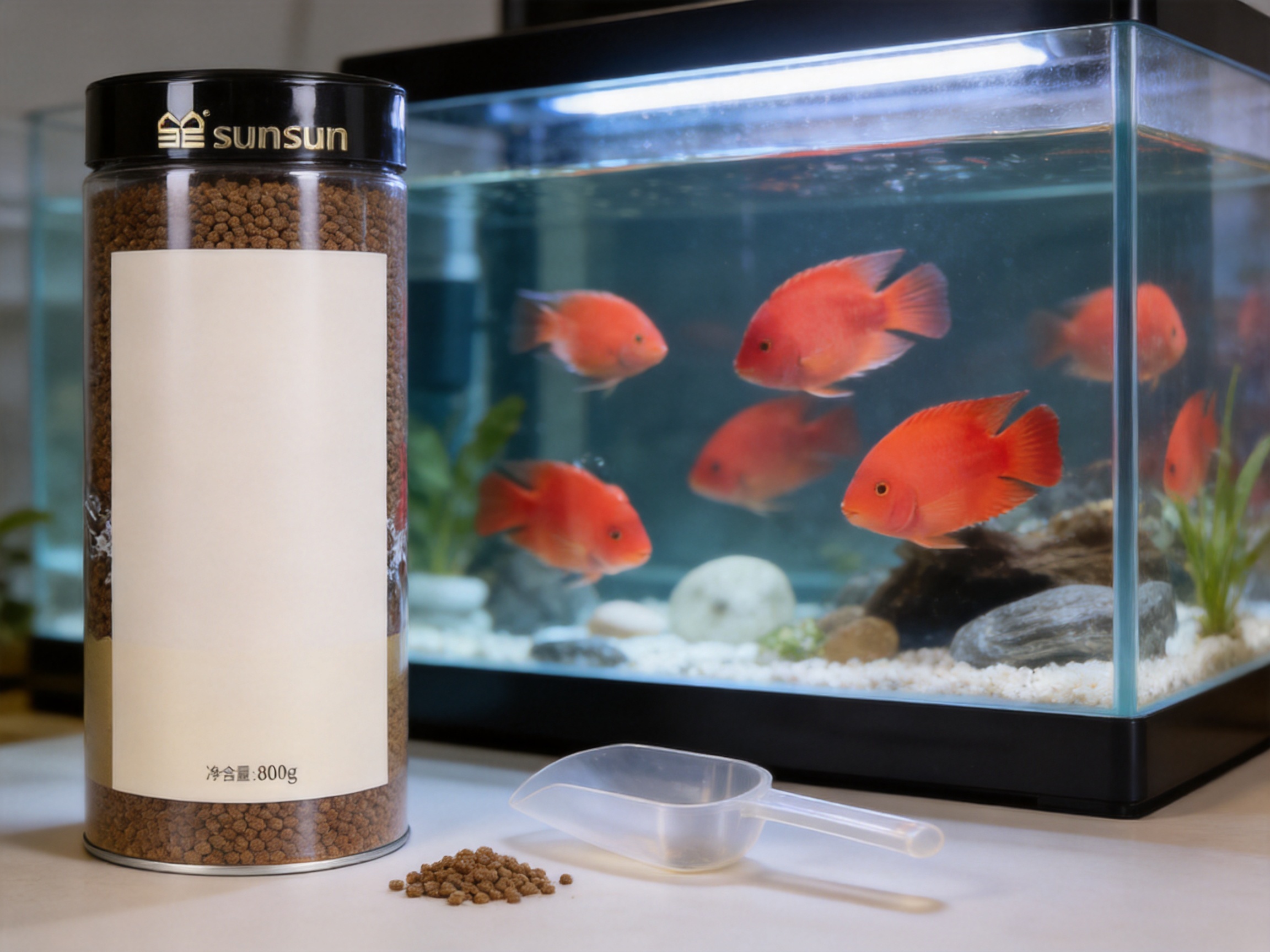
MSX-3203 is identified as food for blood parrotfish. It is best considered a targeted aquarium food for that ornamental fish group. If the aquarium contains other species, the aquarist should observe whether those fish can consume the product safely and should consider whether additional foods are needed for their particular requirements.
The correct amount depends on fish size, fish number, water temperature, filtration, and feeding frequency. Begin with a small portion and observe how quickly it is consumed. The goal is to provide enough food without leaving significant residue. Adjust the quantity gradually according to fish condition and aquarium cleanliness.
It can be used in a community aquarium when blood parrotfish are the principal target, but feeding behavior should be monitored. Other fish may compete for the food or may have different nutritional needs. Distributing small portions across the aquarium can help reduce competition, while supplementary foods may be appropriate for other species.
No food should be treated as a guaranteed solution for coloration. Color depends on genetics, age, stress, lighting, water quality, and general health as well as nutrition. A suitable food can support a complete care program, but stable aquarium conditions and responsible management remain essential.
The stated net content is 800 g per bottle. Buyers should check the current package label and commercial documentation before ordering, particularly if packaging has been updated for a specific market.
Keep the bottle tightly closed in a cool, dry location away from direct sunlight, splashing water, humidity, and chemicals. Use clean, dry feeding tools. Follow the storage and date information printed on the current package.
No. It is identified as aquarium food, not as a medicine or disease treatment. If fish show signs of illness, the aquarist should test the water, review environmental conditions, and seek advice from a qualified aquatic professional or veterinarian.
The quantity provides a practical supply for repeated feeding while remaining easier to handle than a very large bulk package. It can suit home aquariums, fish rooms, and retail operations that need a defined unit for inventory control.
The supplied product information identifies Sensen Group Co., Ltd. as the company. The group reports a history beginning in November 1985, multiple functional departments, related subsidiaries, and operations involving aquarium products, aquaculture machinery, and industrial equipment.
Commercial buyers should confirm the current product specification, label language, net content, packaging, storage requirements, shelf-life information, minimum order quantity, shipping conditions, export documents, and regulatory requirements in the destination market. These details may vary by market and order arrangement.
Aquarium retailers and distributors can use a structured checklist when evaluating MSX-3203. First, confirm that the product is intended for the customer segment being served. A store with many blood parrotfish keepers may value the targeted category more than a store that sells only general community fish supplies.
Second, review the package and warehouse requirements. The 800 g bottle should be easy to display, close, store, and rotate. Confirm how many bottles fit into a shipping carton and whether the packaging can withstand normal transportation. Inspect delivered cartons for damage, moisture exposure, and labeling consistency.
Third, assess communication and continuity. A capable supplier should be able to answer questions about current specifications, order procedures, documentation, and product availability. The manufacturer’s broad organizational structure and export activity may support these needs, but buyers should verify the actual service arrangement for their market.
Fourth, consider the product alongside other aquarium categories. A supplier that also works with pumps, filters, lighting, equipment, and pet products may help a retailer develop a more complete product range. Consolidated purchasing can simplify communication, but quality and suitability should still be reviewed for every individual item.
Finally, judge marketing claims carefully. Strong product communication should focus on the clearly supported facts: the product is intended for blood parrotfish, the net content is 800 g per bottle, and it comes from an established aquatic-products manufacturer. Clear information is more useful to customers than claims that cannot be verified.
MSX-3203 provides a focused feeding option for blood parrotfish in home aquariums, fish rooms, and aquarium retail environments. Its dedicated application makes product selection straightforward, while the 800 g bottle offers a practical format for repeated use and inventory management. Compared with an entirely generic aquarium food, its clearest advantage is the direct connection between the product category and the target ornamental fish.
The product should be used as part of a complete care routine that includes controlled portions, stable water conditions, effective filtration, appropriate temperature, adequate oxygenation, observation, and regular maintenance. Responsible feeding protects both fish health and aquarium stability.
The supplying company adds further value through its long operating history, research and quality functions, broad aquatic-product experience, subsidiary network, and established domestic and international business structure. These strengths create a foundation for organized manufacturing, product development, quality management, and customer support.
For aquarists, MSX-3203 offers a clearly categorized food option for blood parrotfish. For retailers and distributors, it represents a practical product that can be presented within a specialized ornamental fish-care program. The best results will come from combining the food with careful observation, disciplined storage, accurate portioning, and a well-managed aquarium environment.
1. Sensen Group Co., Ltd. Product information for MSX-3203, including target application and stated net content.
2. Sensen Group Co., Ltd. Corporate information describing company history, departments, subsidiaries, product fields, and market network.
3. General aquarium husbandry principles concerning feeding control, water quality, filtration, oxygenation, and ornamental fish observation.
4. General freshwater aquarium management guidance for omnivorous ornamental fish and community aquarium feeding practices.
5. General food-storage and inventory-management principles for packaged aquarium products.


 No. 61-79, Baima Street, Maao Town, Dinghai District, Zhoushan City, Zhejiang Province, China.
 0086 580 8082088 / 8081168
 0086 580 8080978
 songhua@sunsun-china.com