

 English
 русский
 España
 Portugal
 عربي
عربيZhang Lina | Overseas Aquarium Filters Sales Rep
Home / Author / Zhang Lina | Overseas Aquarium Filters Sales Rep / High-Volume Stacked Blow/Draw Air Pump for Industrial Aeration and Vacuum Applications
In modern aquatic systems, aquaculture facilities, industrial ventilation circuits, and centralized air-supply installations, stable airflow is not a convenience; it is a production requirement. The HD Series Stacked Blow/Draw Air Pump is designed for applications that demand powerful air delivery, dependable pressure, and flexible blow-and-draw operation from a compact and serviceable structure. As an air pump category product, it addresses the needs of users who must move large volumes of air continuously while keeping equipment selection, installation, and maintenance practical.
The series includes multiple models ranging from 2200 W to 18500 W, with output capacities from 900 m³/h to 2000 m³/h. These specifications position the product for demanding applications such as large fish farms, water treatment aeration support, aquatic holding systems, oxygenation circulation, industrial air movement, and facilities requiring either positive pressure or vacuum generation. Its stacked structure, dual functional capability, and heavy-duty electrical configuration make it a strong solution for users seeking more than a conventional aquarium air pump.
HD Series Stacked Blow/draw Airpump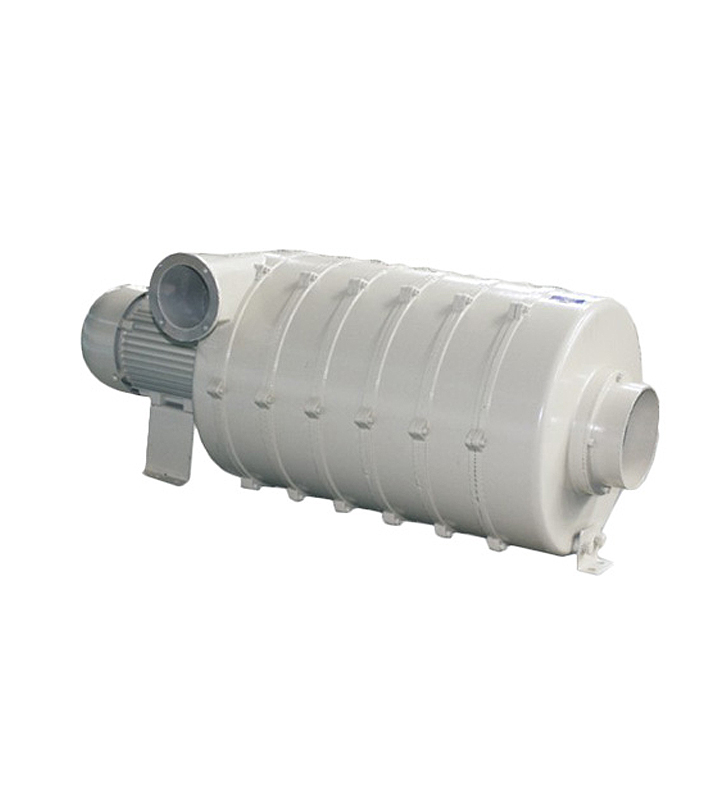
Content
The HD Series Stacked Blow/Draw Air Pump is built around a simple but important operating principle: one machine can support both blowing and drawing functions. In practice, this means the unit can supply air into a system or create suction depending on the installation arrangement. This dual capability increases equipment value because it can be integrated into different process layouts without requiring separate machines for each airflow direction.
The product uses a 380 V/50 Hz electrical configuration across the listed models, indicating its focus on professional and industrial usage rather than small household operation. The pressure range extends from 10 kPa to 30 kPa, and the vacuum range extends from -8 kPa to -25 kPa. This range gives users several options depending on the airflow resistance, pipe length, water depth, tank scale, and operating environment.
Unlike small diaphragm pumps designed for decorative aquariums, this series is intended for heavy airflow movement. The output figures, reaching up to 2000 m³/h in the listed specifications, place it in a much higher performance class. For aquaculture and industrial applications, this high-capacity airflow can support wide distribution networks, multiple outlets, or larger-scale aeration requirements.
Model |
Voltage |
Power |
Pressure |
Vacuum |
Output |
Weight |
Dimensions L×W×H |
HD-2200-S/X |
380V/50Hz |
2200W |
10kPa |
-8kPa |
900m³/h |
30kg |
596×480×458mm |
HD-3000-S/X |
380V/50Hz |
B000W |
12kPa |
-10kPa |
1000m³/h |
30kg |
726×480×455mm |
HD-7500-S/X |
380V/50Hz |
7500W |
18kPa |
-17kPa |
1100m³/h |
65kg |
531×536×432mm |
HD-15000-S/X |
380V/50Hz |
15000W |
20kPa |
-18kPa |
2000m³/h |
80kg |
580×480×460mm |
HD-18500-S/X |
380V/50Hz |
18500W |
30kPa |
-25kPa |
1800m³/h |
90kg |
667×480×450mm |
The table shows that the series is not a one-size-only product. It gives project planners a range of choices according to capacity, pressure, installation space, and equipment weight. The HD-2200-S/X is suitable for medium-duty applications requiring strong but manageable airflow. The HD-15000-S/X offers the highest listed output at 2000 m³/h, while the HD-18500-S/X provides the highest listed pressure and vacuum rating. This selection enables users to match the pump to the real operating load rather than oversizing or undersizing the system.
The most immediate advantage of the HD Series Stacked Blow/Draw Air Pump is its high airflow output. Many competing air pumps are designed for low-volume airflow and cannot maintain distribution across large networks of air stones, diffusers, pipes, or process lines. In contrast, this series reaches outputs from 900 m³/h to 2000 m³/h, providing the airflow volume needed for large installations.
High output is especially important in aquaculture. Fish, shrimp, and other aquatic organisms depend on dissolved oxygen levels that must remain stable despite changes in temperature, stocking density, feeding intensity, and biological load. A pump that cannot deliver sufficient air may cause uneven aeration, stagnant areas, lower oxygen concentration, and stress to stock. By providing large airflow capacity, the HD Series helps maintain oxygenation stability across wider systems.
In industrial settings, airflow volume is also important. Facilities may require air circulation for drying, cooling support, agitation, material handling, or ventilation assistance. A pump with strong output reduces the need for multiple smaller machines, simplifying layout and potentially lowering maintenance complexity.
A major competitive advantage is the ability to support both blowing and drawing. Many air movement devices specialize in only one function. A blower pushes air; a vacuum pump pulls air. The HD Series is designed as a blow/draw air pump, making it more versatile for installations that may require positive pressure at one stage and suction at another.
For users, this flexibility can mean better equipment utilization. In a facility with changing production needs, a machine that can be configured for either direction has more long-term value. It can be used for aeration, suction assistance, airflow transfer, or process support depending on the system design. This makes the product attractive for buyers who want dependable performance with adaptable installation possibilities.
The word “stacked” in the product name indicates a structural design intended to make the equipment compact and organized. Space efficiency matters in pump rooms, fish farm service areas, production workshops, and water treatment support rooms. A compact footprint allows operators to allocate more space to tanks, pipelines, maintenance access, and control equipment.
Compared with bulky single-purpose airflow machines, a stacked air pump structure can improve installation flexibility. The listed dimensions show that even higher-power models are contained within practical equipment sizes. For example, the HD-18500-S/X measures 667×480×450 mm, while the HD-15000-S/X measures 580×480×460 mm. These dimensions make the machines easier to integrate into planned equipment zones.
The entire listed series uses 380 V/50 Hz power, which is common in industrial and large commercial environments. This electrical configuration supports stable power delivery for higher-output machinery. It also signals that the product is intended for continuous, high-load operation rather than casual intermittent use.
For professional users, matching industrial electrical standards can simplify facility integration. Large aquaculture farms, manufacturing sites, and commercial water systems often already operate with industrial electrical infrastructure. Selecting a pump designed for this environment improves compatibility and supports stable operation under heavier loads.
Airflow output alone is not enough. A pump must also overcome system resistance. Resistance can come from long pipelines, narrow tubing, diffusers, water depth, valves, filters, manifolds, and bends. The HD Series offers pressure ratings from 10 kPa to 30 kPa and vacuum ratings from -8 kPa to -25 kPa, giving users multiple performance levels.
The HD-2200-S/X provides 10 kPa pressure and -8 kPa vacuum for medium-duty applications. The HD-18500-S/X reaches 30 kPa pressure and -25 kPa vacuum, making it suitable for more resistant systems that require stronger force. This range allows users to select a model based not only on airflow volume but also on the system’s pressure demand.
The listed weights range from 30 kg to 90 kg. While weight alone does not define quality, it often reflects the presence of substantial structural components and a build class intended for durable use. A heavy-duty pump must resist vibration, maintain alignment, and withstand continuous mechanical load. The series’ weight range supports the impression of a robust air pump designed for demanding environments.
In professional operations, equipment durability is more important than low initial cost. A lightweight machine may be easy to move, but it may also be less stable under continuous operation. A properly engineered heavy-duty unit provides better resistance to operating stress and can contribute to longer service life when installed and maintained correctly.

Aquaculture operations depend heavily on oxygen management. Whether the site raises fish, shrimp, ornamental species, or aquatic organisms for research and production, dissolved oxygen is one of the most important water-quality factors. The HD Series Stacked Blow/Draw Air Pump supports these environments by delivering high-volume air to diffusers and aeration systems.
Large tanks and ponds require more than simple bubbling. They need consistent circulation that helps oxygen enter the water and supports gas exchange. Strong aeration also helps reduce localized dead zones where organic matter can accumulate and oxygen can decline. With output up to 2000 m³/h, the HD Series can serve centralized aeration networks and multiple tank lines.
In intensive aquaculture, stocking density is often high. Higher density increases oxygen consumption and waste production. A reliable air pump becomes part of the life-support system. If airflow becomes unstable, biological stress can occur quickly. The product’s industrial orientation and model range make it suitable for facilities that cannot afford weak or inconsistent aeration performance.
The blow/draw function may also be useful in support operations. While blowing is commonly associated with aeration, drawing can assist in applications where air removal, suction support, or controlled negative pressure is beneficial. This gives the same equipment family broader usefulness across the farm or processing facility.
Although the HD Series is much more powerful than typical small aquarium accessories, it can be valuable in large aquarium facilities, aquatic exhibition centers, wholesale holding rooms, breeding bases, and commercial aquatic shops. These environments often operate many tanks at once. Instead of using dozens of small air pumps, a centralized high-volume pump can distribute air through a manifold system.
A centralized air supply can improve organization. It reduces clutter around individual tanks, simplifies electrical planning, and makes maintenance easier because operators focus on a smaller number of core machines. With proper system design, valves can control airflow to separate tank zones while the pump supplies the main air volume.
For aquatic display environments, stable airflow also supports water clarity and biological filtration. Many filtration systems depend on oxygen-rich water to support beneficial bacteria. Strong and consistent aeration promotes healthier biological activity and helps maintain stable aquatic conditions.
Beyond aquaculture, the HD Series can support industrial and environmental airflow requirements. Its pressure, vacuum, and output ratings make it suitable for installations where air must be moved in large volume. Potential usage areas include ventilation assistance, drying support, agitation, gas transfer support, equipment cooling assistance, and wastewater aeration support.
In wastewater treatment and environmental engineering, aeration is crucial for biological treatment processes. Microorganisms require oxygen to break down organic matter. A high-output air pump can supply diffusers or aeration grids, helping maintain biological efficiency. Selecting the correct model depends on water depth, tank size, diffuser resistance, and oxygen transfer requirements.
In manufacturing or processing settings, air movement may be needed for non-contact drying, circulation, or pneumatic support. The blow/draw capacity gives engineers more configuration options. While the product should always be selected according to technical requirements and safety standards, its high-capacity design makes it relevant for many professional airflow applications.
Small diaphragm pumps are popular in household aquariums because they are inexpensive and easy to use. However, they are not built for large systems. Their airflow is limited, pressure is modest, and long-term operation under heavy load can shorten service life. The HD Series is in a different performance category, offering hundreds or thousands of cubic meters per hour of output.
For large facilities, using many small pumps can create wiring complexity, higher failure points, uneven airflow, and difficult maintenance. A powerful centralized pump can reduce the number of machines required and create a more professional system structure. This is one of the strongest advantages of the HD Series over smaller competing units.
Some competitors provide only blowing capability. While this may be enough for simple aeration, it limits equipment reuse and system flexibility. The HD Series supports both blow and draw operation, allowing users to apply it in more system designs. This versatility can reduce the need to purchase separate suction equipment in certain applications.
For project managers, flexibility is valuable because production needs can change. A pump that only performs one role may become obsolete when the facility layout changes. A blow/draw air pump can remain useful across different tasks, improving long-term return on investment.
Some air pump product lines offer only one or two capacity choices. This creates selection problems: the pump may be too small and fail to meet demand, or too large and waste energy. The HD Series offers multiple models with different pressure, vacuum, output, weight, and dimension values. This range helps users select more accurately.
Model diversity is particularly useful for engineering projects. A medium-size holding facility may not need the largest pump. A deep-water aeration system may need higher pressure rather than maximum output. A large multi-tank system may prioritize output. The availability of several models makes it easier to balance performance, cost, and installation space.
Professional users often require continuous operation. Air pumps in aquaculture and environmental systems may run for long periods, sometimes day and night. Ordinary low-cost competitors may not be designed for this level of duty. The HD Series, with industrial voltage and heavy-duty construction, is better aligned with continuous usage requirements.
Continuous-duty reliability affects not only equipment cost but also production safety. In aquaculture, air supply interruption can threaten livestock. In industrial processes, airflow interruption can reduce production efficiency or affect process stability. A robust air pump is therefore an operational safeguard.
A high-performance air pump depends on more than a strong motor. It requires controlled manufacturing, accurate assembly, quality inspection, and product development experience. The manufacturer behind this series has decades of experience in aquarium pets, aquacultural machinery, and industrial equipment. Established in 1985, the enterprise has developed from a specialized manufacturer into a diversified group with strong production and marketing capacity.
Long manufacturing history matters because air pump quality depends on accumulated engineering knowledge. Real-world operating conditions reveal problems that cannot always be predicted in early design. Over many years, experienced manufacturers learn how to improve structure, reduce failure points, optimize components, and build products that meet the expectations of professional users.
The company has established functional departments that support product development and production control, including a research institute, quality control department, business training system, administrative information department, financial department, and other professional management functions. This organized structure supports consistent manufacturing and product improvement.
In addition, the company operates multiple subsidiary corporations and trading organizations, giving it a broad production and market network. A wide manufacturing base can improve supply capacity, component coordination, and after-sales responsiveness. For customers purchasing industrial air pumps, this background is important because equipment support, spare parts, and long-term supply stability can matter as much as initial product performance.
Air pump manufacturing requires precision in several areas. The housing must be structurally reliable. Rotating and moving components must be aligned. Electrical systems must be suitable for the rated voltage and operating load. Air passages must be controlled to reduce loss and maintain output. Each finished product should meet specification requirements before shipment.
Advanced manufacturing processes help achieve these goals. In a professional production environment, material inspection, machining accuracy, component assembly, electrical testing, performance testing, and final inspection are all part of the manufacturing chain. A company with dedicated quality control resources can better identify deviations and maintain stable product quality.
For the HD Series, pressure and vacuum performance are key indicators. If manufacturing tolerances are poor, actual performance may vary from the listed rating. Controlled production helps ensure that users receive reliable airflow, pressure, and vacuum capability. Consistency is especially important when several pumps are used in a coordinated system.
Quality management also contributes to safety. High-power equipment must be assembled correctly and inspected carefully. Professional production control reduces the risk of wiring problems, mechanical imbalance, air leakage, and premature component wear. For users operating in demanding environments, this manufacturing discipline provides confidence.
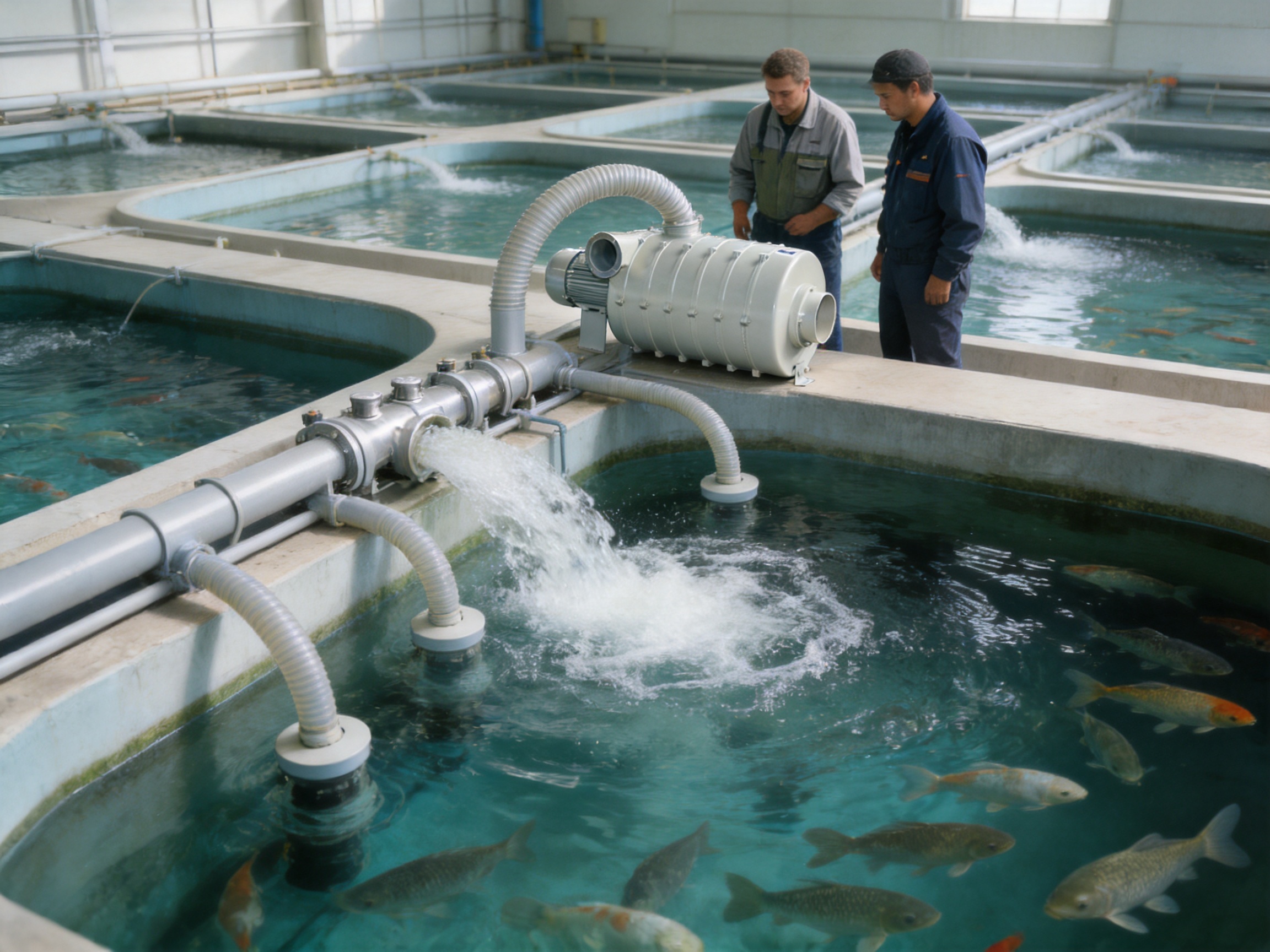
Choosing the right air pump requires understanding the full system. The listed output, pressure, and vacuum ratings provide an important starting point, but the final selection should consider pipe length, pipe diameter, number of outlets, diffuser depth, operating hours, ambient temperature, and required redundancy. A properly selected pump will operate more efficiently and provide more stable performance.
For aeration systems, water depth has a direct effect on pressure demand. Deeper diffusers require more pressure to push air into the water. Long pipelines and many elbows add resistance. If the pressure requirement exceeds the pump’s capability, airflow will drop. Therefore, high-pressure models such as the HD-18500-S/X may be suitable for more demanding systems.
For centralized systems with many outlets, airflow distribution must be balanced. Manifolds, valves, and correctly sized piping help ensure that air reaches all target zones. A high-output pump such as the HD-15000-S/X can supply large volumes, but the pipeline network must be designed to handle that volume without excessive resistance.
Installation space should also be considered. The series has compact dimensions relative to its performance, but maintenance access remains important. Operators should leave enough room for inspection, cleaning, connection adjustment, and safe handling. Equipment should be installed on a stable base to reduce vibration and protect connected piping.
Energy use is a major operating cost for large aquaculture and industrial facilities. Selecting an air pump should not simply mean choosing the highest power model available. Instead, users should match power, output, and pressure to the actual requirement. The HD Series supports this approach by offering several models with different capacities.
An undersized pump may operate under excessive load, fail to deliver required airflow, and force the user to add extra equipment. An oversized pump may consume more power than necessary and require additional airflow control. The model range helps users choose a balanced solution that supports both performance and energy management.
Energy efficiency is also influenced by system design. Proper pipe sizing, reduced unnecessary bends, clean diffusers, and well-adjusted valves can reduce pressure loss. When the airflow system is efficient, the pump can perform closer to its intended operating condition. This improves reliability and may reduce wasted energy.
Compared with using multiple smaller pumps, a centralized high-output pump can sometimes provide operational advantages. Fewer machines may mean fewer motors, fewer electrical connections, and simplified maintenance. However, system redundancy should be planned carefully. In critical aquaculture applications, backup equipment is recommended to protect livestock during maintenance or unexpected downtime.
Routine maintenance helps preserve air pump performance. Operators should inspect the equipment regularly, monitor unusual noise or vibration, check electrical connections according to safety procedures, and ensure that intake and outlet paths remain unobstructed. Clean airflow pathways help maintain performance and reduce unnecessary load.
Because the HD Series is intended for demanding environments, maintenance planning should be part of the installation design. Equipment should not be placed where it is difficult to access. Operators should be able to inspect the unit safely and perform routine service without disassembling unrelated systems.
Long-term reliability also depends on correct operation. The pump should be used within its rated voltage and performance range. Airflow should not be blocked. Operating conditions should avoid excessive dust, moisture exposure, or heat unless proper protective measures are used. Following recommended operating practices can extend service life and maintain stable output.
Professional users should also maintain records. Logging operating hours, maintenance actions, airflow observations, and any abnormal events helps identify patterns before failures occur. This is especially useful in facilities where air supply is mission-critical.
The HD-2200-S/X is an appropriate choice for users needing strong airflow in a comparatively lighter and lower-power model. With 2200 W power, 10 kPa pressure, -8 kPa vacuum, and 900 m³/h output, it is suitable for medium-duty centralized aeration or airflow transfer tasks.
The HD-3000-S/X provides 12 kPa pressure, -10 kPa vacuum, and 1000 m³/h output. The listed power value appears as B000W in the provided specification and should be confirmed during procurement. Its output and pressure place it slightly above the HD-2200-S/X for users who require additional capacity.
The HD-7500-S/X increases the pressure to 18 kPa and vacuum to -17 kPa, with 1100 m³/h output. This model may be selected when system resistance is higher and stronger pressure is needed, while output demand remains moderate compared with the largest models.
The HD-15000-S/X offers the highest listed output at 2000 m³/h, with 20 kPa pressure and -18 kPa vacuum. It is suitable for large airflow distribution networks, extensive aquaculture systems, or applications where very high volume is the main requirement.
The HD-18500-S/X provides the highest listed pressure at 30 kPa and the strongest listed vacuum at -25 kPa, with 1800 m³/h output. This model is suitable for demanding systems where resistance is high, suction strength is important, or pressure stability is a priority.
For professional buyers, the best air pump is not always the cheapest unit. The best choice is the one that delivers stable performance, matches the system, reduces operational risk, and remains serviceable over time. The HD Series Stacked Blow/Draw Air Pump offers a strong investment case because it combines high output, dual functionality, industrial configuration, model diversity, and robust construction.
Its advantages are practical rather than decorative. High airflow supports real production needs. Pressure and vacuum capability help overcome system resistance. The stacked structure supports compact installation. The model range supports accurate selection. The manufacturing background supports confidence in quality control and supply capacity.
Compared with lower-capacity competitors, the series is better suited for large-scale use. Compared with single-function machines, it offers more application flexibility. Compared with narrow product lines, it gives buyers more options. These factors contribute to long-term value in aquaculture, aquatic commercial facilities, environmental systems, and industrial airflow applications.
The manufacturer has built its development around innovation in aquarium pets, aquacultural machinery, and industrial equipment. With more than 30 years of continuous development, the company has created a wide product and service foundation. This experience supports the design of products such as the HD Series, which require practical understanding of aquatic life-support systems and industrial equipment expectations.
The enterprise has also developed a broad sales and service network. Thousands of stores and an integrated online and offline retail strategy reflect a strong connection with end users. For industrial and commercial buyers, this market experience is valuable because it means the manufacturer understands not only production but also real customer needs.
The company’s emphasis on research, quality control, and professional management supports continuous improvement. A dedicated research structure can help refine product design. A quality control department can monitor consistency. Business and management systems can support training, supply, and customer communication. These strengths help make the product more reliable in competitive markets.
Before installing the pump, users should confirm that the electrical supply matches the 380 V/50 Hz requirement. Installation should be performed by qualified personnel according to local electrical and safety regulations. Because these are high-power machines, correct wiring, grounding, protection, and control arrangements are essential.
The pump should be placed on a stable and level foundation. A solid base reduces vibration and helps protect the machine and connected pipework. If the system uses flexible connectors, they can help reduce vibration transfer. The installation area should allow sufficient ventilation and access for maintenance.
Piping should be designed to minimize unnecessary pressure loss. Large enough pipe diameters, smooth routing, and fewer sharp bends can improve airflow efficiency. Valves should be installed where airflow balancing is required, but excessive restriction should be avoided. Filters or protective devices may be used where intake air quality is a concern.
For critical systems, backup air supply should be considered. In aquaculture, oxygen interruption can be dangerous. A standby pump, emergency oxygen supply, or alarm system can protect the operation in case of power failure or equipment shutdown. The HD Series can serve as a strong main unit, but responsible system design should always include contingency planning.
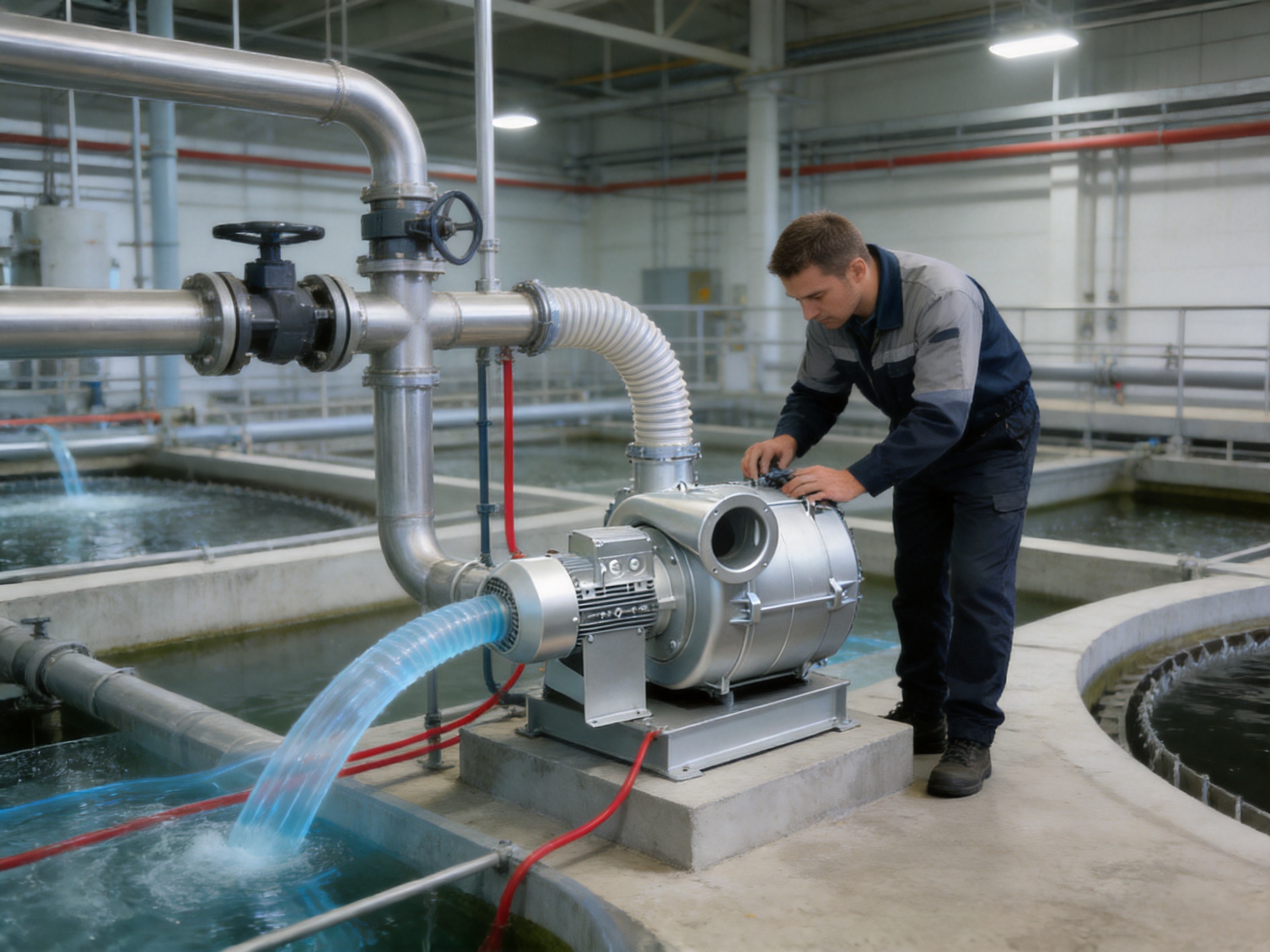
Efficient air movement supports healthier water and more stable production. In aquatic systems, proper aeration improves dissolved oxygen, supports beneficial bacteria, encourages circulation, and helps reduce harmful stagnant zones. These benefits can improve animal welfare and production consistency.
In environmental treatment systems, air supply supports biological processes that reduce organic pollution. Stable airflow can help treatment systems operate more effectively, contributing to cleaner water discharge and better process control. A reliable air pump is therefore not only a mechanical device but also a contributor to environmental management.
Operationally, the ability to select the right model helps reduce waste. Instead of forcing one pump size into every application, users can choose based on actual demand. This improves equipment utilization and can support better energy planning. Over time, accurate selection and reliable performance contribute to more sustainable facility operation.
It is used for high-volume air movement in applications such as aquaculture aeration, large aquatic facilities, industrial airflow support, wastewater aeration, ventilation assistance, and systems requiring either blowing or suction capability.
Ordinary aquarium air pumps are usually small, low-output devices for household tanks. The HD Series is an industrial-grade air pump with 380 V/50 Hz power, output up to 2000 m³/h, and pressure ratings up to 30 kPa, making it suitable for large commercial and industrial systems.
Yes. The product is designed as a blow/draw air pump, meaning it can be applied for positive air delivery or suction-related operation depending on system configuration.
According to the provided specifications, the HD-15000-S/X has the highest listed output at 2000 m³/h.
The HD-18500-S/X has the highest listed pressure at 30 kPa and the strongest listed vacuum at -25 kPa.
It is generally too powerful for small home aquariums. It is better suited for large aquariums, commercial aquatic systems, aquaculture farms, environmental systems, and industrial airflow applications.
This voltage specification indicates that the product is designed for industrial or large commercial electrical environments. Users should confirm electrical compatibility before installation.
Users should consider required airflow, pressure, vacuum demand, pipe length, diffuser depth, number of outlets, operating time, and installation space. For high output, the HD-15000-S/X may be suitable. For higher pressure and vacuum, the HD-18500-S/X may be preferred.
Yes. The stacked structure supports a compact and organized design, helping users install high-capacity airflow equipment in professional pump rooms or limited equipment spaces.
Routine inspection of noise, vibration, electrical connections, airflow paths, intake cleanliness, and operating conditions is recommended. Maintenance should be performed safely and according to professional standards.
The HD Series Stacked Blow/Draw Air Pump is a high-capacity, industrial-oriented air movement solution designed for users who require dependable airflow, pressure, and vacuum performance. With models covering 900 m³/h to 2000 m³/h output and pressure ratings from 10 kPa to 30 kPa, the series provides practical options for aquaculture, aquatic commercial facilities, environmental treatment, and industrial airflow systems.
Its strongest advantages are high output, blow-and-draw versatility, compact stacked structure, industrial voltage configuration, broad model selection, and robust build class. These features distinguish it from small aquarium pumps, narrow-capacity competitors, and single-function airflow devices. For professional operations, these advantages translate into better system flexibility, stronger production support, and improved long-term equipment value.
Behind the product is a manufacturer with decades of experience, organized research and quality control functions, diversified production capability, and a broad market network. This manufacturing strength supports the product’s reliability and competitiveness. For buyers seeking a powerful air pump for serious applications, the HD Series offers a practical, scalable, and professionally engineered solution.
1. Industrial Air Movement Equipment Handbook, Technical Principles of Blowers and Vacuum Systems.
2. Aquaculture Engineering Guidelines, Aeration System Design and Dissolved Oxygen Management.
3. Water Treatment Process Manual, Biological Aeration and Air Supply Requirements.
4. Electrical Equipment Installation Practices for Industrial Pump and Blower Systems.
5. Mechanical Reliability in Continuous-Duty Airflow Machinery, Maintenance and Inspection Standards.


 No. 61-79, Baima Street, Maao Town, Dinghai District, Zhoushan City, Zhejiang Province, China.
 0086 580 8082088 / 8081168
 0086 580 8080978
 songhua@sunsun-china.com