

 English
 русский
 España
 Portugal
 عربي
عربيAn African cichlid aquarium is a freshwater tank that recreates the water conditions of the East African Rift Lakes — Lake Malawi, Lake Tanganyika, and Lake Victoria. The direct answer to "what does an African cichlid aquarium need?" is that the ecosystem requires a minimum 75-gallon tank, filtration rated for two to three times the water volume per hour, hard alkaline water with a pH of 7.8–8.6, generous rockwork with caves, and a stocking plan designed for aggression before you ever add fish. Get these fundamentals right, and you will own one of the most colorful, behavior-rich freshwater displays available to hobbyists.
Content
What Is an African Cichlid Aquarium?
An African cichlid aquarium is a biotope system that copies the hard, alkaline water of the Rift Lakes rather than the soft, acidic conditions that suit most tropical community fish. The lakes that supply the hobby are not interchangeable, and knowing the difference protects you from buying fish that will not thrive together.
- Lake Malawi: mbuna (rock-dwelling species), peacocks, and haplochromines. These are the most common choices for a display aquarium and range from 4 to 10 inches.
- Lake Tanganyika: frontosa, julidochromis, and shell-dwellers. They are often more sensitive to water changes and do best near the lower end of the temperature range.
- Lake Victoria: few species circulate in the hobby, but they are colorful and share similar water requirements.
Because these fish evolved in crowded, rocky habitats with very stable water chemistry, they are hardy when conditions match their home lakes but become stressed quickly under low pH, soft water, or sudden swings. Stressed cichlids lose color, retreat into caves, and fight more often.
Tank Size: Go Big Before You Add Fish
An African cichlid aquarium needs a 75-gallon tank with a 4-foot footprint as the practical minimum for a Malawi community, and this is the first decision you should make, before any filter, heater, or fish. Adult mbuna reach 4–6 inches, haplochromines can exceed 10 inches, and every male defends a territory that takes up at least a square foot of substrate. That is why choosing the right tank size has more influence on long-term success than any other single purchase.
| Tank size | Footprint | Best used for |
|---|---|---|
| 40–55 gallons | 36–48 × 12–13 in | Single pair, juvenile grow-out, small Tanganyikan species |
| 75 gallons | 48 × 18 in | Minimum for an all-male Malawi community of 12–16 adults |
| 120 gallons | 48 × 24 in | Larger mbuna groups, peacocks, mixed Malawi communities |
| 180 gallons and up | 72 × 24 in | Large haplochromines, frontosa colonies, multi-species setups |
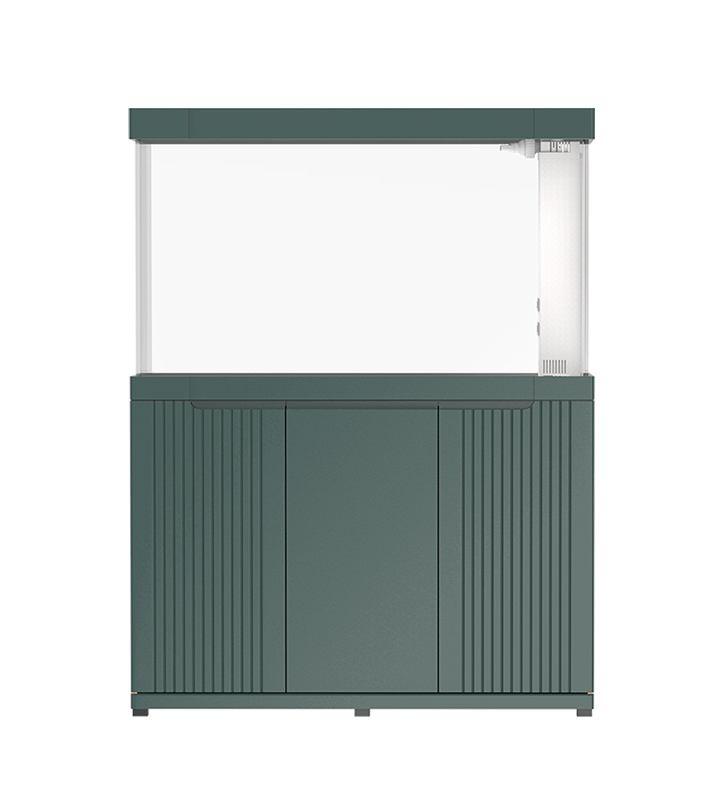 Joy Series Large Aquarium Tank for Cichlid CommunitiesThis large fish tank provides the long horizontal footprint that African cichlids need for territorial behavior, making it a practical foundation for a Malawi community setup in a 75-gallon or larger configuration.View Product →
A longer tank beats a taller one because cichlid territory is horizontal: it runs along the substrate and rock faces, not up the water column. If space limits you to 55 gallons, choose a single small species, over-filter the tank, and resist the urge to crowd it with fish that will fight within weeks.
Filtration and Water Movement
Filtration is the backbone of an African cichlid aquarium, and the system must move at least two to three times the total water volume per hour. Cichlids are messy eaters, produce a heavy bioload, and dig in the substrate, so the filter needs both strong mechanical media and generous biological surface area. Canister filters and external canister filters are the most dependable choices; a sump is an excellent upgrade because it adds water volume and hides the heater and media.
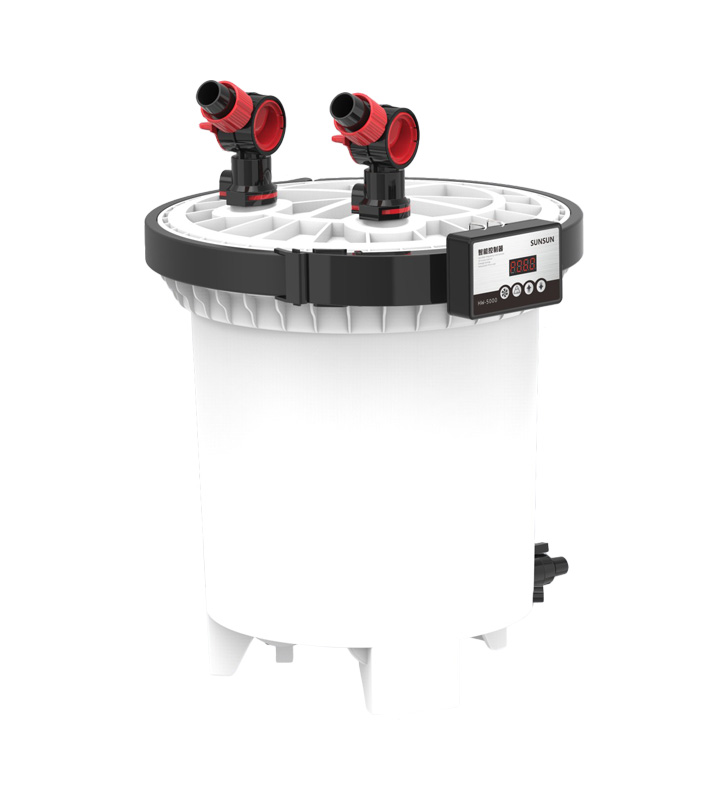 HW Series Frequency-Controlled External Canister FilterWith a variable-frequency pump, UV timer, and multi-layer filter baskets, this external filter delivers strong water turnover and biological media capacity, essential for managing waste and oxygenation in a densely stocked cichlid tank.View Product →
Mechanical media such as sponge or filter floss catches solid waste, while ceramic rings, bio-balls, or sintered glass grow the bacteria that convert ammonia and nitrite into nitrate. Aim part of the return flow at the surface to improve gas exchange, clean the mechanical media every two to four weeks, and always rinse filter media in a bucket of tank water instead of tap water so you do not destroy the biological colonies.
Water Chemistry and Temperature
African cichlids demand hard, alkaline water, and the target values are: pH 7.8–8.6, general hardness 10–20 dGH, carbonate hardness 8–12 dKH, and a steady temperature of 74–80°F (23–27°C). The Rift Lakes are warm, mineral-rich, and remarkably consistent, so sudden or frequent parameter changes cause more harm than water that is imperfect but stable.
| Parameter | Target range | Why it matters |
|---|---|---|
| pH | 7.8–8.6 | Natural lake water is alkaline; low pH causes chronic stress |
| GH (general hardness) | 10–20 dGH | Supports osmotic balance and gill function |
| KH (carbonate hardness) | 8–12 dKH | Prevents rapid pH drops and keeps the buffer stable |
| Temperature | 74–80°F (23–27°C) | Optimal metabolic rate for most Rift Lake species |
The easiest way to hold these values is through the substrate and décor: aragonite sand or crushed coral dissolves slowly and keeps pH and hardness elevated, while limestone or ocean rock adds more buffering capacity. Avoid driftwood, peat moss, and blackwater extracts, all of which push the water in the wrong direction. A properly sized heater with a thermostat, roughly 3–5 watts per gallon, keeps the temperature stable and prevents the overnight swings that trigger ich and bloat.
Substrate, Rockwork, and Aquascaping
Décor is functional in an African cichlid aquarium: rock piles and caves define territories, while an open swimming lane keeps the middle of the tank livable. Mbuna are rock-dwellers by nature, and a tank without caves forces relentless, often fatal, fighting.
- Use 1–2 inches of aragonite sand so the substrate buffers the water and lets fish dig naturally.
- Stack slate, limestone, lava rock, or ocean rock directly on the glass bottom or on an egg-crate grid, never on sand where a burrowing fish can undermine the structure.
- Build multiple cave openings large enough for a fish to enter and turn around.
- Use PVC pipe or terracotta pots hidden under rock as economical cave alternatives.
Keep an open swimming area about one-third of the tank length for peacocks and haplochromines, which cruise constantly. Rearrange the rockwork every time you add fish; breaking up established territories is the most effective single technique for reducing bullying.
Lighting
Moderate lighting is all an African cichlid aquarium needs, and an LED fixture running 8–10 hours per day on a timer creates a natural day–night cycle without driving algae growth. Since the tank usually has no demanding plants, the light exists mainly for viewing color; neutral and blue-white spectrums flatter the blues and yellows of mbuna and peacocks.
Longer photoperiods, combined with hard water and a high nutrient load, will coat rockwork with algae. A light biofilm is harmless and even grazed on by mbuna, but scrub the front glass weekly and reduce lighting to 8 hours if green algae becomes a nuisance.
Aeration and Oxygenation
An African cichlid aquarium benefits from a dedicated air pump because warm, hard water holds less dissolved oxygen, and heavy stocking depletes it quickly. Filter return flow creates some surface agitation, but an air stone or air curtain adds a safety margin, especially at night and during warm weather.
Watch for the warning signs of low oxygen: fish gathering at the surface, rapid gill movement, or diminished appetite. Running a reliable air pump 24/7 is normal for a densely stocked 75-gallon tank and costs very little electricity.
 ACO Series Electromagnetic Air Pump for Aquarium AerationThis electromagnetic air pump provides dependable 24/7 aeration to help maintain dissolved oxygen levels, especially when fish show signs of low oxygen or in densely stocked African cichlid aquariums.View Product →
Stocking and Aggression Management
Stocking is the stage where an African cichlid aquarium succeeds or fails, and the two most dependable strategies are an all-male mbuna or peacock group of 12–16 adults in a 75-gallon tank, or a deliberately overstocked mixed community that spreads aggression among many individuals. An under-stocked cichlid tank is more dangerous than a full one; with too few fish, the dominant male turns every other fish into a target.
- Match adult size and temperament; fast mbuna and slow Tanganyikan species should not share a tank.
- Introduce new fish all at once, or rearrange the hardscape beforehand so existing territories are disrupted.
- Research breeding behavior; many Malawi cichlids are polygamous mouthbrooders, and adding females changes the aggression dynamic.
- Quarantine every new fish for three to four weeks; stressed Rift Lake cichlids are prone to bloat, ich, and secondary infections.
Aggression is driven by territory, breeding, and crowding. Visual barriers and stable water chemistry are the two most effective tools for keeping the pecking order from turning deadly.
Feeding
Feed African cichlids two or three small meals per day with a spirulina-based pellet or flake as the staple, because most Malawi mbuna are herbivores and protein-heavy diets cause digestive bloating, one of the most common killers in this group. Peacocks and haplochromines lean carnivorous and do well with a rotation of quality cichlid pellets, frozen brine shrimp, and mysis shrimp.
Soak dry pellets for about a minute before feeding so they do not swell inside the fish, and offer vegetable matter such as blanched peas or nori once or twice a week. Avoid beef heart and mammal-based foods entirely; Rift Lake cichlids metabolize them poorly, and the fat accumulation leads to organ damage and bloat.
Routine Maintenance
Weekly water changes of 20–30 percent, monthly rinsing of mechanical filter media, and consistent glass cleaning are the three tasks that keep an African cichlid aquarium stable. Nitrates climb fast under a heavy bioload and hard, alkaline water, so even the best filter cannot replace a regular water-change schedule; keep nitrates below 40 ppm to avoid chronic stress.
Use a gravel vacuum over the open sand area without digging deep, because disturbing the buffering substrate releases trapped organic matter and can cause ammonia spikes. Check the heater calibration, inspect silicone seams, and replace worn equipment every six months. Test ammonia, nitrite, pH, and temperature weekly during the first three months so a cycling problem is caught before fish show symptoms.
Frequently Asked Questions
How many African cichlids can I keep in a 75-gallon tank?
Plan for 12–16 adult mbuna in an all-male setup, or about 10–12 peacocks or haplochromines. Add fish in groups and test ammonia and nitrite for two weeks afterward, because the biological filter needs time to catch up with the new load.
Can African cichlids live with other fish?
Usually not: Rift Lake cichlids are territorial and will harass or kill passive tankmates. A bristlenose pleco or a large catfish can coexist in a large, heavily decorated 120-gallon tank, but the high pH and rockwork limit the practical options.
Why is my African cichlid hiding all the time?
The three usual causes are a dominant fish that has claimed the territory, water parameters outside the ranges above, or recent introduction to an unfamiliar tank. Check ammonia, pH, and temperature first; then add more caves and rearrange rocks to break up established territories.
Does an African cichlid aquarium need a heater?
Yes, in almost every indoor setup. Holding the temperature at 74–80°F prevents immune-suppressing swings, and the heater should deliver 3–5 watts per gallon with an accurate, easily readable thermometer to confirm it.

 No. 61-79, Baima Street, Maao Town, Dinghai District, Zhoushan City, Zhejiang Province, China.
 0086 580 8082088 / 8081168
 0086 580 8080978
 songhua@sunsun-china.com