

 English
 русский
 España
 Portugal
 عربي
The short answer: in a normal community fish tank, plant Java fern, Anubias, Amazon sword, Vallisneria and hornwort. All five tolerate moderate light, none needs a specialist substrate, and all survive the mistakes most people make in their first six months. Between them they cover the three jobs plants are actually hired for — removing nitrogen waste, shading out algae and giving fish cover.
Everything beyond that shortlist is optimisation. CO2 injection, high-output LEDs and aquascaping soil make plants grow faster, but none is a prerequisite for a healthy planted tank. Fix light, nutrients and water movement first; CO2 comes last.
| Plant | Usual position | Light | Growth rate | Why it works |
|---|---|---|---|---|
| Java fern | Midground, tied to wood or rock | Low | Slow | Bitter leaves that most fish ignore |
| Anubias | Foreground or midground | Low | Very slow | Grows in shade; rhizome must stay above the gravel |
| Amazon sword | Background | Medium | Moderate | Heavy root feeder that responds well to a root tab |
| Vallisneria | Background | Medium | Fast | Spreads by runners and tolerates hard water |
| Hornwort | Floating or lightly anchored | Low | Fast | Soaks up excess nitrate between water changes |
| Water wisteria | Background | Low to medium | Fast | Cheap, forgiving and easy to prune |
Content
What Live Plants Actually Do in a Fish Tank
Live plants are filtration, cover and algae control at the same time. Because they take up ammonium, nitrate and phosphate as they grow, nitrate climbs more slowly between water changes and less is left over for algae to use.
Nutrient uptake depends on growth rate
Fast growers such as hornwort, water wisteria and floating plants remove the most; slow growers such as Anubias remove almost nothing. Mass matters more than species — a tank with roughly a third of its volume in actively growing plants holds steadier nitrate readings than a lightly planted one.
Oxygen rises and falls with the lights
Plants release oxygen during the photoperiod and consume it after dark, exactly as the fish do. In a densely planted tank with a still surface, dissolved oxygen is lowest just before the lights come on, which is when fish are most likely to gasp at the surface.
Choosing Plants by Position and Difficulty
Choose by where the plant will sit and how much light reaches that spot, not by how it looks under shop lighting.
Foreground, midground and background
Small and shade-tolerant species such as Anubias nana, Cryptocoryne parva and mosses belong at the front, tied to small stones or wood. Java fern, Bolbitis and most crypts fill the midground, where medium light normally reaches. Tall root feeders such as Amazon swords, Vallisneria and stem plants go at the back, because they are the ones that visibly change water chemistry.
Planting in practice
- Keep rhizomes above the substrate: bury the thick horizontal stem of a Java fern or Anubias and it will rot within weeks.
- Trim the roots of root feeders to about 2-3 cm before planting; new roots branch from the cut ends.
- Fix epiphytes with cotton thread or aquarium-safe cyanoacrylate gel rather than pushing them into gravel.
- Plant densely from week one, aiming for 60-70% substrate coverage, because open space quickly becomes algae space.
Lighting Is the Upgrade That Matters Most
If you change only one thing, change the light. Weak light is the most common reason plants stall, and its symptoms — pale new growth, bare lower stems, leaves leaning toward the surface — are easily mistaken for a nutrient shortage.
What to look for
- A colour temperature of 6000-7000 K, which keeps plant and fish colours natural.
- Enough output at substrate level: a fixture that suits a 30 cm deep tank will under-light a 60 cm one.
- A timer, because a consistent photoperiod controls algae better than raw intensity.
How long to run the lights
Start at six hours and add 30 minutes a week up to eight. Past eight hours without CO2, algae normally gains more than the plants do.
| Light level | Plants it supports | Photoperiod |
|---|---|---|
| Low | Java fern, Anubias, mosses, most Cryptocoryne | 6-7 hours |
| Medium | Amazon sword, Vallisneria, water wisteria | 7-8 hours |
| High | Carpeting species and red stem plants | 8-10 hours, usually with CO2 and daily dosing |
 Dream White Series Special Aquatic Plant Aquarium LampSpecialty aquarium lamp for planted tanks; dedicated plant spectrum supports deeper aquariums, and model sizes cover larger setups.View Product →
A dedicated plant spectrum makes the biggest difference in tanks 40 cm deep or more, where standard hood lighting simply does not reach the leaves at the bottom.
Substrate, Nutrients and Root Feeding
Plain gravel plus a liquid fertiliser and root tabs will grow everything in Table 1. Aquasoil buys speed rather than survival, and it is not worth the cost unless you want carpets or heavy stem growth.
Root feeders versus water column feeders
Amazon swords, Vallisneria and crypts take most of their nutrition through their roots and need something beneath them. Java fern, Anubias, mosses and floating plants feed from the water and gain nothing from a rich substrate.
What runs out first
- Nitrate: aim for 10-20 mg/L. Below 5 mg/L, growth stalls and algae fills the gap.
- Phosphate: around 1-2 mg/L. Green spot algae on the glass is a common sign it has dropped.
- Potassium: a shortage shows up as small holes in older leaves.
- Iron and trace elements: yellow patches between green veins on new leaves.
Dosing rhythm
Dose liquid fertiliser after the weekly water change and refresh root tabs every two to three months. If you dose iron and phosphate, use alternate days, because together they can bind into a form the plants cannot absorb.
 Customizable Aquatic Nutrient Solution for Aquarium PlantsCustomizable aquarium nutrient solution offered in 125 ml or 500 ml bottles, suited to weekly liquid dosing routines in planted aquariums.View Product →
For most low-light tanks a single weekly liquid dose covers the water column feeders, while one root tab per sword or Vallisneria plant lasts an entire season.
Which Fish Are Safe With Plants
Most community fish ignore plants completely. The damage comes from a short, predictable list of species.
- Usually safe: tetras, rasboras, danios, guppies, corydoras, bettas, gouramis, angelfish and most dwarf cichlids.
- Likely to eat leaves: goldfish, silver dollars, Buenos Aires tetra, tinfoil barbs, large plecos and oscars.
If you already keep plant eaters
Use tough, bitter-leaved species such as Java fern and Anubias, and treat floating plants as a sacrificial crop that gets eaten instead. Blanched courgette or spinach twice a week also reduces nibbling on your display plants.
Digging and uprooting
Cichlids and large catfish uproot plants while sifting the substrate. Attach epiphytes to rockwork, keep root feeders in pots, or ring the base of swords and Vallisneria with a few smooth stones.
Flow, Filtration and Gas Exchange
Aim for four to six complete tank turnovers per hour with no dead spots, plus enough surface movement to keep oxygen available overnight. In a planted tank the filter does two jobs: it pushes water past the leaves so they can take up nutrients, and it keeps gas exchange going once photosynthesis stops.
Whether a planted tank needs an air pump at all depends on how much surface agitation you already have, and the trade-offs are set out in this guide to air pumps in planted aquariums. The short version: without CO2 injection, surface movement is close to free insurance, while with CO2 injection a gentle ripple is enough, because heavy agitation drives the gas straight out of the water.
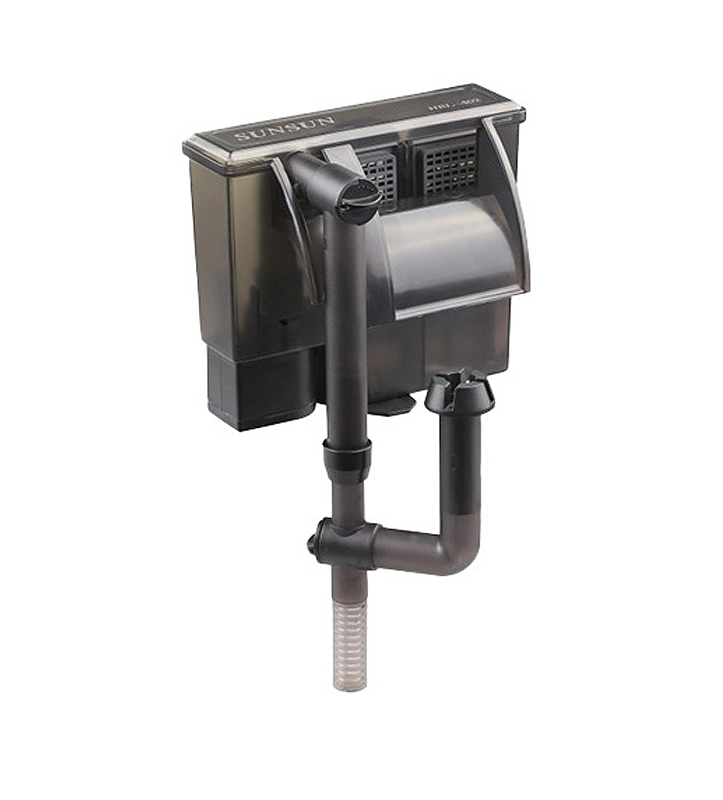 HBL Series Hang On Aquarium FilterCustomizable hang-on aquarium filter available in multiple HBL models; compare output and dimensions to match tank size and filtration needs.View Product →
A hang-on or canister filter with a spray bar spreads flow along the length of the tank instead of blasting one corner, which matters once plants begin blocking the return.
Maintenance and Troubleshooting
A 20-30% weekly water change, a trim every two to three weeks and clean leaves prevent most planted-tank problems before they start.
Pruning and propagation
- Cut stem plants just above a leaf node and replant the tops; discard the woody bottoms.
- Thin floating plants weekly, or they shade everything beneath them.
- Remove yellow or decaying leaves immediately, because they consume oxygen as they break down.
- Divide sword and Vallisneria runners before they crowd the glass.
Algae is a balance problem, not a plant problem
Algae exploits whatever the plants are not using: light beyond eight hours, phosphate that has fallen to zero, or an ammonia spike after heavy feeding. Correct the imbalance rather than reaching for chemicals, and reserve a three-day blackout for cases that have already spread.
| Symptom | Likely cause | What to do |
|---|---|---|
| Yellow leaves with green veins | Iron or trace element shortage | Dose a liquid micronutrient supplement after the water change |
| Pale, small new leaves | Too little light, or nitrate below 5 mg/L | Extend the photoperiod toward eight hours and test nitrate |
| Holes in older leaves | Potassium shortage | Add potassium or increase the water change volume |
| New plants melt within a week | Transplant shock, common in crypts and swords | Leave the roots undisturbed, dim the light for a few days and wait |
| Green spot algae on glass and leaves | Phosphate near zero, or a long photoperiod | Clean the glass, restore phosphate and shorten the light period |
| Rhizome plant turns soft | Rhizome buried in the substrate | Lift it so the rhizome sits above the gravel |
Frequently Asked Questions
Do aquarium plants need CO2 injection?
Not for any plant in Table 1. CO2 makes carpets and red stem plants possible, but in a low-light tank it often creates more algae problems than it solves.
Do I need a special substrate?
No. Root feeders do better with 3-5 cm of fine gravel and a root tab beneath each plant, while epiphytes such as Java fern and Anubias do not care about the substrate at all.
How many hours of light do plants need?
Six to eight hours on a timer, at the same time every day. Increase by 30 minutes a week only while growth is slow and algae is not spreading.
Will plants change pH or hardness?
Plants consume CO2 during the day, so pH drifts slightly upward between morning and evening. The effect is small in tanks with normal surface movement and rarely bothers fish.
Aquarium plants for a fish tank are less complicated than equipment lists suggest. Match species to the light you already have, keep rhizomes out of the substrate, feed the plants that feed from the water column, and keep the surface moving so oxygen does not fall overnight.
Work in this order: light first, nutrients second, water movement third, CO2 last.

 No. 61-79, Baima Street, Maao Town, Dinghai District, Zhoushan City, Zhejiang Province, China.
 0086 580 8082088 / 8081168
 0086 580 8080978
 songhua@sunsun-china.com