

 English
 русский
 España
 Portugal
 عربي
The best small fish tank is the largest compact aquarium your space and budget can support, usually 5 to 10 gallons, with a lid, adjustable filter, and easy access for cleaning. Small tanks are generally under 10 gallons, though compact 10 to 15 gallon setups also belong in the conversation. The distinction matters because water volume creates stability: a 2.5-gallon tank can swing in temperature and water chemistry far faster than a 10-gallon rectangle.
Before comparing shapes or kits, use five practical filters:
- Choose 5 to 10 gallons for a first freshwater community; choose 3 to 5 gallons only for a single betta, shrimp, or snails.
- Look for adjustable flow and media you can replace or rinse easily.
- Prefer a tight lid to reduce evaporation, dust, and jumping fish.
- Check the footprint against your table, shelf, or cabinet, including weight when filled.
- Confirm that replacement cartridges, sponges, heaters, and lids are available.
Content
- Size Is the First Filter: Aim for 5 to 10 Gallons
- Filtration and Flow Matter More Than Tank Shape
- Material and Build Quality Decide Long-Term Satisfaction
- Stocking a Small Tank: Fewer Fish, Better Results
- Maintenance, Heat, and Placement: The Hidden Costs
- How to Compare Small Fish Tank Kits Before Buying
- FAQ
Size Is the First Filter: Aim for 5 to 10 Gallons
A 5- to 10-gallon tank is the best small fish tank size for most beginners because it gives a workable water volume without taking over the room. Below 5 gallons, temperature and waste concentration move quickly; above 10 gallons, the tank starts to feel less “small” in footprint and maintenance cost.
| Volume | Best use | Main trade-off |
|---|---|---|
| 3 to 5 gallons | Single betta, shrimp, snails | Fast temperature swings and limited stocking |
| 5 to 10 gallons | Small community, planted setup | Best balance of stability and compact footprint |
| 10 to 15 gallons compact | Nano community, more plants | Larger water changes but more forgiving |
| Under 2.5 gallons | Plants or shrimp only | Not suitable for most fish |
A small tank on a deep cabinet may look larger than its gallon rating suggests, so measure the footprint first. Also check whether a hang-on filter, heater, and lid can all fit without blocking access to the front glass.
Filtration and Flow Matter More Than Tank Shape
A gentle, adjustable filter with reliable media is more important than a decorative tank shape because small volumes process waste slowly. In a small tank, the filter must do two jobs: trap particles and host bacteria that convert ammonia and nitrite. Flow should move the surface without turning the tank into a washing machine.
For most small freshwater setups, a hang-on or internal filter with sponge and biological media is easier to live with than a cartridge-only system. Look for flow control, quiet operation, and media that can be rinsed rather than replaced every few weeks.
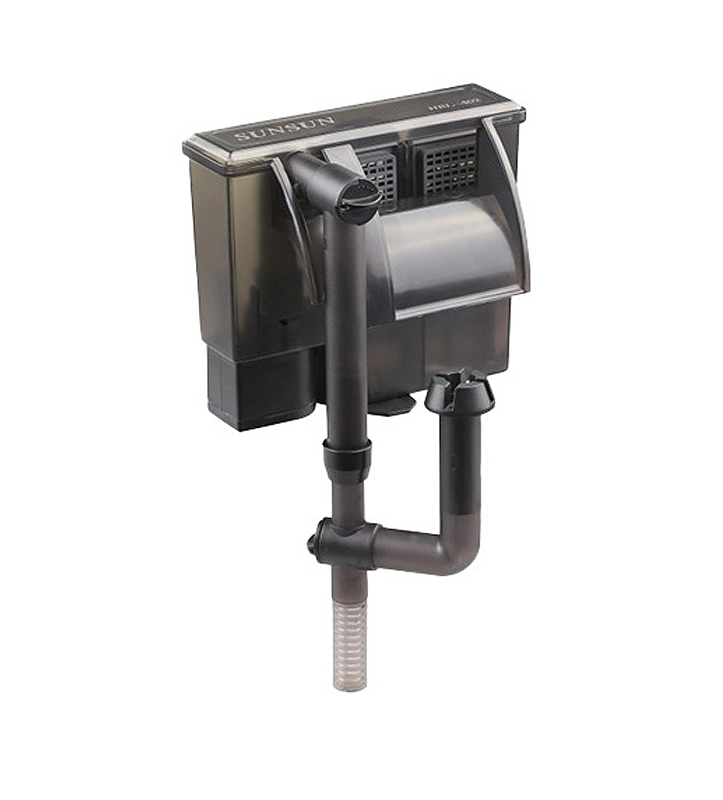 HBL Series Hang-On Aquarium FilterFor small freshwater setups considering a hang-on filter, the HBL series offers multiple models with outputs from 300 to 800 L/h.View Product →
- Mechanical sponge catches food and waste.
- Biological media gives bacteria a home.
- Adjustable flow protects long-finned fish and delicate plants.
- Quiet operation matters if the tank sits near a bedroom or desk.
Material and Build Quality Decide Long-Term Satisfaction
Glass or acrylic both work, but the best choice for a small fish tank depends on scratch resistance, weight, and how often you move it. Standard glass is heavy but resists scratches; acrylic is lighter and impact resistant but scratches easily; hot-bent glass looks clean but can be harder to clean in the curved corners.
| Material | Strength | Watch-out |
|---|---|---|
| Standard glass | Scratch resistant and easy to see through | Heavy for its size |
| Acrylic | Light, impact resistant, molded shapes | Scratches with rough cleaning pads |
| Hot-bent glass | Fewer front seams and a curved view | Curved corners need soft tools |
If the tank will sit on a desk and be moved occasionally, weight and edge protection matter as much as clarity. For a curved, open-top look in a compact format, the XHR hot-bending small tank is one example of the category.
 XHR Series Hot-Bent Desktop AquariumFor a compact curved desktop setup, the XHR series combines hot-bent glass, integrated top filtration, and adjustable LED lighting across 13–76 L models.View Product →
Stocking a Small Tank: Fewer Fish, Better Results
The best stocking plan for a small tank is a small group of one species plus a cleanup crew, not a mixed community that looks full on day one. Fish grow, waste accumulates, and territorial behavior increases when the footprint is crowded.
Good choices include a single betta, chili rasbora, ember tetra, pygmy corydoras, cherry shrimp, and nerite snails. Avoid goldfish, common plecos, and fast-growing community fish that will outgrow the tank or overwhelm its filter. Use adult size and swimming behavior, not the size of the fish in the store, to make the decision.
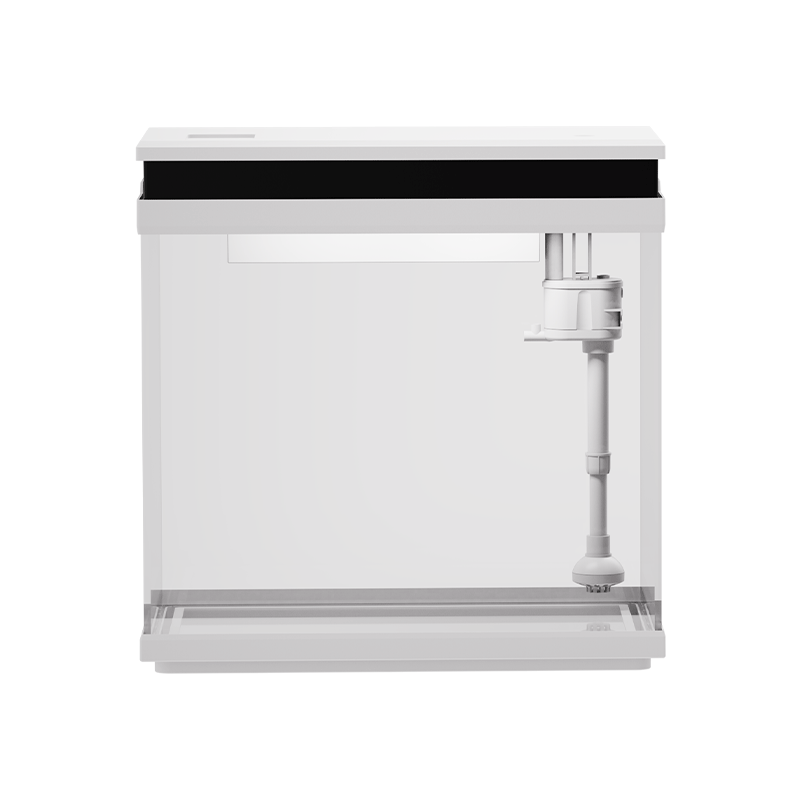 HNE-380 desktop small fish tankSensen Group Co., LTD is a leading China HNE-380 desktop small fish tank suppliers and odm HNE-380 desktop small fish tank factory in China, we are actively creating a...View Product →
Maintenance, Heat, and Placement: The Hidden Costs
A small tank needs weekly attention, stable room temperature, and a safe electrical setup, so plan for maintenance before you buy. Small volumes evaporate quickly and can overheat near a window or radiator.
- Place the tank away from direct sun, air vents, and heavy foot traffic.
- Use a stand rated for the filled weight, not just the tank’s empty size.
- Keep a dedicated bucket and cleaning cloth for aquarium use only.
- Change 20 to 30 percent of the water weekly and rinse media in tank water.
- Use a timer for the light and check temperature during seasonal changes.
How to Compare Small Fish Tank Kits Before Buying
A good kit includes the essentials you would buy anyway, such as a lid, light, filter, and heater, without forcing odd sizes or hard-to-find media. A cheap tank with a nonstandard filter or weak lid often costs more in replacements and frustration.
- Check filter media availability and whether the pump is adjustable.
- Confirm the light suits fish-only or low-demand plants.
- Look for lid cutouts that fit the heater and filter without gaps.
- Match heater wattage to tank volume and room temperature.
- Read the warranty and parts support before ordering.
If you want a clear starting point, browse Sensen’s small fish tank range for desktop, hot-bent, and acrylic formats, then compare the filter and heater requirements for each model.
Sensen’s small fish tank range includes compact desktop and open-top formats that make the size and equipment comparison easier.
FAQ
The answers below cover the decisions that most often make or break a small tank.
What is the best small fish tank size for a beginner?
A 5- to 10-gallon tank is the best starting point because it is more stable than a tiny desktop bowl while still fitting on a shelf or desk. Bigger is easier within reason, but 10 gallons is usually enough for a simple freshwater community.
Can I keep a betta in a 3-gallon tank?
Yes, but a 5-gallon heated, filtered tank is easier to keep stable and gives the fish more swimming room. If you use 3 gallons, plan on frequent water changes and reliable temperature control.
Do small tanks need a filter?
Yes, every fish tank needs filtration because fish waste becomes ammonia, and bacteria must process it. A gentle filter with reusable media is more reliable than relying on water changes alone.
How often should I clean a small tank?
Plan on a 20 to 30 percent water change weekly, with filter rinsing every few weeks or when flow drops. Clean the glass before algae spreads and avoid deep-cleaning the filter media, which can remove beneficial bacteria.
Is a taller tank better for small spaces?
Usually no; footprint and surface area matter more than height. A shallow, wide tank offers more gas exchange and easier access, while a tall narrow tank can be harder to clean and stock.
The best small fish tank is the one you can maintain consistently, not the smallest model that fits on a shelf. Choose 5 to 10 gallons for most freshwater setups, put filtration and stable temperature first, stock lightly, and measure the footprint before you buy. That approach turns a compact tank from a short-lived novelty into a reliable, low-stress aquarium.

 No. 61-79, Baima Street, Maao Town, Dinghai District, Zhoushan City, Zhejiang Province, China.
 0086 580 8082088 / 8081168
 0086 580 8080978
 songhua@sunsun-china.com