Blood parrot cichlids are among the most recognizable ornamental freshwater fish. Their rounded body shape, bright coloration, active behavior, and distinctive appearance make them popular in home aquariums, public displays, and specialty fish shops. However, maintaining their appearance and vitality requires more than attractive tank decoration and clean water. A suitable daily diet is essential for supporting healthy growth, natural activity, good body condition, and long-lasting color.
MSX-3201/3202 blood parrot fish food is designed for the practical feeding needs of blood parrot fish. Available in net contents of 310 g and 580 g per bottle, the product provides a convenient food option for aquarium owners who need a dependable supply for routine feeding. Its purpose is to make feeding easier, more consistent, and more suitable for the dietary habits of ornamental fish kept in controlled aquatic environments.
As part of a broad aquarium product portfolio, this food is supported by the experience of Sensen Group Co., Ltd., a manufacturer and supplier active in aquarium pets, aquaculture machinery, industrial equipment, water pumps, air pumps, aquarium lighting, controllers, aquarium accessories, and related equipment. This wider technical background is important because good fish nutrition is closely connected with water quality, filtration, circulation, oxygenation, lighting, and responsible aquarium management.
The product is not simply a packaged feed item. It represents a convenient component of a complete aquarium-care system. When combined with suitable filtration, stable water conditions, proper stocking, and an appropriate feeding schedule, it can help aquarium keepers manage the daily care of blood parrot fish with greater confidence.
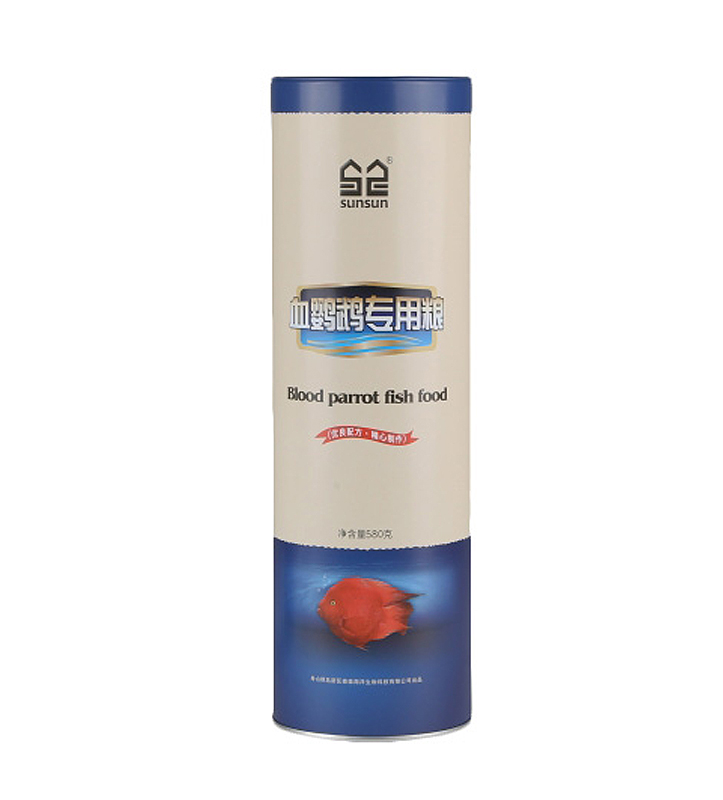
MSX-3201/3202
Content
MSX-3201/3202 is identified as blood parrot fish food within the aquarium accessories category. It is supplied in bottle packaging and is offered in two listed net-content options: 310 g and 580 g. These package sizes provide flexibility for different users, from individual aquarium owners to fish stores, breeders, display facilities, and other customers who require a larger reserve of feed.
| Product Attribute | Information |
|---|---|
| Product model | MSX-3201/3202 |
| Product type | Blood parrot fish food |
| Category | Aquarium Accessories |
| Package form | Bottle |
| Available net contents | 310 g and 580 g |
| Primary application | Routine feeding of blood parrot fish in aquariums |
| Recommended use environment | Freshwater ornamental aquariums managed according to normal fish-care practices |
The clear product positioning makes the food easy to understand. Rather than presenting a general-purpose feed for every aquatic animal, the product is identified for a specific ornamental fish group. This focused positioning is useful for consumers who want to select food according to the type of fish they keep.
Blood parrot fish have particular feeding behavior and body structure. Their mouths are smaller and differently shaped than those of many conventional large cichlids, and they may benefit from food that is easy to approach, consume, and digest. A food developed for this category can make routine feeding more convenient than relying on an unsuitable feed intended for another species or life stage.
For retailers, the model structure also supports clear inventory management. The two listed sizes allow distributors and stores to offer a smaller household option and a larger value-oriented option. For consumers, the choice can be based on aquarium size, number of fish, feeding frequency, and expected storage time.
Blood parrot fish are ornamental cichlids that are often kept as centerpiece fish. Their appearance is a major reason for their popularity, but visual appeal depends on overall health. Fish that receive an unsuitable diet may show reduced activity, poor body condition, inconsistent growth, or a duller appearance. Feeding therefore needs to be considered as part of a broader maintenance program.
A suitable diet can support several fundamental objectives. First, it can provide energy for normal swimming, exploration, and interaction with other fish. Second, it can help maintain body condition during growth and adulthood. Third, it can contribute to the preservation of an attractive appearance when combined with good genetics, suitable lighting, and stable water chemistry. Fourth, consistent feeding can make fish behavior easier for keepers to observe.
Feeding also affects the aquarium environment. Uneaten food decomposes and can increase organic waste, cloud the water, and place additional pressure on the filter. For this reason, food quality and feeding control should be considered together. The best routine is not simply to add a large amount of food. It is to provide an appropriate quantity, observe consumption, and remove or prevent excess where necessary.
MSX-3201/3202 can be used as part of a measured feeding routine. The keeper should introduce a quantity that the fish can consume within a short period and adjust the amount according to fish size, activity, water temperature, tank population, and observed appetite. The correct amount will differ between aquariums, so responsible observation remains essential.
One important advantage is the product’s clear focus on blood parrot fish. General aquarium foods can be useful in many situations, but a dedicated product gives consumers a more direct choice. The packaging and product identity communicate the intended application, reducing confusion at the time of purchase.
This focus is also valuable for retailers. Store employees can more easily recommend the product to customers who own blood parrot fish. Clear product classification can improve shelf organization, simplify product training, and help customers compare feeding options according to the fish in their aquarium.
The bottle format supports practical household use. A bottle is easy to store near an aquarium, easy to open and close during daily feeding, and suitable for controlled dispensing. Compared with an unprotected bulk container, a dedicated bottle can provide a more orderly way to handle the food and reduce unnecessary exposure during repeated use.
For aquarium owners, convenience matters because feeding is performed regularly. A product that can be opened, measured, closed, and stored without difficulty is more likely to support consistent routines. The two listed package sizes also help users select a quantity that is appropriate for their consumption rate.
The 310 g and 580 g options are a practical advantage for different aquarium situations. A smaller package may be suitable for a single home aquarium, a newly established feeding routine, or an owner who wants to evaluate consumption before purchasing a larger quantity. The larger size can be suitable for fish keepers with multiple aquariums, larger populations, or more frequent purchasing needs.
Having more than one size also benefits professional users. Fish shops and display facilities may prefer a larger bottle because their feeding demand is higher, while smaller retail customers may prefer a more compact option. This flexibility can improve product accessibility across several market segments.
The product comes from a company whose portfolio extends beyond fish food. Sensen Group Co., Ltd. is associated with aquarium equipment, pumps, lighting, controllers, aquaculture machinery, and other technical products. This broader product knowledge creates an important advantage in understanding the conditions under which ornamental fish are kept.
Food cannot be evaluated separately from aquarium management. A fish may be offered a suitable diet, but poor filtration, inadequate oxygenation, unstable temperature, excessive stocking, or irregular maintenance can still compromise health. A supplier familiar with the complete aquarium environment is better positioned to understand these connections and support a coordinated product range.
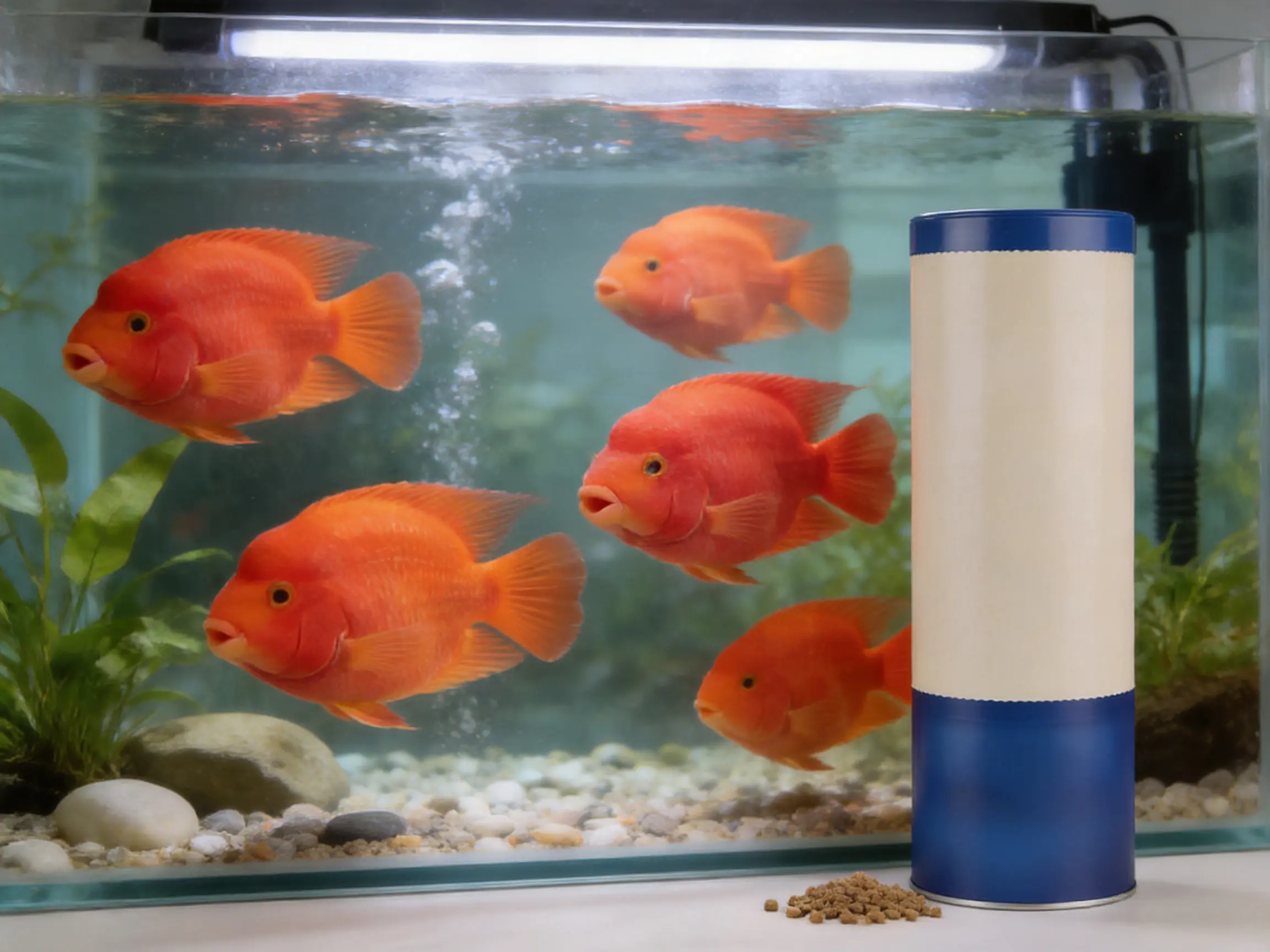
The bright appearance of blood parrot fish is one of their strongest attractions. Many aquarium owners therefore look for food that supports color expression. It is important to understand that appearance is influenced by multiple factors, including genetics, age, stress level, water quality, lighting, tank design, and diet. No food should be considered a substitute for sound aquarium care.
A consistent feeding routine can help fish maintain energy and body condition, which may contribute to a more vigorous appearance. When fish are active, comfortable, and properly nourished, they are more likely to display normal behavior and maintain their characteristic visual appeal. In contrast, irregular feeding or poor environmental management can negatively affect the overall condition of the fish.
For best results, feeding should be combined with stable water parameters and suitable aquarium equipment. Mechanical and biological filtration can help manage waste. Water circulation can prevent stagnant areas. Aeration can support oxygen availability. Appropriate lighting can improve visual presentation without causing excessive stress or algae problems. These factors work together rather than separately.
The value of a dedicated blood parrot fish food therefore lies in its role within a larger care program. The product helps address the feeding component, while the aquarist remains responsible for creating a suitable environment. This balanced approach is more reliable than expecting a single product to solve every aspect of fish health or appearance.
The company information identifies Sensen Group Co., Ltd. as an established organization founded in November 1985. More than three decades of operation provide a substantial foundation for production management, product development, market service, and supply-chain coordination. Long-term experience does not replace quality control, but it can provide the organizational maturity needed to build repeatable systems.
The company has described a structure that includes ten functional departments in its headquarters. These include a research institute, business school, quality control department, personnel and administrative information department, and financial department. Such departmental organization suggests that the company approaches manufacturing and commercial operations through coordinated functions rather than relying solely on one production team.
A dedicated quality control function is particularly relevant to aquarium products. Fish food must be handled and packaged with attention to consistency, cleanliness, storage conditions, labeling, and batch management. While the supplied information does not specify individual testing protocols or formulation percentages for MSX-3201/3202, the existence of a quality control department indicates an organizational basis for systematic product oversight.
The Sensen Research Institute is another important company strength. Research and development capability can support the improvement of formulas, packaging, manufacturing efficiency, and product application knowledge. In the aquarium field, research may cover the interaction between feed, fish behavior, water quality, equipment, and user practices. A company that develops both consumable and technical aquarium products can draw on knowledge from several related areas.
The company’s stated activities include aquarium pets, aquaculture machinery, and industrial equipment. These areas require different types of expertise, but they also share an understanding of aquatic environments, operational reliability, production efficiency, and customer requirements.
Aquarium pet products must meet the expectations of hobbyists and retailers who value appearance, convenience, and consistency. Aquaculture machinery requires attention to mechanical performance, durability, and practical operation. Industrial equipment requires structured production and process management. Experience across these fields can help build a broad technical culture within the organization.
For a fish-food product, this background is relevant because feeding is part of aquatic production and maintenance. Manufacturers familiar with pumps, filtration, aeration, and water movement can better appreciate how feed particles and waste interact with the aquarium system. This does not mean that equipment alone guarantees food quality; rather, it demonstrates a wider understanding of the environment in which the product is used.
The company has reported several wholly owned subsidiary corporations, including organizations associated with different regions and product activities, as well as an import and export company. It has also described holdings in multiple trading companies. This structure indicates a broad commercial and production network.
A large network can offer several practical benefits. It may support more stable procurement, wider product availability, regional service, and coordination between manufacturing and distribution. It can also help a company respond to different market requirements while maintaining a recognizable product system.
For customers purchasing MSX-3201/3202, distribution strength can matter almost as much as product selection. A food product is most useful when it can be replenished reliably, delivered through established channels, and supported with clear product information. Retailers also benefit when a supplier can provide a wider range of related aquarium products and coordinate orders efficiently.
The company describes continuous innovation as a central direction. In the aquarium industry, innovation does not necessarily mean adding unnecessary complexity. It can include improving feeding convenience, refining packaging, strengthening quality systems, developing better equipment integration, enhancing product communication, and responding to changing consumer needs.
Innovation can also be seen in the company’s approach to sales and service. The organization has described a network of aquarium stores with unified decoration and the development of an online and offline retail model. This approach can bring products, education, and customer service closer together. For aquarium owners, better access to product guidance may contribute to more responsible use.
A product such as MSX-3201/3202 benefits from this environment because it is not isolated from the company’s broader innovation program. Its role is connected to the company’s aquarium-pet category, technical equipment, retail system, and long-term experience in aquatic products.
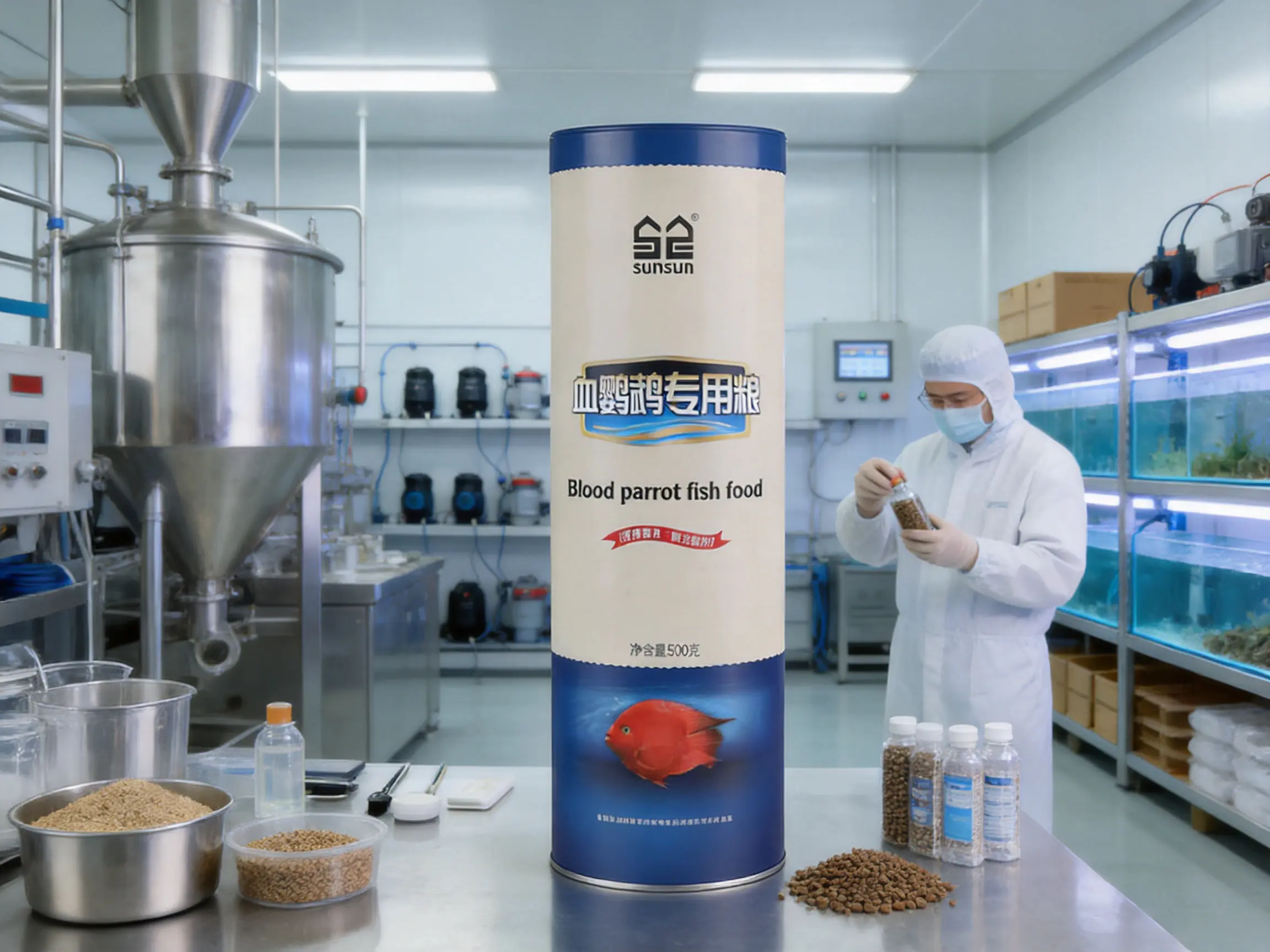
The supplied materials do not list the exact recipe, ingredient percentages, pellet dimensions, moisture level, processing temperature, or laboratory test data for MSX-3201/3202. It would therefore be inappropriate to assign specific technical claims that have not been provided. Nevertheless, a responsible evaluation can explain the manufacturing stages that are important for a product of this type and the systems that a capable manufacturer should control.
Fish food production begins with the selection and inspection of raw materials. Ingredients must be suitable for the intended fish and compatible with the desired product form. A controlled purchasing system should consider supplier reliability, material identity, freshness, storage requirements, and documentation.
For ornamental fish food, raw material consistency is important because changes in composition can affect feeding behavior, physical appearance, storage stability, and waste production. Incoming materials should be identified and handled through a process that reduces the risk of mix-ups. Proper stock rotation can also help preserve material quality.
Once materials have been approved, they are weighed and prepared according to the production formula. Accurate weighing helps maintain batch consistency. Mixing must be controlled so that the final product has a uniform distribution of its components rather than areas with substantially different composition.
Formula management is especially important when food is designed for a specific ornamental fish. The product must be manufactured consistently enough for users to establish a predictable feeding routine. A stable product can also make it easier for retailers and distributors to explain the product to customers.
Many fish foods are processed into particles or pellets that can be handled by the target fish. The selected particle form should support easy storage, dispensing, and consumption. Processing may involve size reduction, blending, forming, drying, or other controlled steps, depending on the formula and manufacturing technology.
For blood parrot fish, the practical objective is to offer food that the fish can approach and consume without unnecessary difficulty. The exact dimensions and processing method for MSX-3201/3202 are not provided, so users should follow the product packaging and observe how their fish respond during feeding.
Moisture control is an important consideration for packaged dry fish food. Excess moisture can affect texture, shelf stability, and storage performance. A controlled drying and cooling process can help prepare the product for packaging, although exact process parameters are determined by the manufacturer’s formula and equipment.
After purchase, the consumer also has a role in maintaining product quality. The bottle should be closed after use and stored in a cool, dry place away from direct sunlight and excessive humidity. Food should be kept away from water splashes, and a clean, dry utensil should be used when necessary.
Packaging protects the product during transport, storage, retail display, and daily household use. The bottle format provides a practical container for repeated opening and closing. Product identification should make it possible to distinguish the model, package size, intended fish, and other relevant information.
Accurate labeling is also important for responsible use. Customers should consult the package for feeding guidance, storage instructions, manufacturing information, and any applicable shelf-life details. The package is the primary source for information that may vary between production batches or markets.
A structured quality-control system may include checks of incoming materials, production records, packaging accuracy, visual condition, and finished-product conformity. The specific controls used for this product are not detailed in the supplied material, but these general checkpoints are important to any responsible manufacturing operation.
Batch identification can help manufacturers and distributors manage inventory and respond efficiently if questions arise. Release procedures can also help ensure that products are not distributed until they have passed the company’s required checks. These systems are part of the less visible infrastructure that supports a consistent consumer experience.
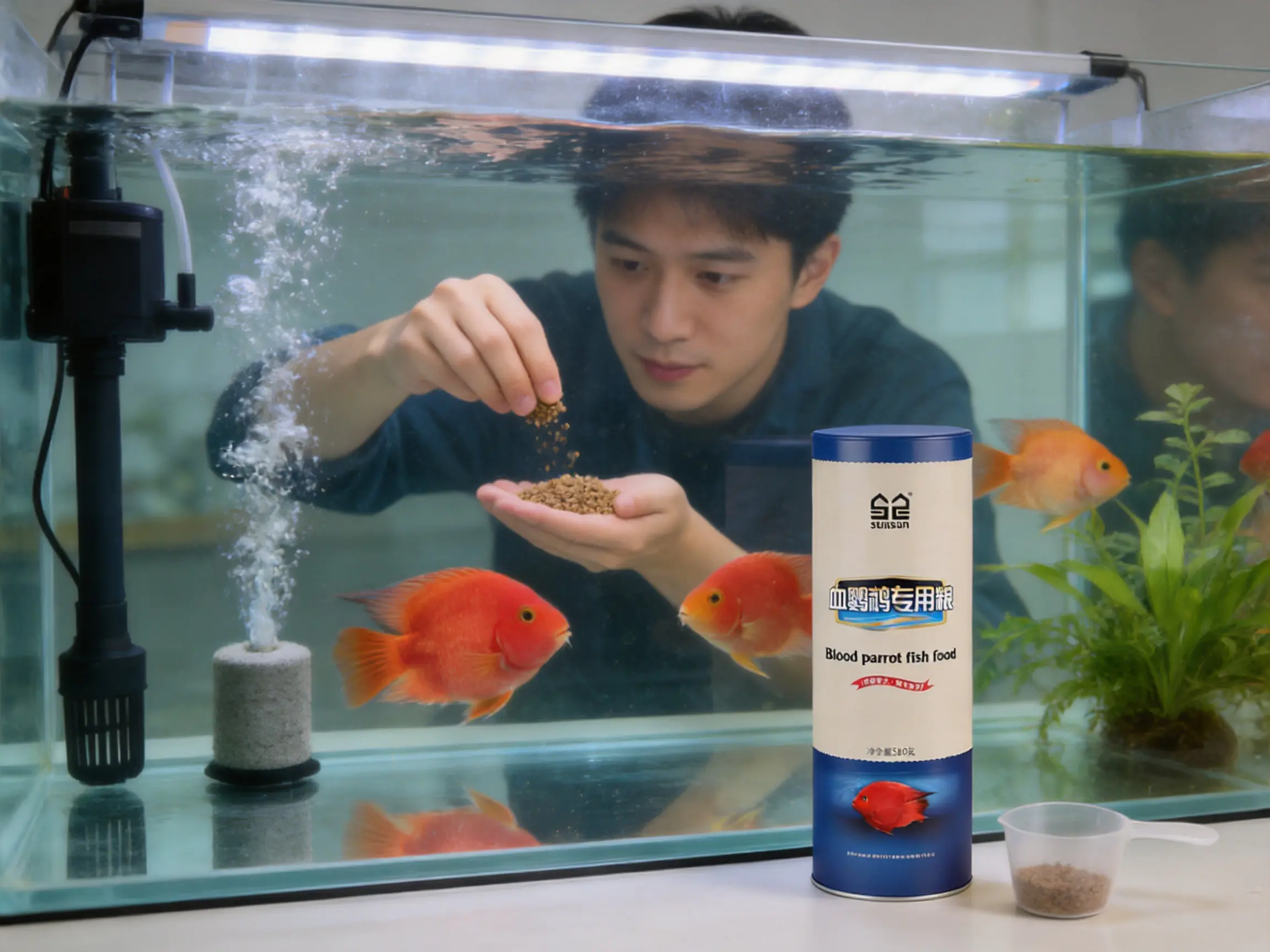
Before feeding, observe the fish for a few moments. Healthy blood parrot fish commonly show interest in food and move actively when the keeper approaches the aquarium. Changes in appetite, swimming behavior, posture, or social interaction may indicate stress or an environmental problem and should not be ignored.
Add a modest quantity of food and watch how quickly it is consumed. The objective is to provide enough for the fish without allowing a large amount to settle into the substrate or become trapped in decorations. If food remains after feeding, reduce the next portion and consider removing the excess with a suitable aquarium tool.
Feeding frequency depends on fish size, age, water temperature, tank conditions, and the overall feeding program. Juvenile fish and growing fish may have different needs from mature specimens. A heavily stocked aquarium may require a different approach from a lightly stocked display tank. The product label and advice from a qualified aquarium professional should be used as the primary guide.
Do not use wet hands or a wet scoop inside the product container. Moisture introduced into dry food can reduce storage quality. Close the bottle immediately after feeding and keep it in a clean, dry location. Avoid placing the container next to a heater, in direct sunlight, or in a location exposed to frequent water vapor.
Food should be part of a varied and carefully managed program when appropriate. Depending on the aquarium and the advice of an aquatic specialist, keepers may use more than one suitable food type. Any change should be introduced gradually, and the fish’s appetite, waste production, and water quality should be monitored.
Even a suitable food can cause water-quality problems if it is overused. Excess food breaks down into organic waste, which can contribute to ammonia, nitrite, nitrate, cloudiness, and unpleasant odors. These problems can stress fish and undermine the benefits of a good feeding routine.
Filtration should be sized for the aquarium and maintained according to the equipment instructions. Mechanical media can help capture suspended particles, while biological media support beneficial microorganisms that process nitrogenous waste. Regular maintenance is necessary because a filter that is clogged or neglected cannot operate effectively.
Water changes are also an important part of routine care. The frequency and volume should be based on aquarium size, stocking density, filtration, feeding amount, and test results. Water should be treated appropriately before it is added to the tank, and sudden changes in temperature or chemistry should be avoided.
Water movement and aeration support a stable aquatic environment. Sensen Group’s broader product range includes water pumps and air pumps, which are relevant to circulation and oxygenation planning. The correct equipment depends on tank volume, fish population, layout, and the desired flow pattern. Blood parrot fish should have adequate circulation without being forced to struggle against excessive current.
Lighting also affects how the fish and aquarium are viewed. Aquarium lighting can improve display quality, but excessive intensity or overly long lighting periods may cause stress or encourage algae growth. A balanced schedule, suitable hiding areas, and consistent day-and-night timing are generally more beneficial than simply using the brightest possible light.
MSX-3201/3202 offers a straightforward product story for aquarium retailers. The intended fish category is clearly identified, the product is available in two package sizes, and the item belongs to a broader aquarium-accessory portfolio. These characteristics can make it easier to place the product in a dedicated ornamental-fish feeding section.
Retail staff can introduce the food when customers purchase blood parrot fish, aquariums, filters, lighting, or other related equipment. This creates an opportunity to explain that nutrition, water quality, and equipment should be considered together. A more complete conversation can help customers avoid the common mistake of choosing fish food without considering filtration capacity or aquarium size.
Distributors may benefit from the company’s broad production and sales network. A supplier active in several aquarium and equipment categories can support mixed orders and offer a wider product selection. This may simplify purchasing for stores that need food, pumps, filters, lighting, controllers, and accessories from related sources.
Professional users such as fish shops and display facilities can select between the 310 g and 580 g bottle sizes according to consumption. The larger option may reduce the frequency of replenishment, while the smaller option may be convenient for lower-volume applications or separate feeding stations.
As with all consumable aquarium products, professional users should establish their own storage, stock rotation, and feeding records. Keeping track of opening dates, product use, fish response, and water-quality results can help identify the most effective routine for each aquarium.
Sensen Group Co., Ltd. has described a long-term development strategy centered on industrial technicalization, marketing globalization, and brand internationalization. These directions are relevant to customers seeking a supplier with experience beyond a single product category.
The company’s headquarters includes research, quality control, administration, finance, personnel, and training functions. Its business school indicates an emphasis on organizational learning and employee development. Training is valuable in aquarium manufacturing because product knowledge, production discipline, customer service, and technical communication all influence the final customer experience.
The company also reports a network of subsidiaries and trading-company holdings in several regions. Such a structure can help serve domestic and overseas markets, coordinate product movement, and adapt commercial support to different customer groups. International supply requires attention to packaging, documentation, logistics, and communication, all of which can affect product availability and usability.
The company’s retail development, including unified aquarium stores and an online-offline service model, reflects an effort to connect manufacturing with end-user experience. This connection may help identify practical problems encountered by aquarium owners, such as confusion about food selection, incorrect portion sizes, unsuitable storage, or poor coordination between feeding and filtration.
These capabilities provide context for the product’s competitive position. MSX-3201/3202 competes not only through the food itself, but also through product focus, packaging options, manufacturing organization, distribution capacity, and access to a wider aquarium ecosystem.
Compared with a generic food designed for many unrelated freshwater fish, a blood parrot-focused product offers clearer application guidance. The consumer does not need to guess whether the product is appropriate for the fish’s feeding habits or body form. This can make the purchasing decision simpler.
Compared with buying unbranded bulk food from an uncertain source, a packaged product from an established aquarium manufacturer offers clearer product identification and a more structured supply relationship. Bottle packaging also supports cleaner storage and easier household handling.
Compared with relying mainly on occasional treats, a dedicated daily food is more suitable for building a consistent feeding routine. Treats can have a place in some aquarium programs, but they should not replace a balanced primary diet unless advised by a qualified aquatic professional.
Compared with selecting food solely by the lowest purchase price, the 310 g and 580 g sizes allow customers to consider value in relation to actual consumption, storage time, and aquarium population. A product that is used consistently and stored correctly may offer better practical value than a cheaper product that creates excessive waste or is difficult to manage.
No responsible comparison should claim that one food is universally superior for every aquarium. Fish size, water temperature, stocking, health condition, and individual preference all affect results. The advantages of MSX-3201/3202 are best understood as product focus, practical packaging, available size choices, and support from an experienced aquarium-product manufacturer.
When purchasing the product, confirm the model, package size, package condition, and intended fish category. Do not buy a bottle with a damaged seal, severe deformation, contamination, or unclear labeling. Retailers should store the product in a dry location away from direct sunlight and excessive heat.
At home, keep the container away from the aquarium’s splash zone. Store it where children and pets cannot access it. Use clean hands or a clean, dry utensil, and never return unused food that has contacted aquarium water to the bottle.
Rotate stock so that older products are used before newer products, while still following the stated shelf-life information. If the food develops an unusual smell, visible moisture, mold, discoloration, or other unexpected change, discontinue use and contact the seller or manufacturer for guidance.
Package sizes should be chosen according to real consumption. A larger bottle may be economical for several aquariums, but a smaller bottle may be more appropriate if one aquarium uses food slowly. The best choice is the size that can be stored properly and consumed within the recommended period after opening.
It is identified as blood parrot fish food. It is intended for blood parrot fish kept in managed freshwater aquariums. Users should consult the product label for the most specific application and feeding instructions.
The listed net contents are 310 g and 580 g per bottle. The appropriate size depends on the number of fish, aquarium quantity, feeding frequency, and storage period.
The product is specifically positioned for blood parrot fish. Other fish may accept it, but suitability depends on species, mouth size, age, dietary requirements, and feeding behavior. For other species, a food designed for that species or life stage is generally the more appropriate choice.
Begin with a small amount and observe consumption. Provide only what the fish can eat promptly, then adjust according to appetite and aquarium conditions. The package instructions should take priority, and excess food should be avoided because it can affect water quality.
No food should be treated as a guarantee of a particular color result. Appearance depends on genetics, age, stress, lighting, water quality, and overall care. A suitable feeding routine can support general condition, while stable aquarium management helps fish express their natural appearance.
Keep it tightly closed in a cool, dry place away from direct sunlight, heat, humidity, and aquarium splashes. Use clean, dry handling methods and follow the storage and shelf-life instructions printed on the package.
Uneaten food and fish waste can increase the organic load in an aquarium. Effective filtration, regular maintenance, appropriate water changes, sensible stocking, and controlled feeding help reduce this risk.
Sensen Group Co., Ltd. was established in 1985 and has described experience in aquarium pets, aquaculture machinery, and industrial equipment. Its reported structure includes research, quality control, training, administration, and distribution functions, as well as subsidiaries and trading activities that support a broad product network.
The two available bottle sizes can serve both household and higher-volume users. Fish shops should establish their own storage and stock-rotation procedures and select the size according to actual consumption.
Remove uneaten food and check water temperature, water quality, social stress, illness, and recent changes in the aquarium. Fish may also need time to adapt to a new food. If refusal continues or other symptoms appear, consult an experienced aquatic professional.
MSX-3201/3202 is a focused blood parrot fish food offered in practical 310 g and 580 g bottle sizes. Its key advantages are clear species-oriented positioning, convenient packaging, flexible purchasing options, and suitability for incorporation into a structured aquarium-feeding routine.
The product is supported by the broader capabilities of Sensen Group Co., Ltd., an established organization with reported experience in aquarium pets, aquaculture machinery, industrial equipment, research, quality control, training, distribution, and international business. These strengths provide a strong foundation for manufacturing and supplying aquarium products across different markets.
For the best results, the food should be used responsibly. Portion control, clean storage, regular observation, suitable filtration, adequate oxygenation, stable water conditions, and consistent aquarium maintenance are all essential. When these practices are combined, dedicated blood parrot fish food can become a reliable part of daily care and help aquarium owners maintain active, attractive, and well-managed fish.
1. Sensen Group Co., Ltd. Company information and corporate development profile supplied for product presentation.
2. Sensen Group Co., Ltd. Product information for MSX-3201/3202, including product category, application, package format, and listed net contents.
3. General aquarium husbandry principles concerning ornamental fish feeding, filtration, water quality, stocking, and routine maintenance.
4. General aquaculture manufacturing principles concerning raw-material control, formula preparation, batch consistency, packaging, storage, and quality assurance.



 English
 русский
 España
 Portugal
 عربي
عربي
 No. 61-79, Baima Street, Maao Town, Dinghai District, Zhoushan City, Zhejiang Province, China.
 0086 580 8082088 / 8081168
 0086 580 8080978
 songhua@sunsun-china.com