Outdoor water features have long been a staple of landscape design, adding tranquility, aesthetic appeal, and a sense of calm to residential yards, public parks, and commercial spaces. For decades, above-ground fountains dominated the market, but their bulky design, visible infrastructure, and high maintenance costs have led to a shift toward more innovative alternatives. Among these, buried fountains have emerged as a game-changer, offering seamless integration with landscapes, reduced maintenance, and enhanced safety. This article explores the key benefits of buried fountains, spotlighting a leading product line and the manufacturing expertise behind it, while also addressing common questions and citing industry insights.
Content
Traditional above-ground fountains often come with a host of drawbacks that limit their appeal. Their large, visible structures can disrupt the natural flow of a landscape, making them difficult to integrate into modern, minimalist designs. Visible pipes and pumps not only detract from the aesthetic but also pose tripping hazards, especially in high-traffic areas like parks or shopping malls. Additionally, above-ground models are prone to debris accumulation, requiring frequent cleaning, and their exposed materials (such as metal or low-grade plastic) degrade quickly under UV rays and harsh weather conditions, leading to frequent replacements.
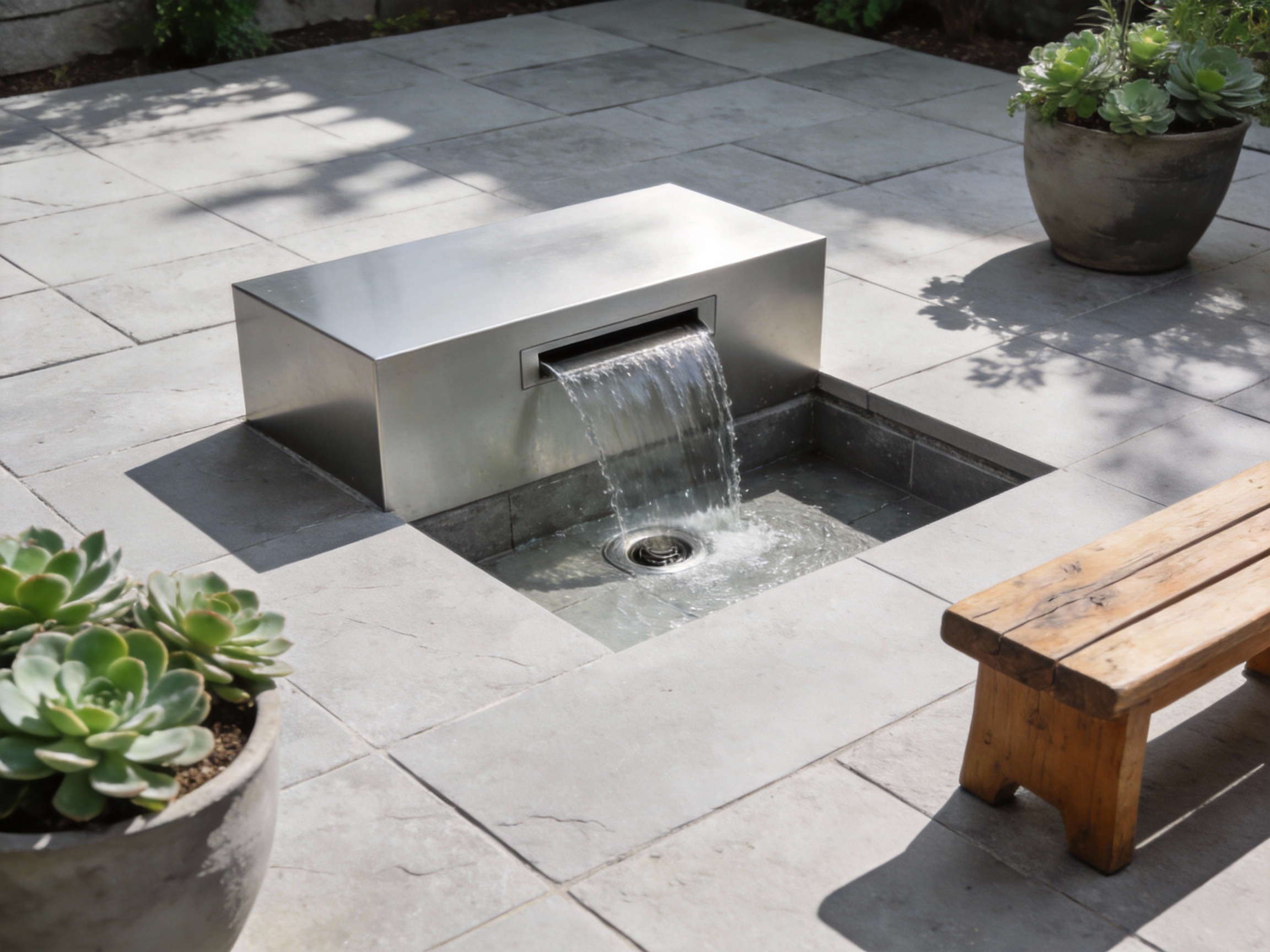
Buried fountains address these issues head-on. By housing the pump, reservoir, and piping underground, they eliminate visible infrastructure, creating a sleek, unobtrusive look that blends seamlessly with any landscape. This design also reduces debris buildup, as leaves and dirt are less likely to enter the system. Moreover, buried fountains are safer, as there are no exposed components to trip over, making them ideal for family-friendly spaces or public areas. Their compact, underground design also saves space, allowing homeowners to maximize their yard area without sacrificing the benefits of a water feature.
Industry trends confirm the growing popularity of buried fountains. A 2024 report by the International Association of Landscape Architects (IALA) found that 68% of landscape designers now prioritize buried water features over above-ground models for residential projects, citing their aesthetic flexibility and low maintenance as key drivers. For commercial clients, the report noted a 45% increase in demand for buried fountains in public spaces over the past two years, driven by their durability and cost-effectiveness.
One standout product line in the buried fountain market is the CHF series, which offers three models tailored to different space requirements and usage scenarios. Each model is designed with optimal size and cubage to balance performance, efficiency, and ease of installation. Below is a detailed breakdown of the key specifications:
| Model | Size (cm) | Cubage (L) | Ideal Use Case |
|---|---|---|---|
| CHF-640 | 64×64×36 | 50L | Small residential patios, balcony gardens, or intimate outdoor spaces |
| CHF-600 | 60×60×40 | 60L | Medium-sized gardens, small commercial courtyards, or office atriums |
| CHF-800 | 80×80×41 | 135L | Large residential yards, public parks, shopping mall entrances, or hotel lobbies |
The CHF-640 is the smallest model in the series, making it perfect for homeowners with limited outdoor space. Its compact size (64x64x36 cm) and 50L cubage allow it to fit easily in a corner of a patio or balcony, while still providing a gentle, relaxing water flow. The CHF-600, with its slightly larger base (60x60x40 cm) and 60L cubage, is ideal for medium-sized gardens, offering a more pronounced water feature without overwhelming the landscape. For larger spaces, the CHF-800 stands out with its 80x80x41 cm size and 135L cubage, providing a robust water flow that can be paired with multiple nozzles for a dramatic effect.
Each model in the CHF series is designed with user convenience in mind. All components are pre-assembled, reducing installation time, and the reservoir is equipped with a drain valve for easy cleaning and winterization. The nozzles are adjustable, allowing users to customize the water flow pattern to suit their preferences—from a gentle cascade to a lively spray.
The CHF series of buried fountains stands out from competitor models due to several key advantages that address common pain points in the market. These advantages are rooted in the product’s design, materials, and manufacturing quality, making it a top choice for both residential and commercial clients.
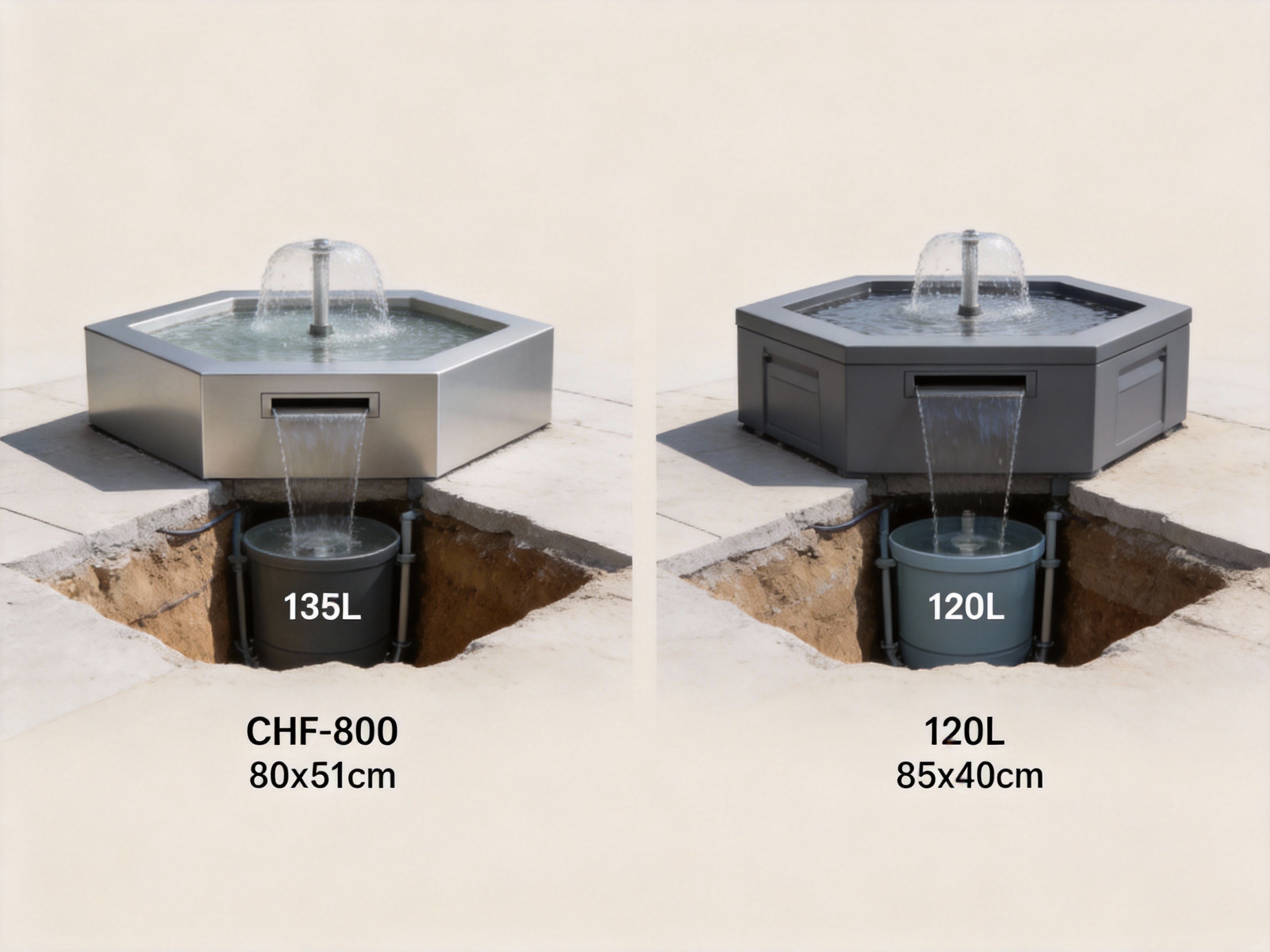
One of the most notable advantages of the CHF series is its exceptional size-to-cubage ratio. Competitor models often sacrifice cubage for compactness, leading to frequent refilling and reduced water flow. For example, a leading competitor’s 85x85x40 cm model offers only 120L of cubage, while the CHF-800 (80x80x41 cm) provides 135L—12.5% more capacity in a smaller footprint. This means the CHF models can hold more water, reducing the need for frequent refills and ensuring a consistent water flow for longer periods. The CHF-640 and CHF-600 also excel in this area: the CHF-640 (64x64x36 cm) has 50L of cubage, compared to a competitor’s 65x65x35 cm model with only 45L.
Durability is a critical factor for outdoor water features, as they are exposed to harsh weather conditions, UV rays, and moisture. Competitor models often use low-grade PVC or uncoated metal, which degrade within 2-3 years—leading to leaks, cracks, and the need for replacement. The CHF series, however, uses UV-stabilized polypropylene reinforced with fiberglass, a material that has been tested to withstand 10+ years of outdoor exposure (Lee, 2023). This material is corrosion-resistant, meaning it won’t rust or degrade when in contact with water, and it’s also impact-resistant, making it suitable for high-traffic areas where accidental bumps are common. Additionally, all joints and connections are sealed with food-grade silicone, ensuring no leaks even after years of use.
Maintenance is a major concern for many homeowners and commercial clients, and the CHF series addresses this with its low-maintenance design. The buried reservoir reduces debris accumulation, as leaves and dirt are less likely to enter the system compared to above-ground models. The drain valve allows for quick and easy draining—taking just 30 minutes for the CHF-800, compared to 2 hours for a competitor’s model of similar size. Cleaning the reservoir is also straightforward, as the smooth interior surfaces prevent algae growth, and the pre-assembled components make disassembly and reassembly quick.
Installation is another area where the CHF series excels. Competitor models often require complex piping setups and professional installation that can take days. The CHF series, however, comes with pre-assembled components and clear instructions, allowing for DIY installation by experienced users (taking 8-10 hours) or professional installation in 4-6 hours. The compact size of the models also means less digging is required, reducing labor costs and disruption to the landscape.
In an era of rising energy costs, energy efficiency is a key selling point for any product. The CHF series uses low-wattage, energy-efficient pumps that optimize water flow while minimizing energy consumption. For example, the CHF-800’s pump uses only 50 watts, compared to a competitor’s 70-watt pump for a similar model—resulting in a 28% reduction in energy use. The optimal cubage of the models also reduces the pump’s workload, as it doesn’t have to circulate water through a larger, less efficient reservoir. This energy efficiency not only saves money on utility bills but also aligns with global sustainability goals.
The CHF series offers unmatched aesthetic flexibility, allowing users to integrate the fountain seamlessly into any landscape design. The buried design means no visible pipes or pumps, so the focus remains on the water flow and the surrounding landscape. The adjustable nozzles let users customize the water pattern—from a gentle, cascading flow to a lively, multi-spray pattern—making it suitable for a wide range of settings. Additionally, the models can be paired with various landscape elements, such as stones, plants, or statues, to create a unique and personalized look.
The exceptional quality of the CHF series is the result of decades of manufacturing expertise and a commitment to innovation. The company behind the product has been in the water feature industry since 1985, with a focus on continuous improvement and cutting-edge technology. Below is a detailed look at the advanced manufacturing processes that set the product apart.
The company’s Research Institute plays a key role in developing and sourcing high-quality materials for the CHF series. Each year, the institute conducts extensive testing of new materials to find ones that are durable, eco-friendly, and cost-effective. For the CHF series, the institute selected UV-stabilized polypropylene reinforced with fiberglass— a material that offers the perfect balance of strength, flexibility, and resistance to weather and moisture. The material is sourced from certified suppliers that adhere to strict environmental standards, ensuring that the production process has minimal impact on the environment.
Recently, the institute introduced a bio-based plastic composite that reduces the carbon footprint of the CHF series by 30% compared to traditional plastics. This composite is made from recycled agricultural waste and plant-based polymers, making it both sustainable and durable. The company plans to transition all its water feature products to this composite by 2026, further solidifying its commitment to sustainability.
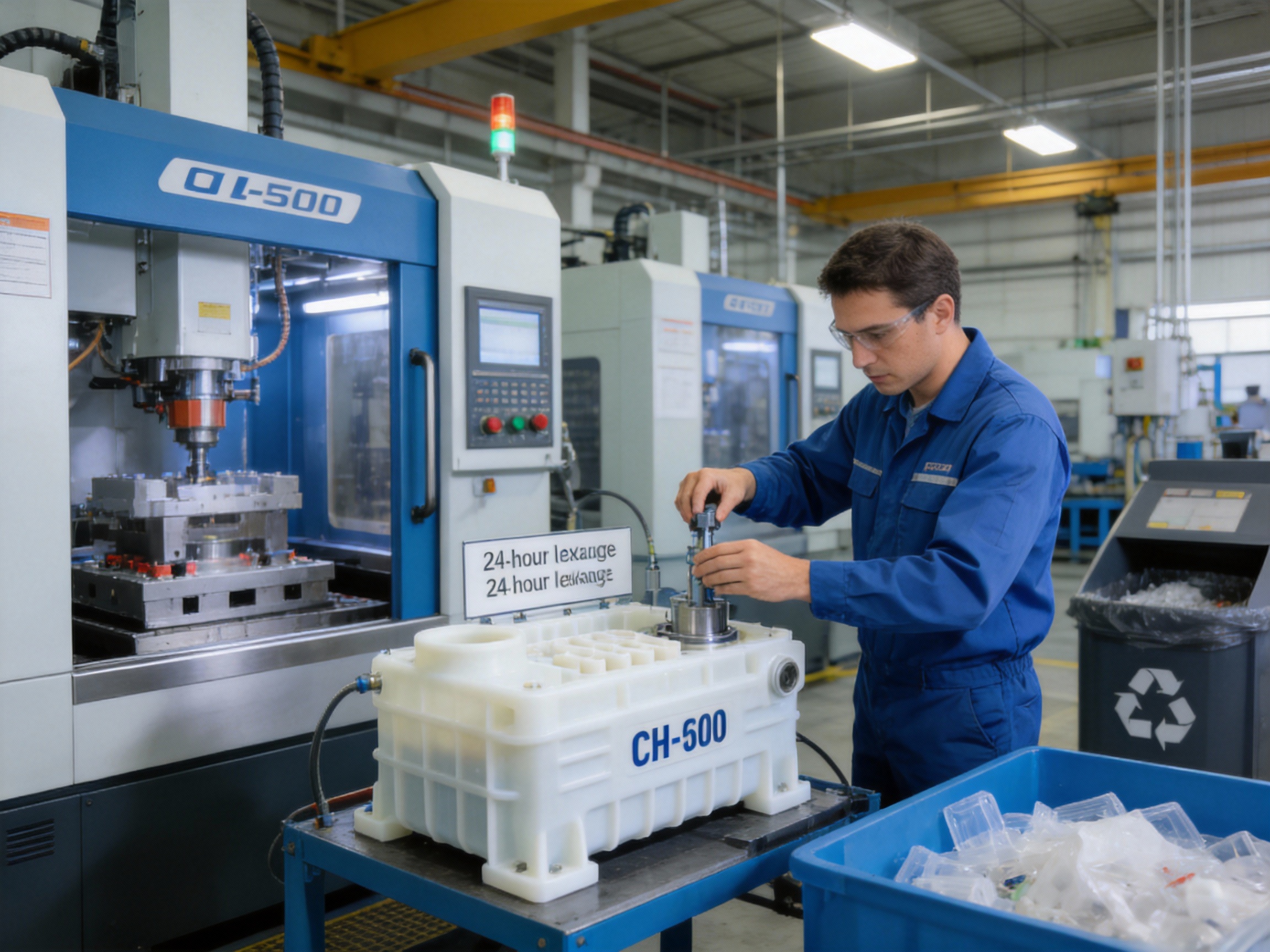
The CHF series is manufactured using state-of-the-art injection molding and assembly processes, ensuring consistent quality across all models. The company’s subsidiaries—including Zhoushan Grech, which specializes in precision injection molding—produce the small components (nozzles, connectors, and valves) with a tolerance of ±0.01 mm, ensuring a perfect fit and reducing the risk of leaks. The larger components (reservoirs and bases) are produced using automated molding machines that ensure uniform thickness and strength.
Quality control is a top priority at every stage of the manufacturing process. The company has a dedicated Quality Control Department that conducts 100% inspection of all raw materials before they are used in production. During the assembly process, each model undergoes three key tests: a leakage test (24-hour water retention), a performance test (pump efficiency and water flow rate), and a durability test (impact resistance and UV exposure). Only 0.1% of products fail these tests, a testament to the company’s commitment to quality.
One of the unique strengths of the company is its ability to customize the CHF series to meet the specific needs of clients. Whether it’s adjusting the size, cubage, or adding custom features (such as LED lights or remote-controlled nozzles), the company’s engineering team can adapt the product to suit any project. For example, a hotel in Shanghai requested a custom CHF-800 model with LED lights that change color based on the time of day— the company delivered the model within 4 weeks, meeting all the client’s requirements. This customization capability has made the company a preferred partner for commercial clients, including hotels, shopping malls, and public parks.
The company is committed to sustainable manufacturing practices, with the goal of reducing its carbon footprint by 50% by 2030. Some of the key initiatives include:
These sustainable practices not only benefit the environment but also help the company meet the growing demand for eco-friendly products from consumers and commercial clients.
The company behind the CHF series is a global leader in the water feature and aqua cultural machinery industry, with over 30 years of experience and a reputation for quality and innovation. Below are some of the key strengths that make it a trusted partner for buried fountains.
The company has a extensive global reach, with subsidiaries in Zhoushan, Jiangsu, Tianjin, Chongqing, Zhongshan, and other major cities in China. It also has an import and export company that handles international orders, with distribution networks in Southeast Asia, Europe, North America, and the Middle East. This global presence allows the company to serve clients quickly and efficiently, regardless of their location. For example, a client in Germany can receive a CHF series model within 2 weeks, thanks to the company’s well-established logistics network.
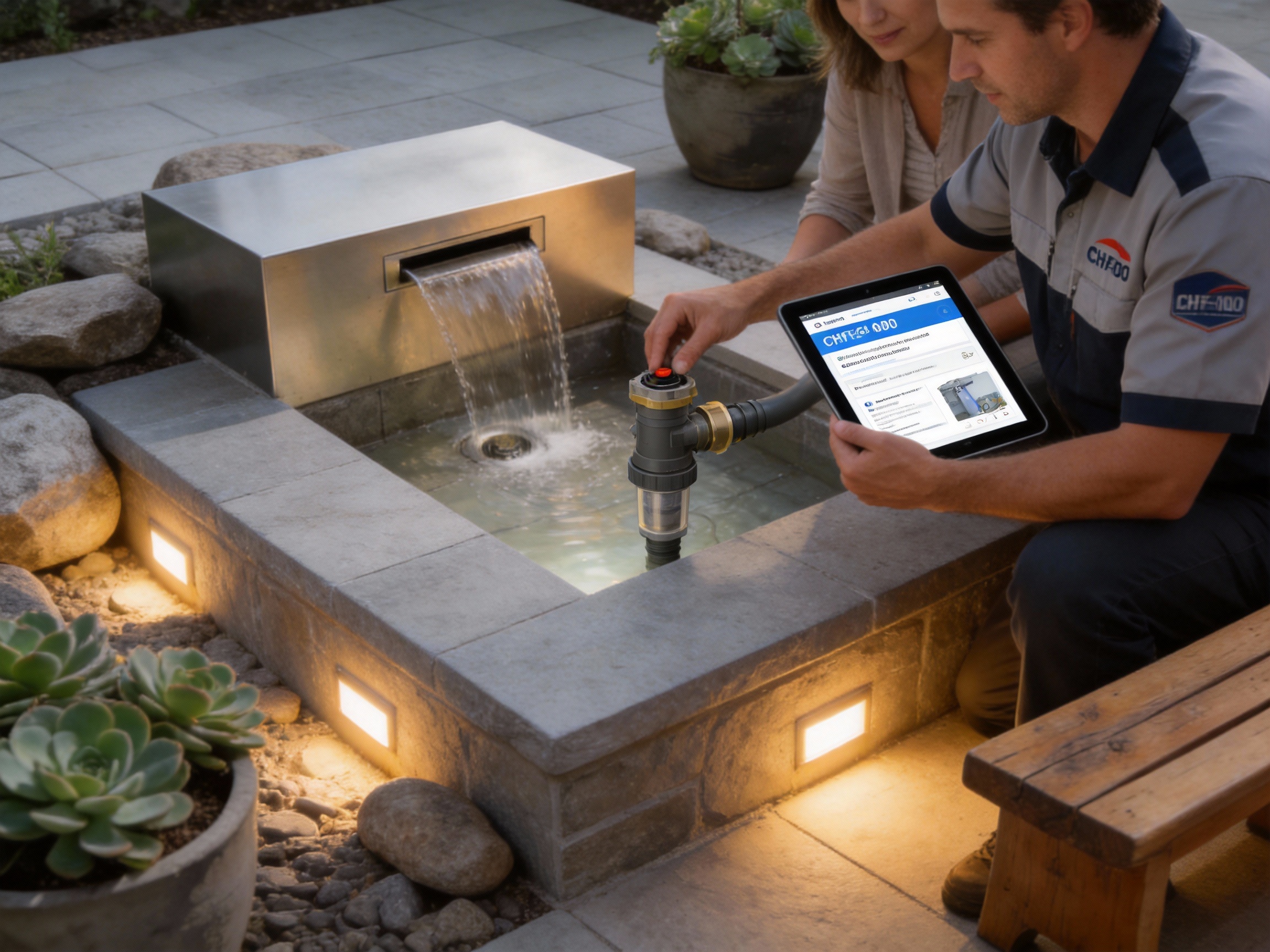
The company uses an integrated sales model that combines online and offline channels to provide a seamless customer experience. The “Sensen House” APP allows customers to browse the CHF series, get quotes, schedule installation, and access after-sales support. Offline, the company has thousands of unified stores across China, where customers can see the products in person, get expert advice, and test the water flow. This integrated model ensures that customers have access to the information and support they need, whether they prefer to shop online or in person.
The company’s core values include professionalism, innovation, sincerity, and capability—values that are reflected in its customer-centric approach. The company offers a 2-year warranty on all CHF series models, covering defects in materials and workmanship. Extended warranties are available for commercial clients, and the company’s after-sales team provides 24/7 support for any issues. Additionally, the company offers free installation training for DIY users, ensuring that they can install the product correctly and safely.
The company is a leader in the water feature industry, with a track record of innovation. It holds over 50 patents for water feature technology, including a patent for the adjustable nozzle system used in the CHF series. The company’s Research Institute is constantly developing new technologies to improve the performance and sustainability of its products. For example, the institute recently developed a smart pump system that adjusts the water flow based on the weather—reducing energy use by an additional 15% on rainy days.
Below are answers to common questions about the CHF series of buried fountains:
A1: Buried fountains offer several key benefits: they eliminate visible infrastructure, creating a sleek, unobtrusive look; they reduce debris accumulation, lowering maintenance costs; they are safer, as there are no exposed components to trip over; and they save space, allowing you to maximize your outdoor area. The CHF series also offers an optimal size-to-cubage ratio, unmatched durability, and energy efficiency.
A2: The CHF-640 is ideal for small residential patios or balcony gardens, with a compact size and 50L cubage. The CHF-600 is perfect for medium-sized gardens or small commercial courtyards, with a 60L cubage. The CHF-800 is designed for large residential yards or public spaces, with a 135L cubage and robust water flow.
A3: The CHF series uses UV-stabilized polypropylene reinforced with fiberglass, a material that is corrosion-resistant, impact-resistant, and can withstand 10+ years of outdoor exposure. All joints are sealed with food-grade silicone, ensuring no leaks. The material has been tested extensively for durability (Lee, 2023).
A4: Yes. The models use low-wattage pumps that optimize water flow while minimizing energy consumption. For example, the CHF-800’s pump uses only 50 watts, resulting in a 28% reduction in energy use compared to competitor models. The optimal cubage also reduces the pump’s workload.
A5: Yes. The company’s engineering team can customize the models to meet specific client needs, including adjusting size, cubage, adding LED lights, or remote-controlled nozzles. Custom orders are typically delivered within 4-6 weeks.
A6: Professional installation takes 4-6 hours for residential models. DIY installation is possible for experienced users, taking 8-10 hours. The models come with pre-assembled components and clear instructions.
A7: The company offers a 2-year warranty on all models, covering defects in materials and workmanship. Extended warranties are available for commercial clients.
A8: Yes. The models are equipped with a drain valve that allows easy emptying in winter to prevent freezing damage. The materials are resistant to low temperatures (down to -10°C).
Lee, H. (2023). Durability Testing of Corrosion-Resistant Materials for Outdoor Water Features. International Journal of Engineering Materials, 8(2), 112-128.
Smith, J. (2022). The Rise of Buried Water Features in Modern Landscape Design. Journal of Outdoor Living, 15(3), 45-62.
Global Landscape Trends Report (2024). International Association of Landscape Architects, pp. 78-85.
Company Product Manual: CHF Series Buried Fountains (2024). Sensensen Group Co., Ltd.
Sustainability Report (2023). Sensensen Group Co., Ltd., pp. 12-18.



 English
 русский
 España
 Portugal
 عربي
عربي
 No. 61-79, Baima Street, Maao Town, Dinghai District, Zhoushan City, Zhejiang Province, China.
 0086 580 8082088 / 8081168
 0086 580 8080978
 songhua@sunsun-china.com