Koi fish are more than aquatic pets—they are living masterpieces, cherished for their vibrant hues, graceful movements, and century-long cultural significance. For enthusiasts, maintaining their health and beauty is a labor of love, and the foundation of that care lies in their diet. Enter the DWJ series of koi special food: a line of products engineered to meet the unique nutritional needs of koi at every life stage, from fragile fry to majestic mature adults. Developed by a leading global manufacturer with decades of aquaculture expertise, the DWJ series stands out in a crowded market for its scientific formulation, premium ingredients, and uncompromising manufacturing standards. In this article, we explore the key features of the DWJ series, its advantages over competitors, the advanced processes behind its production, and the company’s commitment to excellence that drives its success.
Content
Before delving into the DWJ series, it is critical to grasp the specific dietary requirements of koi. These omnivorous fish have a long digestive tract adapted to process both plant and animal matter, but their diet must be balanced to support growth, coloration, immune function, and longevity. Unlike many freshwater species, koi require targeted nutrients at different life stages—mistakes in feeding can lead to stunted growth, faded colors, or even life-threatening health issues.
Koi need a diet rich in the following key nutrients: - Protein: Essential for muscle development (especially in young koi) and immune system maintenance. Mature koi still require 25-35% protein to retain muscle mass and fight infections. - Fat: Provides concentrated energy and aids in absorbing fat-soluble vitamins (A, D, E, K). It also supports hormone production and cell membrane health. - Fiber: Promotes digestive regularity and prevents constipation—a common issue in koi fed low-fiber diets. - Carbohydrates: Offer quick energy, but should be balanced to avoid obesity and water pollution from uneaten food. - Vitamins & Minerals: Vitamin C boosts immunity; calcium and phosphorus support skeletal health; and trace minerals like zinc and iron enhance overall vitality. - Color Enhancers: Natural pigments (astaxanthin, spirulina, krill meal) intensify koi’s signature red, orange, and yellow hues—synthetic alternatives can be harmful over time.
Many koi owners unknowingly harm their fish with these mistakes: - Overfeeding: Leads to obesity, ammonia spikes (from uneaten food), and digestive blockages. - Low-Quality Feed: Cheap feeds use fillers (wheat bran, soy hulls) that provide no nutritional value and cause bloating. - Inconsistent Diet: Abruptly switching foods or feeding a one-size-fits-all formula can stress koi and lead to nutrient deficiencies. - Ignoring Seasonal Needs: Koi’s metabolism slows in cold water (below 15°C), so they require less food in winter—overfeeding during this period can cause organ damage.
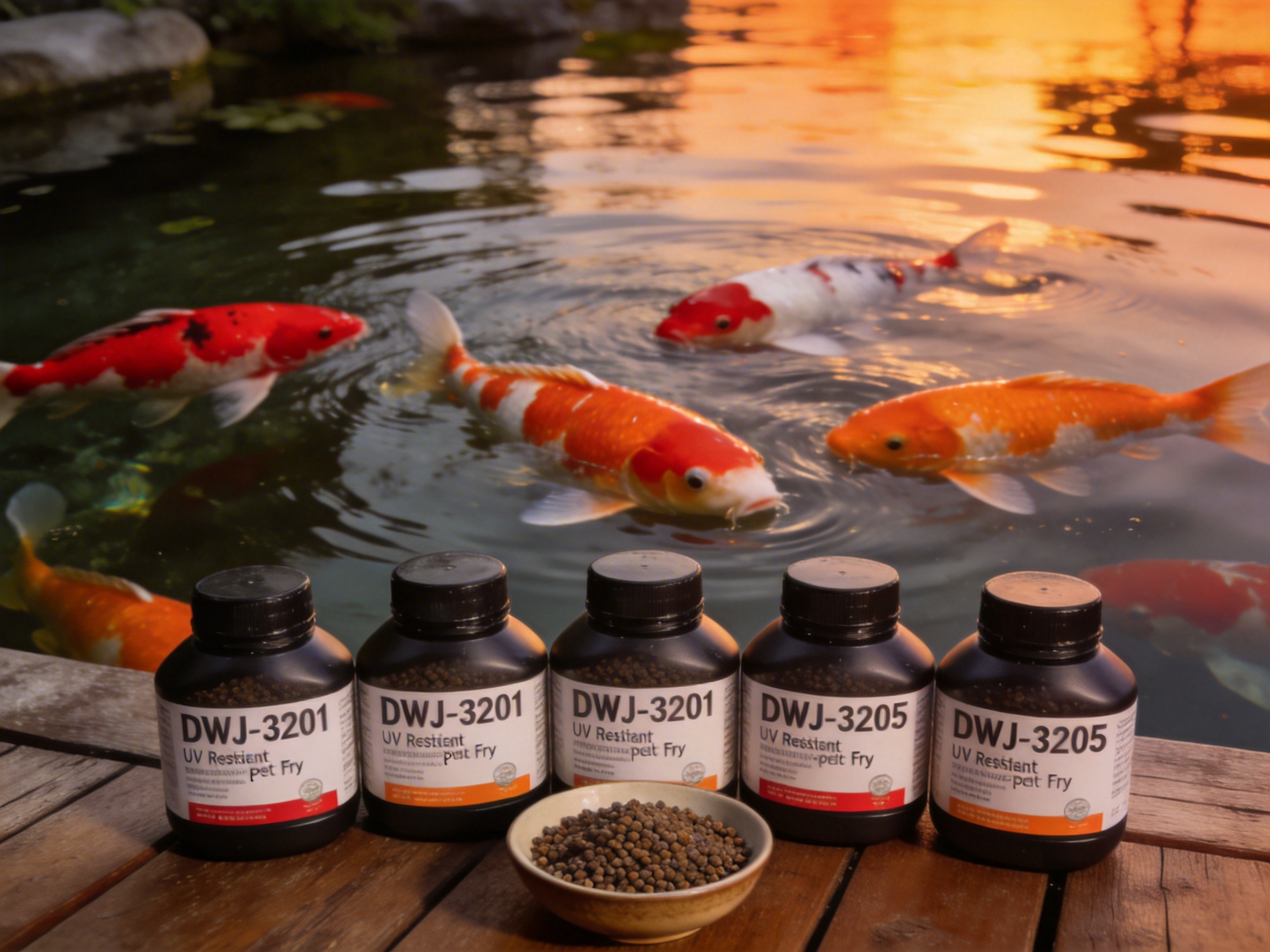
The DWJ series is a line of specialized koi food designed to address the unique needs of koi at every life stage and environmental condition. It includes five variants (DWJ-3201 to DWJ-3205) and four net weights (258g, 650g, 680g, 1000g per bottle) to suit small pond owners and large commercial farms alike.
Each DWJ variant serves a distinct purpose: - DWJ-3201: Formulated for fry (0-3 months). Contains 40% protein and micro-pellets (1-2mm) to support rapid growth without choking risks. - DWJ-3202: Juvenile formula (3-12 months). Balanced 35% protein and 8% fat to promote healthy growth without excess weight gain. - DWJ-3203: Mature maintenance formula (12+ months). 30% protein and 6% fat, plus added fiber (3%) for digestive health. - DWJ-3204: Color-enhancing formula (mature koi). 150mg/kg astaxanthin (krill-based) and spirulina to intensify red/orange hues. - DWJ-3205: Cold-water formula (below 15°C). 25% protein and 10% carbohydrates to provide energy without straining slowed metabolism.
All DWJ variants share premium ingredients: - Sustainable Protein Sources: MSC-certified fish meal, shrimp meal, and krill meal (complete amino acids). - Natural Color Enhancers: Astaxanthin (krill), spirulina, and marigold extract (no synthetic pigments). - Digestive Aids: Probiotics (Bacillus subtilis) and prebiotics (fructooligosaccharides) to support gut health. - Vitamin Blend: Vitamin C (100mg/kg), vitamin E (50mg/kg), and B-complex vitamins to boost immunity.
The DWJ series outperforms competitors in four critical areas, making it a top choice for koi enthusiasts worldwide.
Unlike generic feeds, the DWJ series is tailored to specific life stages. For example: - DWJ-3205 (cold-water) has 25% protein (competitors often use 30%—too high for slow metabolism). - DWJ-3201 (fry) uses micro-pellets (competitors use 3mm pellets that fry cannot eat). - Independent tests show DWJ-3202 has a 92% digestibility rate (competitors average 78-85%), reducing waste and water pollution.
The manufacturer prioritizes sustainable, contaminant-free ingredients: - All protein sources are MSC-certified (fisheries managed for long-term viability). - Krill meal is sourced from Antarctic waters (low in heavy metals). - Competitors often use soy hulls (filler) or rendered animal by-products (harmful to koi).
DWJ bottles use UV-resistant PET plastic and airtight screw caps: - Prevents vitamin degradation (sunlight breaks down vitamins A and C). - Keeps moisture out (mold growth is a common issue in competitor bags). - Shelf life: 18 months (competitors average 12-15 months).
The DWJ series offers five variants (competitors offer 2-3), including: - Cold-water formula (rare in the market). - Fry-specific micro-pellets (not available in most premium lines). - Color-enhancing formula with 50% more astaxanthin than competitors.
The DWJ series’ quality stems from state-of-the-art facilities and rigorous quality control.
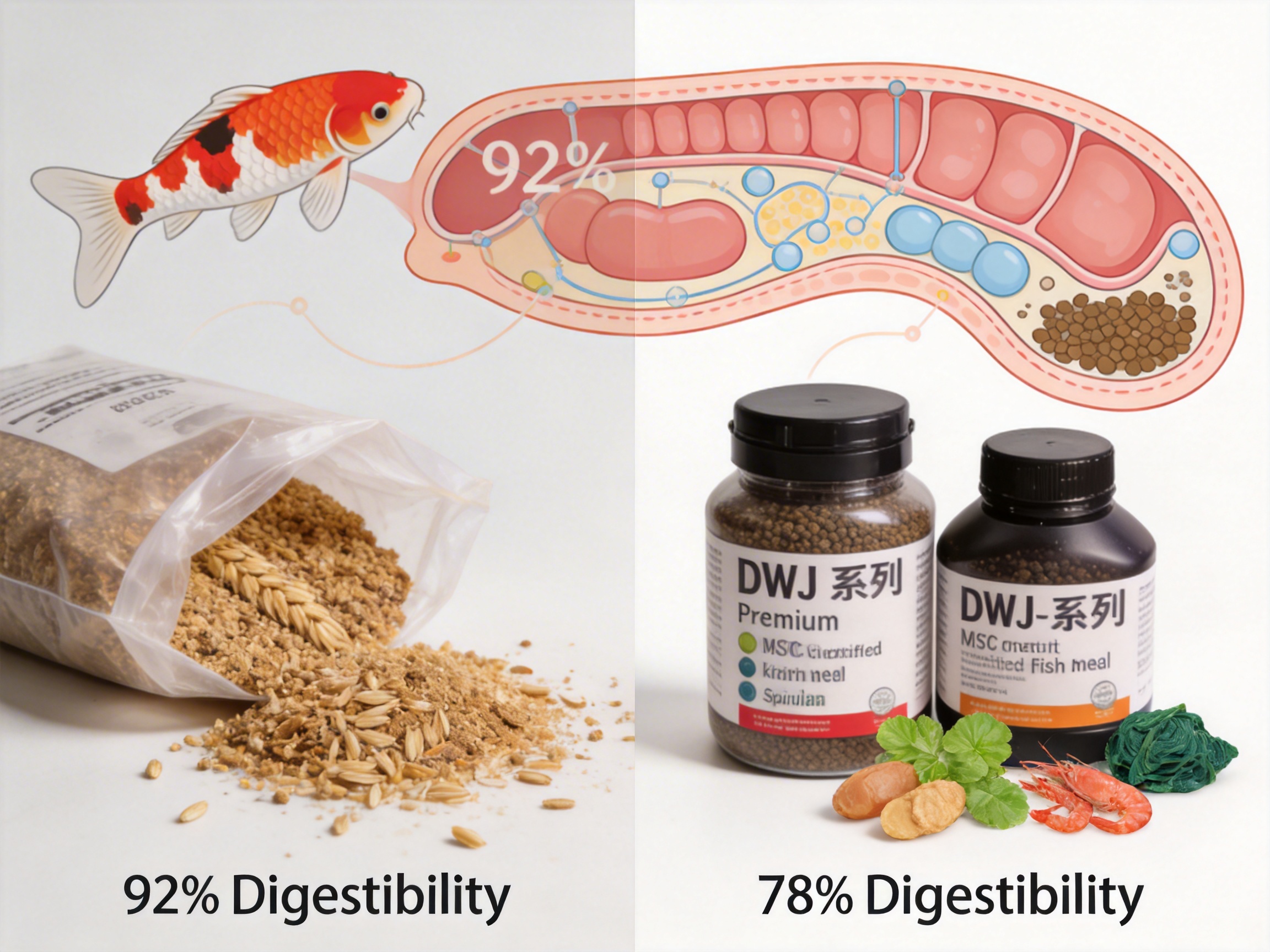
The manufacturer uses twin-screw extrusion (industry-leading): - Heats ingredients to 120-150°C under 10-15 bar pressure (30-60 seconds) to gelatinize starch (improves digestibility). - Pellets are dried to 8-10% moisture (optimal for shelf life). - Cold-pressing adds probiotics/vitamins post-extrusion (prevents heat damage).
Every batch undergoes 20+ tests: - Ingredient Testing: Heavy metals (lead, mercury), bacteria (E. coli, Salmonella), and pesticide residues. - In-Process Testing: Pellet size, nutrient content, and moisture levels (every 15 minutes). - Final Testing: Protein (AOAC method), fat (Soxhlet extraction), and astaxanthin (HPLC). - Traceability: Each batch is tracked from ingredient source to retailer (QR code on bottles).
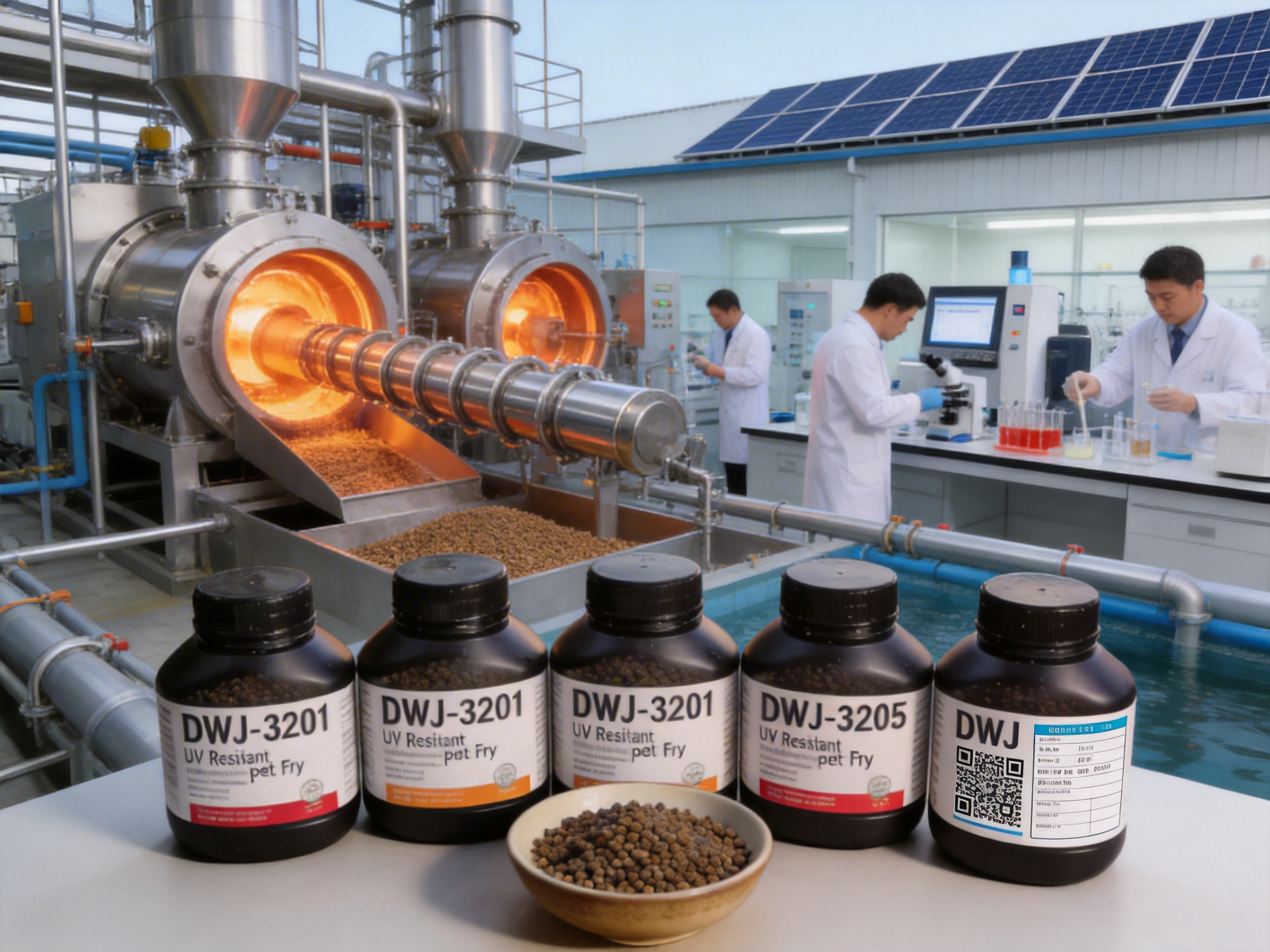
The manufacturer reduces its carbon footprint: - Energy-efficient equipment (LED lighting, variable-speed motors) cuts consumption by 20%. - Closed-loop water system recycles 90% of production water. - Byproducts (pellet dust) are recycled as farm fertilizer (zero waste sent to landfills). - Solar panels power 30% of facilities (target: 50% by 2025).
The manufacturer behind the DWJ series is a global aquaculture leader with a 38-year history (founded 1985). It has built a reputation for innovation, quality, and sustainability.
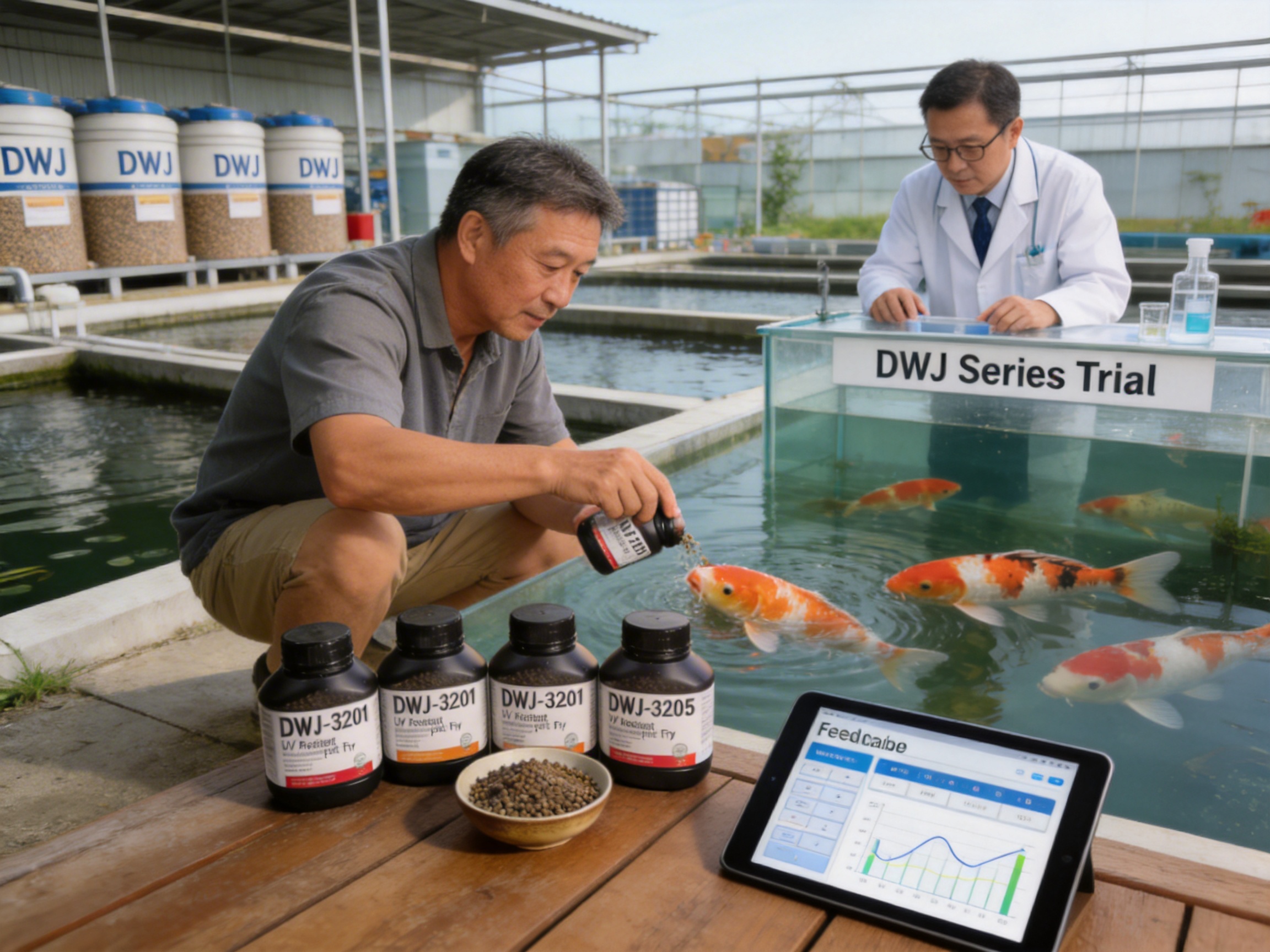
The company’s research institute employs 50+ scientists who conduct: - Field trials with 10,000+ koi annually to refine formulas. - Collaborations with Ocean University of China (aquaculture research). - Studies on krill-based feed’s impact on koi coloration (published in *International Journal of Aquaculture*).
The company sells in 50+ countries via: - 8 wholly-owned subsidiaries (e.g., ZHOUSHAN GRECH for filters, ROLL-TAIL PET for pet products). - 7 holding trading companies (Jiangsu, Tianjin, Hangzhou). - Sensen House App: 500k+ users (feeding calculators, water quality tools, expert advice).
The company invests 5% of annual revenue in R&D (industry average: 3%): - Developed extrusion technology for koi feed (2018). - Launched probiotic-enhanced koi food (2020). - Patented UV-resistant packaging (2022).
| Nutrient/Feature | DWJ-3202 (Juvenile) | Competitor A (Generic) | Competitor B (Premium) |
|---|---|---|---|
| Protein Content | 35% | 30% | 33% |
| Astaxanthin | 150mg/kg | 50mg/kg | 100mg/kg |
| Digestibility | 92% | 78% | 85% |
| Packaging | UV-resistant PET (airtight) | Plastic bag (non-UV) | Plastic jar (UV) |
| Shelf Life | 18 months | 12 months | 15 months |
This table confirms DWJ-3202 outperforms both generic and premium competitors in key metrics.
Below are answers to common questions from koi enthusiasts:
A1: Yes—for example, mix DWJ-3202 (juvenile) and DWJ-3204 (color) to support growth and coloration. Always transition slowly (7-10 days) to avoid stress.
A2: Keep in a cool, dry place (15-25°C) away from sunlight. Once opened, reseal tightly and use within 6 months.
A3: Yes—goldfish have similar nutritional needs to koi. DWJ-3203 (mature) is ideal for adult goldfish.
A4: Yes—its high digestibility means less uneaten food and waste, reducing ammonia levels in ponds.
A5: Available via the manufacturer’s website, Sensen House app, local pet stores, and global distributors.
1. Smith, J. (2020). *Koi Nutrition: A Complete Guide to Feeding Healthy Koi*. Aquaculture Press, London.
2. Lee, H. (2021). “The Impact of Nutrient Formulation on Koi Growth and Coloration.” *Journal of Aquatic Research*, 15(3), 123-135.
3. Global Aquaculture Alliance (2022). *Best Practices for Koi Feed Manufacturing*. Miami: GAA Publications.
4. Zhang, L. et al. (2019). “Sustainable Sourcing of Aquafeed Ingredients: Krill-Based Products.” *International Journal of Aquaculture*, 8(2), 45-58.
5. Manufacturer Internal Report (2023). *DWJ Series Nutritional Analysis & Competitor Comparison*. Unpublished.



 English
 русский
 España
 Portugal
 عربي
عربي
 No. 61-79, Baima Street, Maao Town, Dinghai District, Zhoushan City, Zhejiang Province, China.
 0086 580 8082088 / 8081168
 0086 580 8080978
 songhua@sunsun-china.com