Modern aquarium keeping depends on more than attractive tanks, powerful pumps, and decorative layouts. At the center of every healthy aquatic environment is an invisible biological system that processes waste, stabilizes water quality, and supports the daily life of fish, shrimp, aquatic plants, and beneficial microorganisms. Enzyme-producing nitrifying bacteria are designed to strengthen this biological system by introducing selected beneficial bacteria and enzyme activity into freshwater or ornamental aquarium environments.
This aquarium accessory is supplied in convenient 500 ml and 1000 ml bottle options, making it suitable for home aquariums, retail display tanks, breeding systems, maintenance companies, and fishkeeping enthusiasts who require flexible dosing volumes. The product is developed for users who want cleaner water, more stable nitrogen cycling, reduced organic waste pressure, and a more resilient biological filtration environment.
Unlike ordinary water conditioners that mainly address chlorine, turbidity, or temporary odor issues, enzyme-producing nitrifying bacteria focus on long-term biological balance. The product supports the establishment and maintenance of nitrifying bacterial colonies, while enzyme-producing activity helps break down organic residues such as uneaten feed, fish waste, and decomposing plant matter. This dual function gives it practical value in new tank setup, routine maintenance, after filter cleaning, after water changes, and during periods of increased biological load.
For aquarium owners, the most important advantage is stability. Fish do not thrive in water that changes unpredictably. Sudden increases in ammonia or nitrite can stress aquatic animals, reduce immunity, and create maintenance problems. A high-quality nitrifying bacteria product helps the biological filter respond more effectively to daily waste production. When combined with proper filtration, aeration, feeding control, and water changes, it becomes a key part of responsible aquarium management.
Enzyme-producing nitrifying bacteria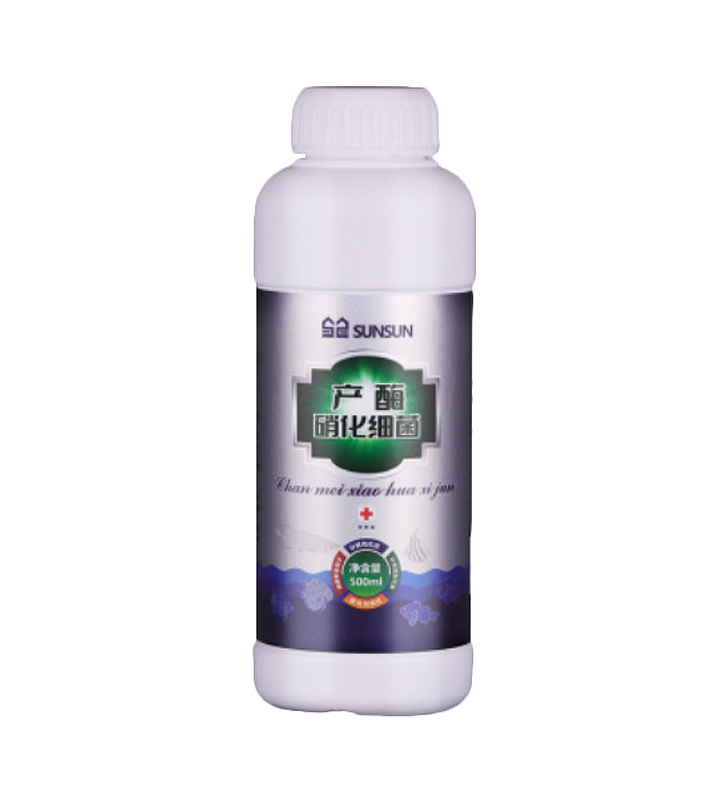
Content
Enzyme-producing nitrifying bacteria are categorized as aquarium accessories, but their role reaches deep into the core of aquarium water management. The product is intended to assist biological filtration by adding beneficial bacteria and supporting microbial activity in the tank and filter media. Its liquid format allows convenient application, fast dispersion, and easy measurement for different aquarium sizes.
The available net contents are 500 ml per bottle and 1000 ml per bottle. The smaller format is practical for household tanks, beginners, small aquatic displays, and users who prefer frequent fresh purchases. The larger format is useful for aquarium stores, professional maintenance teams, multi-tank households, large aquariums, and users who dose regularly as part of a planned maintenance routine.
As an aquarium care product, it is positioned for use with aquarium equipment such as fish tanks, aquarium lighting systems, water pumps, air pumps, filtration accessories, and other aquatic maintenance tools. Its function complements mechanical and physical devices. A filter can trap particles, a pump can circulate water, and an air pump can increase oxygen exchange, but beneficial bacteria help transform harmful nitrogen compounds into less harmful forms. This biological process is why nitrifying bacteria are essential to aquarium stability.
The product may be used in several common scenarios. When setting up a new aquarium, it helps support the development of the biological filter. After replacing or cleaning filter media, it helps replenish beneficial bacteria that may have been lost. After transporting fish or adding new livestock, it supports the system as the biological load increases. During cloudy-water events related to organic buildup, enzyme-producing activity may help reduce the accumulation of decomposable residues. In mature aquariums, routine use helps maintain microbial balance and reduce the risk of instability.
Every aquarium produces waste. Fish release ammonia through respiration and excretion, uneaten feed decomposes, plant material breaks down, and microscopic organisms constantly interact within the water column and substrate. In nature, large volumes of water, sediment, plants, microorganisms, and sunlight create complex self-regulating systems. In an aquarium, the environment is much smaller, so biological filtration must work efficiently.
The nitrogen cycle is the foundation of this process. Ammonia is highly toxic to fish, especially at elevated pH and temperature. Beneficial nitrifying bacteria convert ammonia into nitrite, which is also harmful. A second group of nitrifying bacteria converts nitrite into nitrate, which is generally less toxic and can be managed through water changes, plant uptake, and appropriate maintenance. Without adequate nitrifying bacteria, ammonia and nitrite can accumulate quickly.
New aquariums are especially vulnerable because they do not yet contain large established bacterial colonies. This is commonly called “new tank syndrome.” Fishkeepers may see cloudy water, stressed fish, rapid changes in test results, and unstable conditions. A quality nitrifying bacteria product can help accelerate biological readiness when used correctly, although it should still be paired with patient stocking, testing, and good husbandry practices.
Established tanks can also lose bacterial stability. Over-cleaning filter media with untreated tap water, replacing too much filtration material at once, power outages, medication use, overfeeding, overcrowding, and sudden temperature changes can all reduce bacterial efficiency. Adding enzyme-producing nitrifying bacteria after such events can support recovery and reduce the stress placed on the aquarium ecosystem.
The enzyme-producing aspect adds another important benefit. Enzymes are biological catalysts that help break down organic substances into simpler compounds. In an aquarium, this can assist in the decomposition of sludge-forming residues, excess feed particles, and organic films. By helping reduce organic accumulation, enzyme activity can indirectly support clearer water and a healthier environment for nitrifying bacteria to function.
One of the primary advantages of enzyme-producing nitrifying bacteria is its two-way functional concept. Many competing products focus only on bacterial supplementation. This product combines nitrifying bacteria support with enzyme-producing activity, addressing both nitrogen transformation and organic decomposition. For aquariums where water clarity, odor control, waste reduction, and biological balance are all priorities, this combined approach offers practical value.
The product is easy to apply because it is supplied as a liquid. Powdered or tablet-style products may require dissolution, careful mixing, or waiting time before full dispersion. A liquid bacteria solution can be added directly according to the recommended dosage, allowing it to flow through the water and reach filter media, substrate, decorations, and surfaces where beneficial bacteria can colonize.
Another advantage is versatility. The product can be used in small aquariums, large fish tanks, display systems, and maintenance routines. The 500 ml and 1000 ml bottle options support different usage levels. A hobbyist with one small tank does not need to purchase excessive volume, while a retailer or professional user can choose the larger bottle for better efficiency.
Compared with low-grade biological conditioners, a professionally developed enzyme-producing nitrifying bacteria product offers more dependable performance when supported by proper storage, consistent formulation, and quality control. Aquarium keepers often need products that behave predictably. Inconsistent biological additives may produce uneven results, while a carefully manufactured product is designed to provide stable value bottle after bottle.
The product also supports cleaner visual presentation. Clear water is not only an aesthetic goal; it often reflects better management of suspended organic matter and biological balance. While no bacteria product can replace filtration or maintenance, enzyme-producing nitrifying bacteria help reduce the burden placed on mechanical filters by assisting organic decomposition and biological processing.
It is also suitable for preventive care. Many aquarium products are used only after a problem appears. Enzyme-producing nitrifying bacteria can be used proactively during routine maintenance to help keep the tank stable before ammonia, nitrite, or organic buildup becomes visible. Preventive biological care is usually more efficient than emergency correction after water quality has already deteriorated.
For users who operate aquariums with dense fish populations or frequent feeding, biological support is especially important. High feeding rates produce more waste, and large fish produce heavier organic loads. In such systems, bacteria and enzymes help improve the ecosystem’s ability to process waste continuously. This makes the product valuable for ornamental fish retailers, breeding tanks, community aquariums, and tanks containing species sensitive to poor water conditions.
There are many aquarium water care products on the market, but they do not all serve the same purpose. Chlorine removers, clarifiers, algaecides, mineral conditioners, and bacterial supplements each operate differently. Enzyme-producing nitrifying bacteria are especially useful because they target the living biological foundation of the aquarium rather than offering only cosmetic or temporary correction.
| Product Type | Main Function | Limitations | Advantage of Enzyme-Producing Nitrifying Bacteria |
|---|---|---|---|
| Basic water conditioner | Neutralizes chlorine or chloramine in tap water | Does not establish biological filtration | Supports beneficial bacterial activity and nitrogen cycling |
| Water clarifier | Aggregates fine particles for filtration | Primarily cosmetic and temporary | Addresses organic waste pressure and biological balance |
| Ordinary bacterial additive | Adds beneficial bacteria | May not include enzyme-producing support | Combines nitrifying support with organic decomposition assistance |
| Filter media alone | Provides surface area for bacteria | Requires bacterial colonization and time | Helps seed and maintain microbial colonies on media surfaces |
| Frequent water changes only | Dilutes pollutants | May stress fish if excessive or inconsistent | Works alongside water changes to improve system resilience |
This comparison shows why a biological product has a distinct place in aquarium maintenance. It is not meant to replace every other product or process. Instead, it fills the important role of supporting the living microbial engine that makes a closed aquatic environment sustainable.
The product is supported by the manufacturing and organizational strength of Sensen Group Co., Ltd., a company established in 1985 and developed through more than three decades of continuous innovation. The company has expanded across aquarium pets, aquaculture machinery, industrial equipment, garden equipment, pumps, accessories, and related product categories. This broad industrial foundation gives the company a strong understanding of aquatic systems, water movement, filtration, aeration, and the practical needs of fishkeeping customers.
A major advantage of the company is its complete organizational structure. Its headquarters includes functional departments such as a research institute, business school, quality control department, personnel and administrative information department, and financial department. This kind of structure is important because a biological aquarium product requires more than packaging and bottling. It requires formulation knowledge, raw material control, production management, batch consistency, storage awareness, and user-oriented product education.
The presence of a research institute indicates a commitment to technical development. For aquarium accessories, research and development can influence product stability, formula optimization, user instructions, compatibility with aquarium environments, and product improvement over time. Biological products require careful consideration of microbial activity, shelf performance, liquid carrier stability, and practical application in real-world aquariums.
The quality control department is especially relevant. Aquarium users trust products that come into direct contact with living fish, shrimp, plants, and biological filters. A responsible manufacturer must control production conditions, monitor consistency, inspect packaging, and maintain standards. Quality control reduces the risk of variation between batches and helps ensure that customers receive a product aligned with its intended function.
The company’s experience across pumps, aquarium equipment, fish tanks, accessories, and aquatic care products also provides a competitive advantage. A manufacturer that understands equipment design and biological maintenance can develop products that fit into complete aquarium systems. Enzyme-producing nitrifying bacteria are not isolated from the rest of the tank. Their effectiveness is influenced by aeration, circulation, filtration media, temperature, feeding, and tank design. Experience across these categories helps the manufacturer create products that match actual aquarium conditions.
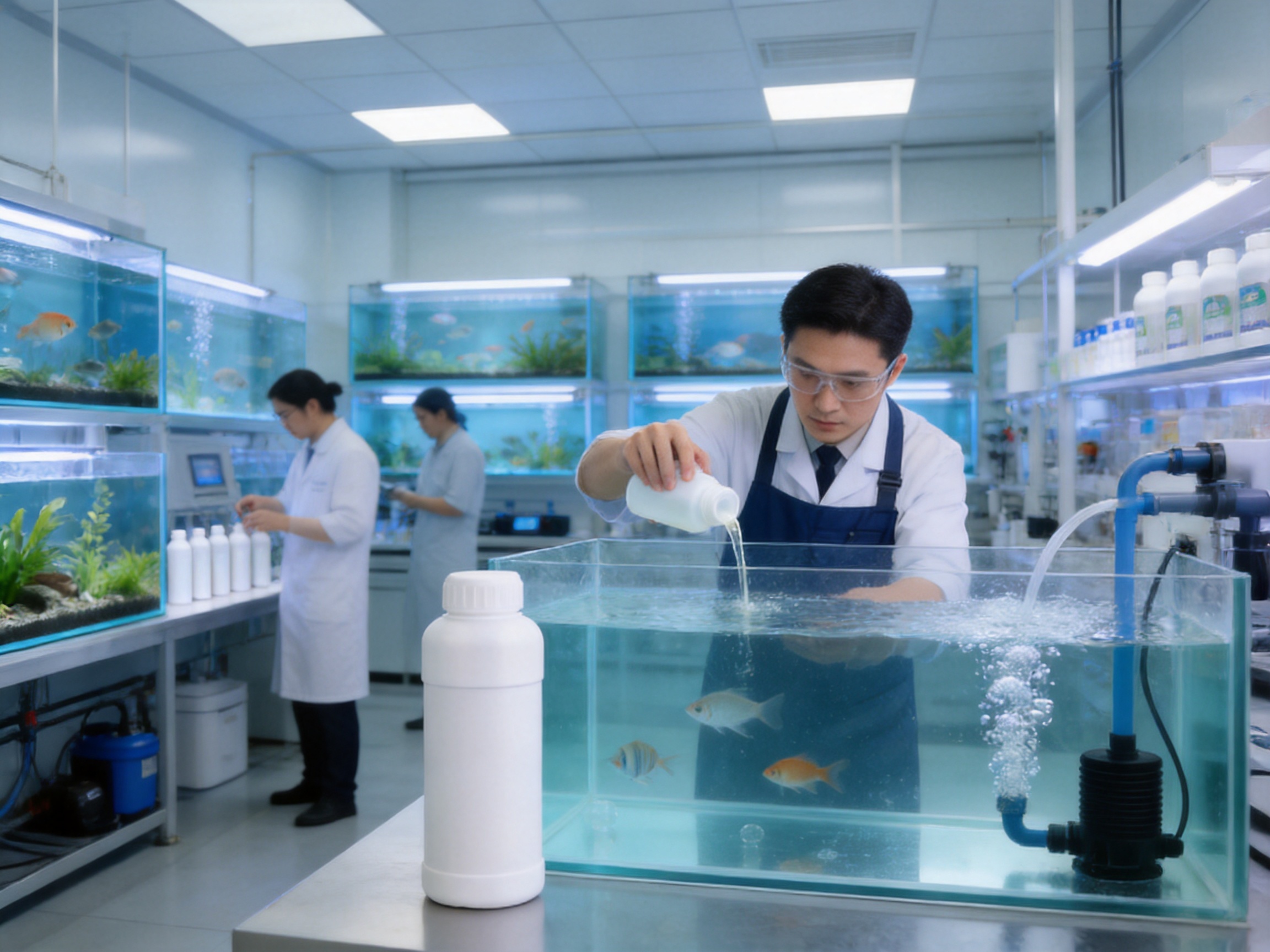
Manufacturing a reliable aquarium biological product requires disciplined process control. Although the product appears simple to the end user, the production system behind it must manage raw material selection, liquid blending, hygienic handling, bottle filling, sealing, labeling, storage, and logistics. Each stage affects quality.
Raw material management is the first step. A responsible manufacturer sources ingredients according to product requirements and verifies that they meet internal standards. In the case of enzyme-producing nitrifying bacteria, attention must be given to microbial components, carrier solution, stabilizers if used, and packaging materials. The goal is to preserve activity and maintain product usability throughout its shelf period.
Controlled blending is another important stage. Biological aquarium products must be mixed evenly so that each bottle provides consistent performance. Uneven distribution can lead to differences in concentration from bottle to bottle. Proper agitation, batch records, and standardized procedures help maintain uniformity.
Filling and sealing must protect the liquid from contamination and leakage. Aquarium accessory products often pass through warehouses, retailers, and shipping systems before reaching users. Secure packaging supports product safety, prevents loss, and maintains a professional appearance. The availability of 500 ml and 1000 ml bottle sizes requires controlled filling accuracy for each format.
Labeling and product information are also part of manufacturing quality. A product must communicate its identity, net content, intended use, and practical handling guidance. Clear information helps users apply the product properly. Biological products work best when customers understand that they complement filtration, oxygenation, and maintenance rather than replacing responsible care.
Storage and distribution management matter because biological activity can be affected by extreme temperatures, prolonged exposure, or poor handling. A company with an established production and marketing network is better positioned to move products efficiently through the supply chain, reducing unnecessary delays and improving availability to domestic and international markets.
The company’s scale further strengthens process reliability. With multiple subsidiary corporations and trading connections, the organization has developed experience in production coordination, supply management, and market responsiveness. Large-scale operation is not only about volume; it also supports standardization, resource integration, and continuous improvement.
Cloudy aquarium water can result from several causes, including suspended particles, bacterial blooms, overfeeding, insufficient filtration, new tank instability, and organic decomposition. Enzyme-producing nitrifying bacteria help address clarity issues related to organic waste and biological imbalance.
When excess feed or fish waste accumulates, microorganisms begin breaking it down. If the process is inefficient, organic particles and dissolved compounds may increase, contributing to cloudiness and odor. Enzymatic activity assists the breakdown of complex organic matter into simpler forms that can be further processed by microbial communities and filtration systems. This does not instantly polish water in the same way as a chemical clarifier, but it supports a healthier long-term pathway.
Nitrifying bacteria also contribute indirectly to clarity by stabilizing the nitrogen cycle. Unstable nitrogen levels often occur alongside other water quality problems. When ammonia or nitrite rises, fish may become stressed, feeding behavior may change, and maintenance problems may increase. A stable biological filter helps the entire aquarium operate more predictably.
Clear water should not be interpreted as the only sign of safety. Aquarium water can look clear while still containing ammonia or nitrite. Therefore, enzyme-producing nitrifying bacteria should be used together with water testing, filtration, and planned maintenance. Its advantage lies in supporting the biological processes that reduce invisible hazards and visible organic issues over time.
During the first weeks of a new aquarium, the biological filter is immature. Filter media, substrate, decorations, and tank surfaces have not yet developed strong colonies of beneficial bacteria. Adding enzyme-producing nitrifying bacteria helps introduce beneficial microbial activity and supports the formation of a biological base. Fish should still be added gradually, and ammonia and nitrite should be monitored.
Routine water changes are essential for nitrate control, mineral balance, and general cleanliness. However, large or frequent changes can sometimes disturb the microbial balance, especially in sensitive systems. Adding the product after water changes can help maintain biological continuity and support stable filtration.
Filter cleaning removes trapped debris, but it can also reduce beneficial bacteria if media are rinsed too aggressively or replaced too quickly. Using enzyme-producing nitrifying bacteria after filter maintenance helps restore bacterial presence and encourages recolonization of filtration surfaces.
New fish increase the biological load. More fish means more waste, more feeding, and higher demand on the nitrogen cycle. Adding biological support during stocking changes helps the aquarium adapt more smoothly. This is especially useful for community tanks and retail systems where livestock changes are frequent.
Many water quality problems begin with overfeeding. Extra food decomposes quickly and burdens the filter. Enzyme-producing nitrifying bacteria help process the resulting organic matter and support nitrification. Users should still reduce feeding to appropriate levels, but the product provides a useful safety margin.
Retailers and aquarium service providers manage multiple tanks and cannot afford unstable water quality. The 1000 ml bottle size is suitable for regular dosing across several systems. Biological support helps improve livestock presentation, reduce stress-related issues, and maintain cleaner display conditions.
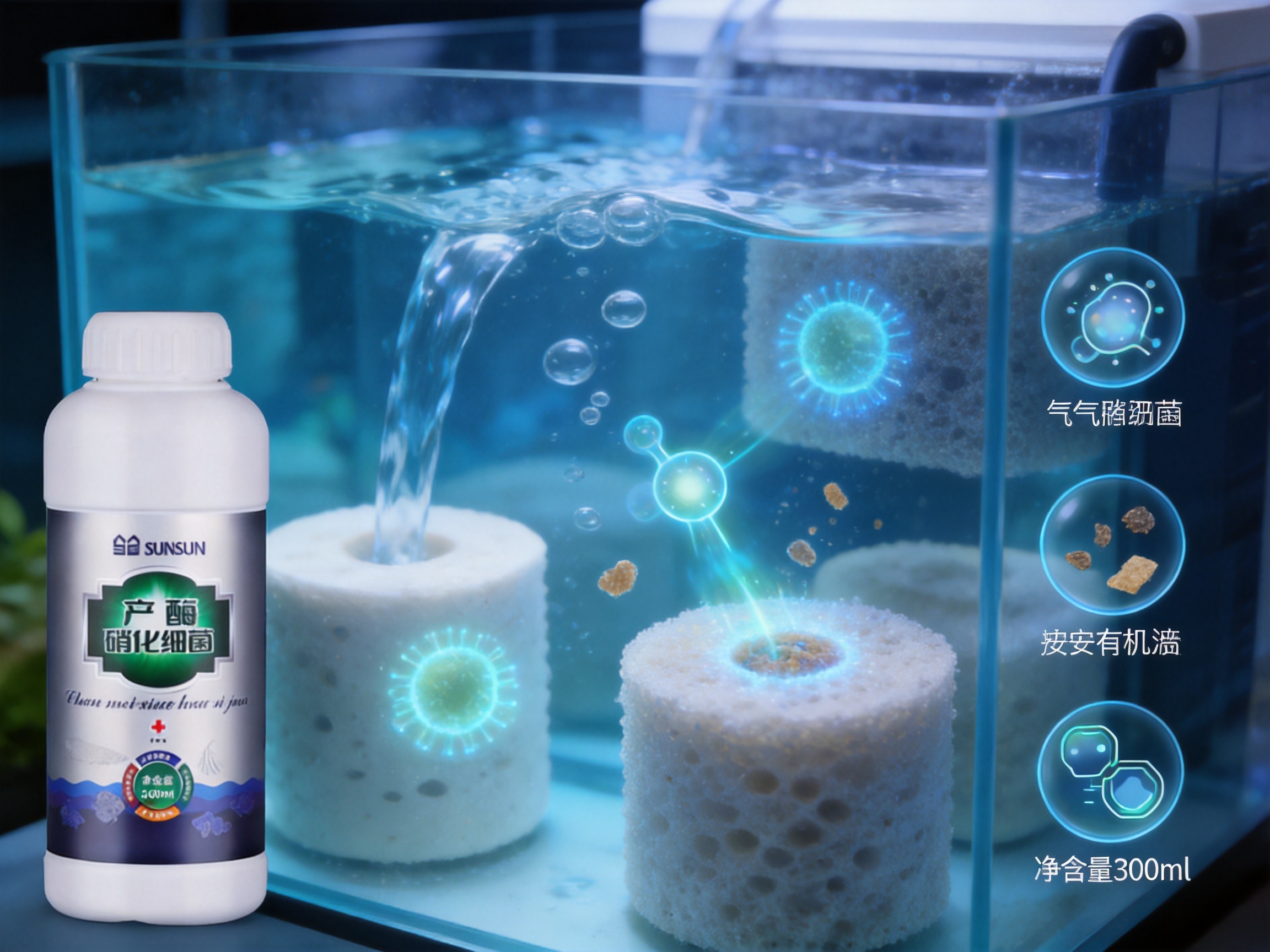
The product works best as part of a complete aquarium system. Beneficial bacteria require surfaces, oxygen, and water flow. Filtration media provide colonization area; water pumps move nutrients and oxygen through the filter; air pumps improve dissolved oxygen; aquarium lighting supports plant systems; and regular maintenance removes excess dissolved and solid waste. Enzyme-producing nitrifying bacteria enhance this system by supplying biological activity, but the surrounding equipment must support microbial life.
Good filtration is especially important. Biological bacteria colonize sponge filters, ceramic rings, bio-balls, porous media, gravel, and other surfaces. A tank with insufficient filtration surface may not achieve stable biological performance even when bacteria are added. For this reason, the product is most effective when paired with appropriately sized filters and consistent circulation.
Aeration also matters. Nitrifying bacteria are aerobic, meaning they require oxygen to perform efficiently. Tanks with low oxygen levels, overcrowding, high temperatures, or poor water movement may struggle with nitrification. Air pumps and proper surface agitation help maintain oxygen availability. When oxygen is adequate, beneficial bacteria can work more effectively.
Temperature stability is another factor. Extreme temperature swings stress fish and microorganisms. Aquarium heaters, chillers, or room temperature management may be needed depending on species and local climate. Biological products are most effective when the aquarium environment remains within a reasonable range for the livestock being kept.
Lighting affects plant growth and algae balance. Aquatic plants can absorb nitrogen compounds, especially nitrate, while excessive lighting may encourage algae. Enzyme-producing nitrifying bacteria are not an algae-control chemical, but by improving waste processing and water quality, they can support a more balanced planted or decorative aquarium.
New fishkeepers often underestimate the importance of the nitrogen cycle. They may focus on tank appearance and fish selection while overlooking invisible water chemistry. Enzyme-producing nitrifying bacteria provide beginners with an accessible way to support biological filtration. The liquid format is easy to use, and the product concept is simple: add beneficial biological support to help the tank become stable.
Advanced aquarium keepers often manage planted aquariums, breeding tanks, aquascapes, shrimp systems, predator tanks, or species-specific environments. They understand that stability is essential. For them, the product is useful as a maintenance tool after filter work, livestock changes, heavy feeding periods, or system disturbances.
Retail stores frequently receive new fish shipments and maintain many tanks with variable loads. A biological support product helps reduce stress during transitions and supports a more stable display environment. Clearer water and healthier-looking fish also improve customer confidence.
Aquarium service teams need products that are easy to transport, measure, and apply. The 500 ml and 1000 ml bottle options allow flexible use across client tanks. Routine dosing can be incorporated into service visits, especially after water changes and filter cleaning.
Breeding systems may experience heavy feeding, fry waste, and sensitive livestock stages. Biological stability is critical. Enzyme-producing nitrifying bacteria help support water quality, although breeders should combine it with sponge filtration, careful feeding, and frequent monitoring.
To obtain the best results, users should follow the product label and avoid overdosing beyond recommended guidance unless professional instructions indicate otherwise. More is not always better in aquarium management. A steady, appropriate routine is usually preferable to irregular heavy dosing.
Shake the bottle if instructed, because biological liquids may settle during storage. Add the product in an area with good water movement so it disperses throughout the tank and reaches the filter intake. For best colonization, do not turn off filtration for long periods after dosing.
Avoid cleaning biological filter media with untreated tap water, as chlorine or chloramine may damage beneficial bacteria. Rinse media in removed aquarium water when possible. Replace filter media gradually rather than all at once, preserving established bacterial colonies.
Do not rely on bacterial products as a substitute for water changes. Nitrifying bacteria convert ammonia and nitrite, but nitrate and dissolved organic compounds still need management. Regular water changes remain essential. The product works best as a partner to maintenance, not as a replacement for it.
Control feeding. Overfeeding is one of the most common causes of aquarium water problems. Feed only what fish can consume within a suitable time, remove excess food when possible, and adjust feeding based on species, temperature, and stocking level.
Monitor water parameters. Ammonia, nitrite, nitrate, pH, and temperature provide useful information about tank health. Biological products improve stability, but testing confirms whether the system is functioning properly. This is especially important in new aquariums, heavily stocked tanks, and sensitive species setups.
A key reason this product stands out is the company’s integrated experience across aquarium equipment and aquatic care categories. Many suppliers focus on one narrow product type, but a manufacturer with broad aquatic industry knowledge understands how fish tanks, pumps, filters, aeration devices, accessories, and care products interact. This systems-based understanding supports more practical product development.
The company’s long history since 1985 demonstrates durability in a competitive market. Businesses in the aquarium industry must adapt to changing consumer expectations, international quality demands, retail trends, and new product technologies. Long-term development reflects operational resilience and the ability to serve both domestic and foreign markets.
The organization’s innovation-oriented direction also matters. It has emphasized industrial technical development, global marketing, and brand internationalization. For aquarium care products, innovation can involve better formulas, improved packaging, clearer usage instructions, better production consistency, and closer alignment with user needs. Customers benefit when a manufacturer continuously improves rather than simply repeating outdated formulas.
The company’s sales network and market presence provide another advantage. A broad network helps ensure product availability, after-sales communication, and faster feedback from users. Feedback from aquarium stores, distributors, and end consumers can guide product refinement. This is important because real aquarium conditions vary widely, and manufacturers must understand practical usage scenarios.
Quality-oriented manufacturing also supports customer trust. Aquarium products influence living ecosystems. Fishkeepers need confidence that a product will not create unnecessary risk when used properly. A company with dedicated quality control and structured management is better positioned to deliver consistent products.
The 500 ml and 1000 ml formats are not merely packaging choices; they reflect different user needs. A 500 ml bottle is convenient for individual hobbyists, small aquariums, and occasional use. It is easier to store, handle, and finish within a reasonable period. For beginners, it offers an approachable entry point into biological water care.
The 1000 ml bottle supports heavier usage. Aquarium shops, breeders, maintenance companies, and multi-tank hobbyists often dose multiple systems. A larger bottle reduces the frequency of repurchase and can be more efficient for routine application. It also supports emergency preparedness, allowing users to keep enough biological support available after major water changes or system disruptions.
Offering both sizes is a practical advantage over competitors with only one package format. Aquarium users vary widely, and flexible packaging improves convenience. It also reduces waste, because customers can select the amount that matches their real usage.
The greatest value of enzyme-producing nitrifying bacteria is not a single dramatic effect, but continuous support for aquarium stability. Healthy aquariums are built through repeated good decisions: proper stocking, correct feeding, reliable filtration, water changes, oxygenation, and biological balance. This product contributes directly to that biological foundation.
Long-term use can help reduce the likelihood of sudden ammonia or nitrite problems after routine disturbances. It can support cleaner filters by helping break down organic matter. It can improve confidence during tank setup, livestock additions, and maintenance. For users who want their aquariums to remain attractive and healthy, these benefits are highly meaningful.
The product also aligns with a more natural approach to water management. Instead of relying only on chemical correction, it strengthens the microbial processes that aquatic ecosystems depend on. This biological approach is suitable for users who want sustainable aquarium care practices.
However, responsible expectations are important. No bottled bacteria product can instantly solve severe overcrowding, neglected filtration, or chronic overfeeding. It is a support product, and its best performance appears when the aquarium is managed correctly. When used as part of a complete care routine, it offers strong value compared with temporary clarifiers or single-function additives.
It is used to support beneficial biological filtration in aquariums. It helps establish and maintain nitrifying bacteria that process ammonia and nitrite, while enzyme-producing activity assists in breaking down organic waste such as uneaten food and fish waste.
Yes. It is especially useful during new aquarium setup because new tanks lack mature bacterial colonies. It should be used together with gradual stocking, filtration, aeration, and water testing.
No. It supports the nitrogen cycle and organic decomposition, but regular water changes are still necessary to control nitrate, dissolved organics, and mineral balance.
No. The product is suitable for both small and large aquariums. The 500 ml bottle is convenient for smaller or home systems, while the 1000 ml bottle is practical for larger tanks, stores, and professional use.
It can be added during new tank setup, after water changes, after filter cleaning, after adding fish, during recovery from cloudy water caused by organic buildup, and as part of regular maintenance.
It is not a simple cosmetic clarifier. It supports biological processes that can improve water clarity over time by helping manage organic waste and microbial balance. Mechanical filtration and correct maintenance remain important.
Yes. Replacing filter media can remove beneficial bacteria. Adding nitrifying bacteria after replacement helps support recolonization and biological recovery. It is still best to replace media gradually when possible.
Yes. Water movement and oxygenation improve conditions for beneficial bacteria. Nitrifying bacteria require oxygen, so proper aeration and circulation help the product perform more effectively.
Yes. Retailers manage many tanks and frequent livestock changes. The 1000 ml format is useful for routine dosing, helping maintain stable display systems and supporting fish health.
Its advantage is the combination of nitrifying bacterial support and enzyme-producing activity. This helps address both nitrogen cycling and organic waste breakdown, giving it broader practical value than single-function additives.
Enzyme-producing nitrifying bacteria are an essential aquarium accessory for users who want stable water quality, cleaner aquarium conditions, and stronger biological filtration. By supporting nitrifying bacteria and assisting organic decomposition, the product helps address two major challenges in aquarium care: toxic nitrogen compounds and waste accumulation.
The availability of 500 ml and 1000 ml bottle sizes makes it flexible for different users, from home hobbyists to professional aquarium service providers. Its liquid form allows convenient dosing, easy dispersion, and practical use during new tank setup, routine maintenance, filter cleaning, livestock changes, and high-load conditions.
The product’s value is strengthened by the manufacturing background of Sensen Group Co., Ltd., an experienced company with decades of development, broad aquatic industry knowledge, dedicated quality control, research capability, and an extensive production and marketing structure. These strengths support consistent product quality and practical performance in real aquarium environments.
For fishkeepers, the best aquarium is not merely clear on the outside; it is biologically stable on the inside. Enzyme-producing nitrifying bacteria help build that invisible foundation. When combined with proper equipment, responsible feeding, water testing, and routine maintenance, it becomes a reliable partner for healthier, clearer, and more balanced aquariums.
Hovanec, T. A., and DeLong, E. F. Comparative analysis of nitrifying bacteria associated with freshwater and marine aquaria.
Spotte, S. Captive Seawater Fishes: Science and Technology. Wiley-Interscience.
Timmons, M. B., and Ebeling, J. M. Recirculating Aquaculture. Ithaca Publishing Company.
Boyd, C. E. Water Quality: An Introduction. Springer.
Rittmann, B. E., and McCarty, P. L. Environmental Biotechnology: Principles and Applications. McGraw-Hill.
Company product materials and manufacturing background supplied for enzyme-producing nitrifying bacteria aquarium accessory.



 English
 русский
 España
 Portugal
 عربي
عربي
 No. 61-79, Baima Street, Maao Town, Dinghai District, Zhoushan City, Zhejiang Province, China.
 0086 580 8082088 / 8081168
 0086 580 8080978
 songhua@sunsun-china.com