The HCB rear side filter fish tank is designed for aquarium owners who want the visual clarity of a display aquarium together with the practical performance of an integrated filtration system. Combining ultra-white glass, rear-side filtration, a dedicated water pump, full-spectrum LED lighting, and a structured storage cabinet, this aquarium provides a complete foundation for freshwater aquatic displays, planted aquariums, and carefully arranged ornamental fish environments.
Unlike a basic glass tank that requires separately purchased filters, lights, stands, and storage units, the HCB system integrates several essential components into one coordinated design. This approach reduces installation complexity, creates a cleaner appearance, and makes better use of the available floor area. It is available in HCB-400B and HCB-500B models, offering capacities of approximately 72 liters and 86 liters respectively.
The aquarium is particularly suitable for homes, offices, reception areas, retail environments, hospitality spaces, and other interiors where the aquarium must function as both an aquatic habitat and an attractive piece of furniture. Its rear-side filtration arrangement keeps the equipment organized behind the main viewing area, while the cabinet below provides practical storage for maintenance tools, water-treatment products, food, nets, cables, and other aquarium accessories.
Content
The traditional aquarium setup often consists of a separate glass tank, an external or internal filter, a lighting fixture, a metal stand, and additional storage furniture. Although this arrangement can be customized, it may also produce visible cables, crowded equipment, inconsistent colors, and inefficient use of space. A poorly coordinated installation can distract from the fish and aquatic plants that should remain the focus of the display.
The HCB rear side filter fish tank takes a more integrated approach. The aquarium body, filtration system, lighting configuration, water pump, and base cabinet are planned as a single product family. This gives the system a more coherent appearance and makes the installation process more straightforward. Users can establish a functional aquarium environment without having to identify compatible components from multiple manufacturers.
The rear-side filter design is one of the most important elements of the product. Instead of placing all filtration equipment in the visible display area, the system uses a dedicated rear section. Water can circulate through the filtration area while the front and side viewing surfaces remain visually uncluttered. This is especially valuable for aquariums positioned in living rooms, offices, and commercial interiors where presentation quality is important.
An integrated aquarium also makes routine organization easier. Filter materials, pump connections, lighting wires, and maintenance items can be arranged according to the structure of the cabinet and filtration compartment. A well-organized system supports more consistent maintenance and reduces the risk of equipment being placed in unstable or inconvenient positions.
The HCB aquarium uses three-sided super-white glass. This material selection is intended to improve transparency and present the aquarium inhabitants with greater visual clarity. In a display aquarium, the quality of the glass directly influences how colors, plant textures, aquascaping details, and fish movement are perceived.
Compared with ordinary glass, ultra-white glass is generally associated with reduced visual tint and a cleaner viewing effect. A less noticeable color cast can help ornamental fish retain a more natural appearance and allow aquatic plants, stones, wood, and decorative elements to appear closer to their intended colors. This can be particularly beneficial in planted aquariums, where subtle variations in green, red, brown, and gray contribute to the overall composition.
The three-sided glass configuration also supports flexible placement. The aquarium can be viewed from the front and sides, making it suitable for locations where the tank is positioned away from a wall or used as a room-divider feature. When placed against a wall, the front remains the principal viewing surface; when positioned in an open space, the side panels can contribute to a broader visual experience.
The supplied product information emphasizes transparency, durability, and scratch resistance as key glass advantages. These qualities are important because aquarium surfaces are exposed to regular cleaning, algae removal, equipment installation, and occasional contact with maintenance tools. While all glass should be handled carefully, a durable surface helps the aquarium preserve its presentation quality over a longer service life when users follow appropriate cleaning practices.
Clear glass is not only a cosmetic benefit. It also improves the ability of the aquarium keeper to observe fish behavior, detect uneaten food, identify plant stress, monitor water movement, and inspect the condition of hardscape materials. Better visibility can therefore support both aesthetic enjoyment and responsible aquarium management.
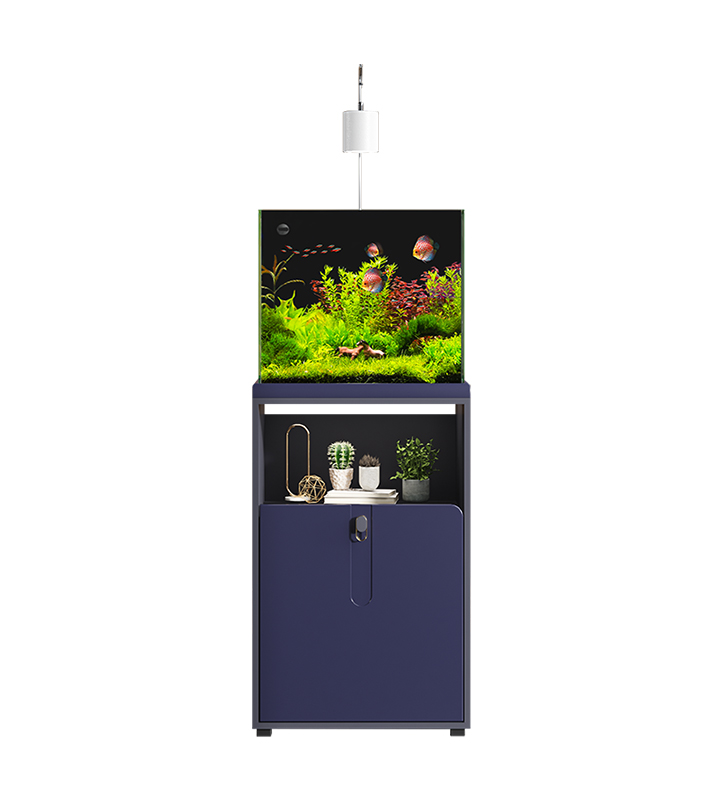
HCB rear side filter fish tank
Filtration is central to aquarium stability. Fish, plants, food, and microorganisms all influence water quality, and the filtration system helps manage suspended particles and biological waste. The HCB series uses a rear-side filtration arrangement designed to keep the filtration process integrated with the aquarium body rather than occupying the main display space.
The rear-side layout offers a clear advantage over many visible internal filter arrangements. A conventional internal filter may occupy a noticeable portion of the tank, interrupt the aquascape, and create a strong visual focus on mechanical equipment. By placing the filtration area along the rear side, the HCB design helps preserve a more open foreground for fish and plants.
The filtration section can also contribute to more orderly water circulation. Water is directed through the filtration area, where suitable media can be arranged according to the needs of the aquarium. Depending on the stocking level and aquatic design, aquarium keepers may use mechanical media for particle capture, biological media for beneficial bacterial colonization, and other compatible materials for specialized water-treatment purposes.
The product specifications identify the filtration systems as HCB-400B for the smaller model and HCB-500B for the larger model. This model-specific arrangement allows the filtration structure to correspond with the dimensions and capacity of the aquarium. A properly matched system is preferable to an improvised filter that may be too large, too small, visually intrusive, or difficult to install.
Rear filtration also supports a more finished appearance. When the aquarium is installed in a prominent location, minimizing visible technical components can make the entire display look more like a designed furnishing than a collection of separate devices. The result is a cleaner visual relationship between the glass, cabinet, lighting, and surrounding interior.
The HCB series is equipped with an HQJ-700G water pump rated at 8 watts. The pump supports water movement between the aquarium and its filtration section. Consistent circulation is important for distributing oxygen, nutrients, temperature, and treated water throughout the aquarium environment.
Water movement should be balanced rather than excessive. Many ornamental fish and aquatic plants benefit from circulation, but excessively strong flow can disturb substrate, stress slow-moving fish, or uproot delicate plants. The integrated pump arrangement provides a coordinated starting point, while users can adjust the aquascape and flow direction according to the inhabitants and layout.
Integrating the pump with the filtration system can also simplify setup. Users do not need to design an entirely separate plumbing arrangement or search for a pump with uncertain compatibility. The system is supplied as a coordinated aquarium configuration, helping reduce the number of installation decisions required at the beginning.
Lighting has two roles in an aquarium. First, it illuminates fish, plants, and decorative features so that the display can be enjoyed. Second, it provides light energy required by many aquatic plants. The HCB series includes full-spectrum LED water plant lighting, with ADT-110C/10W specified for the HCB-400B and ADT-120C/20W specified for the HCB-500B.
Full-spectrum lighting is designed to provide a broad range of visible light that can support the appearance and development of aquatic plants. The actual requirements vary according to plant species, planting density, aquarium depth, water clarity, nutrient availability, and carbon conditions. Nevertheless, a purpose-designed aquarium light is a more suitable starting point than a general household lamp.
LED technology offers several practical benefits for aquarium use. LED fixtures can provide efficient illumination in a relatively compact format, produce less radiant heat than many traditional lighting technologies, and support a slim, modern appearance. Their low-power configuration also helps the aquarium remain practical for daily operation, although total electricity consumption will depend on lighting hours, pump operation, and other connected equipment.
The lighting configuration is matched to the two available aquarium models. The smaller tank uses a 10-watt ADT-110C/10W lamp, while the larger tank uses a 20-watt ADT-120C/20W lamp. This distinction reflects the different dimensions and visual requirements of the models. A properly proportioned light can provide more consistent coverage than a fixture selected without considering the tank size.
For the best results, aquarium keepers should establish a regular lighting schedule. A consistent daily period is generally easier for fish, plants, and algae management than irregular operation. New aquariums should be observed carefully during the first weeks so that lighting duration can be adjusted if excessive algae growth develops or plants show signs of inadequate illumination.
The base cabinet is an important part of the HCB product concept. The supplied information describes a double-layer storage design intended to turn limited space into practical storage capacity. This feature is valuable because aquarium ownership usually involves more accessories than are visible in the completed display.
Common aquarium supplies include fish food, water conditioners, test equipment, cleaning pads, algae scrapers, nets, spare tubing, replacement filter media, plant tools, towels, and electrical accessories. Without dedicated storage, these items may be distributed across cupboards or left near the tank, creating an untidy appearance and making maintenance less convenient.
The double-layer structure enables users to separate supplies according to frequency of use. Daily items such as food and a fish net can be kept in an accessible position, while less frequently used products such as spare media and maintenance tools can be stored in another compartment. Separating dry goods from wet equipment can also help users maintain better organization.
From an interior design perspective, the cabinet helps visually anchor the aquarium. A glass tank installed on an unrelated table or improvised stand may appear unstable or mismatched. A coordinated base creates a unified vertical profile and allows the aquarium to function as a complete furniture element.
Base cabinet height is listed as 790 plus 25 millimeters. The product dimensions identify the aquarium cylinder size separately from the base structure, allowing users and project planners to consider the total installation footprint. Before installation, the floor should be checked for adequate strength, levelness, and stability. Aquarium water is heavy, and the filled unit must be placed on a suitable surface that can support the complete operating load.
The HCB range currently includes two principal configurations. The HCB-400B is the more compact option, while the HCB-500B provides a larger footprint and higher stated capacity. Both models share the same overall design philosophy, including three-sided super-white glass, integrated rear-side filtration, a water pump, full-spectrum lighting, and a storage cabinet.
| Specification | HCB-400B | HCB-500B |
|---|---|---|
| Product type | Rear-side filter fish tank | Rear-side filter fish tank |
| Cylinder size | Length 400 mm x width 400 mm x height 456 + 380 mm | Length 500 mm x width 450 mm x height 456 + 380 mm |
| Base cabinet height | 790 + 25 mm | 790 + 25 mm |
| Stated capacity | 72 liters | 86 liters |
| Glass material | Three-sided super-white glass | Three-sided super-white glass |
| Lamp configuration | ADT-110C / 10 W | ADT-120C / 20 W |
| Water pump | HQJ-700G / 8 W | HQJ-700G / 8 W |
| Filtration system | HCB-400B | HCB-500B |
| Available colors | Multiple color options | Multiple color options |
The HCB-400B may be appropriate for users who have limited floor space or want a more compact aquatic feature. Its 72-liter stated capacity can provide enough room for a carefully planned freshwater display while maintaining a relatively modest footprint. It may also suit smaller offices, apartments, reception counters, and personal study areas, subject to proper structural support and local installation requirements.
The HCB-500B offers a wider footprint and a stated capacity of 86 liters. The additional space may provide more flexibility for arranging aquatic plants, hardscape, and compatible fish communities. A larger aquascaping area can also create greater visual depth and allow the keeper to establish distinct foreground, midground, and background zones.
Neither model should be selected solely by nominal capacity. Users should consider the available installation area, access for cleaning, proximity to electrical outlets, ambient temperature, floor strength, and the intended aquatic inhabitants. The best model is the one that can be installed safely and maintained consistently.
The product is offered in China Red, Mediterranean Blue, Lake Blue, Hermes Orange, Turquoise, Quiet Yellow, and Warm and White. These color choices allow the aquarium cabinet and associated exterior elements to coordinate with different decorative environments.
China Red and Hermes Orange can create a bold visual accent in a modern interior. Mediterranean Blue, Lake Blue, and Turquoise may be suitable for spaces that emphasize water, coastal, or relaxed natural themes. Quiet Yellow and Warm and White provide more restrained options for interiors that favor soft, neutral, or welcoming tones.
Color selection should consider the room’s walls, flooring, furniture, lighting, and the intended aquascape. A brightly colored cabinet may become a central design feature, while a softer tone may allow the fish and plants to remain the principal focus. Offering multiple colors gives designers, retailers, and homeowners more freedom than a single standardized finish.
The cabinet color can also influence the perceived size of the aquarium. Darker or stronger colors may create a more substantial visual base, whereas lighter finishes can help the complete unit blend into a bright room. In commercial spaces, color selection may also support brand environments, seasonal displays, or coordinated interior design schemes.
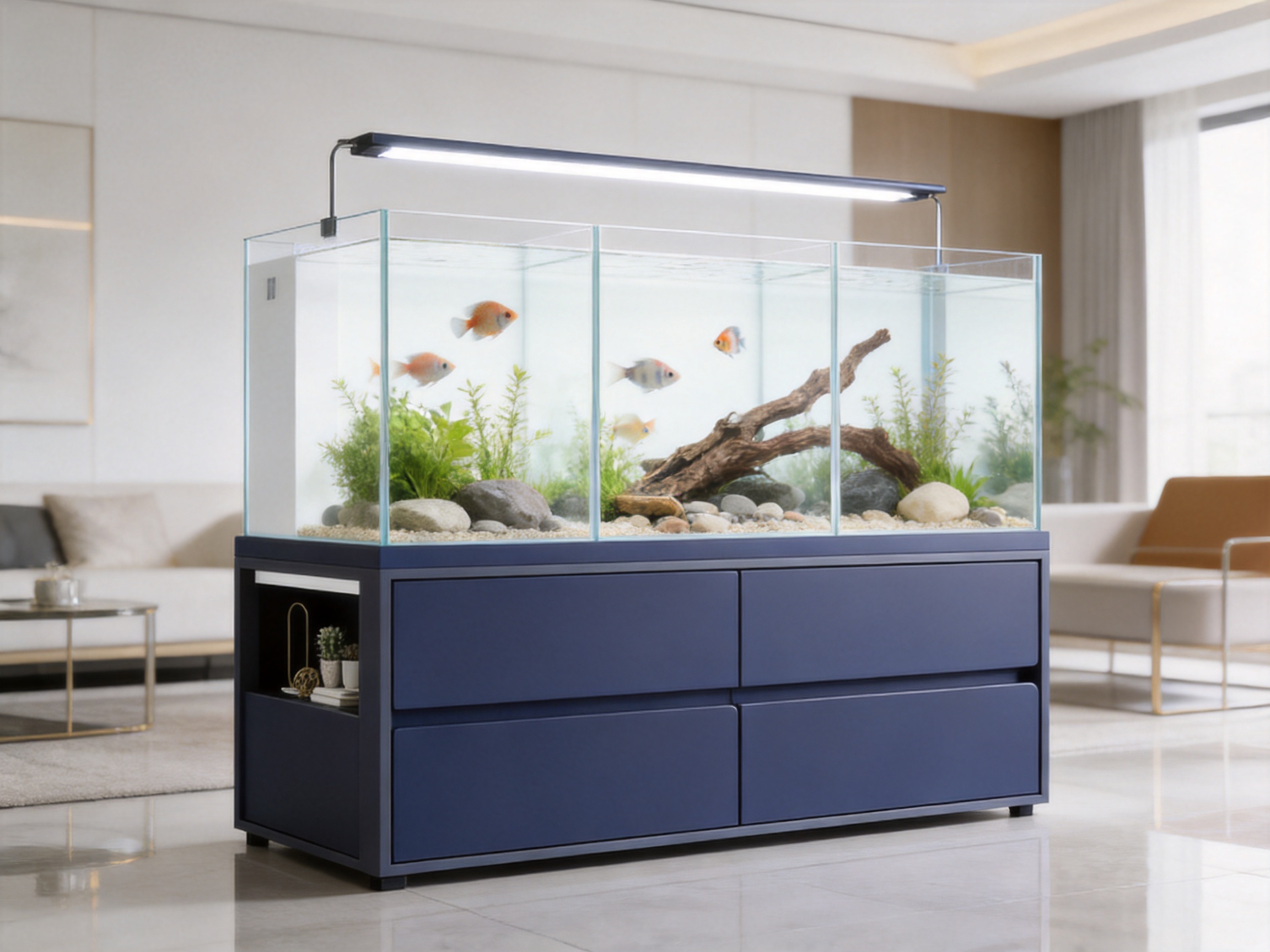
The HCB rear side filter fish tank competes not only with other complete aquariums but also with conventional tank setups assembled from separate parts. Its advantages are most apparent in integration, visual cleanliness, space efficiency, and coordinated component selection.
A separate aquarium setup often exposes hoses, cables, filter bodies, brackets, and mismatched supports. Although experienced hobbyists can conceal these elements, doing so requires additional planning and sometimes custom furniture. The HCB design addresses this issue from the beginning by incorporating the filtration and cabinet into the product structure.
Rear-side filtration keeps the central viewing area more open than a large internal filter positioned inside the main tank. This allows aquascapers to make better use of the foreground and helps fish remain more visible. In a public-facing setting, a cleaner display can improve the visual impact of the aquarium.
The supplied lamp and water pump are specified for the HCB system. This reduces uncertainty when selecting basic equipment and helps the aquarium operate as a unified package. Separate purchases can create compatibility problems involving mounting, power requirements, flow rate, dimensions, and visual proportions.
The double-layer cabinet makes use of the space below the aquarium rather than requiring a separate storage unit. This is a meaningful advantage in apartments, offices, hotel areas, and retail environments where every square meter must be used thoughtfully.
Three-sided super-white glass supports viewing from multiple directions. This offers more placement possibilities than a tank designed to be viewed only from the front. The unit can be positioned near a wall, in a corner, or in a location where the sides are visible, provided the installation conditions are suitable.
When a tank, cabinet, lighting system, and filtration arrangement are designed together, the proportions are more likely to appear balanced. This can help the aquarium integrate into a finished interior without the improvised appearance sometimes associated with hobby equipment.
The aquarium is produced by a company with a long operating history in aquarium products, aquaculture machinery, industrial equipment, and related sectors. The business was established in 1985 and has developed through decades of product development, manufacturing, distribution, and market experience.
This history is significant because aquarium manufacturing involves more than cutting glass. A complete aquarium system requires coordinated knowledge of glass processing, structural assembly, filtration, water movement, lighting, electrical safety, cabinet construction, packaging, quality control, and after-sales support. A manufacturer that works across aquarium and equipment categories can apply broader technical experience to the development of integrated products.
The company maintains functional departments that include research and development, quality control, finance, personnel and administration, information management, and business education. The presence of dedicated research and quality functions indicates an organizational structure capable of supporting product improvement and process management rather than relying only on basic assembly.
Its broader corporate network includes wholly owned subsidiaries and affiliated trading organizations operating in different regions and product areas. Such a structure can support specialized production, procurement, logistics, market feedback, and distribution. For international buyers, a broad operating network may also provide advantages in product availability, communication, and supply coordination.
Continuous innovation is especially important in aquarium equipment because consumer expectations are changing. Buyers increasingly seek quieter operation, easier maintenance, better energy efficiency, improved aesthetics, more reliable filtration, and equipment that occupies less visible space. Product development teams must therefore consider both engineering performance and the user experience.
The HCB aquarium reflects this product-development approach through the combination of a rear-side filter, integrated water pump, plant-oriented LED light, ultra-white glass, and storage cabinet. These features address several common problems at once: visible equipment, limited storage, inconsistent component matching, and reduced display clarity.
Quality control is essential for glass aquariums and water-handling products. The structural integrity of the tank, accuracy of assembly, sealing quality, pump operation, lighting performance, cabinet stability, and packaging protection all influence the customer experience. A dedicated quality control function can help establish inspection procedures for these areas.
For buyers, quality should be evaluated not only by appearance but also by the consistency of the complete product. The tank should arrive without visible damage, the cabinet should be stable and correctly aligned, the pump should operate as intended, and the lighting should be securely installed. Proper packaging and transportation procedures are also important because glass products can be exposed to impact and vibration during shipping.
Manufacturing strength is therefore reflected in the ability to manage the entire product lifecycle. This includes concept development, material selection, component coordination, assembly, inspection, packaging, distribution, and customer support. The company’s long-term specialization in aquarium and equipment categories provides a foundation for this integrated approach.
The HCB product demonstrates several manufacturing principles that distinguish an integrated aquarium from a simple glass container. The first is component coordination. The filter, pump, lamp, glass body, and cabinet must work together dimensionally and functionally. A component that is suitable in isolation may not be suitable when placed inside a compact, highly integrated unit.
The second principle is repeatability. A product intended for domestic and international distribution must be manufactured with consistent dimensions and assembly standards. Repeatable production helps ensure that the specified lamp fits the intended structure, the filter section is correctly formed, and the cabinet supports the aquarium as designed.
The third principle is maintainability. An aquarium is a long-term product that requires regular cleaning and inspection. Filtration areas must be accessible, cables must be manageable, and storage should be useful rather than decorative only. By assigning the filtration to the rear side and including a storage cabinet, the product supports a more practical maintenance routine.
The fourth principle is aesthetic integration. The visual appearance of an aquarium is increasingly important to consumers who want the product to complement their interior. Ultra-white glass, coordinated colors, integrated lighting, and a unified base cabinet show that the design considers the complete environment rather than only the technical function.
The fifth principle is scalability. Offering two models with related specifications allows the manufacturer to serve different room sizes and customer needs while preserving a recognizable product platform. Shared design concepts can simplify user understanding, retail presentation, spare-part planning, and production management.
Before installation, select a location with a level, stable floor and enough clearance for cleaning, cable access, and filter maintenance. Do not place the aquarium on an uneven surface or on furniture that was not designed to support the filled weight. The complete operating weight includes the glass tank, water, substrate, rocks, wood, equipment, and cabinet structure.
Position the cabinet first and confirm that it is stable and correctly aligned. The aquarium should sit according to the manufacturer’s intended support arrangement. Avoid moving the assembled aquarium while it contains water or heavy decorations. If relocation is necessary, drain the tank and remove internal materials before carefully handling the unit.
After positioning, inspect the filtration compartment, pump connections, electrical leads, and lighting installation. Add suitable filter media according to the intended aquarium setup. Rinse appropriate media and decorative materials with clean water when necessary, while avoiding household detergents or chemicals that could harm aquatic life.
Fill the tank gradually and observe the filtration area for leaks, unusual water movement, or abnormal pump noise. Confirm that water flows through the rear-side filter as expected. The pump should be operated according to the supplied product instructions, and electrical connections should be kept dry and safely arranged.
Before adding fish, allow the aquarium to complete an appropriate biological cycling process. A new aquarium does not immediately contain a stable beneficial bacterial population. Introducing livestock too quickly can cause harmful ammonia and nitrite accumulation. Test water parameters when possible and add fish gradually after the system has demonstrated stable conditions.
Routine maintenance helps preserve both water quality and product appearance. Remove debris from the water surface and substrate as required, clean the glass with aquarium-safe tools, and monitor the filter media for clogging. Do not replace all biological media at once unless there is a specific reason, because beneficial microorganisms may be lost.
The rear filtration area should be inspected periodically. Mechanical media may need more frequent cleaning because it captures visible particles. Biological media should generally be rinsed with removed aquarium water rather than untreated tap water, depending on local water conditions and the maintenance approach used by the aquarium keeper.
Check the water pump for reduced flow, unusual sound, or visible buildup. Mineral deposits and debris can affect pump performance. Follow the equipment instructions for safe cleaning, and disconnect electrical power before servicing the pump or any submerged component.
LED lighting should be kept free from excessive moisture and should be operated according to its intended installation. Wipe external surfaces with a soft, dry or appropriately damp cloth, ensuring that water does not enter electrical connections. Establishing a stable lighting schedule can help support plants while limiting unnecessary algae growth.
The cabinet should be kept dry and should not be used to store leaking containers. Water-treatment products, food, and tools should be sealed and organized. If water is spilled during maintenance, dry the cabinet promptly. Good storage habits protect the furniture and help prevent contamination of aquarium supplies.
In residential spaces, the HCB aquarium can serve as a calming focal point in a living room, dining area, study, or entrance hall. The integrated cabinet makes it possible to maintain a coordinated appearance without adding separate aquarium furniture. The choice of cabinet color allows the unit to complement modern, colorful, minimalist, or hospitality-inspired interiors.
In offices, an aquarium can improve the atmosphere of reception areas, executive spaces, meeting rooms, and employee lounges. The rear filtration design is useful where visitors can view the tank from several directions and where exposed equipment would be undesirable.
Retail stores can use the product as a display aquarium or as part of an aquatic product presentation. The storage cabinet can hold maintenance supplies, while the integrated lighting helps highlight fish and aquatic plants. Multiple color options can support different merchandising themes.
Hotels, restaurants, clinics, and other public interiors may also benefit from the aquarium’s combination of presentation and organization. However, commercial users should develop a maintenance schedule that accounts for higher visibility, longer operating hours, and the need for prompt response if water quality or equipment problems occur.
The HCB series is also suitable for hobbyists who want a more polished installation without designing every component independently. It offers a practical entry point for users who appreciate aquascaping but prefer a coordinated product rather than a completely custom system.
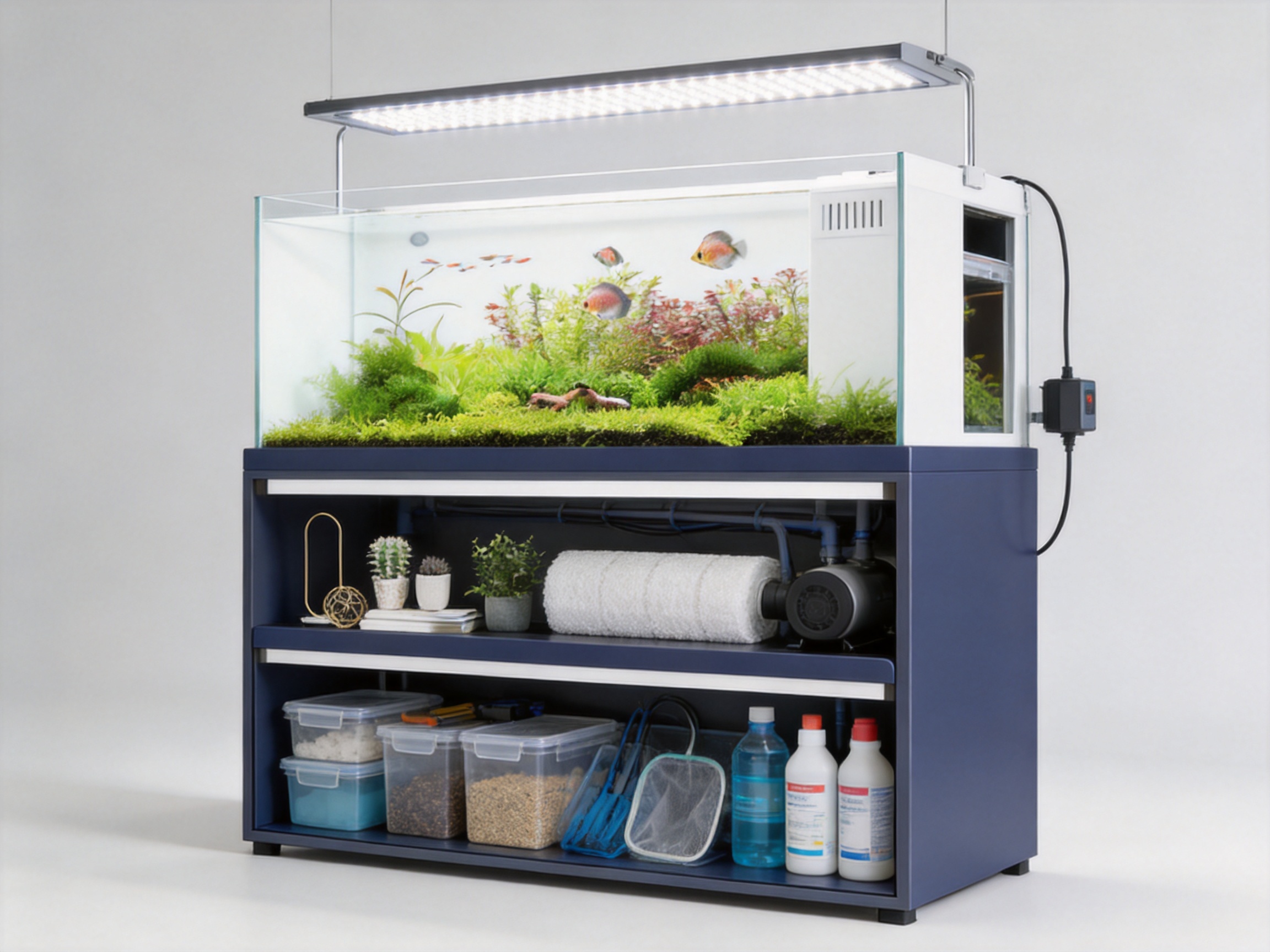
The HCB-400B is the logical choice when floor area is limited or when the intended display is compact. Its smaller dimensions may be easier to integrate into apartments, offices, and rooms with restricted circulation space. It can also be appropriate for users who want a manageable aquarium volume while still benefiting from an integrated cabinet and rear filtration.
The HCB-500B is better suited to users who want additional display width and a larger aquatic layout. Its stated 86-liter capacity provides more room for arranging plants, wood, stones, and compatible fish. The wider footprint may also make it easier to create a visually layered aquascape with open swimming space and planted areas.
Both models require responsible stocking. Capacity alone does not determine how many fish can be kept. Species behavior, adult size, filtration maturity, oxygenation, water-change frequency, and aquascape design must all be considered. A larger aquarium offers more flexibility, but it still requires careful planning and consistent care.
Buyers should also consider the route from delivery to the final installation location. Measure doorways, elevators, stairways, corridors, and cabinet clearance before ordering. Since the product combines glass and furniture elements, advance planning can reduce the risk of handling damage during installation.
An integrated aquarium simplifies equipment selection, but it does not eliminate the responsibilities of fishkeeping. Users must provide appropriate water conditions, compatible livestock, adequate nutrition, suitable temperature control when needed, and regular maintenance. The aquarium should be treated as a living ecosystem rather than simply as interior decoration.
Fish should not be selected only for color or appearance. Their adult size, swimming behavior, social needs, water preferences, and compatibility with plants and other fish are important. Aquatic plants should also be chosen according to the available light and the keeper’s willingness to provide nutrients, pruning, and other care.
Water quality should be monitored during the establishment period and after significant changes to stocking or decoration. Regular partial water changes can help manage dissolved waste, while careful feeding can reduce the amount of uneaten food entering the system. Overfeeding is one of the most common causes of avoidable water-quality problems.
The aquarium should be kept away from direct sunlight, strong heating sources, and locations subject to repeated impact. Direct sunlight can encourage algae growth and raise water temperature. Sudden temperature changes can stress aquatic life. A stable indoor environment is generally preferable.
Purchasing an aquarium is different from purchasing a disposable household object. The product is expected to operate continuously, contain a heavy water load, support electrical equipment, and remain attractive over an extended period. Manufacturer experience therefore matters in areas such as material selection, structural design, product testing, packaging, and customer service.
A company with more than three decades of activity in aquarium pets, aquaculture machinery, and industrial equipment has had time to develop knowledge of different customer requirements and operating environments. Experience across related industries can help inform decisions about pumps, filtration, production efficiency, quality management, and distribution.
The company’s stated commitment to industrial technical development, global marketing, and brand internationalization also reflects an effort to serve both domestic and overseas markets. International distribution requires attention to product documentation, packaging, communication, regulatory expectations, replacement components, and logistics. These considerations are important for professional buyers and distributors.
In addition, a broad sales network can help manufacturers receive feedback from retailers, service teams, installers, and end users. This feedback may contribute to future improvements in product design and operating instructions. The ability to connect manufacturing with real-world usage is a significant advantage in a specialized category such as aquarium equipment.
For wholesalers, retailers, project contractors, and interior designers, the HCB series offers several points of commercial interest. Its integrated specification makes it easier to present as a complete solution. Instead of explaining several unrelated products, a sales team can communicate the value of a unified aquarium with filtration, lighting, pumping, and storage already incorporated.
The two-model range provides a simple product ladder. The smaller model can serve customers with limited space or lower display requirements, while the larger model addresses customers seeking greater capacity and aquascaping flexibility. The range can be displayed with different cabinet colors to demonstrate how the product adapts to multiple interiors.
Retailers may also benefit from the product’s visible design features. Three-sided super-white glass, rear filtration, full-spectrum plant lighting, and double-layer storage are easy to demonstrate in a showroom. These features communicate value more effectively than specifications alone because customers can immediately see the difference in display clarity and equipment integration.
Professional buyers should request current technical documentation, packaging details, operating instructions, warranty terms, spare-part availability, and any applicable compliance information before placing a commercial order. They should also confirm the exact dimensions, color availability, voltage requirements, and delivery configuration for the intended market.
The main advantage is that filtration is positioned in a dedicated rear section rather than occupying the center of the display. This helps maintain a cleaner view, reduces visible equipment, and supports a more organized aquarium layout.
The supplied specifications identify two models: HCB-400B and HCB-500B. The HCB-400B has a stated capacity of 72 liters, while the HCB-500B has a stated capacity of 86 liters.
Both models use three-sided super-white glass. The material is presented as transparent, durable, and scratch-resistant, helping improve the visual clarity of the aquarium from the front and sides.
The HCB-400B is specified with an ADT-110C/10W lamp, and the HCB-500B is specified with an ADT-120C/20W lamp. The lighting is described as full-spectrum LED water plant lighting.
Both listed models use an HQJ-700G water pump rated at 8 watts. The pump supports circulation between the main aquarium and the rear-side filtration section.
Yes. The product includes a base cabinet with a double-layer storage design. This provides space for aquarium food, maintenance tools, filter materials, and other supplies.
Yes. The three-sided glass construction is intended to support viewing from the front and both sides. This makes the aquarium suitable for open placement as well as positioning near a wall.
It is equipped with full-spectrum LED water plant lighting, making it suitable as a starting point for planted aquarium displays. Plant selection should still be based on light requirements, water conditions, nutrients, and the keeper’s maintenance routine.
The integrated design can make equipment selection and installation easier for beginners. However, new users must still learn about aquarium cycling, water testing, compatible stocking, feeding, cleaning, and routine water changes.
The listed color options are China Red, Mediterranean Blue, Lake Blue, Hermes Orange, Turquoise, Quiet Yellow, and Warm and White. Availability may vary by order, market, and production schedule.
It should be installed on a level, stable surface capable of supporting the complete filled weight. Users should provide adequate clearance for maintenance, keep electrical connections dry, and follow the manufacturer’s instructions for pump and lighting installation.
A basic aquarium may include only the glass tank. The HCB system combines the tank with rear-side filtration, a water pump, dedicated LED lighting, and a double-layer cabinet. This creates a more complete and visually coordinated installation.
Professional buyers should confirm exact dimensions, capacity, available colors, electrical specifications, packaging, warranty conditions, spare-part support, delivery terms, and market-specific compliance requirements.
The HCB rear side filter fish tank is a comprehensive aquarium solution built around clarity, organization, and integrated performance. Its three-sided super-white glass supports a high-quality viewing experience, while the rear-side filter keeps technical equipment away from the central display. The included pump and full-spectrum LED lighting provide a coordinated operating foundation, and the double-layer cabinet makes practical use of the space beneath the tank.
The two-model structure gives customers a choice between a compact 72-liter configuration and a larger 86-liter configuration. Multiple exterior colors further expand its suitability for residential, commercial, retail, and hospitality environments. Compared with a separately assembled aquarium, the HCB series can offer a more consistent appearance, easier component coordination, and better use of limited space.
Its value is also supported by the manufacturer’s long-term experience in aquarium products, aquaculture machinery, and industrial equipment. Research, quality control, production coordination, distribution, and market feedback are all important capabilities for producing reliable integrated aquarium systems. These strengths help position the HCB series as more than a decorative tank: it is a planned aquatic display platform designed for practical everyday use.
As with any aquarium, successful ownership depends on correct installation, appropriate livestock selection, biological cycling, regular maintenance, and responsible operation. When these requirements are met, the HCB rear side filter fish tank can provide a clear, organized, and attractive aquatic environment that combines the enjoyment of fishkeeping with the visual quality of modern furniture design.
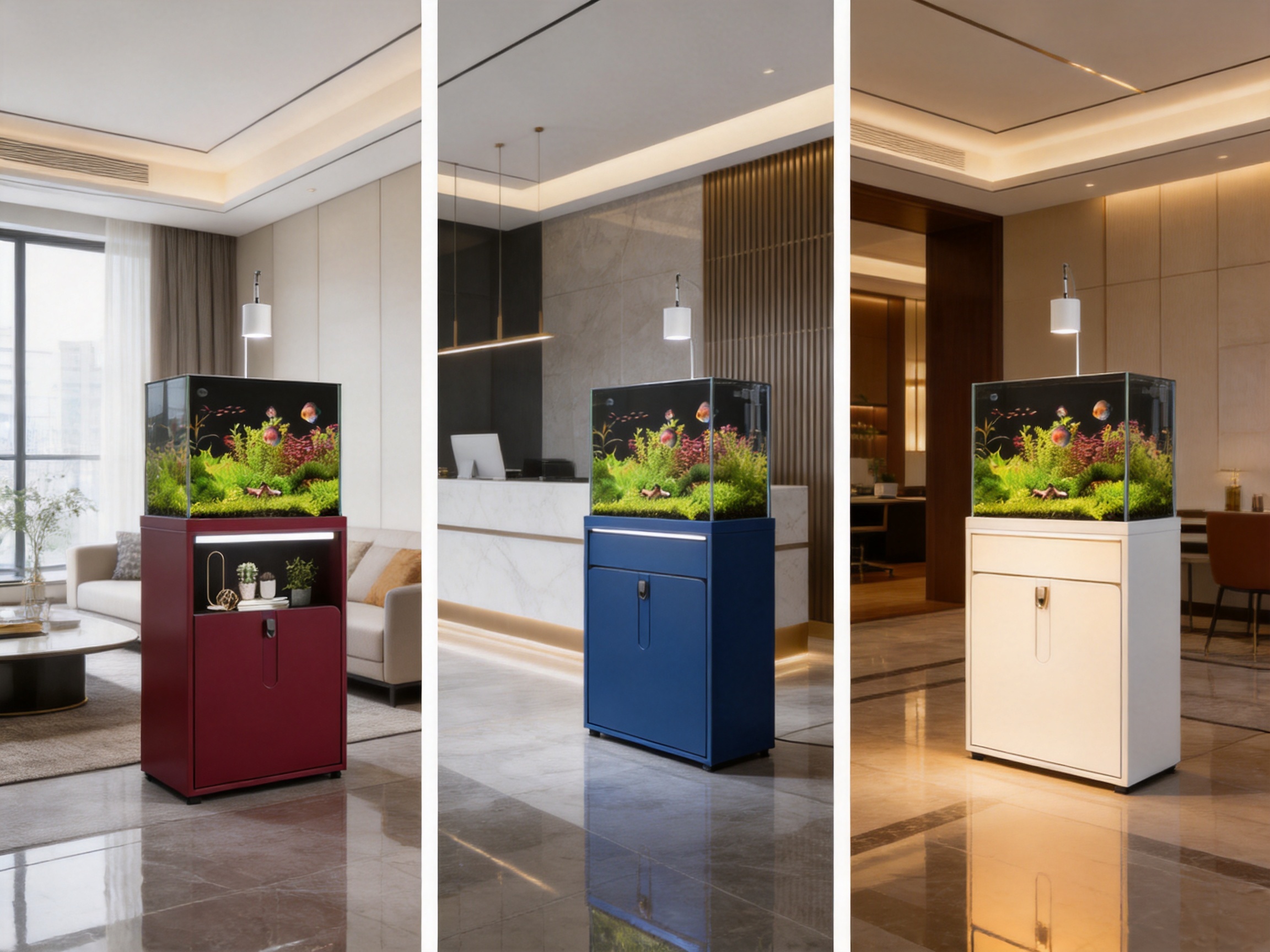
1. Product specification sheet for the HCB rear side filter fish tank, including model dimensions, stated capacity, glass material, lighting, pump, filtration, and color options.
2. Product feature information for the HCB series, including ultra-white glass, rear-side filtration, double-layer storage, and full-spectrum LED plant lighting.
3. General aquarium maintenance principles concerning filtration, water circulation, biological cycling, water changes, stocking, and aquatic plant care.
4. Manufacturer-provided corporate information concerning company history, research functions, quality control, subsidiary operations, and aquarium equipment development.
5. General glass aquarium installation and safety practices concerning stable support, level surfaces, electrical protection, transportation, and maintenance access.



 English
 русский
 España
 Portugal
 عربي
عربي
 No. 61-79, Baima Street, Maao Town, Dinghai District, Zhoushan City, Zhejiang Province, China.
 0086 580 8082088 / 8081168
 0086 580 8080978
 songhua@sunsun-china.com