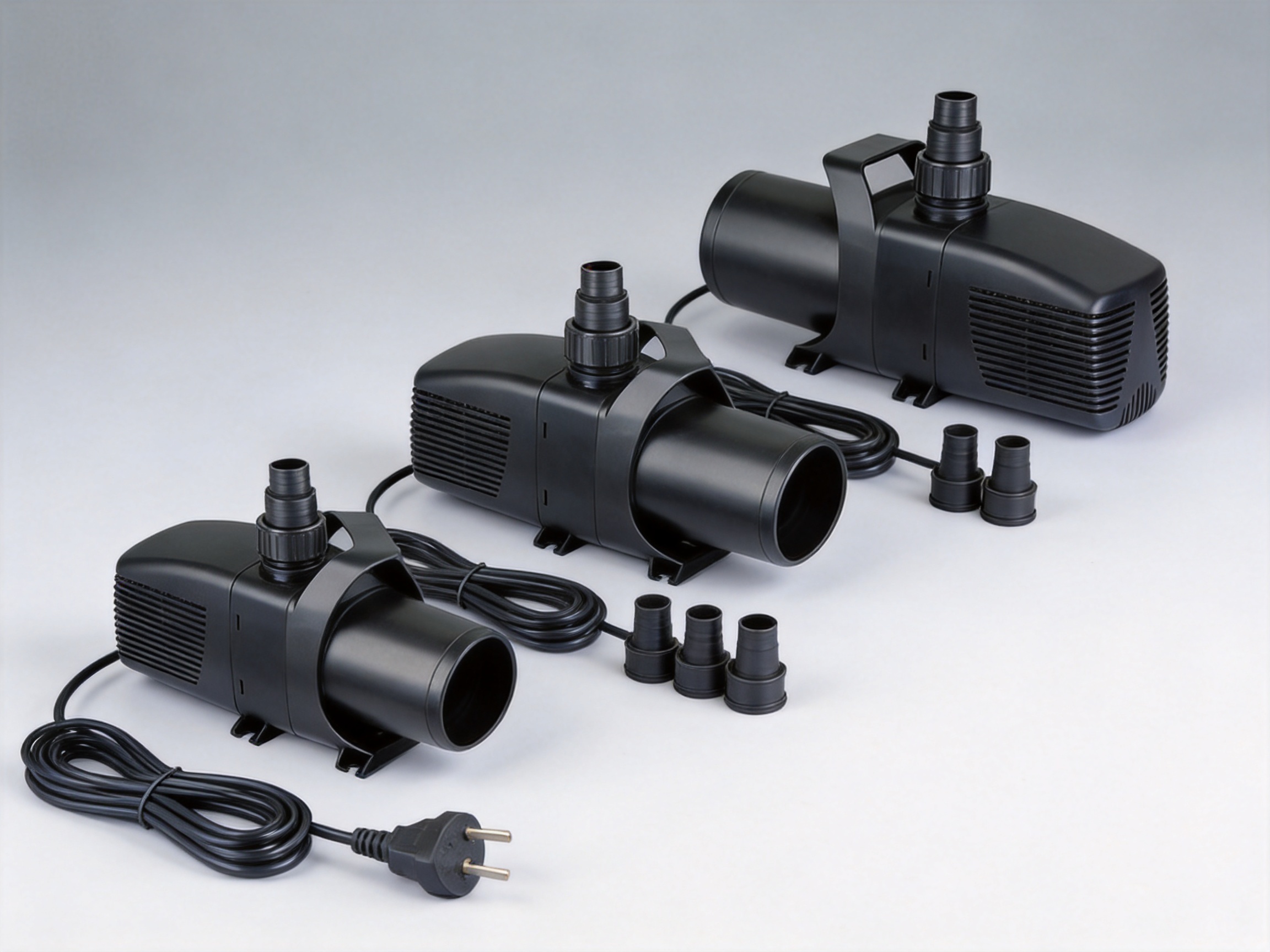
Modern pond systems, decorative water features, aquaculture circulation projects, and large aquarium installations all depend on one essential component: a reliable water pump. The JAP Series Multi-Function Submersible Pump is designed for users who need strong flow, stable operation, practical installation options, and dependable performance across a wide range of water circulation applications. With models ranging from 6,000 L/h to 18,000 L/h, this pump series offers choices for small and medium garden ponds, larger outdoor water features, filtration systems, waterfall circulation, and aquatic environments requiring continuous water movement.
The product stands out because it combines high output, multiple voltage compatibility, practical hose adapter options, a 5-meter cable length, and a submersible structure that supports convenient placement directly in water. Compared with many ordinary pond pumps that are limited to one or two flow capacities, the JAP Series provides a wide selection of specifications, allowing installers, retailers, pond builders, and equipment distributors to match pump capacity with the actual water volume, head height, piping size, and circulation target of each project.
Behind the product is the manufacturing strength of Sensen Group Co., Ltd., an enterprise with decades of experience in aquarium pets, aquacultural machinery, and related industrial equipment. The company’s long-term development, research capability, quality control system, and large production network help support consistent product supply and product reliability. For professional buyers, this background is important because the value of a pump is not only measured by flow rate; it is also measured by how consistently the product can be manufactured, delivered, supported, and improved over time.
JAP Series Multi-Function Submersible Pump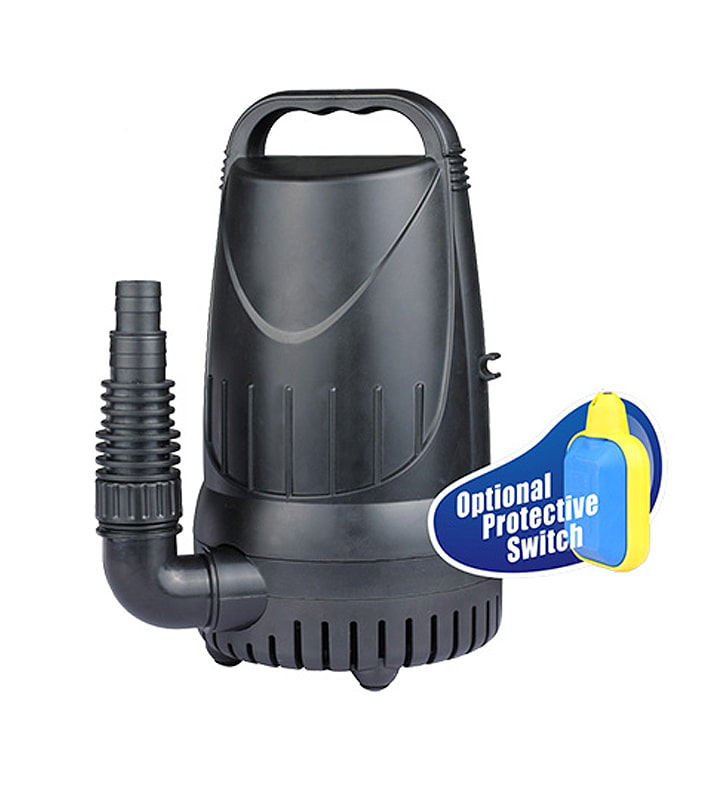
Content
The JAP Series Multi-Function Submersible Pump is a pond water pump family built for high-flow water movement. It is intended for submersible use, meaning the pump can operate while placed directly in water. This design is practical for ponds and water features because it reduces the need for complicated external pump rooms and allows the unit to be installed closer to the water source.
The series includes standard models and “L” models. The available models include JAP-6000, JAP-7500, JAP-8500, JAP-10000, JAP-13000, JAP-15000, JAP-18000, JAP-6000L, JAP-7500L, JAP-8500L, JAP-10000L, JAP-13000L, JAP-15000L, and JAP-18000L. The output range covers 6,000 L/h to 18,000 L/h, which is suitable for a wide selection of pond and circulation demands.
Power ratings range from 140 W to 420 W depending on model. Maximum head height ranges from 5.0 m to 7.5 m. The pumps support 110 V, 220 V, and 240 V with 50 Hz or 60 Hz frequency options, which makes the series adaptable for different regional markets. Hose adapter sizes include 38 mm for several smaller and mid-range models, while larger models support multiple adapter sizes of 20/25/32/38/45 mm, improving installation flexibility.
The 5-meter cable length is another practical feature. In many pond installations, the electrical supply point is not immediately next to the pump position. A longer cable makes installation easier and can reduce the need for awkward positioning. The product dimensions and weights vary according to model, allowing users to choose between compact bodies and larger high-flow designs according to available space.
Model |
Voltage |
Frequency |
Power |
H-Max |
Output |
Hose Adapter |
Cable Length |
Weight |
Dimensions L×W×H |
JAP-6000 |
110V/220V/240V |
50Hz/60Hz |
140W |
6.0m |
6000L/h |
38mm |
5m |
3.5kg |
355×125×145mm |
JAP-7500 |
110V/220V/240V |
50Hz/60Hz |
140W |
5.0m |
7500L/h |
38mm |
5m |
3.5kg |
355×125×145mm |
JAP-8500 |
110V/220V/240V |
50Hz/60Hz |
230W |
7.0m |
8500L/h |
38mm |
5m |
5.0kg |
375×130×153mm |
JAP-10000 |
110V/220V/240V |
50Hz/60Hz |
230W |
6.0m |
10000L/h |
38mm |
5m |
5.0kg |
375×130×153mm |
JAP-13000 |
110V/220V/240V |
50Hz/60Hz |
400W |
7.5m |
13000L/h |
20/25/32/38/45mm |
5m |
5.5kg |
400×140×165mm |
JAP-15000 |
110V/220V/240V |
50Hz/60Hz |
420W |
7.0m |
15000L/h |
20/25/32/38/45mm |
5m |
5.5kg |
400×140×165mm |
JAP-18000 |
110V/220V/240V |
50Hz/60Hz |
420W |
6.5m |
18000L/h |
20/25/32/38/45mm |
5m |
5.5kg |
400×140×165mm |
JAP-6000L |
110V/220V/240V |
50Hz/60Hz |
140W |
6.0m |
6000L/h |
38mm |
5m |
4.0kg |
207×145×270mm |
JAP-7500L |
110V/220V/240V |
50Hz/60Hz |
140W |
5.0m |
7500L/h |
38mm |
5m |
4.0kg |
207×145×270mm |
JAP-8500L |
110V/220V/240V |
50Hz/60Hz |
230W |
7.0m |
8500L/h |
38mm |
5m |
5.0kg |
212×160×285mm |
JAP-10000L |
110V/220V/240V |
50Hz/60Hz |
230W |
6.0m |
10000L/h |
38mm |
5m |
5.0kg |
212×160×285mm |
JAP-13000L |
110V/220V/240V |
50Hz/60Hz |
400W |
7.5m |
13000L/h |
20/25/32/38/45mm |
5m |
5.5kg |
238×175×460mm |
JAP-15000L |
110V/220V/240V |
50Hz/60Hz |
420W |
7.0m |
15000L/h |
20/25/32/38/45mm |
5m |
5.5kg |
238×175×460mm |
JAP-18000L |
110V/220V/240V |
50Hz/60Hz |
420W |
6.5m |
18000L/h |
20/25/32/38/45mm |
5m |
5.5kg |
238×175×460mm |
Water movement is central to pond health. In outdoor ponds, circulation helps reduce stagnant zones, supports oxygen exchange, assists filtration, and improves the visual quality of fountains, streams, and waterfalls. In aquatic environments where fish or plants are present, stable circulation supports a healthier ecosystem by moving water through filter media and helping distribute oxygenated water more evenly.
A pump that is too weak may fail to deliver enough water to a filter or waterfall, especially when head height and pipe friction are considered. A pump that is poorly matched to the system may consume unnecessary energy, create uneven flow, or require frequent maintenance. The JAP Series addresses this issue by providing several output options, so users can choose a model based on practical hydraulic requirements rather than forcing a single pump to do every job.
The maximum head values are particularly important. For example, a pump may be rated at 10,000 L/h, but the actual flow reaching the waterfall can drop if water must be pushed upward several meters or through long hose runs. Models with head heights up to 7.5 m give pond builders more flexibility when designing elevated features or filtration layouts where the filter is installed above the pond waterline.
For garden pond installers, this range of head and flow options can simplify project planning. Instead of using an undersized pump that creates a weak waterfall or a filter that receives insufficient turnover, the user can choose from 6,000 L/h, 7,500 L/h, 8,500 L/h, 10,000 L/h, 13,000 L/h, 15,000 L/h, and 18,000 L/h ratings. This broad range is a practical advantage over competitors that offer fewer model choices or less flexible hose connection options.
One of the most important advantages of the JAP Series is its wide capacity range. Many standard pond pumps are available only in limited sizes, which can force users to compromise. A homeowner may need more than 5,000 L/h but less than 10,000 L/h, while a commercial installer may require 15,000 L/h or 18,000 L/h for a larger water feature. This series gives both groups practical options.
The smaller models, such as JAP-6000 and JAP-7500, are suitable for moderate circulation, small pond filtration, and decorative water movement. Mid-range models such as JAP-8500 and JAP-10000 provide stronger flow for larger pond filters and more substantial water features. The high-output JAP-13000, JAP-15000, and JAP-18000 models are suitable for applications requiring heavy circulation, high-volume water transfer, or strong waterfall effects.
This product range supports distributors and retailers as well. Instead of managing completely different pump families for each flow rate, sellers can offer one coherent series with multiple capacities. That improves product presentation, simplifies customer choice, and helps create a more organized inventory structure.
The series supports 110 V, 220 V, and 240 V options, as well as 50 Hz and 60 Hz frequency compatibility. This is valuable for global markets because electrical standards vary between regions. A product family that can be supplied for different voltage environments is easier for international buyers to integrate into their product lines.
Compared with pumps designed only for one market, the JAP Series is more suitable for distributors handling cross-border business. It can serve customers in regions where 110 V is common and also customers in regions where 220 V or 240 V is standard. The frequency compatibility further improves suitability for different markets.
Hose adapter compatibility influences installation efficiency. Smaller models in the series use a 38 mm hose adapter, while higher-output models include 20/25/32/38/45 mm options. This multi-size configuration is practical because pond installations often involve existing hoses, filters, UV clarifiers, fountains, or waterfall boxes with different inlet and outlet diameters.
Competitor pumps with only one fixed connector size may require extra fittings, adapters, or modifications. Extra fittings can increase installation time, create potential leakage points, and reduce flow efficiency if they introduce unnecessary restrictions. The JAP Series reduces this challenge by offering more connection flexibility, especially in the larger models.
Submersible pumps are popular because they can be placed directly in the pond or water reservoir. This installation style can be more convenient than external pump setups, particularly in garden environments where the user wants to avoid visible equipment. A submersible pump can be positioned near the required intake point, connected to a hose, and routed toward a filter, fountain, or waterfall.
This design can also help reduce priming concerns that are common with some external pumps. Since the pump is submerged, it operates in the water source itself. For many pond owners, this makes daily operation simpler and reduces installation complexity.
The 5-meter cable length provides practical installation freedom. In many outdoor pond projects, the safest electrical connection point is located away from the pond edge. A cable that is too short may require inconvenient extension arrangements or force the pump to be placed in a less suitable position. With a 5-meter cable, the JAP Series supports more flexible pump placement and easier connection planning.
The availability of both standard models and L-type models is another distinguishing feature. The differences in dimensions suggest that users can select a body format that better fits the installation environment. For example, some pond chambers or filter pits require a lower, longer pump shape, while others may accommodate a taller unit more easily. Having both structure types gives users more options when planning equipment placement.
In competitive comparisons, this kind of dimensional variety is often overlooked, but it can become crucial during installation. A pump with excellent performance may still be difficult to use if it cannot fit comfortably in the intended space. The JAP Series gives buyers additional configuration choices, making it more adaptable to real-world conditions.
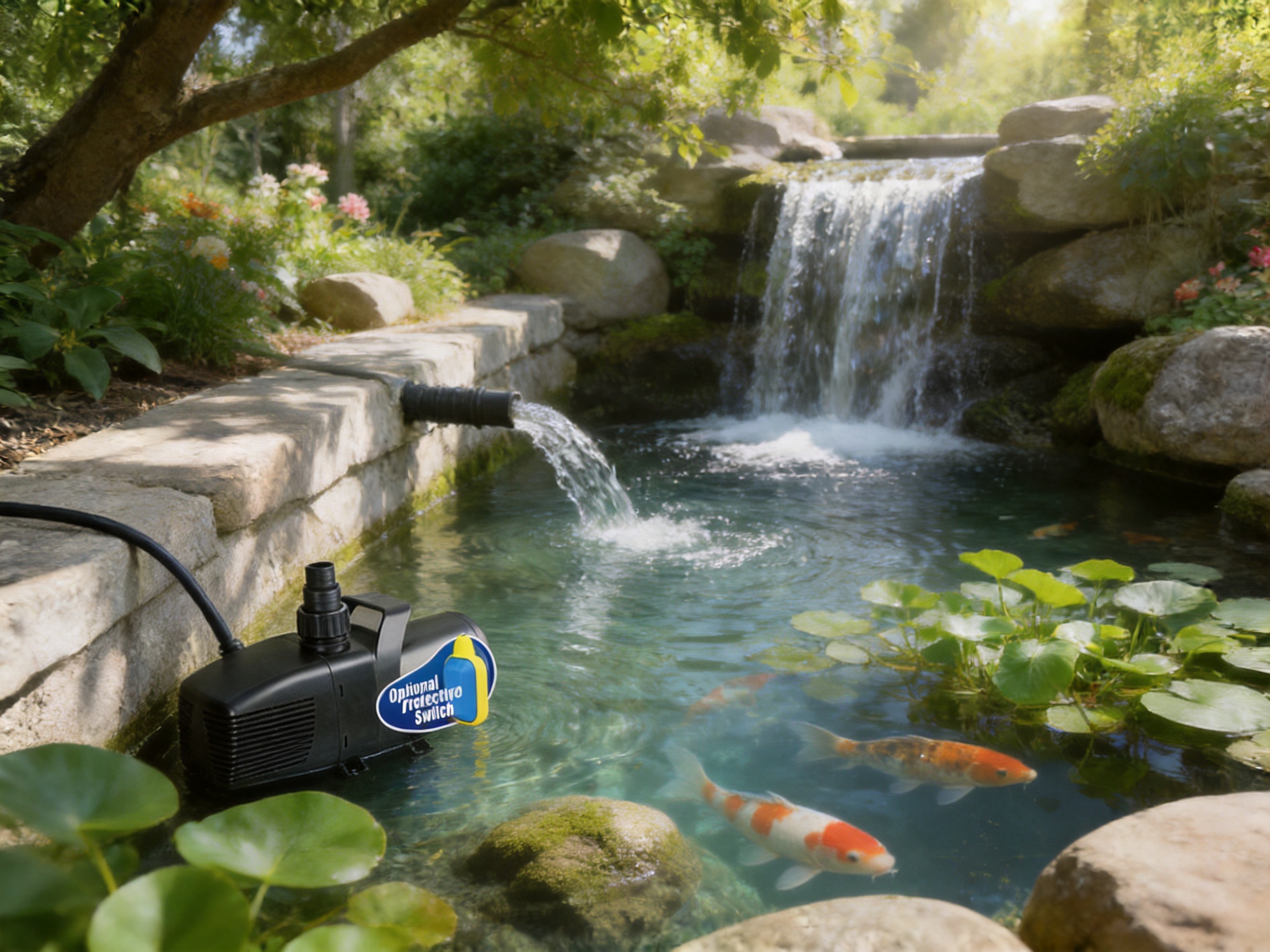
In a garden pond, water circulation helps maintain visual freshness and supports a balanced aquatic environment. The JAP Series can be used to move water through filtration systems, create surface movement, or drive decorative effects. A model such as JAP-6000 or JAP-7500 may be suitable for smaller ponds, while larger ponds may require the JAP-10000, JAP-13000, or higher models depending on water volume and circulation goals.
For fish ponds, pump selection should consider turnover rate, pond depth, fish load, filter design, and the height difference between the pond and filter outlet. A high-flow pump can help ensure that water reaches the filter at a useful rate, but the final model should always be chosen according to the complete system design.
Waterfalls and streams require both flow and head pressure. A pump must lift water to the top of the waterfall and maintain enough flow to create the desired visual effect. The JAP Series includes models with head heights up to 7.5 m, allowing users to design taller or more dynamic features.
For a gentle stream, a mid-range model may be enough. For a wide waterfall or stronger cascade, a high-output model such as JAP-15000 or JAP-18000 may be more appropriate. The availability of multiple hose adapter sizes on large models helps support larger pipework, which is important for maintaining water volume and reducing friction loss.
Many pond filtration systems require continuous water supply. If the pump is undersized, the filter may not receive enough water to process debris and dissolved waste effectively. If the pump is oversized without proper system design, water may pass too quickly through some filter media. The JAP Series gives users the flexibility to match flow capacity to filter specifications.
Because the series covers a broad output range, it can work with different filtration layouts, including pressure filters, gravity-fed filters, waterfall filters, and biological filter boxes. Installers can choose a pump model based on the filter manufacturer’s recommended flow range and the actual head height of the installation.
Decorative fountains need steady flow to maintain consistent spray patterns or water displays. A pump with unstable output can cause weak or uneven effects. The JAP Series is designed for strong water movement, making it suitable for decorative fountain circulation where high volume is required.
For fountains, nozzle type and height must be considered. A tall fountain jet may require greater head capacity, while a broad spillway may require higher flow. The model range allows project designers to choose a pump that supports the required visual result.
The product can also serve certain aquaculture and large aquatic circulation needs where water transfer and movement are important. Sensen Group Co., Ltd. has a background in aquacultural machinery and aquarium-related industries, which provides relevant manufacturing experience for products used in water environments.
In aquaculture settings, pump reliability is critical because circulation can directly affect water quality. A pump must be selected carefully according to tank volume, stocking density, filtration capacity, and oxygenation strategy. The high-output models in this series can support water transfer and circulation tasks where strong flow is needed.
The JAP Series provides different power levels matched with different output capacities. For instance, 140 W models cover 6,000 L/h and 7,500 L/h outputs, while higher power models support greater flows. This allows users to choose the capacity they need without moving directly to the highest power option.
In practical terms, this helps customers control operating cost. Pond pumps often run for many hours each day, and in some systems they operate continuously. Choosing a correctly sized pump matters. The series helps customers avoid overbuying while still offering high-output choices when necessary.
The pump weights range from 3.5 kg to 5.5 kg, depending on model. This weight range suggests a product that is substantial enough for stable placement but still manageable for installation and maintenance. The dimensions are also suited to pond equipment spaces, with standard models offering a horizontal body format and L models offering alternative proportions.
For maintenance, a pump should be removable without excessive difficulty. Units that are too heavy can be inconvenient for homeowners and service technicians. Units that are too light may shift more easily in turbulent environments. The JAP Series offers a practical balance for pond and water feature applications.
The stated maximum head values are a key advantage. The 7.5 m head rating on selected 13,000 L/h models is especially useful for installations where water must be lifted to elevated filters, waterfall starts, or landscape features. In the real world, head loss occurs not only from vertical lift but also from hose length, bends, fittings, and pipe diameter. A pump with stronger head capacity gives users more room to handle these losses.
The high-output models support 20/25/32/38/45 mm hose adapters. This range is valuable because high-flow systems often benefit from larger hose diameters to reduce resistance. Smaller fittings can restrict flow and reduce the benefit of a powerful pump. By supporting multiple adapter sizes, the JAP Series helps installers connect to existing systems while also supporting optimized high-flow layouts.
A pond pump is a mechanical and electrical product that must perform reliably in a demanding environment. It may be exposed to continuous operation, waterborne debris, temperature changes, and installation conditions that vary from one user to another. Therefore, manufacturing strength matters as much as specifications.
Sensen Group Co., Ltd. was established in 1985 and has developed through more than three decades of work in aquarium pets, aquacultural machinery, industrial equipment, and related product categories. This long operating history provides the company with accumulated experience in water-related equipment design, production organization, and market service.
The company has built functional departments that include a research institute, a business school, a quality control department, personnel and administrative information management, and financial management. This organizational structure supports product development, staff training, quality consistency, and operational management. For buyers, this indicates that the pump is not an isolated product but part of a larger manufacturing ecosystem.
The company also operates through multiple subsidiaries and trading companies, supporting broader production and sales coverage. This scale helps improve supply capability and market responsiveness. For distributors and project buyers, reliable supply is essential. A pump series may be technically attractive, but it must also be available in stable quantities, with consistent specifications and dependable communication.
The existence of a dedicated research institute reflects a focus on technical improvement. In pump manufacturing, research and development can influence hydraulic design, motor matching, material selection, structural optimization, noise control, and product durability. Even small improvements in impeller geometry, housing design, and internal flow paths can affect efficiency and reliability.
For the JAP Series, the broad model range suggests a product development approach based on different performance requirements. Instead of producing a single general-purpose pump, the series is structured to meet several output and head combinations. This is beneficial for professional users because it gives them more precise selection options.
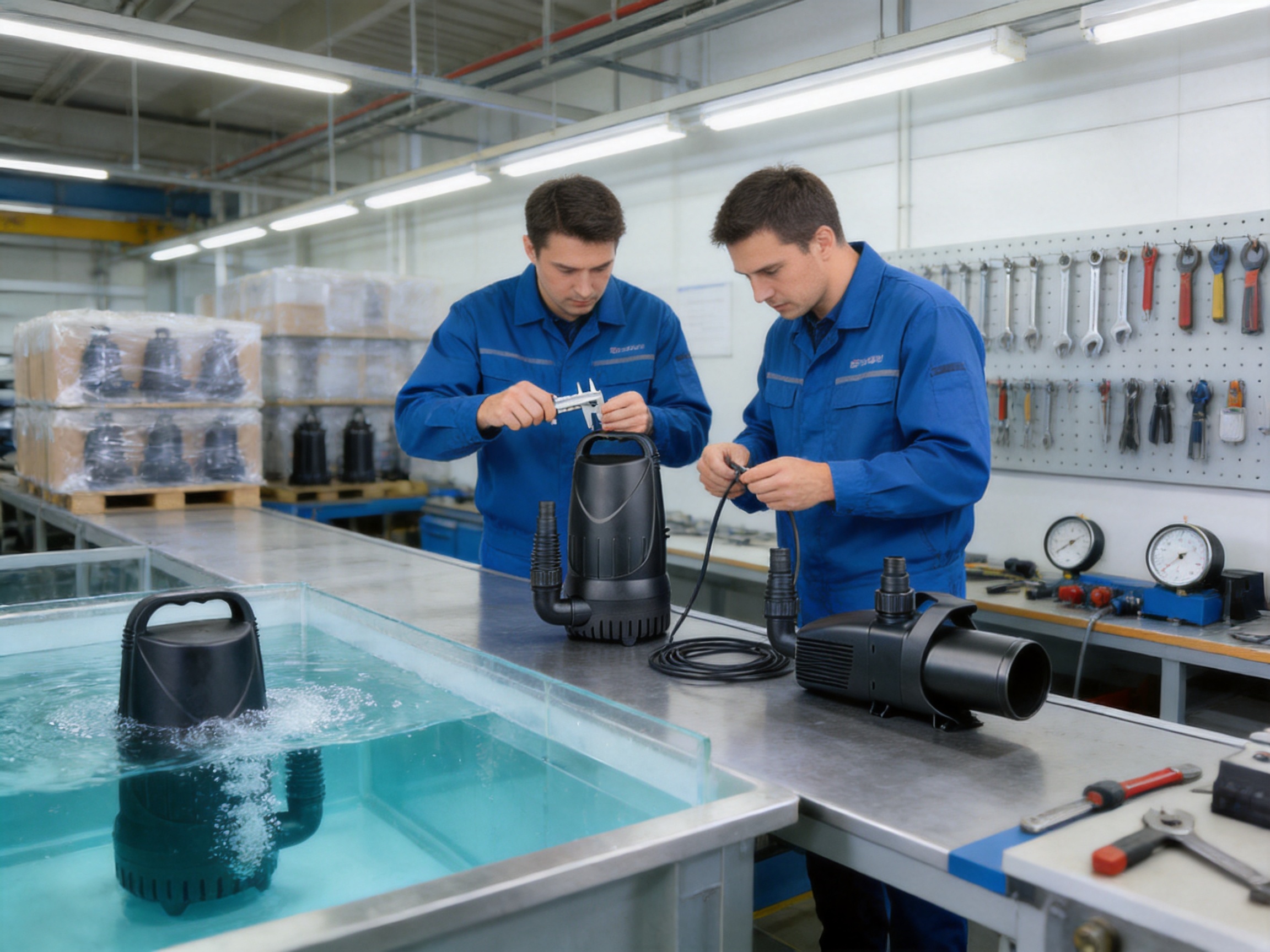
A formal quality control department is important in pump production. Quality control may include inspection of materials, component checks, assembly verification, electrical testing, flow-related checks, sealing evaluation, and final product inspection. While specific internal test methods may vary, a dedicated quality control system helps reduce defects and supports consistent production standards.
For customers, this translates into confidence. A submersible pump must operate safely and reliably in water. Quality control is essential for electrical components, housing integrity, cable connection quality, and overall assembly. When a company emphasizes quality management, it reduces the likelihood of inconsistent performance between units.
Large-scale production provides several advantages over smaller, less experienced operations. It can support better process standardization, more stable supply chains, improved production planning, and stronger experience in handling diverse market requirements. Sensen Group Co., Ltd. has developed a broad operational network, including wholly owned subsidiaries and trading companies, which supports production and distribution capacity.
For an international buyer, large-scale capability can be just as important as product design. Retailers and distributors need products that can be supplied consistently across seasons. Pond equipment demand can be highly seasonal, especially in spring and summer. A manufacturer with stronger production organization is better positioned to meet peak demand.
The company’s business school and functional departments indicate attention to staff training and management. In manufacturing, trained workers and organized management systems help maintain assembly consistency, improve communication, and reduce avoidable errors. For technical products such as pumps, repeatable assembly quality is important because small differences in alignment, sealing, or component handling can influence long-term performance.
The company has developed a sales network system and has pursued integration of online and offline channels. This reflects an understanding that modern equipment buyers need more than physical products. They also need information, service access, brand confidence, and product support. For a pump series, this market awareness can help improve product documentation, distributor communication, and customer experience.
The JAP Series competes in a market where many pond pumps may appear similar at first glance. However, differences become clear when comparing flow range, head performance, connection flexibility, voltage options, manufacturing background, and product family structure.
First, the series covers a wide output range. This allows users to select a pump based on actual project needs. Competitor products with fewer sizes may force customers to compromise between insufficient and excessive flow.
Second, the voltage and frequency compatibility make the series suitable for multiple markets. This is especially useful for importers, wholesalers, and distributors who serve customers in different countries or regions.
Third, the larger models’ multi-size hose adapters provide installation flexibility. This gives the product an advantage over pumps that require additional adapters or limit users to one hose diameter.
Fourth, the product benefits from the background of a long-established manufacturer. In a competitive market, manufacturing maturity can affect product consistency, spare part planning, quality assurance, and long-term buyer confidence.
Fifth, the series offers both standard and L-type models, giving buyers more body-format choices. This can be valuable in installations where pump chamber space is limited or shaped differently from a typical open pond.
Begin by estimating the required water turnover or visual water effect. For filtration, consider how many times the pond volume should circulate through the filter within a given period. For waterfalls, consider the width and desired strength of the falling water. For fountains, consider nozzle requirements.
If the application requires moderate circulation, models such as JAP-6000 or JAP-7500 may be suitable. If stronger flow is needed, JAP-8500 or JAP-10000 can provide a higher output. For large features, the 13,000 L/h, 15,000 L/h, and 18,000 L/h models offer stronger water movement.
Head height is the vertical distance the pump must lift water. If the pump is at the bottom of a pond and the waterfall outlet is above the pond surface, the pump must overcome that height. Pipe length and fittings also add resistance. Choose a model with enough head capacity to maintain useful flow at the final outlet.
Using an appropriate hose diameter helps preserve flow. For high-output models, larger hose sizes are often better because they reduce friction losses. The JAP Series provides useful adapter options, especially on larger models, allowing better compatibility with different installations.
Check the pump dimensions and the available space in the pond, pump chamber, or filter compartment. Standard and L-type models provide different shapes, making it easier to fit the pump into the intended position.
Confirm local voltage and frequency standards before purchasing. The series supports 110 V, 220 V, and 240 V options with 50 Hz or 60 Hz compatibility, but buyers should select the correct configuration for their market or installation site.
Before installing any submersible pump, users should read the product instructions and follow local electrical safety regulations. Outdoor electrical equipment should be connected through suitable protective devices and installed according to qualified electrical standards. Safety is especially important because the pump operates in water.
The pump should be placed on a stable surface, preferably where it can draw water without being buried in heavy sludge. In ponds with debris, a pre-filter or protective placement may help reduce clogging. The hose should be connected securely, and unnecessary sharp bends should be avoided because they can reduce flow.
The cable should be routed safely to prevent damage. It should not be used to lift or carry the pump. During maintenance, power should be disconnected before handling the unit. These general practices help improve safety and extend product life.
Regular maintenance helps any pond pump perform better. Over time, leaves, algae, fine sediment, and mineral deposits may affect the pump intake or impeller area. Users should inspect and clean the pump according to the operating environment. A pond with many leaves may require more frequent cleaning than a clean decorative reservoir.
Flow reduction is often a sign that the intake, hose, or filter system needs cleaning. If the waterfall becomes weaker or the filter flow decreases, users should check the pump intake, hose diameter, hose bends, and filter condition. Maintaining the complete circulation system is just as important as maintaining the pump itself.
In cold climates, users should consider winter operation requirements. Some ponds continue circulating through winter, while others require equipment removal or protection depending on freezing conditions. The correct approach depends on local climate, pond design, and manufacturer guidance.
For distributors, the JAP Series offers a strong product family with broad market coverage. The flow range allows sellers to serve small pond owners, garden centers, landscape contractors, aquarium specialists, and water feature installers. Instead of promoting unrelated pump models, distributors can present a structured range with clear capacity differences.
The multi-voltage support is also valuable for export business. Buyers serving international markets can work with a product series adaptable to different electrical standards. This helps simplify procurement planning and product positioning.
The company’s large production and marketing scale adds another business advantage. Stable supply, organized communication, and long-term industry experience help reduce sourcing risk. For project buyers, reliability of the supplier can be as important as the product’s technical specifications.
Pond pumps often operate for long periods, so choosing the correct model matters for energy use. The JAP Series provides multiple output levels, helping users select an appropriate pump rather than oversizing unnecessarily. Proper sizing can support both performance and operational efficiency.
Efficient system design also improves results. A pump connected to an undersized hose may consume power without delivering expected flow. A pump installed with excessive bends or long restrictive pipe runs may also lose performance. The availability of multiple adapter sizes on larger JAP models helps users design more efficient pipe connections.
Water circulation can also support pond ecology. Better movement may reduce stagnant areas and improve oxygen distribution. When combined with proper filtration, aeration, and maintenance, a suitable pump contributes to clearer and healthier water conditions.
It is mainly used for pond water circulation, garden water features, waterfalls, streams, filtration systems, decorative fountains, and other aquatic applications that require reliable high-flow water movement.
The series includes models with outputs of 6,000 L/h, 7,500 L/h, 8,500 L/h, 10,000 L/h, 13,000 L/h, 15,000 L/h, and 18,000 L/h.
The two body formats provide different dimensional options. This helps users choose a pump that fits better in their pond, pump chamber, or installation space.
Yes. The series supports 110 V, 220 V, and 240 V options and 50 Hz or 60 Hz frequency compatibility, making it suitable for many regional electrical standards. Buyers should still confirm the exact configuration before purchase.
The highest output models are JAP-18000 and JAP-18000L, both rated at 18,000 L/h.
Selected 13,000 L/h models, such as JAP-13000 and JAP-13000L, have a maximum head rating of 7.5 m.
Different pond systems use different hose diameters. Flexible adapter sizes reduce the need for extra fittings, simplify installation, and can help maintain better flow efficiency.
It offers a wider model range, strong flow options, practical head height ratings, multi-voltage compatibility, flexible hose adapters on larger models, and the backing of an experienced manufacturer with established quality control and production systems.
Yes. Like all pond pumps, the unit should be inspected and cleaned regularly to prevent debris, algae, or sediment from reducing performance.
Users should consider pond volume, required turnover, waterfall height, hose diameter, filter requirements, available installation space, and local electrical standards.
The JAP Series Multi-Function Submersible Pump is a practical and competitive solution for pond owners, landscape contractors, aquatic system installers, retailers, and distributors who need dependable high-flow water movement. Its broad output range from 6,000 L/h to 18,000 L/h allows accurate model selection for different pond and water feature sizes. Its head capacity, hose adapter options, 5-meter cable, and submersible design support convenient installation and flexible system planning.
Compared with many ordinary pond pumps, the series offers clearer advantages in model variety, installation adaptability, international voltage compatibility, and supplier strength. The backing of Sensen Group Co., Ltd., with decades of development in aquarium and aquacultural equipment, provides additional confidence for buyers seeking consistent manufacturing, quality control, and long-term product availability.
For users who want a pump that can support filtration, waterfalls, streams, fountains, and general pond circulation, the JAP Series provides a strong combination of performance, practicality, and manufacturing reliability. When selected according to real flow and head requirements, it can become a dependable core component in a healthy, attractive, and efficient water system.
1. Hydraulic Institute. Pump Application and System Design Principles.
2. United States Environmental Protection Agency. Water Circulation and Water Quality Management Concepts.
3. British Standards Institution. General Safety Guidance for Electrical Equipment Used Near Water.
4. Pond and Water Garden Industry Technical Notes. Pump Selection for Waterfalls, Filtration, and Circulation.
5. Aquaculture Engineering Reference Materials. Water Movement, Flow Rate, and System Reliability in Aquatic Environments.



 English
 русский
 España
 Portugal
 عربي
عربي
 No. 61-79, Baima Street, Maao Town, Dinghai District, Zhoushan City, Zhejiang Province, China.
 0086 580 8082088 / 8081168
 0086 580 8080978
 songhua@sunsun-china.com