Reliable air movement is essential wherever water quality, oxygenation, circulation, and pneumatic support are important. In aquariums, aquaculture facilities, water-treatment systems, and selected industrial applications, an air pump must provide more than simple airflow. It must deliver stable pressure, dependable output, practical operating efficiency, manageable noise and vibration, and a structure capable of working consistently over extended periods. The HG Series Air Pump has been developed to address these requirements through a range of motor powers, pressure levels, vacuum capabilities, and air-delivery capacities.
The series includes six models: HG-YSB-370-C, HG-YSB-550-C, HG-VSB-750-C, HG-YSB-1100-C, HG-QZB-750-C, and HG-QZB-1100-C. Their rated power ranges from 370 watts to 1,100 watts, while air output ranges from 60 cubic meters per hour to 165 cubic meters per hour. This selection allows users to choose a suitable model for different tank sizes, aeration requirements, installation conditions, and operating loads rather than relying on a single pump configuration.
Designed by Sensen Group Co., Ltd., the HG Series reflects the company’s long-term experience in aquarium products, aquaculture machinery, and industrial equipment. The company has operated since 1985 and has developed multiple manufacturing and commercial divisions serving domestic and international markets. Its capabilities include research, quality control, production management, business development, and export operations. These organizational strengths support the development of equipment intended for professional users as well as demanding commercial installations.
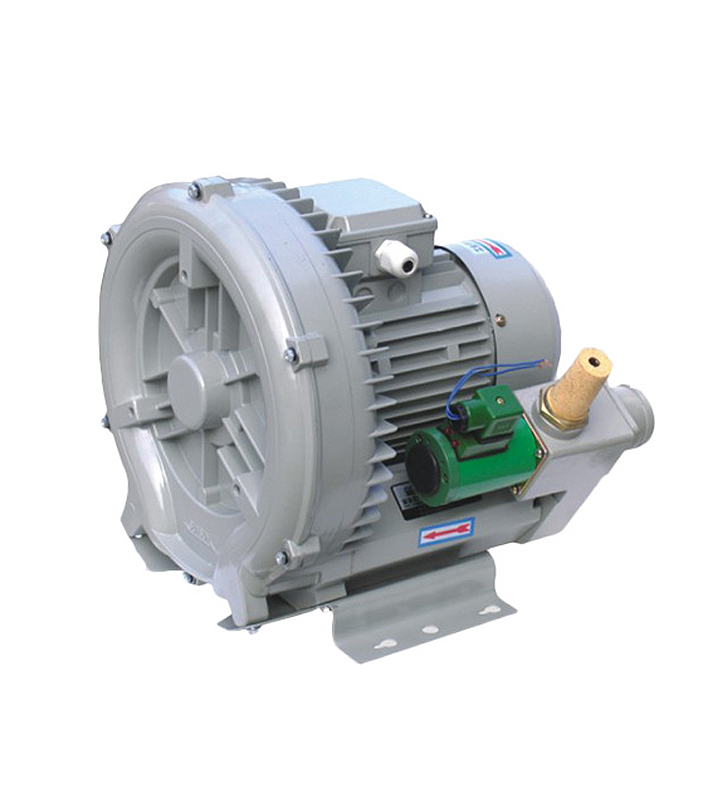
HG Series Air Pump
Content
An air pump transfers atmospheric air into a water system or another application through a controlled outlet. In aquarium and aquaculture installations, the air is commonly distributed through air stones, diffusers, tubing, manifolds, or aeration grids. The pump must overcome the resistance created by water depth, pipe length, valves, diffusers, and other components. For that reason, airflow capacity alone does not define pump performance.
Pressure is equally important. A pump with a high nominal output but insufficient pressure may not deliver the expected volume once it is connected to a deep tank or restrictive diffuser. The HG Series provides pressure ratings from 12 kPa to 22 kPa, depending on the model. This range gives users a practical selection of units for light, medium, and heavier aeration duties.
Vacuum performance is another useful specification. The listed models provide vacuum values from negative 11 kPa to negative 18 kPa. This characteristic can support applications where air extraction, suction-assisted operation, or alternating pressure requirements are involved. The inclusion of both pressure and vacuum data makes it easier for engineers and installers to evaluate the pump against the demands of a complete system.
Output is listed in cubic meters per hour. The smallest model produces 60 m³/h, while the largest models produce 165 m³/h. These figures describe the pump’s air-delivery capability under the manufacturer’s stated conditions. Actual output can vary according to back pressure, piping arrangement, diffuser resistance, altitude, temperature, maintenance condition, and installation quality. Correct system design remains important even when a pump has a generous rated capacity.
The HG Series is not a one-size-fits-all product. Its six configurations allow buyers to match the pump to the intended installation. A small commercial aquarium, a breeding system, an aquaculture tank bank, and an industrial aeration line may each require different combinations of pressure and airflow. Selecting the right model can help prevent over-sizing, unnecessary energy consumption, and insufficient oxygen transfer.
| Model | Voltage | Power | Pressure | Vacuum | Output | Pressure Limit | Weight | Dimensions |
|---|---|---|---|---|---|---|---|---|
| HG-YSB-370-C | 220V/380V/50Hz | 370W | 12kPa | -11kPa | 60m³/h | <10kPa | 12kg | 279 × 240 × 266mm |
| HG-YSB-550-C | 220V/380V/50Hz | 550W | 15kPa | -12kPa | 95m³/h | <10kPa | 13kg | 294 × 288 × 315mm |
| HG-VSB-750-C | 220V/380V/50Hz | 750W | 18kPa | -14kPa | 110m³/h | <12kPa | 14kg | 294 × 288 × 315mm |
| HG-YSB-1100-C | 220V/380V/50Hz | 1100W | 22kPa | -18kPa | 165m³/h | <14kPa | 20kg | 332 × 328 × 358mm |
| HG-QZB-750-C | 220V/380V/50Hz | 750W | 16kPa | -14kPa | 110m³/h | <12kPa | 14kg | 294 × 288 × 315mm |
| HG-QZB-1100-C | 220V/380V/50Hz | 1100W | 22kPa | -18kPa | 165m³/h | <14kPa | 20kg | 332 × 328 × 358mm |
The HG-YSB-370-C is the entry point of the range. With 370 watts of rated power, 12 kPa of pressure, and 60 m³/h of output, it is suitable for installations that require dependable aeration without the capacity of the larger models. Its 12-kilogram weight and compact 279 × 240 × 266 millimeter dimensions can simplify placement where equipment-room space is limited.
The HG-YSB-550-C increases output to 95 m³/h and pressure to 15 kPa. It remains relatively compact, with a weight of 13 kilograms and dimensions of 294 × 288 × 315 millimeters. This model may be appropriate for systems that have more diffusers, greater water volume, or longer distribution lines than those served by the 370-watt unit.
The HG-VSB-750-C provides 110 m³/h of output and 18 kPa of pressure. Its pressure rating makes it a useful option when the system presents greater resistance. The HG-QZB-750-C has the same power, output, vacuum, weight, and dimensions, but its listed pressure is 16 kPa. This distinction allows the two 750-watt models to serve different performance priorities.
The HG-YSB-1100-C and HG-QZB-1100-C are the highest-capacity models in the range. Both provide 165 m³/h of output, 22 kPa of pressure, and negative 18 kPa of vacuum. Their 20-kilogram weight and 332 × 328 × 358 millimeter dimensions reflect the larger motor and air-handling capacity. They are intended for demanding systems in which high air volume and stronger pressure are required.
Many basic aquarium air pumps are designed for small tanks and low-pressure applications. They may be effective for decorative aquariums, but they are not necessarily suitable for commercial breeding systems, large tank banks, or industrial aeration. The HG Series distinguishes itself by offering substantially greater output and a broader pressure range than typical small aquarium units.
One major advantage is scalability. Instead of replacing an entire pump system as an operation grows, users can select a model that corresponds to the size of the installation. The 370-watt and 550-watt models support smaller and medium-duty requirements, while the 750-watt and 1,100-watt models provide additional capacity. This structured range simplifies purchasing, installation planning, spare-parts organization, and future expansion.
A second advantage is the balance between airflow and pressure. Some competitors emphasize high free-air delivery while providing limited pressure information. Such specifications can make it difficult to predict performance after the pump is connected to real equipment. The HG Series publishes pressure, vacuum, output, weight, dimensions, and electrical information for every model. This greater level of technical transparency helps professional buyers compare a pump with their actual system requirements.
The series also provides dual-voltage compatibility in its listed specifications, with 220V/380V at 50Hz. This can be valuable in commercial and industrial settings where different electrical arrangements are available. Electrical compatibility must always be verified before purchase and installation, but the stated voltage range gives system designers additional flexibility compared with products restricted to one supply configuration.
Another competitive benefit is the availability of models with similar overall capacity but different pressure characteristics. The HG-VSB-750-C and HG-QZB-750-C both deliver 110 m³/h and use 750 watts, yet their rated pressures differ. This allows buyers to consider whether the application prioritizes higher pressure or a different pump configuration. A similar choice exists in the 1,100-watt class, where both listed models provide the same headline output and pressure performance.
Weight and dimensions are also clearly defined. For equipment that must be installed in a plant room, under a service platform, or beside a tank bank, physical information is essential. Buyers can evaluate lifting requirements, mounting space, pipe routing, access for inspection, and clearance around the motor before the equipment arrives. This can reduce installation delays and prevent unsuitable equipment-room layouts.
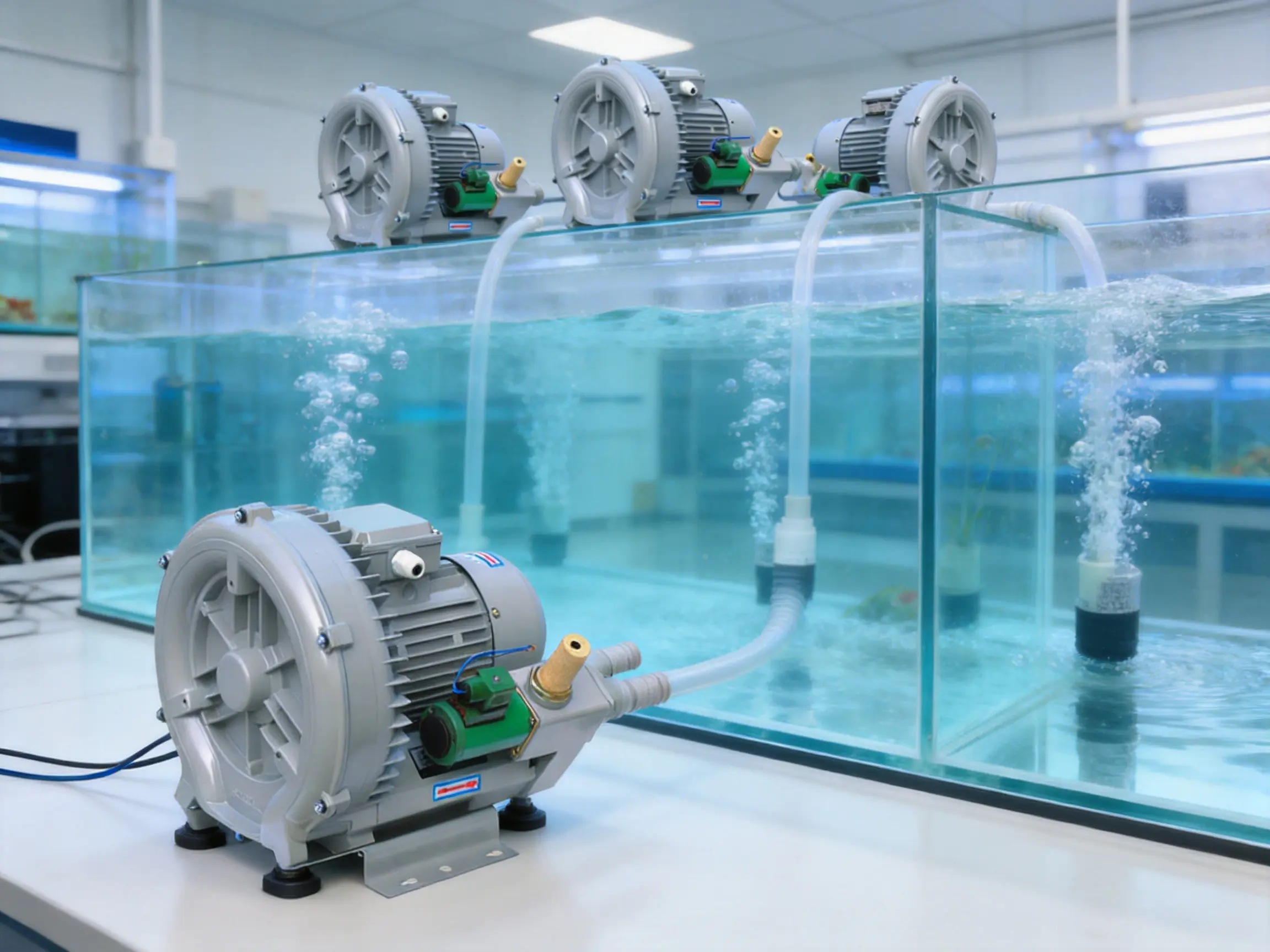
Aquarium aeration serves several purposes. It introduces oxygen into the water, promotes gas exchange at the surface, supports beneficial biological filtration, and helps maintain more uniform conditions throughout the tank. In aquaculture, adequate oxygen availability can be especially important because fish density, feeding levels, water temperature, and biological activity may produce a higher oxygen demand than that found in a lightly stocked ornamental aquarium.
The HG Series can be connected to multiple aeration points through a properly designed manifold. A single pump may supply several tanks, air stones, sponge filters, biological filters, or culture vessels. The final arrangement should account for the pressure drop across every branch. Valves and regulators can be used to balance distribution, but the pump should not be operated continuously against a blocked or improperly restricted outlet.
For larger installations, multiple pumps may be used instead of one oversized unit. A staged arrangement can provide operating flexibility, easier maintenance, and a degree of redundancy. For example, an operator may run one pump during lower-demand periods and add another during peak stocking, feeding, or treatment conditions. The HG Series model range makes this type of system planning possible because capacity can be expanded in defined steps.
Oxygenation performance depends on more than nominal air volume. Diffuser bubble size, contact time, water depth, water movement, temperature, salinity, and tank geometry all influence oxygen transfer. A pump should therefore be selected as one part of an aeration system rather than treated as an isolated component. The HG Series provides the pressure and output characteristics needed for engineers to make that system-level calculation.
In an aquarium retail environment, a dependable central air system can serve display tanks, quarantine tanks, filtration units, and breeding systems. In a hatchery or aquaculture facility, the same general principle can be applied to tanks, raceways, nursery areas, and live-feed systems. The correct model will depend on total air demand and the resistance of the installed distribution network.
The listed construction details show that the HG Series is designed as substantial equipment rather than a lightweight desktop accessory. Weights range from 12 kilograms to 20 kilograms. This mass can contribute to a more stable installation when the pump is mounted on a suitable base. A stable base is important because vibration can be transferred to pipes, fittings, shelves, and surrounding equipment if the pump is placed on an unsuitable surface.
The dimensional progression across the range is practical. The 370-watt model measures 279 × 240 × 266 millimeters. The 550-watt and 750-watt models measure 294 × 288 × 315 millimeters, while the 1,100-watt units measure 332 × 328 × 358 millimeters. These consistent product groups make it easier to prepare standard installation spaces for a selected power class.
Professional users also benefit from selecting a pump based on working conditions instead of choosing solely by motor wattage. For a short, low-resistance air line, a smaller unit may deliver an appropriate result. For deep tanks, long distribution pipes, or restrictive diffusers, a higher-pressure model may be preferable even when the required free-air output appears similar. Reviewing both the pressure and output values helps avoid an unsuitable choice.
Where the pump is used continuously, operating discipline becomes important. The installation should include appropriate ventilation, a clean air intake, correctly sized piping, secure electrical connections, and protection from water splash. The pump should be placed where routine inspection is possible. Operators should check fittings, hoses, valves, and diffusers regularly because a blocked diffuser or damaged hose can change system resistance and reduce performance.
Maintenance requirements will vary according to the application and operating environment. Dust, humidity, salt spray, chemical exposure, and high ambient temperatures may influence service intervals. A planned maintenance schedule should include inspection of air passages, electrical connections, mounting hardware, and connected accessories. If unusual noise, heat, vibration, odor, or reduced airflow appears, the equipment should be inspected by qualified personnel before continued operation.
Sensen Group Co., Ltd. was established in November 1985. Over more than three decades, it has developed activities covering aquarium pets, aquaculture machinery, industrial equipment, and related product categories. This history is significant because air pumps used in professional environments require knowledge that extends beyond basic motor assembly. The manufacturer must understand water systems, aeration requirements, equipment integration, distribution channels, and the service expectations of commercial customers.
The company reports a broad internal structure that includes a research institute, business school, quality control department, personnel and administrative information functions, and financial management. Such departments provide a foundation for organized product development and production. Research resources support product improvement, while quality-control functions help establish inspection procedures and manufacturing consistency.
The group also operates several wholly owned subsidiary corporations and maintains an import and export company. Its wider corporate organization supports procurement, manufacturing, distribution, and international customer service. For overseas buyers, a manufacturer with established export capability may offer advantages in documentation, order coordination, packaging arrangements, and communication across different markets.
Advanced manufacturing does not consist of one isolated machine or one production step. It involves a connected process that begins with product design and technical specifications, continues through component selection and assembly, and ends with inspection, packaging, and customer support. The HG Series benefits from being developed within an organization that has experience across multiple equipment categories and maintains dedicated research and quality functions.
Product development for an air pump should consider motor performance, pressure generation, airflow stability, thermal behavior, structural balance, connection design, electrical compatibility, and serviceability. Each factor can affect the user’s operating experience. A pump that produces strong airflow but overheats, vibrates excessively, or cannot be integrated with available pipework would not be a practical professional solution.
The company’s reported focus on continuous innovation is also relevant to the HG Series. Aquarium and aquaculture applications continue to evolve, with users seeking greater efficiency, improved reliability, easier installation, and more adaptable equipment. A manufacturer that serves both consumer and industrial markets can draw on a broad range of application feedback when refining its products.
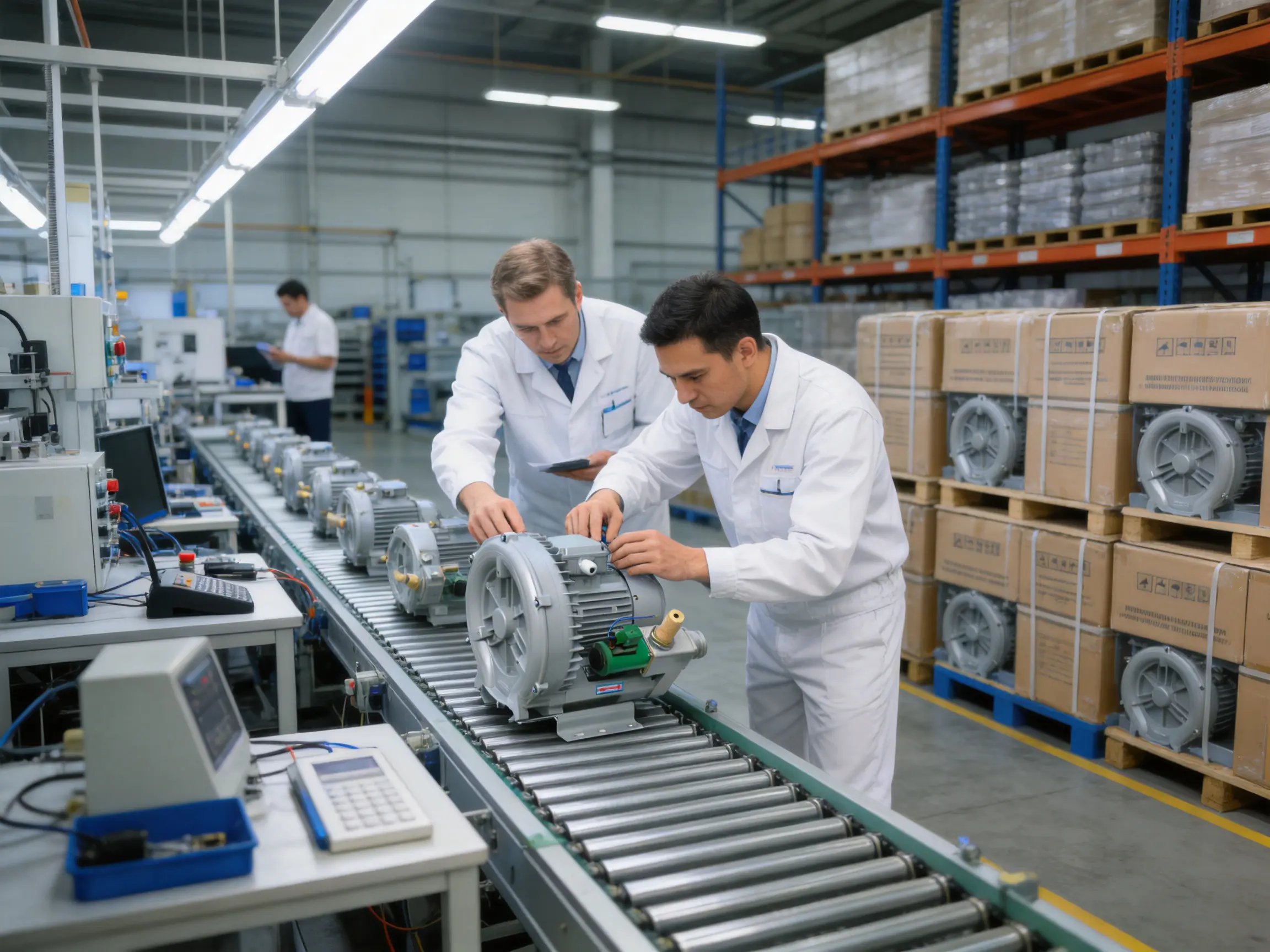
Quality control is especially important for air pumps because the equipment may operate for long periods and may support live organisms. A failure in an aeration system can affect dissolved oxygen levels, filtration performance, and water circulation. For commercial facilities, an unexpected stoppage may also cause financial losses. Consistent production and appropriate final inspection therefore form an important part of product value.
A comprehensive quality process may include incoming-material inspection, component verification, assembly checks, electrical testing, operating tests, pressure assessment, airflow verification, noise and vibration observation, and visual inspection. The exact procedures depend on the manufacturer’s internal standards and the product configuration. Buyers should request applicable technical and testing documentation when a project requires formal compliance records.
Dimensional consistency is another manufacturing advantage. The specified length, width, and height provide a reference for installation planning and packaging. When products are made to consistent specifications, distributors and end users can prepare standard mounting arrangements, replacement procedures, and warehouse storage systems. This is particularly useful for companies operating multiple facilities.
Traceability can also improve after-sales support. Recording model information, production details, shipment data, and service history allows a supplier to respond more effectively to technical questions. For larger orders, purchasers may benefit from agreeing on inspection requirements, labeling, spare-part availability, warranty terms, and operating documentation before production begins.
The manufacturer’s quality-control department, combined with its research and administrative structure, provides an organizational basis for these activities. While product performance must always be verified against the buyer’s application and contractual requirements, a mature manufacturing organization is well positioned to support repeatable production and ongoing product improvement.
The HG Series includes models rated at 370W, 550W, 750W, and 1,100W. Motor power should not be interpreted as a direct measure of total operating cost because actual electricity consumption depends on load, duty cycle, system pressure, electrical efficiency, and operating hours. Nevertheless, selecting a model that matches the application can help avoid unnecessary energy use.
Oversizing may create excess airflow that must be restricted with valves. Restricting a system without understanding the pump’s operating limits can reduce efficiency and increase stress on connected components. Undersizing can be equally problematic because the pump may be unable to achieve the required pressure or may operate continuously at an unsuitable point. A proper design balances output, pressure, duty cycle, and future capacity.
The installation should use an appropriately sized air line. A narrow or excessively long pipe creates additional resistance and may reduce delivered airflow. Multiple branches should be balanced so that one short branch does not receive most of the air while longer branches receive too little. The use of a suitable manifold, control valves, and correctly selected diffusers can improve system distribution.
Electrical work should be completed by qualified personnel. The listed voltage specification is 220V/380V at 50Hz, but the exact connection method, phase arrangement, protection devices, grounding, and local electrical requirements must be confirmed before commissioning. A suitable overload-protection device and an accessible isolation method are recommended for professional installations.
Air pumps should be located in a dry, ventilated position away from direct water contact. If the pump is installed below the waterline, the system may require a check valve or other backflow-prevention measure to reduce the risk of water entering the pump during shutdown. Flexible connectors may help limit vibration transfer, while a rigid and level base can improve installation stability.
The most direct application for the HG Series is aquarium aeration. Public aquariums, retail stores, breeders, wholesalers, and large hobbyist installations may use centralized air distribution to support multiple tanks. The available output levels allow the equipment to serve both medium-sized installations and larger tank networks when the pipework is designed correctly.
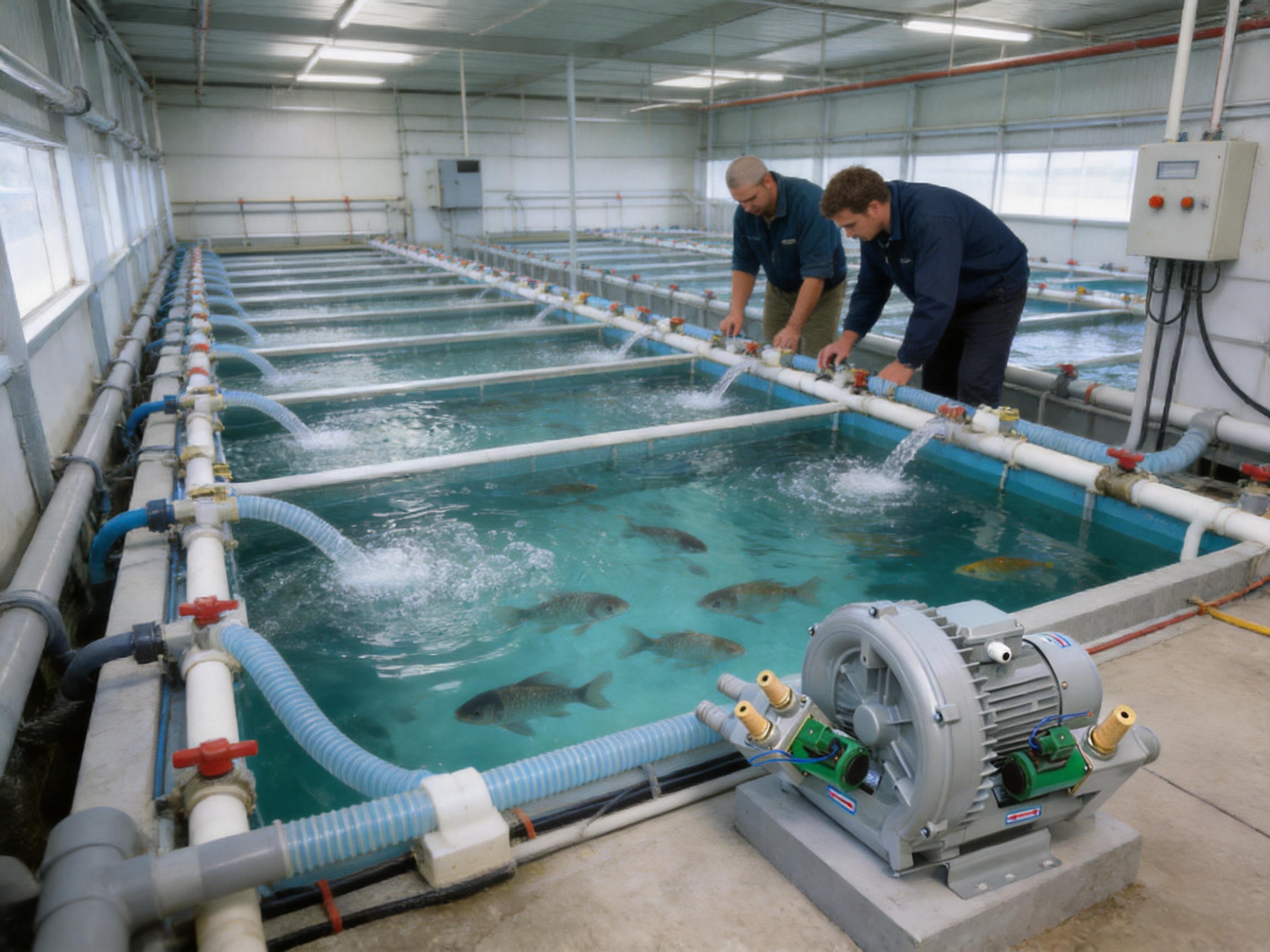
Aquaculture is another important application. Fish, shrimp, shellfish, and other aquatic organisms require suitable dissolved oxygen conditions. Aeration can be used in nursery tanks, grow-out systems, holding tanks, quarantine areas, and water-treatment stages. Because the oxygen demand of a system can change with biomass, temperature, feeding, and stocking density, the operator may select a model with adequate reserve capacity or install multiple units for staged operation.
The pump may also support biological filtration systems. Moving air through a biological filter can create water circulation and provide oxygen for microorganisms that help process organic waste. In this application, pressure must be sufficient to overcome water depth and filter resistance. The required model should be selected according to the filter design and total airflow requirement.
Water-treatment and environmental systems may use air pumps for aeration, mixing assistance, or process support. The exact suitability depends on the treatment chemistry, air quality requirements, temperature, pressure, and material compatibility. The HG Series should be evaluated by an engineer when used with corrosive gases, aggressive chemicals, or conditions outside ordinary aquarium and aquaculture environments.
Industrial equipment applications may include pneumatic assistance, air agitation, or other low-pressure air requirements. However, users should not assume that an aquarium-oriented pump is suitable for every industrial process. The gas composition, duty cycle, pressure profile, safety requirements, and regulatory conditions must be reviewed. The manufacturer or an authorized technical representative can help determine whether the intended duty falls within the product’s appropriate operating range.
Professional buyers often require more than a product with a competitive purchase price. They need predictable specifications, stable supply, clear technical communication, scalable models, and responsive support. The HG Series addresses these purchasing priorities through a defined product family and a manufacturer with experience in domestic and international markets.
A product family reduces the complexity of procurement. A distributor can stock several models that cover different customer needs without managing unrelated brands or inconsistent specifications. A project engineer can standardize on one series while selecting different power levels for different areas of a facility. An end user can also maintain a more organized inventory of replacement units and accessories.
International customers may benefit from the company’s import and export operations. Export experience can assist with commercial documents, packing requirements, shipping coordination, and communication. Each order should still confirm the destination country’s electrical standards, labeling requirements, installation instructions, warranty conditions, and any relevant certification requirements.
The company’s broader product experience is another potential advantage. Its activities cover aquarium products, aquaculture machinery, and industrial equipment, allowing it to understand how air pumps interact with filters, water pumps, tanks, control systems, and other equipment. This wider perspective can be useful when a customer requires more than an individual pump.
Sensen Group also reports a large sales and service network, including aquarium stores and market channels. A broad network can support product visibility, regional distribution, and access to application experience. For large or technically demanding projects, buyers should identify the appropriate sales or engineering contact and request a complete technical proposal rather than selecting solely from a catalog line.
The first step in selecting an HG Series model is to calculate the total required airflow. Add the requirements of all tanks, diffusers, filters, and process points that may operate simultaneously. If the system will expand in the future, include a reasonable allowance for additional demand. The final requirement should not be based only on the water volume because stocking density and diffuser design may be more influential.
The second step is to determine the required pressure. Consider the deepest water point, the pressure loss through diffusers, the resistance of valves and manifolds, and the length and diameter of the pipework. The selected pump should provide the required airflow at the actual working pressure, not merely at an unrestricted outlet.
The third step is to check electrical compatibility. Confirm whether the site uses 220V or 380V, whether the supply is single-phase or three-phase, and whether the 50Hz frequency is compatible with the installation. Electrical protection and control arrangements should be reviewed by a qualified electrician.
The fourth step is to verify the physical installation. Compare the pump dimensions and weight with the available space. Confirm that there is room for air circulation, maintenance access, pipe connections, lifting, and safe electrical isolation. A pump that fits only when newly installed but cannot be accessed for servicing is not an efficient long-term choice.
The final step is to review operating and maintenance needs. Establish inspection intervals, identify replacement parts, train operators, and document normal pressure and airflow conditions. Baseline records make it easier to recognize performance changes before they become serious problems.
Reliability is influenced by the entire installation. The air pump should be protected from moisture, excessive dust, corrosive vapors, and extreme temperatures. The air intake should remain unobstructed, and the surrounding area should allow heat to dissipate. If the equipment is installed in a small enclosed cabinet, forced ventilation may be necessary.
Backflow protection is important in water-related systems. When a pump stops, water can sometimes travel backward through a submerged air line. A check valve can help reduce this risk, although the valve itself introduces resistance and must be suitable for the required airflow. The design should also prevent condensate from accumulating in a position where it can reach the pump.
Noise and vibration management should be considered during installation. A level foundation, secure fasteners, appropriate flexible connectors, and correctly aligned piping can reduce mechanical transmission. Operators should not ignore a sudden change in sound or vibration because it may indicate a loose mounting point, blocked airflow path, worn component, or altered operating condition.
Routine inspection should include the air hose, manifold, valves, diffusers, electrical connections, and external surfaces. Diffusers can become blocked by mineral deposits, biological growth, or particulate contamination. A blocked diffuser increases resistance and can reduce the air delivered to the water. Cleaning or replacing the diffuser may restore performance without changing the pump.
Where continuous aeration is critical to livestock survival, a backup plan should be considered. This may include a standby pump, emergency air source, generator, alarm system, or automatic changeover arrangement. The HG Series can be incorporated into such a plan, but the backup configuration should be designed according to the consequences of an outage and the response time available to operators.
The HG Series should be compared with alternatives according to application, not only purchase price. Small diaphragm pumps may offer lower initial cost and lower weight, but they often serve different airflow and pressure requirements. Large industrial blowers may provide higher capacity, but they may require more space, different controls, and a larger investment than necessary for a medium-duty aeration system.
Compared with a limited single-model range, the HG Series gives buyers more precise capacity choices. This can improve system matching and reduce the need to compromise between insufficient performance and unnecessary oversizing. The defined 370-watt, 550-watt, 750-watt, and 1,100-watt classes also create a straightforward upgrade path.
The publication of both positive pressure and vacuum data is an additional comparison point. Users working with air extraction, alternating pressure, or specialized equipment can consider the pump’s capabilities more completely. In contrast, a product described only by motor wattage or free-air output may require additional technical clarification before it can be evaluated responsibly.
Another advantage is the combination of product specialization and corporate breadth. Sensen Group has experience in aquarium pets, aquaculture machinery, and industrial equipment. This may provide a more application-focused resource than a general motor supplier with no background in aquatic systems. Buyers should still request project-specific confirmation, but the manufacturer’s industry history is relevant when evaluating supplier capability.
Although the HG Series offers substantial output for aquarium and aquaculture applications, its published specifications should be treated as the basis for system design rather than a guarantee of identical performance in every installation. Airflow may change under pressure, and the performance of connected diffusers and pipework can have a significant effect on the result.
Users should avoid operating the pump outside its intended electrical and environmental conditions. The unit should not be exposed to water spray, immersed, connected to incompatible gases, or installed in an area where ventilation is inadequate. If a process involves flammable, toxic, corrosive, or unusually hot gases, a specialized pump may be required.
All installation, wiring, commissioning, and maintenance work should follow applicable safety procedures. Operators should isolate electrical power before opening equipment or servicing connected components. The pump should be installed in a location where accidental contact with rotating or energized parts is prevented.
For commercial projects, it is advisable to confirm the complete technical package before ordering. This may include product drawings, electrical diagrams, performance curves, spare-parts lists, packaging details, inspection documents, warranty terms, and recommended accessories. Such documentation helps ensure that the selected model is properly integrated into the customer’s facility.
The HG Series is intended for high-volume air delivery in aquarium, aquaculture, water-treatment, and selected industrial applications. It can supply air to diffusers, air stones, biological filters, tank manifolds, and other compatible systems.
There are six listed models: HG-YSB-370-C, HG-YSB-550-C, HG-VSB-750-C, HG-YSB-1100-C, HG-QZB-750-C, and HG-QZB-1100-C.
The HG-YSB-1100-C and HG-QZB-1100-C provide the highest listed output at 165 m³/h. Both models are rated at 1,100 watts, 22 kPa pressure, and negative 18 kPa vacuum.
The HG-YSB-370-C has the lowest listed motor rating at 370 watts. It provides 60 m³/h of output and 12 kPa of pressure. Actual electrical consumption depends on operating conditions and should be verified during system design and commissioning.
The HG-VSB-750-C and HG-QZB-750-C both list 110 m³/h output, negative 14 kPa vacuum, 14-kilogram weight, and dimensions of 294 × 288 × 315 millimeters. Their listed pressure ratings differ: the HG-VSB-750-C is rated at 18 kPa, while the HG-QZB-750-C is rated at 16 kPa.
The HG-YSB-1100-C and HG-QZB-1100-C have the same listed power, pressure, vacuum, output, weight, and dimensions. Buyers should confirm the specific structural or configuration differences with the supplier when choosing between them.
Yes, one pump can supply multiple aquariums when the total airflow requirement, manifold arrangement, pipe diameter, water depth, and diffuser resistance are correctly calculated. Valves and distribution components may be required to balance the airflow between tanks.
It may be suitable for deep tanks if the selected model provides adequate pressure at the required airflow. The system designer should calculate water-depth pressure and the resistance of the diffuser and piping before selecting a model.
No. Actual air delivery can vary with back pressure, pipe length, diffuser resistance, altitude, temperature, maintenance condition, and other factors. The rated output should be evaluated together with the pressure specification and the complete system design.
The product information lists 220V/380V at 50Hz for all six models. The exact electrical connection and phase arrangement should be confirmed with the supplier and a qualified electrician before installation.
The pump should be placed on a stable, level base in a dry and ventilated location. It should be protected from water splash and excessive dust, with sufficient clearance for heat dissipation, inspection, and maintenance. Suitable piping, valves, and backflow protection should be used where required.
The series is designed for demanding air-delivery applications, but continuous-duty suitability should be confirmed for the specific model and operating conditions. Ambient temperature, pressure, duty cycle, ventilation, and maintenance all influence service life.
Operators should periodically inspect the air intake, air lines, diffusers, valves, electrical connections, mounting points, and external condition of the pump. They should also monitor changes in noise, vibration, temperature, and airflow. The manufacturer’s service recommendations should be followed for detailed maintenance intervals.
Manufacturer experience can influence product development, quality control, technical documentation, production consistency, and after-sales support. A company familiar with aquarium and aquaculture systems may also better understand how an air pump interacts with tanks, filters, diffusers, and water-management equipment.
Sensen Group Co., Ltd. operates across aquarium pets, aquaculture machinery, industrial equipment, water pumps, air pumps, and related product categories. Buyers seeking a complete system should discuss the full application with the company or its authorized sales representative.
The HG Series Air Pump is a versatile, high-capacity solution for users who need substantially more performance than a basic aquarium air pump can provide. Its six-model range covers 370-watt to 1,100-watt power classes, 60 m³/h to 165 m³/h output, and 12 kPa to 22 kPa pressure. The availability of both pressure and vacuum specifications makes the series easier to evaluate for practical installations.
Its principal advantages include scalability, clearly published technical data, dual-voltage specification, multiple pressure levels, robust equipment dimensions, and suitability for centralized aeration systems. These characteristics can support aquarium retailers, breeders, aquaculture facilities, water-treatment projects, and selected industrial users.
The product is also supported by the experience and organizational resources of Sensen Group Co., Ltd. Founded in 1985, the company has developed businesses across aquarium products, aquaculture machinery, and industrial equipment. Its research, quality-control, manufacturing, subsidiary, and export structures provide a foundation for product development and international supply.
To obtain the best result, users should select the model according to total airflow, working pressure, water depth, diffuser resistance, electrical supply, installation space, and maintenance requirements. When correctly matched to the system, the HG Series can provide a dependable foundation for oxygenation, biological filtration, tank management, and other air-delivery duties.
Sensen Group Co., Ltd. Product specification sheet for the HG Series Air Pump.
Sensen Group Co., Ltd. Corporate information and company history materials.
Aquarium and aquaculture system design principles concerning aeration, dissolved oxygen, diffuser resistance, and air distribution.
General industrial guidance for air-pump installation, electrical protection, ventilation, backflow prevention, and routine maintenance.
Technical data supplied for models HG-YSB-370-C, HG-YSB-550-C, HG-VSB-750-C, HG-YSB-1100-C, HG-QZB-750-C, and HG-QZB-1100-C.



 English
 русский
 España
 Portugal
 عربي
عربي
 No. 61-79, Baima Street, Maao Town, Dinghai District, Zhoushan City, Zhejiang Province, China.
 0086 580 8082088 / 8081168
 0086 580 8080978
 songhua@sunsun-china.com