Modern aquarium care depends on stable water movement, dependable filtration, and equipment that can operate quietly and efficiently for long periods. The JQP-2500F Multi-Function Submersible Filtration Pump is designed for aquariums that require strong circulation, practical filtration support, and a compact submerged installation. With a rated output of 2500 liters per hour, 35 watts of power consumption, a maximum head of 2.4 meters, and a filter-style vertical body, this model offers a balanced solution for hobbyists, retailers, maintenance professionals, and aquarium project builders who need performance without unnecessary complexity.
JQP Series Multi-Function Submersible Filtration Pump JQP-2500F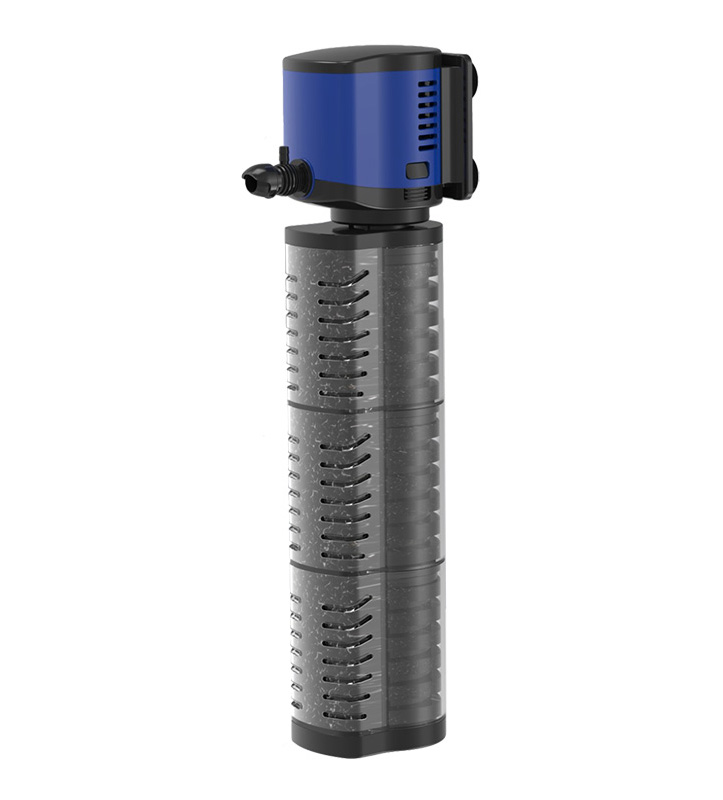
Content
The JQP-2500F belongs to a series of multi-function submersible filtration pumps developed for aquarium water circulation and filtration assistance. The “F” version is designed with a filtration structure, making it suitable for users who want a pump that does more than simply move water from one point to another. Its construction supports continuous submerged operation, while its flow output makes it appropriate for medium to large aquarium systems, display tanks, fish-holding tanks, and aquatic environments that need reliable water exchange.
This pump is specified for 110V, 220V, or 240V voltage options and 50Hz or 60Hz frequency, allowing it to suit multiple regional electrical standards. Its 35W power rating gives it the strength needed for a 2500L/h output while maintaining a practical energy profile. The 2.4m maximum head gives the pump enough lift capacity for many aquarium filtration arrangements, including internal circulation, water delivery to filtration compartments, and oxygenation-support layouts.
One of the most important advantages of the JQP-2500F is that it combines a high-output motor with a compact filtration form. Its dimensions are 96×75×380mm, and its weight is approximately 0.98kg. This makes it substantial enough to feel durable but still compact enough to install inside many aquarium layouts. The 1.8m cable length provides installation flexibility, and the 20mm hose adapter allows connection to compatible tubing systems.
Item |
Specification |
Practical Meaning |
Model |
JQP-2500F |
Filtration-style submersible pump in the JQP series |
Voltage |
110V / 220V / 240V |
Suitable for multiple international electrical markets |
Frequency |
50Hz / 60Hz |
Compatible with common regional power systems |
Power |
35W |
Balanced energy consumption for strong circulation |
Maximum Head |
2.4m |
Useful lift height for many aquarium filtration layouts |
Output |
2500L/h |
Strong water movement for medium and larger tanks |
Hose Adapter |
20mm |
Designed for compatible tubing connections |
Cable Length |
1.8m |
Provides flexible placement within typical installations |
Weight |
0.98kg |
Stable enough for submerged positioning while remaining manageable |
Dimensions |
96×75×380mm |
Vertical filtration-style shape for internal aquarium use |
Water movement is one of the foundations of aquarium health. A pump with insufficient output may leave dead zones where waste accumulates, oxygen becomes depleted, and debris settles into the substrate. A pump with appropriate flow helps suspend particles so that filtration media can capture them, spreads oxygen-rich water throughout the tank, and distributes heat, nutrients, and dissolved compounds more evenly.
The 2500L/h output of the JQP-2500F makes it a practical choice for users who require strong circulation but do not want to move into oversized industrial-style equipment. In many aquarium systems, a turnover rate of several times the tank volume per hour is preferred, depending on fish load, plant density, aquascape design, and filtration media. This model gives users a strong base for circulation planning while still maintaining moderate 35W power consumption.
Competitor pumps in a similar category often force users to compromise between flow, installation convenience, and filtration structure. Some compact pumps may be easy to place but lack the strength needed to maintain consistent circulation in a larger aquarium. Other pumps may offer high output but require external mounting, bulky plumbing, or separate filtration attachments. The JQP-2500F stands out because it is designed as a multi-function submerged filtration pump, offering circulation and filtration support in one integrated format.
The defining feature of the JQP-2500F is its multi-function concept. It is not only a water pump; it is built as a filtration pump that can assist with water purification, circulation, and tank movement. This integrated approach is useful for aquarium owners who want to reduce equipment clutter inside the tank and simplify maintenance routines.
Aquarium equipment should be strong, stable, and easy to use. Users often prefer components that can be installed without complicated assembly or specialized tools. The JQP-2500F’s submerged design allows it to operate directly in the water, reducing the need for priming procedures that may be associated with some external pumps. For many installations, this makes startup easier and helps ensure that the motor remains properly water-cooled during operation.
The filtration pump format is also helpful for supporting cleaner water. By moving water through a filtration structure, the pump assists in capturing suspended debris. While total filtration performance depends on tank size, media selection, stocking levels, and maintenance, the design gives users a functional platform for improving water clarity. In comparison with basic circulation pumps, the JQP-2500F offers added value because it contributes to the filtration process rather than only creating current.
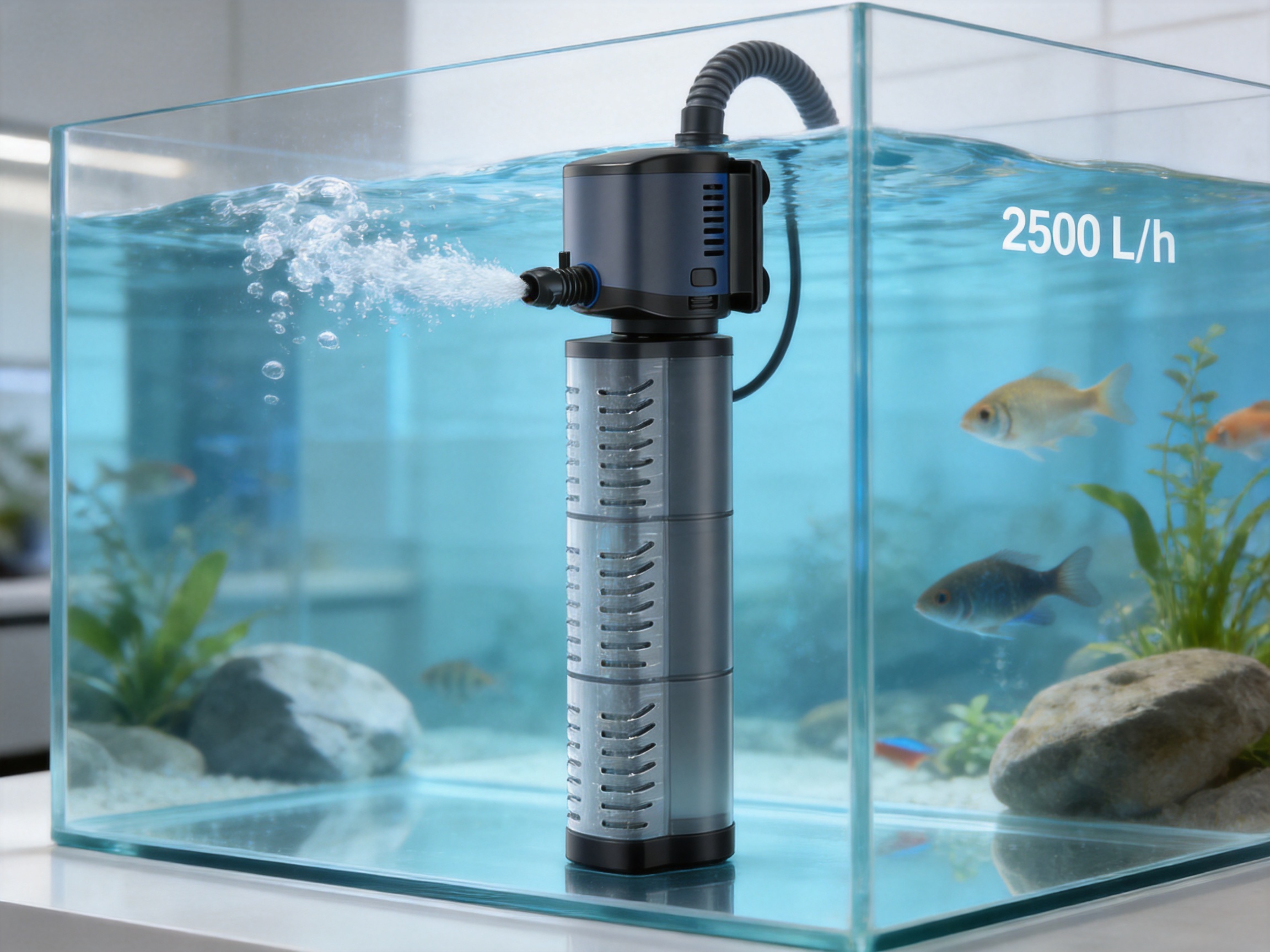
A common weakness among lower-cost competitor pumps is inefficient energy use. Some products consume relatively high wattage while delivering only moderate flow, which increases long-term operating cost and heat generation. The JQP-2500F provides 2500L/h output with 35W power consumption, creating a balanced performance profile for continuous aquarium use.
Energy efficiency is especially important because aquarium pumps often run day and night. Even small wattage differences can become meaningful over months and years. A pump that offers practical water movement while controlling power demand helps aquarium owners maintain a healthy environment without unnecessary electrical expense.
The 2.4m maximum head gives the JQP-2500F more flexibility than many smaller pumps. Maximum head is important when water must be lifted to a filter box, directed through tubing, or pushed through components that create resistance. Pumps with lower head ratings may show acceptable flow in open water but lose strength quickly once connected to tubing or filtration media.
With its 2.4m head rating, the JQP-2500F can serve a wider range of aquarium layouts. It can support internal filtration arrangements, water feature effects, circulation paths, and return flow tasks where moderate vertical lift is required. This makes the product more adaptable than competitor models designed only for short-distance water movement.
Many competitor pumps are simple bare pumps that require separate pre-filters or additional accessories to achieve filtration support. The JQP-2500F’s filtration-style body provides a more integrated approach. This can reduce the need for multiple components, save space, and simplify the visual arrangement inside an aquarium.
For retailers and maintenance professionals, an integrated filtration pump can also make product selection easier. Customers often ask for one device that can improve circulation and help maintain clean water. The JQP-2500F answers that demand more directly than a standard pump that only transfers water.
The availability of 110V, 220V, and 240V options, along with 50Hz and 60Hz compatibility, helps make the pump suitable for international markets. This is an advantage for wholesalers, distributors, and aquarium equipment suppliers who serve customers in different regions. A product platform that can be matched to local electrical requirements is easier to source, promote, and support.
Some competitor products are limited to a narrow voltage range or require separate product families for different regions. The JQP series approach simplifies international product planning and supports global distribution strategies.
The 1.8m cable length of the JQP-2500F provides useful installation flexibility. Aquarium stands, cabinets, wall outlets, power centers, and drip-loop requirements all affect where a pump can be placed. A cable that is too short may force users to rely on extensions or compromise the pump’s position. The supplied cable length supports easier installation in common aquarium setups.
The dimensions of 96×75×380mm show that the JQP-2500F uses a vertical filtration form. This shape helps the product fit inside aquariums while providing sufficient filtration body length. Competitor pumps with broad housings may take up more bottom area or interfere with aquascape layouts. The vertical form helps preserve usable horizontal space for fish, plants, rocks, driftwood, and decorative elements.
The JQP series includes multiple output levels, allowing users to choose a pump according to tank size and application. The JQP-2500F is positioned as a strong mid-to-high output filtration model. It offers significantly more flow than smaller 500L/h, 1000L/h, and 1500L/h filtration versions while remaining more compact and lower powered than larger non-filtration models in the broader series.
Model |
Power |
Maximum Head |
Output |
Hose Adapter |
Dimensions |
JQP-500F |
5W |
0.9m |
500L/h |
12mm |
65×51×215mm |
JQP-1000F |
14W |
1.4m |
1000L/h |
16mm |
76×60×288mm |
JQP-1500F |
20W |
1.7m |
1500L/h |
16mm |
87×68×370mm |
JQP-2500F |
35W |
2.4m |
2500L/h |
20mm |
96×75×380mm |
This comparison shows that the JQP-2500F is the performance leader among the listed filtration versions. It provides the highest output and maximum head in the filtration group shown, making it suitable for users who have outgrown small internal pumps but still want a compact integrated filtration device. Compared with the JQP-1500F, it increases output by 1000L/h and head height by 0.7m, giving noticeably stronger water movement for demanding applications.
In freshwater community tanks, stable circulation helps maintain oxygen levels and keeps particles moving toward filtration zones. The JQP-2500F can support aquariums with active fish populations, decorative hardscape, and moderate waste production. Its filtration format makes it useful where owners want internal support without installing a large external system.
Goldfish and similar high-waste species require stronger filtration and water movement than many small tropical fish. Although total filtration planning should include biological capacity and regular water changes, the 2500L/h flow output of the JQP-2500F can help move waste and suspended particles more effectively than lower-output pumps. The integrated filtration structure also adds practical mechanical support.
Planted aquariums benefit from consistent water movement because circulation helps distribute carbon dioxide, nutrients, and heat. However, circulation must be controlled so plants are not damaged and substrate is not disturbed. The JQP-2500F is suitable for aquascapes that need strong but manageable flow, especially when placement is planned carefully to avoid direct blasting of delicate plants.
Aquarium retailers often use multiple tanks or holding systems where reliability and ease of maintenance are essential. A pump like the JQP-2500F can be valuable because it combines water movement and filtration support in one unit. The international voltage options also help distributors and retail chains standardize product lines for different markets.
Quarantine systems and temporary holding tanks must be stable, clean, and easy to manage. The JQP-2500F can help maintain circulation and filtration support in larger temporary systems. Because it is submersible, it can be positioned directly where needed, reducing installation time when emergency or temporary setups are required.
The performance of an aquarium pump is not determined only by its specifications. Manufacturing capability, quality management, material control, product testing, and long-term engineering experience all influence how well a pump performs in real use. The company behind this product was established in 1985 and has developed through decades of work in aquarium pets, aquacultural machinery, industrial equipment, and related product fields.
This long operating history matters because pump manufacturing requires continuous improvement. Motors must be stable, housings must be accurately formed, impeller assemblies must be balanced, seals must be dependable, and electrical components must be suitable for a wet environment. A manufacturer with broad industry experience can refine these areas through accumulated production knowledge and customer feedback.
The company has built an organizational structure that includes research, business training, quality control, personnel and administrative information management, and financial management. This type of structure supports systematic product development rather than isolated assembly. The existence of a research institute indicates a focus on product improvement, while a dedicated quality control department supports consistency across production batches.
In addition, the company operates with a large production and marketing scale supported by several wholly owned subsidiary corporations and an import and export company. This scale can benefit customers because it supports supply stability, product availability, and coordinated distribution. For international buyers, a manufacturer with export experience is often easier to communicate with and better prepared to handle product documentation, packaging requirements, and regional electrical variants.
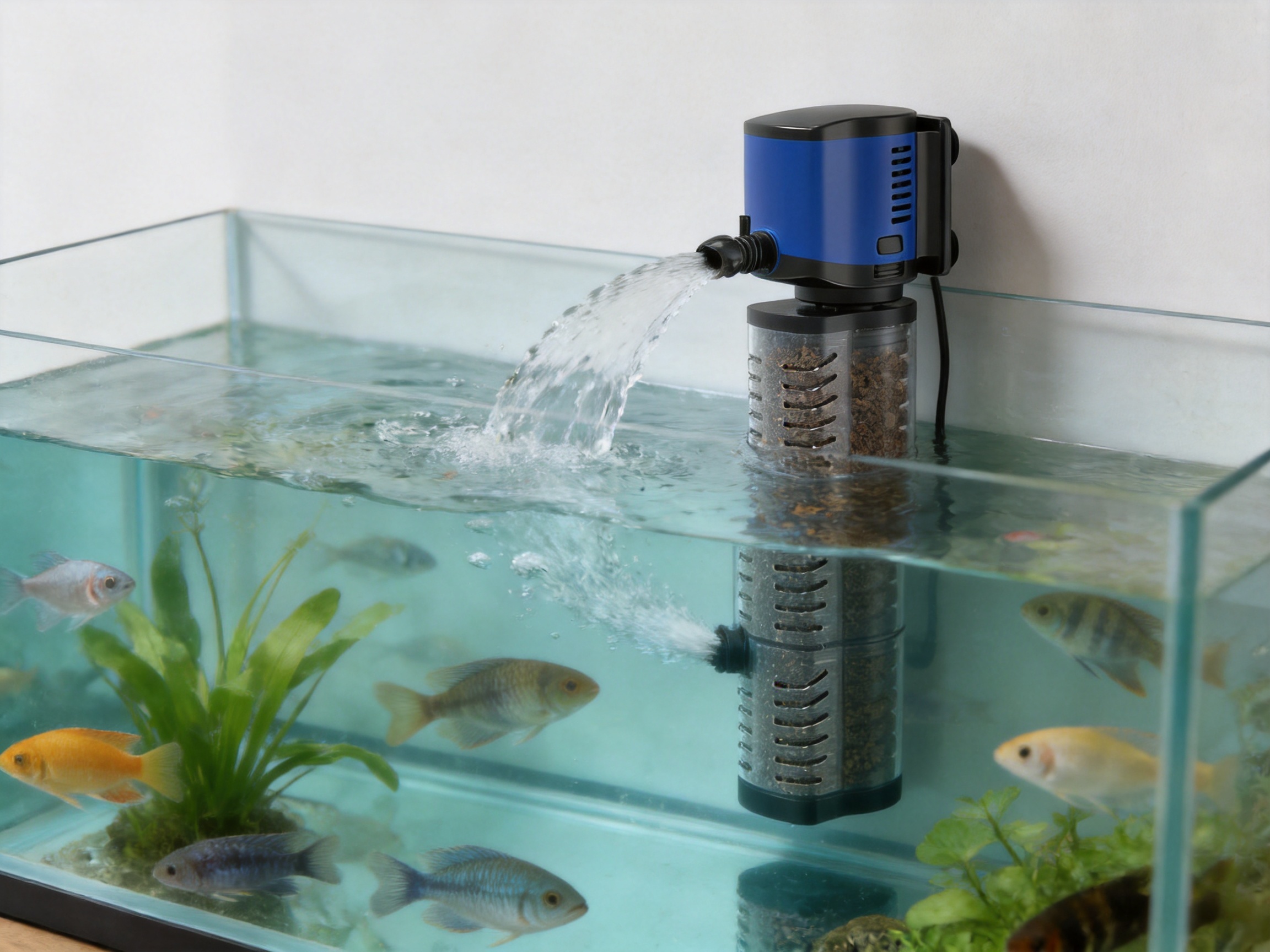
Before a pump reaches mass production, the design must be evaluated for water flow, motor performance, safety, heat dissipation, and assembly efficiency. In a product like the JQP-2500F, engineers must consider how the pump body, intake path, filtration area, impeller chamber, and outlet connection work together. The goal is to create strong water movement while reducing unnecessary flow restriction.
Engineering review also helps ensure that the pump can be manufactured consistently. A design that performs well in a prototype must still be practical for repeated production. Mold accuracy, housing fit, component tolerance, cable routing, and sealing surfaces all require careful planning. This is where experienced manufacturing teams have an advantage over small producers that may focus only on appearance or short-term cost.
Submersible aquarium pumps operate in a demanding environment. They remain in water for long periods, experience continuous vibration, and may be exposed to fish waste, minerals, plant debris, and cleaning routines. Proper material selection is therefore essential. Pump housings need to resist water exposure, maintain shape, and protect internal electrical components. Impeller components need durability and dimensional stability.
Competitor products that use inconsistent materials may develop noise, reduced flow, cracking, or premature wear. A manufacturer with strong procurement and quality systems can better control material consistency. This helps the JQP-2500F maintain performance over repeated use and supports a more dependable user experience.
Small differences in assembly quality can have a large effect on pump performance. If the impeller is not seated correctly, the pump may vibrate or produce more noise. If housing parts do not align well, flow efficiency may decrease. If a seal is not properly installed, safety and durability may be compromised. Precision assembly is especially important for submersible pumps because they must operate continuously in direct contact with water.
The JQP-2500F benefits from production discipline built around repeatable assembly steps. Consistent assembly helps ensure that each unit delivers the expected flow, starts reliably, and maintains stable operation. This is a key advantage over lower-grade competitor products where quality may vary widely from one batch to another.
A submersible pump must be electrically suitable for its rated voltage and frequency. The JQP-2500F is offered for 110V, 220V, and 240V systems with 50Hz and 60Hz compatibility, so production management must ensure that each unit matches its intended electrical specification. Verification of electrical performance helps protect users and supports reliable operation in the correct market.
Professional manufacturing processes typically include checks related to power consumption, startup behavior, operating stability, and insulation quality. These controls are important because aquarium pumps are not occasional-use devices; they often run continuously. A stable electrical design reduces operational interruptions and supports healthy aquarium conditions.
Flow testing is essential for confirming that a pump can meet its intended performance level. For the JQP-2500F, the rated 2500L/h output and 2.4m maximum head are central product values. Production testing and engineering validation help ensure that the design delivers useful water movement, not merely theoretical specifications.
In practical terms, users judge a pump by whether it moves water strongly, starts smoothly, and continues to perform after installation. Testing focused on function and flow helps reduce the chance of weak output, abnormal noise, or early failure. This gives the product an advantage over competitors that may publish attractive specifications without robust quality verification.
Final inspection helps confirm that the pump body, cable, outlet, filtration structure, and accessories are complete before shipment. Packaging control also matters because pumps can be damaged during transportation if they are not properly protected. For distributors and retailers, consistent packaging reduces after-sales issues and improves customer satisfaction.
A large manufacturer with export experience can better manage packaging requirements for different markets. This includes product labeling, model identification, electrical variant control, and protection for long-distance shipping. Such details may not be visible in the aquarium, but they influence the reliability of the supply chain and the end-user experience.
A submersible pump is simple to install because it works directly in the aquarium water. The user does not need to prime an external housing, and the pump is naturally cooled by the surrounding water. This design also reduces the risk of air lock when properly submerged and placed according to normal operating guidance.
The 20mm hose adapter supports practical water delivery through compatible tubing. This allows the user to direct flow to a desired location, connect the pump to filtration components, or create a circulation path. A secure and appropriate outlet connection is important because loose or mismatched fittings can reduce efficiency and cause installation frustration.
At approximately 0.98kg, the JQP-2500F is stable enough to stay positioned during normal use while remaining easy to handle during cleaning. The vertical body shape gives it a clear installation identity and helps users position it against the back or side of the aquarium. This is useful for maintaining a clean display appearance.
The 1.8m cable length allows the pump to reach common power arrangements more easily. Proper aquarium installation should always include safe cable routing and a drip loop. A practical cable length gives users more options for safe placement and reduces the need for inconvenient electrical adjustments.
Water quality depends on mechanical, biological, and chemical processes. A pump does not replace responsible aquarium maintenance, but it supports the movement that allows filtration systems to work. By circulating water, the JQP-2500F helps bring suspended waste toward filtration areas, reduces stagnant zones, and supports oxygen exchange at the water surface when the outlet is positioned appropriately.
Good circulation also supports biological filtration. Beneficial bacteria require oxygenated water and a continuous supply of dissolved waste compounds. When water movement is weak, some areas of the aquarium or filter media may receive less oxygen and less contact with waste molecules. A strong circulation pump improves the distribution of water through the system, helping biological processes remain more stable.
In aquariums with fish, plants, and decorations, flow patterns can be affected by hardscape, dense plant growth, and tank shape. The JQP-2500F gives users enough output to overcome many of these obstacles. Proper placement remains important, but a stronger pump provides more room for adjustment than a weak model that cannot move water effectively across the tank.
Like all aquarium pumps, the JQP-2500F should be maintained regularly. Debris, algae, mineral deposits, and fish waste can gradually reduce flow if they accumulate in the intake, filter area, impeller chamber, or outlet. Routine cleaning helps the pump maintain its rated performance and extends service life.
Before maintenance, users should disconnect the pump from power. The pump should be removed carefully from the aquarium, and components should be cleaned with aquarium-safe methods. Harsh chemicals should be avoided unless the manufacturer’s instructions allow them, because residues can harm aquatic life. Mechanical debris can usually be removed with rinsing, soft brushing, and inspection of the impeller area.
Regular maintenance also gives users a chance to check tubing, outlet connection, cable condition, and pump placement. A pump that becomes blocked or runs with restricted intake may operate less efficiently. By keeping the pump clean, users protect both the equipment and the aquarium environment.
Because aquarium pumps often run continuously, energy consumption has a direct influence on long-term ownership cost. A 35W pump used continuously provides a practical balance between circulation strength and power use. While electricity cost varies by region, users can appreciate that the JQP-2500F is not an oversized, high-wattage unit for its performance class.
Long-term value also depends on reliability. A low-price competitor pump may appear economical at first, but frequent replacement, unstable flow, noise problems, and poor support can make it more expensive over time. The JQP-2500F benefits from established manufacturing experience, series-based product development, and a company structure that includes quality control and research functions. These strengths help create value beyond the purchase price.
For distributors, a strong aquarium pump must be easy to position in the market. The JQP-2500F has several selling points: 2500L/h output, filtration function, 35W power rating, 2.4m maximum head, multiple voltage options, and a practical vertical body. These features make it suitable for a wide customer base, from home aquarium owners to maintenance service providers.
Retailers benefit from products that are easy to explain. The JQP-2500F can be presented as a filtration pump that improves water movement and helps support cleaner aquarium conditions. The specification table is clear, and the series comparison allows sales staff to recommend smaller or larger options depending on aquarium needs.
International buyers also gain from the manufacturer’s broad production and export background. A company with decades of experience and multiple business divisions can support stable supply, product continuity, and market expansion. This is especially valuable in the aquarium equipment industry, where customers expect replacement availability, consistent specifications, and recognizable series names.
Sensen Group Co., Ltd. was established in November 1985 and has developed through more than thirty years of continuous effort. The company has expanded across aquarium pets, aquacultural machinery, industrial equipment, and related fields. This background gives the company a broad technical foundation for producing pumps, filtration devices, aquarium accessories, and supporting equipment.
The company’s headquarters includes functional departments such as a research institute, business school, quality control department, administrative information management, personnel management, and financial management. This structure supports long-term development rather than short-term manufacturing. Research capability helps products evolve, training supports employee skill, and quality control helps maintain production consistency.
The company also operates several subsidiary corporations and an import and export company, creating a wide production and marketing system. This scale supports domestic and foreign markets with high-quality goods and services. For a product like the JQP-2500F, this means customers are not only buying a pump; they are buying the result of a mature manufacturing ecosystem.
The company’s development direction has emphasized industrial technicalization, marketing globalization, and brand internationalization. These goals align closely with the needs of modern aquarium equipment buyers. Products must be technically sound, suitable for international markets, and supported by reliable distribution. The JQP-2500F reflects this direction through its practical specifications, global voltage options, and aquarium-focused design.
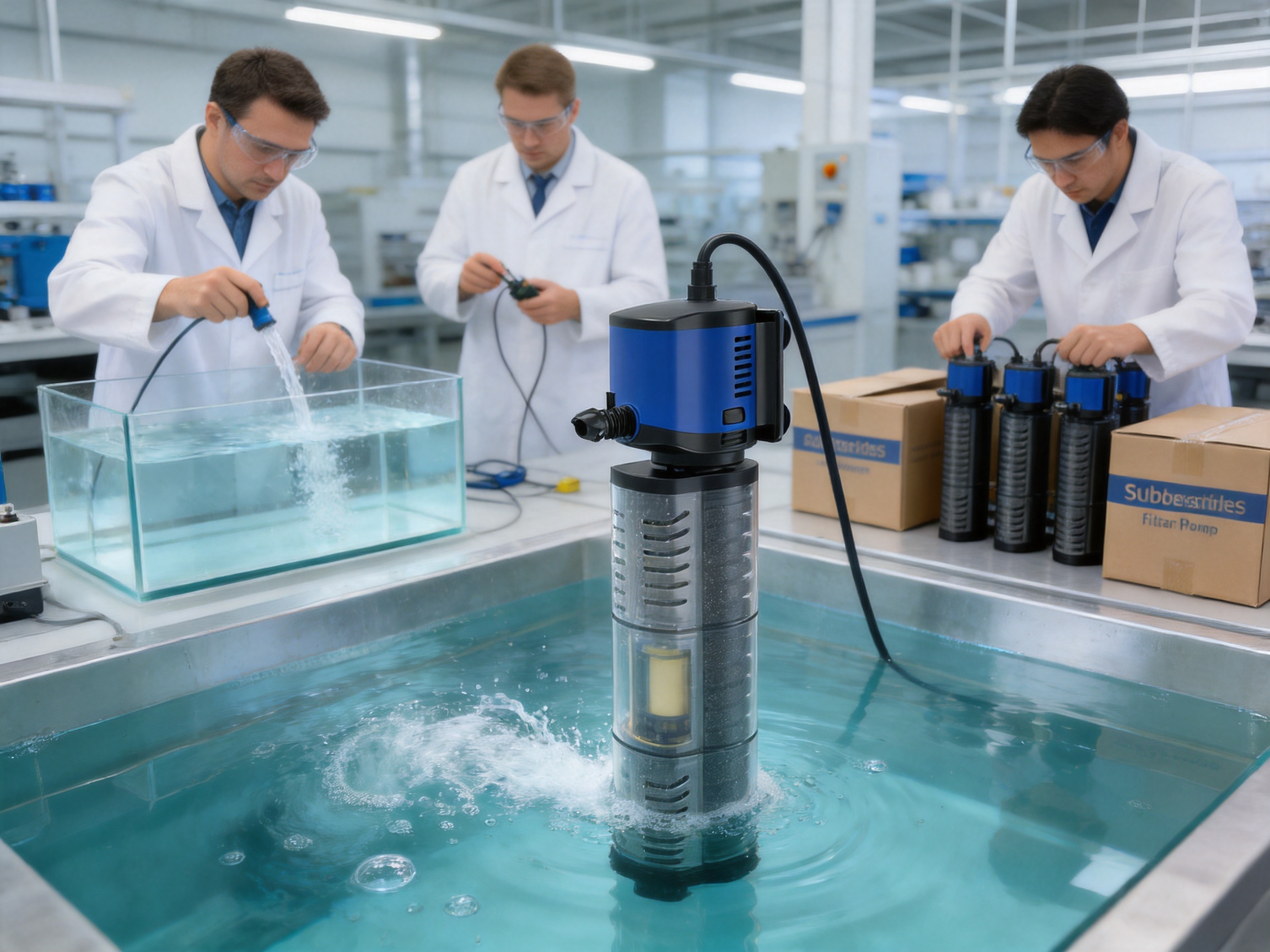
Before installation, users should confirm that the voltage and frequency of the pump match the local power supply. The pump should be fully submerged during operation and placed where water can enter the filtration area freely. It should not be buried in substrate or blocked by decorations, plants, or debris. Clear intake access is important for stable flow and motor protection.
The outlet should be directed according to the desired circulation pattern. In many aquariums, aiming flow across the tank helps reduce dead zones. In planted tanks, the outlet may need to be adjusted to avoid uprooting plants or disturbing fine substrate. In fish tanks with species that dislike strong current, the flow can be directed against glass or decorations to diffuse its force.
The cable should be routed safely with a drip loop below the outlet level before reaching the power source. This prevents water from traveling along the cable toward the electrical outlet. Users should avoid lifting or carrying the pump by the cable. Proper electrical safety practices are essential for all aquarium equipment.
After startup, users should observe the pump for stable operation. Normal water movement should begin quickly when the pump is powered. If flow is weak, the user should check for blockage, trapped air, improper placement, or tubing resistance. Regular observation during the first period of use helps confirm that the installation is suitable.
Choosing the correct pump depends on aquarium volume, fish load, filtration design, and desired water movement. The JQP-2500F is best suited for users who need more output than small internal pumps can provide. It is especially appropriate when 500L/h to 1500L/h pumps are not sufficient and when an integrated filtration-style structure is preferred.
For very small aquariums, the JQP-2500F may be too powerful unless flow is carefully managed. In those cases, smaller models in the series may be more appropriate. For larger or heavily stocked aquariums, the JQP-2500F can be part of a broader filtration plan that includes biological media, mechanical filtration, and regular maintenance.
Users should consider not only the pump’s open-flow output but also head height and tubing resistance. A pump that must push water upward or through long tubing will deliver less actual flow than its open output rating. The JQP-2500F’s 2.4m maximum head provides useful reserve capacity for many layouts, but correct planning remains important.
In a crowded aquarium equipment market, the JQP-2500F competes by combining strong circulation, filtration support, international compatibility, and manufacturing reliability. Its value is not limited to one specification. Instead, it offers a complete balance: 2500L/h output, 35W power, 2.4m head, 20mm hose adapter, 1.8m cable, and a vertical filtration body.
Competitor products may highlight one feature, such as low price or compact size, while sacrificing flow, durability, or installation convenience. The JQP-2500F is positioned as a more complete solution. It is strong enough for demanding aquarium use, practical enough for routine maintenance, and backed by a manufacturer with long industry experience.
Another competitive advantage is the availability of a complete product series. When a manufacturer offers several related models, customers can choose the correct size without switching to an unfamiliar product family. This supports brand and product line consistency for retailers and gives users confidence that the pump is part of a developed system rather than a one-off model.
A well-circulated aquarium is generally easier to maintain than a stagnant one. Water movement helps oxygen reach fish and beneficial bacteria, supports even temperature distribution, and prevents waste from settling unnoticed behind decorations. The JQP-2500F contributes to these conditions by delivering strong water movement within a compact submersible format.
Cleaner water is not only visually attractive; it directly affects fish health. Suspended particles, excess organic waste, and poor oxygen distribution can stress aquatic animals. By supporting filtration and circulation, the pump helps create a more stable environment. When combined with correct feeding, water changes, and filter maintenance, it can become an important part of responsible aquarium care.
In planted aquariums, water movement also helps prevent nutrient imbalance. Plants absorb nutrients from the water column and substrate, but stagnant areas can cause uneven distribution. A pump with sufficient output helps move nutrients and dissolved gases throughout the aquarium, supporting healthier plant growth and reducing the chance of localized water quality problems.
The JQP-2500F is designed to provide submersible water circulation and filtration support for aquariums. It moves water at a rated output of 2500L/h and uses a filtration-style structure to help support cleaner water conditions.
Suitability depends on fish load, filtration design, aquascape layout, and desired turnover rate. The 2500L/h output makes it more appropriate for medium to larger aquariums or systems that need strong circulation. Very small tanks may require a lower-output model.
The JQP-2500F is rated at 35W. This provides a practical balance between strong water output and continuous-use energy consumption.
The maximum head is 2.4m. This indicates the pump’s lift capability and helps users judge whether it is suitable for tubing, filtration compartments, or water delivery layouts that require vertical movement.
The model is available for 110V, 220V, and 240V power systems, with 50Hz and 60Hz frequency compatibility. Users must choose the correct version for their local electrical supply.
Yes. As a submersible pump, it should operate underwater. Running a submersible pump without sufficient water can cause overheating, poor performance, or damage.
The listed hose adapter size is 20mm. Users should select compatible tubing and ensure a secure connection to maintain flow efficiency.
The cable length is 1.8m. This provides practical flexibility for many aquarium installations, but users should still follow safe electrical routing practices and use a drip loop.
Cleaning frequency depends on aquarium conditions. Tanks with heavy fish load, fine debris, algae growth, or high mineral content may require more frequent maintenance. Regular inspection is recommended to keep the intake, filtration area, impeller, and outlet clear.
Compared with a basic circulation pump, the JQP-2500F combines strong flow, filtration-style design, useful head height, international voltage options, and manufacturing support from an experienced aquarium equipment producer. This makes it a more complete and practical solution for many users.
The JQP-2500F Multi-Function Submersible Filtration Pump is a strong and practical choice for aquarium users who need dependable water circulation and filtration support. Its 2500L/h output, 35W power rating, 2.4m maximum head, 20mm hose adapter, 1.8m cable, and compact vertical body create a balanced product for medium and larger aquarium applications.
Its advantages over ordinary competitor pumps come from the combination of performance and usability. It delivers more than simple water movement by offering a filtration-style format, flexible electrical options, and installation-friendly dimensions. It is powerful enough to improve circulation, practical enough for regular maintenance, and efficient enough for continuous operation.
The manufacturing strength behind the product further increases its value. With decades of industry experience, research capability, quality control systems, multiple subsidiaries, and international market development, the producer has the foundation needed to support reliable aquarium equipment. For home users, retailers, distributors, and aquarium service professionals, the JQP-2500F represents a dependable solution built for clear water, stable circulation, and long-term aquarium care.
Product specification data for JQP Series Multi-Function Submersible Filtration Pump models.
Company profile information for Sensen Group Co., Ltd., including establishment history, manufacturing fields, organizational structure, and market development direction.
General aquarium filtration principles regarding circulation, oxygenation, mechanical filtration, and biological filtration.
Standard aquarium equipment selection practices for pump flow rate, head height, submersible installation, and maintenance planning.



 English
 русский
 España
 Portugal
 عربي
عربي
 No. 61-79, Baima Street, Maao Town, Dinghai District, Zhoushan City, Zhejiang Province, China.
 0086 580 8082088 / 8081168
 0086 580 8080978
 songhua@sunsun-china.com