Modern aquatic systems depend on one invisible but essential resource: air. Whether the application is a large ornamental aquarium, a commercial fish-holding system, an aquaculture pond, a spa-style bubble bath installation, or a recirculating water treatment setup, stable aeration supports oxygen transfer, water movement, biological filtration, and overall system health. The PPL Series Bubble Bath Air Pump is designed for users who need high air volume, dependable pressure, and practical installation in demanding environments.
This article focuses on the PPL Series Bubble Bath Air Pump, an air pump product developed for high-output aeration tasks. It explains the product’s technical value, model differences, practical applications, competitive advantages, manufacturing strengths behind the product, and purchasing considerations. It also includes a Q&A section to help distributors, installers, aquaculture operators, aquarium professionals, and project buyers understand how this pump can fit into different aeration systems.
PPL Series Bubble Bath Air Pump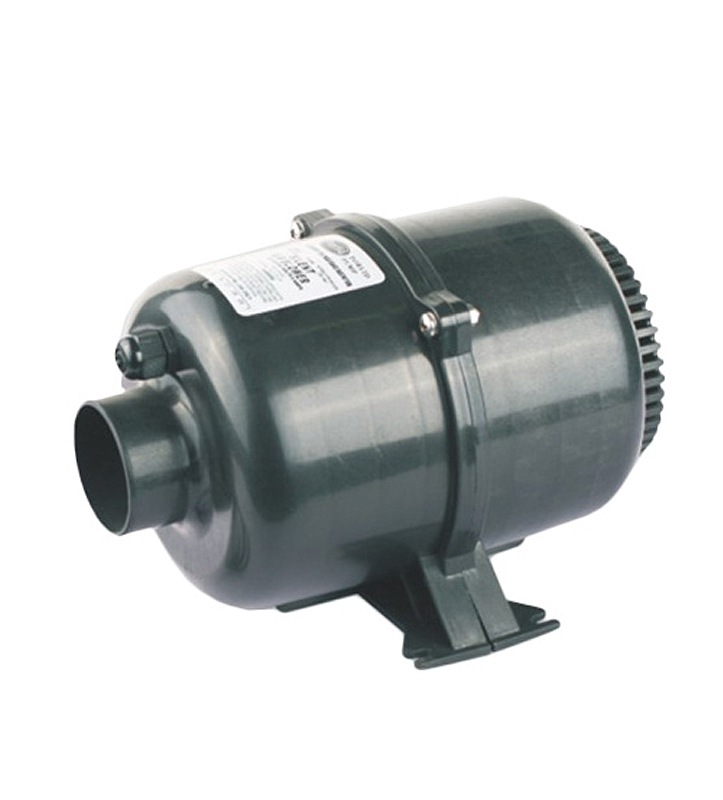
Content
The PPL Series Bubble Bath Air Pump belongs to the air pump category and is designed to deliver large volumes of air with useful pressure levels. The available models include PPL-700, PPL-900, and PPL-1500. These models are built around a 220V/50Hz power supply and offer output capacities from 120 m³/h to 145 m³/h, depending on the selected model.
Unlike small aquarium air pumps used for single tanks or decorative bubbles, this series is intended for higher-volume applications. Its air delivery capacity makes it suitable for systems where multiple outlets, deeper water levels, larger distribution manifolds, or continuous aeration demand are involved. The compact external dimensions of 277 × 208 × 184 mm across all three models help simplify installation planning, especially for equipment rooms and integrated aquatic systems.
The PPL Series is particularly valuable where strong airflow must be supplied consistently. Bubble bath equipment, aquatic holding tanks, fish farming tanks, hydrotherapy-style water systems, and aquarium equipment installations can all benefit from a pump that provides a stronger air supply than ordinary low-output units. With pressure ratings from 20 kPa to 29 kPa, the product offers a useful balance between airflow volume and air delivery force.
Model |
Voltage |
Power |
Rated Pressure |
Output |
Operating Pressure Reference |
Weight |
Dimensions L × W × H |
PPL-700 |
220V/50Hz |
700W |
20 kPa |
120 m³/h |
<10 kPa |
2.1 kg |
277 × 208 × 184 mm |
PPL-900 |
220V/50Hz |
900W |
23 kPa |
125 m³/h |
<13 kPa |
2.1 kg |
277 × 208 × 184 mm |
PPL-1500 |
220V/50Hz |
1100W |
29 kPa |
145 m³/h |
<18 kPa |
2.1 kg |
277 × 208 × 184 mm |
Aeration is often associated with visible bubbles, but its true function is deeper than appearance. Air introduced into water increases gas exchange at the water surface and throughout the water column. This process helps improve dissolved oxygen levels, supports aerobic bacteria, assists in degassing carbon dioxide, and creates circulation that prevents stagnant zones.
In aquaculture and fish-holding systems, insufficient oxygen can lead to fish stress, poor feeding response, reduced immunity, and in severe cases, mortality. In large aquariums, inadequate aeration can weaken biological filtration because nitrifying bacteria require oxygen to process ammonia and nitrite. In bubble bath or hydrotherapy environments, air delivery must be stable enough to create a consistent bubbling effect and comfortable user experience.
The PPL Series addresses these needs by providing strong air output in a compact package. Its higher air volume allows the pump to serve multiple diffusers or air stones, while the pressure capability helps air reach deeper water areas or overcome resistance from tubing and distribution components. This combination is what separates a professional-grade aeration pump from a basic decorative unit.
The most immediate advantage of the PPL Series is its high airflow capacity. With outputs of 120 m³/h, 125 m³/h, and 145 m³/h, the series is positioned for users who need more than light bubbling. Compared with many ordinary aquarium air pumps, which are designed for small tanks and limited outlet numbers, the PPL Series is better suited for large-volume aeration and multi-point air distribution.
High output is especially valuable when the system uses many air diffusers. Each diffuser creates resistance, and long air lines add further friction losses. A pump with limited capacity may produce weak bubbles at the end of the line or uneven distribution across outlets. The stronger output of the PPL Series helps maintain a more consistent aeration effect across a larger network.
Airflow volume alone is not enough. A pump must also generate enough pressure to push air through water depth, tubing, valves, manifolds, and diffusers. The PPL-700 provides a rated pressure of 20 kPa, the PPL-900 reaches 23 kPa, and the PPL-1500 reaches 29 kPa. This makes it possible to choose a model according to the resistance level of the installation.
In competitive terms, many lower-cost air pumps advertise airflow but struggle when connected to deeper tanks or denser diffusers. The PPL Series offers a stronger pressure profile, helping maintain stable operation where back pressure is present. This is particularly important for professional users who need predictable performance rather than only laboratory-style maximum airflow values.
All three models share the same listed dimensions: 277 × 208 × 184 mm. For designers and installers, this is highly convenient. A system can be designed around one footprint, and the appropriate model can be selected later according to output and pressure requirements. This simplifies cabinet design, equipment-room layout, replacement planning, and inventory management.
Competitor products with different capacities often require different mounting arrangements or space allowances. The shared dimensions of the PPL Series reduce that complication. A dealer or maintenance team can keep installation accessories standardized while still offering three performance levels.
Each model is listed at 2.1 kg. This relatively manageable weight improves handling during installation, movement, inspection, or replacement. For service technicians, lighter equipment reduces labor difficulty. For distributors, it can also help with storage and logistics compared with heavier units of similar airflow class.
Light weight does not mean the pump is intended for weak performance. Instead, it reflects a practical product structure that balances power, airflow, compactness, and usability. In real-world installations, ease of handling matters because air pumps are often placed in equipment areas where access is limited.
The series includes three options: PPL-700, PPL-900, and PPL-1500. This range gives buyers flexibility. The PPL-700 can be selected for installations requiring high airflow but moderate pressure. The PPL-900 offers a step upward in pressure and output. The PPL-1500 provides the highest pressure and airflow in the listed series, making it suitable for more demanding aeration networks.
Compared with suppliers that offer only one high-volume model, a series-based product lineup allows better system matching. Oversizing can waste energy, while undersizing can cause weak aeration. Having three choices helps the buyer select a pump closer to the actual project requirement.
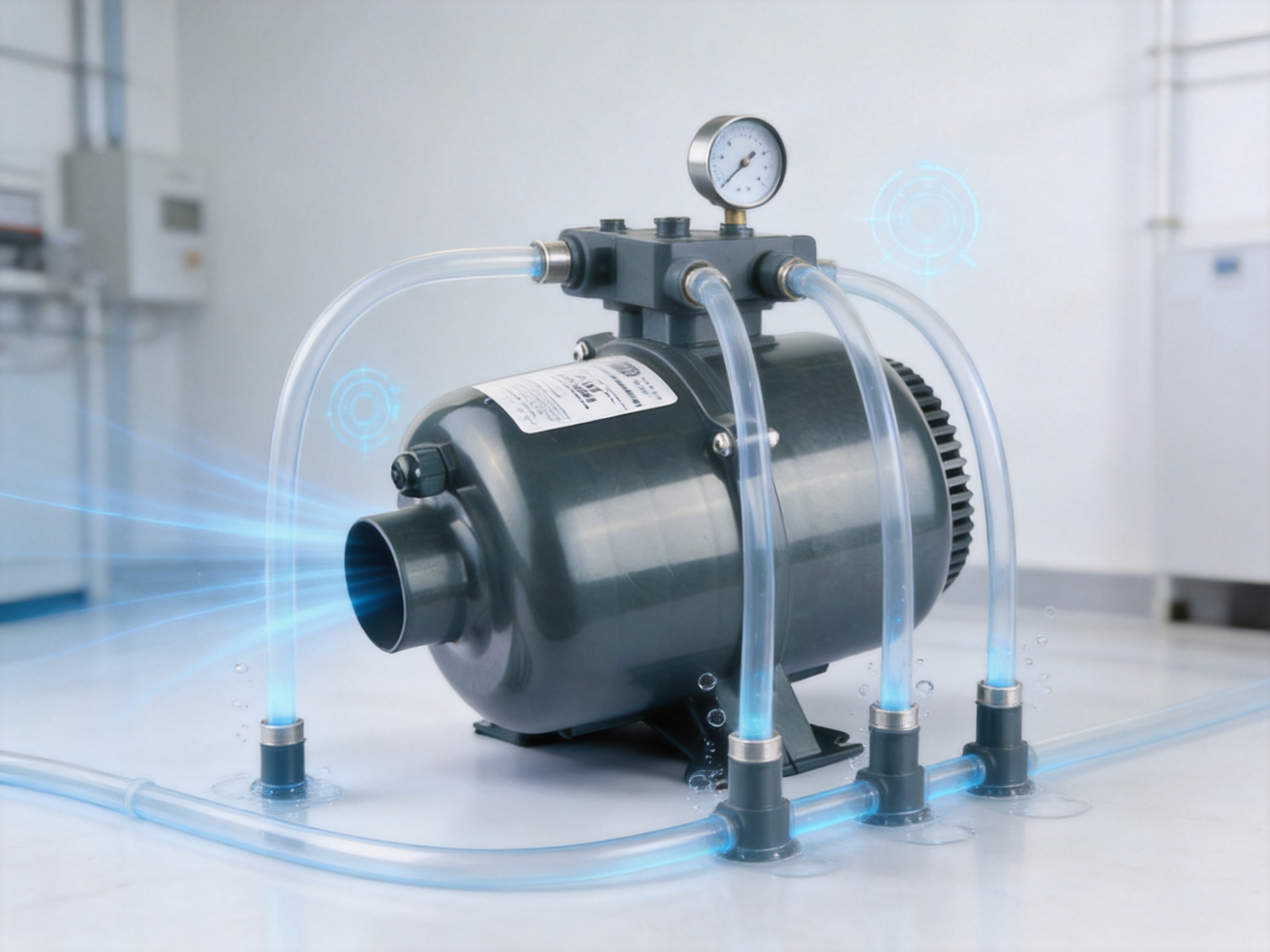
The PPL-700 is the entry model of the series, with 700W power, 20 kPa rated pressure, and 120 m³/h air output. It is appropriate for installations where substantial air volume is needed but resistance is not at the highest level. For example, it can serve large bubble features, moderate-depth aquatic tanks, or aeration systems with multiple outlets arranged efficiently.
This model is especially attractive for users who want high airflow while managing power consumption. In many installations, the PPL-700 may provide enough air without requiring the highest power model. It is a practical choice for balanced performance.
The PPL-900 increases power to 900W and rated pressure to 23 kPa while providing 125 m³/h output. This makes it suitable for systems that require slightly stronger pressure reserve. The increase in airflow over the PPL-700 is moderate, but the pressure improvement can be important when the system includes longer pipe runs, more valves, or deeper water.
For many professional users, the PPL-900 may be the middle choice that offers flexibility without moving directly to the highest-capacity unit. It can be useful where installation conditions are uncertain and some additional pressure margin is desired.
The PPL-1500 is the most powerful model in the listed range, with 1100W power, 29 kPa rated pressure, and 145 m³/h output. It is best suited for demanding systems where both airflow and pressure are critical. If the application includes deeper water columns, multiple diffuser arrays, or higher back pressure, this model provides the strongest performance option.
In competitive comparisons, the PPL-1500 stands out because it combines the highest output in the series with the strongest pressure capability while retaining the same compact dimensional footprint as the smaller models. This makes it easier to upgrade performance without redesigning the installation space.
Large aquariums require stable oxygenation and water movement. The PPL Series can support air curtains, large air stones, biological filter aeration, and multi-zone bubbling. In public display aquariums or large decorative tanks, stable aeration helps maintain water quality and visual appeal.
Although water pumps and filtration systems handle much of the circulation, air pumps provide valuable supplemental movement and oxygen support. In some systems, aeration is also used to power sponge filters, moving-bed biological media, or airlift devices. The strong output of the PPL Series makes it suitable for such tasks when scaled appropriately.
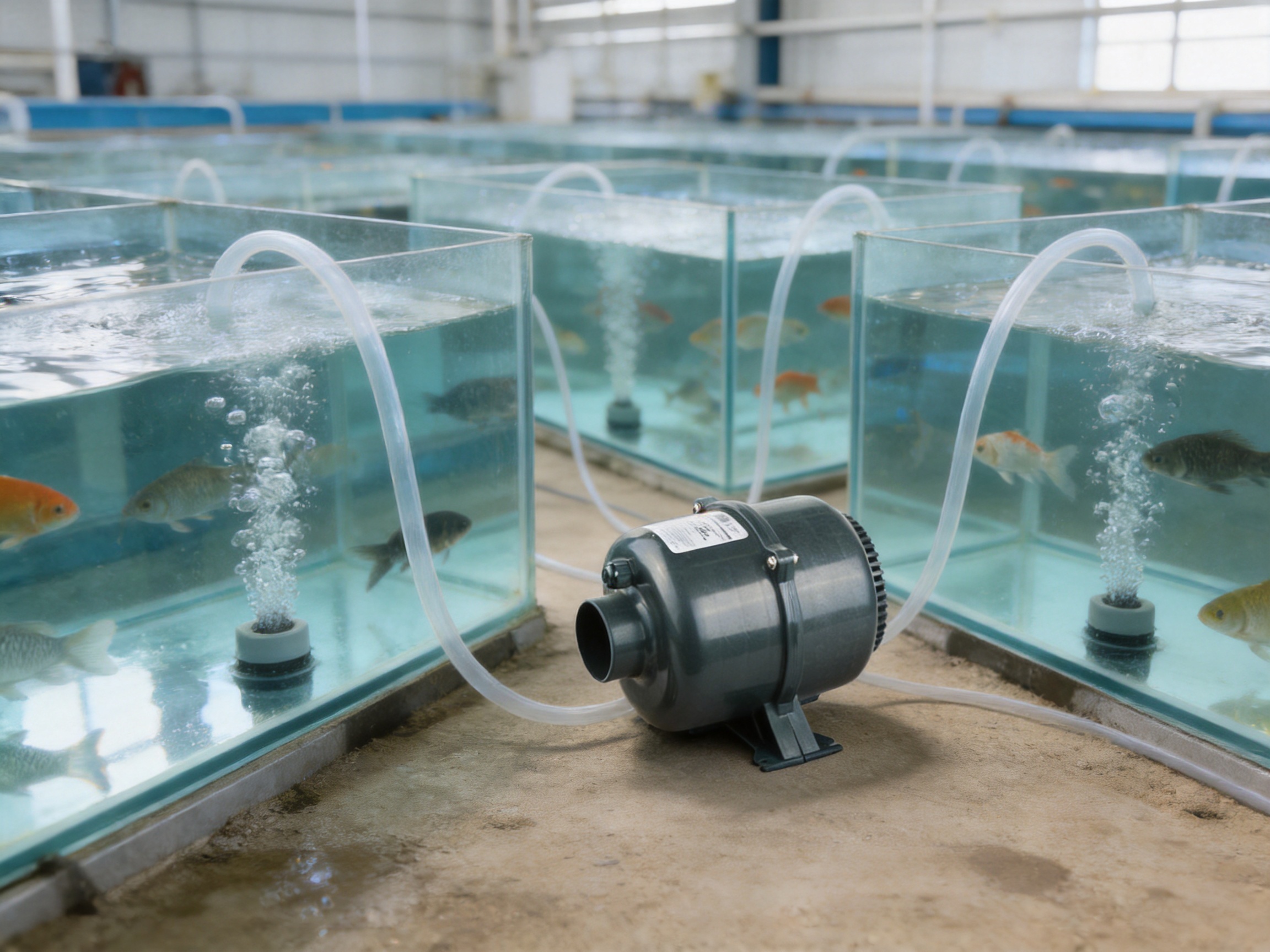
Fish-holding systems require dependable oxygen supply, especially where stocking density is high. In commercial environments, air pump reliability directly affects animal welfare and business continuity. The PPL Series provides the air capacity needed to support multiple tanks or larger holding units.
Aquaculture users often value equipment that is easy to install, powerful enough for changing biomass loads, and available in multiple models. The PPL Series meets these expectations by offering three output levels, a compact footprint, and a strong pressure range.
The product title identifies the series as a bubble bath air pump, making it suitable for applications where air bubbles are introduced into water for comfort, movement, or visual effect. In these systems, the user experience depends on stable and even bubble delivery. Weak air supply creates uneven bubbling, while unstable airflow can reduce comfort and performance.
The high output capacity of the PPL Series helps produce a more vigorous bubbling effect. The pressure capability supports air movement through distribution channels, nozzles, and water depth. For equipment manufacturers and installers, the series provides a practical option when designing bubble systems that need more power than small air blowers.
Aeration is widely used in biological filtration, wastewater pre-treatment, and recirculating aquatic systems. Oxygen supports microbial activity, which is essential for breaking down organic waste and nitrogen compounds. In moving-bed filters, air also keeps media in motion, improving contact between water, oxygen, and bacterial surfaces.
The PPL Series can be used as an air source in systems that require strong aeration for biological efficiency. Its model range allows users to match airflow with tank size, media volume, and operating pressure. Stable air delivery improves treatment consistency and reduces the risk of oxygen limitation.
Outdoor ponds and garden aquatic systems can benefit from aeration, especially during warm weather when dissolved oxygen levels naturally decline. Aeration also helps prevent stratification and improves water movement. For larger ponds, a high-output air pump can support multiple diffusers installed at different zones.
While proper weather protection and installation design are always necessary, the PPL Series can contribute to pond aeration systems where strong air supply is required. Its compact body makes it easier to place in a protected equipment box or pump room.
Many air pumps on the market are designed for home aquariums, small decorative water features, or light-duty intermittent use. These units may be inexpensive, but they often lack the airflow and pressure needed for larger systems. The PPL Series is positioned for more demanding installations where professional-level aeration is expected.
Its output range of 120 m³/h to 145 m³/h places it beyond basic aquarium accessories. This gives distributors and project buyers a product that can serve larger installations without requiring many small pumps connected together. Using one appropriately sized high-output pump can simplify system layout, reduce wiring complexity, and make maintenance easier.
Some competitors offer only one or two models, forcing customers to compromise. The PPL Series provides three clear choices. This makes it easier to select a pump based on water depth, air-line length, diffuser count, and required bubble strength. Better model matching can improve energy efficiency and system reliability.
For example, a system with moderate pressure requirements may not need the PPL-1500. Choosing the PPL-700 or PPL-900 could provide sufficient performance while controlling power use. Conversely, when pressure resistance is higher, the PPL-1500 provides the additional capability needed. This flexibility is a meaningful advantage.
Space is often limited in aquarium cabinets, equipment rooms, spa structures, and aquaculture service areas. A compact pump with strong output provides practical value. Since all three models share the same listed dimensions, installers can standardize layouts and choose the performance level without changing the physical arrangement.
This is especially useful for OEM projects and equipment manufacturers. A product line that fits the same space can be integrated into different product configurations, allowing manufacturers to offer multiple performance grades while keeping the same structural design.
Air pressure determines whether a pump can overcome resistance. In real installations, resistance comes from water depth, diffuser pore size, tubing length, manifold design, and check valves. Ordinary low-pressure pumps often lose performance quickly when connected to complex air distribution systems.
The PPL Series provides rated pressures from 20 kPa to 29 kPa. This pressure reserve supports more stable operation in systems with real-world resistance. It gives designers more confidence when planning multi-point aeration networks.
A product is not only defined by its specifications. It is also supported by the manufacturer’s production capacity, quality management, research capability, and market experience. The company behind this product was established in 1985 and has developed across aquarium pets, aquacultural machinery, and industrial equipment. This long-term industry involvement supports product consistency and market understanding.
Compared with small trading-only suppliers, an experienced manufacturing group can provide stronger support in product development, quality control, production scaling, and after-sales communication. For distributors and project buyers, this background reduces procurement risk.
The manufacturer has been active since November 1985. More than three decades of experience in aquatic and related equipment industries provides a deep understanding of water systems, pump operation, customer expectations, and product reliability requirements. This experience matters because air pumps must perform continuously and often operate in environments where failure can affect living aquatic organisms or user comfort.
Long-term manufacturing experience also supports better component selection and product refinement. Over time, product teams learn which designs are more stable, which materials perform better, and which production controls reduce defect rates. The PPL Series benefits from this accumulated knowledge.
The company has established a research institute as part of its functional structure. Research and development capability is essential in pump manufacturing because airflow, pressure, noise, heat, durability, and electrical safety must be balanced. A pump that produces strong airflow but overheats or vibrates excessively would not meet professional expectations.
R&D teams can evaluate impeller or blower structure, motor performance, housing design, air-path resistance, and safety features. They can also test how the pump performs under different back-pressure conditions. This engineering background helps transform a basic air-moving device into a product suitable for demanding applications.
The company structure includes a Quality Control Department, which is important for maintaining stable production standards. Air pumps require consistent assembly, secure electrical connections, proper motor alignment, and performance verification. Quality control helps ensure that each unit matches expected specifications and is suitable for customer use.
Typical air pump quality processes may include incoming material inspection, component testing, assembly inspection, electrical performance checks, pressure and airflow testing, noise and vibration evaluation, and final appearance inspection. While each manufacturer’s exact process may vary, a formal quality control department provides the organizational foundation needed to manage these steps effectively.
The manufacturer operates with a large production and marketing system and has developed multiple subsidiaries and trading companies. This scale allows the company to serve domestic and international markets while maintaining product availability. For buyers, stable supply is a major advantage, especially when products are used in ongoing construction projects or retail distribution networks.
Scale also supports investment in equipment, training, process improvement, and product development. Smaller suppliers may struggle to maintain consistent capacity or respond to large orders. A larger manufacturing group can better support repeat procurement, custom packaging discussions, spare parts planning, and long-term cooperation.
The company has built a headquarters structure with multiple functional departments, including research, business training, quality control, personnel administration, information management, and finance. This organizational maturity supports reliable business cooperation. Product quality depends not only on factory equipment but also on management, training, documentation, and continuous improvement.
For international buyers, working with a structured manufacturer can improve communication and reduce uncertainty. Clear internal departments make it easier to coordinate production schedules, technical questions, quality feedback, and commercial arrangements.
The company emphasizes industrial technicalization, marketing globalization, and brand internationalization. From a manufacturing perspective, industrial technicalization means that products are developed and produced with increasing engineering discipline rather than simple manual replication. For the PPL Series, this philosophy supports the creation of air pumps that address real technical requirements: airflow, pressure, compactness, reliability, and usability.
Marketing globalization also matters because products sold into different markets must meet varied customer expectations. International buyers may require stable performance, clear specifications, packaging reliability, and responsive communication. A manufacturer with global market awareness is better positioned to support these needs.
A high-volume air pump begins with design. Engineers must determine the airflow target, pressure rating, motor power, heat dissipation requirements, and mechanical structure. The PPL Series demonstrates a clear design strategy: three performance levels using a consistent housing size. This approach suggests careful dimensional planning and product platform thinking.
Engineering validation is important because airflow and pressure interact. A pump may achieve high flow at low resistance but perform poorly under back pressure. Therefore, testing across different pressure conditions is essential. The listed operating pressure references help users understand suitable working ranges for each model.
Air pump materials must withstand vibration, heat, airflow friction, and repeated operation. Housing materials should protect internal components while remaining manageable in weight. Internal parts must be selected for stable rotation, sealing, and air delivery. Electrical components must match the voltage and power requirements.
Good material selection contributes to durability and consistent performance. It also affects noise, heat dissipation, and long-term maintenance. In competitive markets, products made from poorly selected materials may initially appear similar but fail earlier under continuous use.
Assembly quality is critical for any pump. Misalignment can cause vibration, noise, energy loss, or premature wear. Electrical assembly must be secure and safe. Air-path assembly must reduce leakage and maintain output. For high-output models such as the PPL Series, precision becomes even more important because higher power and airflow magnify small defects.
A mature manufacturer can use standardized assembly procedures, trained workers, inspection points, and production records to improve consistency. This is one of the hidden strengths behind reliable equipment: the customer sees the finished pump, but the performance depends on disciplined assembly work.
Airflow and pressure testing help confirm that the pump meets its intended specification. Testing can identify issues such as insufficient output, abnormal vibration, excessive heat, or unstable operation under load. For professional buyers, performance testing is a key reason to choose a manufacturer with quality control systems rather than an unknown supplier.
In aeration projects, actual performance matters more than printed claims. A product that is tested and controlled during production is more likely to deliver predictable results once installed.
The PPL Series operates on 220V/50Hz power, with models rated at 700W, 900W, and 1100W. Electrical safety is therefore essential. Manufacturing processes should include checks for wiring integrity, insulation, grounding or protection design where applicable, and safe operation under normal conditions.
Electrical reliability is especially important in aquatic environments because water and electricity are used close to each other. Proper installation by qualified personnel and appropriate protection devices are also necessary for safe long-term use.
Air pumps must be protected during transport. Packaging should reduce the risk of impact damage, deformation, or moisture exposure. For distributors, reliable packaging reduces after-sales issues and protects product appearance. A manufacturer with broad domestic and international sales experience is better positioned to understand packaging requirements for different logistics channels.
The first step is to calculate or estimate the required airflow and pressure. Consider water depth, number of diffusers, diffuser resistance, tube length, valves, and future expansion. If the system has modest resistance and needs strong airflow, the PPL-700 may be suitable. If additional pressure margin is needed, the PPL-900 is a good middle option. For more demanding networks, the PPL-1500 provides the strongest listed performance.
A strong pump requires appropriate tubing, manifolds, valves, and diffusers. Undersized air lines can restrict airflow and increase pressure load. Poor-quality diffusers may clog or create uneven distribution. A well-designed air network allows the pump to operate efficiently and deliver balanced aeration.
Air pumps should be installed in a location protected from water splashing, flooding, and excessive humidity. Good ventilation helps manage heat generated during operation. The installation area should allow access for inspection, cleaning, and maintenance.
In aquatic systems, water backflow can damage air pumps. A suitable check valve or backflow prevention arrangement should be used where necessary. The pump should also be positioned above the water level when possible, or installed with proper anti-siphon protection.
Keep air lines as short and direct as practical. Avoid sharp bends, unnecessary fittings, and blocked diffusers. Lower resistance improves airflow and reduces stress on the pump. If multiple outlets are used, balance valves can help distribute air evenly.
Even reliable equipment requires inspection. Install the pump where technicians can reach it easily. Check air filters, tubing, connections, diffusers, and operating sound periodically. Early detection of unusual vibration, noise, or reduced airflow can prevent larger problems.
Operators should regularly check whether the pump is delivering air evenly. Weak bubbling at outlets may indicate blocked diffusers, leaking tubing, excessive back pressure, or pump performance issues. Inspecting the system helps distinguish between pump problems and downstream air network problems.
Dust and debris can reduce air intake efficiency. If the pump includes an intake filter or protective inlet structure, it should be cleaned according to operating conditions. Clean air intake supports stable output and reduces internal stress.
High-output pumps generate heat. The pump should not be covered or placed in a sealed area without ventilation. Excessive heat can reduce component life. Maintaining airflow around the pump body is a simple but important maintenance practice.
Air tubing can age, loosen, kink, or accumulate moisture. Diffusers can clog with mineral deposits or biological growth. These downstream issues increase pressure resistance and reduce visible bubbling. Regular cleaning or replacement of diffusers may be necessary depending on water conditions.
Changes in operating sound can indicate mechanical stress, blockage, or installation problems. A pump that suddenly becomes louder may be working against higher pressure or may require inspection. Early response helps protect the pump and the aquatic system.
Distributors need products that are easy to explain, easy to stock, and supported by a reliable manufacturer. The PPL Series offers clear model differentiation and consistent dimensions. This makes it easier to present to customers and manage inventory. The manufacturer’s long industry history and broad product background also support distributor confidence.
Project contractors need predictable performance and installation flexibility. The PPL Series is useful because it can support large air systems while maintaining a compact footprint. Contractors can select a model based on project size and pressure requirement, then standardize installation space around the series dimensions.
Aquaculture operators prioritize oxygen supply, reliability, and ease of maintenance. The PPL Series provides strong output for fish-holding and production systems. Operators should select the correct model according to stocking density, tank volume, diffuser type, and backup aeration strategy.
Manufacturers of bubble bath or hydrotherapy equipment need air pumps that can deliver a consistent bubble effect. The PPL Series provides high airflow and pressure options, making it suitable for integration into systems where strong bubbling performance is required. Shared dimensions across models can simplify product design.
Energy use matters in any continuous aeration system. While the PPL Series is a high-output product, correct model selection is essential for efficient operation. A pump should not be chosen only by maximum power. Instead, users should match airflow and pressure to the actual system need.
Efficient installation also reduces energy waste. Proper tubing size, clean diffusers, balanced manifolds, and reduced resistance allow the pump to work closer to its intended operating range. Maintenance is therefore part of energy management. A clean and well-designed air network can improve both performance and operating cost.
In aquatic systems, reliable aeration can also reduce losses associated with poor oxygen conditions. For aquaculture, stable oxygen supports fish health and productivity. For biological filtration, adequate aeration helps maintain water treatment efficiency. These indirect benefits can be more valuable than the pump’s electricity cost alone.
It is designed for high-volume aeration applications such as bubble bath systems, large aquariums, fish-holding tanks, aquaculture systems, biological filtration, pond aeration, and multi-outlet air distribution networks.
The available models are PPL-700, PPL-900, and PPL-1500. They differ in power, pressure, and air output while sharing the same listed dimensions and weight.
The PPL-1500 is the strongest listed model. It has 1100W power, 29 kPa rated pressure, and 145 m³/h output.
Pressure determines the pump’s ability to push air through water depth, tubing, valves, manifolds, and diffusers. A pump with insufficient pressure may produce weak or uneven bubbles, especially in deeper or more complex systems.
Yes, the high output capacity makes the series suitable for multi-outlet systems. However, the final number of outlets depends on diffuser resistance, air-line design, water depth, and selected model.
It is generally more suitable for larger or professional applications. Small home aquariums usually require much lower airflow. Using an oversized pump without proper control may create excessive turbulence.
The shared dimensions make installation planning easier. Buyers and installers can use the same space allowance while selecting different performance levels according to the system requirement.
The choice should be based on required airflow, water depth, diffuser count, air-line length, and pressure resistance. The PPL-700 is suitable for moderate resistance, the PPL-900 provides additional pressure margin, and the PPL-1500 is best for the most demanding listed applications.
The pump should be installed in a dry, ventilated location. Proper tubing, valves, diffusers, and backflow prevention should be used. The air network should be designed to avoid unnecessary resistance.
The main advantages include higher airflow, stronger pressure capability, compact dimensions, multiple model choices, suitability for professional-scale systems, and support from an experienced manufacturing organization with research, production, and quality control capabilities.
The PPL Series Bubble Bath Air Pump is a high-output aeration solution for users who require stronger performance than ordinary small air pumps can provide. With three models, outputs from 120 m³/h to 145 m³/h, rated pressure from 20 kPa to 29 kPa, and consistent compact dimensions, the series offers practical flexibility for bubble bath systems, aquaculture, large aquariums, biological filtration, and pond aeration.
Its advantages are not limited to technical specifications. The product is supported by a manufacturer with decades of experience, research capability, quality control organization, broad production scale, and a long-term focus on aquatic and industrial equipment. These strengths help provide the reliability and consistency that professional buyers expect.
For distributors, project contractors, aquaculture operators, and equipment manufacturers, the PPL Series represents a practical choice when high airflow, useful pressure, compact installation, and dependable supply background are required. Correct model selection, proper installation, and regular maintenance will allow the pump to deliver stable aeration performance and long-term value.
Boyd, C. E. Water Quality: An Introduction. Springer.
Timmons, M. B., Ebeling, J. M., Wheaton, F. W., Summerfelt, S. T., and Vinci, B. J. Recirculating Aquaculture Systems. Cayuga Aqua Ventures.
Lawson, T. B. Fundamentals of Aquacultural Engineering. Springer.
Spotte, S. Fish and Invertebrate Culture: Water Management in Closed Systems. Wiley-Interscience.
Colt, J. Computation of Dissolved Gas Concentrations in Water as Functions of Temperature, Salinity and Pressure. American Fisheries Society.



 English
 русский
 España
 Portugal
 عربي
عربي
 No. 61-79, Baima Street, Maao Town, Dinghai District, Zhoushan City, Zhejiang Province, China.
 0086 580 8082088 / 8081168
 0086 580 8080978
 songhua@sunsun-china.com