Modern aquariums, ornamental ponds, aquaculture installations, and water features all depend on reliable water movement. A pump must do more than move water from one point to another. It must provide an appropriate flow rate, overcome the vertical height of the installation, operate efficiently for long periods, connect with different plumbing systems, and remain manageable in environments where noise, vibration, and maintenance can affect both animals and users.
The ZSP Series Frequency Variation Pump is designed for this broad range of circulation requirements. It is available in multiple capacities, from the compact ZSP-2000 to the high-output ZSP-14000. The series combines several flow classes with different head heights, outlet options, cable lengths, dimensions, and power ratings. This allows system designers to select a model according to the actual hydraulic demands of a project instead of relying on a single pump size for every installation.
Its position within the Sunsun Zhizhen category reflects a focus on controllable and adaptable water circulation. While the supplied technical information does not state every operating feature of the electronic control system, the frequency variation designation indicates that the range is intended for flexible pump operation rather than a simple one-speed solution. The result is a product family suitable for installations that require different flow levels at different times, including aquarium filtration, circulation loops, water features, and other aquatic equipment systems.
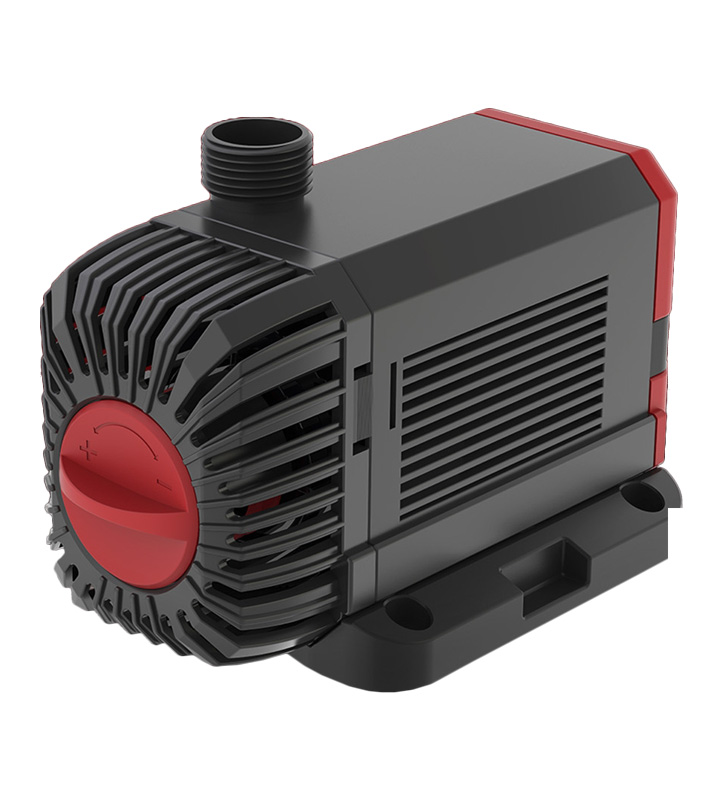
ZSP Series Frequency Variation Pump
Content
Water circulation is one of the most important functional requirements in an aquarium or aquatic installation. In a freshwater or marine tank, circulation helps distribute oxygen, transport nutrients, move suspended waste toward filtration equipment, and reduce areas of stagnant water. In a pond or water feature, the pump supports visual movement, filtration, water returns, and sometimes biological processes. In aquaculture equipment, stable flow can contribute to water quality management and operational consistency.
A pump that is too small may fail to provide the required turnover or may lose effectiveness when water must be lifted through vertical pipework. A pump that is too large may consume unnecessary energy, generate excessive turbulence, or require additional valves and bypass arrangements to reduce the output. Correct sizing therefore depends on both the desired volume of water and the total head of the installation.
The ZSP Series addresses this selection problem through a graded model structure. The nominal output begins at 2,500 liters per hour and increases through 3,000, 4,000, 5,000, 6,000, 7,000, 8,000, 10,000, 12,000, and 14,000 liters per hour. The range also provides maximum head figures from 3.0 meters to 7.0 meters. This spread is useful because two systems with similar tank volumes may still require very different pumps when their pipe length, return height, fittings, and filtration equipment are different.
The stated output figures should be understood as product specification values rather than guaranteed flow at every installation point. Actual delivered flow depends on pipe diameter, pipe length, elbows, valves, filter resistance, elevation, water temperature, and other system factors. A careful installer should compare the pump curve and project requirements before final selection. Even so, the broad ZSP model range provides a practical starting point for matching pump capacity to system design.
A conventional fixed-speed pump generally operates at one principal operating level. If the installation needs less flow, the user may need to close a valve, redirect water through a bypass, or accept the same output regardless of changing conditions. These methods can work, but they may reduce efficiency or make adjustment less convenient.
A frequency variation pump is intended to provide a more adaptable approach. By changing the operating frequency or the corresponding motor operating condition, the pump can be adjusted to suit the required circulation level. This can be useful during feeding periods, maintenance, nighttime operation, seasonal changes, or different stages of aquarium development. A lower flow setting may be appropriate for delicate livestock, while a higher setting may be needed after cleaning or when filtration resistance increases.
Variable operation can also support better system planning. Designers do not have to size every installation only for the maximum possible flow if the pump can be adjusted across a practical working range. The maximum capacity remains available when needed, while normal operation can be set closer to the actual circulation requirement. This approach may reduce unnecessary turbulence and help users avoid wasting energy through excessive throttling.
The supplied product information identifies the ZSP range as a frequency variation pump but does not provide a detailed control interface, adjustment scale, control range, or automation protocol. These items should therefore be confirmed before purchase when a project requires external control, scheduled operation, or integration with a specialized aquarium controller. The important advantage is the product concept: one pump family is designed around adaptable output rather than a single fixed operating condition.
The following table consolidates the supplied specifications. The frequency entries shown as “50H_Hz” have been presented as 50 Hz for readability. The ZSP-10000 output has been interpreted as 10,000 liters per hour because the source uses a lowercase letter in place of the number one. The power entry for the ZSP-14000 appears as “MOW” in the supplied material and should be confirmed with the manufacturer before ordering.
| Model | Voltage | Frequency | Power | Maximum Head | Output | Outlet | Cable Length | Weight | Dimensions L × W × H |
|---|---|---|---|---|---|---|---|---|---|
| ZSP-2000 | 220–240 V | 50 Hz | 18 W | 3.0 m | 2,500 L/h | 20/25 mm | 1.8 m | 0.9 kg | 175 × 70 × 115 mm |
| ZSP-3000 | 220–240 V | 50 Hz | 26 W | 3.6 m | 3,000 L/h | 20/25 mm | 1.8 m | 0.9 kg | 175 × 70 × 115 mm |
| ZSP-4000 | 220–240 V | 50/60 Hz | 32 W | 4.5 m | 4,000 L/h | 20/25 mm | 2.5 m | 1.4 kg | 190 × 78 × 109 mm |
| ZSP-5000 | 220–240 V | 50 Hz | 40 W | 5.2 m | 5,000 L/h | 20/25 mm | 2.5 m | 1.4 kg | 190 × 78 × 109 mm |
| ZSP-6000 | 220–240 V | 50 Hz | 50 W | 4.4 m | 6,000 L/h | 20/25/38 mm | 5 m | 2.1 kg | 220 × 92 × 127 mm |
| ZSP-7000 | 220–240 V | 50 Hz | 60 W | 4.8 m | 7,000 L/h | 20/25/38 mm | 5 m | 2.1 kg | 220 × 92 × 127 mm |
| ZSP-8000 | 220–240 V | 50/60 Hz | 70 W | 5.4 m | 8,000 L/h | 20/25/38 mm | 5 m | 2.1 kg | 220 × 92 × 127 mm |
| ZSP-10000 | 220–240 V | 50 Hz | 85 W | 6.0 m | 10,000 L/h | 20/25/38/45 mm | 5 m | 2.6 kg | 240 × 102 × 135 mm |
| ZSP-12000 | 220–240 V | 50 Hz | 115 W | 6.5 m | 12,000 L/h | 20/25/38/45 mm | 5 m | 2.6 kg | 240 × 102 × 135 mm |
| ZSP-14000 | 220–240 V | 50/60 Hz as listed | MOW as listed; confirm | 7.0 m | 14,000 L/h | 20/25/38/45 mm | 5 m | 2.6 kg | 240 × 102 × 135 mm |
One notable characteristic of the range is the relationship between nominal output and listed power consumption. The smaller models provide 2,500 liters per hour at 18 watts and 3,000 liters per hour at 26 watts. The mid-range models continue the progression with 4,000 liters per hour at 32 watts, 5,000 liters per hour at 40 watts, 6,000 liters per hour at 50 watts, 7,000 liters per hour at 60 watts, and 8,000 liters per hour at 70 watts.
At the upper end, the listed values reach 10,000 liters per hour at 85 watts and 12,000 liters per hour at 115 watts. These figures suggest that the series has been developed with attention to useful flow relative to electrical input. Actual efficiency varies with head height and operating conditions, so users should not compare pumps only by the nominal liters-per-hour figure. Nevertheless, the published ratings make it easier to compare available models during the planning stage.
Compared with a basic fixed-speed pump that is selected only by maximum flow, the ZSP Series offers a more structured capacity choice. The ten-model range reduces the need to choose between a pump that is clearly undersized and one that is unnecessarily oversized. This can be particularly valuable for professional aquarium installers, wholesalers, public displays, pond contractors, and maintenance companies that serve systems of different sizes.
Energy use is also important in equipment that may run continuously. Even a small difference in power consumption can become significant over a year of operation. A pump rated at 50 watts, for example, has a different operating cost from one rated at 100 watts, although the final cost depends on local electricity prices and actual running time. Frequency variation may create additional opportunities to reduce operating demand when full capacity is not necessary, but the precise savings depend on the control setting and hydraulic load.
It is important not to treat the listed power values as a direct promise of delivered efficiency under all conditions. Head height, plumbing restrictions, and maintenance status affect real performance. The strongest conclusion supported by the data is that the series supplies a broad range of published flow-to-power combinations, giving users a sound basis for comparison.
Maximum head is a critical specification for any pump that must lift water. The ZSP-2000 is listed with a maximum head of 3.0 meters, while the ZSP-3000 reaches 3.6 meters. The ZSP-4000 and ZSP-5000 provide 4.5 and 5.2 meters respectively. The larger models are rated at 4.4 meters for the ZSP-6000, 4.8 meters for the ZSP-7000, 5.4 meters for the ZSP-8000, 6.0 meters for the ZSP-10000, 6.5 meters for the ZSP-12000, and 7.0 meters for the ZSP-14000.
These figures help identify the models intended for higher returns, taller water features, and systems with greater elevation demands. However, maximum head should not be confused with useful flow at that height. At or near the maximum head, actual flow will normally be lower than the free-flow output. A complete design should consider the operating point where the pump curve intersects the system curve.
Pipe diameter is especially important. Narrow pipe creates greater friction, and numerous elbows, valves, unions, and filter chambers can further reduce delivered flow. The larger models support outlets up to 45 millimeters, giving designers more options for reducing friction in high-flow systems. The ability to use 38-millimeter and 45-millimeter connections can be a practical advantage over compact pumps limited to very small outlets.
For aquarium applications, the correct outlet size can help maintain a balanced return rate and reduce unnecessary velocity. For pond and water-feature installations, larger outlets can support more efficient movement over longer pipe runs. The installer should use compatible fittings and avoid abrupt reductions wherever possible. A carefully sized pipe network allows the pump to operate closer to its intended performance.
The ZSP-2000 through ZSP-5000 models provide 20/25-millimeter outlet options. The ZSP-6000, ZSP-7000, and ZSP-8000 add a 38-millimeter option, while the ZSP-10000, ZSP-12000, and ZSP-14000 also include a 45-millimeter option. This graduated outlet structure corresponds logically with the increasing water volumes of the range.
Multiple outlet sizes are valuable because aquatic installations are rarely identical. A small aquarium cabinet may already use 20-millimeter tubing, while a large pond filtration circuit may require a 38-millimeter or 45-millimeter return. A flexible outlet arrangement can simplify replacement planning and help reduce the number of special adapters needed during installation.
Before connecting the pump, users should verify the actual fitting standard, hose inner diameter, pipe material, clamp type, and sealing method. Nominal millimeter sizes do not always guarantee that fittings from different suppliers will connect directly. Correct mechanical support is also important. The pump should be positioned securely, with the cable routed away from sharp edges, heat sources, and areas where water could travel along the cable toward an electrical connection.
Installation should follow the applicable electrical and aquatic safety requirements for the location. The supplied voltage is 220–240 volts, and the user must confirm that the local power supply matches the product rating. Residual-current protection, grounding arrangements where applicable, splash protection, and safe isolation during maintenance should be addressed by a qualified installer.
The smaller ZSP-2000 and ZSP-3000 share dimensions of 175 × 70 × 115 millimeters and a listed weight of 0.9 kilograms. This compact format makes them suitable for installations where space is restricted, including aquarium cabinets, compact filtration compartments, and smaller circulation systems.
The ZSP-4000 and ZSP-5000 measure 190 × 78 × 109 millimeters and weigh 1.4 kilograms. The ZSP-6000, ZSP-7000, and ZSP-8000 increase to 220 × 92 × 127 millimeters and 2.1 kilograms. The three largest models share dimensions of 240 × 102 × 135 millimeters and a listed weight of 2.6 kilograms. This progression shows that the series increases physical size in stages rather than requiring a completely different form factor for every output level.
Shared dimensions across several models can simplify equipment planning. A manufacturer, installer, or service organization can design a cabinet around a model group and select the required capacity within that group. Replacement logistics may also be easier when related models use similar physical envelopes. Clearance should still be provided around the pump for connection, inspection, cleaning, and removal.
Compact size is not merely a convenience. It can reduce the amount of cabinet space occupied by mechanical equipment and leave more room for filtration media, valves, controllers, and service access. In retail aquarium installations, a smaller footprint may also improve the appearance of the display and reduce the visual impact of the technical equipment.
The cable length is 1.8 meters for the ZSP-2000 and ZSP-3000. It increases to 2.5 meters for the ZSP-4000 and ZSP-5000. The ZSP-6000 through ZSP-14000 models are listed with 5-meter cables. This arrangement reflects the likely installation context of each size group.
Smaller aquarium systems often place the pump and electrical connection close together, so a shorter cable can be sufficient and may be easier to organize. Larger ponds, display systems, and equipment rooms may require the pump to be positioned farther from the power source or controller. A 5-meter cable can offer additional flexibility during layout planning.
Users should not extend or modify the cable without confirming that the work is permitted and safe. Cable routing must protect against abrasion, immersion beyond the product’s intended design, heat, compression, and accidental pulling. The cable should not be used to suspend the pump. Any controller or electrical accessory should be compatible with the specified voltage and the pump’s operating requirements.
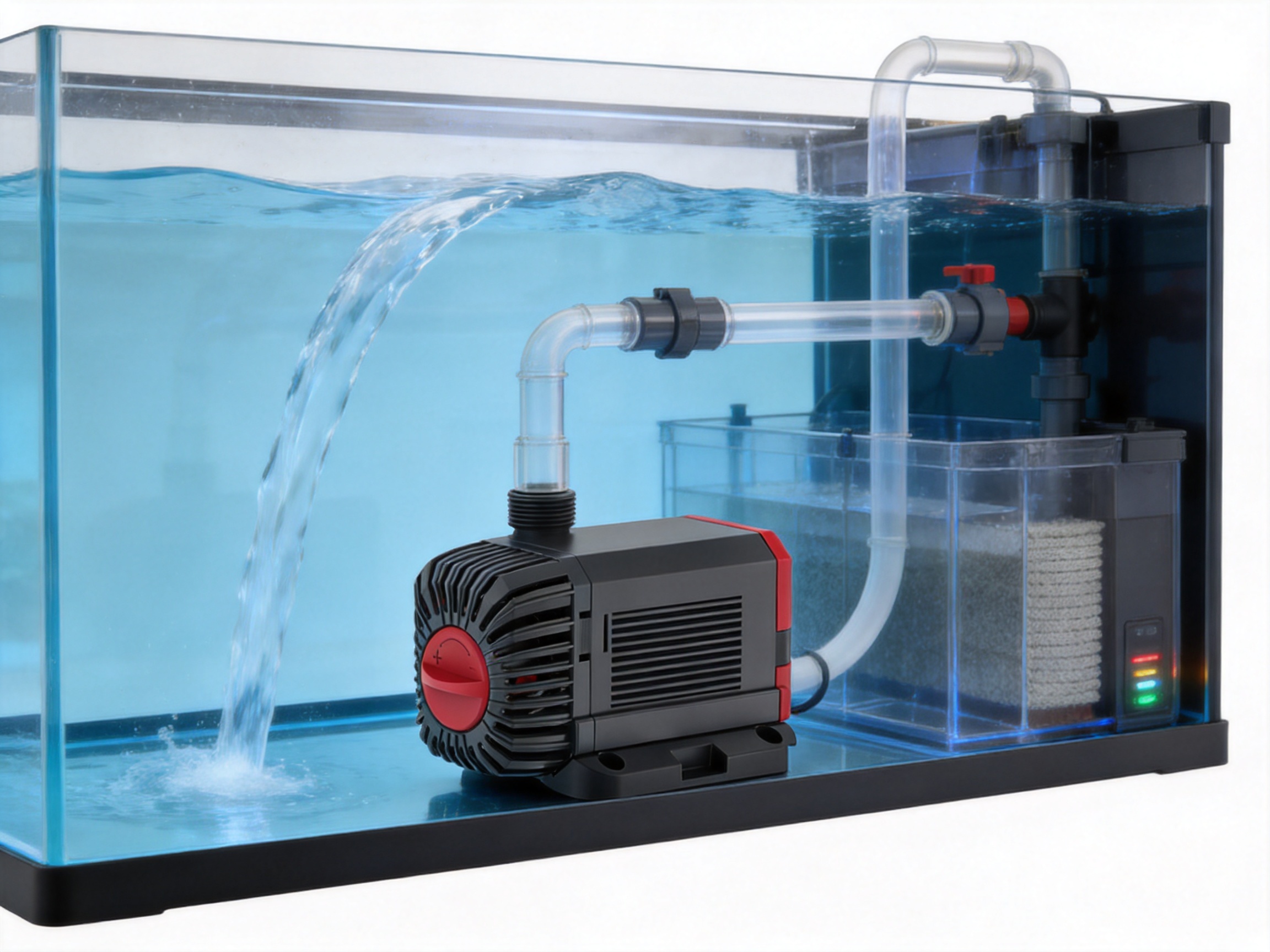
The ZSP Series can be considered for sump returns, external filtration circuits, wet-dry filter systems, and other aquarium arrangements where water must be moved between compartments. The available outputs allow the user to match pump capacity to aquarium size, filtration resistance, and desired turnover. The variable-operation concept can be useful where the aquarist wants to alter circulation after feeding, during acclimation, or when livestock requirements change.
In a reef aquarium, flow must be coordinated with wave pumps, skimmers, reactors, and overflow capacity. A return pump that is too powerful for the overflow can create unstable water levels or excessive noise. A model with adjustable operation may give the user more control over the relationship between return flow and the rest of the system. In a freshwater planted aquarium, a gentler setting may reduce disturbance to plants and small fish, while a higher setting can assist filtration after maintenance.
Pond systems often require greater flow and higher head than standard aquariums. Long pipe runs, waterfalls, biological filters, and elevated returns can create substantial resistance. The upper ZSP models, with outputs up to 14,000 liters per hour and listed maximum heads up to 7.0 meters, are suited for consideration in larger circulation designs.
Pond designers should calculate total dynamic head rather than relying on vertical height alone. A waterfall may look relatively low, but the associated pipe length and fittings can significantly affect the pump operating point. Choosing a pump with a larger outlet and adequate head capability can help maintain useful flow without forcing water through undersized pipework.
Fountains, streams, decorative cascades, and exhibition water features often require a carefully controlled visual effect. Full output may be needed for a large cascade, while a lower setting may be preferable for a quieter or more restrained presentation. Frequency variation may give operators the ability to change the appearance without replacing the pump.
Water features also benefit from appropriate installation planning. Intake protection should be used where debris or animals may enter the system. The pump should be accessible for cleaning, especially in outdoor environments where leaves, sediment, algae, and organic matter can restrict the inlet or impeller area.
The company information describes activity in aquarium pets, aquacultural machinery, and industrial equipment. Within these broader fields, a multi-model pump family can support circulation loops, holding systems, water treatment equipment, and specialized machinery. The correct application depends on fluid quality, temperature, solids content, duty cycle, and the specific requirements of the installation.
Where the water contains heavy solids, abrasive particles, chemicals, or unusual additives, the installer should confirm material compatibility and operating limitations before use. The supplied specifications establish the electrical and hydraulic ratings, but they do not state a universal suitability for every industrial liquid. Professional assessment remains necessary for demanding applications.
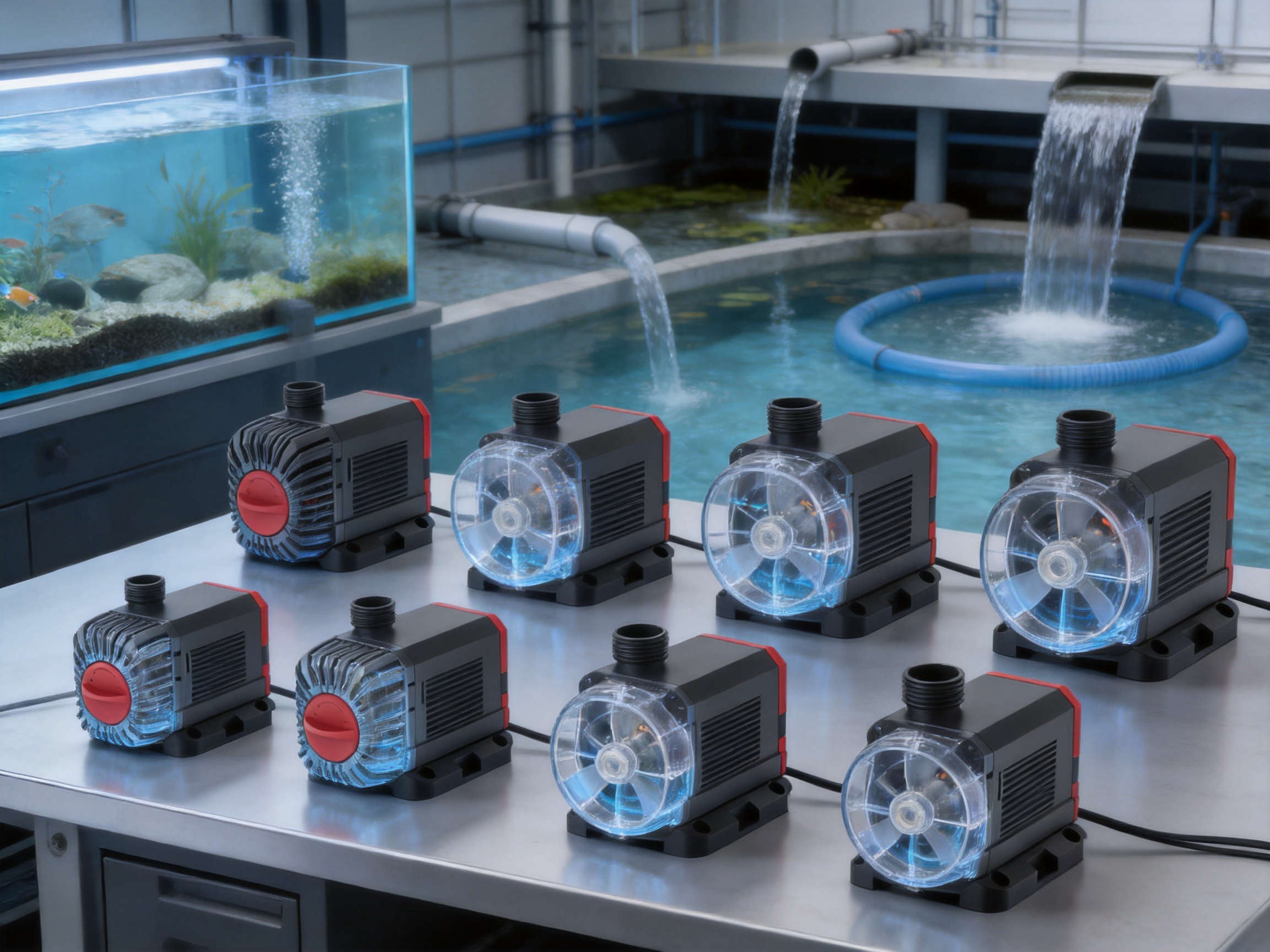
The most important competitive advantage of the ZSP Series is its combination of model variety and frequency variation. Many basic pumps compete primarily on a single headline flow number. That approach can make selection difficult because it does not address how the pump will perform at different head heights or operating conditions. The ZSP range offers ten nominal capacity levels, allowing the user to choose a more appropriate starting point.
Another advantage is the inclusion of multiple outlet sizes. Smaller competing pumps may be limited to one narrow connection, requiring adapters or forcing the installer to use restrictive tubing. The ZSP models extend outlet options as capacity increases, including 38-millimeter and 45-millimeter choices in the higher-output range. This can support better hydraulic design and reduce the risk of creating unnecessary friction.
The published maximum head values are also useful for comparison. A pump with a high free-flow output but a low head capability may not perform well in a raised return system. The ZSP Series provides head figures for every model, making the product information more relevant to real installation planning. The range reaches 7.0 meters at the upper end, which can be valuable for taller or more resistant circulation systems.
The staged physical design is an additional practical benefit. Several models share the same dimensions and weight, which can simplify cabinet planning and product substitution within a capacity group. A professional installer may be able to standardize the available mounting space while selecting different models according to flow requirements.
The longer cables on larger models can reduce layout limitations in larger systems. Although cable length alone does not determine pump quality, it is an important installation detail that is sometimes overlooked in basic product comparisons.
Finally, the product is supported by a company with a long operating history and a broad manufacturing and business structure. The supplied company information states that the group was established in November 1985 and has continued developing products across aquatic, industrial, and related equipment sectors. This background can be advantageous to distributors and professional buyers seeking a supplier with experience beyond a single product line.
The company information describes a large organizational structure that includes research, quality control, personnel and administration, finance, education, import and export, and multiple subsidiary companies. Such a structure can support product development and manufacturing continuity more effectively than a small operation focused only on trading finished goods.
The stated presence of a research institute is particularly relevant to pump development. A frequency variation pump requires attention to motor behavior, hydraulic design, heat management, electrical compatibility, sealing, vibration, and long-term operating stability. Although the supplied material does not provide laboratory test results or specific engineering certifications, an internal research function can help coordinate these areas during product development and refinement.
A dedicated quality control department is another important strength. Pump production involves multiple stages where quality must be managed: incoming materials, motor and impeller components, housing assembly, cable installation, sealing, electrical testing, hydraulic testing, packaging, and final inspection. A formal quality function can establish procedures for checking these stages and identifying problems before products enter the market.
The company’s reported subsidiaries in different regions also suggest a broad production and distribution network. The supplied information names operations associated with Zhoushan, Zhejiang, Jiangsu, Chongqing, Zhongshan, Tianjin, and other locations. A distributed industrial structure can provide access to different manufacturing resources, regional expertise, logistics channels, and service capabilities. Buyers should still request current factory, warranty, and production information for the specific model and order.
The group also describes an import and export company and an established sales network. For international customers, this may support documentation, shipping coordination, export procedures, and communication with distributors. These commercial capabilities are relevant when aquarium equipment is purchased for overseas markets where product labeling, voltage requirements, packaging, and after-sales service must be managed carefully.
The company profile emphasizes continuous innovation across aquarium pets, aquacultural machinery, and industrial equipment. For a pump manufacturer, innovation should be understood as more than adding new model numbers. It can include improved motor efficiency, better hydraulic geometry, more useful control options, quieter operation, easier maintenance, improved component consistency, and better adaptation to different system types.
The ZSP Series itself illustrates a product-development approach based on range coverage. Instead of producing only one general-purpose pump, the series provides multiple outputs and head levels. This gives users more opportunity to choose a model that matches the application and gives distributors a coherent product family to present to the market.
Innovation also involves listening to different user groups. Home aquarists may prioritize compact size and manageable flow. Aquarium stores may need reliable continuous circulation and standardized replacement options. Pond contractors may focus on head height, outlet diameter, and cable reach. Aquaculture operators may need stable operation and service support. A broad company structure can help bring feedback from these markets into future product planning.
Professional installation begins with a complete hydraulic calculation. The required flow should be identified first, followed by the vertical lift, horizontal pipe distance, fittings, valves, filters, and any other restrictions. The selected model should have enough capacity to deliver the required flow at the calculated operating head, not merely at zero head.
Pipe sizing should be considered at the same time as pump selection. If a high-output pump is connected to a long run of undersized tubing, friction can reduce performance and increase the energy required to achieve the desired circulation. The larger outlet options of the upper ZSP models give installers more flexibility, but those options should be used with a suitably designed pipe network.
The pump intake should remain clear and should be protected from large debris. In aquarium systems, pre-filtration may be needed to prevent media fragments, plant material, or other objects from entering the pump. In outdoor ponds, an intake screen or suitable pre-filter can reduce blockage risk. The protection method should not itself create excessive resistance.
Service access must be planned before the system is filled. The pump may require periodic inspection and cleaning, particularly in systems with high biological activity or suspended particles. Valves or unions can make removal easier, although the final arrangement must remain watertight and mechanically secure.
Noise and vibration should also be addressed. The pump should be installed on a stable, appropriate surface and should not be pressed against cabinet walls or pipework. Plumbing should not place excessive mechanical strain on the pump outlet. Flexible connectors, when compatible with the system, may help isolate vibration and simplify service.
Electrical installation should be completed by a qualified professional when required by local regulations. The 220–240-volt rating means that regional compatibility must be checked before use. The pump must be isolated from power before maintenance, and the installation should be designed to prevent water from reaching electrical sockets, plugs, controllers, or extension connections.
Regular maintenance is essential for preserving flow and reducing operating stress. Even a well-designed pump can lose performance when the intake, impeller, outlet, or connected filter becomes obstructed. A maintenance schedule should be based on water quality, debris levels, operating hours, and the consequences of reduced circulation.
Inspection should begin with the intake area. Remove leaves, algae, sediment, and other material that can restrict water entry. Check the outlet and connected pipework for blockages. If the system uses a filter, inspect the filter media and clean it according to the system’s biological and mechanical requirements. Excessive cleaning of biological media may disrupt beneficial bacteria, so maintenance should be planned rather than performed indiscriminately.
Unusual noise, vibration, heat, intermittent operation, or a noticeable decline in flow should be treated as a reason for inspection. Possible causes include debris around the impeller, trapped air, a blocked pipe, a damaged fitting, insufficient water level, or electrical problems. Users should not continue operating a pump under abnormal conditions without identifying the cause.
The frequency variation function should be used thoughtfully. A lower setting may reduce flow and energy demand, but it does not remove the need to maintain adequate oxygenation, filtration turnover, or temperature distribution. A higher setting may improve circulation but could increase turbulence, noise, or stress on livestock. The ideal setting is the one that supports the biological and mechanical needs of the complete system.
Replacement parts and service procedures should be confirmed with the supplier or distributor. The supplied material does not list individual service components, warranty terms, impeller construction, ingress protection classification, or detailed repair instructions. These details are important for professional maintenance planning and should be obtained before deployment in critical installations.
The ZSP-2000 and ZSP-3000 are appropriate starting points for smaller systems that need compact pumps, modest flow, and maximum heads of 3.0 or 3.6 meters. Their 1.8-meter cables and 20/25-millimeter outlets suit installations where the equipment area is relatively close to the power and plumbing connections.
The ZSP-4000 and ZSP-5000 provide a step up in both flow and head, with maximum heads of 4.5 and 5.2 meters. Their 2.5-meter cables and 20/25-millimeter outlets make them suitable for medium-sized arrangements where the system needs additional lifting capability.
The ZSP-6000, ZSP-7000, and ZSP-8000 form a useful middle-to-large capacity group. They provide 6,000 to 8,000 liters per hour, include 38-millimeter outlet options, and use 5-meter cables. These characteristics may be helpful for larger aquariums, pond filters, water features, and systems with more demanding equipment layouts.
The ZSP-10000, ZSP-12000, and ZSP-14000 are the highest-capacity models listed. They support outlet options up to 45 millimeters and provide maximum head ratings from 6.0 to 7.0 meters. These models should be considered for large circulation loops and higher-flow applications, with final selection based on the actual pump curve, system head, and confirmed electrical data.
Because the supplied information does not include detailed pump curves, noise ratings, controller specifications, duty classifications, or protection ratings, buyers should request those documents for applications where these factors are decisive. A good product selection combines the published basic specifications with project-specific verification.
A coherent product range has commercial value. Distributors can stock several models that cover different customer requirements while maintaining a recognizable series structure. Retail staff can compare capacities using consistent specifications such as output, head, power, outlet, cable length, and dimensions. This can make product recommendations more straightforward than comparing unrelated pumps from different manufacturers.
System builders can also benefit from a model family that follows a predictable progression. A contractor may use a smaller model for a residential aquarium, a middle model for a commercial display, and a larger model for a pond or water feature. Familiarity with the product format can reduce training time and simplify installation procedures.
The company’s stated national sales network and international business capability may further support distribution. The company profile describes thousands of aquarium stores with unified decoration throughout the country and the development of integrated online and offline retail services. For buyers, this suggests an emphasis on organized market coverage and consumer access rather than isolated product sales.
Professional buyers should still evaluate delivery times, minimum order quantities, packaging standards, technical support, spare-parts availability, warranty policy, and regional compliance. These commercial considerations are as important as the pump’s hydraulic specifications when the product is being used in a business or project environment.
Water pumps that run continuously can represent a meaningful share of an aquatic system’s energy consumption. Selecting a pump that matches the required flow and head can reduce unnecessary electrical demand. Frequency variation may provide another way to adjust consumption when the system does not need maximum circulation at all times.
Efficient operation also depends on plumbing design. Large enough pipes, clean filters, short practical routes, and a reasonable number of fittings help the pump move water with less resistance. A highly efficient motor cannot compensate fully for a poorly designed hydraulic system. The pump and installation must therefore be treated as one combined system.
Long service life can also improve environmental performance because replacing equipment less frequently reduces material use, packaging demand, and disposal. Proper maintenance, protection from debris, and operation within the specified electrical and hydraulic conditions can help support reliable service. Users should avoid making unsupported assumptions about service life and should follow the manufacturer’s instructions for the specific application.
Reliability is especially important in aquariums and aquatic systems because pump failure can affect oxygenation, temperature distribution, filtration, and animal welfare. The importance of reliability makes manufacturing controls, final inspection, and supplier support central parts of the buying decision.
The company profile identifies a Quality Control Department and a long history in aquatic equipment. These are positive indicators of organizational capability, although they are not substitutes for model-specific test reports or certifications. Buyers should request the documentation relevant to their market, including electrical compliance, safety instructions, warranty conditions, and performance information.
A manufacturer with research, quality, production, marketing, and export functions can provide a stronger foundation for product continuity than an anonymous source with limited technical support. This is particularly important for commercial users who need repeat orders, consistent specifications, and assistance when installing multiple systems.
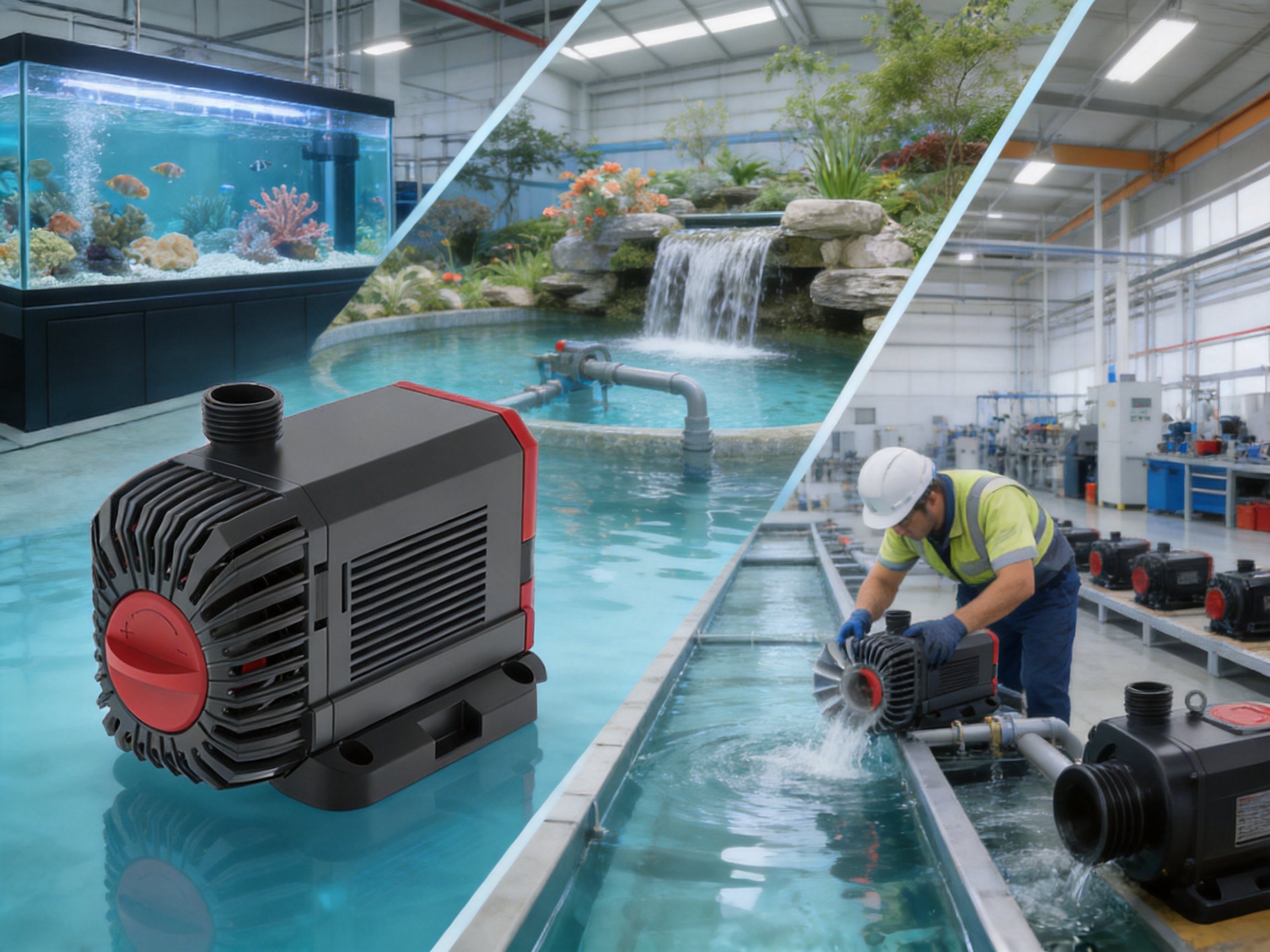
The series is intended for water circulation applications such as aquariums, filtration systems, ponds, water features, aquacultural equipment, and related aquatic installations. The correct use depends on the selected model, system head, water conditions, and installation requirements.
The supplied range includes ten models: ZSP-2000, ZSP-3000, ZSP-4000, ZSP-5000, ZSP-6000, ZSP-7000, ZSP-8000, ZSP-10000, ZSP-12000, and ZSP-14000.
The highest listed output is 14,000 liters per hour for the ZSP-14000. The source specification should be confirmed with the supplier before purchase, especially where the installation requires a guaranteed flow at a particular head height.
The highest listed maximum head is 7.0 meters for the ZSP-14000. Actual water flow at that height will be lower than the free-flow output and should be verified using the applicable performance curve.
The product is identified as a frequency variation pump, indicating an adaptable operating concept. The supplied information does not state the precise adjustment range, control method, or automation interface. Buyers should request those details when variable operation is essential to the project.
The ZSP-10000, ZSP-12000, and ZSP-14000 are listed with 20/25/38/45-millimeter outlet options. Compatibility should be checked against the actual pipe and fitting standards used at the installation site.
All listed models are specified for 220–240 volts. The local electrical supply must match this rating, and installation should comply with applicable electrical and aquatic safety regulations.
The ZSP-2000 or ZSP-3000 may be a practical starting point for a smaller aquarium, but the correct choice depends on tank volume, filter resistance, return height, desired turnover, and livestock requirements. A smaller model is not automatically correct if the system has a high return or restrictive plumbing.
No. The listed outputs are specification values. Actual flow changes according to head height, pipe diameter, pipe length, fittings, valves, filters, water conditions, and operating settings. The final selection should be based on the system operating point.
Outlet diameter affects friction and water velocity. A larger outlet can be beneficial in high-flow systems or long pipe runs because it may reduce resistance. The pipe network should be sized consistently with the pump and the required flow.
The supplied information lists the ZSP-14000 power as “MOW,” which appears to be an unclear or incomplete entry. The buyer should confirm the exact power rating, operating frequency, control requirements, performance curve, and electrical documentation before ordering.
The company profile describes activity in aquarium pets, aquacultural machinery, industrial equipment, and related fields. It also identifies multiple subsidiaries, research and quality functions, and import and export capabilities.
Cleaning frequency depends on water quality, debris levels, biological activity, and operating hours. The intake, impeller area, outlet, and connected filters should be inspected whenever flow decreases or unusual noise appears. A routine schedule should be established for the specific system.
It may be considered for suitable aquatic machinery and circulation systems, but the user must verify fluid compatibility, temperature, solids content, duty cycle, electrical requirements, and regulatory conditions. The supplied specifications do not establish suitability for every industrial liquid or environment.
The ZSP Series Frequency Variation Pump offers a broad and practical solution for aquatic circulation. Its ten-model structure covers outputs from 2,500 to 14,000 liters per hour, while maximum head ratings extend from 3.0 to 7.0 meters. Multiple outlet sizes, staged dimensions, different cable lengths, and a range of power ratings help users select equipment according to the actual needs of an installation.
Its greatest advantage over a basic fixed-speed competitor is the combination of adaptable frequency-based operation and detailed model choice. This can support better control, more appropriate flow, reduced unnecessary throttling, and improved flexibility across aquarium, pond, water-feature, and aquacultural applications. The range is also supported by a company profile that describes long-term industry experience, research resources, quality control, multiple subsidiaries, and international business capabilities.
Successful use still depends on correct engineering. Buyers should calculate total dynamic head, size the pipework properly, confirm electrical compatibility, provide safe service access, protect the intake, and request missing technical information where the supplied data is incomplete. When selected and installed carefully, the ZSP Series can provide a versatile foundation for reliable water movement across a wide range of aquatic systems.
Sensen Group Co., Ltd. Product specification sheet, “ZSP Series Frequency Variation Pump.”
Sensen Group Co., Ltd. Company information and corporate profile, including manufacturing, research, quality control, subsidiary, and export operations.
Internal technical data supplied for ZSP Series model output, maximum head, voltage, frequency, power, outlet, cable length, weight, and dimensions.
General principles of aquarium pump selection, hydraulic head calculation, pipe friction, filtration circulation, and aquatic equipment maintenance.



 English
 русский
 España
 Portugal
 عربي
عربي
 No. 61-79, Baima Street, Maao Town, Dinghai District, Zhoushan City, Zhejiang Province, China.
 0086 580 8082088 / 8081168
 0086 580 8080978
 songhua@sunsun-china.com