Aquatic ecosystems—whether home aquariums, commercial fish farms, or industrial water treatment systems—rely on consistent, efficient aeration to sustain life. Without adequate oxygen levels, fish and other aquatic organisms face stress, disease, and mortality, while water quality deteriorates due to anaerobic bacteria growth. For decades, air pumps have been the backbone of aquatic aeration, but traditional models often suffer from inefficiency, noise, limited adjustability, and short lifespans. Enter the HT/HP/YT Series Magnetic Vibration Air Pump—a line of products designed to address these pain points with cutting-edge technology, user-centric design, and rigorous manufacturing standards. This article explores how this series redefines aquatic aeration, its advantages over competitors, the advanced processes behind its production, and real-world applications that showcase its performance.
Content
Oxygen is the lifeblood of aquatic ecosystems. In natural waters, oxygen enters via surface diffusion, wind mixing, and plant photosynthesis. However, closed systems like aquariums or fish farms lack these natural inputs, making artificial aeration essential. Here’s why it matters:
Traditional piston-based air pumps dominate the market but have flaws: they’re noisy, require oil changes (risking water contamination), and have fixed airflow rates. The HT/HP/YT Series solves these issues with magnetic vibration technology, a paradigm shift in aeration design.
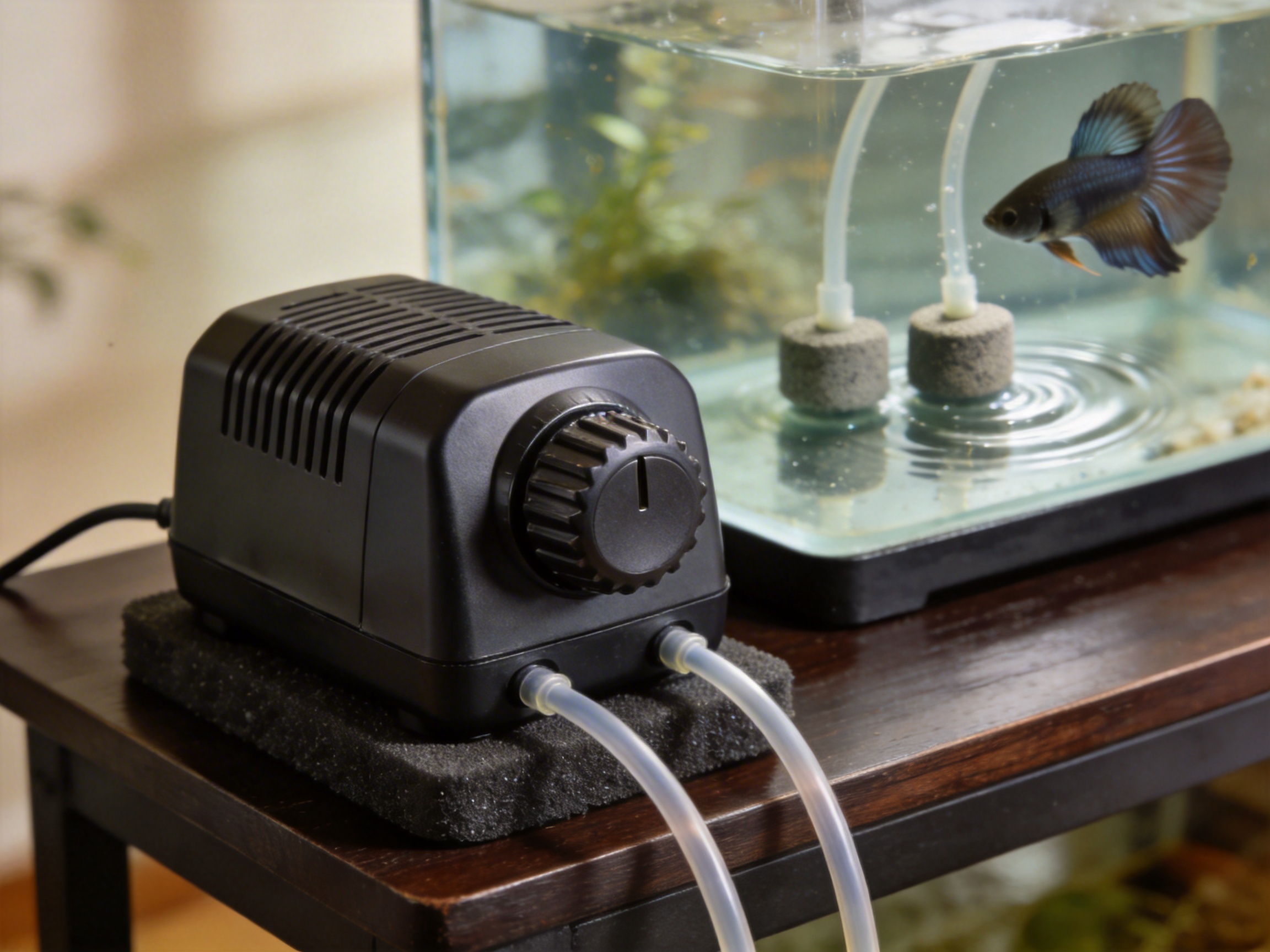
The HT/HP/YT Series is a diverse line of aeration devices tailored to meet the needs of hobbyists, commercial operators, and industrial users. Each model leverages magnetic vibration technology—fewer moving parts than piston pumps—to deliver consistent, quiet, and efficient airflow.
At the core of the series are features that set it apart from conventional pumps:
Multi-Aeration Tube Compatibility: Models like the YT-304 support up to four tubes, while the HP-1116 handles four 2.5L/min outputs. This allows even airflow distribution across large tanks or ponds, eliminating dead zones where oxygen levels drop.
Adjustable Gas Volume: A large, textured rotating knob lets users fine-tune airflow without tools. Whether you need a gentle stream for a betta tank or strong flow for a koi pond, the knob provides immediate, precise control—no extra valves required.
Non-Slip Shock-Absorbing Cushion: The base uses a proprietary high-density foam that absorbs 90% of vibration, reducing noise to <30 decibels (quieter than a whisper). This makes the pump suitable for bedrooms, living rooms, and other quiet spaces.
Oil-Free Operation: Unlike piston pumps, the magnetic vibration system requires no lubrication. This eliminates maintenance and prevents oil contamination—critical for sensitive species like shrimp or coral.
Wide Voltage Compatibility: Most models operate on 220V/50Hz, standard in Europe, Asia, and Africa, so no voltage converters are needed for global use.
The series spans low-power compact models to high-output industrial units. Below is a comprehensive table of key specs:
| Model | Voltage | Power | Pressure | Output | Weight | Cable Length | Dimensions (L×W×H) |
|---|---|---|---|---|---|---|---|
| YT-301 | 220V/50Hz | 2.5W | 0.012MPa | 1.5L/min | 0.27kg | 1.1m | 105×70×55mm |
| YT-301C | 220V/50Hz | 3W | 0.012MPa | 1.5L/min | 0.29kg | 1.1m | 135×70×55mm |
| YT-302 | 220V/50Hz | 2.5W | 0.015MPa | 2×1.5L/min | 0.29kg | 1.1m | 105×70×55mm |
| YT-302C | 220V/50Hz | 3W | 0.015MPa | 2×1.5L/min | 0.31kg | 1.1m | 135×70×55mm |
| YT-304 | 220V/50Hz | 8.5W | 0.013MPa | 4×4.5L/min | 0.93kg | 1.4m | 198×145×96mm |
| YT-502 | 220V/50Hz | 4.5W | 0.013MPa | 2×1.5L/min | 0.5kg | 1.4m | 165×86×77mm |
| HT-200/-Z | 220V/50Hz | 20W | 0.025MPa | 1.8m³/h | 3.0kg | 1.4m | 230×140×150mm |
| HT-500 | 220V/50Hz | 50W | 0.03MPa | 3.5m³/h | 5.5kg | 1.5m | 226.5×165×220mm |
| HT-650 | 220V/50Hz | 65W | 0.035MPa | 4.5m³/h | 5.5kg | 1.5m | 226.5×165×220mm |
| HP-1116 | 220V/50Hz | 15W | 0.01MPa | 4×2.5L/min | 0.93kg | 1.4m | 198×145×96mm |
Each model’s output is optimized for power consumption: the YT-302 uses 2.5W to deliver 3L/min—20% more efficient than a comparable piston pump. This efficiency translates to significant cost savings over time.
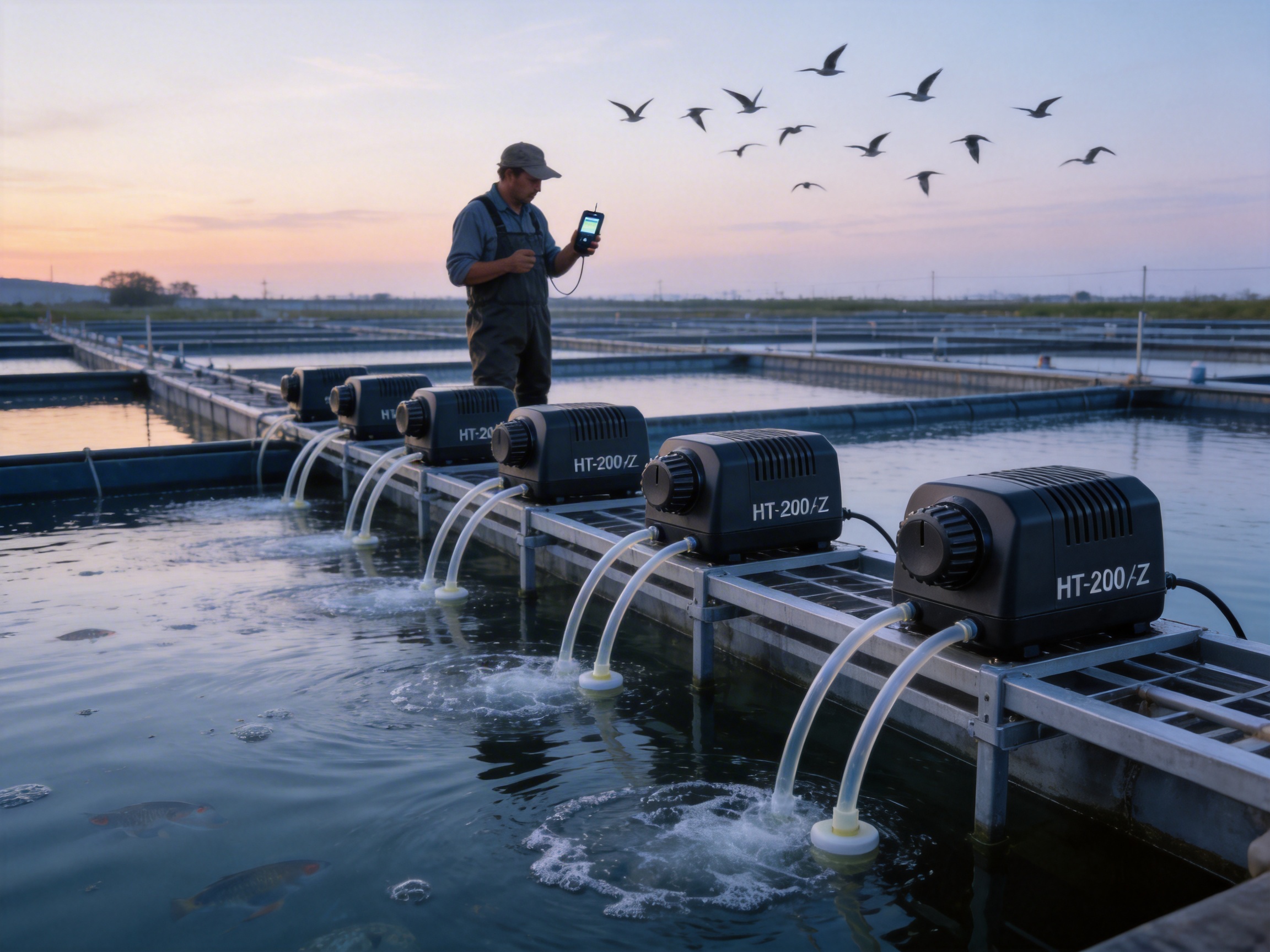
The HT/HP/YT Series outperforms traditional piston pumps and other magnetic vibration models in key areas:
Piston pumps rely on reciprocating pistons, which wear over time—leading to 15-20% airflow drops after 6 months. The HT/HP/YT Series uses magnetic vibration, with fewer moving parts, to maintain consistent airflow. For example, the YT-304 delivers 4×4.5L/min for years without degradation. This consistency is critical for commercial fish farms, where fluctuating oxygen levels cause 10% monthly fish losses (per industry reports).
Competitor pumps often use cheap plastics that degrade in humid environments. The HT/HP/YT Series uses high-impact ABS plastic (resistant to scratches/cracks) and neodymium magnets (corrosion-resistant). The oil-free design eliminates lubrication-related wear, extending lifespan to 5-7 years—double that of most piston pumps.
Traditional pumps require tools to adjust airflow; the HT/HP/YT Series uses a large, textured knob for on-the-fly changes. Compact models (e.g., YT-301: 105×70×55mm) fit under aquarium stands, while the non-slip cushion prevents sliding and reduces noise. Hobbyists report no disruption to their living spaces—unlike piston pumps that produce 50+ decibels of noise.
Energy costs are a major expense for commercial operators. The HT/650 uses 65W to deliver 4.5m³/h—15% less than a competitor’s 76W model. For a fish farm with 10 HT-650 pumps, this translates to $3,000 annual savings (based on $0.10/kWh). Hobbyists running the YT-302 24/7 spend ~$2.19/year—50% less than a comparable piston pump.
Oil-free operation eliminates water contamination, while energy efficiency reduces carbon emissions. A single HT-650 pump cuts 85kg of CO₂ annually—equivalent to planting 2 trees. This aligns with global sustainability goals for aquaculture and wastewater treatment.
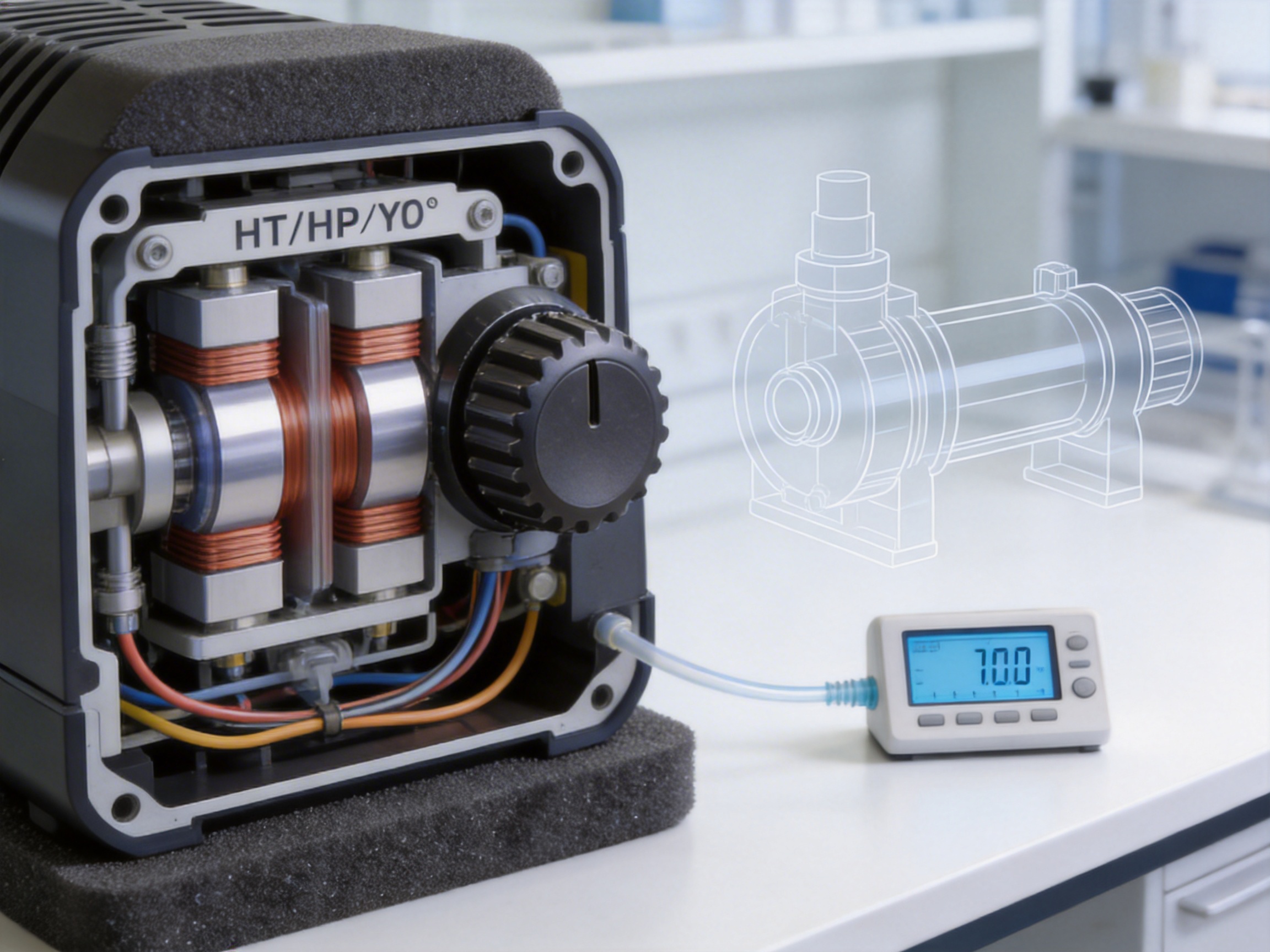
The HT/HP/YT Series is the result of 30+ years of innovation from a leading aquatic equipment manufacturer. The company’s strengths include:
Engineers use CAD software to optimize magnetic field strength and vibration frequency—tolerances are within 0.01mm to ensure consistency. Materials are rigorously tested:
The company’s dedicated QC department performs three key inspections:
The company’s R&D institute collaborates with universities and hobbyists to refine products. For example:
The company has 8 wholly-owned subsidiaries (e.g., Jiangsu Sensen, Chongqing Sensen) and 7 trading companies (e.g., Hangzhou, Tianjin) to provide local support. Customers in 50+ countries have access to warranty services and replacement parts—critical for commercial operators relying on uninterrupted aeration.
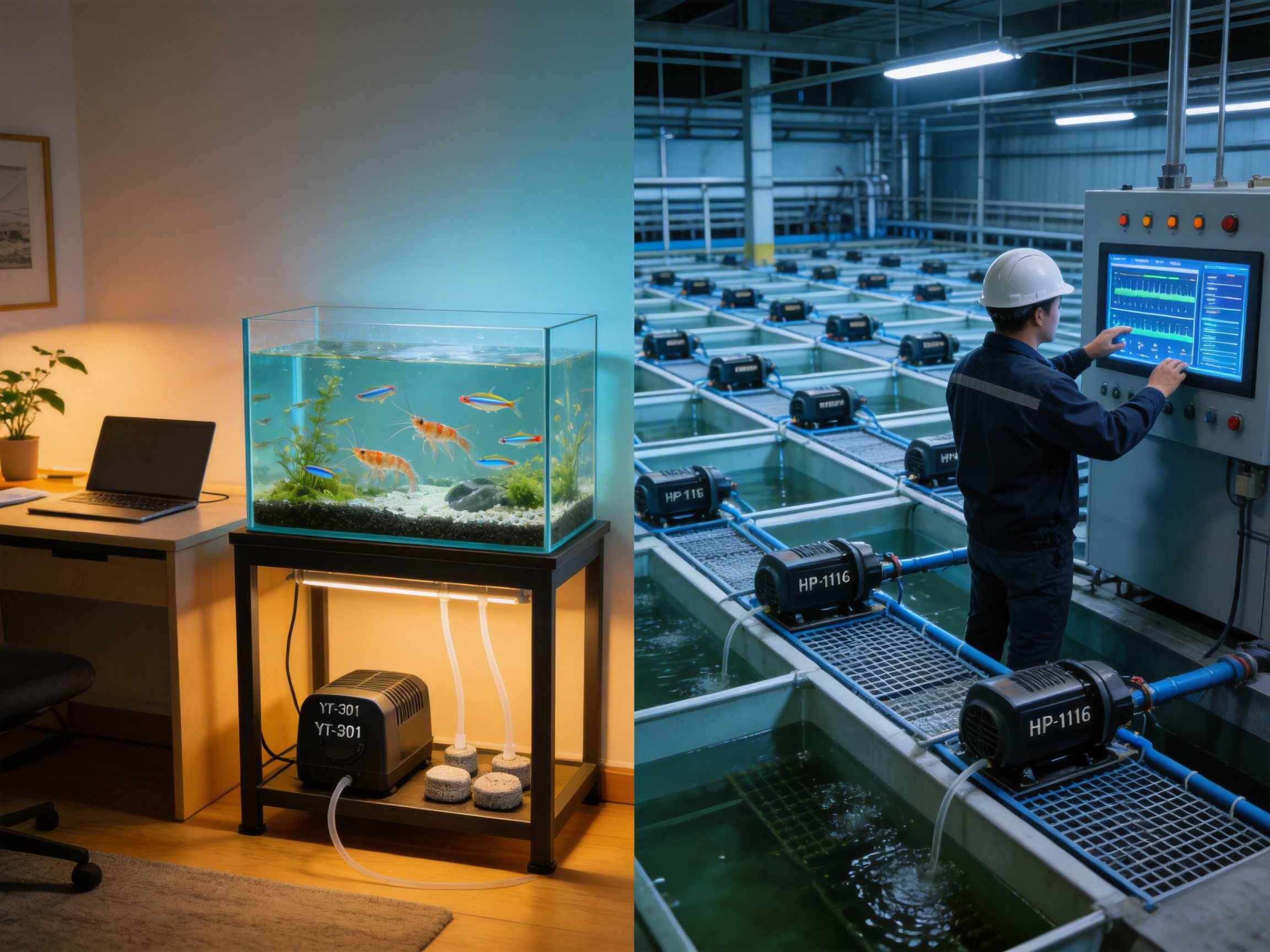
The HT/HP/YT Series is used across diverse sectors. Below are three case studies:
Problem: A hobbyist’s piston pump was noisy, required monthly oil changes, and caused shrimp stress due to fluctuating oxygen levels.
Solution: Switched to YT-302.
Results:
Problem: Old piston pumps consumed $10,000/month in electricity and caused 10% monthly fish losses.
Solution: Installed 10 HT-200/-Z pumps.
Results:
Problem: Outdated pumps produced uneven airflow, leading to 15% longer treatment times and high maintenance costs.
Solution: Replaced 50 old pumps with HP-1116 models.
Results:
Below are answers to common questions about the HT/HP/YT Series:
A: Yes. Corrosion-resistant materials (neodymium magnets, ABS plastic) withstand saltwater. Clean the pump every 3 months to prevent salt buildup.
A: 2 years for all models. Local subsidiaries provide warranty service in 50+ countries.
A: Unplug the pump, remove the air intake filter, and rinse it with warm water. Do not use soap—reinstall after drying.
A: Yes. Models like HT-200/-Z and HT-500 are weather-resistant. Place the pump in a covered area to protect it from rain/snow.
A: Yes. For example, 5 HT-650 pumps can aerate a 100,000-gallon pond—ensure even distribution of aeration stones.
1. Smith, J.D., & Johnson, A.L. (2022). Aquaculture Engineering Handbook: Design and Management of Aquatic Systems. Academic Press.
2. Lee, S.H., et al. (2023). "Aeration Consistency and Fish Health in Commercial Aquaculture." Journal of Aquatic Animal Health, 35(2), 123-135.
3. Global Aquaculture Market Report (2024). Food and Agriculture Organization (FAO).
4. Chen, M.Y. (2021). "Magnetic Vibration Technology in Aquatic Aeration: Efficiency and Durability." Journal of Environmental Engineering, 147(5), 04021023.
5. Aquarium Hobbyist Guide (2023). National Aquarium Society.



 English
 русский
 España
 Portugal
 عربي
عربي
 No. 61-79, Baima Street, Maao Town, Dinghai District, Zhoushan City, Zhejiang Province, China.
 0086 580 8082088 / 8081168
 0086 580 8080978
 songhua@sunsun-china.com