

 English
 русский
 España
 Portugal
 عربي
عربيA 20-gallon tank holds about 75 liters of water, and the best fish for it are peaceful species that stay under 3 inches (7.5 cm) as adults and live comfortably between 74°F and 80°F. The most dependable picks are the honey gourami, ember tetra, harlequin rasbora, cherry barb, celestial pearl danio, pygmy corydoras, kuhli loach and, in a 20-gallon long, one bristlenose pleco. If your tap water is hard and alkaline, skip that list and run a colony of shell-dwelling Neolamprologus multifasciatus instead.
The formula that works is narrow: one midwater school of 8-10 small tetras or rasboras, one bottom group of 6-8 pygmy corydoras or kuhli loaches, and at most one centrepiece fish. Anything that grows past 3 inches, patrols the glass aggressively, or has to be kept alone because it eats its tank mates does not belong in 20 gallons.
Content
- What Actually Fits in a 20-Gallon Tank
- Best Fish for a 20 Gallon Tank at a Glance
- Best Community Fish for the Middle and Top of the Tank
- Best Centrepiece Fish for a 20-Gallon Tank
- Best Bottom-Dwellers and Cleanup Crews
- Three Stocking Plans That Work
- Filtration and Flow Set the Stocking Ceiling
- Heating: One Small Adjustable Heater Is Enough
- Oxygen and Overnight Surface Movement
- Common Mistakes When Stocking a 20-Gallon Tank
- FAQ
What Actually Fits in a 20-Gallon Tank
A 20-gallon tank is a small system, not a scaled-down 55-gallon: usable volume after substrate, filter media and decor is closer to 16-18 gallons, and the footprint limits stocking more than the volume does. Four checks decide whether a species belongs on your list.
- Adult size: aim for 3 inches (7.5 cm) or less. Shop tanks show juveniles, and a fish sold at 1 inch may finish at 8 inches.
- Group size: schooling species need six minimum, and eight to ten looks and behaves far better.
- Temperature overlap: choose species whose comfortable ranges meet at 76-78°F, so a single heater setting suits every fish.
- Swimming zone and temperament: stock one species per layer and skip fin nippers and territorial bottom dwellers.
Footprint then decides which of those fish you can actually keep, because a tall 20 and a long 20 offer very different floor space.
| Tank shape | Dimensions | Floor space | Stocking consequence |
|---|---|---|---|
| 20-gallon long | 30 × 12 × 12 in | About 2.5 sq ft | Best for corydoras and a single bristlenose pleco |
| 20-gallon high or standard | 24 × 12 × 16 in | About 2 sq ft | Taller water column suits gouramis and bettas, but limits bottom groups |
If you are still shortlisting, this guide to how to choose the right fish species for a small fish tank follows the same checklist in more detail.
Best Fish for a 20 Gallon Tank at a Glance
Small, group-friendly species with overlapping temperature ranges are the safest choices. The table below compares the ten options most often recommended for this tank size.
| Species | Adult size | Group | Temperature | Why it works |
|---|---|---|---|---|
| Ember tetra | 1 in (2.5 cm) | 8-10 | 74-82°F | Tiny, colourful, ideal in planted tanks |
| Harlequin rasbora | 1.75 in (4.5 cm) | 8-10 | 72-80°F | Tight school that fits a standard or high 20 |
| Cherry barb | 2 in (5 cm) | 6-8 | 73-81°F | Hardy starter fish; males flush deep red |
| Celestial pearl danio | 1 in | 8-12 | 68-78°F | Cool-water nano for a heavily planted tank |
| Honey gourami | 2 in | 1 pair | 72-82°F | Quiet top-layer centrepiece |
| Betta (single male) | 2.5-3 in | 1 | 76-81°F | Solo centrepiece with real personality |
| Pygmy corydoras | 1 in | 8-10 | 72-79°F | Bottom school that suits small floor space |
| Kuhli loach | 3-4 in | 6+ | 73-82°F | Sand sifter; needs caves and a tight lid |
| Bristlenose pleco | 4-5 in | 1 | 74-80°F | Algae control in a 20 long only |
| N. multifasciatus | 1.5 in | 4-6 | 76-82°F, hard water | Species-only shell dweller colony |
Best Community Fish for the Middle and Top of the Tank
Ember tetras, harlequin rasboras, cherry barbs and celestial pearl danios are the four most dependable community schools here, because each stays under 2 inches and tolerates the same 74-80°F window.
Ember tetra
Ember tetras are the easiest school to fit, since even ten of them look lightly stocked in a planted 20. Keep the group at eight or more, feed micro pellets or crushed flakes, and give them floating plants or driftwood shade so they colour up properly.
Harlequin rasbora
Harlequin rasboras are the most forgiving classic school for a standard or high 20, tolerating slightly cooler rooms at 72-74°F. They school tightly, ignore other species, and their black wedge markings look best against a dark background with moderate flow.
Cherry barb
Cherry barbs are the best beginner choice if your tap water is neutral to slightly hard. Buy six to eight, aim for two females per male so the males keep their red colour, and plant the back glass lightly; they browse the whole tank rather than sitting in one layer.
Celestial pearl danio
Celestial pearl danios are the best pick for a cool, densely planted 20 kept at 70-74°F. They are shy, so keep a group of ten or more, avoid boisterous tank mates, and expect them to spend most of the day among moss and fine-leaved stems.
Best Centrepiece Fish for a 20-Gallon Tank
One honey gourami, one male betta, or a pair of peacock gudgeons is enough as a centrepiece; two territorial centrepiece fish in 75 liters usually ends with one hiding in a corner.
A honey gourami is the calmest option, reaching about 2 inches and settling in at 72-82°F, where it will eat flake, pellets and small frozen foods and mostly ignore its tank mates. A single male betta works in a 20 as a species tank, or alongside small rasboras if that particular fish is placid; short-finned females are usually the safer community choice. A pair of peacock gudgeons at 72-78°F is more colourful but shyer, needing caves and frozen or live food at first. Dwarf gouramis and kribensis are common recommendations that carry real risk in this volume, and angelfish grow far too large for a 20 high.
Best Bottom-Dwellers and Cleanup Crews
Pygmy corydoras and kuhli loaches are the two best bottom groups for a 20-gallon tank; a bristlenose pleco fits only in the long footprint, and otocinclus should only be added to a tank that has been running for three months or more.
- Pygmy corydoras: keep 8-10 over fine sand. They swim in midwater as often as on the bottom, which suits small floor areas.
- Kuhli loaches: keep six or more with caves, leaf litter and a tight lid, since they squeeze through the smallest gaps.
- Bristlenose pleco: one fish in a 20 long, with driftwood for grazing and blanched vegetables weekly.
- Otocinclus: six is enough, and only in a mature, algae-rich tank with stable water.
- Shrimp and snails: neocaridina shrimp and nerite snails add almost no bioload, but bettas and gouramis will hunt the shrimp.
Three Stocking Plans That Work
Each plan below has been sized for a mature 20-gallon tank with a cycled filter and weekly 25% water changes, so you can copy one directly instead of guessing.
Plan 1: beginner community
This suits a standard or long 20 with a hang-on filter set at 77-78°F. Add the groups two weeks apart.
- 8 harlequin rasboras
- 8 pygmy corydoras
- 1 honey gourami
- Optional one nerite snail for glass and decor
Plan 2: planted nano community
Use this if you run moderate light and plants at 76°F, and you want colour without much biomass.
- 10 ember tetras
- 6 kuhli loaches
- 10 neocaridina shrimp, if no gourami is present
Plan 3: hard-water species tank
This plan is single species only, in water at 8 dGH or above and pH 7.8-8.6, with sand and empty snail shells.
- 5-6 Neolamprologus multifasciatus
- Six to eight shells clustered at one end of the tank
- No plants; a sponge filter or small hang-on filter for flow
Filtration and Flow Set the Stocking Ceiling
Filtration, not floor space, usually caps how many fish a 20-gallon tank can carry, so choose a filter rated for 20-40 gallons and aim for six to eight turnovers per hour, roughly 120-160 GPH. A hang-on-back unit is the simplest answer: it holds enough biological media to process a full community and its outflow is easy to aim along the surface for gas exchange. Internal and sponge filters work as well but occupy floor space that corydoras need.
Sensen builds aquarium filters and water pumps sized for exactly this range, from compact hang-on units to submersible pumps, and the media volume matters more than the box size on the label.
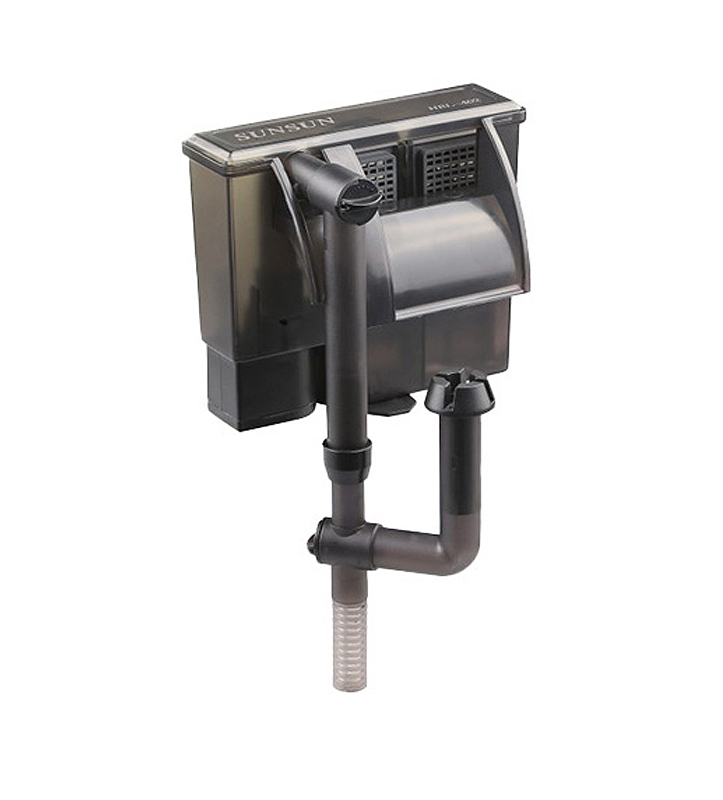 HBL Series Hang-On Aquarium Filter with Model SpecificationsCustomizable hang-on filter series listing multiple models with voltage, output, weight, dimensions, and cable length for aquarium filtration comparisons.View Product →
Whatever you install, rinse biological media in tank water rather than under the tap, and treat rising nitrate within a week of adding fish as a sign that the filter is undersized for the stocking level.
Heating: One Small Adjustable Heater Is Enough
A 50-100 W adjustable heater comfortably holds a 20-gallon tank at 76-80°F; the rough guide is 1 W per liter, so 75-100 W covers 75 liters with margin for a cold room. Choose a heater with its own thermostat rather than a fixed preset, place it near the filter outflow so heat spreads, and guard it if you keep kuhli loaches that like to squeeze behind equipment. Check the temperature with a separate thermometer, because a swing of more than 2°F is what triggers stress and ich outbreaks in a small volume.
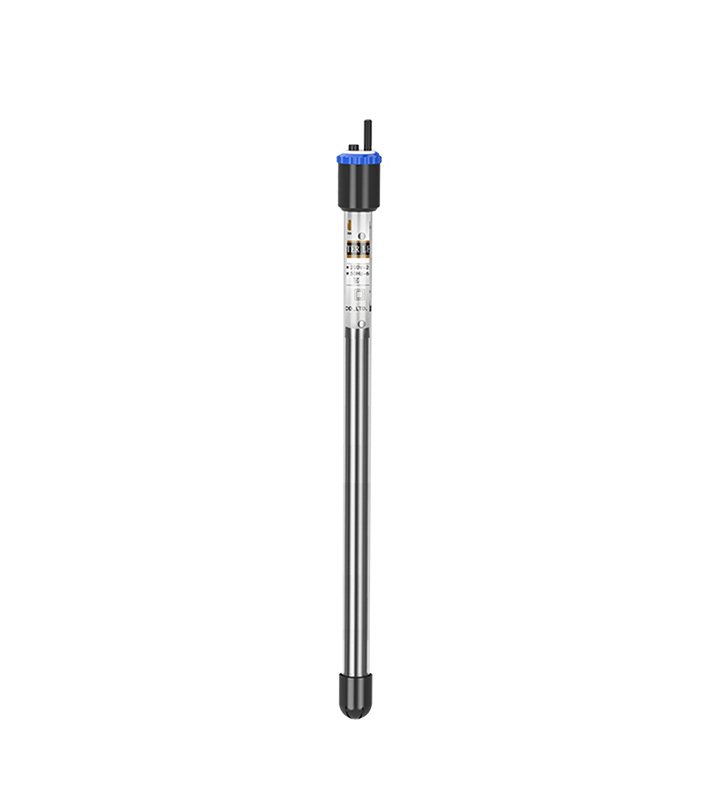 JRB/YRB Series Aquarium Glass Heater with Adjustable Temperature ControlGlass aquarium heater series with listed wattage, length, tank-size, and temperature ranges; useful for comparing adjustable heating options for stable tank temperatures.View Product →
Oxygen and Overnight Surface Movement
An air pump is not optional in a stocked 20-gallon tank, because at night plants and fish both consume oxygen and only surface movement keeps the level safe until morning. A single small pump driving a sponge filter or airstone provides that insurance, and a magnetic vibration design keeps the noise low enough for a bedroom. If you inject CO2 for plants, run the air pump on a timer overnight and switch the CO2 off after lights out.
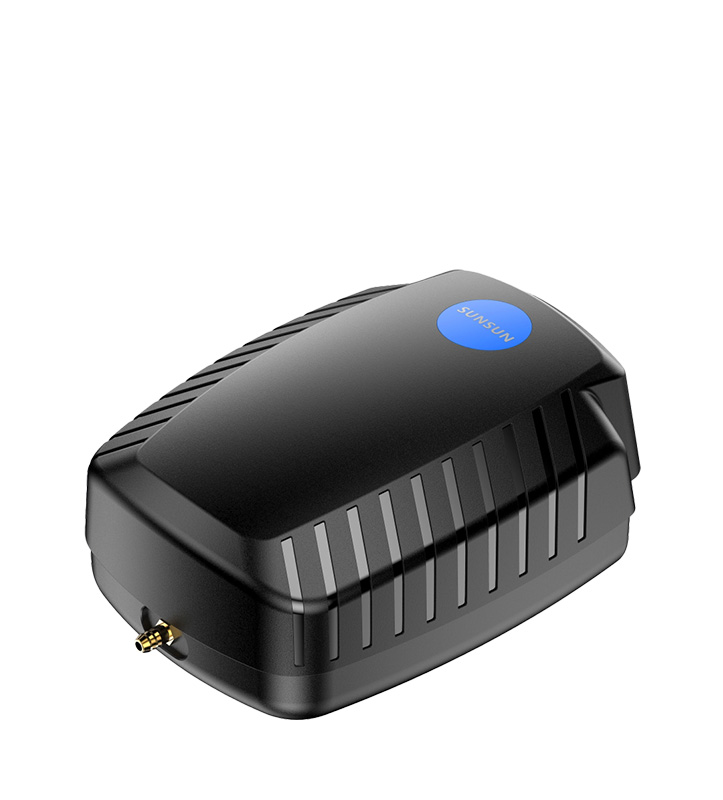 CAP Series Magnetic Vibration Air Pump for Aquarium and Pond AerationMagnetic vibration air pump with rainproof and waterproof designs, listing output, pressure, cable, and dimensions for aquarium or pond aeration and surface movement.View Product →
Fish hanging at the surface or pumping their gills in the first hour after lights on are telling you the surface movement is too low.
Common Mistakes When Stocking a 20-Gallon Tank
Most failures in this tank size come from four predictable errors, and all of them are avoidable before you buy a single fish.
- Buying by fish count instead of adult size, which is how a common pleco that grows past 12 inches ends up in a 20.
- Adding the whole stock list on day one; add one group every two weeks so bacteria keep pace with the waste.
- Mixing species with different temperature needs, such as cool-water danios with warm-water bettas, so someone is always outside their comfort range.
- Over-cleaning the filter, which removes the bacteria that make the stocking level possible in the first place.
- Ignoring the footprint, then wondering why corydoras have nowhere to forage in a tall 20.
FAQ
Can I keep a betta with other fish in a 20-gallon tank?
Yes, if you choose the tank mates for the betta rather than the other way round. Ember tetras, harlequin rasboras and pygmy corydoras usually work when they are added first and the betta last, with plants breaking sight lines. Avoid guppies and other long-finned or nippy fish, and expect shrimp to be hunted.
How many fish can I put in a 20-gallon tank?
For a typical community, roughly 20 small fish in total: 8-10 tetras or rasboras, 6-8 pygmy corydoras and one honey gourami. The count matters less than adult size, filtration capacity and whether the species occupy different swimming zones, so two heavy-bodied fish can be a bigger load than a dozen ember tetras.
Is a 20-gallon tank big enough for a bristlenose pleco?
Yes in the long footprint, and only one fish. A bristlenose reaches 4-5 inches, needs driftwood to graze on, produces a lot of waste for its size, and will not survive on algae alone, so offer vegetables and sinking wafers alongside a strong filter.
Do I need a heater for a 20-gallon tank?
Yes for tropical species such as bettas, honey gouramis and tetras. Room temperature in most homes sits at 68-72°F, which is below their comfortable range, so a 75-100 W adjustable heater set to 77-78°F is the simplest way to keep a small volume stable.
Pick fish by adult size, group size, temperature overlap and swimming zone, and a 20-gallon tank reads as calm and deliberate rather than crowded. Support that list with filtration rated for 20-40 gallons, a 75-100 W heater, and an air pump for overnight surface movement, then add each group two weeks apart and let the filter catch up. Do that, and the same ten species that fail in an overstocked tank will thrive in yours for years.

 No. 61-79, Baima Street, Maao Town, Dinghai District, Zhoushan City, Zhejiang Province, China.
 0086 580 8082088 / 8081168
 0086 580 8080978
 songhua@sunsun-china.com