Modern aquarium keeping is no longer limited to clear glass, decorative plants, and a simple filter. Healthy aquatic life depends on stable water conditions, timely observation, and fast response when something changes. An intelligent pH and water temperature monitoring controller brings these requirements together in one practical device, helping aquarists observe water parameters, monitor tank conditions, and stay connected to the aquarium through smart app functions. Designed for the Controller category in aquarium management, this product supports the daily needs of fish keepers, aquatic plant enthusiasts, aquarium retailers, and professionals who require dependable oversight of water quality and aquarium activity.
The Intelligent pH Water Temperature Monitor is built around the idea that aquarium care should be measurable, visible, and responsive. By combining pH and temperature awareness with smart monitoring features such as 1080P high-definition viewing, video playback, dynamic alarm, static alarm, vacuum sucker mounting, and aquarium live viewing, the product offers far more than a conventional single-purpose meter. It is positioned as a practical, smart, and connected controller for aquariums where stability and observation matter.
Unlike traditional aquarium accessories that only display a number at the tank side, this controller is designed for a more connected lifestyle. Users can connect the device with a smart home application to access multiple functions, including video monitoring, alarm notification, video playback, and live aquarium sharing. This makes the device useful not only for checking water quality, but also for understanding what is happening inside the tank when the owner is away. For aquarium owners who travel, work long hours, manage multiple tanks, or care for sensitive aquatic species, this combination of monitoring and visual confirmation can provide a major advantage.
Intelligent PH Water Temperature Monitor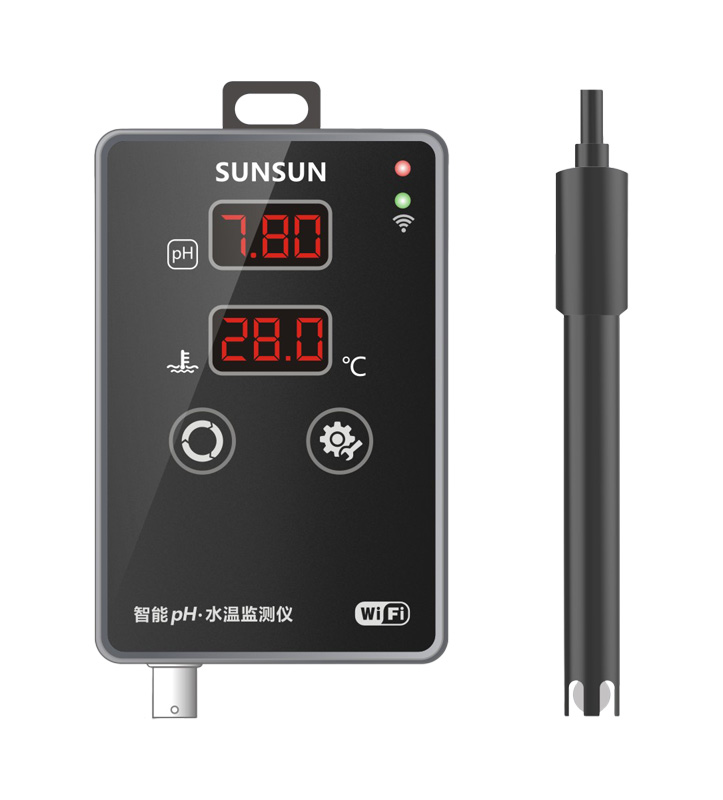
Content
The Intelligent pH Water Temperature Monitor is an aquarium controller developed for continuous observation of important tank conditions. Its core value lies in helping users understand whether the water environment remains within an appropriate range for fish, shrimp, aquatic plants, and beneficial bacteria. Temperature fluctuations and unsuitable pH levels are among the most common causes of stress in aquatic life. When these conditions are not observed in time, small problems can become serious quickly. A smart monitor helps reduce uncertainty by giving the user accessible information and a more complete view of the aquarium environment.
The product is especially suitable for home aquariums, planted tanks, ornamental fish tanks, breeding tanks, retail display tanks, and hobbyist systems that require regular attention. While it is listed under the Controller category, it also relates closely to aquarium accessories, aquarium equipment, and smart pet products because it supports both water condition monitoring and visual interaction.
A key feature of the device is its connection with a mobile application. Through the app, the user can realize a range of smart functions, including video monitoring, dynamic alarm, static alarm, video playback, and live video broadcast of aquarists. This places the device in a different category from ordinary pH pens or analog thermometers. It is not merely a reading tool; it is a smart aquarium supervision system.
The included high-definition 1080P viewing capability supports clear observation of the aquarium. This helps users check fish behavior, equipment operation, feeding response, water clarity, and unusual movement. Video playback allows users to review events that occurred earlier, which is useful when investigating sudden fish stress, equipment disturbance, or unexpected tank activity. Dynamic and static alarms improve responsiveness by helping identify movement-related changes or unusual situations in the monitored area.
Water in an aquarium is a living environment. Fish breathe through it, beneficial bacteria process waste in it, aquatic plants absorb nutrients from it, and every biological process depends on its stability. Two of the most important measurable conditions are pH and temperature. Although they are simple concepts, their influence is broad.
pH indicates whether water is acidic, neutral, or alkaline. Different aquatic species have different preferred pH ranges. For example, many tropical community fish do well in slightly acidic to neutral water, while some cichlids prefer more alkaline conditions. Shrimp and sensitive ornamental fish can react strongly to sudden pH changes. Even when a pH value is within an acceptable range, rapid fluctuation can cause stress. A reliable pH monitoring device allows users to track trends, not only isolated readings.
Temperature is equally important. Fish are ectothermic animals, meaning their body temperature and metabolism are influenced by the surrounding water. If the water becomes too cold, digestion, movement, and immune response can slow down. If it becomes too warm, oxygen levels may decrease while metabolism increases, placing stress on fish. In planted tanks, temperature also affects plant growth, nutrient uptake, and algae balance. A smart water temperature monitor helps users respond to heater malfunction, seasonal changes, and environmental variation.
Many aquarium problems begin gradually. A heater may drift out of calibration. A water change may introduce water with a different pH. A filter issue may reduce circulation and create uneven temperature zones. Without monitoring, users may only notice the problem after fish behavior changes. A controller that provides measurement and visual oversight supports earlier action.
One of the most distinctive advantages of this product is that it adds visual monitoring to water condition awareness. Traditional pH meters and thermometers can tell a user what the water value is, but they cannot show whether the fish are gasping, hiding, fighting, spawning, or reacting to a sudden disturbance. They cannot show whether a pump has shifted, whether food remains uneaten, or whether an object has fallen inside the tank. Video monitoring closes that information gap.
The 1080P HD function supports clear image quality for daily observation. High-definition viewing is particularly valuable in aquariums because many details are small: the movement of fins, the behavior of shrimp, the condition of plants, the presence of debris, and the activity of fish near the surface. A low-quality image may not show these signs clearly, but an HD camera function can make remote observation more practical.
Video playback is another advantage. Aquariums often change when the owner is not watching. Fish may show aggression only at certain times, equipment may vibrate occasionally, or nocturnal animals may become active after the lights go off. By reviewing recorded video, users can better understand patterns. This is useful for breeders, hobbyists with valuable ornamental fish, and anyone who wants to improve tank management based on evidence rather than guesswork.
Dynamic alarm and static alarm functions are designed to improve awareness of activity and abnormal conditions. A dynamic alarm can help identify motion-related events, while a static alarm can assist in detecting unusual stillness or stationary changes depending on the application settings. These alarms bring the product closer to a smart monitoring solution rather than a passive aquarium accessory.
The live aquarium function also gives the device a social and educational dimension. Many aquarists enjoy sharing their tanks with friends, customers, or online communities. Live viewing can be used for aquarium appreciation, store display, classroom demonstration, or remote family viewing. In a world where smart home products are becoming common, an aquarium that can be observed live from a mobile device is a natural next step.
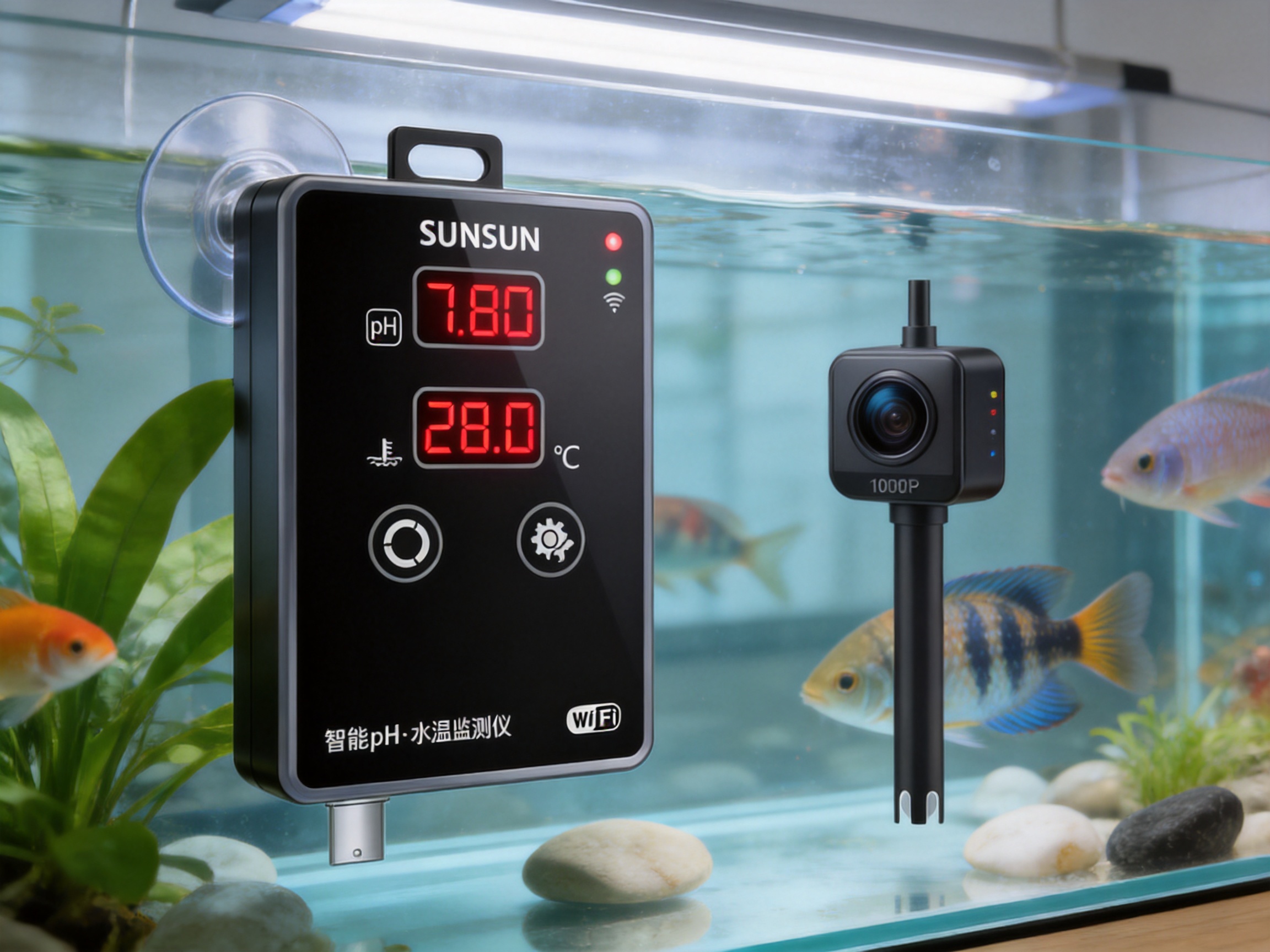
The product combines multiple functions in a compact aquarium controller format. Its feature set is designed to serve both practical safety needs and the enjoyment of aquarium ownership.
| Feature | Practical Meaning | User Benefit |
|---|---|---|
| pH Monitoring | Tracks acidity and alkalinity of aquarium water | Helps maintain suitable conditions for fish, shrimp, and aquatic plants |
| Water Temperature Monitoring | Observes thermal stability in the tank | Supports faster response to heater problems and environmental changes |
| 1080P HD Viewing | Provides clear visual monitoring of the aquarium | Allows users to check fish behavior, equipment status, and tank appearance remotely |
| Video Playback | Enables review of previous aquarium activity | Helps identify causes of stress, aggression, or unusual events |
| Dynamic Alarm | Detects movement-related activity | Improves awareness of sudden tank changes or unexpected motion |
| Static Alarm | Supports alerting for still or abnormal conditions | Adds another layer of smart supervision |
| Vacuum Sucker Mounting | Allows attachment to aquarium glass or smooth surfaces | Simplifies installation without complex tools |
| Application Connectivity | Links the device to smart control and monitoring functions | Allows remote viewing, alerts, playback, and live sharing |
The table shows why the product is best understood as a smart aquarium monitoring controller rather than a single-function meter. It brings together measurement, observation, alerting, and user interaction. This integration is important because aquarium health is not determined by one parameter alone. A fish keeper needs both data and visual context.
For example, a temperature reading may appear normal, but video may reveal that fish are clustered near the surface, indicating possible oxygen deficiency or circulation problems. A pH change may occur after a water change, and video playback may help the user confirm whether fish behavior changed at the same time. A dynamic alarm may bring attention to unusual movement, and the user can open the app to see whether the event was caused by fish activity, equipment movement, or external disturbance.
Many aquarium owners begin with simple tools: a glass thermometer, paper pH test strips, liquid test kits, or handheld digital pens. These tools can be useful, but they are limited. They require manual checking, they do not always provide continuous awareness, and they do not show what is happening in the tank. The Intelligent pH Water Temperature Monitor addresses these limitations through connectivity and multifunction design.
Using separate devices can create inconvenience. A thermometer provides temperature only. A pH pen requires the user to test manually. A camera provides visual information only. An alarm device may not be connected to water quality monitoring. This intelligent controller combines several of these functions into one system, reducing the need for scattered accessories and making daily aquarium management more coherent.
Manual testing is valuable, but it depends on the user being present and remembering to test. Many water changes happen between testing sessions. Temperature can shift during the night. Fish may show stress while the owner is away. Smart monitoring helps users become aware more quickly, especially when combined with app-based viewing and alarms.
A display-only meter gives a number, but numbers need context. If pH changes, the user may want to know whether fish are reacting. If temperature changes, the user may want to see whether the heater indicator is on or whether fish are near the heater. Video monitoring gives the missing context, helping users make better decisions.
Remote care is increasingly important. Aquarium owners may be at work, traveling, or managing tanks in different rooms or locations. A smart app connection allows the aquarium to remain visible even when the owner is not standing in front of the glass. This is especially useful for users who keep valuable fish, operate display tanks, or manage aquariums as part of a store or public space.
Aquarium keeping is not only technical; it is also emotional and visual. Many owners enjoy watching their fish and sharing beautiful aquatic scenes. The live video function makes the aquarium more accessible and shareable. This creates an advantage over purely technical devices, because it supports both care and enjoyment.
The Intelligent pH Water Temperature Monitor can serve a wide range of aquarium users. Its value changes according to the situation, but the central benefit remains the same: better visibility into the aquarium environment.
In a typical home freshwater tank, the device helps the user keep track of daily stability. Many family aquariums are cared for by busy owners who may not inspect conditions several times a day. App-based monitoring and video access make aquarium care easier to fit into modern routines. If fish behave strangely, the user can check both water condition information and live visual activity.
Planted aquariums often require careful balance among light, carbon dioxide, nutrients, water movement, pH, and temperature. pH changes can occur when carbon dioxide injection is used. Temperature can influence plant metabolism and algae growth. With visual monitoring, users can also observe plant health, pearling, algae development, and fish response.
Breeding tanks require calm, stable conditions. Eggs, fry, and sensitive parent fish may be affected by sudden changes. Video playback can help breeders observe spawning behavior, fry activity, and possible predation without disturbing the tank. pH and temperature monitoring supports the environmental consistency needed for successful breeding.
Owners of valuable ornamental fish often want a higher level of supervision. Fish such as koi in indoor systems, discus, arowana, fancy goldfish, shrimp colonies, or rare species can represent significant investment and emotional value. A smart monitoring controller helps reduce risk by improving awareness of changes and supporting faster response.
Retail environments may contain many tanks, and staff cannot observe every tank continuously. A device that combines monitoring, video, and alarm functions can support more efficient supervision. Live viewing can also be used to show customers tank activity, promote aquarium products, or demonstrate fish behavior.
Aquariums are often used in classrooms, laboratories, and educational displays to teach biology, ecology, water chemistry, and animal behavior. A smart monitor makes these lessons more interactive. Students can observe how pH and temperature relate to aquatic life, while live video and playback support discussion and analysis.
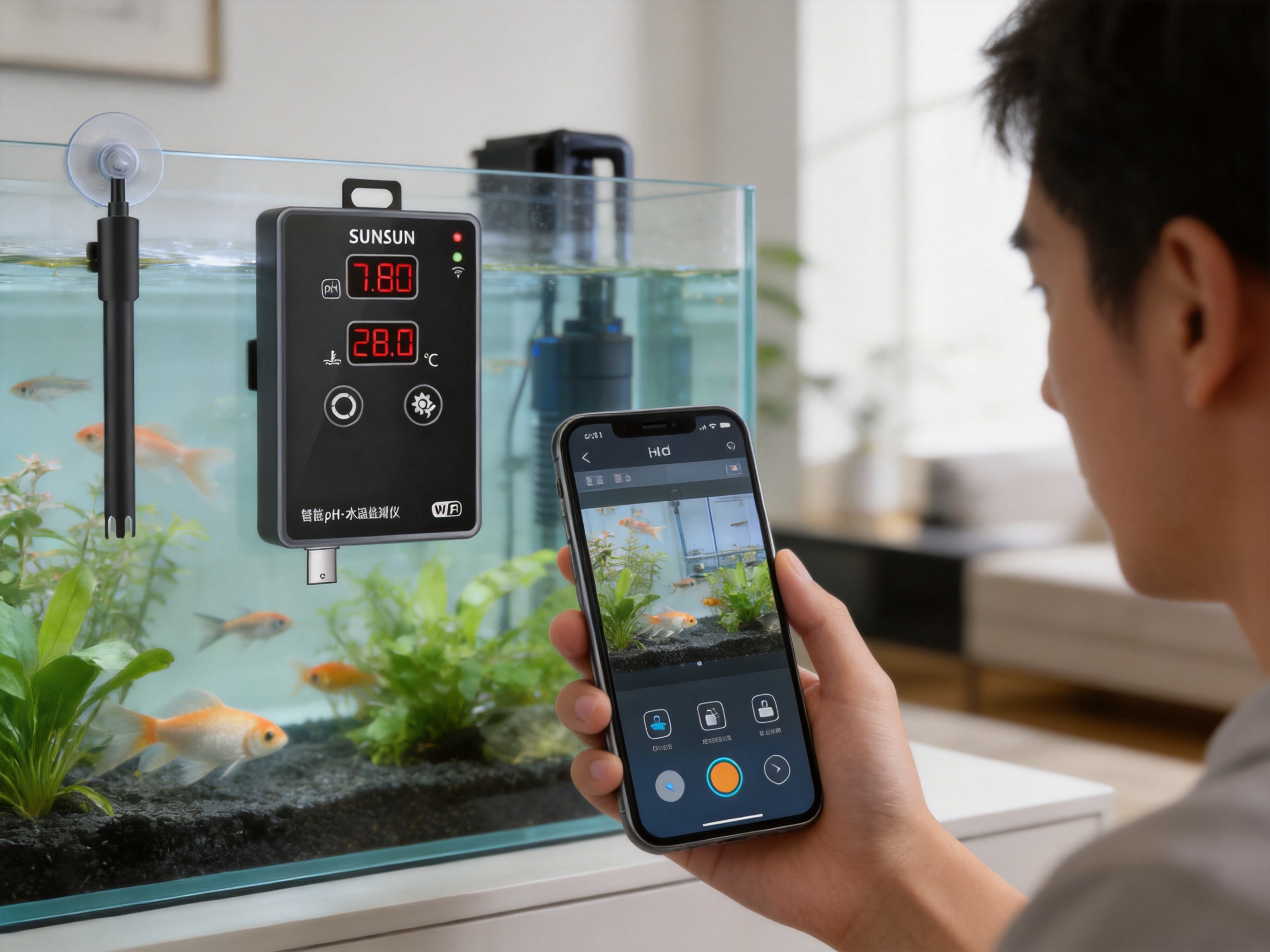
A monitoring device must be easy to install and stable in daily use. The vacuum sucker mounting feature is important because it allows the product to be attached to aquarium glass or other smooth surfaces without complex tools. This is especially convenient for users who do not want permanent modifications to the tank.
The vacuum sucker design supports flexible positioning. Users can place the device where observation is most useful, such as near the front glass for a broad tank view, near equipment for operational checks, or near a specific zone where fish often gather. The ability to reposition the device can help users adapt as aquascapes change, plants grow, or equipment layout is adjusted.
Installation video support also helps users understand setup steps more clearly. For smart aquarium products, correct installation affects the quality of monitoring. Clear guidance reduces confusion and makes the product more approachable for beginners. A user-friendly installation process is an advantage over devices that require technical knowledge or complicated mounting hardware.
Because the product connects with a mobile application, setup should be considered part of the overall user experience. A well-designed smart monitoring device should make connection, viewing, alerts, and playback straightforward. This is especially important for aquarium owners who may be familiar with fish care but less familiar with smart devices.
The quality of an aquarium controller depends not only on its concept, but also on the manufacturing strength behind it. The company associated with this product has a long development history dating back to 1985 and has expanded through continuous innovation in aquarium pets, aquaculture machinery, industrial equipment, garden equipment, water pumps, air pumps, aquarium accessories, and related fields. This background gives the product an important foundation: it is supported by a manufacturer with broad experience in aquatic systems rather than by a short-term consumer electronics assembler.
Long-term involvement in the aquarium industry matters because aquarium products face specific challenges. They operate near water, humidity, glass surfaces, pumps, lights, biological materials, and sensitive animals. A manufacturer familiar with these conditions can design products with practical aquarium use in mind. The Intelligent pH Water Temperature Monitor benefits from this ecosystem of experience.
The company has developed a structured headquarters with functional departments that include a research institute, business training systems, quality control, personnel and administrative information management, and financial management. Such an organizational structure supports product development from concept to mass production, from testing to market service. A research institute contributes to innovation and product improvement, while a quality control department supports consistency and reliability.
Manufacturing strength is also reflected in the company’s network of subsidiary corporations and trading operations. A broad production and marketing structure allows the company to respond to different market demands, support product distribution, and integrate feedback from domestic and international users. This is important for smart aquarium equipment, because user needs vary by region, species, tank size, and care style.
For a smart aquarium monitoring controller, advanced manufacturing is not limited to assembling parts. It involves product design, component selection, sensor integration, waterproofing considerations, electronic stability, software compatibility, camera performance, mounting reliability, inspection, packaging, and after-sales support. Each stage influences the final user experience.
Product development begins with identifying aquarium user needs. In this case, the needs include water condition monitoring, remote observation, alarm awareness, and easy installation. The research and development process must combine aquarium knowledge with electronics and smart application functionality. This requires interdisciplinary capability: understanding water chemistry, fish keeping habits, sensor behavior, camera usability, and mobile connectivity.
A company with a dedicated research institute can continue improving products based on market feedback and technological changes. For example, smart aquarium equipment may evolve toward more accurate sensors, clearer video, better app integration, more stable alarms, and more convenient user interfaces. Continuous research helps the product remain competitive.
Aquarium devices must be made with materials suitable for humid environments and frequent proximity to water. Components should resist corrosion, maintain stable performance, and avoid harmful effects on aquatic life when used correctly. Sensor components must be selected for consistency, while camera and electronic modules must support stable operation. Mounting components such as vacuum suckers must maintain grip and flexibility.
Smart monitoring equipment requires careful assembly. Sensors, camera modules, wiring, shells, and mounting points must align properly. Precision assembly helps reduce failure points and supports consistent performance across production batches. For users, this translates into easier installation, clearer viewing, and more dependable monitoring.
Quality control is critical for controller products. Inspection should consider electronic performance, visual clarity, mounting stability, app connectivity, alarm function, and appearance. A quality control department can establish procedures that reduce defects and ensure that products leaving the factory meet defined standards. This gives the product an advantage over low-cost competitors that may lack systematic inspection.
A large production and marketing system can support consistent supply. For distributors and retailers, this matters because product availability and repeatable quality are essential. For end users, production consistency means that replacement units, accessories, and support are more likely to be available. A company with long-term manufacturing scale is better positioned to maintain stable product lines.
The company has actively developed integrated online and offline service models and promotes smart application-based experiences. This is relevant to the Intelligent pH Water Temperature Monitor because the product itself depends on app connectivity and user interaction. A manufacturer that understands both physical aquarium products and digital service channels can better support smart aquarium ecosystems.
The smart aquarium market includes basic digital thermometers, pH pens, Wi-Fi cameras, automated feeders, lighting controllers, water pumps, and integrated aquarium systems. The Intelligent pH Water Temperature Monitor stands out because it connects water parameter awareness with visual monitoring and alarm functionality. Its competitive position can be understood through several dimensions.
A basic thermometer is inexpensive but limited. It only shows temperature, and the user must be present to read it. It does not provide pH information, video, alarms, or remote access. The intelligent monitor offers a more complete solution for users who want convenience and broader tank supervision.
Manual test kits can be accurate when used properly, but they require time, reagents, and user interpretation. They are not designed for quick remote awareness. The intelligent monitor is more convenient for routine observation and trend awareness. Test kits may still be used for confirmation or detailed water chemistry analysis, but the smart monitor improves daily convenience.
A standalone camera may provide video, but it usually does not focus on aquarium-specific monitoring needs such as pH and water temperature. It may not mount conveniently inside or near aquarium glass, and it may not be designed with aquarium observation in mind. The intelligent monitor provides a more targeted solution for fish keepers.
Some high-end aquarium controllers offer extensive automation, including dosing, lighting, pumps, and probes. However, they can be expensive and complex. The Intelligent pH Water Temperature Monitor offers a more accessible balance: important monitoring functions, app connection, video, alarms, and easy mounting. It is suitable for users who want smart oversight without building a complicated full automation system.
Low-cost unbranded devices may attract attention through price, but they may lack stable quality control, industry experience, and after-sales support. A product backed by a long-established aquarium equipment manufacturer offers stronger confidence in manufacturing, product continuity, and market understanding. This is a significant advantage for users who value reliability.
The most important purpose of monitoring is not simply collecting data. It is making better decisions. This controller helps users act more intelligently in several common situations.
If pH begins to drift, the user can consider recent water changes, substrate effects, carbon dioxide use, biological filtration, and buffering capacity. Visual monitoring can show whether fish remain active or show stress. This supports measured response rather than panic.
If water temperature changes unexpectedly, the user can check whether the heater is functioning, whether room temperature has changed, or whether the tank is exposed to sunlight. Remote video can help confirm whether equipment is operating normally or whether fish are gathering in unusual areas.
If an alarm occurs, the user can open the app to view the aquarium immediately. Instead of waiting until returning home, the user can decide whether to contact someone, adjust equipment if connected through other systems, or simply keep observing.
If fish aggression occurs, video playback can help identify the aggressor and the timing. This can guide changes in stocking, decoration, hiding places, or feeding routines. If fish become inactive, playback may reveal whether the change happened suddenly or gradually.
If uneaten food is a concern, visual monitoring can show feeding response. This helps avoid overfeeding, one of the most common causes of poor water quality. Better feeding management supports cleaner water and healthier fish.
Aquarium technology should ultimately serve the welfare of aquatic life. Fish cannot speak when water quality changes, but they show signs through behavior, color, movement, breathing, and appetite. A smart monitoring controller helps owners notice these signs earlier.
Stable pH and temperature reduce stress. Lower stress supports immune health, feeding behavior, growth, coloration, and breeding success. In community tanks, stable conditions also reduce conflict caused by environmental pressure. In planted aquariums, stable water supports plant growth, which in turn helps oxygenation, shelter, and biological balance.
Remote observation can also reduce unnecessary disturbance. Instead of repeatedly approaching the tank, turning on lights, or opening covers, the user can observe through video. This is useful for shy fish, breeding fish, and newly introduced livestock.
For responsible pet ownership, monitoring is a form of care. The product encourages users to pay attention to water conditions and behavior rather than treating the aquarium as decoration only. This aligns with modern expectations for humane and informed pet keeping.
Beginners often struggle because they do not yet know what normal aquarium conditions look like. A smart monitor helps them learn by connecting readings with visible behavior. They can see how fish respond after water changes, feeding, lighting schedules, or seasonal temperature shifts. This makes aquarium learning more intuitive.
Intermediate hobbyists often manage more complex tanks with plants, special fish, or multiple systems. They benefit from monitoring trends, reviewing video, and receiving alarms. The product supports more disciplined aquarium management without excessive complexity.
Advanced users may already own test kits and specialized equipment, but they still benefit from remote observation and integrated monitoring. For them, the product becomes part of a larger management system. Video playback and live viewing are particularly useful for breeding, behavior study, and high-value livestock.
Retailers and service professionals can use the device to improve supervision and customer communication. A live view of a display tank can attract attention, while monitoring helps staff maintain better conditions. Aquarium maintenance providers may also use smart observation to check client tanks between visits where appropriate.
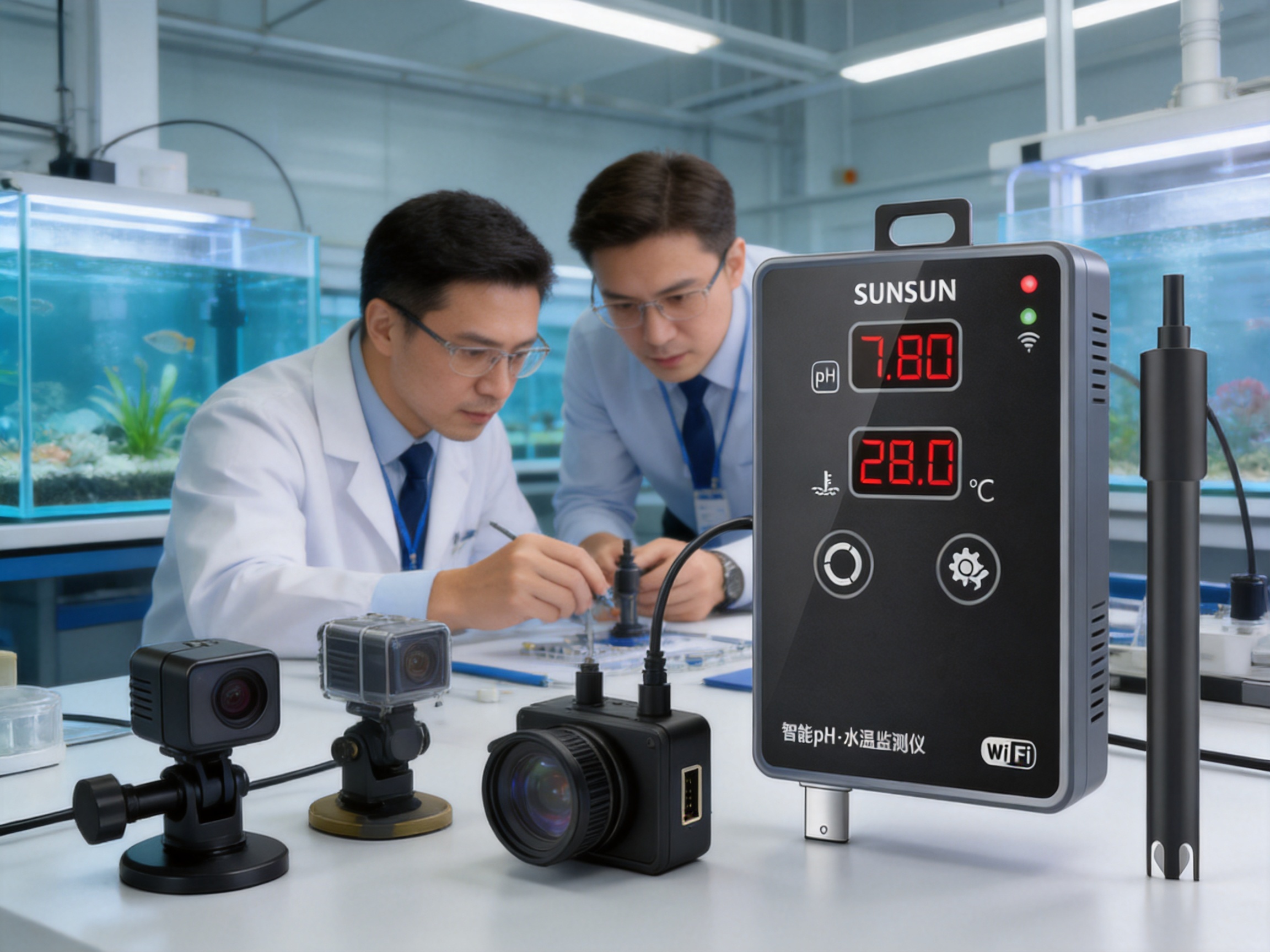
To obtain the best results, users should install the device in a position that provides a clear view and stable monitoring conditions. The aquarium glass should be clean where the vacuum sucker is attached. A secure attachment helps maintain viewing angle and reduces accidental movement.
The device should be positioned where it does not disturb fish or interfere with equipment. It should not block filter intake, heater operation, or fish swimming paths. In planted tanks, users should consider plant growth, because fast-growing stems may later cover the viewing area.
For pH and temperature monitoring, users should understand the preferred range of their specific aquatic species. The goal is not to chase a perfect number every hour, but to maintain stability within a suitable range. Sudden correction can sometimes be more harmful than gradual adjustment. Users should combine monitor readings with good aquarium practices, including regular water changes, proper filtration, responsible feeding, and appropriate stocking.
Video playback should be used as a learning tool. Reviewing fish behavior at different times can reveal useful patterns. For example, fish may become more active after lights turn on, may compete during feeding, or may hide during sudden room activity. Understanding these patterns helps create a better aquarium environment.
Alarm settings should be selected carefully. If alarms are too sensitive, users may receive unnecessary notifications. If they are too broad, important events may be missed. The best settings depend on tank type, fish behavior, room activity, and user preference.
The aquarium industry is moving toward smart, connected, and user-friendly products. Lighting systems can follow sunrise and sunset cycles. Pumps can be adjusted electronically. Feeders can operate automatically. Cameras can stream live views. Controllers can coordinate environmental information. The Intelligent pH Water Temperature Monitor fits this trend by making aquarium information more accessible through app connectivity and visual monitoring.
This trend is driven by real user needs. People want healthier fish, easier maintenance, better information, and more confidence when they are away from home. At the same time, aquariums are increasingly appreciated as lifestyle products, interior design elements, and educational displays. Smart monitoring makes aquariums more interactive and manageable.
Manufacturers with long experience in aquarium equipment are well positioned to lead this transformation. They understand the difference between ordinary electronics and aquarium-ready products. They know that reliability, safety, and ease of use are essential. By combining traditional aquarium manufacturing strength with digital technology, they can create products that serve both practical and emotional needs.
The company behind this product has grown through decades of development and has continuously expanded across aquarium pets, aquaculture machinery, industrial equipment, garden equipment, water pumps, air pumps, aquarium accessories, and pet-related products. This wide product background supports a deep understanding of aquatic environments and customer expectations.
Its headquarters structure includes multiple functional departments, including research, training, quality control, administrative information, personnel management, and finance. This structure helps ensure that product development is not isolated from production, service, and market feedback. A professional research institute supports innovation. A quality control department supports stable output. A business training system helps improve market service and product knowledge.
The company also operates through a broad network of subsidiaries and trading companies, supporting production and distribution across different regions. Such scale allows it to serve both domestic and international markets. For a smart aquarium monitor, this means the product is part of a larger ecosystem rather than a one-time device. Users, distributors, and retailers can have more confidence in continuity and support.
Another strength is the company’s commitment to marketing globalization and brand internationalization. Aquarium keeping is a global hobby, but markets differ in water conditions, species preferences, tank sizes, and consumer expectations. Experience across markets helps manufacturers design products with broader usability.
The company’s integrated online and offline development direction also aligns with smart aquarium devices. A product connected to an app is not only hardware; it is part of a service experience. The company’s attention to digital platforms and user interaction supports the long-term development of intelligent aquarium products.
Better monitoring can also contribute to more efficient aquarium operation. When users understand water conditions and fish behavior, they can avoid unnecessary interventions. They may reduce excessive water changes, avoid overuse of chemical adjusters, prevent overfeeding, and detect equipment problems earlier. This can save water, energy, and maintenance effort.
Temperature monitoring can help identify inefficient heating conditions. If a tank loses heat quickly, the user may adjust room conditions, heater placement, or tank cover usage. pH monitoring can help users understand whether their water change schedule and buffering approach are stable. Video monitoring can show whether circulation is adequate or whether debris is accumulating in dead zones.
For retailers or multi-tank users, efficient monitoring is especially valuable. Time spent checking each tank manually can be significant. A smart controller can support more targeted inspections, allowing users to focus attention where it is most needed.
As with all aquarium electronic equipment, responsible installation and use are important. Users should follow the product instructions, keep electrical connections safe, avoid improper placement, and ensure that the device is suitable for the intended aquarium environment. The vacuum sucker should be checked periodically to confirm secure attachment.
Monitoring devices support aquarium care, but they do not replace good husbandry. Users should still perform routine maintenance, clean filters as appropriate, test other important water parameters when needed, and observe livestock directly. The controller is most effective when used as part of a complete aquarium care routine.
pH readings should be interpreted thoughtfully. Many fish can adapt to a range of pH values if the water is stable. Sudden chemical adjustment can cause stress. Temperature changes should also be gradual unless an emergency requires immediate action. The device provides information; the user should apply that information with knowledge and patience.
The main purpose is to help aquarium users monitor important water conditions while also providing smart visual observation. It supports pH and water temperature awareness, 1080P HD viewing, video playback, alarm functions, and live aquarium viewing through app connectivity.
A normal thermometer only shows water temperature and usually requires the user to stand near the tank. This intelligent monitor offers broader functionality, including pH monitoring, remote viewing, video playback, dynamic alarm, static alarm, and app-based access.
pH affects fish comfort, biological filtration, plant growth, and overall water stability. Different species prefer different pH ranges, and sudden pH changes can cause stress. Monitoring helps users notice changes and maintain a more stable environment.
Water temperature influences fish metabolism, oxygen demand, digestion, immune response, and plant growth. Monitoring helps detect heater malfunction, room temperature effects, and seasonal changes before they become serious.
High-definition video allows clearer observation of fish behavior, equipment operation, water clarity, plant condition, and unusual events. Clear visuals are especially useful for remote checks and video playback review.
Video playback helps users review events that happened earlier, such as fish aggression, spawning behavior, equipment movement, feeding response, or unusual activity. It helps users understand causes rather than relying only on memory.
Dynamic alarm and static alarm functions are smart alert features designed to improve awareness of activity or abnormal conditions in the monitored area. They help users respond more quickly when something unusual may be happening in the aquarium.
Yes. Beginners can benefit because the device makes aquarium conditions easier to understand. It connects numerical monitoring with visual observation, helping new users learn how fish behavior relates to water stability.
Yes. Advanced hobbyists can use the device for breeding tanks, planted aquariums, high-value fish systems, and behavior observation. Video playback and remote monitoring are useful even for experienced users.
The product uses a vacuum sucker mounting method, allowing it to attach to aquarium glass or smooth surfaces. Users should follow the installation guidance and place it where it has a clear view and does not interfere with fish or equipment.
No. It supports better monitoring, but users should still perform regular water changes, filter maintenance, feeding control, and other water tests when necessary. The device is a tool for better care, not a substitute for responsible husbandry.
Aquarium monitoring devices operate in humid, water-related environments and must meet the practical needs of fish keepers. A manufacturer with long aquarium industry experience, research capability, quality control, and broad production systems is better equipped to deliver reliable and user-focused products.
The Intelligent pH Water Temperature Monitor represents the direction of modern aquarium care: smarter, more connected, more visual, and more responsive. By combining pH and water temperature monitoring with 1080P HD video, playback, dynamic alarm, static alarm, vacuum sucker installation, and live aquarium viewing, it provides a strong advantage over conventional single-function tools. It helps users understand not only what the water parameters are, but also how the aquarium is behaving.
Its value is practical for beginners, useful for advanced hobbyists, and relevant for professional aquarium environments. It supports healthier fish, better decision-making, easier remote supervision, and a more enjoyable aquarium experience. Backed by a manufacturer with decades of aquatic equipment experience, research and development capability, quality control systems, and broad production strength, the product is positioned as a dependable smart controller for the evolving aquarium market.
For users who want more than a thermometer, more than a pH pen, and more than a simple camera, this intelligent monitoring controller offers an integrated solution. It helps transform aquarium keeping from occasional checking into continuous awareness, giving aquarists the information and visual confidence needed to maintain a stable, beautiful, and healthy aquatic environment.
Axelrod, H. R., and Vorderwinkler, W. Encyclopedia of Tropical Fishes.
Spotte, S. Captive Seawater Fishes: Science and Technology.
Hovanec, T. A., and DeLong, E. F. Comparative Analysis of Nitrifying Bacteria Associated with Freshwater and Marine Aquaria.
Tullock, J. H. The Simple Guide to Freshwater Aquariums.
Walstad, D. Ecology of the Planted Aquarium.
Wedemeyer, G. A. Fish Hatchery Management.



 English
 русский
 España
 Portugal
 عربي
عربي
 No. 61-79, Baima Street, Maao Town, Dinghai District, Zhoushan City, Zhejiang Province, China.
 0086 580 8082088 / 8081168
 0086 580 8080978
 songhua@sunsun-china.com