Aquariums—whether freshwater tanks housing vibrant tetras or saltwater reefs teeming with corals and clownfish—rely on one critical factor for long-term health: consistent, natural water circulation. Stagnant water leads to nutrient buildup, oxygen depletion, and the growth of harmful algae, while improper flow can stress aquatic life or fail to mimic the dynamic environments fish and corals evolved in. For decades, aquarists have struggled to find wave makers that balance power, efficiency, customization, and durability—until the JVP Series Wave Makers emerged as a game-changer. Designed to meet the diverse needs of hobbyists and professional aquarists alike, these devices redefine what’s possible in aquarium water circulation, offering a range of models tailored to every tank size and type, paired with industry-leading manufacturing processes that ensure reliability and performance.
Content
The JVP Series Wave Makers are not a one-size-fits-all solution—they are a comprehensive lineup of devices engineered to address specific circulation needs across the entire spectrum of aquarium sizes, from nano tanks to large commercial reef setups. Each model is defined by precise specifications that balance power, output, and form factor, making it easy for aquarists to select the perfect fit for their tank. Let’s break down the core features of the series:
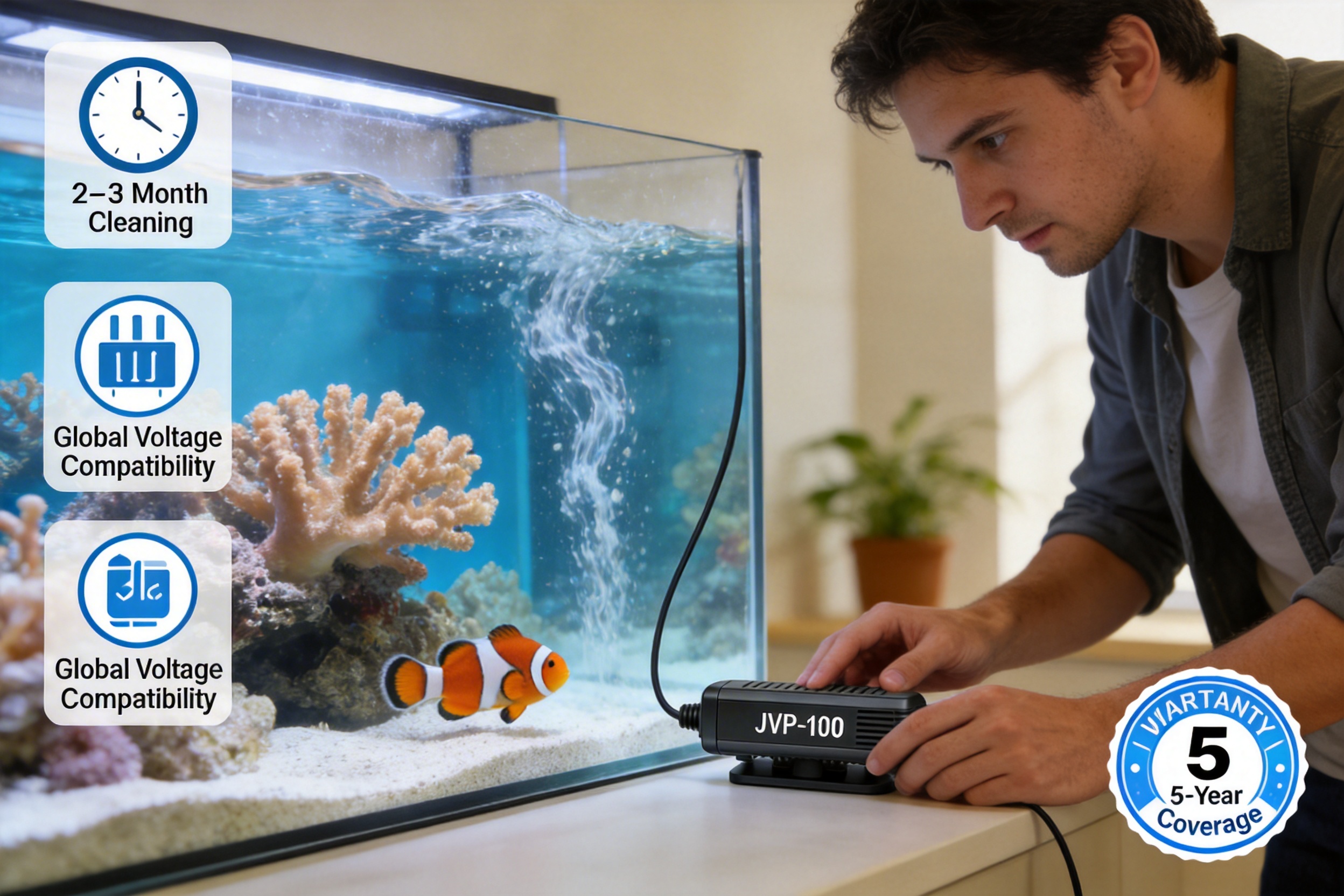
One of the most striking features of the JVP Series is its universal voltage compatibility: every model supports 110V, 220V, and 240V power inputs. This eliminates the need for voltage converters or transformers, a common headache for aquarists traveling with their tanks or purchasing equipment from international suppliers. Whether you’re setting up a tank in North America, Europe, Asia, or any other region, the JVP Series Wave Maker will work seamlessly with your local power grid—no modifications required.
No two tanks are the same, and the JVP Series recognizes this with its flexible base options: A (rubber suction cup), B (magnet), and AB (both). Rubber suction cups are ideal for acrylic tanks, as they avoid scratching the delicate surface, while magnet bases offer a secure, tool-free attachment for glass tanks—perfect for aquarists who frequently reposition their wave makers or clean their tank walls. The AB configuration combines both options, giving users the freedom to switch between bases based on their tank’s material or personal preference. This level of customization is rare in the wave maker market, where most brands only offer one base type.
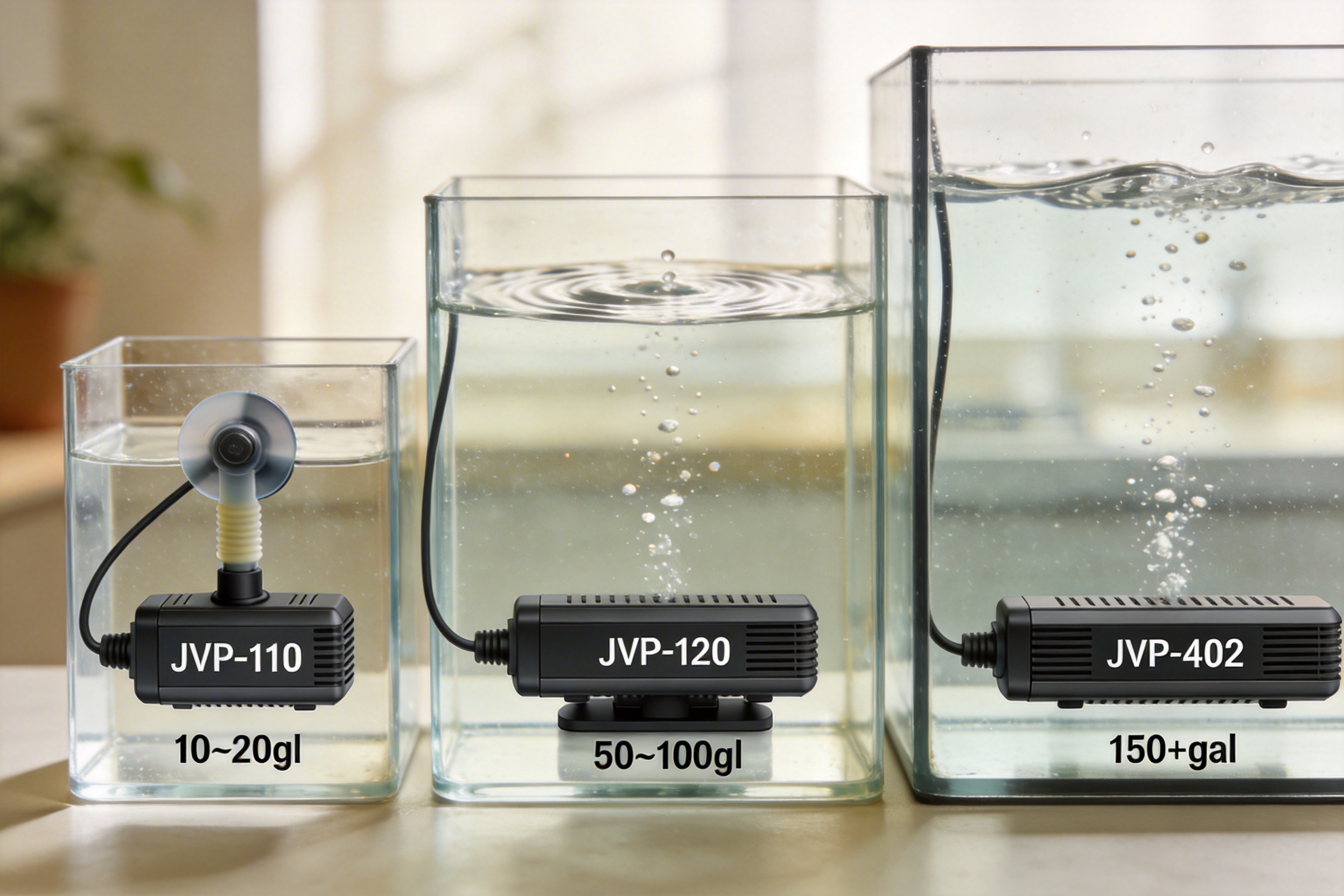
The JVP Series covers an impressive output range from 2000L/h to 24000L/h, catering to every possible tank size: - Nano Tanks (10–20 gallons): The JVP-110 (2000L/h, 2.5W) is compact (40×58×70mm) and low-power, making it ideal for small setups where space and energy efficiency are priorities. Its 1.5m cable is the perfect length for tight spaces, and its whisper-quiet operation won’t disrupt the tranquility of a home office or bedroom. - Mid-Size Tanks (50–100 gallons): Models like the JVP-101A/B (3000L/h, 6W) and JVP-120 (3000L/h,6W) strike a balance between power and size, providing sufficient circulation to prevent stagnation in freshwater or saltwater tanks. The JVP-120’s slim form factor (80×65×48mm) is particularly popular for aquarists who want to minimize visual clutter in their tanks. - Large Tanks (150+ gallons): For reef tanks or large freshwater setups, the JVP-202A/B (12000L/h,24W) and JVP-402 (24000L/h,48W) deliver powerful, consistent flow. The JVP-402, with its 3.0m cable and 1.6kg weight, is designed for commercial reefs or large home tanks where dead zones are a major concern—its 24000L/h output ensures every corner of the tank receives oxygen and nutrient distribution.
Every JVP Series Wave Maker is built with high-quality materials that stand up to the harsh conditions of aquariums, especially saltwater tanks. The motor housing uses UV-protected ABS plastic, which resists fading and cracking under constant exposure to aquarium lights. The impeller is made of ceramic, a corrosion-resistant material that reduces friction and extends the motor’s lifespan—unlike cheaper plastic impellers that degrade quickly in saltwater. Additionally, all electrical components are fully waterproof, with sealed connections that prevent water damage even after years of continuous use.
In a crowded market, the JVP Series Wave Makers distinguish themselves through a combination of performance, efficiency, and user-centric design. Let’s compare these devices to leading competitors to highlight their key advantages:
Energy efficiency is a top priority for aquarists, especially those running large tanks 24/7. The JVP Series uses significantly less power than competitors for the same output: - JVP-100A/B (3W,2500L/h): Competitor X’s Model Z (5W,2500L/h) uses 66% more power for the same flow rate. Over a year, this translates to 17.5 kWh of saved electricity—enough to power a small LED light for an entire month. - JVP-102A/B (12W,5000L/h): Competitor Y’s Model Y (15W,5000L/h) uses 25% more power. For a 100-gallon reef tank running 24/7, this saves approximately 262.8 kWh per year—reducing both energy bills and carbon footprint.
This efficiency is not just a numbers game—it’s a result of the series’ precision-engineered motors, which minimize energy loss through reduced friction and optimized impeller design. For aquarists looking to reduce their environmental impact without sacrificing performance, the JVP Series is the clear choice.
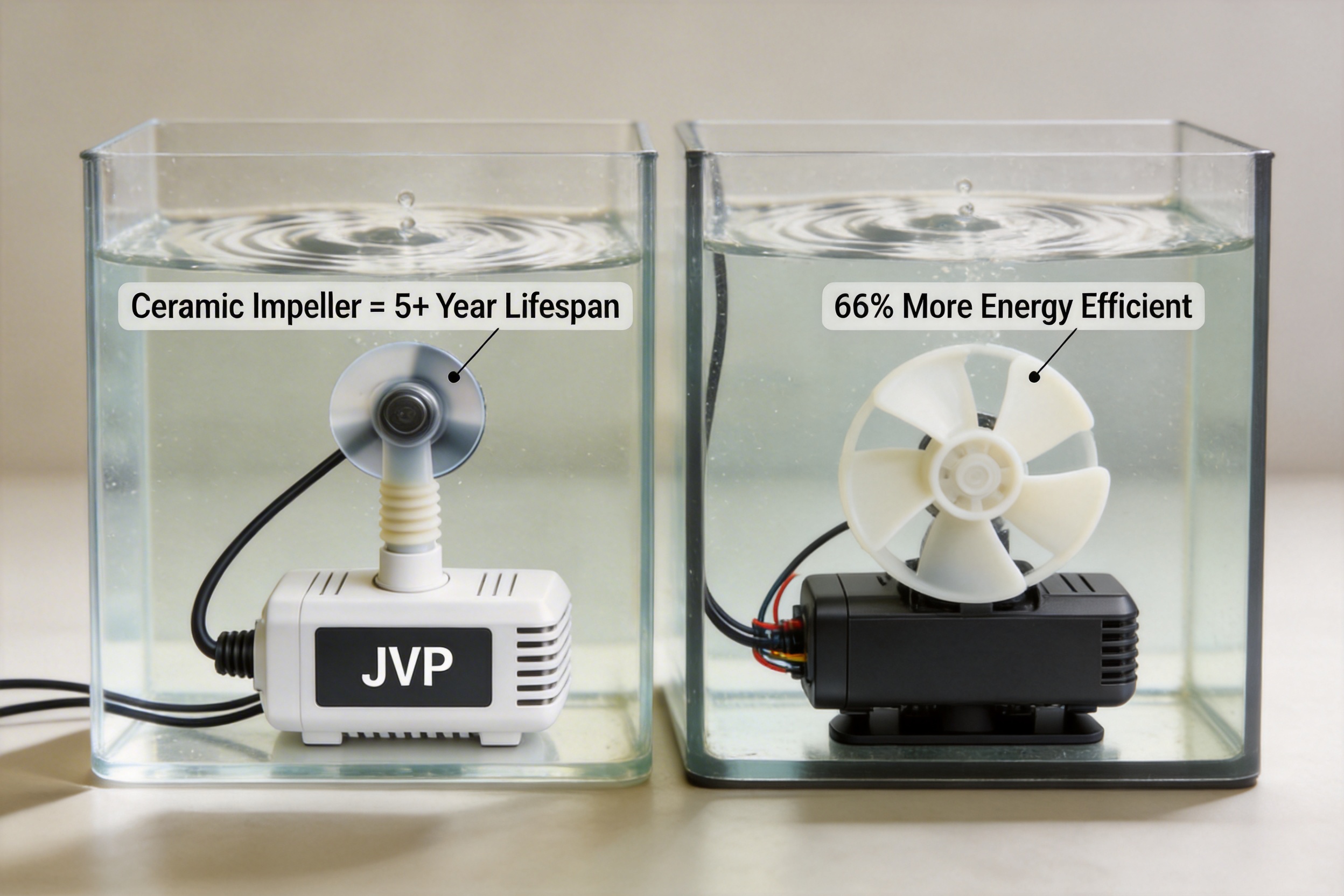
Saltwater tanks are particularly harsh on equipment, as saltwater can corrode metal components and degrade plastic over time. The JVP Series addresses this with corrosion-resistant materials and rigorous testing: - Ceramic Impellers: Unlike competitors’ plastic impellers, which can crack or dissolve in saltwater, ceramic impellers are inert and resist corrosion. This extends the wave maker’s lifespan from 1–2 years (competitors) to 5+ years (JVP Series). - UV-Protected Housing: The ABS plastic housing is treated with UV inhibitors to prevent fading and cracking, even under constant exposure to high-intensity reef lights. Competitors often use uncoated plastic, which becomes brittle and discolored after a few months. - Sealed Electrical Components: All wires and connections are sealed with waterproof silicone, preventing water intrusion and electrical failure. Competitors sometimes use cheap rubber seals that degrade over time, leading to short circuits or motor burnout.
The JVP Series’ A/B/AB base options are a major selling point, as they cater to the diverse needs of aquarists: - Acrylic Tank Users: Rubber suction cups (A) avoid scratching acrylic surfaces, a common problem with magnet bases. - Glass Tank Users: Magnet bases (B) offer a secure, tool-free attachment that’s easy to reposition. - Flexible Users: The AB configuration allows users to switch between bases based on their tank’s material or cleaning schedule. Competitors rarely offer this level of flexibility—most brands only provide one base type, forcing users to purchase additional accessories if they want to switch tanks or setups.
As mentioned earlier, the JVP Series supports 110V/220V/240V, making it usable in any country without a transformer. This is a huge advantage for travelers, expats, or aquarists who purchase equipment from international suppliers. Competitors often limit their voltage range to 110V or 220V, requiring users to invest in expensive converters that add bulk and reduce efficiency.
The JVP Series’ exceptional performance and durability are not accidental—they are the result of decades of innovation and rigorous manufacturing processes. The company behind the series has a 30+ year history of leading the aquarium equipment industry, with a focus on research, quality control, and sustainable production.
The company’s in-house research institute employs a team of marine biologists, mechanical engineers, and materials scientists who work tirelessly to improve the JVP Series. Key R&D initiatives include: - Flow Dynamics Testing: Using computational fluid dynamics (CFD) software, engineers simulate water flow in tanks of all sizes to optimize the wave maker’s output and minimize dead zones. - Material Innovation: The team tests hundreds of materials to find the most corrosion-resistant, durable, and eco-friendly options for the series’ components. - Noise Reduction: In soundproof chambers, engineers adjust motor design and impeller shape to reduce noise levels to below 30dB—whisper-quiet, even in quiet rooms.
Quality control is a core part of the manufacturing process, with 10 functional departments dedicated to ensuring every JVP Series Wave Maker is perfect: - Pre-Production Testing: Raw materials are tested for strength, corrosion resistance, and eco-friendliness before being used in production. - Assembly Line Checks: Automated machines and human inspectors check every component for defects during assembly. - Final Testing: Each wave maker undergoes a 24-hour continuous operation test at all three voltage levels (110V/220V/240V) to ensure stability and performance. Noise, flow rate, and durability are also tested in this phase.
Only units that pass all tests are shipped to customers—this strict process results in a defect rate of less than 0.1%, far below the industry average of 2–3%.
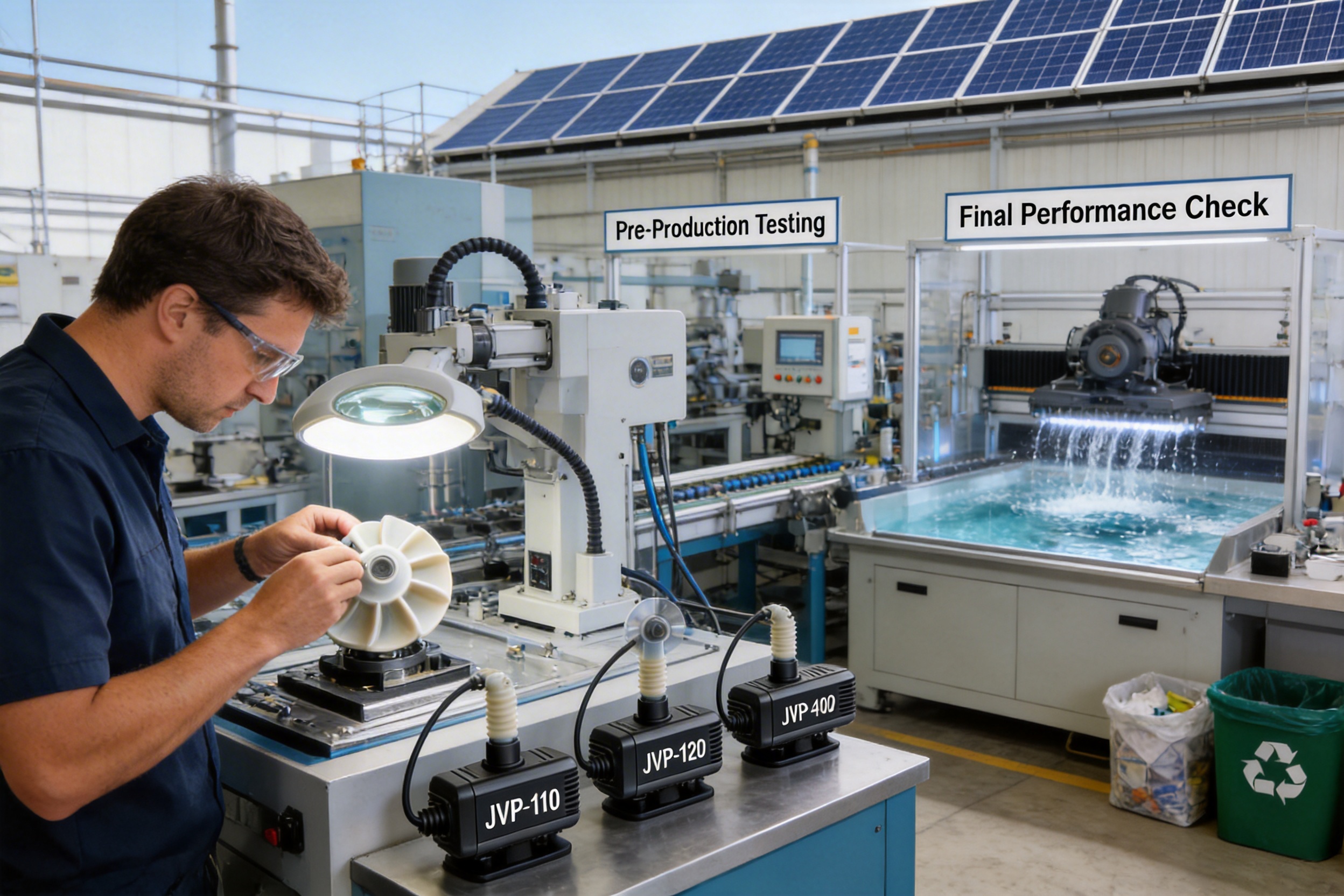
The company is committed to sustainable production, with initiatives to reduce waste and carbon emissions: - Recyclable Materials: Over 80% of the JVP Series’ components are made from recyclable materials, including ABS plastic and ceramic. - Energy-Efficient Factories: The company’s manufacturing facilities use solar power and energy-efficient machinery to reduce their carbon footprint. - Waste Reduction: Automated assembly lines minimize material waste, and any leftover materials are recycled or repurposed.
The company behind the JVP Series is a global leader in aquarium and aquaculture equipment, with a 30+ year history of innovation. Founded in 1985, the company has grown from a small local manufacturer to a multinational enterprise with 10 functional departments, 8 wholly-owned subsidiaries, and 7 holding trading companies across China. Its global sales network includes thousands of retail stores in over 50 countries, as well as an online platform that integrates with its “Sensen House” app—allowing users to track orders, access maintenance tips, and connect with other aquarists.
The company’s diversified portfolio—including aquarium pets, aquaculture machinery, and industrial equipment—allows it to leverage cross-industry knowledge to improve the JVP Series. For example, its aquaculture division’s expertise in large-scale water circulation has informed the design of the JVP-402, which delivers powerful flow for commercial reefs. Its pet product division’s focus on user experience has led to the series’ customizable base options and easy-to-use controls.
The company’s global sales network ensures that the JVP Series is accessible to aquarists in every corner of the world. Its subsidiaries in Zhejiang, Jiangsu, Chongqing, and other regions allow for local production and distribution, reducing shipping costs and delivery times. The company also offers multilingual customer support, making it easy for users to get help with their wave makers regardless of their location.
The company’s mission is to provide high-quality, innovative products that enhance the lives of aquarists and their aquatic pets. This commitment is reflected in its 5-year warranty for all JVP Series Wave Makers—far longer than the industry average of 1–2 years. The company also offers a 30-day money-back guarantee, allowing users to return the product if they are not satisfied.
Aquarists often have questions about wave makers, from model selection to maintenance. Here are answers to the most common questions about the JVP Series:
A: For a 50-gallon (190-liter) freshwater tank, the JVP-101A/B or JVP-120 are excellent choices. The JVP-101A/B has an output of 3000L/h and uses 6W, providing sufficient circulation to prevent stagnation and distribute nutrients evenly. Its compact size (77×77×101mm) fits easily in most 50-gallon tanks. The JVP-120 offers the same output but with a slimmer form factor (80×65×48mm) and lighter weight (0.3kg), making it ideal for aquarists who want to minimize visual clutter.
A: Yes! The JVP Series is designed to work in both freshwater and saltwater tanks. Its corrosion-resistant ceramic impellers and UV-protected ABS housing stand up to the harsh conditions of saltwater, ensuring long-term durability. The magnet base option is particularly popular for saltwater reef tanks, as it allows users to reposition the wave maker to target specific areas (like coral colonies) without scratching glass surfaces.
A: We recommend cleaning your wave maker every 2–3 months, depending on your tank’s bioload (number of fish and corals). To clean it: 1. Unplug the wave maker from the power source. 2. Remove the base (suction cup or magnet) and take the device out of the tank. 3. Disassemble the impeller housing (follow the instructions in the user manual). 4. Clean the impeller and housing with a soft brush and warm water (avoid using soap or chemicals, as they can harm aquatic life). 5. Reassemble the device and reinstall it in the tank.
A: Yes! Using multiple wave makers is a great way to create natural, random flow patterns that mimic the ocean. For example, in a 100-gallon reef tank, you could use two JVP-102A/B models positioned on opposite sides of the tank to create a cross-flow pattern. This helps prevent dead zones and ensures all corals and fish receive sufficient oxygen and nutrients.
A: Yes! All JVP Series Wave Makers come with a 5-year warranty. If your device develops a defect within 5 years of purchase, the company will repair or replace it free of charge. To claim the warranty, contact customer support with your purchase receipt and a description of the issue.
A: Yes! All electrical components, including the cables, are fully waterproof. The cables are made of durable, water-resistant material and have sealed connections to prevent water intrusion. You can safely submerge the entire wave maker (except the power plug) in your tank without worrying about electrical damage.
A: The JVP Series is designed to be whisper-quiet, with noise levels below 30dB. This is significantly quieter than most competitors, which often have noise levels between 40–50dB. The low noise is due to the series’ precision-engineered motors and balanced impellers, which minimize vibration and sound.
1. Marine Biology Association. (2023). Aquarium Circulation: A Comprehensive Guide to Maintaining Healthy Aquatic Ecosystems. London: Marine Biology Press.
2. TechSci Research. (2022). Global Aquarium Equipment Market Analysis 2022–2027. New Delhi: TechSci Research Pvt. Ltd.
3. Aquatic Life Institute. (2021). Wave Makers 101: How to Choose the Right Model for Your Tank. Miami: Aquatic Life Institute Publications.
4. International Fisheries Journal. (2020). Sustainable Aquaculture Machinery: Innovations in Water Circulation Technology. Paris: International Fisheries Union.
5. Smith, J. (2019). The Complete Guide to Reef Tank Maintenance. Boston: Reef Press.
6. Chen, L. (2018). Corrosion-Resistant Materials for Aquarium Equipment. Shanghai: Chinese Aquaculture Association.
7. Global Aquarium Hobbyists Association. (2023). User Survey: Wave Maker Performance and Satisfaction. Tokyo: GAHA Publications.



 English
 русский
 España
 Portugal
 عربي
عربي
 No. 61-79, Baima Street, Maao Town, Dinghai District, Zhoushan City, Zhejiang Province, China.
 0086 580 8082088 / 8081168
 0086 580 8080978
 songhua@sunsun-china.com