Content
Maintaining clean, oxygen-rich, and properly circulated water is one of the most important responsibilities in aquarium care. Fish, aquatic plants, beneficial bacteria, and other aquatic organisms all depend on stable water conditions. A suitable pump must therefore do more than move water. It should support filtration, provide dependable circulation, help maintain oxygen exchange, resist corrosion, operate safely in a wet environment, and remain practical for different aquarium sizes.
The HJ Series Multi-Function Submersible Filtration Pump is designed to meet these combined requirements in a compact and versatile format. Rather than functioning only as a basic water-transfer device, the series can be used for filtration, water pumping, or oxygen supply. Its submersible construction allows the pump to work directly inside the aquarium or water container, while its integrated filtration capability helps improve water quality and supports the development of beneficial nitrifying bacteria.
The series includes a broad range of models, from the compact HJ-111B for small aquariums to the higher-capacity HJ-1152 for larger systems and more demanding circulation applications. Across the range, power consumption extends from 2 watts to 22 watts, maximum head height reaches up to 2.0 meters, and water output ranges from 200 liters per hour to 1,200 liters per hour. This range allows aquarium owners, retailers, ornamental fish breeders, and aquatic equipment integrators to select a configuration that matches the size and purpose of their system.
Built with high-quality ABS housings, ceramic axle cores, ceramic casings, waterproof construction, and biochemical filter cotton, the HJ Series combines durability with functional flexibility. The design also reflects the manufacturing strengths of Sensen Group Co., Ltd., a long-established producer involved in aquarium products, aquaculture machinery, industrial equipment, and related technologies.
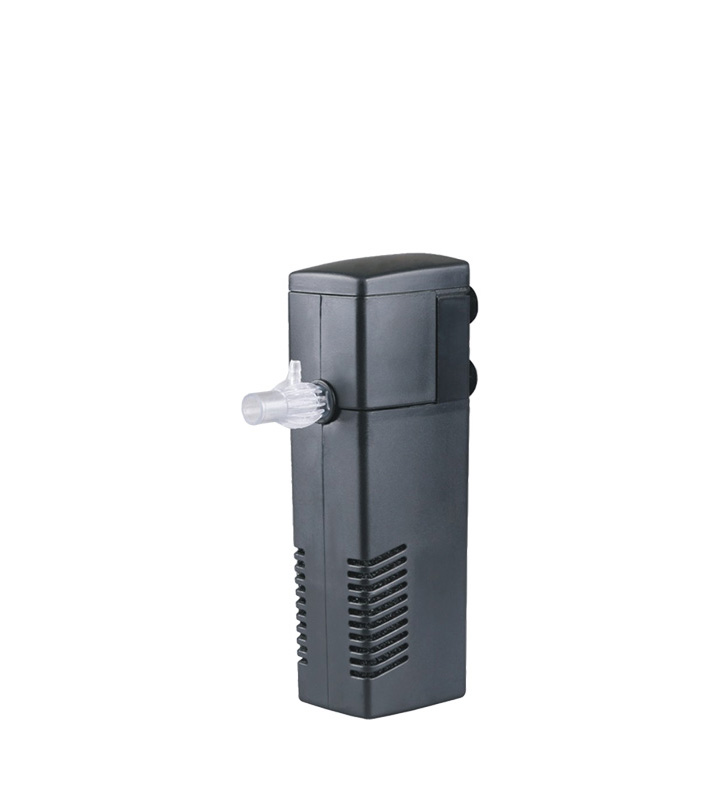
HJ Series Multi-Function Submersible Filtration Pump
Water movement is essential in both freshwater and marine aquariums. Without sufficient circulation, waste can accumulate in stagnant areas, oxygen levels may become uneven, and beneficial bacteria may not receive a consistent supply of oxygenated water. Poor movement can also reduce the effectiveness of filtration equipment and make it more difficult to maintain a stable aquatic environment.
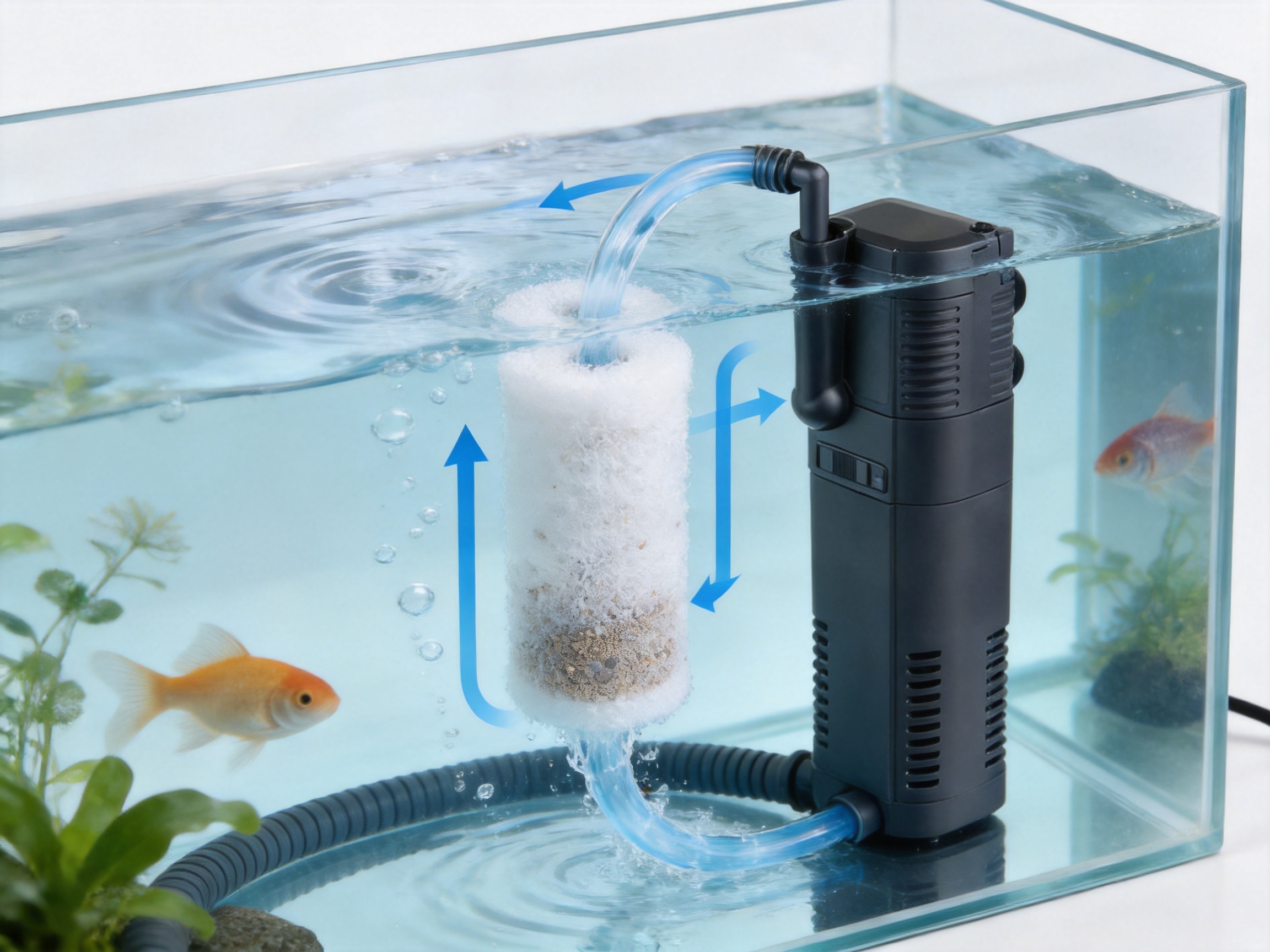
A submersible filtration pump helps address these challenges by drawing water through a filtration medium and returning it to the aquarium. As water passes through the biochemical filter cotton, suspended particles can be captured while the increased surface area provides a place for beneficial microorganisms to grow. These microorganisms support biological filtration by helping convert harmful compounds produced by fish waste and decomposing organic matter.
Water circulation also improves oxygen exchange. When the pump creates movement at or near the water surface, it encourages contact between the water and the surrounding air. In systems using an air-supply function or suitable outlet arrangement, the pump can further contribute to oxygenation. This is particularly valuable in densely stocked aquariums, breeding systems, temporary holding tanks, and aquaculture applications.
The practical advantage of a multi-function pump is that one compact unit can support several aquarium management tasks. A hobbyist may use it as an internal filter, a circulation pump, or a water-transfer device. A professional user may integrate it into a custom filtration system or connect it to compatible tubing where the model provides a hose adapter.
The external shells of the HJ Series are made from high-quality ABS material. Acrylonitrile butadiene styrene is widely used in equipment housings because it offers a useful balance of rigidity, impact resistance, dimensional stability, and manufacturability. For an aquarium pump, the housing must protect internal components while remaining lightweight enough for easy installation and handling.
A well-formed ABS shell also helps maintain the correct alignment of internal pump components. This is important because the impeller, axle core, casing, and water channels must work together with accurate clearances. Proper alignment can support stable operation, reduce unnecessary vibration, and help the pump deliver consistent water flow.
Compared with fragile or poorly finished plastic housings, a durable ABS body offers better resistance to the normal handling associated with aquarium maintenance. Users frequently remove pumps for cleaning, reposition equipment, replace filter media, or adjust tubing. A robust housing is better suited to these repeated activities.
The axle cores and casings are made from high-quality ceramic components. Ceramic is valued in aquatic equipment because it is non-corrosive and can perform reliably in continuous contact with water. Unlike common metal parts that may be vulnerable to oxidation or corrosion, ceramic components are less likely to degrade as a result of prolonged exposure to moisture.
The use of ceramic components is especially relevant for aquariums where water chemistry can vary. Mineral content, salt, cleaning residues, and biological activity may all affect equipment over time. Non-corrosive materials help protect the internal mechanism and reduce the risk of contamination caused by material deterioration.
Ceramic surfaces can also support smooth movement within the pump assembly when correctly manufactured and installed. This contributes to reliable operation and can help extend service life. Although all submerged equipment should be inspected and cleaned periodically, the ceramic axle and casing provide an important structural advantage over designs that rely heavily on corrosion-sensitive components.
Because the pump is designed for submersible use, waterproof performance is fundamental. The HJ Series is built with waterproof protection and good insulation performance to support safe operation in an aquatic environment. The electrical system, housing, seals, and internal structure must work together to prevent water from reaching sensitive electrical areas.
Users should always follow appropriate electrical safety practices. The pump should be installed according to its operating instructions, connected to a suitable power supply, and disconnected before maintenance or cleaning. Cables should be positioned to prevent water from running directly toward electrical outlets, and the equipment should never be operated if the cable, plug, or housing shows damage.
The combination of waterproof design and insulation performance makes the HJ Series suitable for continuous aquarium operation when properly installed. This is a significant advantage over improvised circulation solutions that may not have been designed for immersion. Purpose-built submersible equipment provides a more dependable foundation for aquarium water management.
The HJ Series uses high-quality biochemical filter cotton to support biological filtration. Filter cotton performs two important functions. First, it helps intercept suspended particles and visible debris. Second, its porous structure can provide a surface where beneficial nitrifying bacteria establish colonies.
Biological filtration is central to maintaining a healthy aquarium. Fish excrete waste, uneaten food decomposes, and organic material breaks down into compounds that can be harmful at elevated concentrations. Beneficial bacteria help process these compounds through the aquarium nitrogen cycle. The filter medium does not replace regular water changes or proper stocking practices, but it provides a useful biological support system.
The quality of the filter medium affects how efficiently water can pass through the pump and how consistently the filtration function operates. A suitable material should allow adequate flow without collapsing too easily or becoming blocked immediately. Routine maintenance remains important because accumulated debris can restrict flow and place additional stress on the pump.
In filtration mode, the pump draws aquarium water through the biochemical filter cotton and returns the filtered water to the tank. This arrangement can help reduce suspended particles and support biological activity. It is suitable for aquariums that require internal filtration without the space or plumbing requirements of a large external filter.
An internal filtration pump can be particularly convenient in small and medium-sized aquariums. The unit is positioned directly inside the tank, which reduces the need for long external hoses and simplifies installation. For new aquarium owners, this straightforward configuration can make routine setup more accessible.
The HJ Series can also be used as a water pump. Depending on the model and installation arrangement, it may support water transfer, circulation between aquarium sections, operation of a small waterfall feature, or connection to compatible filtration equipment. Models with a 13-millimeter hose adapter, such as the HJ-532 and HJ-732, offer additional flexibility for tubing-based installations.
Water pumping capability is useful during aquarium maintenance. A pump can help move water between a storage container and an aquarium, circulate water through a treatment system, or support a quarantine setup. Because different applications require different flow rates and head heights, selecting the correct model is essential.
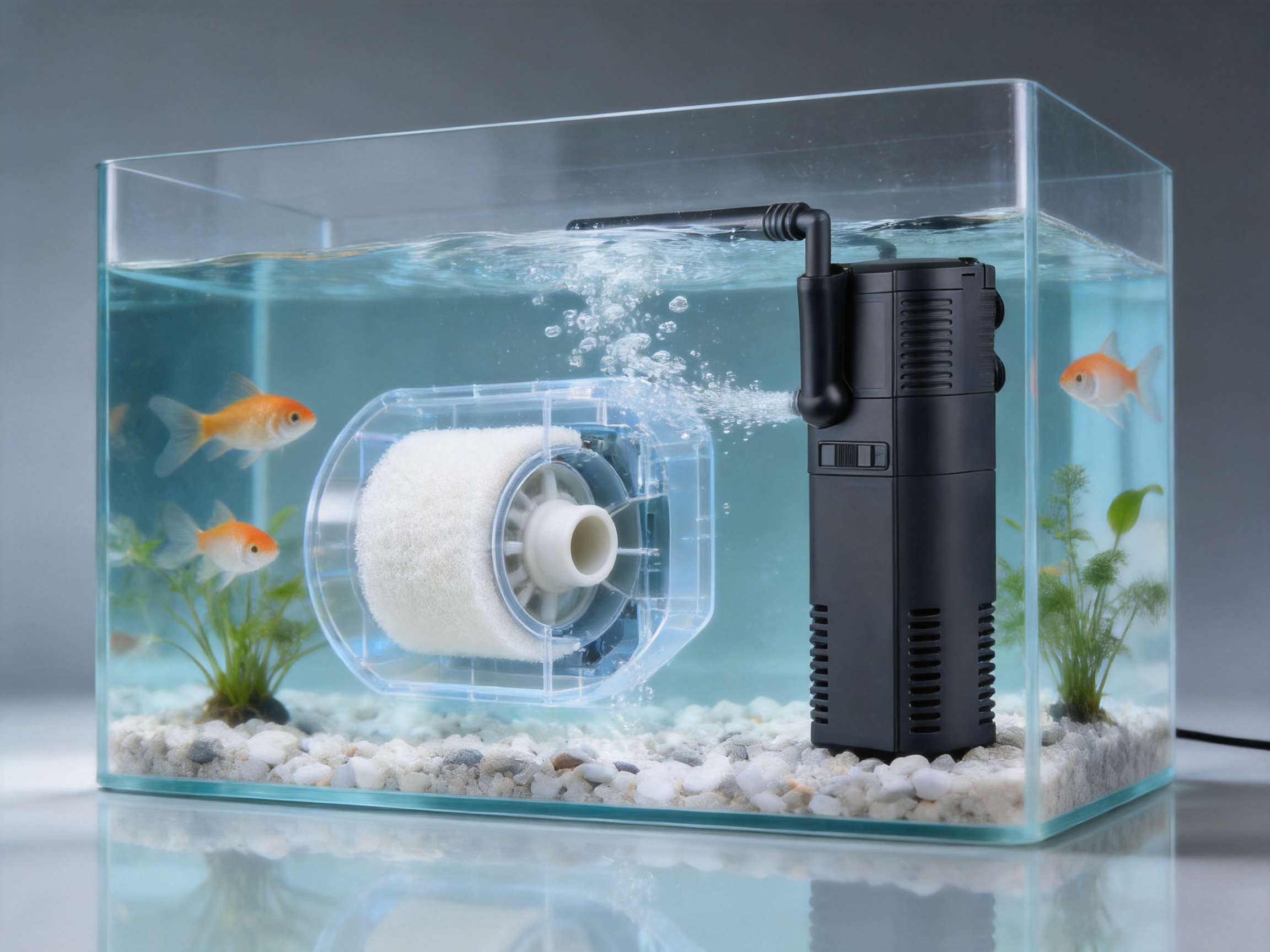
Water movement contributes to oxygen exchange by disturbing the surface and circulating water throughout the aquarium. The HJ Series can be used to supply oxygen as part of a suitable aquarium arrangement. This makes the pump valuable in systems where circulation and oxygenation need to be addressed by one compact device.
Oxygen demand varies according to fish species, stocking density, water temperature, plant coverage, and filtration activity. The pump should therefore be selected according to the overall aquarium design rather than output alone. In heavily stocked systems, additional aeration may still be appropriate.
The HJ Series is offered in several configurations. The differences in power, maximum head height, output, dimensions, and weight allow users to choose a pump for a specific aquarium or installation requirement. The following table summarizes the available models.
| Model | Voltage | Frequency | Power | Maximum Head | Output | Hose Adapter | Cable Length | Weight | Dimensions L × W × H |
|---|---|---|---|---|---|---|---|---|---|
| HJ-111B | 110V/220V/240V | 50Hz/60Hz | 2W | 0.45m | 200L/h | Not specified | 1.5m | 0.15kg | 32 × 38 × 105mm |
| HJ-311B | 110V/220V/240V | 50Hz/60Hz | 2W | 0.6m | 300L/h | Not specified | 1.5m | 0.15kg | 36 × 44 × 133mm |
| HJ-411B | 110V/220V/240V | 50Hz/60Hz | 2W | 0.6m | 300L/h | Not specified | 1.5m | 0.15kg | 36 × 44 × 115mm |
| HJ-611B | 110V/220V/240V | 50Hz/60Hz | 6W | 0.9m | 450L/h | Not specified | 1.5m | 0.3kg | 43 × 53 × 163mm |
| HJ-532 | 110V/220V/240V | 50Hz/60Hz | 5W | 0.6m | 350L/h | 13mm | 1.5m | 0.22kg | 60 × 42 × 170mm |
| HJ-732 | 110V/220V/240V | 50Hz/60Hz | 8W | 0.8m | 550L/h | 13mm | 1.5m | 0.35kg | 67 × 52 × 182mm |
| HJ-752 | 110V/220V/240V | 50Hz/60Hz | 10W | 1.1m | 600L/h | Not specified | 1.5m | 0.5kg | 76 × 50 × 152mm |
| HJ-952 | 110V/220V/240V | 50Hz/60Hz | 16W | 1.4m | 800L/h | Not specified | 1.5m | 0.6kg | 95 × 62 × 287mm |
| HJ-1152 | 110V/220V/240V | 50Hz/60Hz | 22W | 2.0m | 1,200L/h | Not specified | 1.5m | 0.9kg | 110 × 70 × 330mm |
The HJ-111B, HJ-311B, and HJ-411B are compact, low-power options. Each uses only 2 watts, making these models appropriate for users who want modest circulation with low energy consumption. Their outputs range from 200 liters per hour to 300 liters per hour, while maximum head heights reach 0.45 to 0.6 meters.
The HJ-111B has the smallest listed dimensions and is suited to installations where space is limited. The HJ-311B and HJ-411B provide the same stated output and power but differ in physical dimensions. This gives installers more flexibility when choosing a unit that fits a particular filter compartment or aquarium layout.
The HJ-532, HJ-611B, and HJ-732 occupy the middle of the range. These models provide a useful balance between compact size, moderate energy consumption, and higher output. The HJ-532 offers 350 liters per hour at 5 watts and includes a 13-millimeter hose adapter. The HJ-611B produces 450 liters per hour at 6 watts and reaches a maximum head height of 0.9 meters.
The HJ-732 delivers 550 liters per hour at 8 watts and includes a 13-millimeter hose adapter. It may be suitable for users who need stronger circulation or a tubing connection while still seeking a relatively compact pump. These models are practical for community aquariums, planted aquariums, quarantine tanks, and small custom water features, subject to the requirements of the specific installation.
The HJ-752, HJ-952, and HJ-1152 are designed for higher water movement requirements. Their outputs are 600 liters per hour, 800 liters per hour, and 1,200 liters per hour respectively. Maximum head heights increase from 1.1 meters to 2.0 meters, making these models more suitable for installations where water must be lifted or moved through a more demanding circulation path.
The HJ-1152 is the most powerful model in the listed range. With 22 watts of power and a maximum head height of 2.0 meters, it can serve larger aquariums, multi-section systems, or applications requiring stronger circulation. Its larger dimensions and 0.9-kilogram weight should be considered during installation.
A basic pump may be designed only to move water. The HJ Series provides a broader operating role by combining pumping, filtration, and oxygen-support functions. This reduces the need to purchase several separate devices and can simplify aquarium equipment management.
Fewer separate components may also mean fewer cables, fewer mounting points, and less congestion around the aquarium. For small installations, this space-saving benefit can be especially important. For larger systems, the pump can be integrated into a wider filtration and circulation plan.
The use of ABS for the external shell and ceramic for the axle core and casing creates a material combination suited to wet environments. A housing made from durable plastic can withstand routine handling, while ceramic internal components offer resistance to corrosion. This is a practical advantage over low-cost pumps that use less suitable internal materials.
Material selection also influences long-term maintenance. Corrosion can cause rough surfaces, reduced movement, discoloration, and eventual mechanical failure. Non-corrosive ceramic parts help reduce these risks, although regular cleaning remains necessary to prevent algae, mineral deposits, and organic debris from affecting performance.
The availability of nine models is another advantage. Users do not have to choose between a single low-capacity pump and an oversized commercial unit. Instead, they can compare output, head height, dimensions, and power consumption to find a closer match for the intended application.
A pump that is too small may fail to provide adequate circulation. A pump that is too large may create excessive flow for delicate fish or plants, consume more energy than necessary, and require additional flow-control measures. The HJ Series range supports more precise selection.
The listed models support 110V, 220V, and 240V operation and are specified for 50Hz and 60Hz frequencies. This broad electrical specification can simplify product distribution across different markets. However, customers should confirm the exact electrical configuration supplied for their destination and ensure that installation complies with local electrical standards.
Each listed model includes a 1.5-meter cable. This length is practical for many aquarium installations because it provides room to position the pump inside the tank while reaching a nearby power source. Proper cable routing is still essential. The cable should be arranged with a drip loop and kept away from sharp edges, excessive heat, and areas where it may be pinched.
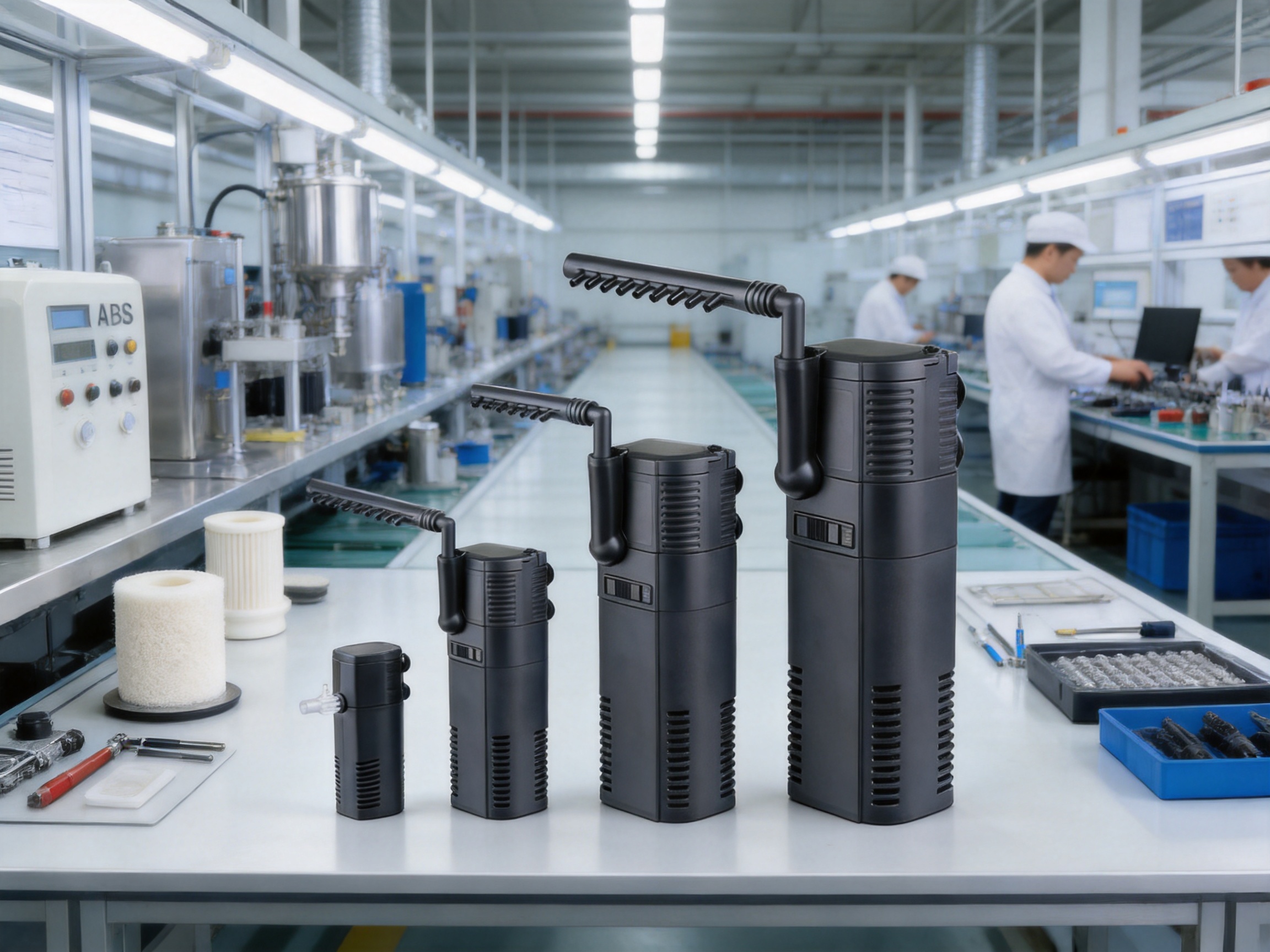
The performance of an aquarium pump depends not only on its design but also on the consistency of its manufacturing process. The HJ Series reflects the experience of Sensen Group Co., Ltd., which was established in 1985 and has developed activities across aquarium pets, aquaculture machinery, industrial equipment, and related product fields.
More than three decades of industry experience can support the development of practical products that respond to real user requirements. Aquarium equipment must operate in demanding conditions: continuous contact with water, repeated cleaning, changing water chemistry, biological buildup, and long operating cycles. Experience in this field helps manufacturers recognize the importance of materials, sealing, component fit, flow design, and maintenance access.
The HJ Series demonstrates a focus on practical engineering rather than unnecessary complexity. Its design combines a submersible pump mechanism with filtration media and flexible application options. This approach is valuable for both household users and professional customers who need dependable equipment without excessive installation difficulty.
The company has established a research institute and maintains functional departments associated with product development, quality control, personnel administration, finance, and business training. A dedicated research structure can support continuous improvement in pump design, materials, production methods, energy use, and user convenience.
Research and development are particularly important for small water pumps because seemingly minor changes can affect performance. Impeller geometry, internal water channels, axle fit, housing thickness, seal design, motor efficiency, and filter-media placement all influence the final product. Systematic technical work allows these details to be evaluated as part of a complete product rather than as isolated components.
A quality control department provides an organizational foundation for consistent production. Quality control may include inspection of incoming materials, dimensional checks, assembly verification, electrical safety testing, water-resistance evaluation, operational testing, packaging inspection, and documentation review.
For a submersible pump, quality control is especially important because the product combines mechanical, electrical, and waterproof requirements. A pump may have excellent water output but still be unsuitable if the insulation is inconsistent. Similarly, a well-sealed unit must also maintain stable axle alignment and dependable flow. A complete quality approach examines the entire product system.
The group operates through a broad corporate structure that includes wholly owned subsidiaries and an import and export company. Its business network covers aquarium equipment as well as other machinery and pet-related products. This scale can provide advantages in procurement, manufacturing coordination, technical resource allocation, packaging, logistics, and after-sales support.
Large-scale production can also make it easier to maintain standardized components and repeatable assembly procedures. For distributors and commercial buyers, supply stability is often as important as product performance. A manufacturer with an established production and marketing network may be better positioned to support recurring orders and a wider product portfolio.
The company has developed a nationwide sales network and aquarium retail presence, while also working on integrated online and offline service models. This connection to retailers and end users can provide valuable market feedback. Information about common installation problems, preferred specifications, service requirements, and product usage conditions can be used to guide future improvements.
For international customers, an established export structure is also beneficial. It can support communication with distributors, product documentation, model selection, and shipment coordination. Buyers should nevertheless confirm commercial terms, regional certifications, packaging requirements, and technical support arrangements before placing an order.
The manufacturing process begins with the selection and preparation of materials. ABS resin must be processed under controlled conditions to produce housing parts with accurate dimensions and stable mechanical properties. Ceramic axle cores and casings require appropriate forming, sintering, finishing, and inspection to achieve the necessary geometry and surface quality.
Filter cotton must also be selected for appropriate density, resilience, water permeability, and biological surface area. The media must be compatible with the pump structure and should not release unwanted substances into aquarium water when correctly used.
Plastic housing parts are typically produced through controlled molding processes. Accurate molds help ensure that the shell, protective grilles, internal supports, and connection areas fit together correctly. Consistent molding is important because even small variations can affect water flow, assembly fit, and sealing performance.
Ceramic components require careful dimensional control. The axle core must fit the corresponding support points, while the casing must work with the impeller and surrounding structure. Excessive clearance may increase vibration, while insufficient clearance can restrict movement. Production controls help maintain a suitable balance.
During assembly, the motor, axle core, impeller, casing, seals, housing, and electrical components must be positioned accurately. The assembly sequence should protect delicate components and ensure that the rotating parts move freely. The pump must be able to operate continuously without unnecessary friction or obstruction.
Assembly consistency has a direct influence on noise, vibration, flow stability, and service life. A well-organized production line can use standardized work instructions and inspection points to reduce variation between units. This is one area where manufacturing experience and quality-control discipline provide meaningful advantages.
Waterproofing is verified through inspection of housing joints, cable entry points, seals, and other areas where water could reach electrical components. Electrical inspection may include checks for insulation performance, continuity, power consumption, and safe operation under the specified voltage and frequency conditions.
Testing should be carried out with procedures appropriate to the model and target market. Because the products are intended for use in water, safety-related inspections are essential. Distributors and end users should also inspect each unit before installation and discontinue use if damage is visible.
Output and maximum head height are important performance indicators. Flow testing helps confirm that a model can deliver water at the stated operating conditions. Head-height testing evaluates the pump’s ability to move water upward against resistance. Actual flow in an installation may be lower than the rated output because of tubing length, bends, filter resistance, outlet configuration, water depth, and elevation.
Testing across the model range helps distinguish the intended applications of each product. The result is a clearer selection process for users and distributors. It also helps identify problems related to impeller alignment, blockage, motor performance, or housing fit before products are shipped.
Before shipment, finished pumps may be checked for appearance, model identification, cable condition, accessory completeness, filter-media placement, and packaging integrity. Clear model labeling is important because the HJ Series includes several visually related products with different output and dimensions.
Appropriate packaging protects the housing, cable, hose connection, and internal components during transportation. For export markets, packaging must also be suitable for warehouse handling, container loading, and distribution through retail or wholesale channels.
Model selection should begin with the aquarium volume and the required circulation rate. Users should then consider the distance the water must travel, the vertical height of the outlet, tubing resistance, filter-media resistance, and the sensitivity of the aquarium inhabitants.
For small tanks with modest circulation needs, the HJ-111B, HJ-311B, or HJ-411B may be appropriate. Medium installations may benefit from the HJ-532, HJ-611B, or HJ-732. Larger systems or applications with greater lifting requirements may require the HJ-752, HJ-952, or HJ-1152.
Rated output should not be treated as the exact flow that will always reach the aquarium outlet. A pump’s actual delivery depends on the complete system. If the pump must lift water close to its maximum head height, the flow may be significantly reduced. Selecting a model with a suitable performance margin can help maintain effective circulation.
The pump should be positioned securely and kept fully submerged when the design requires submersible operation. It should not be allowed to run dry. Dry operation can increase heat, reduce lubrication, and damage internal parts.
The intake area should be kept away from large gravel, loose decorations, plant fragments, and other materials that could block the pump. If the pump is installed near the substrate, a protective arrangement may be needed to prevent sand or fine particles from entering the intake.
Models supplied with a 13-millimeter hose adapter can be connected to compatible tubing. Tubing should be securely fitted and routed with as few sharp bends as possible. Excessive bends can restrict flow and increase the load on the pump.
Users should verify the internal diameter and material of the hose before installation. A connection that is too loose may leak or disconnect, while an incompatible hose may be difficult to fit. The outlet should also be arranged to avoid splashing outside the aquarium.
Regular cleaning helps preserve water flow. Filter cotton should be rinsed or replaced according to the level of debris and the needs of the aquarium. Mechanical parts should be inspected for algae, mineral deposits, plant material, and other obstructions.
Cleaning should be performed with the pump disconnected from the power supply. The housing should be opened only in accordance with the product instructions. Abrasive tools and aggressive chemicals should be avoided because they may damage surfaces, seals, or aquarium-safe components.
The pump should be connected to a suitable electrical outlet with appropriate protection. A residual-current device or ground-fault protection system is recommended for equipment used near water where required by local regulations. The cable should have a downward loop before reaching the outlet so that water cannot run directly along the cable into the socket.
Users should never lift the pump by its cable. If the pump becomes noisy, overheats, loses flow, or shows visible damage, it should be disconnected and inspected. Repairs involving electrical parts should be performed by qualified personnel.
For household aquariums, the HJ Series offers a convenient way to combine internal filtration and circulation. Compact models can fit into smaller tanks, while higher-output models can support larger aquariums or installations with additional water movement requirements.
Planted aquariums benefit from balanced circulation because nutrients, oxygen, and carbon dioxide must be distributed throughout the water. Excessive flow can disturb delicate plants or uproot newly planted specimens, so users should choose a suitable model and adjust the outlet direction carefully.
Breeding tanks and quarantine tanks often need reliable filtration without excessive turbulence. The lower-power models can provide controlled movement in compact systems, while the filtration cotton supports basic mechanical and biological water management. Equipment should be cleaned carefully between separate tanks to reduce the risk of transferring pathogens.
Retailers and fish breeders may use the HJ Series in holding tanks, display systems, or temporary water containers. The range of outputs allows different tank sizes to be equipped according to their circulation requirements. The compact form can also help conserve space in areas where many aquariums operate together.
The larger models may be considered for certain small aquaculture or water-circulation applications. Their usefulness will depend on the system design, water depth, biological load, and required turnover rate. Commercial users should evaluate the pump alongside professional filtration, aeration, backup power, and water-quality monitoring equipment.
The HJ Series is a multi-function submersible filtration pump designed for filtration, water pumping, and oxygen-support applications. It can be used inside aquariums and in compatible water-circulation systems.
The external shells use high-quality ABS. The axle cores and casings use high-quality ceramic components, which are non-corrosive and suitable for prolonged contact with water.
No. The HJ-532 and HJ-732 are listed with a 13-millimeter hose adapter. The other models in the provided specifications show no hose adapter designation.
The HJ-111B, HJ-311B, and HJ-411B each use 2 watts. These models are intended for lower-capacity applications where compact size and energy efficiency are important.
The HJ-1152 provides the highest listed output at 1,200 liters per hour. It also reaches a maximum head height of 2.0 meters and uses 22 watts of power.
Maximum head height is the greatest vertical distance the pump can move water under the specified operating conditions. As the water is lifted higher, actual flow generally decreases. Tubing, bends, and filtration resistance can reduce delivery further.
The pump is designed for submersible use and should not be operated dry. It should remain properly submerged during operation unless the specific product instructions state otherwise.
The biochemical filter cotton provides a porous surface where beneficial nitrifying bacteria can grow. It also helps capture suspended particles. It should be maintained regularly so that debris does not restrict water flow.
The product specifications list 110V, 220V, and 240V operation, with 50Hz and 60Hz frequencies. Customers should confirm the exact supplied configuration and local electrical compatibility before use.
Each listed model has a 1.5-meter cable.
The HJ Series combines water movement with filtration and oxygen-support functions. It also offers a broad model range, waterproof construction, ceramic internal components, ABS housing, and integrated biochemical filter cotton.
Cleaning frequency depends on aquarium size, stocking level, food quantity, plant debris, and water conditions. The filter medium and intake should be inspected regularly, and cleaning should be performed whenever flow becomes restricted.
The series can be considered for ornamental fish retail, breeding, quarantine, holding tanks, and selected small aquaculture applications. Professional users should confirm that the chosen model meets their water-quality, safety, flow, and duty-cycle requirements.
The HJ Series Multi-Function Submersible Filtration Pump provides a practical solution for aquarium filtration, circulation, pumping, and oxygen-support needs. Its combination of high-quality ABS housing, non-corrosive ceramic axle and casing components, waterproof construction, insulation performance, and biochemical filter cotton gives it a strong foundation for reliable aquatic use.
The nine-model range is one of the series’ most useful advantages. With outputs from 200 liters per hour to 1,200 liters per hour and maximum head heights from 0.45 meters to 2.0 meters, the product family can serve small home aquariums, medium community tanks, retail holding systems, breeding environments, quarantine tanks, and selected larger installations.
Behind the product is a company with a long history in aquarium equipment and related machinery. Its research institute, quality control organization, subsidiary structure, production resources, and domestic and international distribution capabilities support a manufacturing approach focused on product consistency and market service.
For the best results, users should select a model according to actual aquarium size, required flow, head height, tubing configuration, and the needs of the aquatic organisms. Correct installation, regular cleaning, and careful electrical safety practices will further support dependable operation. When these factors are considered together, the HJ Series offers a flexible and efficient approach to everyday aquarium water management.
Sensen Group Co., Ltd. Product specification sheet for the HJ Series Multi-Function Submersible Filtration Pump.
Sensen Group Co., Ltd. Corporate information concerning aquarium equipment, aquaculture machinery, industrial equipment, research, quality control, and distribution operations.
General aquarium filtration principles covering mechanical filtration, biological filtration, nitrifying bacteria, water circulation, and oxygen exchange.
General guidance for the installation, maintenance, and electrical safety of submersible aquarium equipment.
General engineering references concerning ABS housing materials and ceramic components used in wet-environment equipment.



 English
 русский
 España
 Portugal
 عربي
عربي
 No. 61-79, Baima Street, Maao Town, Dinghai District, Zhoushan City, Zhejiang Province, China.
 0086 580 8082088 / 8081168
 0086 580 8080978
 songhua@sunsun-china.com