Modern aquariums, ornamental ponds, water features, aquaculture systems, and many garden installations depend on dependable water movement. A pump must do more than simply transfer water from one location to another. It must provide a suitable combination of flow, lifting height, energy use, connection flexibility, physical durability, and convenient installation. When a pump operates continuously, even small differences in design and construction can affect water quality, maintenance frequency, operating cost, and the long-term stability of the entire system.
The HYL Series Multi-Function Submersible Pump is designed for users who need adaptable and consistent water circulation in aquarium, pond, garden, and related water-handling applications. The series includes multiple output levels, lifting capacities, power ratings, hose adapters, and physical sizes. This broad range allows buyers to select a model according to the actual requirements of a project rather than relying on one oversized or undersized pump.
Available models provide outputs from 2,000 to 16,000 liters per hour and maximum lifting heights from 2.5 to 6.5 meters. The range also includes versions equipped with a float switch section, supporting applications where water-level response and operating convenience are important. With 110V/220V compatibility, a 50Hz frequency rating, three-meter cables, and several hose-adapter options, the series is suitable for a wide variety of installations.
Content
A submersible pump is installed directly in the water it is intended to move. Unlike an external pump, it does not normally require a separate priming procedure before operation. Its submerged position can reduce the distance between the water source and the pump inlet, while the surrounding water may also help contain operating sound. These characteristics make submersible pumps particularly practical for aquariums, reservoirs, ponds, fountains, drainage areas, and water features.
In aquarium systems, a pump may circulate water through a filter, return treated water to the tank, drive a waterfall, supply a decorative feature, or support a larger filtration arrangement. In garden ponds, it may send water to a biological filter, fountain head, stream, or elevated return line. In aquaculture and utility applications, the pump may be used for general water transfer or circulation.
Each installation has different hydraulic requirements. The pump must overcome the vertical distance between the water surface and the discharge point, as well as resistance caused by hoses, bends, valves, filters, and fittings. This is why both the rated output and the H-max value are important. Output indicates the approximate water-delivery capacity, while H-max indicates the maximum lifting height under the manufacturer’s stated testing conditions.
The HYL Series addresses these requirements through a structured model range. Users can choose a compact model for a smaller aquarium or select a higher-capacity model for a pond, large water feature, or demanding circulation system. This approach is more practical than treating all water-moving tasks as identical.
The HYL Series contains models with different performance levels and connection configurations. Several models share similar output and lifting specifications while differing in the float-switch configuration indicated by their model designation. This gives users additional flexibility when choosing between a standard design and a version intended for water-level control or float-switch-related applications.
Model |
Voltage |
Power |
H-max |
Output |
Hose Adapter |
Cable |
Weight |
Dimensions |
HYL-2503/A |
110V/220V |
55W |
2.5m |
2,000L/h |
13/20mm |
3m |
1.5kg |
139×139×188mm |
HYL-4503/A |
110V/220V |
85W |
3.5m |
3,000L/h |
13/20mm |
3m |
1.5kg |
139×139×188mm |
HYL-5503/A |
110V/220V |
100W |
4.0m |
4,500L/h |
13/26mm |
3m |
2.5kg |
155×155×230mm |
HYL-6503/A |
110V/220V |
150W |
5.0m |
6,000L/h |
13/26mm |
3m |
2.5kg |
155×155×230mm |
HYL-7503/A |
110V/220V |
210W |
5.5m |
7,500L/h |
13/26mm |
3m |
3.9kg |
180×180×260mm |
HYL-2553/A |
110V/220V |
330W |
6.5m |
16,000L/h |
38mm |
3m |
5.5kg |
264×204×308mm |
HYL-4553/A |
110V/220V |
55W |
2.5m |
2,000L/h |
13/20mm |
3m |
1.5kg |
139×139×188mm |
HYL-5553/A |
110V/220V |
85W |
3.5m |
3,000L/h |
13/20mm |
3m |
1.5kg |
139×139×188mm |
HYL-6553/A |
110V/220V |
100W |
4.0m |
4,500L/h |
13/25mm |
3m |
2.5kg |
155×155×230mm |
HYL-7553/A |
110V/220V |
150W |
5.0m |
6,000L/h |
13/25mm |
3m |
2.5kg |
155×155×230mm |
HYL-8553 |
110V/220V |
210W |
5.5m |
7,500L/h |
13/25mm |
3m |
3.9kg |
180×180×260mm |
The table shows a clear progression from compact circulation units to high-output water-transfer equipment. The smallest models are relatively light and compact, making them suitable where installation space is limited. The larger models provide substantially greater output and lifting capacity, allowing them to serve larger tanks, pond filters, streams, and water features.
When comparing models, buyers should consider the complete system rather than selecting only by liters per hour. A 7,500-liter-per-hour rating, for example, does not mean that the same flow will be available at every lifting height. Hose length, internal diameter, vertical elevation, and restrictions in the discharge line all influence the actual result. Correct model selection therefore begins with a practical assessment of the installation.
One of the strongest advantages of the series is its broad performance range. The HYL family covers 2,000L/h, 3,000L/h, 4,500L/h, 6,000L/h, 7,500L/h, and 16,000L/h output levels. This range helps distributors, installers, aquarium professionals, and end users meet different application requirements without changing to an entirely different product family.
A compact aquarium may require modest circulation to prevent stagnant areas and support filtration. A garden pond may need a stronger flow to drive a waterfall or elevated filter. A large ornamental installation may require substantial water movement across a longer return path. The series provides options across these scenarios, helping users avoid the common problem of using a pump that is too weak for the system or unnecessarily powerful for the task.
Maximum lifting heights range from 2.5 meters to 6.5 meters. This is an important advantage for installations where the discharge point is above the pump. The higher-capacity models are designed for applications that require greater pressure and elevation, while the smaller models remain appropriate for lower-lift circulation.
Compared with a pump chosen only for free-flow output, a model with a suitable H-max rating offers a more realistic basis for planning. Users can evaluate the vertical rise first and then account for friction and fittings. This reduces the risk of inadequate circulation after installation.
The HYL Series provides multiple hose-adapter configurations, including 13/20mm, 13/25mm, 13/26mm, and 38mm options. Hose compatibility is a practical matter that can significantly affect installation time. A pump that can connect to commonly used hose sizes gives users greater freedom when designing pipe routes and replacing existing equipment.
The 38mm connection on the HYL-2553/A is especially appropriate for the highest-output model. A larger outlet can support the movement of a greater volume of water and is better suited to installations where a high-flow path is required. Smaller connections are available on compact and mid-range models, matching their intended flow capacities.
All listed models are rated for 110V/220V operation at 50Hz. This dual-voltage specification can simplify product distribution across markets that use different nominal voltage systems. It also gives project planners more flexibility when evaluating equipment for international aquarium, garden, and water-feature installations.
Electrical installation must always follow local regulations and the instructions supplied with the pump. Because the product is intended for submerged use, appropriate electrical protection, grounding, residual-current protection, and safe cable routing are essential. Voltage compatibility is a useful feature, but it does not replace proper installation practice.
Each listed model is supplied with a three-meter cable. A cable of this length can make placement easier in tanks, sumps, ponds, and reservoirs where the nearest protected power connection is not immediately beside the pump. It may also reduce the need for extension arrangements near wet areas.
The cable should be positioned so that connectors and power outlets remain protected from water exposure. It should not be used as a lifting handle, and it should be inspected regularly for cuts, crushing, or other damage.
Physical dimensions are kept relatively compact in the lower and middle performance groups. The 2,000L/h and 3,000L/h models measure 139×139×188mm and weigh 1.5kg. The 4,500L/h and 6,000L/h models measure 155×155×230mm and weigh 2.5kg. The 7,500L/h models measure 180×180×260mm and weigh 3.9kg.
This graduated construction allows the pump size to increase in line with expected performance. Smaller systems do not need to accommodate the body of a high-capacity pump, while larger installations can select a more robust unit with the required hydraulic output. The largest listed model measures 264×204×308mm and weighs 5.5kg, reflecting its 16,000L/h output and 6.5-meter maximum lifting height.
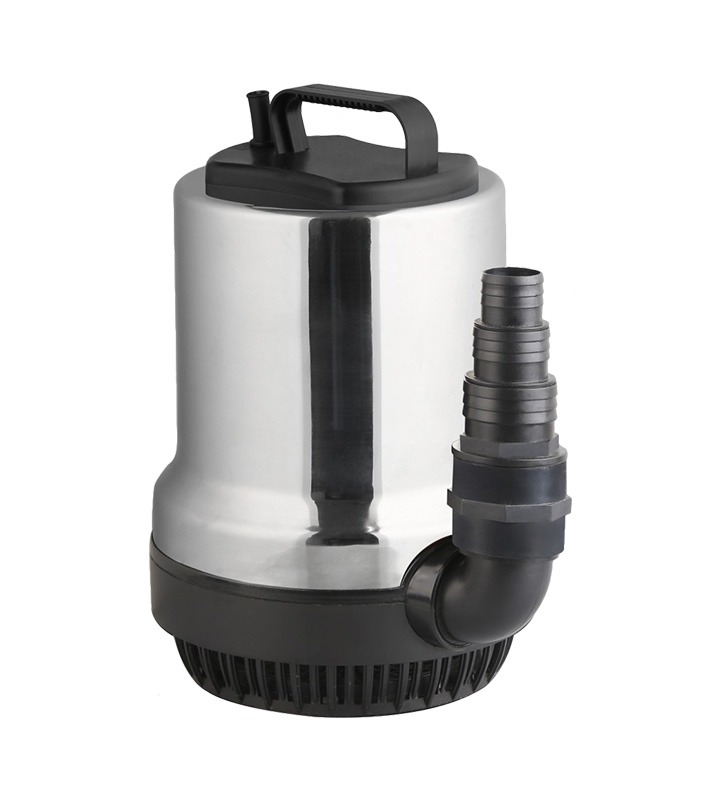
HYL Series Multi-Function Submersible Pump
Water circulation is central to aquarium health. Fish, plants, beneficial microorganisms, and filtration media all depend on suitable water movement. A well-selected pump can help distribute oxygenated water, carry suspended material toward a filter intake, and return filtered water throughout the tank or sump system.
The compact HYL models are appropriate for smaller systems where space is restricted. Their rated outputs of 2,000L/h and 3,000L/h can support circulation and water transfer in a range of aquarium arrangements, subject to tank volume, livestock requirements, and the resistance of the filtration system.
Mid-range models provide additional capacity for larger aquariums, multi-tank systems, sumps, and display installations with higher return points. The 4,500L/h, 6,000L/h, and 7,500L/h models can be considered when the system requires stronger circulation or when water must be lifted through a filter, return pipe, or decorative feature.
In any aquarium, the actual flow should be balanced against the needs of the animals and plants. Excessive movement may stress species that prefer calmer conditions, while insufficient movement may create dead zones. The pump should therefore be combined with suitable outlets, valves, spray bars, or flow diffusers where necessary.
The pump should be installed according to the product instructions and used only in an appropriate water environment. Before starting, the user should check that the pump is fully submerged when required, the intake is unobstructed, all connections are secure, and the electrical supply is protected.
Garden ponds and ornamental water features often require a combination of flow and lifting height. Water may need to travel from a lower basin to a raised filter, fountain, stream, or waterfall. In these installations, the H-max specification becomes particularly important.
The HYL-5503/A and HYL-6553/A, with maximum lifting heights of 4.0 and 5.0 meters respectively, may suit medium-sized pond systems where the pump must overcome a meaningful vertical rise. The HYL-7503/A and HYL-8553 provide 7,500L/h output and a 5.5-meter maximum lift, offering greater capacity for larger features or systems with higher resistance.
For high-flow installations, the HYL-2553/A provides a rated output of 16,000L/h, a 6.5-meter maximum lifting height, and a 38mm hose adapter. This configuration is designed for demanding circulation and water-transfer duties where a larger connection and stronger pumping capacity are beneficial.
When installing a pond pump, the inlet should be positioned to avoid excessive exposure to leaves, gravel, sludge, and other debris. A suitable pre-filter or protective screen may help reduce blockage and protect the pump from large particles. Routine cleaning remains necessary, especially in outdoor environments where seasonal debris can accumulate quickly.
In fountains and waterfalls, the final visual effect depends on more than pump capacity. Pipe diameter, outlet design, elevation, flow restriction, and the shape of the discharge point all influence the appearance and sound of the water. The HYL Series gives the installer a selection of performance levels, while the rest of the hydraulic design determines how that performance is used.
For professional installers, product consistency and model coverage are important commercial advantages. A series with clearly differentiated outputs allows an installer to standardize basic selection procedures. Instead of evaluating an unrelated pump for every project, the installer can begin with the HYL range and identify the model that matches the required flow, lift, connection, and available space.
Distributors also benefit from a structured product family. The models cover common low-, medium-, and high-output requirements while maintaining shared characteristics such as 110V/220V operation, 50Hz frequency, and three-meter cable length. This can simplify product training, inventory organization, and customer consultation.
Another advantage is the availability of different hose adapters. Stocking models with several connection options allows distributors to serve customers with different pipe systems. It also helps installers work with existing hose sizes, reducing the number of additional adapters needed during installation.
Weight and dimensions are clearly specified for every model. This information supports shipping calculations, equipment-room planning, cabinet design, and maintenance access. For commercial aquarium projects and garden contractors, accurate physical information is often just as important as the flow rating.
The HYL Series is produced by Sensen Group Co., Ltd., an established Chinese manufacturer with roots extending back to 1985. The company has developed activities across aquarium products, aquaculture machinery, industrial equipment, and related fields. This long operating history provides a broad base of product experience and an understanding of the different environments in which water-moving equipment is used.
The company’s stated organizational structure includes several functional departments, including a research institute, quality control department, financial department, personnel and administrative information department, and a business school. The presence of dedicated research and quality-control functions is significant for pump manufacturing because reliable performance depends on coordinated work across product development, component selection, assembly, inspection, documentation, and customer support.
A research-oriented organization can support continued development of motor systems, pump-body layouts, impeller arrangements, sealing methods, connection options, and application-specific designs. While the supplied product information does not disclose individual internal component materials or laboratory test results, the existence of a dedicated research function indicates an institutional framework for technical development rather than a purely trading-based approach.
Quality control is equally important. Submersible pumps operate in demanding conditions involving water exposure, continuous electrical operation, mechanical rotation, and changing loads. Quality management must therefore address assembly accuracy, electrical safety, sealing integrity, rotor movement, output consistency, cable condition, and final product appearance. A dedicated quality-control department provides an organizational channel for these responsibilities.
The group also operates wholly owned subsidiaries and maintains an import and export company, together with interests in multiple trading companies. This broad corporate structure can support manufacturing coordination, supply-chain management, domestic distribution, and international market service. For overseas buyers, the ability to work with an established export organization can be valuable when handling product documentation, shipping arrangements, and communication.
The company describes its development direction through industrial technicalization, marketing globalization, and brand internationalization. In practical terms, these goals are relevant to a product such as the HYL Series because international buyers expect more than a working pump. They also need consistent specifications, understandable model differentiation, stable supply, professional communication, and support for different regional markets.
The company’s nationwide sales-network development and aquarium-store infrastructure further demonstrate experience in product distribution and market feedback. Retail and service networks can provide useful information about installation conditions, customer preferences, common maintenance issues, and the performance expectations of different user groups.
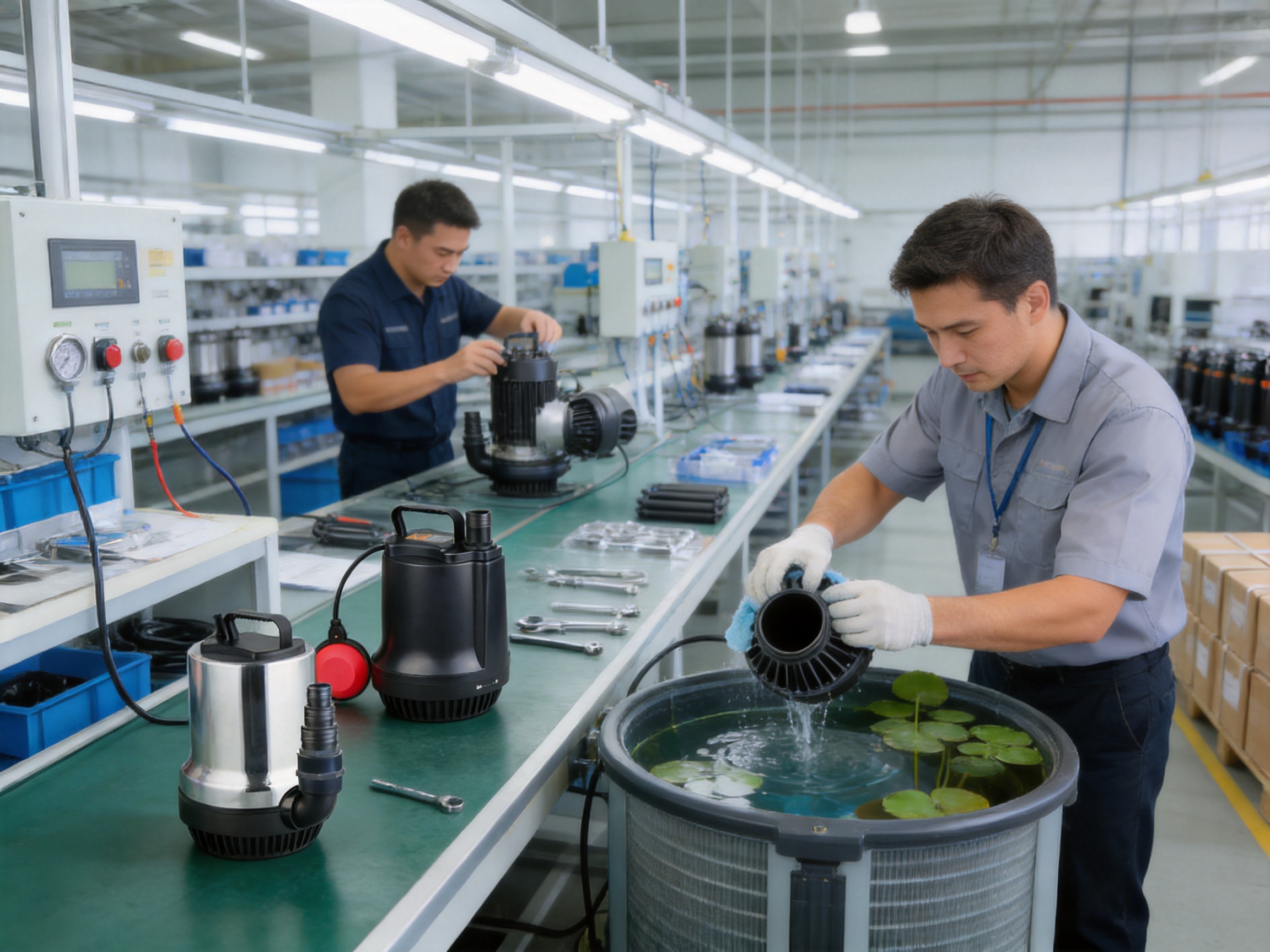
Advanced manufacturing is not limited to the use of automated machinery. It also includes disciplined product planning, repeatable assembly procedures, quality checkpoints, traceable specifications, and coordination between research, production, and customer-facing departments. These elements are especially important for pumps because the same model must deliver consistent electrical and hydraulic behavior across many units.
A strong manufacturing process begins with a defined product specification. For the HYL Series, that specification includes model number, voltage, frequency, wattage, maximum lifting height, output, hose adapter, cable length, weight, and dimensions. Clearly identifying these parameters allows production teams and inspectors to work toward measurable targets.
The next stage is component and assembly control. The pump housing, motor assembly, impeller, seals, cable, adapters, and related parts must be correctly fitted. Dimensional consistency is important because poor alignment can create noise, vibration, reduced output, or premature wear. Electrical connections must be securely assembled, and the submerged design requires particular attention to insulation and water protection.
Functional inspection is another essential stage. A completed pump should be evaluated for basic starting behavior, operating stability, water movement, connection fit, and general condition. The exact test procedures and acceptance values are not provided in the supplied materials, so specific test claims cannot be made here. Nevertheless, these are the normal areas that a professional pump quality program is expected to control.
Packaging and documentation also form part of manufacturing quality. A pump may be technically sound but difficult to use if its model information, connection instructions, electrical requirements, or installation precautions are unclear. Consistent product identification helps distributors and end users select and install the correct unit.
The company’s involvement in aquarium pets, aquaculture machinery, and industrial equipment creates a useful cross-application knowledge base. Aquarium products emphasize water quality, compact equipment, and user-friendly operation. Aquaculture machinery emphasizes continuous circulation, system capacity, and practical maintenance. Industrial equipment emphasizes structured production and operational reliability.
A multi-industry manufacturer can apply lessons from each field to product development. For example, aquarium applications may encourage compact design and connection flexibility, while aquaculture applications may highlight the importance of flow planning and long operating periods. Industrial experience can contribute to production organization, quality systems, and process control.
This combination helps distinguish the HYL Series from generic pumps that may be offered with limited application guidance or an incomplete model range. The competitive advantage is not based on one specification alone. It comes from the combination of selectable performance, established product experience, organizational resources, and a distribution structure capable of supporting different markets.
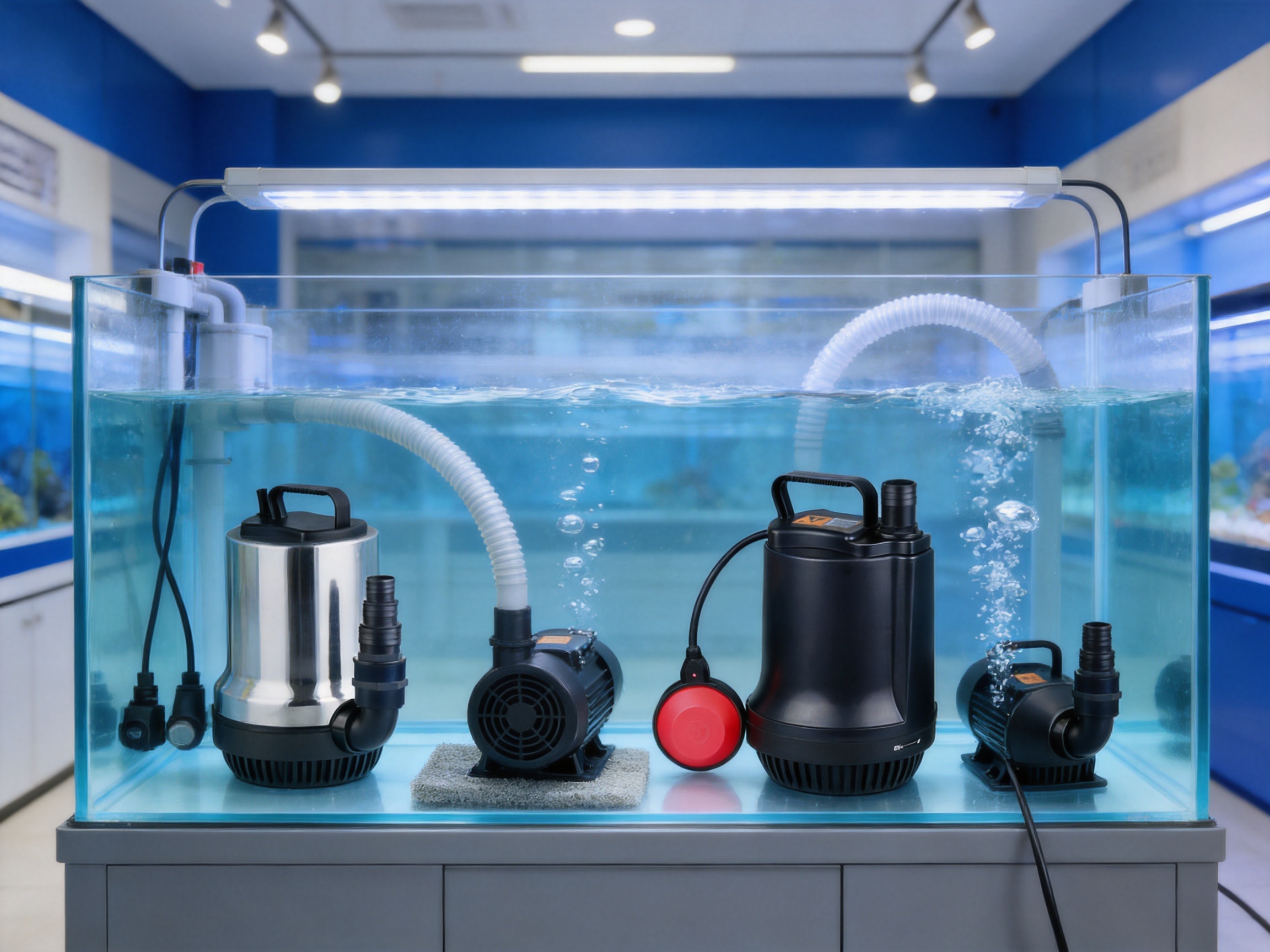
Many low-cost submersible pumps appear similar when viewed only from the outside. However, a meaningful comparison should include performance coverage, connection options, documented dimensions, electrical compatibility, cable length, product support, and the manufacturer’s ability to maintain supply.
The HYL Series offers a published range of technical specifications for each model. This makes it easier to compare the pump with project requirements. Generic alternatives may provide only a single maximum-flow figure, without identifying lifting capacity, adapter size, cable length, weight, or physical dimensions. In real installations, missing information can lead to incorrect selection and unexpected performance.
The series also provides a progression from compact 55W units to a 330W high-output unit. This allows users to make a more precise choice. A competitor with only one or two models may force the customer to accept a compromise between insufficient flow and unnecessary energy consumption or physical size.
Connection flexibility is another point of comparison. The availability of 13/20mm, 13/25mm, 13/26mm, and 38mm adapter configurations gives the HYL Series a practical advantage where hose compatibility matters. A pump that fits the existing system more directly can reduce installation complexity and improve the appearance of the finished project.
Corporate capability is also relevant. Sensen Group’s long history, research organization, quality-control function, subsidiaries, and export infrastructure suggest a greater capacity for product development and market support than an anonymous supplier with no established technical or distribution structure. Buyers seeking repeat orders, private project supply, or long-term commercial cooperation may place significant value on this stability.
It is important to make comparisons fairly. The supplied materials do not provide data for sound level, service life, efficiency curves, particle tolerance, sealing construction, warranty period, or independent certification. These factors should be confirmed with the supplier before making a final purchasing decision. The clear competitive strengths supported by the available information are the breadth of the range, lifting capacity, adapter choices, dual-voltage specification, defined dimensions, and the manufacturer’s established organizational base.
Start by identifying the volume of water that must be moved during a given period. Aquarium turnover requirements vary according to fish species, filtration design, planting, tank volume, and the preferences of the aquarist. Pond requirements depend on pond size, biological filtration, waterfall width, desired circulation, and climate.
The pump’s stated output is normally a reference value measured under defined conditions. It should not automatically be treated as the actual flow at the end of a hose. If the system contains a long pipe, multiple bends, a narrow outlet, or a raised return point, the delivered flow will be lower than the free-flow rating.
Measure the vertical distance from the water level around the pump to the discharge point. Compare this distance with the model’s H-max value. The H-max values in the series range from 2.5 to 6.5 meters.
The H-max value should not be treated as the ideal operating point. A pump operating close to its maximum lifting capacity may deliver considerably less water than its rated free-flow output. For practical performance, users should allow additional capacity for hose friction and other restrictions.
Check the inside diameter and connection type of the existing hose or planned pipe. The pump’s adapter must fit securely, and the outlet should be appropriate for the expected flow. Using an unnecessarily narrow hose can restrict performance and increase resistance.
The largest model uses a 38mm hose adapter, while the other listed models use smaller adapter configurations. Choosing the correct connection at the beginning can prevent avoidable modifications later.
Review the model dimensions and weight before purchase. The compact 139×139×188mm models may fit into smaller sumps and tanks, while the 180×180×260mm and 264×204×308mm models require more installation space. Maintenance access should also be considered. The pump should be removable for cleaning without dismantling an entire water feature.
Confirm that the local power supply matches the pump’s voltage and frequency requirements. The listed models support 110V/220V operation at 50Hz. Electrical work near water must comply with local regulations and should be carried out by a qualified person where required.
Before installation, inspect the pump, cable, housing, adapter, and intake area. Do not use the pump if the cable or housing appears damaged. Place the pump on a stable surface or in an appropriate protective arrangement. Avoid locations where it can become buried in sediment or blocked by leaves and debris.
Ensure that the discharge hose is securely connected. A loose connection can reduce flow, cause leakage, or place mechanical stress on the outlet. If the hose is routed upward, support it where necessary so that its weight does not pull against the pump connection.
Never operate a submerged pump outside the conditions specified by the manufacturer. If the design requires full submersion, ensure that adequate water surrounds the pump before switching it on. Disconnect the power before moving the pump, removing a guard, cleaning the intake, or carrying out any inspection.
For aquarium use, avoid placing the intake directly against gravel, sand, or decorative material. Fine particles can enter the pump and accelerate wear. For pond use, a pre-filter or mesh guard may be helpful, but it must be sized so that it does not create excessive restriction.
Monitor the pump during its first operating period. Check for unusual noise, vibration, reduced flow, overheating of accessible electrical components, or leakage around connections. Early observation can identify installation problems before they become more serious.
Regular maintenance is essential for any water pump. Even a well-designed unit can lose performance when its intake, impeller area, or hose becomes obstructed. Maintenance frequency depends on water quality, plant material, sediment, algae, and operating hours.
Disconnect the power before cleaning. Remove visible debris from the intake and inspect the hose for kinks or deposits. If the pump’s service instructions permit access to the impeller area, clean it carefully and check for material that could restrict rotation. Do not use tools or cleaning agents that may damage plastic components or seals.
Keep a simple maintenance record for commercial installations. Record cleaning dates, observed flow changes, replacement parts, and any unusual operating conditions. This can help determine whether a problem is caused by the pump, the hose system, water contamination, or a change in the installation.
In outdoor systems, seasonal maintenance is particularly important. Falling leaves, winter debris, algae growth, and changes in water level can all affect operation. A float-switch-equipped section may be beneficial in systems where water-level changes are expected, but the precise control function and installation requirements should be confirmed from the product documentation before use.
Reliability is supported not only by the pump itself but also by correct sizing and proper care. A pump selected with adequate capacity and installed without unnecessary restriction is less likely to be overloaded by abnormal operating conditions. Regular cleaning helps preserve water movement and reduces the risk of blockage-related problems.
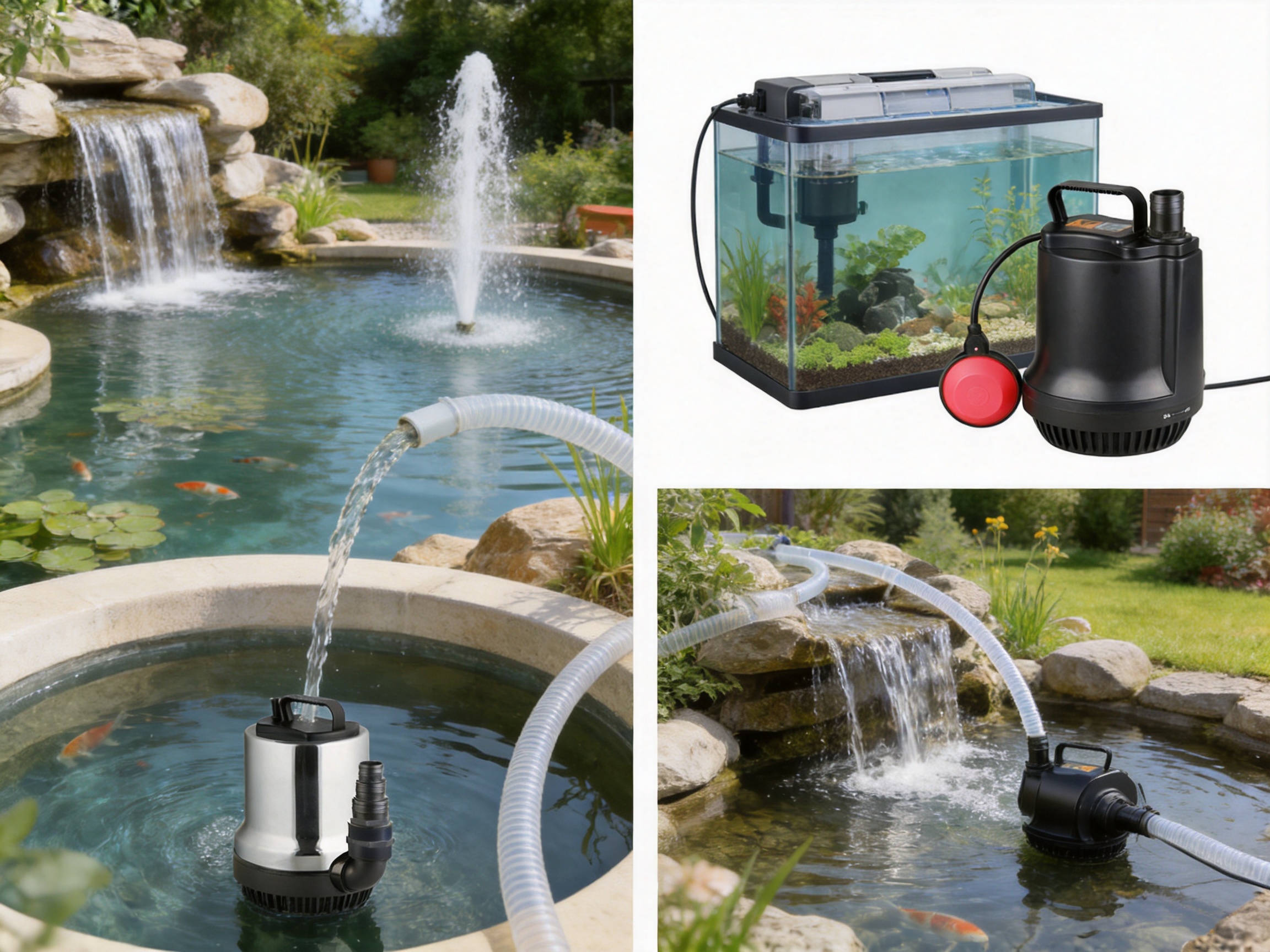
Although the product is strongly associated with aquarium and pond equipment, the HYL Series can also be considered for other compatible water-transfer tasks. These may include garden circulation, decorative streams, reservoir movement, water-feature returns, and selected aquaculture arrangements.
In a plant-wall or vertical-garden system, a pump may circulate nutrient solution or water from a lower reservoir to an elevated distribution line. The selected model must match the height, pipe resistance, and required distribution volume. A compact unit may be sufficient for a small installation, while a larger system may require higher lifting capacity.
In aquaculture-related equipment, stable circulation can help move water through treatment or filtration stages. System designers should consider biological requirements, tank volume, solids management, cleaning access, and backup arrangements. The pump’s published output and lifting specifications provide a starting point, but the complete system must be engineered for its intended use.
For garden equipment and decorative installations, visual performance is often a major consideration. A waterfall or stream may require a broad, even flow rather than the maximum possible pressure. Proper outlet design and pipe sizing can help convert pump capacity into the desired appearance.
Users should not assume that a pump designed for water circulation is suitable for liquids containing chemicals, abrasive solids, flammable materials, or temperatures outside the permitted range. The intended fluid, operating environment, and safety requirements should always be verified before use.
Sensen Group Co., Ltd. is based in Zhoushan, Zhejiang Province, China, and maintains contact channels for business communication and product inquiries. Its company information describes a long-term focus on aquarium products, aquaculture machinery, industrial equipment, and related leisure-industry applications.
For international customers, a supplier’s ability to communicate technical information clearly is an important part of product value. Model tables, dimensions, electrical ratings, adapter sizes, and application guidance help buyers make better decisions before ordering. They also support distributors who need to prepare catalogs, quotations, installation documents, and customer training materials.
The group’s import and export activities and wider sales-network structure may support overseas cooperation, although buyers should confirm current availability, lead times, packaging details, minimum order quantities, warranty terms, certification requirements, and after-sales procedures directly with the supplier.
For project customers, it is advisable to provide the supplier with complete installation information. This should include tank or pond volume, required flow, vertical lift, hose length, hose diameter, water temperature, operating schedule, available voltage, and any special control requirements. Clear technical communication improves the likelihood of selecting the correct HYL model.
Water and electricity require careful handling. The pump should be connected to a suitably protected electrical circuit, and local electrical regulations should be followed. Where appropriate, use residual-current protection and ensure that the power connection is positioned away from splash zones and possible flooding.
Never pull or carry the pump by its cable. Do not modify the cable, housing, or electrical components. Disconnect power before placing hands in the water or servicing any equipment connected to the pump.
Use the pump only for clean or appropriately filtered water unless the manufacturer confirms compatibility with other fluids or suspended materials. Avoid running the pump dry unless the specific model is expressly designed for that condition. Dry operation can cause excessive heat and damage to internal components.
Children and untrained users should not handle the pump or its electrical connections without suitable supervision. Commercial installations should include written maintenance and emergency procedures, particularly where pumps operate continuously or where a failure could affect animals, plants, or property.
It is a range of submersible pumps designed for water circulation and transfer in aquariums, ponds, gardens, water features, aquaculture-related systems, and compatible applications. The series includes models with different output, lifting height, power, dimensions, and hose-adapter specifications.
The listed models provide outputs from 2,000L/h to 16,000L/h. The available steps include 2,000L/h, 3,000L/h, 4,500L/h, 6,000L/h, 7,500L/h, and 16,000L/h.
Depending on the model, the H-max value ranges from 2.5 meters to 6.5 meters. The H-max rating represents the maximum lifting capability under stated testing conditions. Actual flow decreases as lifting height and system resistance increase.
The HYL-2553/A provides the highest listed output at 16,000L/h. It has a 330W power rating, a 6.5-meter H-max value, a 38mm hose adapter, a weight of 5.5kg, and dimensions of 264×204×308mm.
The 2,000L/h and 3,000L/h models are the most compact options in the listed range and may be considered for smaller aquarium systems. The final choice should account for tank volume, filtration resistance, desired circulation, livestock needs, and the available installation space.
No. The series includes 13/20mm, 13/25mm, 13/26mm, and 38mm adapter configurations. The correct model should be selected according to the planned hose or pipe system.
The listed models are specified for 110V/220V and 50Hz. Users must verify local electrical conditions and follow the supplied instructions and applicable safety regulations.
Each listed model has a three-meter cable. The cable should be routed safely and kept away from situations that could cause mechanical damage or water exposure at the power connection.
The product information states that the A section includes a float switch. Buyers should confirm the exact operating logic, installation position, and water-level requirements with the supplier before ordering a model for automatic water-level control.
Yes, the series is suitable for consideration in pond and water-feature applications when the selected model matches the required flow, lift, hose size, and operating conditions. Outdoor installations should include suitable intake protection and regular debris removal.
Measure the vertical distance from the pump’s water level to the outlet, then consider pipe length, bends, filters, valves, and other restrictions. Choose a model with an H-max value above the required lift and sufficient capacity to maintain the desired flow after system resistance is included.
No. An oversized pump may be unnecessary for a small system and may require additional flow control. The best choice is the model that provides suitable real-world circulation while fitting the installation’s physical, electrical, and hydraulic requirements.
Buyers should confirm current model availability, technical documentation, certifications, warranty terms, spare parts, packaging, lead time, minimum order quantity, shipping information, and after-sales support. Project customers should also provide complete installation data to the supplier.
The HYL Series Multi-Function Submersible Pump provides a practical range of water-moving solutions for aquariums, ponds, gardens, water features, and related applications. Its principal strengths are the wide output range, lifting heights up to 6.5 meters, multiple hose-adapter choices, 110V/220V specification, three-meter cables, and clearly documented dimensions and weights.
Its competitive value also comes from the manufacturing and organizational resources of Sensen Group Co., Ltd. The company’s history since 1985, research institute, quality-control department, subsidiary structure, import and export capability, and experience across aquarium, aquaculture, and industrial equipment provide a substantial foundation for product development and market service.
As with any pump, performance depends on correct selection and installation. Users should evaluate both flow and lifting height, account for pipe resistance, confirm hose compatibility, provide appropriate electrical protection, and maintain the pump regularly. When these factors are addressed, the HYL Series can provide a flexible foundation for stable circulation and dependable water transfer in a broad range of projects.
1. HYL Series Multi-Function Submersible Pump product specification sheet provided in the source material.
2. Sensen Group Co., Ltd. company information and organizational overview provided in the source material.
3. General principles of pump selection, including flow rate, total lifting height, pipe resistance, and system design.
4. General aquarium and pond equipment installation and maintenance practices.
5. General electrical safety principles for equipment used near water.



 English
 русский
 España
 Portugal
 عربي
عربي
 No. 61-79, Baima Street, Maao Town, Dinghai District, Zhoushan City, Zhejiang Province, China.
 0086 580 8082088 / 8081168
 0086 580 8080978
 songhua@sunsun-china.com