

 English
 русский
 España
 Portugal
 عربي
عربيYou have just finished planting a 10-gallon tank with java moss, anubias, and a piece of driftwood, and you are wondering whether it can support shrimp. The answer is yes: a planted tank is one of the best possible homes for dwarf freshwater shrimp, provided the tank has matured, the filter intake is shrimp-safe, and the species you choose matches your water chemistry.
"Planted shrimp" is not a single species; it is a way of keeping live plants together with dwarf shrimp such as Neocaridina or Caridina. The plants absorb nitrate and grow biofilm, the shrimp graze that biofilm and keep the tank lively, and neither one crowds out the other. This guide covers the best shrimp for beginners, the plants that work best, the hardware you need, and the water parameters and waiting times that separate a thriving colony from early losses.
Content
- Why a Planted Tank Suits Shrimp Better Than a Bare Tank
- Choosing Shrimp: Neocaridina Versus Caridina
- Plants That Earn Their Place in a Shrimp Tank
- Equipment: Tank Size, Filter, Light, and Heater
- Cycling and Water Parameters: Wait Before Adding Shrimp
- Feeding and Everyday Maintenance
- Common Mistakes and Frequently Asked Questions
Why a Planted Tank Suits Shrimp Better Than a Bare Tank
You should keep shrimp in a planted tank because plants directly improve shrimp survival, feeding, and water stability; dwarf shrimp are prey animals, and in nature they stay close to dense vegetation that a planted aquarium reproduces.
- Molting cover: shrimp shed their exoskeletons every few weeks, and for 24 to 48 hours afterwards they are soft and vulnerable. Moss and dense foliage give them somewhere to hide.
- Natural food: plant leaves and driftwood grow a biofilm of microorganisms that shrimp graze on almost continuously.
- Shrimplet survival: baby shrimp are tiny; fine-leaved moss catches the particulate food they need and keeps them away from filter intakes.
- Nitrate control: healthy plants consume ammonia and nitrate, which keeps the water stable and reduces the risk of a toxic spike when a shrimp dies.
Choosing Shrimp: Neocaridina Versus Caridina
Choose Neocaridina davidi for your first planted shrimp tank. Sold as cherry, blue dream, yellow, orange, or green jade shrimp, Neocaridina tolerates a wide pH and temperature range, breeds readily in tap water, and forgives beginner mistakes. Caridina shrimp such as crystal reds, bees, and tigers look stunning, but they demand soft, acidic, buffered water that most tap water cannot provide without an RO/DI unit and remineralizer.
Water temperature between 21°C and 26°C suits almost all dwarf shrimp. Higher temperatures speed up the life cycle, which means faster breeding but a shorter lifespan, so keep the tank on the cooler side if you can.
| Parameter | Neocaridina davidi | Caridina (crystal, bee, tiger) |
|---|---|---|
| Difficulty | Beginner-friendly | Intermediate or advanced |
| pH | 6.5–7.5 | 5.8–6.8 |
| GH (total hardness) | 6–12 | 3–6 |
| KH (carbonate hardness) | 1–4 | 0–2 |
| Temperature | 21–26°C | 20–24°C |
| Colour forms | Many | Pattern-based, fewer variants |
Plants That Earn Their Place in a Shrimp Tank
Slow-growing plants with broad or fine leaves work best because they hold biofilm and provide shelter without demanding strong light or CO2. The list below covers the most dependable choices for a planted shrimp tank.
- Java moss and Christmas moss: the undisputed favourite; shrimplets hide in the branches and biofilm grows densely on the leaves.
- Anubias nana: broad, tough leaves that serve as resting platforms; tie it to wood or rock and never bury the rhizome.
- Java fern (Microsorum): undemanding and easy to attach, with new plantlets forming along old leaves.
- Cryptocoryne species: handle lower light and form low thickets where shrimp feel secure.
- Hornwort or water wisteria: fast-growing nitrate sponges that are excellent while the tank matures, although they need regular trimming.
Equipment: Tank Size, Filter, Light, and Heater
A planted shrimp tank does not need complex hardware, but it needs consistent hardware. Choose a 10-gallon tank with a gentle sponge or hang-on filter, run low-to-medium light for six to eight hours a day, and add a small heater only if the room drops below 20°C. Sensen's aquarium equipment range includes desktop tanks, gentle filters, and plant-rated lights, which makes it convenient to match sizes and avoid overly strong flow.
Tank size matters more than most beginners expect. A 10-gallon (about 38-litre) tank gives enough volume to buffer daily temperature and waste swings, yet still fits on a desk or shelf. A 5-gallon nano tank can work for a few shrimp, but small volumes heat up and cool down quickly, so beginners should start larger. If you plan to breed shrimp seriously, a 20-gallon tank provides even more stable water and colony headroom.
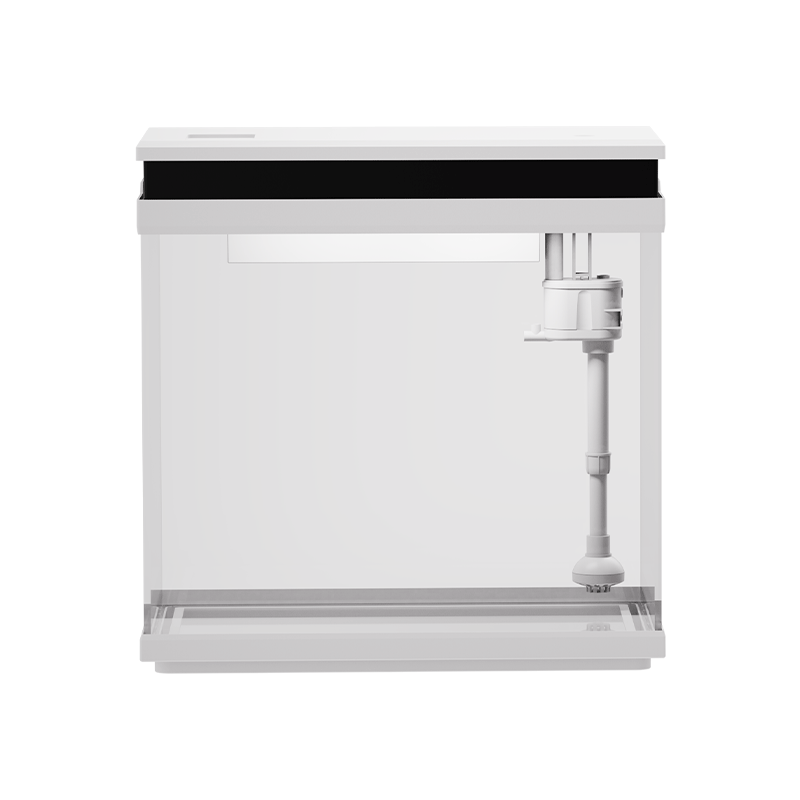 HNE-380 Desktop Tank for Stable Shrimp KeepingA 10-gallon tank size is recommended for beginners to buffer temperature and waste swings; this desktop aquarium fits that need while remaining compact enough for a desk or shelf.View Product →
Filtration should supply biological surface area without dangerous suction. Sponge filters are the safest option: they are air-driven, gentle, and shrimplets cannot be drawn into them. A hang-on back filter with a foam intake cover is also fine, but strong currents stress shrimp and push babies around, so keep the flow low.
 CBG Series Hang-On Back Filter with Gentle FlowThe article notes a hang-on back filter with a foam intake cover is acceptable for shrimp, provided flow stays low; this filter series is positioned as a suitable option when adjusted carefully.View Product →
Lighting is for the plants, not the shrimp. Most low-tech plants grow well under low-to-medium light; a dedicated plant light on a six-to-eight-hour timer keeps growth steady without feeding algae. Skip CO2 injection, because the pH swings it causes are harder on shrimp than any benefit it gives plants.
 Dream White Series Plant Light for Low-Tech TanksFor low-tech planted shrimp tanks, a low-to-medium light on a timer prevents algae; this aquatic plant lamp matches that need without adding CO2-related pH swings.View Product →
A heater is optional if the room stays between 21°C and 26°C. In a cold room or near an air conditioner, a 25–50 watt preset heater prevents the temperature swings that trigger failed molts. For substrate, inert sand or gravel is simplest for Neocaridina, while an active aquasoil buffers pH downward and suits Caridina. Rinse all substrate well, and never use tools, pipes, or medications that could introduce copper.
Cycling and Water Parameters: Wait Before Adding Shrimp
Wait at least one month, and preferably two to three months, before adding shrimp. In the planted shrimp hobby, the single most common cause of failure is adding shrimp to a tank that is not fully cycled or has not yet developed biofilm; a mature tank is the strongest predictor of survival.
- Set up the tank with plants, hardscape, and filter; run the light six to eight hours per day.
- Add a small ammonia source, such as a pinch of fish food or pure ammonia, so beneficial bacteria can establish.
- Test ammonia and nitrite every few days. When both read 0 ppm and nitrate is present, the tank has cycled. This usually takes four to six weeks.
- Wait two to four more weeks for biofilm to coat the wood, leaves, and glass; shrimp graze this biofilm continuously.
- Acclimate shrimp by drip over 45 to 60 minutes before releasing them into the tank.
Water parameters should sit inside the ranges in the table above, and they should stay there. Small weekly changes of 10 to 20 percent with dechlorinated water keep nitrate low without shocking shrimp; large water changes are a classic trigger for failed molts and sudden deaths.
Feeding and Everyday Maintenance
Shrimp graze all day, but they still need supplemental food two to three times per week: offer a tiny pinch of shrimp-specific pellets or a blanched slice of spinach, and remove anything uneaten after a few hours so it cannot rot and raise ammonia.
- Dead shrimp: remove carcasses promptly. A single dead shrimp can cause an ammonia spike in a small, lightly stocked tank.
- Filter cleaning: rinse filter media in a bucket of old aquarium water, never tap water, to protect the bacteria colony.
- Plant trimming: prune fast growers every few weeks so lower leaves still receive light and the tank stays open.
- Copper caution: check the label of any medication, fertilizer, or water conditioner; products containing copper kill dwarf shrimp even at tiny concentrations.
Common Mistakes and Frequently Asked Questions
Most planted shrimp tank failures come down to four causes: adding shrimp too early, unstable temperature, copper contamination, and overfeeding. Solve those four and the rest is regular maintenance.
How many shrimp can I keep in a 10-gallon planted tank?
A mature, well-planted 10-gallon tank can comfortably hold 30 to 50 dwarf shrimp, but start with 10 to 15 and let the colony grow. Neocaridina breed until they reach the tank's natural carrying capacity.
Does a planted shrimp tank need an air pump?
Not automatically. A sponge filter or hang-on filter moves the surface and provides oxygenation. An air pump becomes useful when flow is too gentle for gas exchange or on hot days when oxygen levels drop; our guide to air pumps in planted aquariums explains the situations where it genuinely helps.
Will shrimp breed in a planted tank?
Yes. Neocaridina breed readily between 21°C and 26°C once they settle in. You will see berried, or egg-carrying, females within a few weeks, and shrimplets appear about three to four weeks later if moss is present.
Do I need CO2 injection?
No. Shrimp do better in low-tech planted tanks. Injected CO2 creates pH swings every time the solenoid switches on and off, and an accidental overdose can wipe out an entire colony in hours.
A planted shrimp tank rewards patience with one of the most self-contained mini-ecosystems in the hobby. Keep three rules in mind: let the tank mature for at least a month before adding shrimp, keep temperature and water chemistry stable, and match the shrimp species to your source water. Do that, and the colony will largely take care of itself.

 No. 61-79, Baima Street, Maao Town, Dinghai District, Zhoushan City, Zhejiang Province, China.
 0086 580 8082088 / 8081168
 0086 580 8080978
 songhua@sunsun-china.com