Modern pond keeping depends on more than an attractive layout, a strong pump, or decorative aquatic plants. The long-term clarity, stability, and biological health of a pond are determined by filtration. A well-designed filter must remove visible debris, support beneficial microorganisms, suppress green water, and maintain steady water circulation without creating unnecessary maintenance burdens. The CNF Series Stainless Steel Bio-filter is designed for this role: a durable pond bio press filter system that combines stainless steel construction, biological media, food-grade brush filtration, and built-in ultraviolet sterilization to help pond owners maintain cleaner, healthier water.
This article explores the CNF Series Stainless Steel Bio-filter in detail, including its working principles, model options, advantages over typical competing filters, and the manufacturing strengths behind its production. It also explains how the filter supports nitrifying bacteria, improves water flow, inhibits algae and harmful microorganisms, and provides a practical solution for ponds of different sizes. Whether used in a fish pond, ornamental landscape pond, or water garden, the filter is built to support reliable operation, stable water quality, and easier management.
CNF Series Stainless Steel Bio-filter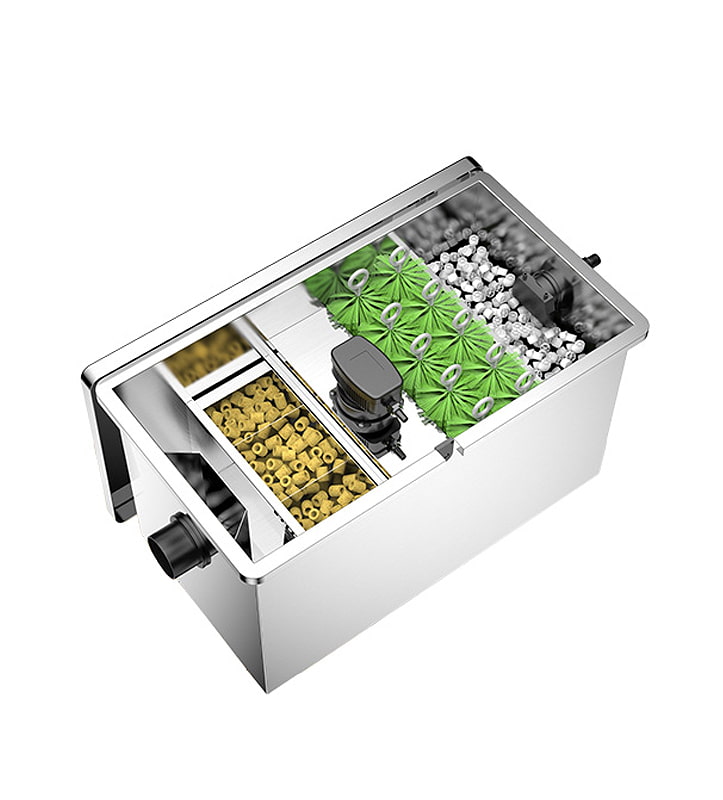
Content
The CNF Series Stainless Steel Bio-filter is a pond filtration system designed to combine mechanical, biological, and ultraviolet treatment in one practical structure. Its stainless steel housing offers durability and a professional appearance, while the internal filtration materials are arranged to enhance water contact, promote beneficial bacteria, and reduce contaminants that affect pond clarity.
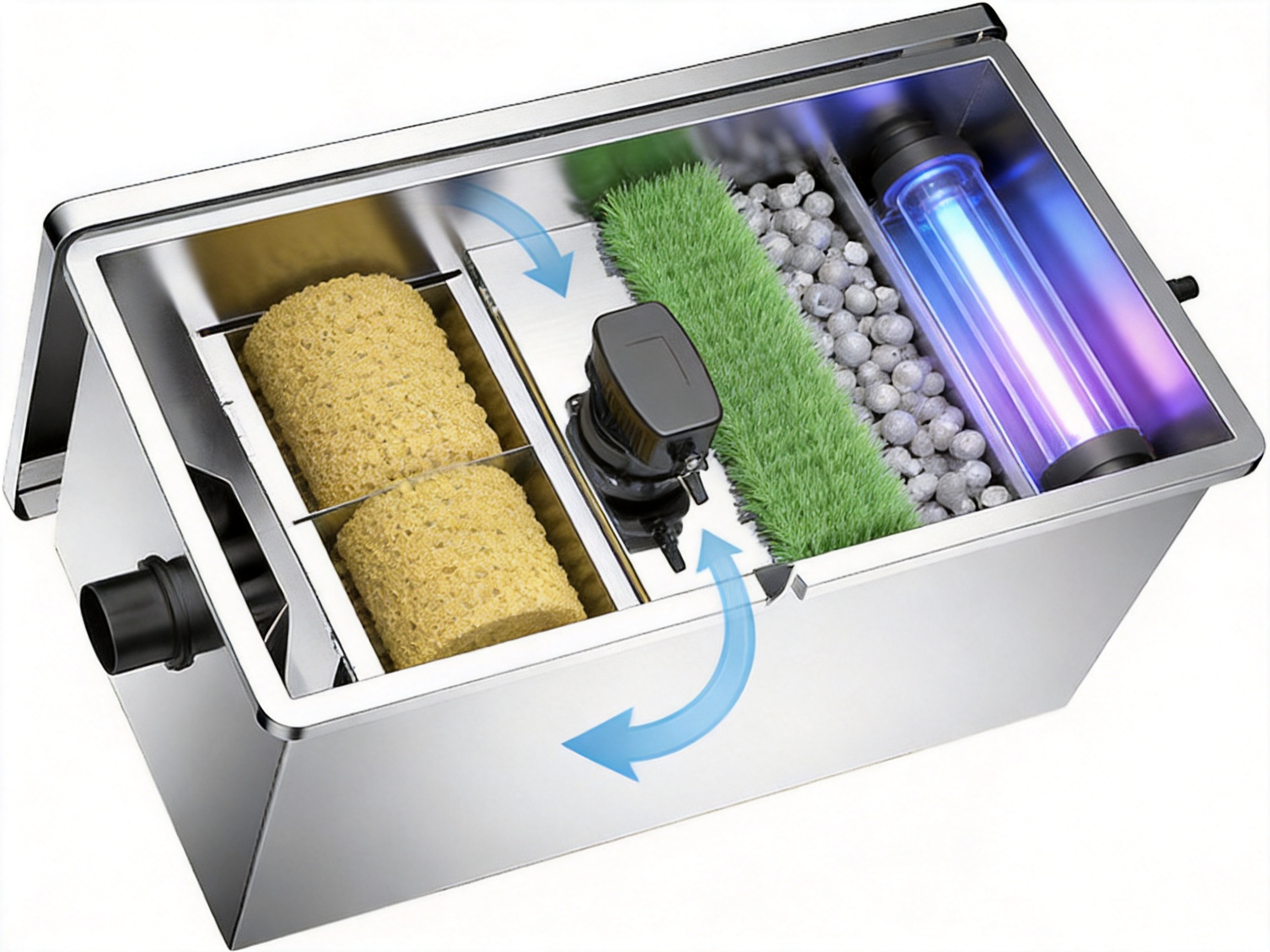
Unlike simple foam-only filters or low-capacity plastic filter boxes, this series is built with a larger working volume and a structured treatment process. Water enters the system through an inlet hose adapter, passes through media such as biochemical balls and food-grade brushes, receives ultraviolet sterilization from the germicidal lamp, and exits through a larger outlet adapter. This integrated approach helps address several common pond water problems at once: suspended particles, organic waste, ammonia conversion, algae growth, and microbial imbalance.
The product line includes three models: CNF-200, CNF-400, and CNF-800. These models are suitable for different pond capacities and flow requirements. The CNF-200 is designed for smaller ponds, the CNF-400 for medium-sized installations, and the CNF-800 for larger ponds requiring higher water throughput and stronger ultraviolet capacity. With maximum flow-through ratings ranging from 4,000 L/h to 10,000 L/h, the series provides options for both residential water gardens and more demanding ornamental pond systems.
One of the key strengths of the design is the balance between filtration performance and ease of integration. The inlet hose adapter supports 20 mm, 25 mm, 32 mm, and 38 mm hose sizes, while the outlet adapter supports 38 mm, 50 mm, and 70 mm hose sizes. This flexibility makes it easier to connect the filter with different pumps, hose layouts, and pond circulation designs. For installers and pond owners, adapter compatibility is an important advantage because it reduces the need for additional fittings and helps simplify setup.
Pond water quality is affected by uneaten food, fish waste, decaying leaves, algae spores, microorganisms, and dissolved organic matter. A single filtration method is rarely enough to manage all of these factors effectively. Mechanical filtration catches visible particles. Biological filtration transforms toxic nitrogen compounds. Ultraviolet treatment reduces free-floating algae and some harmful microorganisms. The CNF Series Stainless Steel Bio-filter integrates these functions into one system.
The biochemical ball media has a textured surface that improves water flow and creates a large area for microbial colonization. Beneficial bacteria can attach to the surfaces and participate in the nitrogen cycle. The food-grade brush structure further supports biological activity while capturing larger suspended impurities. The germicidal lamp provides ultraviolet treatment, helping inhibit algae, bacteria, and viruses in the water. Together, these features create a layered water treatment process that is more effective than a basic filter relying on only one form of filtration.
For fish ponds, biological filtration is especially important. Fish continuously release ammonia through waste and respiration. In an unbalanced pond, ammonia can accumulate and threaten fish health. Nitrifying bacteria convert ammonia first into nitrite and then into nitrate, which is less toxic and can be absorbed by aquatic plants or managed through water changes. By offering a surface-rich environment for these bacteria, the filter supports a more stable aquatic ecosystem.
For ornamental ponds where visual clarity is a priority, the ultraviolet sterilization function is particularly valuable. Green water is often caused by suspended algae. These algae cells can multiply rapidly under sunlight and nutrient-rich conditions. The germicidal lamp helps inhibit algae by exposing water to ultraviolet radiation as it passes through the system. This can reduce green water problems and improve visibility, especially when the filter is correctly matched with the pond volume and pump flow.
The following table summarizes the main technical details of the CNF Series Stainless Steel Bio-filter models.
Specification |
CNF-200 |
CNF-400 |
CNF-800 |
UV Power |
18 W |
18 W |
2 x 24 W |
Maximum Flow-Through |
4,000 L/h |
6,000 L/h |
10,000 L/h |
Inlet Hose Adapter |
20/25/32/38 mm |
20/25/32/38 mm |
20/25/32/38 mm |
Outlet Hose Adapter |
38/50/70 mm |
38/50/70 mm |
38/50/70 mm |
Suitable for Ponds with Fish |
6 m³ |
10 m³ |
20 m³ |
Suitable for Ornamental or Lightly Stocked Ponds |
12 m³ |
20 m³ |
40 m³ |
Actual Volume |
45 L |
60 L |
120 L |
Dimensions |
525 x 425 x 402 mm |
730 x 410 x 400 mm |
865 x 495 x 472 mm |
The table shows that each model is designed for a clear pond capacity range. A fish pond usually requires stronger filtration than a lightly stocked ornamental pond because fish waste creates a higher biological load. For this reason, the recommended pond volume with fish is lower than the suitable volume for ornamental or lightly stocked ponds. Selecting the correct model should be based not only on pond size but also on fish density, feeding level, sunlight exposure, plant coverage, and pump performance.
One of the most visible advantages of the CNF Series Stainless Steel Bio-filter is its stainless steel structure. Many competing pond filters use plastic housings because plastic is lightweight and inexpensive. Plastic can be suitable for some applications, but it may suffer from aging, deformation, ultraviolet exposure, and impact damage over time. In outdoor pond environments, filters are often exposed to sunlight, rain, changing temperatures, and occasional physical contact during maintenance. A stainless steel body offers a stronger and more durable alternative.
Stainless steel provides enhanced structural strength, better resistance to corrosion, and a cleaner professional appearance. For pond owners who value long service life, the material selection can reduce concerns about cracking or weakening. In larger pond systems, where filtration equipment may operate continuously for long periods, housing reliability is not a minor detail. A damaged housing can cause leaks, water loss, reduced filtration efficiency, and unnecessary repair costs. The robust structure of the CNF Series helps address these risks.
Another benefit of stainless steel is dimensional stability. A stable housing supports better sealing and more consistent internal water routing. When the filter body remains rigid under operating conditions, water is more likely to follow the intended path through the media rather than bypassing key treatment zones. This contributes to more reliable filtration performance. In comparison, low-cost filters with weaker housings may become less effective over time if seals loosen or internal alignment changes.
The premium appearance of stainless steel also matters for landscape applications. Some pond systems are installed in visible areas such as gardens, courtyards, parks, hotels, restaurants, and decorative water features. A stainless steel filter can blend more naturally into a professional installation than a basic plastic box. While performance is the main purpose, visual quality can also support the overall impression of the pond environment.
The biochemical ball media used in the CNF Series is designed with a surface texture that enhances water flow and supports beneficial bacterial growth. Biological filtration depends on the relationship between water movement, oxygen supply, and microbial colonization. If water flows too quickly without contact, filtration is incomplete. If water stagnates, oxygen levels may drop and beneficial bacteria may become less active. The textured biochemical ball structure helps create a balanced flow pattern, increasing contact between pond water and microbial surfaces.
In a biological filter, surface area is essential. Nitrifying bacteria do not primarily float freely in the water; they attach to surfaces. Media with more surface texture can support larger bacterial populations within a given volume. This can improve the filter’s ability to process ammonia and nitrite, especially in ponds with fish. By encouraging stable bacterial colonies, the CNF Series helps create a more resilient water treatment environment.
Compared with simple sponge-only systems, biochemical balls offer advantages in long-term biological stability. Sponges can trap debris effectively, but if they become clogged, water flow decreases and oxygen availability may decline. Biochemical balls allow more open flow channels, helping water pass through while still providing contact surfaces. This supports both oxygen transfer and microbial activity. When used together with brush media, the result is a layered system that balances debris capture and biological processing.
The surface texture also improves distribution. Water flowing through a chamber filled with smooth, low-surface media may form preferred pathways, reducing the percentage of media actively used. Textured media can disturb the flow, creating more contact opportunities and reducing dead zones. This design principle is important for achieving consistent performance across the filter volume.
The food-grade brush component is another important part of the CNF Series filtration concept. Brush media has long been valued in pond filtration because it can capture suspended particles while providing a favorable surface for beneficial microorganisms. The brush shape creates many contact points and open spaces, enabling water to move through while impurities are intercepted. This makes it different from dense foam, which can clog more quickly under heavy debris conditions.
Food-grade material is especially important in aquatic environments. Pond water comes into direct contact with fish, plants, bacteria, and other organisms. Materials used in the filtration path should not introduce harmful substances into the water. By using food-grade brush material, the filter supports safer long-term operation in fish and ornamental ponds.
Nitrifying bacteria benefit from stable surfaces and oxygen-rich water. The brush structure helps provide both. As water passes through the brushes, organic particles may be retained, and bacteria living on the brush surfaces can begin breaking down waste compounds. This supports the natural biological cycle of the pond. Over time, the brush media can become an active biological zone rather than simply a mechanical screen.
Compared with many low-cost competitors, the use of brush filtration can reduce maintenance pressure. Some filters rely heavily on fine foam pads that block quickly and require frequent cleaning. While fine filtration can polish water, it can also become inconvenient if the pond contains leaves, fish waste, or suspended algae. Brush media can handle a higher debris load while maintaining flow, making it a practical choice for outdoor ponds.
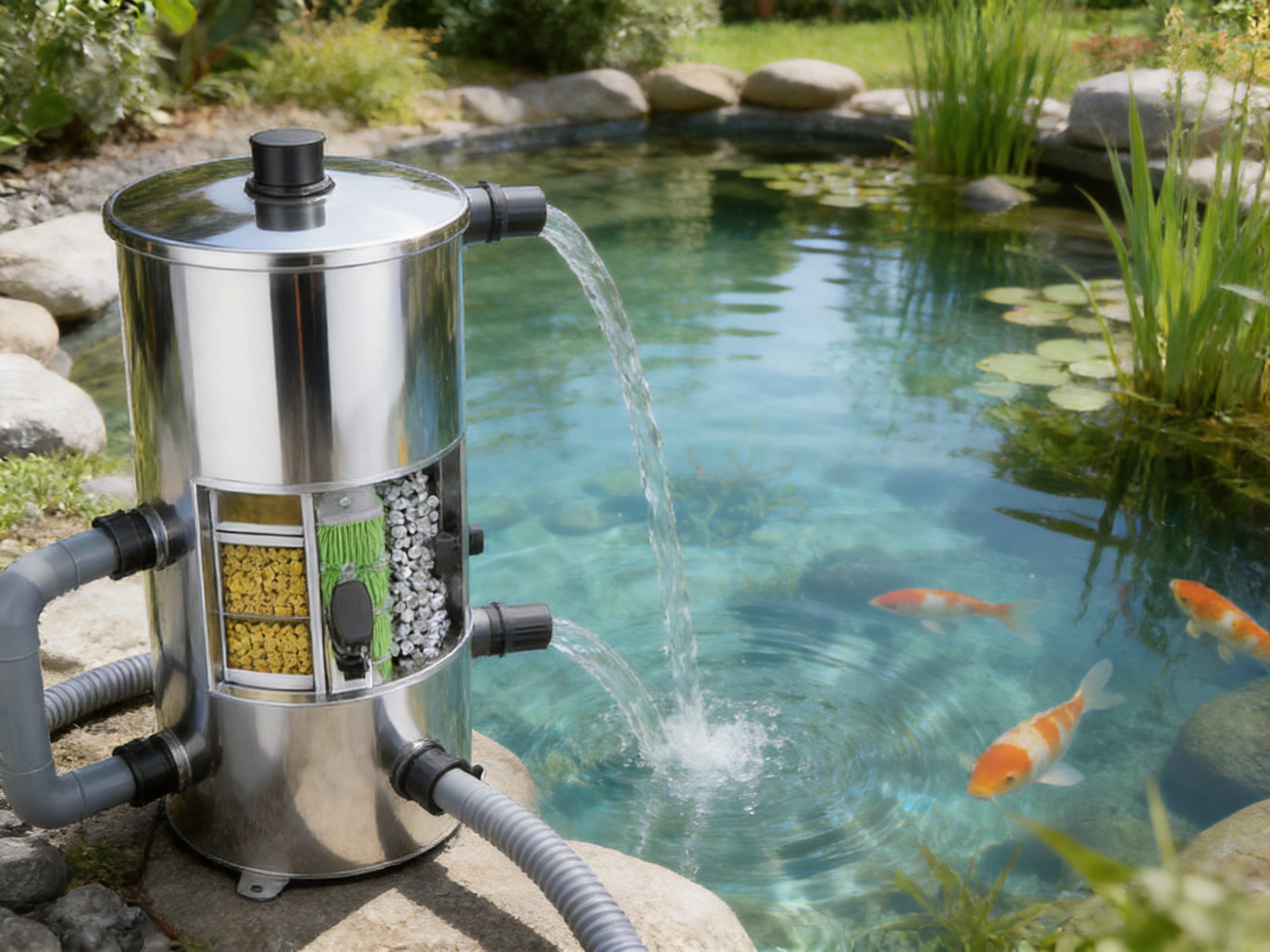
The CNF Series includes a germicidal lamp designed to inhibit algae, bacteria, and viruses in the water. Ultraviolet treatment is a proven method for controlling free-floating algae and reducing certain microorganisms when water is properly exposed to UV radiation. This is particularly useful in ponds exposed to sunlight, where algae can develop quickly.
The CNF-200 and CNF-400 models each use an 18 W UV lamp, while the CNF-800 model uses two 24 W lamps. This scaling reflects the increasing water volume and flow requirements of larger pond systems. A larger pond requires higher treatment capacity because more water must pass through the UV zone to maintain clarity. The dual-lamp design of the CNF-800 provides stronger ultraviolet capability for demanding applications.
Many competing filters require a separate external UV clarifier, which increases installation complexity, cost, and space requirements. By integrating UV treatment into the bio-filter, the CNF Series simplifies system design. The pond owner can benefit from biological filtration and UV clarification in a single unit. Fewer external components may also mean fewer hose connections, fewer leak points, and a cleaner installation.
Ultraviolet treatment does not replace biological filtration. It works best as part of a complete system. The UV lamp targets microorganisms suspended in the water column, while the biological media supports bacteria attached to internal surfaces. This distinction is important: beneficial nitrifying bacteria living on filter media are not the same as free-floating algae cells in the pond water. By combining UV and bio-media, the CNF Series addresses both water clarity and ecological balance.
For best results, the lamp should be maintained according to normal UV filtration practices. UV lamp output decreases over time even if the lamp still appears to be glowing. Periodic replacement helps preserve sterilization performance. The quartz sleeve or lamp chamber should also be kept clean so that UV light can effectively reach the passing water. Proper maintenance allows the system to maintain its intended algae-inhibiting effect.
A pond filter must match the pump and pond size. If the flow rate is too low, water turnover is insufficient and parts of the pond may remain poorly treated. If the flow rate is too high, water may pass through the filter too quickly, reducing contact time with media and UV light. The CNF Series provides clearly defined maximum flow-through values, allowing users to match equipment more accurately.
The CNF-200 supports up to 4,000 L/h, making it suitable for smaller fish ponds up to 6 m³ or ornamental ponds up to 12 m³. The CNF-400 supports up to 6,000 L/h, suitable for fish ponds up to 10 m³ or ornamental ponds up to 20 m³. The CNF-800 supports up to 10,000 L/h, making it appropriate for larger fish ponds up to 20 m³ or ornamental ponds up to 40 m³. These performance ranges help users choose a filter that fits their actual needs rather than relying on guesswork.
The inlet and outlet adapter design also supports hydraulic efficiency. The inlet accepts several common hose sizes, while the outlet offers larger-diameter options. Larger outlets can reduce resistance and help water return smoothly to the pond. In practical pond installations, hose diameter, bend angles, elevation difference, and pump performance all influence real water flow. The availability of multiple adapter sizes gives installers more flexibility to optimize the system.
Compared with filters that provide limited hose compatibility, the CNF Series is easier to integrate into different setups. This is valuable for replacement projects, where an owner may already have a pump and hose network in place. It is also beneficial for dealers and installers because one product series can support multiple installation scenarios.
Choosing the correct model is essential for achieving the best filtration effect. The CNF-200 is ideal for compact ponds, small garden water features, and lightly stocked fish ponds. Its 45 L actual volume provides meaningful filtration capacity without requiring excessive installation space. With an 18 W UV lamp and 4,000 L/h maximum flow-through, it offers a practical balance for smaller systems.
The CNF-400 is a strong choice for medium-sized ponds. Its 60 L actual volume and 6,000 L/h maximum flow-through provide greater treatment capacity while maintaining a manageable footprint. For many residential ponds, the CNF-400 offers an excellent middle option: more capacity than an entry-level filter, but not as large as a commercial-scale system. It is suitable for fish ponds up to 10 m³ and ornamental ponds up to 20 m³.
The CNF-800 is built for larger and more demanding ponds. With an actual volume of 120 L, a maximum flow-through of 10,000 L/h, and two 24 W UV lamps, it is the most powerful model in the series. It is suitable for fish ponds up to 20 m³ and ornamental ponds up to 40 m³. For ponds with higher sunlight exposure, heavier fish load, or greater clarity requirements, the CNF-800 provides the strongest performance margin.
When selecting a model, pond owners should consider more than water volume. A heavily stocked koi pond may require stronger filtration than a lightly stocked decorative pond of the same size. A pond located under trees may collect more leaves and debris. A pond exposed to full sun may experience stronger algae pressure. Feeding frequency also affects waste load. In uncertain cases, choosing a larger model can provide a useful safety margin and improve long-term stability.
The CNF Series offers several advantages over many conventional pond filters. The first advantage is its stainless steel body. Many budget filters use plastic housings that may become brittle or fade with outdoor exposure. Stainless steel provides a more durable and professional solution for long-term pond use.
The second advantage is integrated multi-stage treatment. Some competing products provide only mechanical filtration, requiring users to purchase additional biological media or UV clarifiers. The CNF Series combines biochemical balls, food-grade brush media, and a germicidal lamp, giving users a more complete filtration system in one unit. This reduces complexity and can improve overall pond management.
The third advantage is media design. The biochemical balls offer enhanced surface texture for water flow and bacterial growth. The brush media supports nitrifying bacteria while capturing particles without excessive clogging. This combination provides a practical balance between biological activity and mechanical capture. In comparison, filters relying only on dense foam may require more frequent cleaning and may suffer from reduced flow if not maintained carefully.
The fourth advantage is flexible installation. The inlet and outlet adapters support multiple hose sizes, making the filter easier to connect with different pond pumps and layouts. This flexibility is especially important for distributors, installers, and end users who work with various system configurations.
The fifth advantage is product scalability. With three models covering different pond volumes, the series allows users to select a model according to actual pond demands. Competitors sometimes offer only one or two sizes, forcing users to oversize or undersize their filtration system. The CNF range provides a clearer selection path.
The sixth advantage is manufacturing background. The product is supported by Sensen Group Co., Ltd., a company established in 1985 with decades of experience in aquarium pets, aquaculture machinery, and industrial equipment. The company’s broad manufacturing base, research capability, quality control system, and large-scale production network contribute to product consistency and supply reliability.
A filter’s performance depends not only on its design but also on how consistently it is manufactured. The CNF Series is supported by the manufacturing and development capabilities of Sensen Group Co., Ltd., located in Zhoushan City, Zhejiang Province, China. Since its establishment in 1985, the company has developed across aquarium pets, aquaculture machinery, and industrial equipment. This long operational history provides valuable technical experience in water treatment products, pumps, accessories, and aquatic life support systems.
The company has built a broad organizational structure that includes research, quality control, business training, administration, finance, and other functional departments. This type of structure is important because modern filtration equipment requires coordination between product design, material selection, production engineering, testing, packaging, logistics, and after-sales support. A mature manufacturer can control these steps more effectively than a small workshop with limited resources.
Research and development capability is especially important for filtration products. Pond filtration requires an understanding of hydrodynamics, biological media, ultraviolet treatment, sealing performance, and user maintenance behavior. By maintaining research functions, the company can improve product structures, develop new solutions, and respond to changing market requirements. This supports continuous innovation rather than simple imitation.
Quality control is another major strength. A pond bio-filter must remain watertight, withstand continuous flow, protect electrical components, and maintain media performance. Quality control processes may include material inspection, dimensional checks, assembly verification, leakage testing, electrical safety inspection, packaging review, and final product assessment. These steps help ensure that each unit delivered to the market meets consistent standards.
The company also benefits from a large production and marketing network. With multiple subsidiary corporations and trading companies, it can support production scale, distribution, and market responsiveness. This is important for buyers who require stable supply, consistent model availability, and reliable communication. For wholesalers, importers, retailers, and pond equipment distributors, manufacturing scale can be as valuable as product design because it affects delivery schedules and long-term cooperation.
The advanced manufacturing value of the CNF Series can be understood through several key process areas: material handling, metal forming, surface finishing, precision assembly, electrical integration, and final inspection. Each area contributes to product reliability.
Stainless steel processing requires careful forming and joining. The filter body must be shaped accurately to maintain structural strength and support correct assembly. Edges, openings, and connection points must be processed with precision so that hoses, adapters, seals, and internal components fit properly. A well-made stainless steel housing improves durability and reduces the risk of leaks or deformation.
Surface finishing is also important. Stainless steel used in outdoor water equipment should be finished to resist corrosion and allow easier cleaning. Smooth and consistent surfaces reduce areas where dirt can accumulate and make the product easier to maintain. A high-quality finish also improves the product’s appearance, which is valuable for visible garden installations.
Internal media arrangement must be controlled during assembly. Biochemical balls and brushes should be positioned to support intended water flow, not block circulation or create uneven channels. The ultraviolet lamp must be installed in a way that allows safe operation and effective exposure. Electrical components require secure placement and protection from water intrusion. This combination of wet-area engineering and electrical integration requires disciplined production standards.
Testing is a critical part of reliability. Filters used in ponds operate under constant hydraulic conditions. Leakage, poor sealing, weak connectors, or electrical defects can create serious user problems. A responsible manufacturing process includes inspection and testing before shipment. These steps help reduce failure rates and build confidence among customers and distributors.
Because the company has experience in aquarium and aquaculture equipment, it understands the importance of continuous operation. Pond equipment often runs for many hours per day, sometimes around the clock. A product designed for this environment must use suitable materials, reliable components, and stable assembly methods. The CNF Series reflects this practical understanding by combining robust construction with integrated water treatment functions.
For everyday users, the most important benefits of a pond filter are clear water, healthier fish, reduced maintenance, and dependable operation. The CNF Series addresses these needs through its combination of stainless steel durability, biological media, brush filtration, and UV treatment.
Clear water is supported by the filter’s ability to capture particles and inhibit free-floating algae. When suspended debris and algae are reduced, the pond becomes more visually attractive. Fish can be seen more clearly, aquatic plants receive better light penetration, and the overall landscape effect improves.
Healthier fish are supported by biological filtration. A stable population of nitrifying bacteria helps convert harmful ammonia and nitrite into less harmful nitrate. This reduces stress on fish and supports a more balanced pond ecosystem. While no filter eliminates the need for responsible feeding, stocking, and maintenance, a well-sized bio-filter is one of the most important tools for fish health.
Reduced maintenance comes from the use of brush and biochemical media that support flow while capturing waste. Filters that clog quickly can become frustrating and may be neglected by users. A filter designed for practical pond conditions encourages regular but manageable maintenance. This helps keep the system performing over time.
Dependable operation is supported by stainless steel construction and manufacturing quality. A pond owner wants equipment that can withstand outdoor conditions and continuous use. Strong housing, adaptable connectors, and integrated treatment features make the CNF Series a practical long-term investment.
The CNF Series can be used in several types of pond environments. In residential garden ponds, it helps maintain water clarity and supports fish health. In koi or goldfish ponds, biological filtration is particularly valuable because fish waste can accumulate quickly. In decorative landscape ponds, UV treatment helps control green water and preserve visual appeal. In larger ornamental water features, the CNF-800 provides higher capacity for greater circulation demands.
For small ponds, the CNF-200 offers a compact but capable solution. It can be used where space is limited but water quality remains important. For medium garden ponds, the CNF-400 provides increased volume and flow handling. For larger ponds, the CNF-800 offers a stronger treatment system with dual UV lamps and a larger media chamber.
The filter can also support installations in courtyards, hotels, public gardens, leisure spaces, and commercial decorative water features. In these environments, water clarity affects customer experience and visual quality. A durable stainless steel filter can offer both performance and a professional equipment appearance.
Proper installation is essential to obtain the best performance from the CNF Series. The filter should be placed in a stable position near the pond, with easy access for inspection and maintenance. The pump should be selected according to the filter’s maximum flow-through rating, hose length, and elevation difference. Using a pump that greatly exceeds the recommended flow may reduce filtration contact time, while an undersized pump may fail to circulate the pond effectively.
Hose selection should match the adapter sizes and desired flow rate. Wider hoses generally reduce friction loss and support better circulation. The outlet should return water to the pond in a way that promotes surface movement and oxygen exchange. Good circulation helps distribute treated water and prevents stagnant areas.
The ultraviolet function should be operated according to appropriate safety practices. UV lamps should not be viewed directly when operating, and electrical components should be protected according to installation instructions and local safety requirements. The system should be connected to a safe power source, preferably with suitable ground-fault protection where applicable.
Before starting the filter, all connections should be checked for secure fitting. After startup, the system should be observed for leaks, abnormal noise, or flow restrictions. During the first weeks of operation, biological media will gradually mature as nitrifying bacteria colonize the surfaces. Pond owners should understand that biological filtration develops over time and may not reach full performance immediately on the first day.
Routine maintenance helps the CNF Series perform at its best. Mechanical debris should be removed from brush media as needed. The cleaning frequency depends on pond conditions, fish load, feeding levels, leaf fall, and algae pressure. During heavy seasonal debris periods, more frequent inspection may be required.
When cleaning biological media, it is best to avoid harsh chemicals or chlorinated tap water that can damage beneficial bacteria. Rinsing with pond water is commonly recommended for biological filter media because it removes excess debris while preserving microbial colonies. Over-cleaning can temporarily reduce biological filtration capacity, so maintenance should aim to restore flow without sterilizing the media.
The UV lamp should be checked periodically. Even if the lamp lights up, its germicidal output can decline with age. Replacing the lamp according to normal service intervals helps maintain algae inhibition performance. The lamp sleeve or chamber should also be cleaned so mineral deposits or biofilm do not block UV transmission.
Hose connections, seals, and adapters should be inspected for wear or loosening. Outdoor equipment experiences temperature changes and physical movement, so periodic checks are practical. The stainless steel body should be cleaned when necessary to maintain appearance and remove surface contaminants.
Seasonal maintenance may be needed in cold climates. If the pond system is shut down during freezing weather, the filter should be drained and protected from ice damage. If operated year-round, the system should be installed in a way that prevents freezing of hoses and chambers. Correct seasonal care can extend product life and prevent avoidable damage.
Efficient filtration contributes to a healthier pond with less need for corrective chemicals. By supporting biological balance and inhibiting algae, the CNF Series can help reduce reliance on temporary water clarifiers or repeated chemical treatments. A stable filter system works continuously with the natural nitrogen cycle, which is generally more sustainable than reactive pond management.
The built-in UV lamp targets water clarity problems without adding chemicals to the pond. This is beneficial for fish, plants, and beneficial bacteria living on media surfaces. While UV electricity consumption should be considered, the integrated design may reduce the need for separate equipment and simplify energy planning.
Choosing the correct model also supports operational efficiency. An undersized filter may require frequent cleaning and still fail to maintain clarity. An oversized filter may cost more than necessary. The CNF model range allows users to match pond needs more accurately, balancing performance, energy use, and investment.
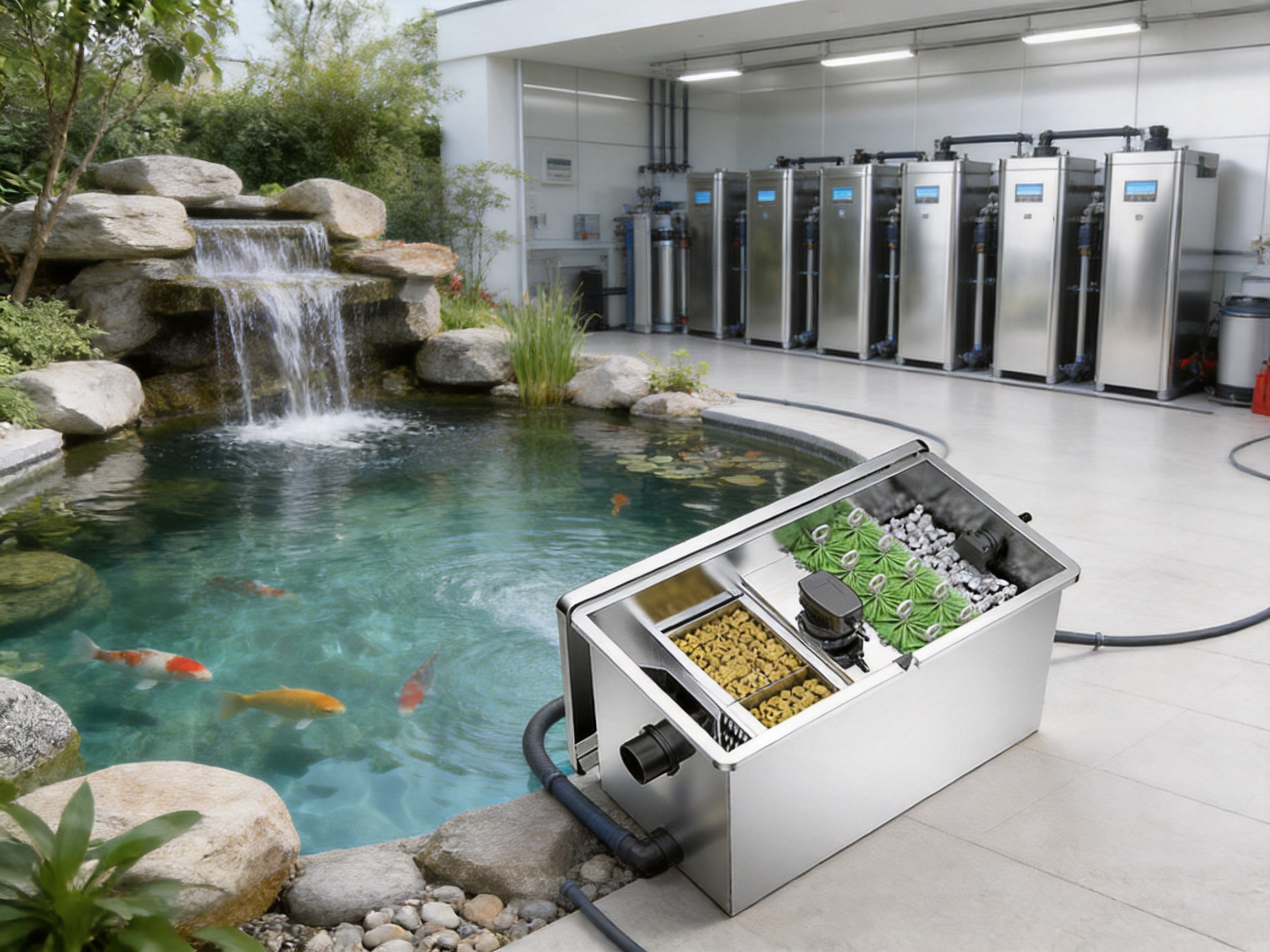
For individual pond owners, a filter purchase may seem like a single equipment decision. For distributors, retailers, contractors, and project buyers, the manufacturer’s scale and reliability are equally important. A strong manufacturing company can provide consistent product quality, stable supply, technical support, and model continuity. This reduces business risk and supports customer satisfaction.
Sensen Group Co., Ltd. has developed for more than three decades and operates across aquarium pets, aquaculture machinery, and industrial equipment. Its experience in related aquatic industries gives it a broad understanding of water circulation, filtration, and life support needs. The company’s subsidiaries and trading network support production capacity and market reach. This background strengthens the commercial value of the CNF Series because buyers are not only purchasing a filter; they are also relying on a manufacturer with established industry experience.
The company’s development direction emphasizes industrial technicalization, marketing globalization, and brand internationalization. These goals align with the needs of modern pond equipment markets, where buyers expect advanced design, reliable quality, and international supply capability. The company’s combination of manufacturing, research, quality control, and distribution helps support these expectations.
For custom aquarium filters suppliers, aquarium filters manufacturers, pond equipment dealers, and garden equipment distributors, the CNF Series can be positioned as a durable stainless steel bio-filter solution for customers who want more than a basic plastic filtration unit. Its multi-stage structure, UV integration, and model range provide clear selling points in competitive markets.
When compared with a simple gravity filter box, the CNF Series offers stronger material construction and integrated UV treatment. Gravity filter boxes may be easy to use, but they often rely on plastic bodies and basic media layers. Without UV, they may struggle with green water. Without sufficient biological media, they may not handle fish waste effectively. The CNF Series provides a more complete treatment approach.
When compared with foam-only pressure filters, the CNF Series offers better biological media diversity. Foam pads can provide mechanical and some biological filtration, but they may clog quickly in outdoor ponds. The use of biochemical balls and brush media supports open flow and bacteria growth, reducing the risk of rapid blockage. This makes the system better suited for ponds with variable debris loads.
When compared with separate filter and UV installations, the CNF Series offers simpler integration. Separate systems can perform well, but they require additional space, fittings, and installation planning. More connections can increase the risk of leaks and make maintenance more complicated. The integrated design of the CNF Series can reduce system complexity while maintaining multi-stage performance.
When compared with low-cost imported filters of uncertain manufacturing origin, the CNF Series benefits from the production background of an established aquatic equipment manufacturer. Product consistency, quality control, and after-sales support are important differentiators, especially for professional buyers and repeat customers.
The effectiveness of the CNF Series is linked to basic principles of aquatic water quality. Fish produce ammonia, which is toxic at elevated levels. Beneficial bacteria convert ammonia to nitrite, which is also harmful, and then to nitrate, which is less toxic. This process is called nitrification. It requires oxygen, suitable surfaces, stable water flow, and time for bacterial colonies to mature.
The biochemical balls and brush media provide surfaces for nitrifying bacteria. Their open structures allow oxygenated water to pass through, supporting microbial metabolism. If media becomes clogged or oxygen is depleted, nitrification efficiency can decline. Therefore, the CNF Series uses media forms that encourage both surface contact and flow continuity.
Algae growth is influenced by sunlight, nutrients, and water movement. A pond with high nitrate and phosphate levels under strong sunlight may develop green water or string algae. UV treatment is particularly effective against free-floating algae cells that pass through the filter. By damaging these cells, the germicidal lamp helps reduce green water and improve clarity. However, nutrient management, plant balance, and proper feeding remain important parts of pond care.
Mechanical capture is also necessary because organic particles eventually decompose and release nutrients. Removing leaves, fish waste, and suspended debris before they break down reduces the nutrient load. Brush filtration helps intercept such particles while maintaining flow. This supports both visual clarity and biological stability.
A good pond filter must balance several factors. It must be strong but not unnecessarily difficult to install. It must have enough capacity but remain maintainable. It must treat water effectively but not restrict flow excessively. The CNF Series reflects this balance through its stainless steel body, model range, open biological media, brush structure, UV integration, and adapter flexibility.
The actual volumes of 45 L, 60 L, and 120 L show that the series provides meaningful internal capacity. A larger internal volume generally allows more media and greater contact time, both of which can improve filtration. At the same time, the dimensions remain practical for garden installation. The CNF-200 measures 525 x 425 x 402 mm, the CNF-400 measures 730 x 410 x 400 mm, and the CNF-800 measures 865 x 495 x 472 mm. These sizes allow users to select a system that fits both water quality requirements and available space.
Usability is supported by the adapter design. Multiple inlet and outlet sizes reduce the need for complex modifications. This is particularly helpful for users upgrading from older equipment. Instead of redesigning the entire pond circulation system, they may be able to connect the filter using existing hose sizes or simple adapter choices.
For dealers, the CNF Series provides a product line with clear segmentation. The CNF-200 can be offered to small pond owners, the CNF-400 to typical residential garden pond users, and the CNF-800 to customers with larger or higher-demand systems. This makes sales consultation more straightforward. Customers can compare pond size, fish load, and desired clarity against the model specifications.
The stainless steel construction provides a premium selling point. In many markets, customers are willing to invest more in equipment that appears durable and professional. The integrated UV lamp and biological media offer additional value compared with basic filter boxes. Dealers can explain that the product is not only a container for media but a complete water treatment system.
For project buyers, durability and supply reliability are important. Hotels, parks, public landscape projects, and commercial garden installations need equipment that can operate consistently. They also value manufacturers with production capacity and quality control systems. The company’s long industry history and broad manufacturing structure help support these project requirements.
The main purpose is to improve pond water clarity and biological stability by combining mechanical capture, biological filtration, and ultraviolet treatment. It helps remove suspended debris, supports nitrifying bacteria, and inhibits algae and harmful microorganisms in the water.
Model selection depends on pond volume, fish density, feeding level, and sunlight exposure. As a general guide, the CNF-200 is suitable for fish ponds up to 6 m³, the CNF-400 for fish ponds up to 10 m³, and the CNF-800 for fish ponds up to 20 m³. For heavily stocked ponds, choosing a larger model may provide better safety margin.
Stainless steel offers higher structural strength, better resistance to outdoor conditions, improved durability, and a more professional appearance. It is less likely to crack or deform compared with many low-cost plastic housings, especially in demanding outdoor pond environments.
The biochemical balls have textured surfaces that enhance water flow and provide surface area for beneficial bacteria. These bacteria help convert harmful ammonia and nitrite into less harmful nitrate, supporting healthier water for fish and plants.
The food-grade brush captures suspended particles and provides additional surface area for nitrifying bacteria. Its open structure allows water to continue flowing while trapping debris, reducing the risk of rapid clogging compared with dense foam-only filtration.
No. The UV lamp and biological media perform different functions. The UV lamp helps inhibit free-floating algae, bacteria, and viruses in the water, while biological media supports beneficial bacteria that process ammonia and nitrite. The best performance comes from using both together.
Cleaning frequency depends on pond conditions, fish load, feeding, and seasonal debris. Brush media should be inspected regularly and cleaned when flow decreases or debris accumulation becomes significant. Biological media should be cleaned gently with pond water to preserve beneficial bacteria.
Yes. The series is also suitable for ornamental or lightly stocked ponds. In these applications, the recommended pond volume is larger than for fish ponds because the biological waste load is usually lower. The CNF-200 can serve up to 12 m³, the CNF-400 up to 20 m³, and the CNF-800 up to 40 m³ in such conditions.
The CNF-800 is designed for larger ponds and higher flow-through capacity. Two 24 W UV lamps provide stronger ultraviolet treatment to match the larger water volume and greater circulation demand.
The product combines stainless steel construction, integrated UV treatment, biological media, flexible hose adapters, and multiple model sizes. It is supported by a manufacturer with decades of aquatic equipment experience, research capability, quality control systems, and large-scale production strength.
The CNF Series Stainless Steel Bio-filter is a comprehensive pond filtration solution designed for users who want durability, clear water, biological stability, and simplified system integration. Its stainless steel housing provides a strong advantage over many plastic alternatives. Its biochemical balls and food-grade brush media support beneficial bacteria and improve water treatment efficiency. Its built-in germicidal lamp helps inhibit algae, bacteria, and viruses, reducing green water problems and improving pond appearance.
With three models covering different pond capacities, the series gives pond owners and professional buyers practical choices. The CNF-200 serves smaller ponds, the CNF-400 supports medium systems, and the CNF-800 provides higher capacity for larger installations. Flexible inlet and outlet adapters make installation easier, while the integrated design reduces the need for separate filtration and UV components.
Behind the product is the manufacturing strength of Sensen Group Co., Ltd., a company with long experience in aquarium pets, aquaculture machinery, and industrial equipment. Its research, quality control, production scale, and market network help support consistent product quality and reliable supply. For pond owners, dealers, and project buyers, the CNF Series offers not only a filter but a durable water management solution built on established aquatic equipment expertise.
In competitive pond filtration markets, products must do more than move water through a container. They must support aquatic life, reduce maintenance pressure, withstand outdoor conditions, and deliver visible results. The CNF Series Stainless Steel Bio-filter meets these expectations through a balanced design that combines strength, biological performance, UV clarification, and practical usability.
Andrews, C. The Manual of Fish Health: Everything You Need to Know About Aquarium Fish, Their Environment and Disease Prevention.
Timmons, M. B., Ebeling, J. M., Wheaton, F. W., Summerfelt, S. T., and Vinci, B. J. Recirculating Aquaculture Systems.
Hovanec, T. A., and DeLong, E. F. Comparative Analysis of Nitrifying Bacteria Associated with Freshwater and Marine Aquaria.
Boyd, C. E. Water Quality: An Introduction.
Spotte, S. Fish and Invertebrate Culture: Water Management in Closed Systems.
United States Environmental Protection Agency. Wastewater Technology Fact Sheet: Ultraviolet Disinfection.
Food and Agriculture Organization of the United Nations. Small-Scale Aquaponic Food Production: Integrated Fish and Plant Farming.



 English
 русский
 España
 Portugal
 عربي
عربي
 No. 61-79, Baima Street, Maao Town, Dinghai District, Zhoushan City, Zhejiang Province, China.
 0086 580 8082088 / 8081168
 0086 580 8080978
 songhua@sunsun-china.com