

 English
 русский
 España
 Portugal
 عربي
عربيGuppies, platies, corydoras catfish, and neon tetras are the best aquarium fish for beginners. A beginner-friendly fish is hardy enough to survive small water-quality mistakes, peaceful enough to live in a community, small enough to stay comfortable in a 10 to 20 gallon tank, and willing to eat standard flake or pellet foods. This guide covers what makes a fish beginner-friendly, the eight species that deserve your first tank, the equipment that keeps them healthy, and the mistakes that cause most early failures.
Content
What Makes a Fish Beginner-Friendly?
A good starter fish survives the learning curve of a new aquarium. The most common beginner failure is adding fish before the nitrogen cycle matures, which lets ammonia and nitrite climb. The species below tolerate moderate water-quality swings, recover quickly when conditions stabilise, and stay calm in a mixed community.
- Hardiness: tolerates temperature swings and minor water-chemistry lapses.
- Peaceful temperament: does not nip fins or start fights.
- Small adult size: under 3 inches, so the bio-load stays manageable.
- Flexible diet: accepts flakes, granules, and frozen foods without fuss.
- Proven recovery: handles transport and new-tank stress better than sensitive species.
The 8 Best Aquarium Fish for Beginners
Tank size shapes every stocking decision. A 10-gallon tank is the practical minimum for most fish on this list; if space is tight, a compact view aquarium gives you far more swimming room than a bowl while staying comfortable on a desk or counter. Larger tanks are always easier to keep stable, but the species below will do well once the tank is cycled.
 Custom AT Series View Aquarium Suppliers, ODM Factory - Sensen Group Co., LtdSensen Group Co., Ltd is China custom AT Series View Aquarium Suppliers and ODM AT Series View Aquarium Factory,details:One-touch / eight...View Product →
Best Fish for a 10–20 Gallon Starter Tank
Guppy (Poecilia reticulata). Guppies are the classic first fish because they are colourful, hardy, and eat almost anything. A group of five or six will breed readily, so keep an all-male group if you do not want fry in the tank.
- Minimum tank: 10 gallons
- Temperature: 72–82°F
- Water: pH 6.8–7.8, tolerates a wide range
Platy (Xiphophorus maculatus). Platies are slightly hardier than guppies and just as peaceful, making them a forgiving choice for a first community tank. Keep them in groups of three or more.
- Minimum tank: 10 gallons (20 for a group)
- Temperature: 70–80°F
- Water: pH 7.0–8.2
Zebra danio (Danio rerio). Zebra danios are the most temperature-tolerant fish on this list and one of the most adaptable freshwater species. They are fast, energetic schooling fish that need a lid because they jump.
- Minimum tank: 10 gallons
- Temperature: 64–74°F; usually no heater needed in a heated room
- Schooling: keep 6 or more
Neon tetra (Paracheirodon innesi). Neon tetras are the classic mid-water schooling fish, with a glowing blue line over a red tail. They are slightly more sensitive than guppies or danios, so add them only after the tank has fully cycled.
- Minimum tank: 10 gallons
- Temperature: 70–81°F
- Schooling: keep 6 or more
Betta (Betta splendens). The Siamese fighting fish is the best single-fish choice for a small aquarium. A 5-gallon tank with a heater and gentle filter is enough, and a male betta is perfectly happy living alone, which removes all community compatibility worries.
- Minimum tank: 5 gallons (10 recommended)
- Temperature: 76–80°F
- Water: pH 6.5–7.5, low flow
Best Fish for a 20–40 Gallon Community Tank
Corydoras catfish (Corydoras spp.). Corydoras are peaceful bottom-dwellers that sift the substrate and eat leftover food. They must be kept in groups of six or more, and a soft sand substrate protects their sensitive barbels.
- Minimum tank: 20 gallons
- Temperature: 72–80°F
- Schooling: keep 6 or more
Harlequin rasbora (Trigonostigma heteromorpha). Harlequin rasboras are calm, undemanding schooling fish that suit planted tanks and gentle water flow. Their orange bodies and dark triangular patch add strong visual interest without aggression.
- Minimum tank: 10 gallons (20 for a larger group)
- Temperature: 73–80°F
- Schooling: keep 6 or more
Bristlenose pleco (Ancistrus spp.). Bristlenose plecos stay around 4 to 5 inches, far smaller than the common pleco, and spend their time grazing on algae. They are a practical clean-up crew, but they produce noticeable waste, so a strong filter is essential.
- Minimum tank: 30 gallons
- Temperature: 74–80°F
- Feeding: algae wafers and blanched vegetables
Beginner Fish Comparison Table
The table below summarises the key numbers for the eight species so you can compare them at a glance before buying.
| Species | Adult size | Minimum tank | Temperature | Temperament |
|---|---|---|---|---|
| Guppy | 1.5–2.5 in | 10 gal | 72–82°F | Peaceful |
| Platy | 2–3 in | 10 gal | 70–80°F | Peaceful |
| Zebra danio | 2 in | 10 gal | 64–74°F | Active, schooling |
| Neon tetra | 1.5 in | 10 gal | 70–81°F | Peaceful, schooling |
| Betta | 2.5–3 in | 5–10 gal | 76–80°F | Solitary |
| Corydoras catfish | 2–3 in | 20 gal | 72–80°F | Peaceful, schooling |
| Harlequin rasbora | 1.8 in | 10 gal | 73–80°F | Peaceful, schooling |
| Bristlenose pleco | 4–5 in | 30 gal | 74–80°F | Peaceful |
Essential Equipment for a Beginner Aquarium
A filter is non-negotiable. It houses the beneficial bacteria that break down fish waste and keeps the water gently moving. A hang-on back filter is the easiest choice for 10 to 40 gallon tanks because it provides mechanical, chemical, and biological filtration in one compact unit on the back of the aquarium. Choose a model rated for a slightly larger tank than yours.
 Custom CBG Series Hang On Back Filter Suppliers, ODM Factory - Sensen Group Co.,Sensen Group Co., Ltd is China custom CBG Series Hang On Back Filter Suppliers and ODM CBG Series Hang On Back Filter Factory,details:Oil...View Product →
An air pump is not strictly required when the filter creates surface agitation, but it adds oxygen and helps keep the water moving during hot weather or after a water change. A quiet magnetic vibration air pump is a good fit for a living room or bedroom because it runs with very little hum.
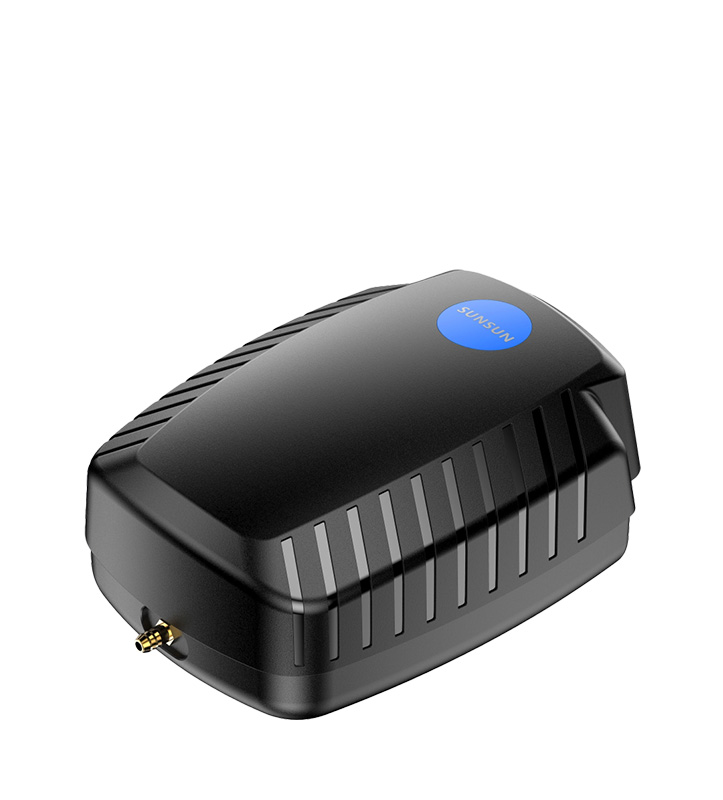 Custom CAP Series Magnetic Vibration Air Pump Suppliers, ODM Factory - Sensen GrSensen Group Co., Ltd is China custom CAP Series Magnetic Vibration Air Pump Suppliers and ODM CAP Series Magnetic Vibration Air Pump Fac...View Product →
A heater with an adjustable thermostat and a reliable thermometer complete the basics. Set tropical tanks to 76–78°F before adding fish and check the temperature daily during the first week. Sensen's complete product catalog covers filters, air pumps, heaters, lighting, and water-care additives, so you can build the whole setup from one supplier.
Common Beginner Mistakes and How to Avoid Them
Almost every early failure comes down to four errors: overstocking, skipping the nitrogen cycle, overfeeding, and inconsistent water changes. Fix those four habits and your fish will thrive through the first year.
- Overstocking: use one inch of adult fish per gallon as a starting point, not a target.
- Skipping the cycle: run the filter for 4–6 weeks before adding fish, or use a bottled bacteria starter and test the water daily.
- Overfeeding: feed once a day only what the fish can eat in two minutes.
- Skipping water changes: replace 25–30% of the water every week without fail.
If this is your first tank, read our guide to the most common beginner mistakes before you buy fish, and always test the water before adding any new livestock.
Frequently Asked Questions
How many beginner fish can I keep in a 10-gallon tank?
Use one inch of adult fish per gallon as a rough guide. A 10-gallon tank can comfortably hold six neon tetras, a single betta with a snail, or three guppies. Resist the urge to fill it completely; a lightly stocked tank stays far more stable.
Do beginner fish need a heater?
Most tropical species on this list need a stable temperature between 72°F and 80°F, so an adjustable heater and thermometer are recommended. Zebra danios are the exception and can live in an unheated room that stays near 68–72°F.
How often should I change the water?
Change 25–30% weekly to keep nitrate low and replenish minerals. Weekly changes are the habit that makes the hobby predictable and safe, even when the tank looks clear.
Can a betta live with other beginner fish?
Sometimes. A male betta can live with peaceful bottom-dwellers such as corydoras in a larger tank, but it should not share a small tank with guppies or other long-finned fish, because the betta may see them as rivals and nip their fins.
Do I need a lid on my fish tank?
Yes. Jumping is common among zebra danios and bettas, especially during the first few days in a new tank. A glass or acrylic lid also slows evaporation and protects the tank from curious pets.
Choose one or two species from this list, cycle the tank properly, keep feeding moderate, and stick to a weekly water change. The best aquarium fish for beginners are not rare or expensive; they are simply the species that forgive small mistakes and reward consistent care with colour and activity.

 No. 61-79, Baima Street, Maao Town, Dinghai District, Zhoushan City, Zhejiang Province, China.
 0086 580 8082088 / 8081168
 0086 580 8080978
 songhua@sunsun-china.com