

 English
 русский
 España
 Portugal
 عربي
A tank can look crystal-clear and still be a poor place for fish: 0.25 mg/L ammonia or 0.1 mg/L nitrite is enough to cause stress, gill damage, and appetite loss. Water quality for fish tanks is not a single reading. It is the stable balance of temperature, pH, carbonate hardness (KH), general hardness (GH), ammonia, nitrite, nitrate, oxygen, and dissolved organic waste, supported by filtration and regular maintenance.
The practical answer is to use a safe source water, remove chlorine or chloramine, cycle the filter before stocking, test the parameters that matter, and keep conditions steady. Fish tolerate small, slow changes far better than a sudden “perfect” reset.
Content
- The Short Answer: Stable Water Beats Perfect Water
- Start With the Right Source Water
- Build the Nitrogen Cycle Before You Add Fish
- Filtration and Flow Do the Heavy Lifting
- Oxygen and Temperature: Two Quiet Limiters
- Water Changes and Feeding: The Maintenance Rhythm
- Testing and Troubleshooting Without Guesswork
- FAQ
- A Practical Water Quality Checklist
The Short Answer: Stable Water Beats Perfect Water
The best water for a fish tank is stable, well-oxygenated, chlorine-free water that matches the species’ pH, KH, and GH needs. A community tank does not need laboratory-grade purity; it needs consistent chemistry, a working nitrogen cycle, and enough surface movement to support respiration.
| Parameter | Target range | Why it matters | Test rhythm |
|---|---|---|---|
| Temperature | 24–28°C (75–82°F) | Drives metabolism and oxygen demand | Daily or with controller |
| pH | 6.5–7.8 | Affects enzyme activity and ammonia toxicity | Weekly |
| KH | 3–8 dKH | Buffers against pH crashes | Weekly to monthly |
| GH | 4–12 dGH | Supplies minerals for fish and plants | Monthly |
| Ammonia | 0 mg/L | Toxic to gills at very low levels | Weekly while cycling |
| Nitrite | 0 mg/L | Blocks oxygen transport in blood | Weekly while cycling |
| Nitrate | Below 20–40 mg/L | Signals waste accumulation | Weekly |
Stability matters more than a single number. A tank held at pH 7.2 for months is usually safer than one swung between 6.5 and 7.8 because of repeated adjustments. Test first, then change one variable at a time.
Start With the Right Source Water
Tap water is usually the most practical source for fish tanks, provided you remove chlorine or chloramine and test for nitrate, phosphate, and hardness first. Source water sets the baseline; conditioning and maintenance keep it safe.
| Source | Best use | Main risk |
|---|---|---|
| Tap water | Most community tanks after conditioning | Chlorine, chloramine, nitrate, copper |
| Well water | Hard-water species when tests are clean | Iron, hardness, nitrate, local contaminants |
| RO or DI water | Soft-water species and precise mixing | Zero KH and GH; unstable pH |
| Bottled water | Emergency top-offs and small tanks | Unknown mineral content and cost |
| Rainwater | Soft-water setups after safe collection | Roof pollution and no buffering |
| Distilled water | Base for remineralized mixes | No minerals; do not use straight |
Do not chase pure water by default. Reverse osmosis and distilled water are useful tools for soft-water fish or for mixing a predictable mineral profile, but they must be remineralized before use in most tanks. Pure water has no KH buffer, so pH can fall quickly after waste accumulates.
Build the Nitrogen Cycle Before You Add Fish
A new tank is not ready for fish until ammonia and nitrite both read zero after a deliberate ammonia source; clear water is not evidence of a cycled filter. The nitrogen cycle is the process where nitrifying bacteria convert toxic ammonia to nitrite and then to much less harmful nitrate.
- Fill the tank, dechlorinate the water, and start the filter and heater.
- Add a fishless ammonia source or a small amount of fish food to feed the cycle.
- Test ammonia and nitrite daily; add ammonia only when it drops near zero.
- Wait for nitrite to fall to zero and nitrate to appear, usually within four to six weeks.
- Do a large partial water change before adding the first fish, then stock slowly.
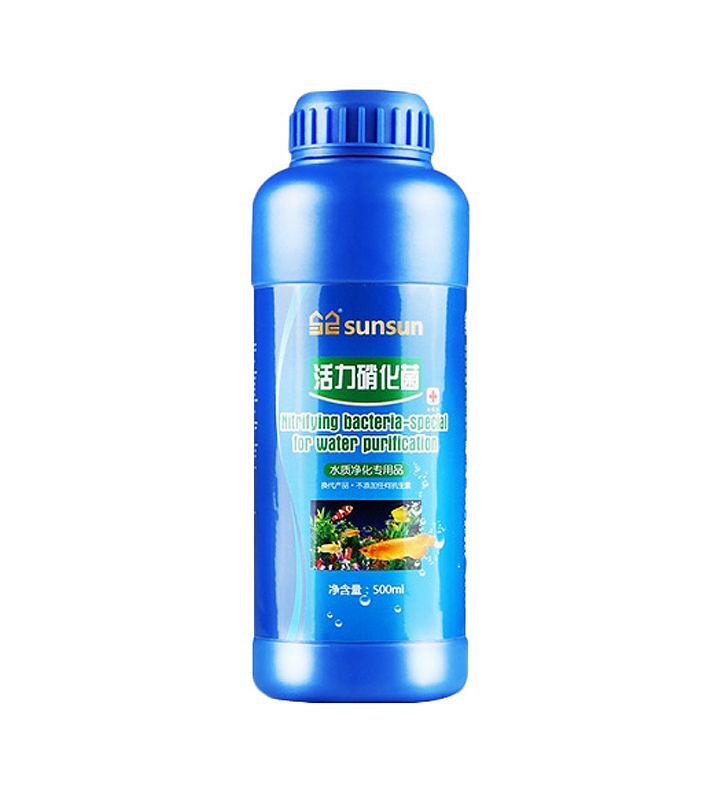 Nitrifying Bacteria for Aquarium Water PurificationAvailable in 500 ml and 1000 ml bottles, this nitrifying bacteria preparation is relevant when starting or supporting a new aquarium cycle.View Product →
Bottled bacteria can shorten the wait, but they do not replace testing. If ammonia or nitrite rises after stocking, feed less, increase aeration, and change part of the water rather than adding more fish.
Filtration and Flow Do the Heavy Lifting
A filter must do three jobs at once: trap particles, host nitrifying bacteria, and keep water moving past the media; a pump alone does not replace biological filtration. For most freshwater tanks, aim for four to six complete tank turnovers per hour, then reduce flow for long-finned bettas, slow-growing plants, or delicate fry.
- Mechanical media catches food, plant matter, and fish waste before it breaks down.
- Biological media provides surface area for bacteria that process ammonia and nitrite.
- Chemical media such as carbon is optional and best used for a specific problem, not as permanent life support.
The available filtration and circulation range includes internal filters, hang-on filters, canister filters, and multi-function pumps. Match the model to tank volume, stocking level, and the amount of surface disturbance the fish can tolerate.
 JP Series Multi-Function Submersible Aquarium PumpThis pump combines pumping, filtration, and oxygen supply, with multiple JP models and specifications to match different aquarium or pond circulation needs.View Product →
Clean biological media in tank water, not under hot tap water. Chlorine kills the bacteria you are trying to protect, and a “spotless” filter can trigger an ammonia spike.
Oxygen and Temperature: Two Quiet Limiters
Warm water holds less oxygen, so a heated tank needs surface movement and a reliable air source even when the filter is running. A gentle ripple across the surface supports gas exchange; a sealed lid with still water does not.
Use an air pump when the tank is heavily stocked, warm, planted, or treated with medication that lowers oxygen. Signs of low oxygen include gasping at the surface, lethargy, and fish crowding near filter outlets.
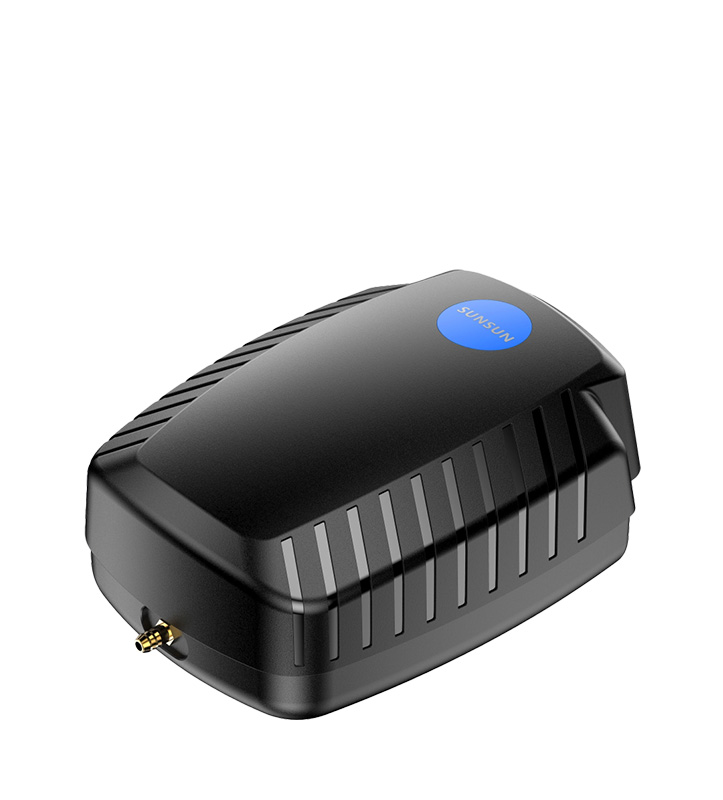 CAP Series Magnetic Vibration Air Pump for PondsWith rainproof construction and strong air output for nano bubble discs, this air pump supports outdoor pond and aquarium aeration where extra oxygen is needed.View Product →
Keep temperature swings small during water changes. Match replacement water within about 1–2°C of tank water, and avoid large changes in pH, KH, or GH unless the species requires a deliberate adjustment.
Water Changes and Feeding: The Maintenance Rhythm
Weekly partial water changes remove nitrate and dissolved organics that filters cannot delete; 20–30% per week is a practical baseline for most stocked freshwater tanks. Adjust upward for heavy stocking, large fish, or rising nitrate, and downward only when tests show the tank is stable.
- Unplug the heater if the water level will drop below its minimum line.
- Siphon gravel or clean the substrate surface without disturbing deep anaerobic pockets.
- Refill slowly with temperature-matched water treated with a conditioner.
- Restart equipment and check flow, temperature, and fish behavior.
Use a water conditioner or stabilizer from the aquarium accessories range whenever replacement water contains chlorine or chloramine. Feed only what fish eat in one to two minutes; uneaten food becomes ammonia, not fish growth.
Testing and Troubleshooting Without Guesswork
Test ammonia, nitrite, and nitrate at least weekly during cycling and every one to two weeks after the tank matures; act on numbers, not on how clear the glass looks. A clear tank can still carry invisible ammonia, nitrite, or high nitrate.
- Ammonia above zero: do a partial water change, reduce feeding, and check that the filter is running.
- Nitrite above zero: increase aeration, change part of the water, and avoid adding fish.
- Nitrate above 40 mg/L: increase water changes, lower stocking, or reduce feeding.
- Dropping pH: test KH and use a water change with appropriate buffering rather than guessing.
- Cloudy water: a bacterial bloom or organic load is common in new tanks; keep testing and avoid overcleaning.
FAQ
Is tap water safe for fish tanks?
Yes, tap water is safe for most fish tanks after chlorine or chloramine is removed and the water is tested for nitrate, hardness, and unusual contaminants. Never add tap water directly without conditioning unless you know the local supply is untreated and suitable.
Does clear water mean good water quality?
No, clear water does not prove good water quality because ammonia and nitrite are invisible. Test kits, not appearance, reveal whether the filter is processing waste.
Can I use distilled or RO water?
Yes, distilled or RO water can be used, but it must usually be remineralized before it goes into a tank. Straight pure water lacks KH and GH, so pH can become unstable.
How often should aquarium water be changed?
Most freshwater tanks do well with 20–30% changed weekly, with the exact amount based on nitrate trend, stocking, and feeding. Large cichlids or goldfish often need more; lightly stocked planted tanks may need less.
What is the fastest way to improve water quality?
The fastest safe step is a partial water change with conditioned, temperature-matched water, plus reduced feeding and extra aeration. Test immediately before and after, and avoid a full teardown unless the tank is contaminated.
A Practical Water Quality Checklist
The most reliable plan for water quality in fish tanks is consistent and simple: safe source water, a cycled filter, moderate flow, good oxygen, modest feeding, and routine testing. Use this checklist each week.
- Check temperature and confirm the heater is working.
- Test ammonia, nitrite, and nitrate, then record the results.
- Change 20–30% of the water and condition the replacement water.
- Clean the filter only when flow drops, using tank water for biological media.
- Remove uneaten food and inspect fish for gasping, spots, or lethargy.

 No. 61-79, Baima Street, Maao Town, Dinghai District, Zhoushan City, Zhejiang Province, China.
 0086 580 8082088 / 8081168
 0086 580 8080978
 songhua@sunsun-china.com