A clean aquarium is more than a visual pleasure. It is an important part of maintaining a stable aquatic environment, protecting ornamental fish and plants, and preserving the clarity and condition of the tank itself. Algae, mineral deposits, biofilm, and other surface buildup can quickly collect on aquarium glass, particularly in tanks exposed to strong lighting or high nutrient levels. Traditional cleaning methods often require wet hands, long-handled tools, partial water changes, or repeated scraping. A magnetic aquarium brush offers a more convenient and controlled alternative.
The ZL Series Tank Dedicated Magnetic Brush is designed to make aquarium glass cleaning simpler, safer, and more efficient. Its magnetic structure allows the external handle to control the internal cleaning component through the glass. Users can clean the aquarium without placing their hands into the water, disturbing fish, or moving hardscape and aquatic plants unnecessarily. The series includes four models, allowing aquarium owners to select a tool according to tank size and glass thickness.
With model options covering glass thicknesses from 3 mm to 29 mm, the ZL Series is suitable for a broad range of home aquariums, display tanks, and larger fish tanks. Its different dimensions and configurations also address the practical differences between compact aquariums and long, deep installations. The ZL-01 is designed for tanks up to approximately 40 cm, while the ZL-04 is intended for tanks up to approximately 120 cm. Several models include a cutter head for additional cleaning capability.
This article examines the product’s construction, model selection, cleaning advantages, application value, manufacturing background, quality-oriented production philosophy, and position among competing aquarium maintenance tools.
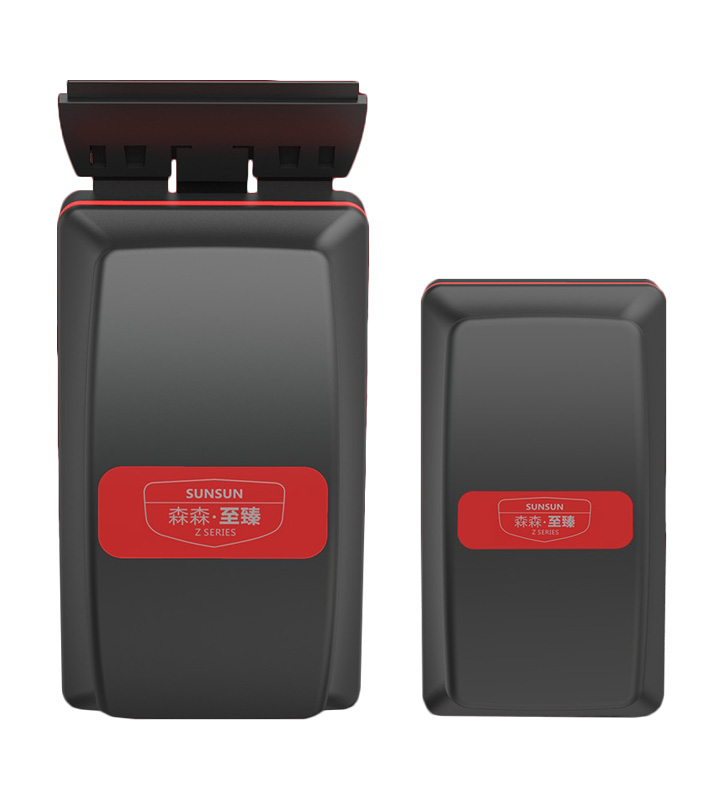
ZL Series Tank Dedicated Magnrtic Brush
Content
Aquarium glass is continuously exposed to water, light, dissolved minerals, organic material, and microorganisms. Even in a well-maintained tank, a thin layer of algae or biofilm can develop on the inner surface. Over time, this layer can reduce transparency and make the aquarium look neglected. In planted aquariums, intense lighting may accelerate the growth of green spot algae and other surface deposits. In fish-only aquariums, feeding activity and waste accumulation can also contribute to cloudy or dirty glass.
Manual cleaning is therefore a routine responsibility for many aquarium owners. However, the cleaning method affects both convenience and safety. Reaching into the aquarium may disturb fish, uproot plants, shift substrate, or damage delicate decorations. A cleaning tool with a long handle can help, but it may be awkward in narrow aquariums and may not provide consistent contact with the glass. Conventional scrapers can also be difficult to control, especially around silicone joints, equipment, and curved or densely decorated areas.
A magnetic brush solves many of these problems by separating the user’s hand from the wet interior cleaning surface. The external portion remains outside the aquarium, while the internal portion follows its movement through magnetic attraction. This structure allows cleaning to take place from the dry side of the glass. It reduces the need for direct contact with aquarium water and makes frequent maintenance more practical.
Regular light cleaning is often more effective than occasional aggressive cleaning. When algae is removed before it becomes thick and firmly attached, less pressure is necessary and the risk of scratching the glass is reduced. A convenient tool encourages aquarium owners to clean more frequently, which can improve the appearance of the tank and support a more stable maintenance routine.
The ZL Series Tank Dedicated Magnetic Brush is a dedicated aquarium glass-cleaning device developed for tanks of different sizes and wall thicknesses. Its main operating principle is magnetic coupling. The external cleaning component is moved across the outside of the aquarium, and the internal component follows the same path on the inside. The cleaning surfaces remain aligned through the glass, enabling the user to remove surface buildup with a controlled back-and-forth motion.
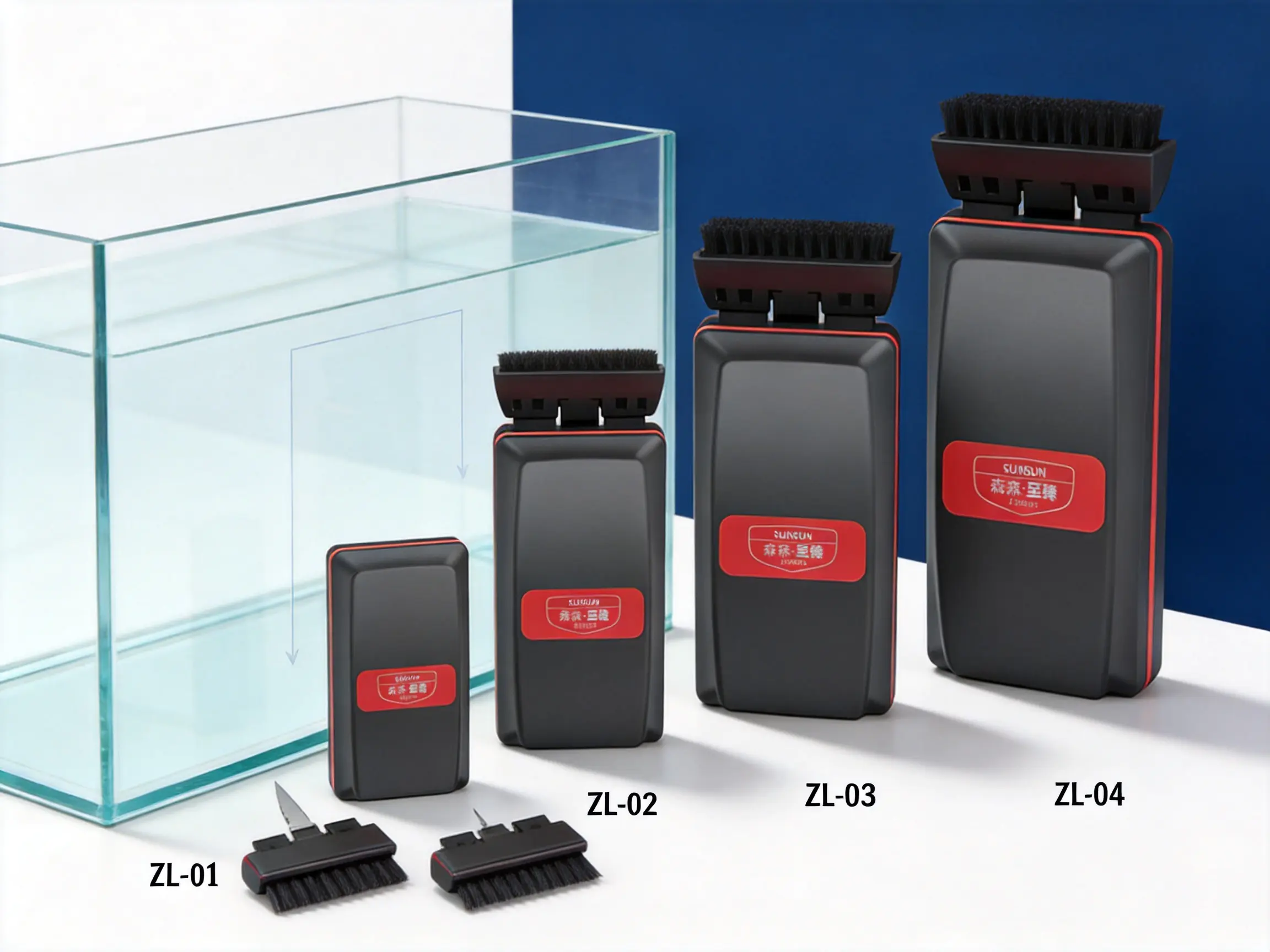
The series is available in four models: ZL-01, ZL-02, ZL-03, and ZL-04. These models are not simply different in size. Each is matched to a particular range of aquarium dimensions and glass thicknesses. This model-based approach helps users avoid selecting a tool that is too weak for a thick panel or too large for a compact aquarium.
The ZL-01 measures 85 × 48 × 60 mm and is designed for aquariums up to approximately 40 cm in length. It is suitable for glass thicknesses from 3 mm to 10 mm and is supplied without a cutter head. This compact configuration is appropriate for small aquariums, desktop tanks, breeding tanks, and other installations where maneuverability is more important than maximum cleaning coverage.
The ZL-02 measures 95 × 55 × 62 mm and is designed for aquariums up to approximately 60 cm. It supports glass thicknesses from 3 mm to 18 mm and includes a cutter head. This model provides a balance between compact handling and stronger magnetic performance, making it suitable for many family aquariums and medium-sized display tanks.
The ZL-03 measures 105 × 60 × 66 mm and is intended for aquariums up to approximately 120 cm. It supports glass thicknesses from 3 mm to 24 mm and includes a cutter head. Its larger body and broader application range make it appropriate for larger aquariums where a small magnetic brush may not maintain sufficient contact or cleaning effectiveness.
The ZL-04 measures 115 × 68 × 66 mm and is intended for aquariums up to approximately 120 cm. It supports glass thicknesses from 3 mm to 29 mm and includes a cutter head. This is the largest and most broadly applicable model in the series, offering increased magnetic capability for particularly thick aquarium glass.
| Model | Dimensions L × W × H | Recommended Aquarium Size | Applicable Glass Thickness | Cutter Head |
|---|---|---|---|---|
| ZL-01 | 85 × 48 × 60 mm | Up to approximately 40 cm | 3–10 mm | Not included |
| ZL-02 | 95 × 55 × 62 mm | Up to approximately 60 cm | 3–18 mm | Included |
| ZL-03 | 105 × 60 × 66 mm | Up to approximately 120 cm | 3–24 mm | Included |
| ZL-04 | 115 × 68 × 66 mm | Up to approximately 120 cm | 3–29 mm | Included |
The table demonstrates the importance of selecting a model according to actual glass thickness rather than aquarium length alone. A long aquarium may have relatively thin glass, while a shorter custom tank may use thick panels. The glass thickness range is therefore one of the most important selection criteria.
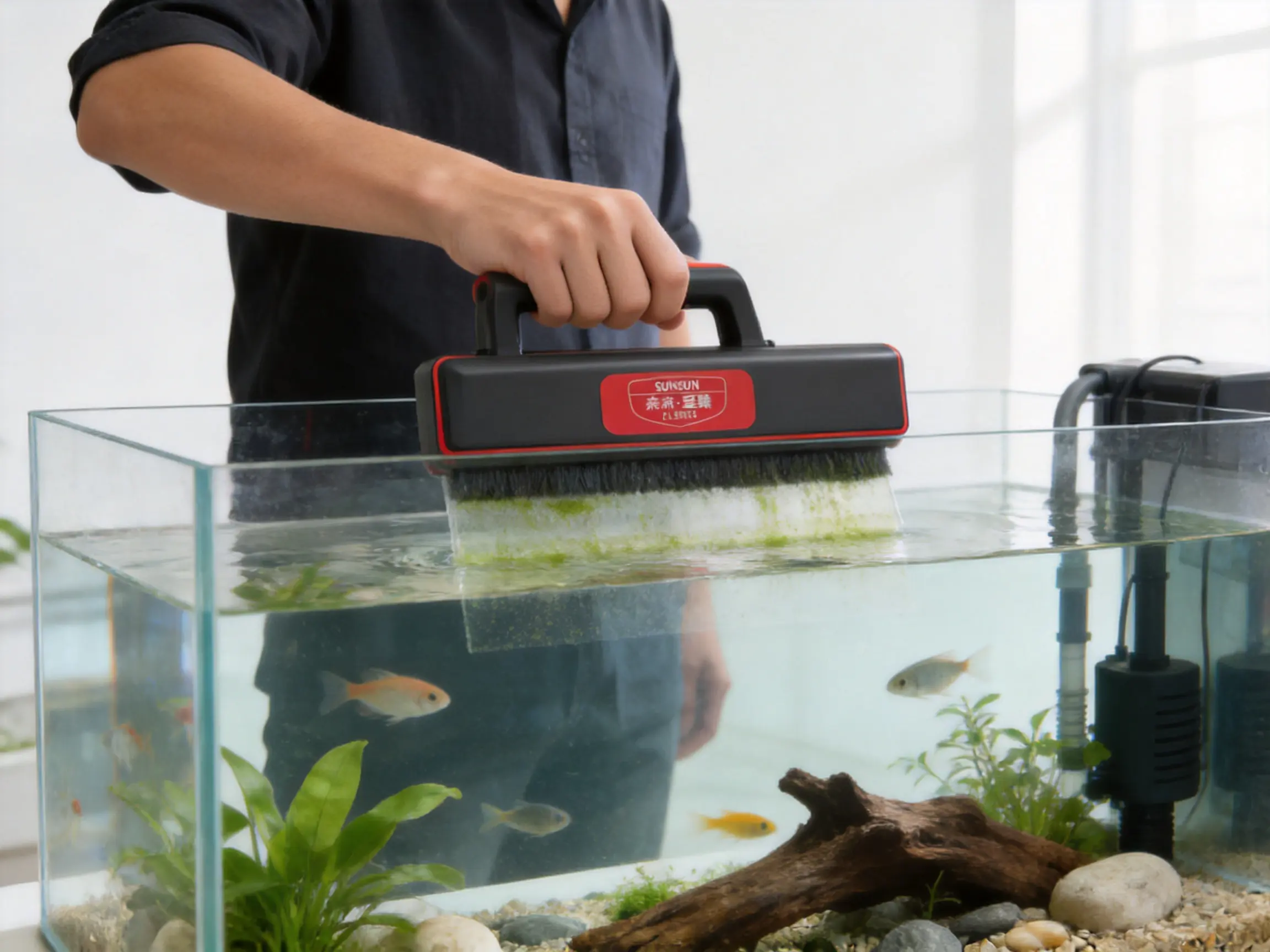
The principal advantage of a magnetic brush is that it allows the user to clean the inner surface while remaining outside the tank. This is especially useful for aquariums containing sensitive fish, shrimp, aquatic plants, or carefully arranged decorations. By avoiding direct hand contact with the water, the tool can reduce unnecessary disturbance during routine maintenance.
Keeping hands dry also improves comfort. Aquarium cleaning can otherwise involve repeated contact with cold water, algae residue, and cleaning equipment. The external handle provides a more convenient point of control and helps make a short cleaning session less disruptive to the user’s daily routine.
The magnetic connection also reduces the need to remove water before cleaning. With some traditional methods, the water level must be lowered to provide access to the glass or to prevent splashing. A magnetic brush can be moved along the glass while the aquarium remains filled, provided the tool is used appropriately and the manufacturer’s operating limitations are observed.
For public displays, retail aquariums, offices, hotels, and restaurants, this advantage can be especially valuable. Staff can perform quick surface cleaning without preparing a large maintenance area or placing their hands inside a display tank. The aquarium can remain in operation while its glass is refreshed.
The four-model structure gives the ZL Series a practical advantage over one-size-fits-all cleaning tools. A single universal brush may be too bulky for small tanks, too weak for thick glass, or difficult to maneuver in a large aquarium. By offering different dimensions and application ranges, the ZL Series allows the user to choose a tool that is better matched to the installation.
The ZL-01 is suited to small tanks where compact movement is essential. Small aquariums often contain dense planting, miniature decorations, or narrow spaces around filters and heaters. A smaller brush can be easier to guide around these features. Its 3–10 mm glass range covers many standard small aquariums.
The ZL-02 serves users who require a stronger and more versatile device for medium-sized tanks. Its cutter head provides an additional method of dealing with more persistent surface buildup. The 3–18 mm glass range gives it flexibility for ordinary household tanks as well as some thicker custom-built aquariums.
The ZL-03 and ZL-04 are designed for larger or heavier aquarium construction. Thick glass increases the distance between the internal and external magnetic components. A tool intended for thin glass may lose effectiveness when used on a thick panel. The larger ZL models address this issue with dimensions and magnetic strength appropriate to wider glass thickness ranges.
Correct model selection helps preserve cleaning performance. Users should confirm the actual glass thickness, not merely estimate it from the aquarium’s external dimensions. If the aquarium has laminated glass, unusual construction, curved panels, protective coatings, or frames that interfere with movement, the compatibility of the brush should also be assessed before use.
The ZL-01 is supplied without a cutter head, while the ZL-02, ZL-03, and ZL-04 include one. This difference reflects the intended application of each model. Smaller aquariums may primarily require light surface cleaning, while medium and large aquariums may benefit from an additional edge for handling more firmly attached deposits.
A cutter head can help loosen algae and mineral buildup that a soft cleaning surface may not remove efficiently. It can be particularly useful when the aquarium has not been cleaned for an extended period. The cutting component should be used carefully and with controlled movement. Excessive force, incorrect angles, or use on unsuitable surfaces may cause damage.
Before using a cutter head, aquarium owners should inspect the glass for sand grains, grit, or particles trapped between the cleaning surfaces. Abrasive particles can create scratches when dragged across the panel. The cleaning tool should be kept clean, and the user should avoid allowing substrate or decorative fragments to become caught in the brush.
The inclusion of a cutter head on the larger models provides added versatility without requiring a separate specialized tool for every cleaning task. This can simplify aquarium maintenance equipment and reduce the amount of time needed to switch between different methods.
Conventional sponge cleaning often requires the user to place a hand or arm inside the aquarium. This can disturb the aquatic environment and may introduce residues from soaps, lotions, or other substances if hands are not thoroughly rinsed. The magnetic brush provides a dry-side operating method that helps reduce this risk.
Long-handled tools can be effective, but they may require careful positioning and can be difficult to use in small or crowded aquariums. A magnetic brush is controlled from the outside and can be moved in short, precise passes. This encourages more frequent cleaning instead of waiting until the glass requires a lengthy restoration process.
For aquariums used as interior decoration, visual clarity is essential. The ZL Series can help maintain a clean front panel without removing ornaments or interrupting the overall appearance of the installation. Quick cleaning sessions can be performed when needed, including before visitors arrive or during routine store operations.
Many competing products focus on a narrow glass range or provide limited guidance for model selection. The ZL Series clearly divides its applications among four models, with compatibility extending from 3 mm to 29 mm. This wider structured range makes the product family useful to both small-tank owners and operators of larger aquariums.
Models with cutter heads can address both ordinary surface residue and more stubborn deposits. The user can select the appropriate cleaning motion according to the condition of the glass. This integrated approach may be more convenient than maintaining a separate magnetic cleaner and scraper.
Because the external part remains in the user’s hand, the cleaning path is easy to observe and adjust. The user can slow down near corners, equipment, and decorations. This level of control can be especially valuable in planted tanks or aquascapes where the interior layout is delicate.
A useful aquarium tool must combine cleaning performance with manageable handling. Excessive size can make a brush tiring to use, while insufficient size can limit coverage and magnetic force. The ZL Series addresses this balance by progressively increasing dimensions from the ZL-01 through the ZL-04.
The dimensions are compact enough for handheld operation while providing a substantial contact area. A larger contact surface may help cover more glass during each pass, reducing the number of movements needed on a large panel. At the same time, the user can choose the smallest appropriate model for greater maneuverability in restricted spaces.
Magnetic alignment is another important part of the user experience. When the internal and external components remain properly coupled, movement is smoother and more predictable. The brush should be guided gradually rather than pulled abruptly. Smooth movement helps maintain contact and reduces the possibility of the inner component becoming separated.
The product is intended for aquarium glass cleaning, and users should not assume that it is suitable for every type of tank surface. Acrylic panels, specially coated glass, curved glass, and uneven surfaces may require separate compatibility testing. The operating environment should always be considered before use.
Different aquariums produce different types of surface buildup. A low-tech planted aquarium may develop a light green film, while a brightly illuminated reef-style display may experience more persistent algae. A newly established aquarium may have mineral residue from water evaporation, and a heavily stocked fish tank may require frequent cleaning because of organic accumulation.
For light film, the magnetic brush can be moved slowly across the glass in overlapping passes. Cleaning from the upper section toward the lower section may help users observe the result and prevent missed areas. The external handle should be kept aligned with the internal component throughout the movement.
For more persistent deposits, a cutter-head model may provide additional assistance. The user should apply moderate pressure and avoid fast, forceful strokes. A controlled technique is more likely to remove buildup while protecting the glass surface.
In aquariums with sand or fine gravel, additional care is required near the lower edge. A particle trapped beneath the cleaning component can scratch glass. Users should keep the brush slightly above the substrate when necessary and inspect the cleaning surfaces regularly.
Aquarium equipment such as heaters, filter intakes, thermometers, and air lines may obstruct the cleaning path. The modular layout of the aquarium should be considered before starting. It may be preferable to clean around equipment manually or temporarily move an accessory if doing so is safe and practical.
The ZL Series is supported by the manufacturing and product-development capabilities of Sensen Group Co., Ltd., a company established in 1985. Over more than three decades, the group has developed business activities in aquarium products, aquaculture machinery, industrial equipment, and related fields. This broader industrial background provides a foundation for designing products that must combine mechanical function, material selection, usability, and consistent production.
The company operates functional departments including a research institute and quality control department. These organizational capabilities are important for aquarium tools because product performance depends on more than appearance. Magnetic force, dimensional accuracy, component fit, surface contact, cutter-head integration, and durability all require systematic development and inspection.
A research-oriented structure can support the improvement of product geometry and user operation. For a magnetic brush, development may involve evaluating the relationship between brush dimensions, glass thickness, internal and external component spacing, cleaning contact, and ease of movement. A product family with four models requires coordinated design rather than a single isolated configuration.
Quality control is also essential. If the dimensions of magnetic components or housings vary excessively during production, the user experience may become inconsistent. Proper inspection helps ensure that products remain within their intended specification and that different batches provide dependable performance.
The group’s experience across aquarium pets, aquaculture machinery, and industrial equipment also supports a practical understanding of water-related operating environments. Aquarium products must work around moisture, repeated cleaning, temperature variation, and frequent handling. Manufacturing methods must therefore be selected with both performance and service life in mind.
Although the ZL Series is compact, its production requires attention to several technical details. The outer housing must protect internal components and provide a comfortable gripping structure. The magnetic elements must be positioned accurately so that the internal and external parts remain aligned through the specified glass range. The cleaning surface must contact the aquarium panel evenly, and the cutter head must be integrated without compromising safe handling.
Precision molding or forming processes can help create consistent housings with repeatable dimensions. Consistency is particularly important for products that depend on magnetic alignment. A minor dimensional change may affect how the internal and external components interact, especially when the tool is used near the maximum supported glass thickness.
Assembly control is another important manufacturing stage. Components must be installed in the correct orientation, and moving or detachable parts must be checked for secure fit. A structured assembly process can reduce variation and improve the reliability of each finished unit.
Inspection may include visual checks, dimensional verification, magnetic coupling evaluation, surface inspection, and functional movement testing. Products can be reviewed for defects that might affect contact with the glass or interfere with normal operation. A quality-oriented process is especially valuable for aquarium equipment because failure during use may result in the loss of the internal cleaning component inside the tank.
Packaging and product identification also contribute to manufacturing quality. Each model has a different application range, so clear labeling can help distributors and end users select the correct product. Accurate model information reduces the possibility of using a brush outside its intended glass-thickness range.
Sensen Group has developed a large organizational structure that includes research, education, quality control, personnel, administration, information management, finance, and other functional areas. A company with such a structure can coordinate product development, procurement, production, inspection, marketing, and after-sales support more systematically than a small workshop focused only on assembly.
The group also operates wholly owned subsidiaries and maintains interests in trading companies. This network contributes to production and distribution capacity. For an aquarium product series, a broad commercial structure can support access to different markets and help identify the needs of aquarium stores, professional users, distributors, and household consumers.
Manufacturing scale can also support more consistent sourcing and process management. When products are produced for domestic and international markets, the company must pay attention to packaging, specifications, customer communication, and product differentiation. These requirements encourage standardized production and clearer quality procedures.
The company’s stated development direction includes industrial technicalization, marketing globalization, and brand internationalization. For the ZL Series, this means that the product is positioned not only as a basic household cleaning implement but also as part of a broader professional aquarium-equipment portfolio.
Household aquarium owners often need a tool that is easy to use without requiring extensive preparation. The ZL Series can support quick cleaning between larger maintenance sessions. Its dry-side operation may make the task more comfortable and reduce disruption to the aquarium.
Aquascapers invest considerable time arranging plants, stones, wood, and technical equipment. Direct hand cleaning can disturb this arrangement. A magnetic brush offers a way to maintain the front and side panels while minimizing contact with the interior layout.
Retail stores often maintain multiple display tanks and need efficient cleaning procedures. The four-model range allows staff to choose different tools for different tanks. A routine cleaning tool that is quick to deploy can help keep display aquariums attractive throughout the day.
Decorative aquariums in commercial spaces are part of the visitor experience. Clear glass contributes to a professional appearance. A magnetic brush can be used for visible maintenance without requiring staff to drain the tank or move large amounts of equipment.
Smaller tanks used for breeding, quarantine, or observation may require regular visual inspection. Clean glass helps caretakers observe fish condition and behavior. The compact ZL-01 may be useful for installations where small dimensions and controlled movement are priorities.
Before use, confirm that the selected model is compatible with the aquarium’s glass thickness. The applicable ranges are 3–10 mm for the ZL-01, 3–18 mm for the ZL-02, 3–24 mm for the ZL-03, and 3–29 mm for the ZL-04. The aquarium should also be checked for unusual materials, coatings, curves, or structural features that may affect magnetic movement.
Inspect both cleaning surfaces before placing the brush against the aquarium. Remove visible sand, gravel, dust, or other abrasive particles. This simple step is important because hard particles can become trapped and scratch the glass during movement.
Place the internal and external portions on opposite sides of the glass, ensuring that they are correctly aligned. Begin with gentle movement in a small area. This allows the user to confirm that the magnetic connection is stable and that the cleaning surface is working as expected.
Move the brush slowly across the panel. Avoid sudden changes in direction or excessive pressure. Near corners, silicone seams, and aquarium equipment, use shorter movements and check the position of the internal component frequently.
After cleaning, separate the two components carefully. Rinse or wipe the cleaning surfaces as appropriate and store the brush in a clean, dry location. If a cutter head is included, inspect it for residue and handle it carefully during storage.
The magnetic brush should be used only for its intended purpose. It is designed for aquarium glass cleaning, not for removing deposits from household windows, metal surfaces, or rough construction materials. Using it on unsuitable surfaces may damage the tool or reduce cleaning performance.
Users should avoid applying excessive force. Magnetic attraction is designed to hold the components together through a specified thickness range, but abrupt pulling can cause separation. If the inner component becomes detached, it should be retrieved carefully rather than dragged across the aquarium substrate.
The cleaning surface should be kept free of abrasive particles. After use in an aquarium with sand or fine gravel, inspect the brush especially carefully. A small particle may not be immediately visible but can create scratches during the next cleaning session.
The cutter head should be used with controlled strokes. It should not be directed toward fish, aquatic plants, electrical cables, or soft aquarium seals. Users should keep the tool away from children unless supervised, particularly when a cutter head is included.
Magnetic products should also be stored responsibly. They should be kept away from devices or objects that may be affected by magnets, according to the safety practices appropriate for the surrounding environment.
The aquarium accessory market includes algae scrapers, cleaning pads, long-handled brushes, floating cleaners, and magnetic tools. Each category has a different use case. The ZL Series competes by combining magnetic operation with a clearly defined multi-model structure and cutter-head availability on three of its four models.
Compared with a basic hand sponge, the ZL Series offers a cleaner operating method because the user can remain outside the aquarium. Compared with a long-handled scraper, it provides a more direct hand-controlled motion and may be easier to maneuver around aquarium features. Compared with a single-size magnetic cleaner, the four-model structure offers more specific support for different glass thicknesses and aquarium sizes.
The product’s greatest competitive strength is not necessarily one isolated feature. It is the combination of model selection, dry-side operation, compact dimensions, broad thickness coverage, and the established industrial background of the manufacturer. These factors make the series relevant to both casual aquarium owners and more demanding users.
Another differentiating factor is the availability of a larger model compatible with glass thicknesses up to 29 mm. Thick aquarium panels can present a challenge for magnetic cleaners because the distance between the two components is greater. A model designed for this range gives users an option where many small or general-purpose products may be unsuitable.
For distributors, the series also provides a logical product ladder. Retailers can stock different models according to customer needs rather than carrying unrelated products with unclear application boundaries. This can simplify product education and improve the likelihood that customers select a compatible tool.

A magnetic cleaning tool does not require a chemical cleaning solution during ordinary aquarium use. This is beneficial because aquarium inhabitants are sensitive to many substances that are harmless in household cleaning applications. Mechanical removal of surface buildup can reduce the need for chemical intervention.
The tool may also help reduce unnecessary water changes caused solely by dirty glass. Water changes remain an important part of aquarium care, but they should be performed according to the biological needs of the aquarium rather than simply because the front panel requires cleaning. A convenient glass-cleaning method allows these tasks to be managed separately.
Long-term product value depends on appropriate use and care. Keeping the brush clean, avoiding abrasive contamination, and selecting the correct model can extend its practical service life. A durable reusable tool may be more economical than repeatedly purchasing disposable cleaning pads or low-quality accessories.
From an operational perspective, the brush supports a preventive maintenance approach. Small amounts of algae can be removed regularly before they become thick deposits requiring aggressive scraping. This improves the appearance of the aquarium and may reduce the time spent on periodic deep cleaning.
Research and quality control are particularly important for products that depend on precise interaction between multiple components. A magnetic brush must maintain a stable relationship between its external housing, internal cleaning unit, magnetic elements, and contact surface. The intended performance cannot be achieved through appearance alone.
Product research may address questions such as how much magnetic force is appropriate for each glass range, how the brush should be shaped for comfortable movement, how the cleaning surface should contact the panel, and how a cutter head can be integrated safely. These decisions influence both the technical performance and the user’s confidence.
Quality control helps ensure that production results remain consistent with the product design. A finished brush should be checked for proper assembly, stable magnetic connection, clean contact surfaces, and accurate model identification. Inspection procedures can reduce the risk of variation between units and help protect the reputation of the product family.
The presence of a dedicated quality control department within the broader group is a meaningful strength. It indicates that quality management is treated as an organizational responsibility rather than an informal final check. This type of structure is valuable when products are distributed across domestic and international markets.
The manufacturer has developed a broad sales and service network and has experience serving both domestic and foreign markets. This international orientation is relevant to aquarium accessories because customers in different regions may use different aquarium styles, glass specifications, and maintenance routines.
A broad distribution structure can support product availability and help retailers obtain the correct models. It can also improve communication between users and the manufacturer. Feedback from different markets may contribute to future improvements in product design, packaging, instructions, and model organization.
The group’s aquarium-related business is supported by other activities in aquaculture machinery and industrial equipment. This diversified experience can contribute to a stronger understanding of manufacturing coordination, mechanical product development, and large-scale production management.
For commercial buyers, supplier stability is an important consideration. Retailers and distributors generally prefer products supported by an established organization with research, production, quality control, and export experience. The ZL Series benefits from being part of such a wider company structure rather than an isolated accessory with limited institutional support.
When selecting a ZL Series model, begin by measuring or confirming the thickness of the aquarium glass. Do not select a model solely because the aquarium is large or small. The correct magnetic force depends significantly on the distance between the internal and external parts.
Next, consider the aquarium’s length and internal layout. A compact tank with narrow spaces may be easier to clean with the ZL-01. A medium tank may benefit from the additional capability of the ZL-02. Larger tanks or tanks with thick construction should be evaluated for the ZL-03 or ZL-04.
Consider whether a cutter head is needed. The ZL-01 is intended for users who need a compact brush without a cutter head. The ZL-02, ZL-03, and ZL-04 include cutter heads and may be more suitable when the aquarium commonly develops firmly attached deposits.
Finally, consider the aquarium’s surface material and structure. The listed specifications concern applicable glass thickness. If the tank uses acrylic, curved panels, laminated sections, coatings, or unusual framing, the user should confirm compatibility before purchase and operation.
A practical routine may begin with a light inspection of the front and side panels several times each week. If a thin film is visible, use the appropriate magnetic brush with gentle overlapping passes. Frequent light cleaning is generally easier to control than infrequent heavy scraping.
Before each session, check the cleaning surfaces. After cleaning near the bottom of the tank, inspect for trapped substrate. If the aquarium has recently been rearranged, be especially cautious around newly exposed sand or gravel.
For stubborn marks, use the cutter head included with the appropriate model, applying controlled pressure. Avoid repeatedly scraping the same area with excessive force. If the deposit does not release, it may be better to investigate its composition and use a suitable aquarium-safe maintenance method rather than forcing the tool.
After use, clean the brush and allow it to dry according to the material and care instructions. Store the internal and external components together in a location where they will not attract metal objects or interfere with other equipment.
The product is designed to remove algae, biofilm, mineral residue, and other surface buildup from aquarium glass. Its magnetic structure allows the user to control the internal cleaning component from outside the aquarium.
No. The external component is moved by hand outside the aquarium, while the internal component follows through magnetic attraction. This allows routine cleaning without directly placing a hand into the water.
The ZL-01 is intended for aquariums up to approximately 40 cm and supports glass thicknesses from 3 mm to 10 mm. It is the compact model in the series and does not include a cutter head.
The ZL-02, ZL-03, and ZL-04 include cutter heads. The ZL-01 is listed as excluding a cutter head.
The ZL-04 is applicable to glass thicknesses from 3 mm to 29 mm, making it the model with the widest and highest listed glass-thickness range in the series.
Compare the aquarium’s actual glass thickness and cleaning requirements. The ZL-03 supports 3–24 mm glass, while the ZL-04 supports 3–29 mm glass. The correct choice should be based on compatibility rather than aquarium length alone.
The listed specifications are for aquarium glass. Users should confirm compatibility before using the product on acrylic, curved panels, coated surfaces, laminated glass, or other unusual materials.
Inspect and clean the brush surfaces before use, especially after cleaning near sand or gravel. Avoid trapped particles, use moderate pressure, and move the tool smoothly. A cutter head should be used carefully and only when appropriate.
It can be useful in planted aquariums because it allows glass cleaning with less direct disturbance to plants and hardscape. Users should still move carefully around equipment, plants, and substrate.
The manufacturer has operated since 1985 and works across aquarium products, aquaculture machinery, industrial equipment, and related fields. Its organizational structure includes research and quality control functions, along with production and international distribution capabilities.
No. It is primarily a glass-cleaning tool. Aquarium owners must still manage water quality, filtration, substrate, equipment, plant care, feeding, and other routine maintenance tasks.
Clean the surfaces after use, keep the components in a dry and safe place, and store the magnetic parts away from objects or devices that may be affected by magnets.
The ZL Series Tank Dedicated Magnetic Brush provides a practical answer to one of the most frequent aquarium maintenance tasks: keeping glass clear. Its external operating method reduces wet-hand contact and can make routine cleaning more convenient. The four-model structure gives users a clear way to select a tool according to aquarium size and glass thickness.
The series covers applications from small tanks with 3 mm glass to large and heavy aquarium panels up to 29 mm. The inclusion of cutter heads on the ZL-02, ZL-03, and ZL-04 adds versatility for users who face more persistent deposits. The different dimensions also allow users to prioritize compact maneuverability or stronger performance according to their aquarium requirements.
Its competitive value is strengthened by the manufacturer’s long-term experience in aquarium products, aquaculture machinery, and industrial equipment. Research resources, quality control functions, subsidiary operations, and international market experience provide a solid foundation for product development and supply.
For best results, users should choose the model carefully, inspect the cleaning surfaces, avoid abrasive particles, and operate the brush with controlled movements. When used correctly, the ZL Series can become a valuable part of a regular aquarium-care routine and help maintain a clearer, more attractive display with less disruption to the aquatic environment.
1. Sensen Group Co., Ltd. Product specification information for the ZL Series Tank Dedicated Magnetic Brush.
2. Sensen Group Co., Ltd. Corporate information concerning aquarium products, aquaculture machinery, industrial equipment, research, and quality control.
3. ZL Series model data: dimensions, aquarium-size recommendations, glass-thickness ranges, and cutter-head configurations.
4. General aquarium maintenance principles concerning algae removal, glass cleaning, substrate protection, and routine equipment care.
5. General product-selection principles for magnetic aquarium cleaners, including glass thickness, aquarium size, surface compatibility, and safe operating technique.



 English
 русский
 España
 Portugal
 عربي
عربي
 No. 61-79, Baima Street, Maao Town, Dinghai District, Zhoushan City, Zhejiang Province, China.
 0086 580 8082088 / 8081168
 0086 580 8080978
 songhua@sunsun-china.com