In a well-designed aquarium, water movement and oxygen exchange are not optional details; they are core conditions for healthy fish, active beneficial bacteria, stable filtration, and a pleasant viewing experience. The ZQ-200 Air Pump is designed for aquariums that require steady aeration, practical installation, and dependable everyday performance. With a rated power of 4W, an output of 3.3L/min, a pressure rating of 0.02 MPa, two outlets, a 2m cable, and compact dimensions of 148×82×75mm, this air pump offers an efficient combination of functionality and convenience for small to medium aquarium applications.
The product belongs to the aquarium equipment field and is especially suitable for users who need a compact air pump that can support air stones, sponge filters, decorative bubble features, or supplementary aeration. It is simple enough for home aquarium owners, yet structured around the manufacturing discipline of an established industrial producer with decades of experience in aquarium pets, aquaculture machinery, and related equipment. This balance between daily usability and professional manufacturing capability is one of the strongest reasons the ZQ-200 Air Pump stands out in its category.
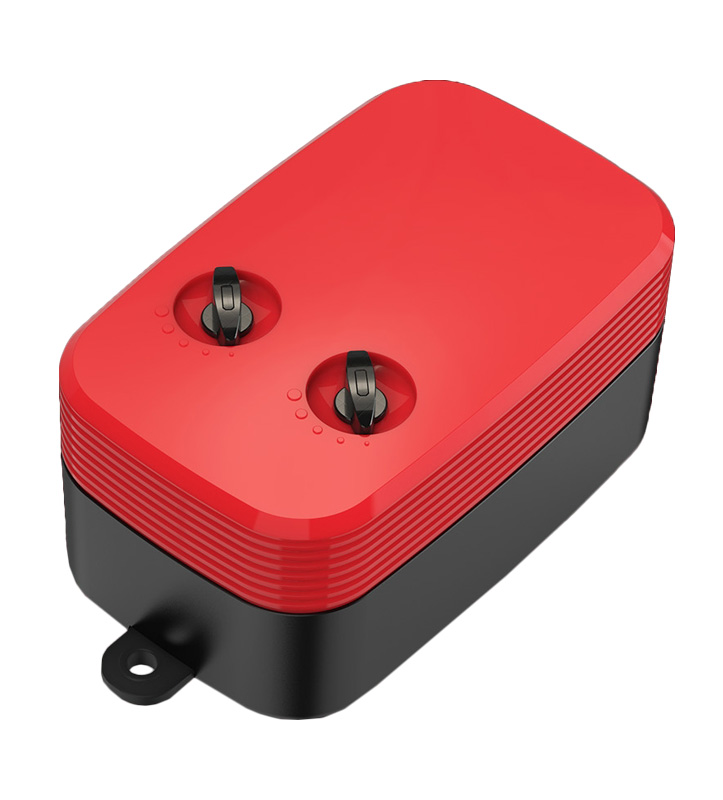
ZQ-200 Air Pump
Content
The ZQ-200 Air Pump is an electrically powered aquarium aeration device designed to push air through tubing into aquarium water. In practice, this air is usually released through air stones, sponge filters, biochemical filtration accessories, or decorative bubble devices. Once air enters the water, it helps increase surface agitation and promotes gas exchange, allowing oxygen to enter the aquarium while carbon dioxide and other gases leave the water more efficiently.
Its two-outlet design gives aquarium owners more flexibility than many single-outlet compact pumps. With two outlets, the user can connect two air stones, two sponge filters, or one filtration device and one decorative aeration accessory. This is especially useful for aquariums that need more even oxygen distribution or for users who want to operate two aeration points without purchasing two separate pumps.
The pump is rated at 4W, which makes it economical for continuous use. Since air pumps commonly operate for long hours or even 24 hours per day, low energy consumption is a meaningful advantage. A pump that saves power while maintaining practical air output can reduce long-term operating costs, especially for aquarium hobbyists with multiple tanks.
The ZQ-200 also has a 2m cable, allowing more freedom when choosing the pump’s installation position. This is helpful in real home environments where electrical outlets may not be directly beside the aquarium. Its compact body, measuring 148×82×75mm, makes placement easier on aquarium cabinets, shelves, worktables, or dedicated equipment areas.
Model |
Voltage |
Power |
Pressure |
Output |
Outlet Number |
Cable Length |
Dimensions L×W×H |
ZQ-200 |
220-240V/50Hz |
4W |
0.02 MPa |
3.3L/min |
2 |
2m |
148×82×75mm |
Aquarium aeration is often misunderstood. Many beginners believe that bubbles themselves directly fill the water with oxygen. In reality, the main benefit of aeration is the movement it creates. Rising bubbles agitate the water surface, and this surface movement improves gas exchange. Oxygen dissolves into the aquarium, while carbon dioxide escapes more easily. This process supports fish respiration, stabilizes biological filtration, and helps prevent stagnant zones.
Fish, shrimp, snails, and beneficial bacteria all depend on dissolved oxygen. Beneficial bacteria are especially important because they convert harmful ammonia into nitrite and then nitrate. These bacteria live in filter media, sponge filters, substrate, and other surfaces. If oxygen levels decline, biological filtration becomes less efficient, and water quality can deteriorate. A reliable air pump like the ZQ-200 can help maintain oxygen movement and support a more stable aquatic environment.
Aeration is particularly important in warm water aquariums because warm water holds less oxygen than cool water. It is also valuable in tanks with dense stocking, active fish, medication treatments, or heavy feeding. During certain treatments, oxygen can become depleted more quickly, and extra air movement becomes a useful protective measure. The ZQ-200 is well suited for these everyday aquarium needs because it offers continuous air output without demanding excessive power.
One of the most practical advantages of the ZQ-200 Air Pump is its 4W power rating. Aquarium equipment often runs continuously, so even small differences in power consumption can matter over time. A low-power air pump is attractive for households, fish rooms, retail aquarium displays, and hobbyists who operate multiple tanks. Compared with higher-wattage pumps designed for larger systems, the ZQ-200 provides targeted aeration without unnecessary energy use.
For users who want a stable air source for sponge filtration or decorative bubbling, the 4W design offers a good balance between function and economy. It is not oversized for common aquarium use, and it avoids the waste associated with using a large pump for a modest tank. This makes it a practical selection for customers who value both performance and responsible energy consumption.
The two-outlet structure is a major competitive advantage. Many compact air pumps in the same general class provide only one outlet, requiring users to add splitters or buy another pump when they want two air lines. The ZQ-200 already provides two outlets, making it easier to serve two points inside the aquarium.
Two outlets can support two sponge filters in separate areas of a tank, which helps improve water circulation and biological filtration. They can also operate two air stones to distribute bubbles more evenly. In breeding tanks, hospital tanks, or shrimp tanks, dual aeration points can be especially useful because gentle and distributed airflow is often preferred over a single strong bubble stream.
The two-outlet configuration also helps users organize equipment more cleanly. Instead of creating complicated tubing arrangements, the aquarium owner can connect two air lines directly to the pump. This reduces installation complexity and improves reliability because fewer connectors mean fewer possible leakage points.
The ZQ-200 is rated at 0.02 MPa pressure, which supports practical operation with common aquarium accessories such as air stones and sponge filters. Pressure matters because the pump must overcome water depth, tubing resistance, and accessory resistance. A pump with inadequate pressure may produce weak bubbling or fail to drive air through denser air stones. The ZQ-200 is designed to provide useful pressure for regular aquarium applications.
Stable pressure is also important for consistency. Fish and beneficial bacteria benefit from predictable water movement. A pump that works steadily helps maintain the aquarium’s oxygen balance. In comparison with unreliable low-cost pumps that may lose strength over time, a pump supported by disciplined manufacturing and quality control offers more confidence for long-term use.
The 3.3L/min output rating gives the ZQ-200 enough air volume for common small and medium aquarium tasks. Output must match the intended application. Too little output can fail to create sufficient surface agitation, while excessive output may disturb fish, uproot delicate plants, or create unnecessary turbulence. The ZQ-200’s output is positioned for balanced daily use.
For aquariums with calm fish, shrimp, or planted layouts, users can regulate airflow with suitable accessories if necessary. For tanks needing more oxygen, the dual outlets can distribute the flow. This makes the pump adaptable rather than limited to one narrow use case.
With dimensions of 148×82×75mm, the ZQ-200 is compact enough for convenient installation around most home aquarium setups. Space is often limited around tanks, especially in apartments, offices, classrooms, shops, and display areas. A compact pump is easier to place on a cabinet, behind the tank, or inside an equipment compartment.
The compact size also benefits maintenance. A pump that is easy to reach is more likely to be checked, cleaned, and installed correctly. Equipment that is difficult to access may be neglected, which can reduce performance over time. By keeping the form practical, the ZQ-200 supports better long-term user habits.
The 2m cable gives users more flexibility when connecting the pump to a power source. Aquariums are not always located near electrical outlets, and many users prefer to route cables neatly behind furniture or through equipment cabinets. A longer cable can reduce the need for unsafe or messy extension arrangements.
In addition, a practical cable length helps users position the pump correctly. Air pumps should generally be installed in a dry, stable, ventilated location. If placed below the aquarium water level, users should install a check valve in the airline to reduce the risk of water siphoning backward during power interruptions. A 2m cable makes it easier to choose a safer and more convenient location.
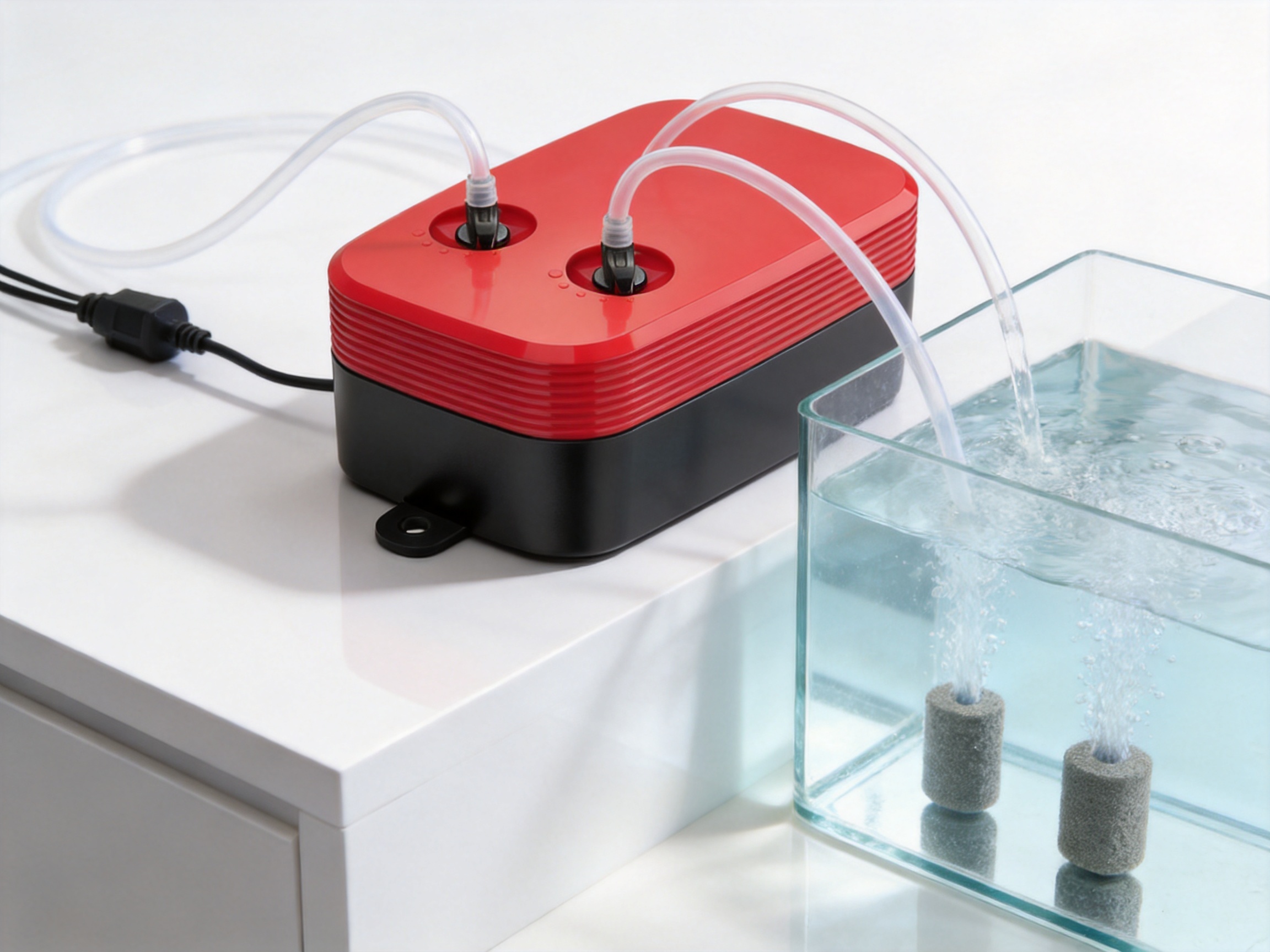
The aquarium air pump market includes a wide range of products, from very inexpensive entry-level pumps to larger industrial-style units. The ZQ-200 competes by offering a practical combination of dual outlets, moderate output, low power consumption, compact dimensions, and support from an experienced manufacturer. While some low-cost competitors may focus only on price, the ZQ-200 emphasizes balanced reliability and user convenience.
Compared with many single-outlet compact pumps, the ZQ-200 provides more installation options. A single-outlet pump may be sufficient for one small air stone, but it becomes limiting when the user wants to run a sponge filter and an air stone together. Users may add a splitter, but this can reduce pressure and complicate airflow adjustment. The ZQ-200’s built-in two-outlet design is a simpler and cleaner solution.
Compared with larger pumps, the ZQ-200 is more economical and easier to place. Large pumps can be useful for big fish rooms or multiple aquarium systems, but they may produce more airflow than needed for a single aquarium. Excessive air output can require additional valves, create noise, or cause strong turbulence. The ZQ-200 is designed for controlled, everyday aeration rather than oversized performance.
Compared with generic pumps without strong manufacturing support, the ZQ-200 benefits from the broader production and quality management experience of Sensen Group Co., Ltd. The company has developed across aquarium pets, aquaculture machinery, and industrial equipment for decades. This experience supports better process management, product consistency, and after-sales confidence.
The ZQ-200 Air Pump is not an isolated item produced without context. It is part of a larger manufacturing ecosystem built by Sensen Group Co., Ltd., a company established in November 1985. Over more than 30 years of development, the company has expanded its capabilities in aquarium pets, aquaculture machinery, industrial equipment, and related categories. This long-term industry presence provides valuable technical knowledge that can influence product design, production management, and quality control.
The company’s headquarters includes functional departments such as Sensen Research Institute, Sunsun Business School, Quality Control Department, Personnel and Administrative Information Department, and Financial Department. This organizational structure reflects a systematic approach to manufacturing rather than simple assembly. Research, training, quality management, administration, and finance all contribute to stable product delivery.
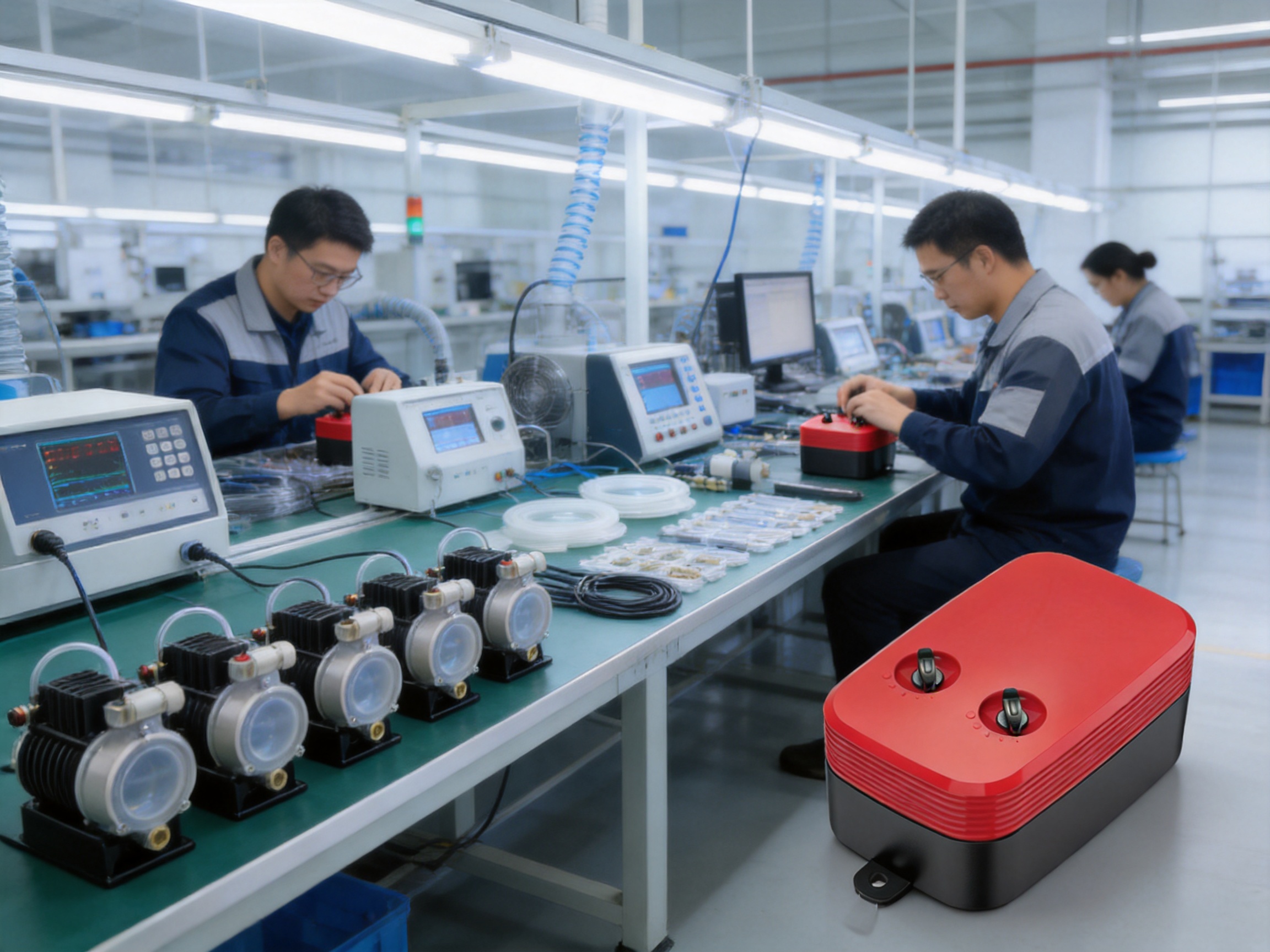
Advanced manufacturing is not only about machinery. It also depends on standard operating procedures, trained employees, quality inspection, supplier management, product testing, and continuous improvement. A company with dedicated research and quality departments is better positioned to control the details that matter in an air pump: motor performance, diaphragm durability, housing precision, outlet consistency, electrical safety, and packaging protection.
Sensen Group has also developed a broad production and marketing network. Its wholly owned subsidiary corporations and related business entities support manufacturing scale and market responsiveness. Scale can help improve consistency because processes are repeated, measured, and refined. It can also support stable supply capacity for distributors, retailers, and OEM or customized projects.
An aquarium air pump appears simple from the outside, but dependable performance requires careful attention to many internal details. Airflow depends on the vibration mechanism, diaphragm quality, valve structure, housing design, and sealing accuracy. If these parts are poorly made, the pump may become noisy, lose output, overheat, or fail early. For this reason, manufacturing discipline is one of the most important product advantages.
The ZQ-200 benefits from the producer’s quality control system. Quality control in air pump manufacturing may include incoming material inspection, dimensional checks, electrical testing, airflow testing, pressure testing, operational noise observation, assembly inspection, and final product review. Each step reduces the chance that defective products reach customers.
For example, the diaphragm is a critical component. It must move repeatedly for long periods while maintaining flexibility and strength. Poor diaphragm material can harden, crack, or lose elasticity. Similarly, valves must open and close efficiently to keep air moving in the correct direction. A small defect in a valve can reduce output. A manufacturer with experience in aquarium and aquaculture equipment understands these functional requirements and can apply appropriate checks during production.
Electrical safety is another important area. Since air pumps are used near water, proper electrical design and manufacturing consistency are essential. The ZQ-200 is rated for 220-240V/50Hz operation, so users in matching markets can operate it according to the specified voltage requirements. Careful production helps support safe and stable use when the pump is installed according to instructions.
A company with a research institute can approach product development from both technical and user perspectives. In air pump design, research and development may involve improving airflow efficiency, reducing vibration transfer, optimizing internal chamber shape, selecting better materials, and refining product dimensions. The goal is not simply to make a pump that works once, but to create equipment that performs consistently in real aquarium environments.
The ZQ-200’s specifications show a product designed around practical use. The 4W power rating suggests energy-conscious operation. The 3.3L/min output supports common aquarium aeration tasks. The 0.02 MPa pressure helps the pump work with typical accessories. The two outlets increase usability. The 2m cable improves installation. The compact dimensions make placement easy. These features together reflect product planning rather than random specification choices.
Continuous innovation is a major theme in the company’s development. Over the years, it has expanded from aquarium products into aquaculture machinery and industrial equipment. Cross-industry experience can strengthen engineering capability. Knowledge gained from larger water-management systems can inform smaller aquarium devices, especially in areas such as fluid movement, durability, and practical maintenance.
Reliable supply matters for distributors, retailers, aquarium shops, and end users. A product can have good specifications, but if supply is inconsistent, it becomes difficult for sellers to recommend and support it. Sensen Group’s large production and marketing scale helps create a stronger foundation for stable distribution.
The company has developed multiple subsidiary corporations and trading companies, supporting broader market coverage. This kind of network can improve product availability and after-sales response. For business buyers, a manufacturer with established scale is often preferable to a small supplier that may struggle with production volume, product consistency, or communication.
Production scale can also support cost control. When a manufacturer produces aquarium equipment in significant quantities, it can standardize components, improve procurement efficiency, and refine assembly methods. These efficiencies can help deliver a product with competitive value while maintaining quality expectations. The ZQ-200 benefits from this industrial background by offering useful features without becoming unnecessarily expensive or complex.
The ZQ-200 is designed to be practical for everyday aquarium users. Installation typically involves placing the pump in a dry, stable location, connecting airline tubing to one or both outlets, attaching the other end of the tubing to air stones or filters, and then plugging the pump into a suitable 220-240V/50Hz power supply. Users should follow standard aquarium electrical safety practices and keep the pump away from splashing water.
If the pump is positioned below the aquarium water level, a check valve should be installed in each airline. This small accessory helps prevent water from siphoning backward into the pump if power stops. Even when a pump is placed above water level, a check valve can add protection and peace of mind. Proper tubing management also helps maintain clean airflow and reduces the chance of kinks that restrict air movement.
Air stones should be selected according to the desired bubble effect and tank size. Fine air stones create smaller bubbles but may require more pressure as they age or clog. Sponge filters offer both aeration and biological filtration, making them excellent partners for the ZQ-200. In breeding tanks or shrimp aquariums, sponge filters are especially popular because they are gentle and protect small animals from being sucked into filter intakes.
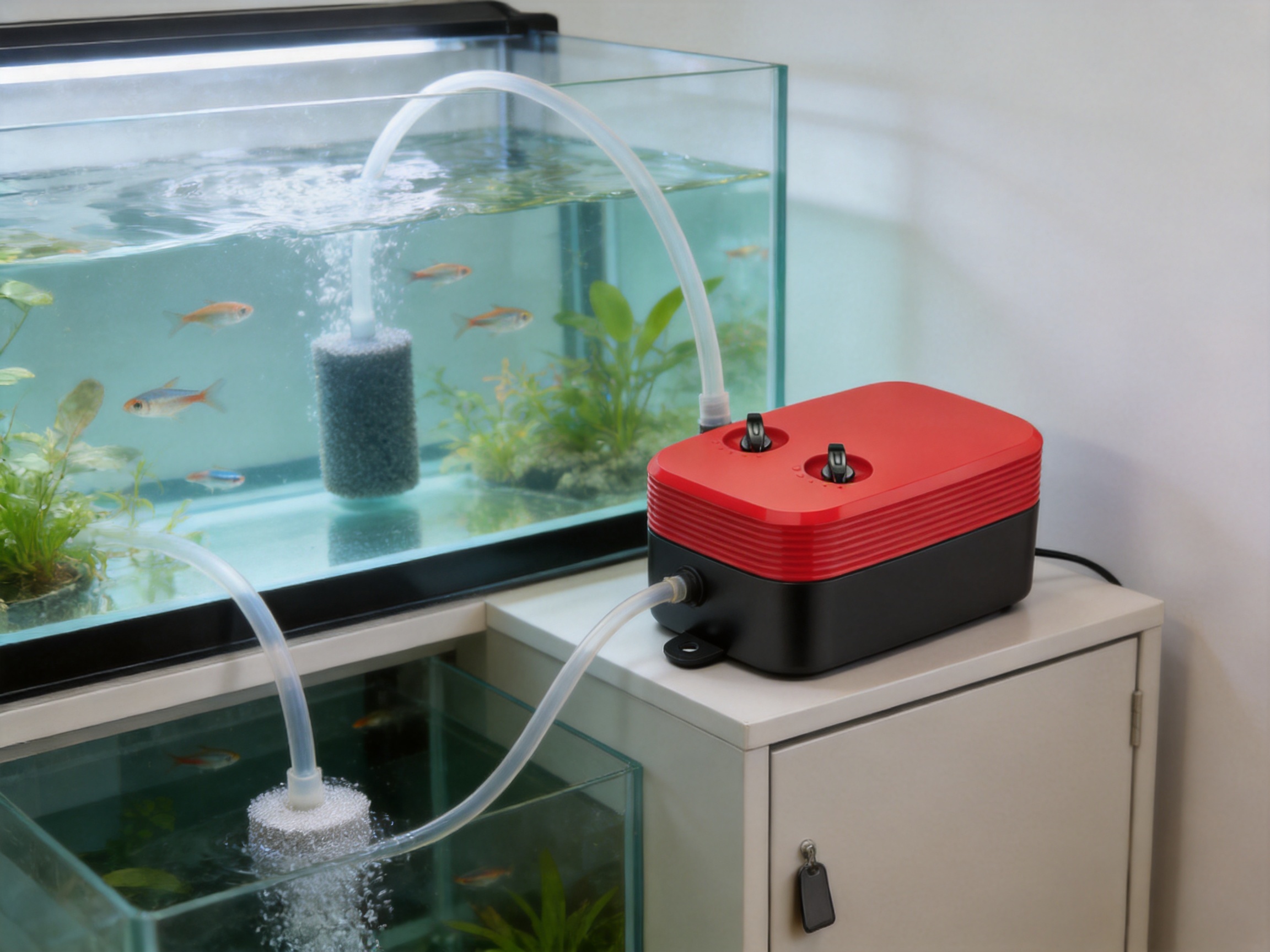
In small community aquariums, the ZQ-200 can provide supplementary oxygen and gentle circulation. Community tanks often contain fish with varying oxygen needs, and added aeration can help maintain stable conditions. The dual outlets can be used to place one air stone at each end of the tank, improving distribution.
Sponge filters are widely used in breeding tanks, fry tanks, shrimp tanks, and quarantine tanks. They require an air pump to pull water through the sponge. The ZQ-200’s two outlets allow users to operate two sponge filters or one larger filtration arrangement. This makes it a useful choice for hobbyists managing multiple small tanks or divided aquarium systems.
When fish are stressed, sick, or undergoing treatment, oxygen support is important. Some medications can reduce dissolved oxygen or affect fish respiration. A dependable air pump can help maintain water movement and gas exchange. The ZQ-200 is compact enough to keep available as a dedicated quarantine tank pump.
Aquarium owners often use bubble curtains, ornaments, and air stones to create visual movement. The ZQ-200 can operate decorative aeration accessories while still supporting functional oxygen exchange. The two outlets allow one line for decoration and another for filtration or additional aeration.
Even aquariums with power filters or canister filters can benefit from a separate air pump. If water circulation is reduced, supplementary aeration can help protect livestock. The ZQ-200 can serve as a practical backup or secondary aeration device, especially in systems where oxygen stability is important.
Energy efficiency is increasingly important in aquarium keeping. Aquariums often use lights, heaters, filters, pumps, and controllers. Although each device may seem small, total electricity use can become significant. A 4W air pump is attractive because it provides necessary function with minimal energy demand.
Long-term value is not determined only by purchase price. A very cheap pump may cost less at first, but if it fails early, becomes noisy, or provides unstable airflow, it can become more expensive in the long run. The ZQ-200 offers value through balanced specifications, dual outlets, compact design, and the backing of an experienced manufacturer. For many users, reliability and convenience are worth more than the lowest possible upfront price.
Because the pump can serve two outlets, it may also reduce the need to buy a second pump. This improves value for users who operate two small devices. Fewer pumps also mean fewer power plugs, less cable clutter, and simpler maintenance.
A well-aerated aquarium is more resilient. Oxygen supports fish metabolism and bacterial filtration. Surface agitation helps prevent oily films from forming. Water movement discourages stagnant areas where debris can accumulate. The ZQ-200 contributes to these benefits by supplying air to equipment that moves water and promotes gas exchange.
However, good aeration is part of a complete aquarium care system. Users should also maintain appropriate stocking levels, avoid overfeeding, perform regular water changes, clean filter media correctly, and monitor water parameters. An air pump cannot replace responsible aquarium management, but it can strongly support it.
In planted aquariums, aeration should be managed thoughtfully. Plants consume carbon dioxide during photosynthesis and release oxygen, but at night they consume oxygen. Gentle aeration can be helpful, especially after lights go off. Users who inject carbon dioxide for plant growth may adjust aeration timing to avoid excessive CO2 loss during the photoperiod. The ZQ-200’s dual outlets make it adaptable for different planted tank strategies.
Regular maintenance helps preserve performance. Users should periodically inspect airline tubing for kinks, cracks, or mineral buildup. Air stones can clog over time due to mineral deposits or biofilm, reducing bubble output. Replacing or cleaning air stones can restore airflow. Sponge filters should be rinsed in aquarium water, not untreated tap water, to protect beneficial bacteria.
The pump itself should be kept dry and clean. Dust buildup around ventilation areas should be removed gently. The pump should be placed on a stable surface to reduce vibration transfer. It should not be covered with cloth or placed in an enclosed space that traps heat. Good ventilation supports long service life.
If airflow decreases, users should check accessories before assuming the pump is defective. A clogged air stone, blocked sponge filter, pinched tube, or leaking connector can all reduce visible bubbles. Checking each part step by step can identify the problem quickly. Because the ZQ-200 has two outlets, users can also compare the airflow from each outlet to detect tubing or accessory issues.
Because aquarium equipment operates near water, safety must always be considered. The ZQ-200 should be used only with the specified voltage range of 220-240V/50Hz. It should be connected to a suitable electrical outlet and protected from water splashes. Users should create a drip loop with the power cable where possible, allowing any water running along the cord to drip away before reaching the outlet.
A check valve is strongly recommended, especially if the pump is below the water level. Back-siphoning can damage an air pump and create safety risks. Airline tubing should be securely connected, but users should avoid forcing incompatible tubing sizes. The pump should not be opened or modified by unqualified users. If abnormal heat, smell, sound, or performance occurs, the pump should be disconnected and inspected according to proper service guidance.
Children should not treat the pump as a toy. In public, educational, or commercial settings, the pump and cables should be positioned where they cannot be pulled, stepped on, or exposed to water spills. Proper installation protects both the equipment and the aquarium animals that depend on it.
Sensen Group Co., Ltd. has developed over decades into a diversified enterprise serving aquarium pets, aquaculture machinery, industrial equipment, and related fields. Its address is No. 61-79, Baima Street, Maao Town, Dinghai District, Zhoushan City, Zhejiang Province, China. The company’s long history, broad product categories, and organized management structure help strengthen customer confidence in products such as the ZQ-200 Air Pump.
The company has pursued the development direction of industrial technicalization, marketing globalization, and brand internationalization. This strategy matters because aquarium equipment customers increasingly expect stable quality, modern design, and reliable service. A manufacturer focused only on short-term sales may neglect product improvement, but a manufacturer with long-term industrial goals is more likely to invest in research, training, production systems, and quality control.
The company has also built a sales network system and promoted integrated online and offline experiences. For customers, a broad network can make products easier to access and support. For business partners, it suggests stronger distribution capability and market knowledge. These strengths help position the ZQ-200 not merely as a component, but as part of a complete aquarium equipment solution.
The ZQ-200 Air Pump is a smart choice for users who want practical aeration without unnecessary complexity. It offers the features most aquarium owners need: enough output for common aeration tasks, two outlets for flexible installation, low power consumption for continuous operation, a compact body for easy placement, and a practical cable length for convenient setup.
Its competitive edge comes from balance. Some pumps may be cheaper but less reliable. Some may be stronger but unnecessarily large or energy-consuming for smaller aquariums. Some may offer only one outlet and require extra accessories. The ZQ-200 provides a sensible middle ground supported by manufacturing experience and quality management.
For aquarium retailers, it is a product that can be recommended to beginners and experienced hobbyists alike. For home users, it is easy to understand and install. For fish breeders or shrimp keepers, it can drive sponge filters and provide gentle oxygenation. For decorative aquarium setups, it can power bubble features while supporting water health.
The ZQ-200 Air Pump is mainly used to provide aeration in aquariums. It can operate air stones, sponge filters, bubble decorations, and other air-driven aquarium accessories. Its purpose is to improve water movement and support oxygen exchange.
The pump has two outlets. This allows users to connect two air lines, such as two air stones, two sponge filters, or one sponge filter and one decorative bubble accessory.
The ZQ-200 is rated at 4W. This low power consumption makes it suitable for continuous daily operation while helping reduce electricity use.
The rated output is 3.3L/min. This output is suitable for many small and medium aquarium aeration applications.
The pump is designed for 220-240V/50Hz power supply. Users should confirm that their local power supply matches this rating before use.
Yes. The ZQ-200 can be used with sponge filters. Its two outlets make it possible to operate two compatible sponge filters or to combine sponge filtration with an air stone.
A check valve is strongly recommended, especially if the pump is installed below the aquarium water level. The check valve helps prevent water from siphoning backward into the pump during power loss or shutdown.
Dual outlets provide flexibility. Users can aerate two areas of one aquarium, operate two devices, or serve two small tanks depending on setup and airflow requirements. This reduces the need for extra splitters or additional pumps.
The ZQ-200 combines low 4W power consumption, two outlets, 3.3L/min output, 0.02 MPa pressure, compact dimensions, and a 2m cable. It also benefits from the manufacturing experience and quality systems of Sensen Group Co., Ltd.
Users should keep the pump dry and clean, inspect airline tubing regularly, replace clogged air stones, clean sponge filters properly, and ensure the pump has ventilation. If airflow drops, tubing and accessories should be checked before replacing the pump.
The ZQ-200 Air Pump is a compact, efficient, and practical aeration solution for aquarium users who need reliable airflow and flexible installation. Its 4W power rating supports economical continuous operation, while its 3.3L/min output and 0.02 MPa pressure provide useful performance for common aquarium accessories. The dual outlets make it more versatile than many single-outlet competitors, and the 2m cable and compact 148×82×75mm body simplify placement.
Behind the product is the manufacturing strength of Sensen Group Co., Ltd., a company with decades of experience, organized departments, research capability, quality control systems, and a broad production and marketing network. These strengths help transform a small aquarium device into a dependable piece of equipment supported by industrial experience.
For hobbyists, retailers, breeders, and aquarium service providers, the ZQ-200 offers a strong combination of value, convenience, and reliability. It is suitable for aeration, sponge filtration, decorative bubbling, quarantine tanks, and backup oxygen support. In a market full of generic options, the ZQ-200 stands out through balanced specifications, practical design, and the credibility of advanced manufacturing.
1. Sensen Group Co., Ltd. Product specification materials for ZQ-200 Air Pump.
2. Sensen Group Co., Ltd. Company profile and manufacturing capability information.
3. Standard aquarium husbandry references on aeration, dissolved oxygen, and biological filtration.
4. General aquarium equipment installation and electrical safety guidelines.
5. Aquaculture and aquarium filtration literature concerning air-driven sponge filters and gas exchange.



 English
 русский
 España
 Portugal
 عربي
عربي
 No. 61-79, Baima Street, Maao Town, Dinghai District, Zhoushan City, Zhejiang Province, China.
 0086 580 8082088 / 8081168
 0086 580 8080978
 songhua@sunsun-china.com