

 English
 русский
 España
 Portugal
 عربي
A fish tank plant fertiliser is a nutrient supplement for aquatic plants, not a fish medicine and not a substitute for water changes. Use it when plant growth outpaces the nutrients supplied by fish waste, most often in planted tanks with medium-to-high light, added CO2, or fast-growing stems. The practical rule is to dose lightly, test nitrate and phosphate, and adjust every two to three weeks rather than following a bottle label blindly.
That definition matters because fertiliser is only one part of a planted tank. Light sets the growth rate, CO2 and flow affect how efficiently plants use nutrients, and water changes remove what the tank cannot process. A fertiliser that is strong but poorly matched to those factors creates more work, not better plant growth.
Content
What Fish Tank Plant Fertiliser Actually Does
It fills nutrient gaps that fish food and fish waste cannot cover reliably. Aquatic plants need nitrogen, phosphorus, potassium, calcium, magnesium and sulfur in larger amounts, plus iron, manganese, zinc, copper, boron and molybdenum in trace amounts. Fish waste supplies some nitrogen and phosphorus, but not in a predictable ratio, and heavily planted or fast-growing tanks can consume those nutrients faster than they appear.
A complete liquid fertiliser usually supplies both macro and micro nutrients. A single-nutrient bottle, such as iron or potassium, is a corrective tool rather than a full programme. For buying decisions, look for a guaranteed analysis, a clear dose per litre, and a note on whether the product is intended for low-tech tanks, CO2-injected tanks, or both. A bottle with vague “plant food” claims and no nutrient breakdown is a purchase risk because you cannot compare it with another product or correct a deficiency with confidence.
Plant cover also changes fish behaviour and water quality. This note on the benefits of plants in a small fish tank explains the practical side of that relationship.
Liquid, Root Tab or Substrate: Which Format Fits?
Match the format to the plant’s feeding strategy, not to the shelf label. Stem plants, floating plants and epiphytes such as Anubias feed mainly from the water column, so a liquid fertiliser is the logical first choice. Cryptocoryne, Echinodorus, lotus and other heavy root feeders often respond better to root tabs or a nutrient-rich substrate. Many tanks need both approaches because they contain both plant types.
| Format | Best for | What it supplies | Watch-outs |
|---|---|---|---|
| Liquid all-in-one | Water-column feeders, stems, floating plants | Macro and micro nutrients | Easy to overdose in low-plant-mass tanks; algae risk rises when light and CO2 are unstable |
| Root tab | Heavy root feeders such as Cryptocoryne, Echinodorus and lotus | Concentrated nutrients at the root zone | Not ideal for water-column feeders; pushing a tab too close to delicate roots can cause local burn |
| Nutrient substrate | Long-term root zone and aquascapes | Slow-release root nutrients | Hard to adjust later; disturbing it can cloud water and release trapped organics |
| Single nutrient | Correcting a confirmed deficiency | One nutrient, such as iron or potassium | Guessing can unbalance the tank; test first and change one variable at a time |
If you want to compare formats in one place, the aquarium accessories range groups liquid nutrients, root support and water conditioners. For a ready-made water-column mix, check the product card below before buying separate bottles.
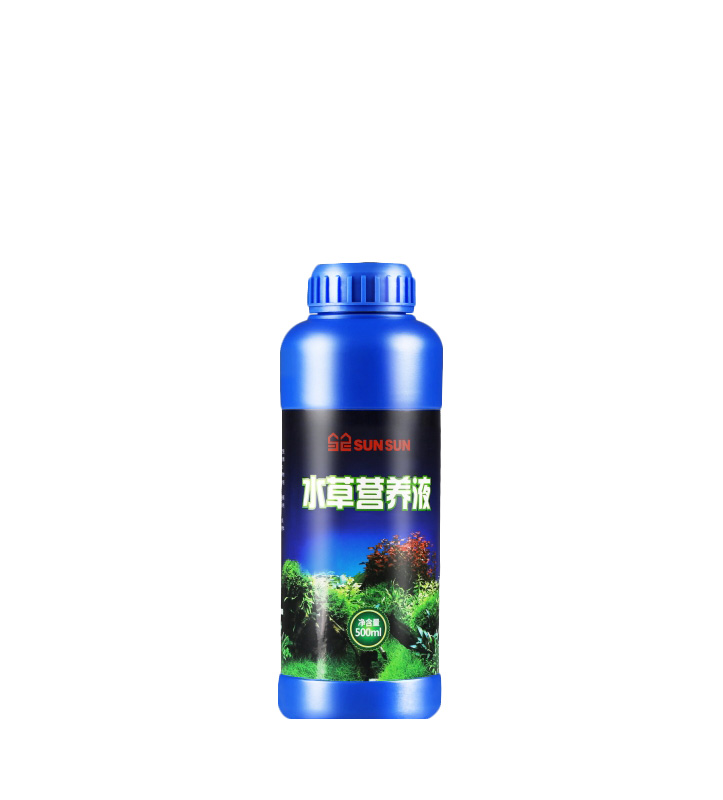 Aquatic nutrient solutionNet content: 125ml / 500ml / bottleView Product →
How to Dose Without Over-Fertilising
Start at half the label dose and let test results, not the calendar, set the pace. A 60 L low-tech tank with slow growers may need one third of the label dose once a week, while a 200 L high-light tank with CO2 may use the full label dose two or three times a week. The difference is plant mass, growth rate and the amount of nutrients already present in the water.
- Measure the actual water volume after substrate and hardscape. A nominal 100 L tank may hold 80 L, and that changes every dose calculation.
- Set a baseline with test kits. Many planted tanks run nitrate around 5–20 ppm, phosphate around 0.5–2 ppm, and iron around 0.1–0.5 ppm, but livestock tolerance and kit accuracy matter more than a perfect number.
- Dose at 50 percent of the label rate for two weeks. In low-tech tanks, use one third; in CO2 tanks, split the full dose across two or three sessions rather than adding it all at once.
- Watch new leaves, algae and fish behaviour. Pearling is not a reliable dose signal, and a single yellow leaf is not proof of a shortage.
- Change 30–50 percent of the water weekly. If nitrate climbs above 20–30 ppm, phosphate rises sharply, or algae appears, reduce the dose before changing products.
A concentrated water-free nutrient formula can be useful when you want to adjust the water column without adding more liquid volume, but it still needs the same measured approach.
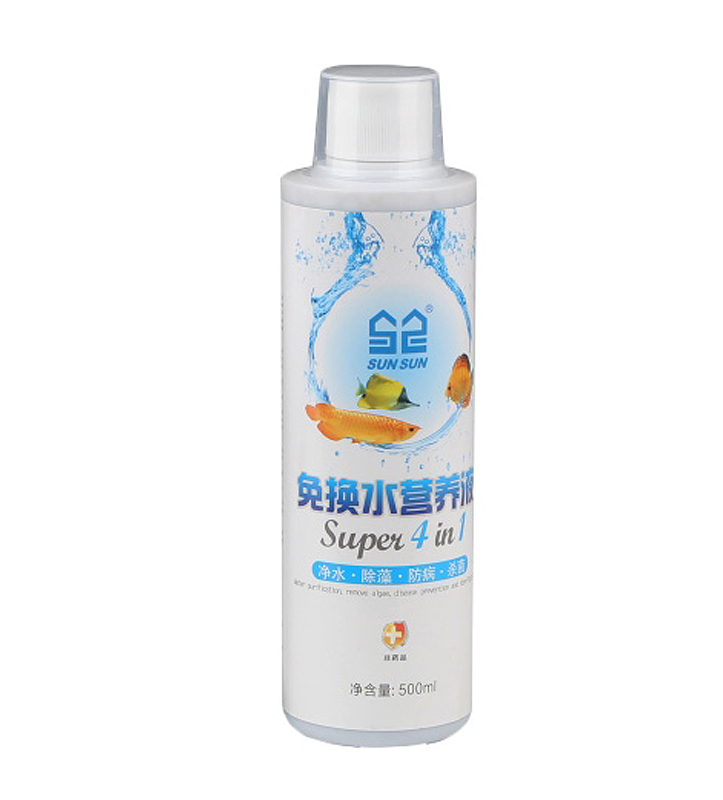 Water-Free Aquarium Nutrient Solution Bottle OptionsWater-free nutrient solution for adjusting the water column without adding liquid volume; confirm tests, flow, and CO2 before measured dosing.View Product →
Reading Deficiency Signs Before You Add More
Yellow old leaves usually mean nitrogen, pin-holes potassium, and pale new growth iron, but confirm with tests, flow and CO2 before dosing. Leaf colour is a symptom, not a diagnosis. Low flow, compacted substrate, wrong temperature and unstable CO2 can mimic nutrient shortages, and adding more fertiliser then makes the problem harder to read.
| Symptom | Likely shortage | First check |
|---|---|---|
| Older leaves yellow, growth slows | Nitrogen | Nitrate test, stock load, feeding rate and water-change routine |
| Dark purple or dark green leaves, stunted growth | Phosphorus | Phosphate test, food input and accumulated organics |
| Pin-holes, cracked leaf edges | Potassium | Dose potassium only after confirmation; check CO2 stability and flow |
| Pale new leaves with green veins | Iron | Iron test, chelate type, light intensity and pH |
| Melting stems, black roots | Poor flow, CO2 or root damage | Substrate condition, circulation, temperature and planting depth |
Change one variable at a time. If you suspect iron, dose iron alone for two weeks and observe new leaves. If you suspect nitrogen, test nitrate before adding more. This slower method costs less than buying three bottles and guessing which one worked.
Algae, Water Changes and Fish Safety
Algae is rarely solved by cutting fertiliser alone; it usually points to too much light, unstable CO2, or accumulated organics. Fertiliser feeds plants, but it also feeds algae when plant growth is limited by something else. Reduce light intensity or duration, clean the filter, remove dead leaves, and improve flow before cutting nutrients to zero.
Excess nitrate and phosphate are not automatically toxic at normal planted-tank levels, but sudden swings and poor water quality are. Keep weekly water changes at 30–50 percent, feed fish moderately, and avoid dosing just before a long absence. If fish gasp at the surface, invertebrates climb out, or a bloom appears, stop dosing, change water, and restore stability before resuming at a lower rate.
Fertiliser should support a routine, not replace one. A tank with strong light, good CO2, active plant growth and regular maintenance can use a complete fertiliser confidently. A tank with weak light, low plant mass and heavy stocking needs less, not more.
FAQ
How often should I use fish tank plant fertiliser?
Use liquid all-in-one fertiliser two to three times weekly in high-growth CO2 tanks, and once weekly or less in low-tech tanks. Root tabs usually last two to three months. Follow the product concentration and adjust after testing rather than copying another tank’s schedule.
Can fertiliser harm fish?
At the label dose, harm is uncommon. Problems usually come from overdosing, poor water quality or sudden changes. Dose after a water change, watch fish behaviour, and keep a test kit for nitrate and phosphate.
Do I need fertiliser if I have fish waste?
Not always. A lightly stocked, low-light tank with slow-growing plants may run on fish waste alone. A dense planted tank with CO2, strong light and fast stems usually needs supplemental nutrients because plant demand outpaces waste production.
Is liquid or root fertiliser better?
Neither is better in every tank. Liquid fertiliser suits water-column feeders, while root tabs suit heavy root feeders. Many planted tanks use both because the plant community contains both feeding types.

 No. 61-79, Baima Street, Maao Town, Dinghai District, Zhoushan City, Zhejiang Province, China.
 0086 580 8082088 / 8081168
 0086 580 8080978
 songhua@sunsun-china.com